
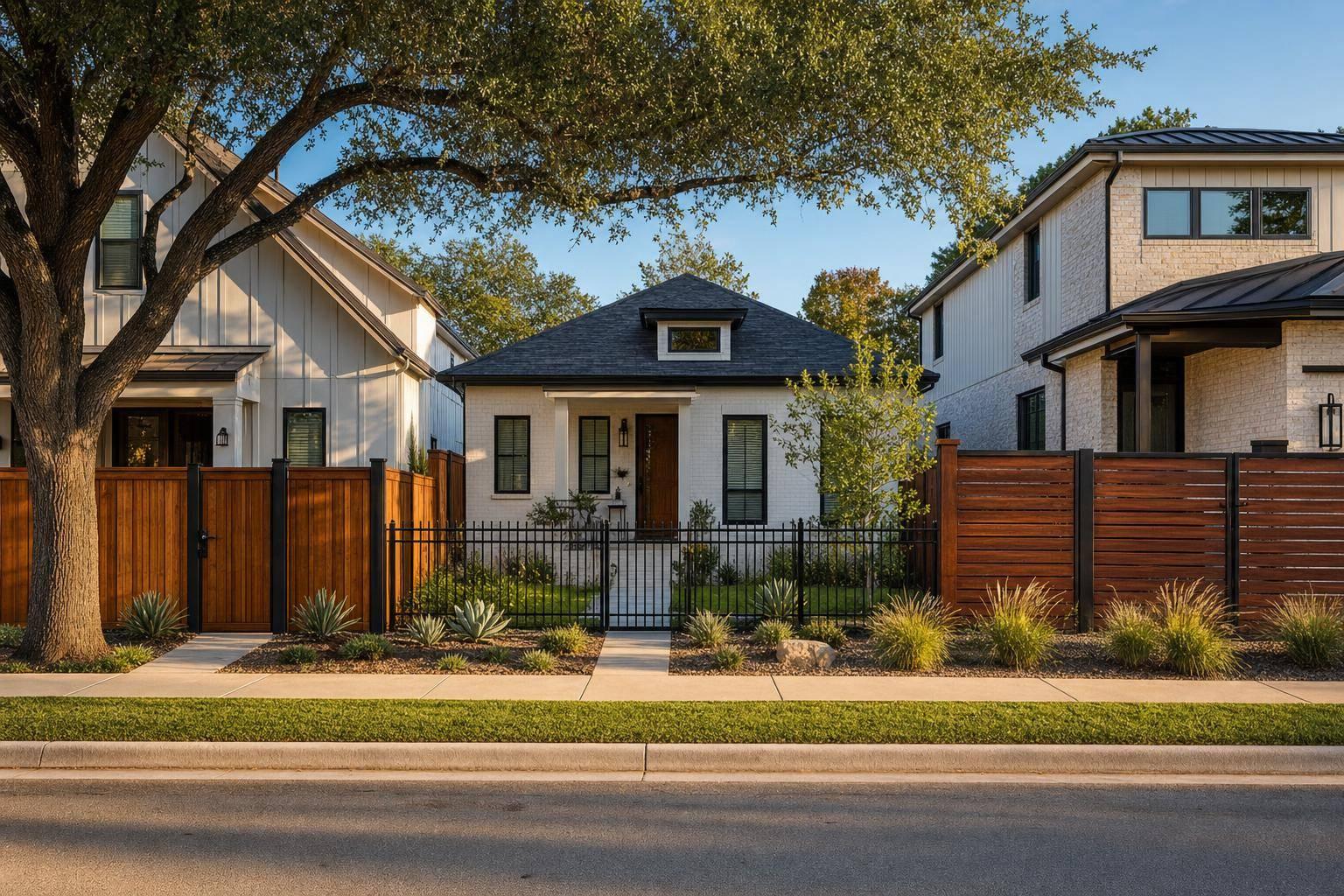
The right fence should fit your block, follow local rules, and handle North Texas weather. If I were choosing a fence in Plano or nearby, I’d start with four things: what neighbors already use, what the city and HOA allow, what the lot needs for privacy and sight lines, and which materials can take heat, wind, and storms.
Here’s the short version:
- I’d look for common heights, materials, and colors on the street
- I’d match the fence to the home style, whether it leans more modern or older in look
- I’d check Plano code, HOA rules, permits, easements, and 811 marking
- I’d pick materials based on use:
- Cedar for backyard privacy
- Ornamental iron for pools and gates
- Black chain link for utility areas and dog runs
- I’d keep in mind that backyard fences are often 6 feet, while front-yard fences are often 3 to 4 feet
- I’d remember that code and HOA mistakes can get expensive, with fines that may reach $500 per day in some cases, and permit issues that can cost $1,000+
My takeaway: don’t pick a fence just because it looks good in a photo. Pick one that looks right on your street, works for your lot, and won’t cause problems later. Choosing a contractor that offers comprehensive warranty coverage provides long-term peace of mind.
If you want a fence that feels right for the area, this article comes down to one simple idea: study the block first, then narrow the design by rules, weather, and upkeep.
20 Fence Ideas for Privacy, Style and Curb Appeal
sbb-itb-d1d0a96
Step 1: Study Neighborhood Style and Market Expectations
Start with the block. It tells you a lot about the fence styles buyers already expect to see.
Walk the Neighborhood and Note Common Fence Patterns
Take a walk and pay attention to the details: fence height, material, how open the front yards feel, and even stain color. Front-yard fences usually land around 3 to 4 feet, while backyard privacy fences are often 6 feet and can go up to 8 feet based on local codes.
Put extra focus on corner lots and homes that were updated not long ago. Those spots often give you the clearest read on what buyers expect right now.
Use what you see to narrow down the style that fits the house.
Match Fence Style to the Home’s Architecture
The house itself should help make the call. A fence that looks right on one home can feel out of place on another.
Traditional brick homes often pair well with vertical wood boards or ornamental iron. Modern and contemporary homes usually look better with horizontal boards and black finishes. Ranch-style homes tend to work best with classic wood privacy fencing in the back and low, open fencing in the front.
| Home Style | Fence Style That Works |
|---|---|
| Traditional Brick | Vertical wood, ornamental iron |
| Modern / Contemporary | Horizontal wood, black aluminum |
| Ranch | Classic wood privacy, low open front |
| Transitional / Custom | Mixed material (wood + metal frame) |
Determine Whether the Area Leans Modern or Traditional
Next, read the overall tone of the block. Some neighborhoods lean modern, with clean horizontal boards, matte black metal, and mixed materials. Others lean more old-school, with warm-stained vertical wood and picket-style front fencing.
The goal isn’t to chase whatever looks trendy this year. It’s to choose a fence that feels like it belongs on that block.
Once you know the neighborhood’s style, you can move on to local rules and site limits.
Step 2: Check Rules, Lot Conditions, and Climate Before Finalizing a Design
Once you’ve picked a style direction, test it against local rules. That part matters more than a lot of people expect. City codes, lot limits, and North Texas weather can all shape what you’re able to build – and what will last. Start with the neighborhood look you spotted in Step 1, then narrow it down based on code, site limits, and climate.
Review City Codes, HOA Standards, and Easements
Before you lock in the layout, confirm the city’s height limits. Permits are often required for fences over 8 feet tall, front-yard fences, corner-lot installs, and projects near public sidewalks, roads, or easements. Pay close attention to the rules on height, placement, materials, and approvals. Skipping a permit can get expensive fast. Fines for work done without one can hit $1,000 or more.
It also helps to check HOA covenants before you apply for a city permit. That can save you from redraws, delays, and penalties that can hurt resale appeal. In many Plano subdivisions, HOA rules are stricter than city rules. They may limit materials, stain colors, and even which side of the fence faces the street. The city does not require the finished side to face outward, but many local HOAs do.
If part of the fence crosses a utility easement, you’ll need written consent from the utility provider. The fence also has to be removable at the owner’s expense. And before any digging starts, Texas law requires calling 811 at least two business days ahead so underground lines can be marked.
Once those legal limits are clear, it’s much easier to cut the design down to what’s allowed and what makes sense on the lot.
Account for Privacy, Security, and Street Visibility
The fence’s job should guide the height and layout. Backyard fences are often taller when privacy is the goal. In front yards, more open styles usually work better because they keep curb appeal intact and maintain sight lines at driveways and corners. Layout matters too. A fence shouldn’t block drainage flow or extend into a public right-of-way.
Plano residential zones do not allow barbed wire, razor wire, or electrified fencing.
Choose Materials That Hold Up in Plano’s Heat and Storms
Plano weather can be rough on fencing. Heat, hard sun, wind, rain, and storms all put materials to the test. Under Plano residential code, allowed fence materials include wood, masonry, vinyl, wrought iron, and chain link. For wood fences, UV-resistant stain helps protect against sun damage, and corrosion-resistant hardware can hold up better over time.
With rules, lot limits, and weather in view, you can start tightening the design details in Step 3.
Step 3: Turn Local Trends Into Specific Fence Design Choices
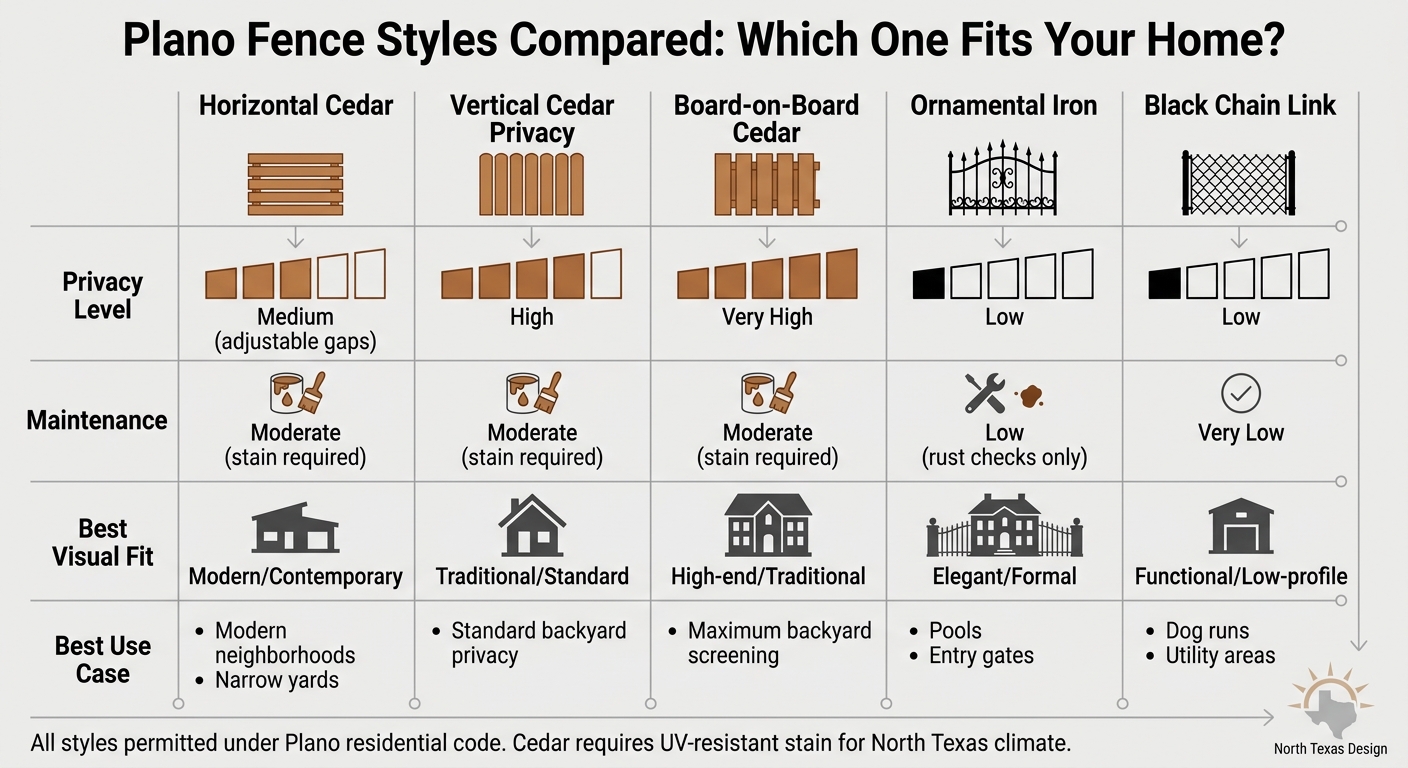
Plano Fence Styles by Home Type: Material, Privacy & Maintenance Guide
Once you’ve narrowed down the neighborhood look and local code limits, the next step is getting specific. That means choosing the material, layout, board direction, color, and finish that fit both the area and the way you use the property every day.
Pick the Right Material and Layout for the Property
For backyard screening, a 6-foot cedar privacy fence is a common pick. It gives solid coverage and should be protected with stain and a weather coating.
For front yards, spaced pickets or boards usually make more sense because they keep sight lines open. That helps the fence feel lighter and less closed off from the street.
Some materials fit certain jobs better than others:
- Use ornamental iron for pool safety enclosures and security gates.
- Use black chain link for dog runs or long boundary lines where privacy isn’t the main goal.
- In modern neighborhoods, combine wood and black metal for a cleaner, more current look.
Select Board Orientation, Color, and Design Details
Board direction changes the feel of the whole fence. Vertical boards are the classic option. Horizontal boards look more modern and can make a narrow yard seem wider, but they usually cost more. If privacy comes first, board-on-board gives the most coverage.
Color and finish should line up with the home’s brick, siding, or trim. White tends to work well on cottage-style homes, while dark gray or black fits modern designs better. Small details matter too. Black hardware and post caps can give the fence a cleaner finish.
Compare Popular Fence Styles Found in Local Neighborhoods
| Fence Style | Privacy | Maintenance | Visual Fit |
|---|---|---|---|
| Horizontal Cedar | Medium (adjustable gaps) | Moderate (stain required) | Modern / Contemporary |
| Vertical Cedar Privacy | High | Moderate (stain required) | Traditional / Standard |
| Board-on-Board Cedar | Very High | Moderate (stain required) | High-end / Traditional |
| Ornamental Iron | Low | Low | Elegant / Formal |
| Black Chain Link | Low | Very Low | Functional / Low-profile |
Cedar fence styles show up often across Plano because they balance privacy, appearance, and climate performance when they’re maintained well. Ornamental iron is a strong match around pools and entry gates. Black chain link usually works best in utility-focused areas where visibility still matters.
Bring two or three options from the table to your consultation to request a quote from Tend Fencing. That gives you a solid starting point before you weigh upkeep and durability across your top picks.
Step 4: Plan for Long-Term Durability and Work With a Local Installer
Use Maintenance Expectations to Narrow the Final Choice
After you narrow down the style, let maintenance help make the last call.
Wood fencing, especially cedar, needs re-staining every few years to protect against UV damage and moisture. If you skip that upkeep, the fence can warp or crack earlier than expected. Metal usually costs more up front, but it often needs less upkeep than wood. Ornamental iron generally just needs occasional rust checks and touch-ups. Storm resistance also comes down to the install itself, especially proper post setting and solid footing.
Prepare for a Design Consultation With Photos and Rules in Hand
Once you’ve settled on the material, pull together the items your installer will want to see. Bring:
- Your HOA guidelines
- A copy of your property survey or plat
- Photos of your home’s exterior
- A few examples of fence styles you’ve seen in the neighborhood
It also helps to be clear about the fence’s main job: privacy, pets, pool safety, or curb appeal. For custom cedar, ornamental iron, chain link, or gate projects in Plano and nearby areas, Tend Fencing can handle design and installation.
Conclusion: Choose a Fence That Fits the Block, the Property, and the Climate
Choose a fence that fits the block, follows local rules, and holds up in North Texas weather.
FAQs
How do I know which fence style fits my neighborhood?
Take a look at your neighborhood’s overall look, your home’s exterior, and your landscaping. A fence that fits in with nearby homes often helps curb appeal. For example, picket or split-rail fences can work well in more classic suburban areas, while modern metal fences may suit newer, contemporary neighborhoods.
You’ll also want to check local ordinances or HOA rules for height and design limits. And if you’re sharing a fence, a good neighbor style can make it look nice from both sides.
Do I need HOA approval or a city permit first?
The available information doesn’t say whether you need HOA approval or a city permit before choosing or installing a fence.
In the United States, it’s usually smart to check your local HOA rules and city requirements first. That can help you stay in line with neighborhood and municipal standards and avoid fines, delays, or having to change the fence later.
Which fence material lasts best in Plano weather?
In Plano, wood fences usually don’t hold up as long. Constant sun and water exposure can wear them down, so they need regular upkeep.
Materials like vinyl or metal tend to last longer and handle the weather better.