
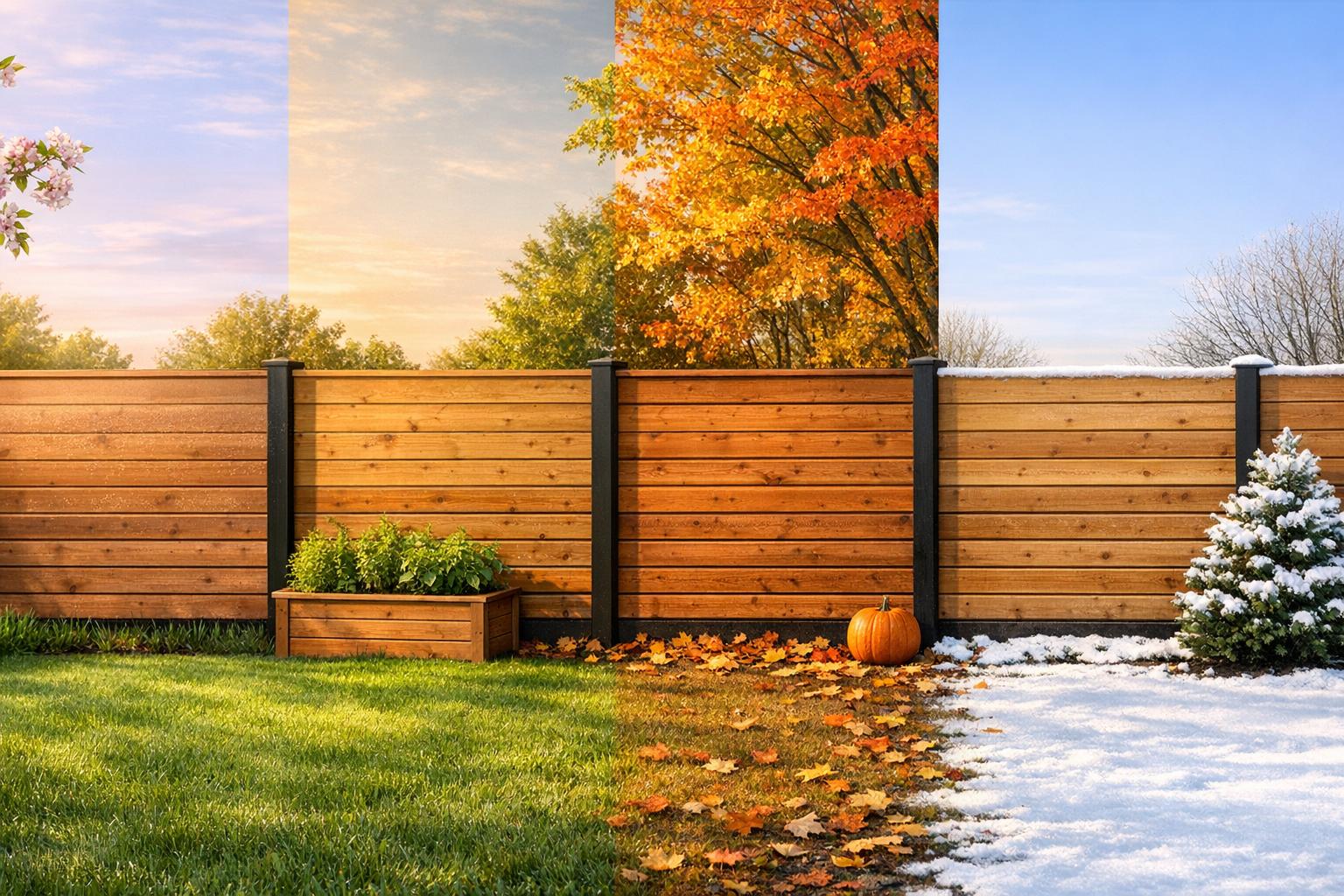
When planning a fence installation, timing matters. Each season has its pros and cons, depending on your priorities like cost, contractor availability, and weather conditions. Here’s a quick breakdown:
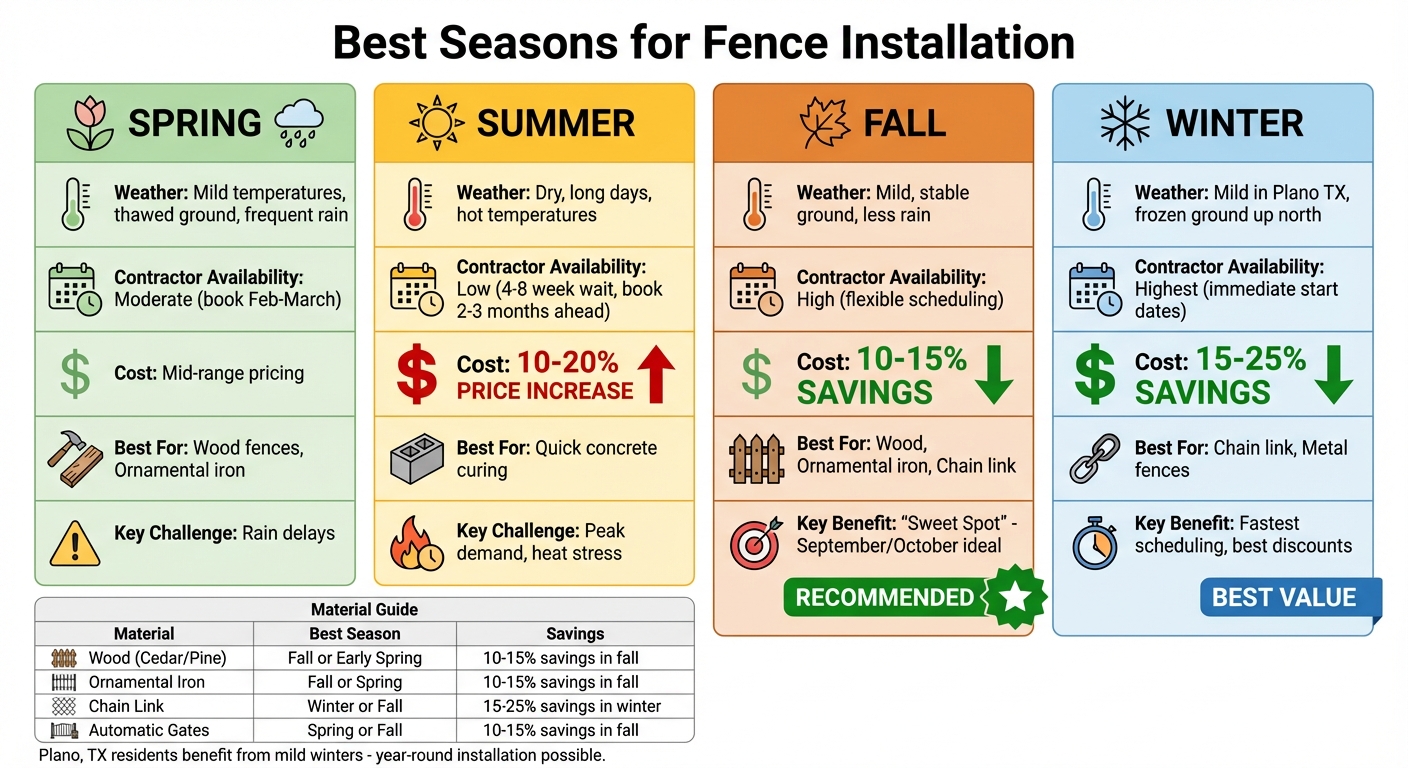
- Spring: Mild temperatures and thawed ground make it ideal for digging. However, frequent rain and high demand can lead to delays and mid-range pricing.
- Summer: Dry weather and long days speed up projects, but expect a 10–20% price increase and longer wait times due to peak demand.
- Fall: Mild weather, stable ground, and lower prices (10–15% savings) make this season a popular choice. Contractor availability also improves.
- Winter: The most budget-friendly option with 15–25% savings. While frozen ground can be a challenge up north, Plano’s mild winters keep projects feasible with faster scheduling.
Key Tip: Match your fence material to the season for better durability and cost-effectiveness. For example, wood fences are best installed in fall or spring, while chain link works well in winter.
For Plano, TX residents, Tend Fencing offers year-round installation, leveraging the region’s mild climate to minimize seasonal disruptions.
Best Seasons for Fence Installation: Cost Savings and Weather Comparison
1. Spring
Weather Conditions
Spring brings mild temperatures and thawed ground, making it a great time for fence installation – especially in northern areas where frozen soil during winter halts digging. However, it’s best to wait until the last frost has passed, as chilly spring mornings can slow down concrete curing. In colder regions, late April often marks the start of ideal conditions for this type of work.
That said, spring isn’t without its challenges. Frequent rain can lead to muddy conditions, making it tough to dig post holes and potentially impacting the curing process for concrete. If you’re working during wet weather, be cautious not to over-dilute the concrete mix. Covering freshly poured footings with a tarp can help them retain warmth and stay protected from rain. Heavy downpours often lead contractors to pause work to prevent damage to your yard or any compromise to the installation quality. These weather conditions also mean contractor schedules can quickly fill up during this season.
Contractor Availability
Spring is a busy season for fence installations. While contractor availability is better early in the season, demand steadily increases from March through May. To secure your spot, it’s a smart move to reach out as early as February or early March. For instance, if you’re in a place like Plano, TX, contacting a local company such as Tend Fencing early can help you lock in a convenient installation date. Keep in mind, the high demand during spring doesn’t just affect scheduling – it can also influence pricing.
Cost Implications
Spring prices sit in a middle range compared to other seasons. While you won’t get the 15–25% savings typical of winter, costs are still lower than the 10–20% premium often seen in summer. Choosing spring gives you a balanced price point, and it also leaves you with the entire growing season to tackle any landscaping projects around your new fence.
sbb-itb-d1d0a96
2. Summer
Weather Conditions
Summer offers longer daylight hours, dry conditions, and warm temperatures – ideal for curing concrete quickly. These factors allow for extended workdays and faster project timelines. However, extreme heat can reduce crew productivity, and in areas prone to drought, water restrictions might delay landscaping after installation. These factors can significantly affect how contractors schedule their work.
Contractor Availability
Summer is the busiest time of year for fencing projects, which often results in scheduling difficulties. Wait times typically range from 4 to 8 weeks, so planning ahead is crucial. For example, if you’re aiming for a July installation in Plano, TX, you should book with Tend Fencing as early as April or May.
Cost Implications
Due to high demand, summer installations often come with a 10–20% price increase. If you’re looking to save money, consider scheduling your project during the fall or winter months when demand – and prices – are usually lower.
3. Fall
Weather Conditions
Fall brings mild temperatures and less rainfall compared to spring, making it an ideal season for fence installation. The ground remains firm before the first frost, simplifying tasks like digging post holes. September and early October tend to be the "sweet spot" for installation, offering stable weather without the intense heat of summer or the biting cold of winter. However, keep in mind that shorter daylight hours as fall progresses may extend project timelines. In northern states, late fall can bring early frost, which can complicate ground conditions. Installing your fence in the fall also allows it to settle over the winter months, ensuring it’s ready for use by spring. These steady weather conditions also make scheduling less of a headache.
Contractor Availability
One of the perks of a fall installation is the increased availability of contractors. You can also browse our gallery of completed projects to see the quality of work delivered during these off-peak months. With fewer projects on their books, contractors often have more flexible schedules during this time. This added availability, combined with the favorable weather, makes planning and executing your project much smoother.
Cost Implications
Fall is also a great time to save money on your fence installation. Homeowners can typically save 10–15% compared to the peak summer season. For example, residents in Plano, TX, can take advantage of these savings by scheduling with Tend Fencing during September or early October to lock in both the cost benefits and optimal weather conditions.
"September and October are generally the best months to install a fence. You get mild weather, lower prices (10-15% off peak summer rates), better contractor availability, and the ground is still easy to work with before frost." – FenceFind
4. Winter
Weather Conditions
Winter can make fence installation tricky, especially in colder northern areas. When the ground freezes solid, digging post holes becomes a real challenge unless you have specialized tools. Plus, concrete won’t cure properly if temperatures drop below 40°F, which can weaken the stability of fence posts. Another concern is frost heave – the freezing and thawing of soil – which can shift the ground and cause posts to lean if they aren’t installed deep enough or correctly. On top of that, snow, ice, and shorter days can slow down projects and reduce available work hours. That said, in places with mild winters, fence installation remains a practical and budget-friendly option.
Contractor Availability
Winter is typically the off-season for fencing, which means contractors are more readily available. With fewer projects on their plates, contractors can often start your job sooner and give it more attention. Permit reviews during this time are also faster, sometimes taking as little as 10 days.
"Winter scheduling offers immediate or near-term start dates with established contractors. Projects proceed on predictable timelines without competing for crew time with multiple simultaneous jobs." – Ray Naftalin, Iron Master Gates & Fencing
This off-peak season often translates to better quality control and quicker timelines, as crews aren’t stretched thin across multiple jobs.
Material Considerations
Certain materials work better for winter installations. Metal options like ornamental iron and aluminum, along with composite fencing, handle cold weather well because they aren’t as prone to expansion and contraction as wood. Interestingly, the cooler temperatures during winter can actually help concrete cure more evenly, reducing the risk of cracking in the fence post foundations. To counter frost heave, posts should be installed 3–4 feet deep, extending below the frost line to keep the fence stable as the ground thaws. These material advantages not only ensure better installation quality but also make winter projects more appealing.
Cost Implications
Winter might bring its share of challenges, but it also comes with some major cost perks. Since it’s the slow season, fencing projects are often more affordable, with prices dropping by 15% to 25% compared to the busy summer months. Many contractors offer reduced labor rates or even throw in free upgrades to keep their teams working during this downtime.
For homeowners in Plano, TX, this is a great time to schedule with Tend Fencing. The milder winter conditions in the area make installation easier, avoiding the frozen ground issues seen up north, while still taking advantage of the seasonal savings.
"To keep their best workers on the payroll and busy during the slower months, fencing contractors will often offer discounts or upgrades at no extra cost if you hire them during the winter months." – Deirdre Sullivan, Contributing Writer, Angi
When is the BEST Time to Build a Fence?
Choosing the Right Season for Your Fence Type
Matching your fence type to the right season isn’t just about timing – it’s about ensuring durability and getting the most out of your investment. Different fence materials react uniquely to weather, and in Plano, TX, where summer temperatures can exceed 100°F and clay soil shifts with moisture, the season you choose can significantly impact both costs and longevity.
Wood fences, like cedar and pine, are best installed in the fall or early spring. Why? These seasons offer moderate temperatures (50–85°F), perfect for staining wood before the harsh summer sun can cause damage. Cedar fences typically need restaining every 2–3 years in North Texas, while pine may require attention every 18–24 months. Installing in the fall gives the material time to settle over the winter, reducing the risk of warping when summer heat kicks in. Timing your installation right can make a noticeable difference in how long your fence lasts.
Ornamental iron fences and automatic gates also benefit from spring or fall installations. These seasons minimize issues caused by thermal expansion and contraction, which can loosen fasteners and misalign gates. Automatic gates, in particular, need careful calibration and lubrication to handle North Texas humidity. Companies like Tend Fencing excel in this area, even performing welding repairs during ice storms to ensure security.
Chain link fences are a great choice for winter or fall installations. These seasons provide stable conditions for setting post foundations in Plano’s shifting clay soil. Plus, winter often brings lower demand, which can translate to significant savings.
Here’s a quick reference guide to help you decide the best season for your fence material:
| Fence Material | Best Season (Plano, TX) | Key Reason | Cost Savings |
|---|---|---|---|
| Wood (Cedar/Pine) | Fall or Early Spring | Ideal for staining and settling before summer heat | 10–15% in fall |
| Ornamental Iron | Fall or Spring | Reduces thermal expansion issues | 10–15% in fall |
| Chain Link | Winter or Fall | Stable ground with lower seasonal demand | 15–25% in winter |
| Automatic Gates | Spring or Fall | Ensures mechanical and electrical stability | 10–15% in fall |
With over 15 years of experience, Tend Fencing has built a reputation for delivering high-quality fences year-round in North Texas. From 8-foot Western Red Cedar board-on-board fences to HOA ornamental steel and commercial-grade security fencing, they’ve handled it all. Their crews have proven their adaptability, completing projects in everything from heavy rain in Garland to emergency gate repairs during ice storms.
Conclusion
Planning your fence installation in Plano, TX means weighing factors like budget, timeline, and weather. Here’s a quick look at how each season can influence your project:
- Spring: The ground is easier to work with, and temperatures are mild. However, rain and increasing demand might cause scheduling delays.
- Summer: Longer daylight hours and dry weather speed up projects and help concrete set properly, but expect higher costs and extended wait times.
- Fall: With mild weather, lower prices, and better contractor availability, this season often becomes the go-to choice for many homeowners.
- Winter: Plano’s mild winters mean you avoid frozen ground issues, making it the most budget-friendly time with faster scheduling options.
Choose professionals who know how to make the most of each season for your specific needs. Tend Fencing works year-round to deliver quality installations tailored to Plano’s climate.
FAQs
How far in advance should I book my fence installation?
Planning your fence installation? It’s a smart move to schedule it 2–3 months in advance, especially during peak times like summer. By booking early, you’re more likely to secure your spot on the schedule and avoid any potential price hikes.
Do I need a permit, and does the season affect approval time?
Yes, you’ll need a permit to install a fence, and the time it takes to get approval can vary depending on the season. Fall is often a great time for this, as demand tends to drop, which can make scheduling easier and speed up the permit process.
Which fence material handles Plano weather best year-round?
Wood holds up nicely in Plano’s weather throughout the year, largely because it can be stained or painted to boost both its durability and appearance. That said, it does need routine upkeep to guard against changing weather conditions and to extend its lifespan.