
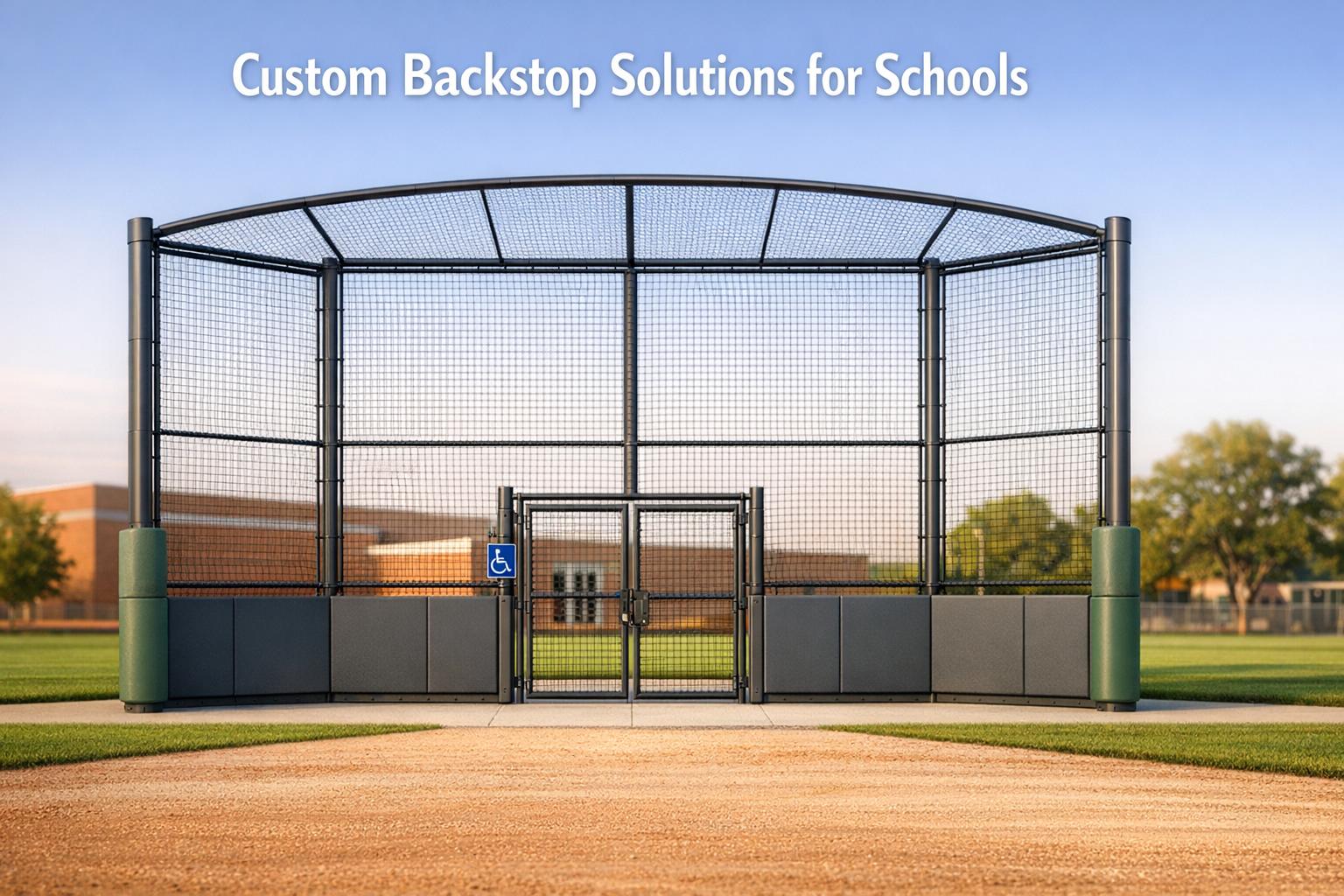
Schools need backstops that prioritize safety, durability, and compliance with regulations. Standard commercial fencing often falls short, leading to safety risks, property damage, and high maintenance costs. Custom backstops solve these problems by using stronger materials, tailored designs, and professional installation to meet the specific needs of school sports facilities.
Key Points:
- Safety: Proper backstops protect spectators, players, and property from stray balls.
- Durability: Materials like 9-gauge chain-link and vinyl coatings withstand impacts and weather.
- Customization: Heights, styles, and ADA-compliant features are tailored to each field.
- Cost-Effectiveness: Long-lasting designs reduce maintenance and replacement expenses.
Tend Fencing specializes in creating and installing custom backstops that address safety concerns, meet regulatory standards, and enhance the functionality of school sports facilities. Their solutions ensure a safer, more efficient, and professional environment for schools.
Chain Link Fence & Baseball Backstop Installation | Local School – Northwest Fencing
sbb-itb-d1d0a96
Common Backstop Problems for Schools
Schools across the U.S. face a range of issues with backstops that jeopardize student safety and stretch already-tight budgets. These problems often arise from outdated designs, poor material choices, and infrastructure that can’t handle the demands of modern sports programs.
Safety Hazards and Inadequate Coverage
When backstops fail to properly contain projectiles, the results can be dangerous. Foul balls escaping poorly designed or aging backstops pose risks to spectators, damage nearby property, and disrupt games. For instance, in December 2025, Frederick County Public Schools had to relocate the Oakdale High School backstop after foul balls caused damage to nearby homes and passing cars.
Players face additional risks from collisions with rigid, unpadded backstop surfaces. Older chain-link structures with exposed twisted wires or protruding hardware can cause severe cuts or scrapes when players reach for balls. Backstops made from standard fencing materials are particularly vulnerable, as repeated high-velocity impacts can cause major deformation if they lack heavy-gauge fabric (9-gauge) and closely spaced posts.
Material Wear and Maintenance Issues
Backstops endure constant wear from both sports activity and weather exposure. High-speed impacts from foul balls and wild pitches can warp or weaken structures that aren’t built with durable materials. Outdoor backstops are especially vulnerable to rust, corrosion, UV damage, sagging, and tearing over time.
Many schools use backstops far beyond their intended lifespan – often 25 to 30 years. In gymnasiums, frequent movement and vibrations loosen hardware and cause specific areas to degrade. Neal Turner, Director of Gymnasium Equipment Sales at Draper, Inc., explains:
Because it’s mechanical, there are points that can wear and hardware that can loosen due to vibration.
Replacing backstops can be an expensive undertaking. For example, a high school baseball backstop replacement involving a block wall and netting was reported to cost approximately $22,000. To cover such costs, schools often turn to creative fundraising efforts, like selling engraved brick pavers for $125 to $250 to be mounted on backstop walls.
These maintenance challenges underscore the importance of using materials and designs suited to the demands of school environments.
Lack of Customization for School Requirements
Standard backstops frequently fall short because they aren’t tailored to meet schools’ unique needs. For example, straight vertical backstops may be simpler to install, but they fail to catch high, looping foul balls that a canopy-style backstop with angled overhead extensions could redirect more effectively.
Schools also face strict regulatory requirements that generic backstops often fail to meet. Poorly installed or aging backstops with exposed hardware can violate Consumer Product Safety Commission (CPSC) guidelines, creating hazards for players. One-size-fits-all solutions rarely align with a school’s field dimensions, safety standards, or budget constraints, leaving administrators with backstops that aren’t up to the task.
Why Standard Backstops Don’t Work for Schools
Standard backstops, designed for general perimeter security, often fall short when put to the test in school sports settings. They struggle in three key areas: durability under heavy use, adherence to safety standards for youth, and long-term cost-effectiveness.
Poor Performance in High-Use Environments
Most standard backstops use 11-gauge fabric and wider post spacing, which are not built for the intense demands of school sports. In contrast, engineered backstops typically use at least 9-gauge material with tighter post spacing, making them better suited to handle high-impact hits.
The rigid nature of chain-link backstops is another problem. They fail to absorb force, leading to unpredictable ricochets when struck by balls traveling at speeds of up to 100 mph. Data from Major League Baseball shows that over 1,750 fans are injured each year by foul balls, highlighting the risks posed by inadequate materials.
Indoor gym environments present additional challenges. Mechanical backstops in gyms require specialized maintenance to address wear and prevent loose hardware – something standard products often neglect. These shortcomings not only affect performance but also compromise critical safety features, as explained in the next section.
Failure to Meet Youth Safety Requirements
Many standard backstops lack essential safety features, making them unsuitable for schools. For instance, they often omit positive stop mechanisms on vertical tubes and fail to include fall-arrest systems. These weighted safety straps are designed to catch equipment if a cable fails, a feature that could prevent tragic accidents.
One such incident occurred at Irving Elementary School in Joplin, Missouri, where an 18-year-old named Spencer Nicodemus lost his life when a 300-pound basketball backstop slid off its mast. This tragedy led to the creation of ASTM F3731, the first comprehensive safety standard for basketball backstops, published in December 2024.
Other design flaws include gate configurations that fail to meet ADA requirements for a minimum 32-inch clear opening. Additionally, the balance between visibility and strength often creates safety issues. Heavy-gauge wire obstructs views, while thinner netting lacks the tensile strength to handle high-velocity impacts. These shortcomings not only put users at risk but also lead to higher maintenance costs over time.
Increased Costs from Frequent Repairs
What might seem like a cost-effective choice at first often becomes a financial burden. Standard poly netting and untreated chain-link degrade quickly due to UV exposure and rust, resulting in weakened sections prone to failure. When damage occurs, these systems typically require full panel or section replacements, which can be costly.
Schools often use athletic equipment for decades without professional maintenance or inspections, further increasing the risk of failure. Neal Turner highlights this issue:
Accidents typically don’t happen quickly on gym equipment. It’s something that you probably could have detected if you were staying on top of your maintenance.
Ultimately, using lighter materials and wider post spacing – features intended for perimeter security – leads to frequent failures. This forces schools to shoulder repair costs, deal with potential liability from injuries or property damage, and pay for emergency replacements that could have been avoided with better-engineered solutions.
Custom Backstop Solutions by Tend Fencing
Tend Fencing takes school sports safety and functionality to the next level by creating custom backstops that address common issues like deformation, maintenance hassles, and outdated designs. Their solutions blend durable materials, thoughtful designs, and expert installation to meet the demands of daily use while prioritizing the safety of students and spectators. These tailored backstops also tackle regulatory and safety challenges head-on.
High-Quality Materials for Durability
Tend Fencing uses 9-gauge galvanized or vinyl-coated chain link with 10-foot post spacing to construct backstops that can handle high-impact forces with ease. The thicker gauge ensures the structure can absorb repeated impacts effectively. For added protection, the vinyl coating not only prevents rust but also reduces risks like snagging clothing or causing injuries.
For schools looking to enhance both security and aesthetics, Tend Fencing offers ornamental steel and iron options, including an 8-foot curved press point steel design for a polished, professional appearance.
Adjustable Heights and Custom Designs
Recognizing that each school has unique requirements, Tend Fencing provides backstops ranging from 20 to 30 feet in height, meeting the needs of high school and competitive sports fields. Schools can choose between two main design styles:
- Straight Style: Perfect for schools with limited space or those seeking a classic look.
- Canopy Style: Features an angled overhead extension to catch high foul balls near bleachers or buildings.
Tend Fencing works closely with schools to create designs tailored to their specific settings. Whether it’s accommodating nearby parking lots, ensuring spectator safety, or incorporating school branding with custom powder-coated finishes, their consultation process ensures every detail is addressed, and schools can request a free quote to begin their project. They also provide ADA-compliant gate configurations with a minimum 32-inch clear opening, ensuring accessibility for all.
Improved Safety and Appearance
Safety and visibility are at the forefront of Tend Fencing’s backstop designs. The high-visibility chain-link materials allow coaches and spectators to monitor field activities without obstruction. At the same time, these materials provide strong protection against fast-moving balls, ensuring a safer environment for everyone.
Every installation is handled by a licensed and insured team that follows the International Building Code for foundation depth and secures all necessary permits for athletic structures. As the company proudly states:
We excel in commercial fence installation, providing tailored solutions for businesses to enhance security, define boundaries, and elevate outdoor spaces with superior craftsmanship and professionalism.
Tend Fencing’s commitment to quality is reflected in their perfect 5.0/5 customer rating, with clients frequently praising the owner’s responsiveness and the crew’s ability to efficiently complete large projects. Up next, we’ll walk through the seamless process they use to install these custom backstops.
How to Install School Backstops
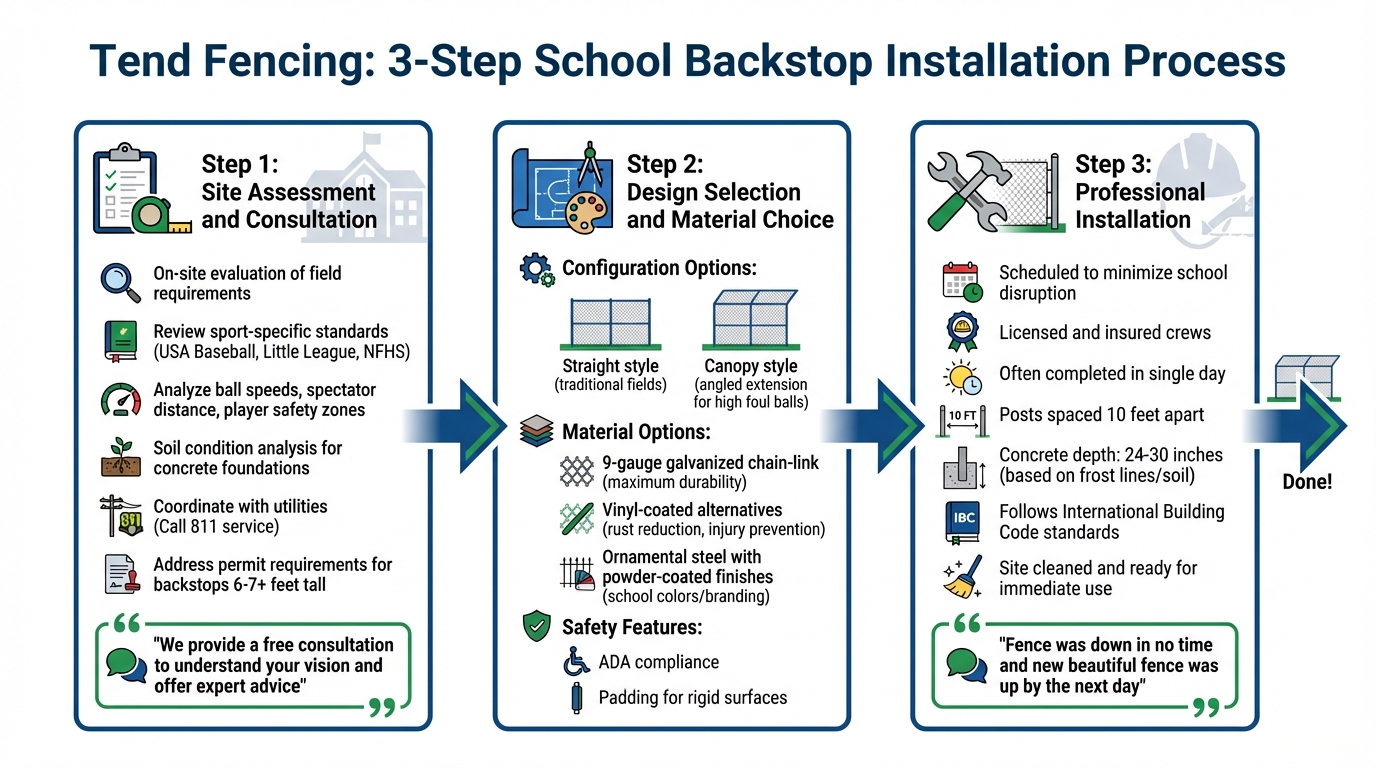
3-Step School Backstop Installation Process
Installing a backstop for your school’s sports field doesn’t have to be a complicated or disruptive process. Tend Fencing has developed a simple three-step approach that prioritizes safety, efficiency, and minimal interruption to school activities.
Step 1: Site Assessment and Consultation
The process kicks off with an in-depth on-site evaluation. Tend Fencing’s team reviews the specific requirements for your sport, referencing standards like those from USA Baseball, Little League, or NFHS. This assessment lays out the dimensions and layout needed for your field.
Key factors like ball speeds, the distance between spectators and the field, and player safety zones are carefully considered to determine the right backstop height and material strength. Soil conditions are also analyzed to ensure proper concrete foundations for the posts. Before any digging starts, the team coordinates with local utilities using the "Call 811" service to mark underground lines, avoiding any service disruptions.
As Tend Fencing emphasizes:
We provide a free consultation to understand your vision and offer expert advice.
During this consultation, they also address permit requirements for backstops taller than 6–7 feet, ensuring all regulations are met.
Step 2: Design Selection and Material Choice
Once the site assessment is complete, the focus shifts to customizing the design. Schools collaborate with Tend Fencing to choose between two main configurations: the straight style, ideal for traditional fields, or the canopy style, which features an angled extension to catch high foul balls near seating or concession areas.
Material selection is equally important. Options include 9-gauge galvanized chain-link for maximum durability or vinyl-coated alternatives to reduce rust and the risk of injuries. For schools looking to add a touch of flair, ornamental steel designs with powder-coated finishes can be customized to match school colors and branding.
To enhance safety, the team ensures compliance with ADA standards and can add padding to rigid surfaces where players might come into contact. This collaborative phase helps schools strike the right balance between budget and performance.
Step 3: Professional Installation
With the design finalized, installation is scheduled at times that work best for the school, ensuring classes and sports activities are not disrupted. Licensed and insured crews handle the work efficiently, often completing installations in a single day.
The installation adheres to International Building Code standards, ensuring proper foundation depth and structural integrity. Posts are typically spaced 10 feet apart and set in concrete at depths of 24 to 30 inches, depending on local frost lines and soil conditions. The team ensures all hardware is securely fastened, eliminating any sharp or protruding elements that could pose safety risks.
Customer Toni Knox shared her thoughts on the process:
Tend came out and fence was down in no time and new beautiful fence was up by the next day. So happy with new fence and whole experience.
Once the installation is complete, the site is cleaned and ready for immediate use, allowing your school to get back to normal activities without delay. Tend Fencing’s attention to detail ensures a safe, durable, and tailored backstop solution for your school.
Conclusion
Schools face ongoing challenges with backstop safety, durability, and appearance. Traditional backstops often fall short in high-traffic environments, leading to frequent repairs, safety concerns, and a less-than-professional look. Tend Fencing addresses these issues with custom backstops designed using advanced materials, expert installation, and solutions tailored to each school’s specific needs.
By incorporating high-performance materials like 9-gauge galvanized chain-link and advanced netting systems, Tend Fencing’s backstops are built to withstand years of high-impact use. These materials not only reduce the need for constant repairs but also cut maintenance costs over time. Additionally, proper installation significantly lowers the risk of injuries to spectators, creating a safer environment for everyone involved.
Beyond functionality, Tend Fencing prioritizes design. With over 15 years of experience and a flawless 5.0-star rating, their custom backstops blend performance with aesthetics. Schools can choose features like school colors, adjustable heights, and layouts that improve visibility while maintaining structural strength.
As Tend Fencing proudly states:
We use only top-quality materials and craftsmanship to ensure your fence stands strong and beautiful for years.
Their commitment goes further with a sustainability initiative – planting a tree for every fence built. This eco-conscious approach aligns with modern educational values, offering schools a partner that combines safety, quality, and environmental responsibility.
With free consultations, fully licensed and insured crews, and minimal disruption to school operations, Tend Fencing delivers a backstop solution that safeguards students and staff, reduces long-term costs, and enhances the overall professional appearance of school facilities.
FAQs
What backstop height does our field need?
To ensure safety and effective containment, a backstop for your field should be at least 20 feet high. However, many fields follow a more common standard height of 30 feet, offering better protection and coverage.
Are permits required for a new backstop?
Yes, you’ll usually need permits to install a new backstop. Since backstops are considered life-safety infrastructure, they fall under federal, state, and local regulations. These rules often require permits and inspections. Make sure to review your local guidelines before beginning the installation.
How often should a school backstop be inspected?
School backstops need routine inspections to maintain safety and meet compliance standards. While the exact frequency can vary based on how often they’re used and the conditions they face, conducting inspections at least once a year is typically advised. These regular assessments are crucial for spotting any wear or damage that could endanger students or staff.