

Chainlink fences are a durable, low-maintenance, and cost-effective option for securing commercial spaces. With a lifespan of 20–30 years, these galvanized steel fences resist rust, rot, and harsh weather. Their open-weave design offers visibility for monitoring, while customization options like barbed wire or privacy slats enhance security. Here are the top 7 uses for chainlink fences in commercial settings:
- Business and Warehouses: Secure perimeters with strong, customizable fences that deter intrusions and withstand high traffic.
- Sports Facilities: Contain balls, ensure player safety, and provide clear visibility for spectators.
- Schools and Playgrounds: Protect children with durable barriers that allow staff to monitor access points.
- Construction Sites: Safeguard equipment and hazardous zones with temporary or permanent fencing.
- Storage Yards: Prevent theft and ensure visibility for security cameras.
- Parking Lots: Control access, reduce liability risks, and enhance surveillance.
- Utility Sites: Protect critical infrastructure with anti-climb, anti-cut fences.
Chainlink fences are affordable, easy to install with professional services, and ideal for large-scale applications, making them a practical choice for various industries.
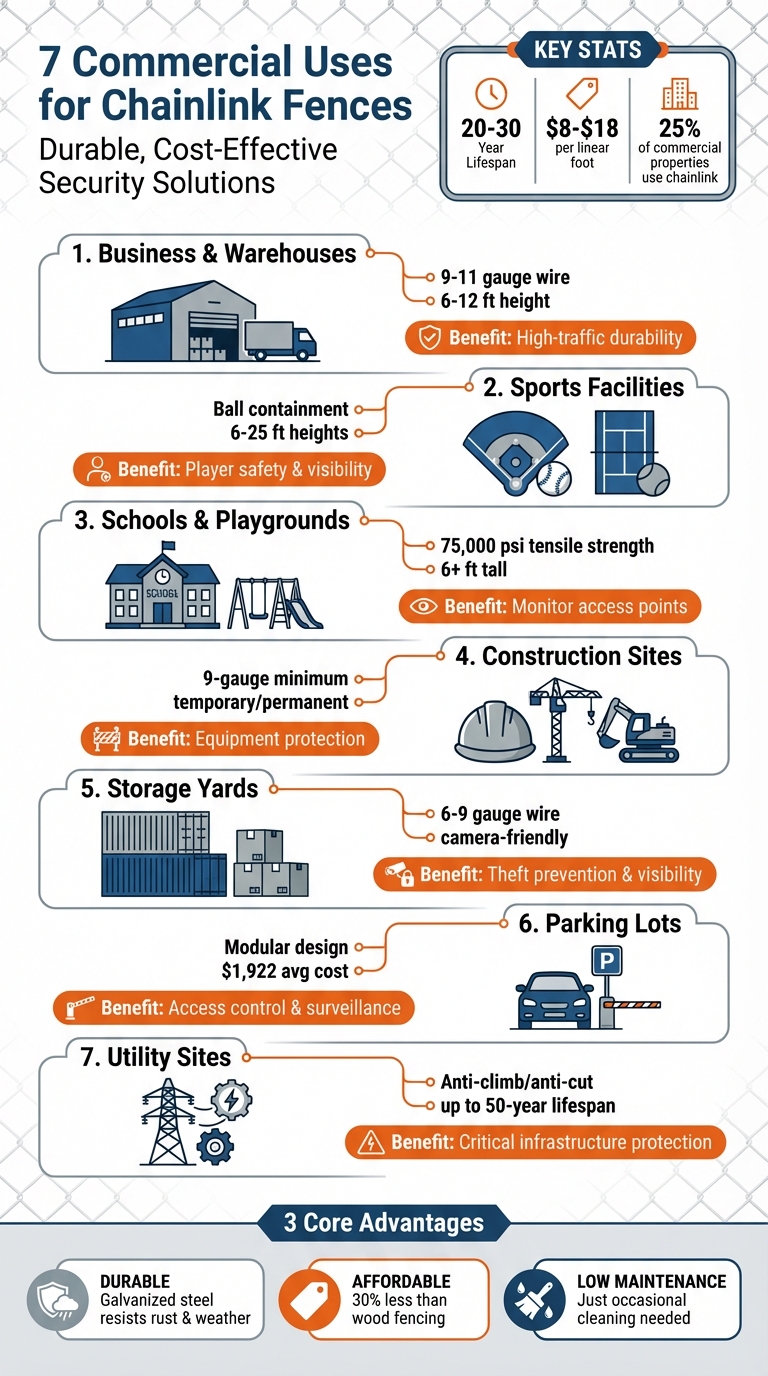
7 Commercial Uses for Chainlink Fences with Key Benefits
How To Install a Chain Link Fence (Commercial Parking Lot – Part 1 of 2)
sbb-itb-d1d0a96
1. Business and Warehouse Perimeters
Securing business and warehouse perimeters is one of the most common uses for chainlink fencing in commercial settings.
Security and Durability for High-Traffic Areas
Businesses and warehouses require fencing that can withstand constant activity while ensuring unauthorized access is prevented. To meet these needs, commercial-grade chainlink fences are built using thicker 9 or 11 gauge wire, making them harder to breach. It’s no surprise that nearly 25% of commercial properties rely on chainlink fencing – it offers strong security with little maintenance required.
The open-weave design provides clear visibility on both sides, helping deter intruders. Additional security features like barbed wire, razor tape, anti-climb spikes, tension wires, and concrete-anchored posts can further enhance protection.
"A well-placed barrier serves as both a physical and psychological deterrent, discouraging unauthorized access before an attempt even happens." – R&M Fence
Cost-Effectiveness for Large-Scale Applications
At a cost of $8 to $18 per linear foot, chainlink fencing is an affordable option for large-scale projects. Its lower material costs and reduced installation time make it a practical solution for businesses that need to secure expansive areas.
"The lower initial cost combined with minimal maintenance requirements makes chain link fencing an economical long-term solution for businesses looking to secure their premises without compromising on quality." – Texas Fence
Another advantage is its modular design. Damaged sections can be repaired or replaced quickly and cost-effectively without taking down the entire fence. Standard commercial fences typically range from 6 to 12 feet in height, with customization options available for added security.
This combination of affordability, ease of repair, and durability makes chainlink fencing a go-to choice for high-demand commercial environments.
Low Maintenance and Long-Lasting Materials
Chainlink fences are built to last, with galvanized steel coatings that protect against rust, corrosion, and harsh weather conditions. Unlike wood fencing, which requires frequent staining or sealing, chainlink fences only need occasional cleaning with a hose or mild soap. High-quality commercial chainlink fences can last 20 to 30 years with minimal maintenance.
Standard zinc coatings provide 20%–33% more protection against rust compared to welded wire panels. For industrial applications, specialized 2 oz. zinc coatings deliver up to 220% greater protection. Vinyl coatings in colors like black, green, or brown are also available, allowing businesses to match their fences to their branding.
For businesses in Plano, TX, and nearby areas, Tend Fencing offers professional chainlink fence installation and free project quotes designed to enhance security, durability, and performance.
2. Sports Facilities
Chainlink fencing is a trusted option for sports facilities like tennis courts and baseball fields. It provides essential features such as ball containment, player safety, and clear visibility. This makes it a reliable solution for meeting the specific needs of sports environments.
Security and Durability for High-Traffic Areas
Sports facilities often deal with wear and tear from ball impacts and player collisions. Chainlink fencing is designed to handle these challenges, maintaining its strength and shape under pressure. Made from galvanized steel, it resists rust and corrosion, even in tough outdoor conditions, and can last over 20 years with regular upkeep.
The open mesh design not only allows security teams to monitor activities but also ensures fans enjoy an unobstructed view of the game. For added protection, facilities can opt for anti-climb mesh patterns and angled top rails. Safety is further enhanced with knuckled edges instead of sharp barbs to minimize injury risks.
"Chain link fence has been the standard for years for ball fields and continues to be so today; it is highly durable, functional, and cost effective solution for most applications." – The American Fence Company
This combination of durability and functionality makes chainlink fencing a smart choice for busy sports venues.
Cost-Effectiveness for Large-Scale Applications
For sports complexes with multiple fields or courts, chainlink fencing offers a cost-efficient solution. Standard galvanized chainlink is far more affordable than materials like ornamental iron or solid barriers. Its straightforward installation process also helps keep labor costs down. Common configurations include 6-foot-high outfield fences and baseball backstops that can reach up to 25 feet for spectator safety. A 9 to 11 gauge wire is typically recommended, and smaller mesh sizes are ideal for tennis and pickleball courts to prevent balls from slipping through.
Its affordability, combined with minimal upkeep, ensures long-term savings.
Low Maintenance and Long-Lasting Materials
Chainlink fences require only basic maintenance, such as routine inspections and occasional cleaning. Options like vinyl or polymer coatings in colors like black, green, or brown offer extra protection against moisture, UV rays, and general wear. For facilities exposed to sprinkler systems or humid conditions, vinyl-coated chainlink is especially beneficial, as it guards against water damage. This coating also resists scratches and weather-related issues, further extending the fence’s lifespan.
"A vinyl coating acts as a protective layer against corrosion, rust, and UV rays, thereby extending the fence’s longevity." – Sharon Fence
For sports facilities looking for durable and budget-friendly fencing options, Tend Fencing (https://tendfencing.com) provides expert installation and custom designs to meet the demanding requirements of these environments.
3. Schools and Playgrounds
Chainlink fencing is a practical solution for schools, offering safety and visibility. Its open diamond-mesh design allows staff to monitor access points and eliminates potential hiding spots, helping administrators stay alert to possible threats. This visibility plays a key role in emergency situations, streamlining lockdown procedures and maintaining order by controlling entry and exit points. Such features make chainlink fencing well-suited to the demanding needs of busy school environments.
Security and Durability for High-Traffic Areas
School fences must handle heavy use while deterring unauthorized access. Chainlink fencing stands out with a minimum wire tensile strength of 75,000 psi – more than double the strength of standard welded wire panels. For optimal security, experts suggest fences at least 6 feet tall, with wire gauges between 9 and 11 to balance durability and cost.
"Safety is a top priority in any educational institution. Chain link fences create a physical barrier that helps prevent unauthorized access to the school premises." – Reliable Fence Co Inc
To enhance security, standard mesh sizes of 2 or 2.25 inches are ideal for most areas, while high-security zones benefit from a tighter 1-inch mesh to reduce climbing risks. For playgrounds, knuckled selvage edges minimize injury risks, and twisted selvage edges make climbing more difficult.
Cost-Effectiveness for Large-Scale Applications
Chainlink fencing is an economical choice for schools, especially for large perimeters. On average, installing a chainlink fence costs $1,922 compared to $2,729 for wood fencing. Made from galvanized steel, these fences can last up to 50 years without major repairs, and advanced coatings can further extend their lifespan. Additionally, their quicker installation process reduces labor costs, making them ideal for large-scale projects.
Low Maintenance and Long-Lasting Materials
Chainlink fences require minimal upkeep, making them a practical option for educational facilities. Routine inspections for loose parts or rust and occasional lubrication of hinges ensure they perform reliably, even during emergencies. Vinyl coatings in custom colors can match school branding, and privacy slats can reduce distractions from outside. If the zinc coating becomes damaged, applying rust-inhibiting paint can prevent further wear. For professional installations tailored to schools, Tend Fencing (https://tendfencing.com) offers expert service and durable solutions.
4. Construction Sites
Chainlink fencing is a practical choice for securing construction sites. It helps protect valuable equipment from theft, manages vehicle and worker traffic, and keeps hazardous zones – like areas with electrical wires or chemicals – safely enclosed.
Security and Durability for High-Traffic Areas
Construction sites come with unique security concerns, and chainlink fencing is built to handle them. With a tensile strength of 75,000 psi – more than twice that of standard fencing panels – it stands up to cuts and impacts effectively. Experts recommend using 9-gauge or heavier wire since lighter gauges can be breached in just 4–12 seconds. Additionally, the galvanized steel coating provides 20% to 33% better resistance to rust compared to welded wire alternatives, making it reliable even in harsh weather conditions like rain, snow, or ice.
"Chain link fence is manufactured from galvanized steel. This material can take a beating." – Atlantic Fence Supply
For added protection, privacy screens can be installed to hide equipment from view and discourage theft. To further improve security, extend the fence below ground in soft soil areas and use hardened covers on gate latches to prevent tampering. These measures not only enhance security but also help reduce costs by minimizing theft and damage.
Cost-Effectiveness for Large-Scale Applications
When it comes to large construction projects, chainlink fencing offers significant savings. The average installation cost is around $1,922 – roughly 30% less than wood fencing, which averages $2,729. Its simple installation process also saves on labor costs and helps avoid delays. If heavy equipment damages the fence, repairs are quick and affordable, often eliminating the need to replace the entire perimeter.
Flexibility to Meet Diverse Commercial Needs
Chainlink fencing isn’t just for perimeter security; it’s versatile enough to handle the evolving needs of active construction sites. It can separate work areas by trade, reducing the risk of accidents and improving efficiency. Depending on the site’s requirements, the fence can be installed with T-posts for stability or temporary panels that are easy to reposition. Its open design also makes it ideal for mounting safety signs . For sites near residential neighborhoods, vinyl-coated options in colors like black, green, or brown provide a more visually appealing alternative while maintaining the same strength as standard galvanized versions.
For expert chainlink fencing solutions tailored to construction site needs, check out Tend Fencing in Plano, TX, and the surrounding areas.
5. Storage Yards
Storage yards require fencing that not only secures valuable inventory but also allows for constant monitoring. The open-mesh diamond design of chainlink fences is perfect for this, as it eliminates blind spots, ensuring that security cameras and personnel have a clear view of the entire area. This level of visibility is especially important when safeguarding high-value assets.
Security and Durability for High-Traffic Areas
Commercial-grade chainlink fences are built to withstand tough conditions. Constructed with heavy 6 or 9 gauge wire and a tensile strength of at least 75,000 psi, these fences resist cutting, bending, and impacts from heavy equipment. For even greater security, smaller mesh sizes – such as 1 3/4 inches or 1/2 inch – make it harder to climb or cut through the fence. Adding bottom tension wires keeps the mesh tight and prevents intruders from lifting the fence to crawl underneath.
"Chain link has an unbroken record of being the most cost-effective perimeter protection product capable of meeting ASTM/industry needs at every level of the perimeter (and interior) physical security."
Cost-Effectiveness for Large-Scale Applications
For large storage yards, chainlink fences are a budget-friendly choice. They cost less in materials and labor compared to wood, vinyl, or wrought iron. Plus, their straightforward design speeds up installation over wide areas, saving both time and money. With proper care, these fences can last over 20 years. Galvanized steel coatings extend their lifespan by 20% to 33%, while specialized 2 oz. zinc coatings offer up to 220% more rust protection in challenging environments. This combination of affordability and durability makes chainlink fences a practical option for storage yards.
Flexibility to Meet Diverse Commercial Needs
Since storage yards vary in their security demands, chainlink fences can be customized to suit specific requirements. Heights range from 3 feet to over 12 feet, with options for different wire thicknesses and mesh sizes. Add-ons like barbed wire, razor tape, or privacy slats can enhance security or block the view of valuable inventory. The sturdy framework can also support motion sensors and security cameras. For locations near residential or high-traffic areas, vinyl-coated options in colors like forest green, midnight black, or sierra brown offer a more polished look without sacrificing strength.
For tailored solutions, companies like Tend Fencing in Plano, TX, provide custom chainlink fence designs that balance security, durability, and visual appeal – all while keeping costs manageable.
6. Parking Lots
Parking lots often deal with issues like unauthorized access, vehicle damage, and liability risks. Commercial chainlink fencing provides a practical solution by offering clear visibility and acting as a strong deterrent against trespassers. Its open-mesh design allows for unobstructed surveillance, making it less appealing to criminals who prefer to avoid being seen. This setup not only enhances security but also simplifies maintenance and upgrades when needed.
Security and Durability for Busy Areas
With constant vehicle movement, parking lots are prone to accidental fence damage. The modular nature of chainlink fencing makes repairs straightforward – damaged sections can be replaced without the need to reinstall the entire fence. To improve security, thicker 6- or 9-gauge wires are recommended, as they resist cutting and bending. The grid pattern also provides a convenient way to mount security cameras, motion sensors, or "Authorized Parking Only" signs directly onto the fence.
"A parking lot must be secure; otherwise, car owners would park somewhere else. Enclosing the whole property with a chainwire fence will keep trespassers and crooks away." – Chainwire Fencing Specialist
Affordable Solution for Large Parking Areas
For large-scale applications, chainlink fencing stands out as a budget-friendly and durable option. On average, installing chainlink fencing costs about $1,922, significantly less than the $2,729 required for wood fencing. Its straightforward design speeds up installation, cutting down on labor costs and minimizing disruptions to daily operations. Beyond the initial investment, chainlink requires little upkeep – there’s no need for staining, painting, or intensive cleaning. Galvanized steel’s durability ensures it holds up over time, making it a cost-effective choice for enclosing large perimeters.
Weather-Resistant and Easy to Maintain
Parking lot fences must endure harsh weather conditions without frequent repairs. Galvanized steel, with its zinc coating, resists rust and corrosion caused by snow, rain, and ice. The open-weave design allows wind to pass through, reducing strain on the structure during storms. Maintenance is minimal – usually just a quick rinse to remove dirt or debris. For added protection and a more polished look, vinyl or PVC coatings can be applied. Routine inspections for loose bolts or sagging sections can help address small issues before they escalate into costly repairs.
7. Utility Sites
Utility sites, such as electrical substations, water treatment plants, and refineries, present unique security challenges. These facilities house costly equipment and potentially hazardous infrastructure, making them high-priority targets for protection against unauthorized access and even wildlife interference. Chainlink fencing has proven effective in these settings, offering a reliable solution that integrates well with surveillance systems, motion detectors, and other monitoring tools. Its transparency ensures clear visibility of the perimeter, which is essential for security. The detect-deter-delay strategy works particularly well here, as it allows for immediate detection of intruders while specialized mesh configurations make breaching the fence significantly more time-consuming.
Security and Durability for High-Traffic Areas
Utility sites demand robust barriers that are both anti-climb and anti-cut. These are typically constructed using 1 3/4" to 2" 6-gauge fabrics with a minimum tensile strength of 75,000 psi – more than double the strength of standard welded wire panels. These features help to delay intrusions and combat copper theft, further reinforced by bottom rails or tension wires. To prevent vandalism and unauthorized tampering, tamper-resistant hardware like high-security fasteners and heavy-duty gate hinges made from stainless steel or galvanized metal is often employed .
Cost-Effectiveness for Large-Scale Applications
Utility sites frequently span large areas, requiring extensive fencing. Chainlink fencing is particularly well-suited for such large-scale installations due to its simple design, which allows for rapid deployment – a critical factor for securing facilities like substations or treatment plants where delays could be costly. Facilities can customize their security needs by choosing specific wire gauges and fence heights, with options extending up to 12 feet or more, all while avoiding the steep cost increases associated with alternative materials. Galvanized steel fencing, known for its longevity, can last up to 50 years with minimal repairs, providing an excellent return on investment over its lifespan .
Low Maintenance and Long-Lasting Materials
Utility environments often subject fencing to harsh conditions, from chemical exposure to extreme weather. Durability is key, and galvanized steel, with its zinc coating, offers strong rust resistance. A 2 oz. coating can extend protection against red rust by 220%. The open-weave design also allows wind to pass through, reducing the strain on the structure during storms. Unlike wood or wrought iron, chainlink fencing doesn’t require painting, staining, or sealing. Maintenance is minimal, typically involving just occasional cleaning with mild soap and water to remove corrosive buildup. If damage does occur, repairs are straightforward and cost-effective, as individual mesh sections can be replaced without dismantling the entire structure .
Conclusion
Commercial chainlink fences stand out for their durability, affordability, and ability to provide reliable security. Made from galvanized steel, they boast a long lifespan and require minimal maintenance – usually just some occasional cleaning – making them a practical choice for businesses looking for long-term value.
The see-through design ensures there are no blind spots for security personnel or cameras, while the modular construction allows for quick installation and easy repairs when needed. Businesses can also tailor these fences to their needs, with options for various heights (typically 3 to 12 feet), wire gauges, and added security features like barbed wire or privacy slats. These customizations and low-maintenance features make chainlink fencing one of the most cost-effective solutions for commercial properties.
It’s no surprise that nearly 25% of commercial properties use chainlink fences, thanks to their dependable security and minimal upkeep. These qualities make them a go-to choice for a wide range of applications. For businesses in Plano, TX, and nearby areas, Tend Fencing offers expert installation services and custom solutions to boost security and define property boundaries. Their skilled team uses high-quality materials and delivers exceptional craftsmanship, ensuring customer satisfaction every step of the way.
FAQs
What height and wire gauge should a commercial chainlink fence be?
Commercial chain link fences are generally available in heights ranging from 3 to 12 feet, with popular choices being 6, 8, 10, and 12 feet. The wire thickness, or gauge, typically comes in 6, 9, or 11, depending on the desired level of security. Select the height and gauge that align with your property’s requirements.
Which add-ons make chainlink fencing more secure?
To make chain-link fencing more secure, you can incorporate features like anti-climb and anti-cut enhancements. This might include using reinforced fabric or applying protective coatings to the fence. For an extra layer of security, consider adding intrusion detection systems or pairing the fence with surveillance equipment. These measures can help discourage unauthorized access and strengthen the overall perimeter defense.
How do I choose between galvanized and vinyl-coated chainlink?
When deciding between galvanized and vinyl-coated chain-link fences, it’s all about what matters most to you: durability, appearance, or budget. Vinyl-coated options offer better rust resistance and come in various colors, giving them a more polished and versatile look. Meanwhile, galvanized fences are usually more budget-friendly and feature a traditional metallic finish. Think about what aligns with your priorities to make the right choice for your property.