
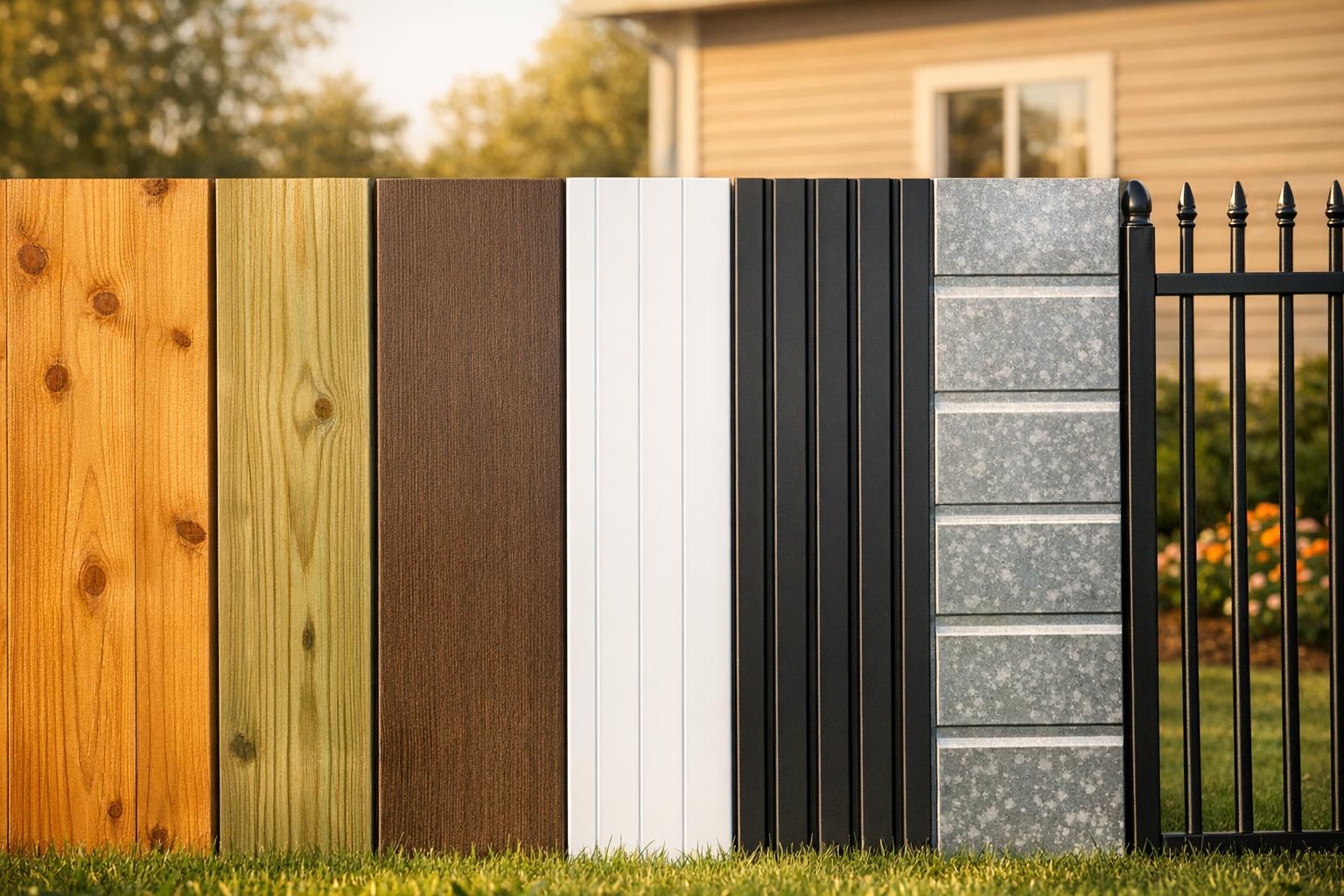
When choosing a fence material, durability, maintenance, and cost are the most important factors. Here’s a quick breakdown of the top materials:
- Wrought Iron: Extremely strong, lasts 50+ years, but requires regular rust prevention. Costs $50–$80 per linear foot installed.
- Steel: Long-lasting (20–50 years) with moderate maintenance. Prices range from $30–$60 per linear foot.
- Aluminum: Lightweight, rust-resistant, and low maintenance. Lifespan is 30–50 years, costing $20–$75 per linear foot.
- Vinyl (PVC): Low maintenance and weather-resistant, lasting 20–30 years. Costs $30–$60 per linear foot.
- Cedar Wood: Natural resistance to pests and rot, but requires staining. Lifespan is 20–30 years, priced at $15–$35 per linear foot.
- Chain Link: Affordable and low maintenance, lasting 15–30 years. Costs $8–$25 per linear foot.
- Redwood: Durable and visually appealing, lasting 20–30 years with proper care. Costs $18–$35 per linear foot.
Quick Comparison
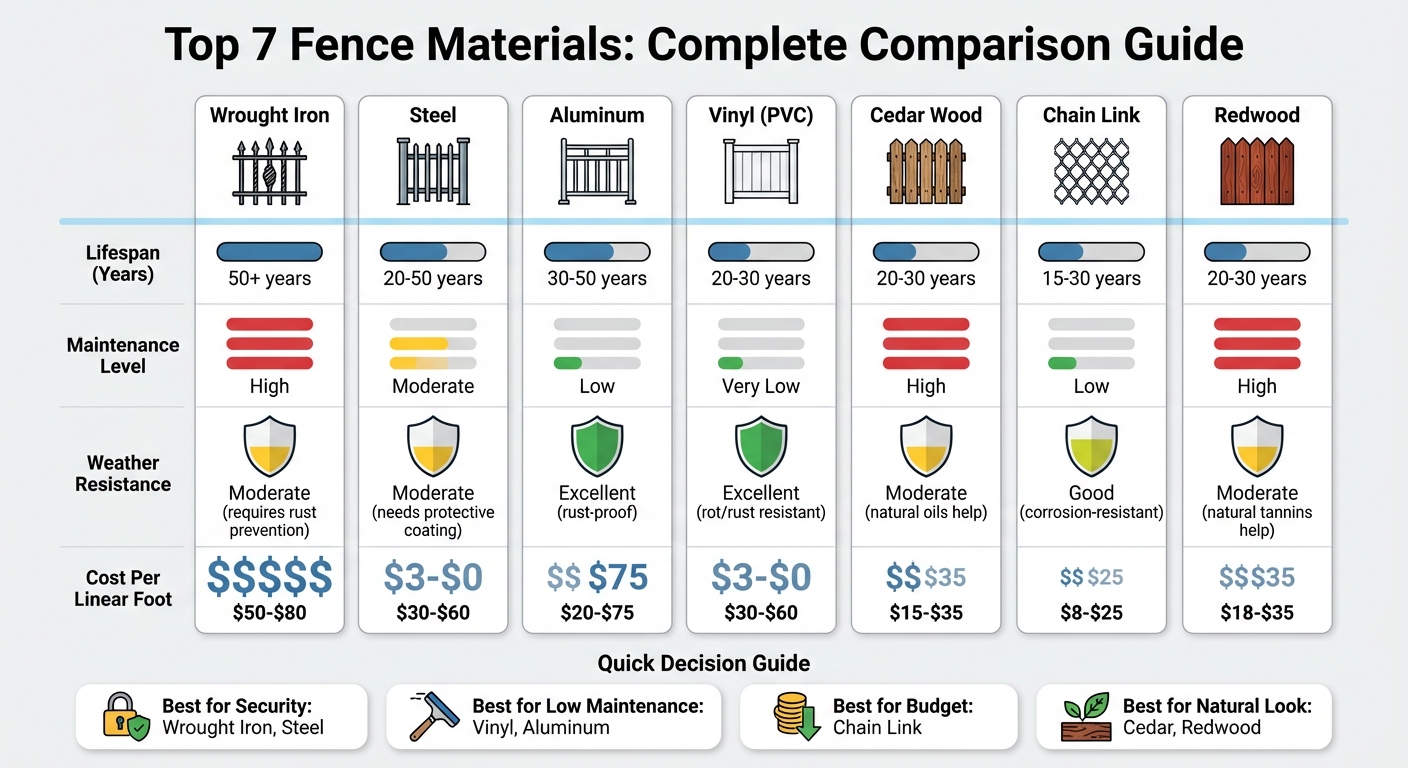
| Material | Lifespan | Maintenance | Cost (per linear ft) |
|---|---|---|---|
| Wrought Iron | 50+ years | High | $50–$80 |
| Steel | 20–50 years | Moderate | $30–$60 |
| Aluminum | 30–50 years | Low | $20–$75 |
| Vinyl (PVC) | 20–30 years | Very Low | $30–$60 |
| Cedar Wood | 20–30 years | High | $15–$35 |
| Chain Link | 15–30 years | Low | $8–$25 |
| Redwood | 20–30 years | Moderate | $18–$35 |
Each material has its strengths and weaknesses. For low-maintenance options, consider vinyl or aluminum. For a classic look, cedar or redwood is ideal. Wrought iron and steel provide unmatched security, while chain link is budget-friendly. Choose based on your needs and climate.
Fence Materials Comparison: Durability, Maintenance, and Cost Guide
Wood, Vinyl, or Metal? Choosing the Right Fence
sbb-itb-d1d0a96
1. Wrought Iron
Wrought iron is known for its incredible strength, making it one of the most durable fencing options you can choose. This material, made from pure iron with very little carbon, is dense and highly resistant to breaches. As Barrier Bob from BarrierBoss explains:
"Wrought iron represents traditional craftsmanship and sheer strength… nearly impossible to cut through and stands firm against physical impact".
Durability
With proper care, a wrought iron fence can last an impressive 50 to 100+ years. Unlike wood, it won’t warp or crack, and its high resistance to impact makes it a reliable choice for securing your property.
Maintenance Requirements
To keep wrought iron in top shape, regular maintenance is essential. Cleaning it at least twice a year with soapy water and a soft cloth helps prevent dirt from trapping moisture. Rust prevention and repainting are also key, with an annual maintenance cost of $5 to $10 per linear foot. If rust spots show up, they should be scrubbed off with a wire brush, treated with a rust converter, and repainted right away to stop further corrosion.
Weather Resistance
Although wrought iron can endure tough weather conditions, it isn’t naturally rust-resistant. Exposure to rain, snow, or humidity can lead to corrosion if its protective coating is damaged. To combat this, applying a rust-resistant coating or paint during installation is crucial. Regularly inspecting joints and connections for wear can also help catch issues early. This balance of durability and maintenance needs plays a role in the overall cost.
Cost Range
The material itself costs $30–$50 per linear foot, with installation adding another $20–$30 per linear foot due to the weight of the material and the need for specialized welding tools. Altogether, the total cost typically falls between $50 and $80 per linear foot installed. While the upfront expense is higher, the fence’s long lifespan makes it a worthwhile investment. For homeowners in the Plano, TX area, professionals like Tend Fencing (https://tendfencing.com) can ensure proper installation, which is critical for maximizing the fence’s durability.
2. Steel
Steel fencing is known for its strength and ability to withstand harsh weather and physical impact. Unlike wood, steel doesn’t rot, warp, or attract pests, making it a dependable long-term option for homeowners. Modern steel fences often come with protective coatings, like galvanized zinc or powder coatings, which help guard against rust and corrosion.
Durability
High-quality steel fencing systems can last over 50 years when installed correctly, while standard galvanized options typically last between 25 and 35 years. Jesse Sumrak describes these systems as being designed to stand the test of time. Steel fences also handle extreme temperatures with ease, further enhancing their long-term performance. However, regular maintenance plays a key role in ensuring they remain in top condition.
Maintenance Requirements
Steel fences are relatively low-maintenance but still require some attention to maximize their lifespan. Inspect connection points annually for any water buildup. If you notice scratches, touch them up promptly to maintain the protective coating and prevent rust. Gate hinges and latches should also be lubricated annually to ensure smooth operation.
Weather Resistance
The protective coatings on steel fences are crucial for their durability. Hot-dip galvanization, which meets ASTM A123 standards, can protect against corrosion for 50 years or more in moderate climates. However, in wetter environments, untreated steel may begin to show surface oxidation within 2 to 5 years. Proper installation, especially at ground contact points, is critical, as these areas are more vulnerable to corrosion.
Cost Range
Steel fencing comes in a variety of price ranges depending on the style and materials used:
- Chain link (steel wire): $8 to $18 per linear foot
- Galvanized steel panels: $15 to $30 per linear foot
- Decorative options like Colorbond (pre-painted steel): $25 to $45 per linear foot
- Ornamental steel: $30 to $60 per linear foot
Labor costs for installation can range from $15 to $80 per linear foot, depending on the complexity of the terrain. While steel fencing may have a higher upfront cost, its durability and minimal replacement needs make it a cost-effective choice over time. These qualities cement its reputation as one of the most durable fencing materials available.
3. Aluminum
Aluminum fencing stands out for being both strong and lightweight. One of its key benefits is that it doesn’t rust – thanks to a natural oxide layer that protects it from damage over time. This makes aluminum an ideal choice for coastal areas, where salty and sandy winds can wreak havoc on other materials. Plus, it resists cracking and warping through seasonal changes, making it reliable in various climates.
Durability
Aluminum fences can last anywhere from 30 to over 50 years, far surpassing the 10–20-year lifespan of wood fences. As noted by Betafence USA:
"Aluminum is the most durable of all common fencing materials".
Unlike wood, aluminum is completely resistant to rot, decay, and pests like termites. It also won’t splinter, making it a safer option for families with children or pets. Despite its lightweight nature, aluminum offers impressive impact resistance, adding to its long-term durability.
Maintenance Requirements
One of aluminum’s standout features is how little maintenance it needs. A simple wash with soap and water is usually enough to keep it looking great. Unlike wood, aluminum doesn’t require staining, sealing, or painting during its lifespan. For homes near the coast, choosing aluminum with an additional protective coating can provide extra durability against salty air. And if a section of the fence gets damaged, modular aluminum panels make it easy to replace individual parts without dismantling the entire structure.
Cost Range
Aluminum fencing typically costs between $20 and $75 per linear foot. While the upfront expense is higher than wood, which averages $15–$35 per linear foot, aluminum’s low maintenance needs make it a more economical choice in the long run. Labor costs for professional installation range from $15 to $40 per linear foot or $40 to $90 per hour. High-quality aluminum fencing can offer up to a 50% return on investment. For those looking to save, DIY installation is a practical option due to aluminum’s lightweight design and pre-assembled panels, which can reduce labor costs by up to 40%.
4. Vinyl (PVC)
Vinyl fencing, made from polyvinyl chloride (PVC), is a synthetic material known for its resistance to rot, rust, and insect damage. Modern versions include titanium dioxide (TiO₂), which helps guard against UV damage, yellowing, and brittleness over time. Its non-porous surface also prevents problems like warping and cracking that are common with wood. This combination of features makes vinyl fences highly durable and low-maintenance.
Durability
Vinyl fences are built to last, with a lifespan of 20 to 30 years. As Kyle Carney from ReVamp explains:
"Vinyl fences offer exceptional durability, typically lasting 20-30 years with minimal maintenance requirements."
One of vinyl’s standout features is its flexibility. It can bend slightly under wind pressure, reducing the risk of snapping or splintering. It’s also highly fire-resistant, requiring temperatures over 900°F to ignite. However, in extreme cold (below -20°F), vinyl can become brittle. Additionally, heavy impacts – like those from lawn equipment – can cause cracks, especially as the material ages under constant UV exposure.
Maintenance Requirements
Vinyl fencing is about as low-maintenance as it gets. A simple wash with soap and water once a year keeps it looking clean. Scuff marks? Those can be wiped away easily with a Magic Eraser. Unlike wood, which needs regular staining or sealing, vinyl retains its appearance without the need for painting or refinishing. For a 200-foot fence, annual maintenance costs range from $50 to $100, significantly lower than the $300 to $800 required for pressure-treated wood.
Cost Range
The cost of vinyl fencing falls between $30 and $60 per linear foot installed. While the upfront expense is about 50% to 70% higher than wood, vinyl often proves to be more budget-friendly in the long run. Over 20 years, a 200-foot vinyl fence costs between $7,000 and $14,000, compared to $10,000 to $23,000 for pressure-treated wood due to ongoing staining and repair costs.
5. Cedar Wood
Cedar, especially Western Red Cedar, stands out as the top choice for premium fencing in the U.S.. Thanks to its natural oils, known as thujaplicins, cedar provides built-in protection against moisture, decay, rot, and insect damage – no need for chemical treatments.
Durability
When properly cared for, a cedar fence can last anywhere from 15 to 25 years, and with meticulous maintenance, it can stretch to 25–35 years or more. Cedar is also known for its excellent stability, meaning it resists warping, cupping, twisting, and shrinking, which are common issues with other woods. However, fence posts are often the first to fail. Opting for steel posts paired with cedar panels can significantly extend the fence’s lifespan.
Maintenance Requirements
Cedar is considered a low-to-medium maintenance material. While its natural oils offer some protection, applying a sealer or stain every few years helps maintain its color and structural integrity. Using hot-dipped galvanized or stainless steel hardware is also recommended to prevent corrosion and keep your fence looking great.
Cost Range
The cost of installing a cedar fence typically falls between $30 and $55 per linear foot for a standard 6-foot privacy fence. For instance, a 200-foot fence might cost anywhere from $3,700 to $9,300, with the average being around $6,500. Although cedar is about 20–30% pricier upfront compared to pressure-treated pine (which costs approximately $20–$32 per linear foot), its lower maintenance needs and resistance to warping make it a smart long-term choice. Individual cedar boards are priced at $8.50–$9.25 per linear foot, while privacy fence styles range from $10 to $16.50 per linear foot.
If you’re in Plano, TX, companies like Tend Fencing specialize in cedar fence installations, offering a combination of durability, skilled craftsmanship, and aesthetic appeal. Up next, we’ll explore chain link fencing – a budget-friendly option for various uses.
6. Chain Link
Switching gears from high-end materials like cedar, chain link fencing stands out as a budget-friendly option for covering large areas. It’s a practical choice for securing property boundaries, keeping pets contained, or even protecting commercial spaces. Made from galvanized or vinyl-coated steel with a distinctive open-weave mesh, chain link fencing is built to handle wind pressure and resists issues like rot, warping, or termite damage.
Durability
In areas away from the coast, a galvanized chain link fence can last anywhere from 15 to over 30 years with very little maintenance, thanks to its strong construction and durability. For residential projects, 9-gauge fabric is standard, while heavier 6-gauge material is often used for commercial or high-security needs to boost strength. In coastal or humid regions, opting for vinyl-coated steel adds extra protection against rust, ensuring the fence lasts even longer.
Maintenance Requirements
Compared to wood or wrought iron, chain link fences are incredibly low-maintenance. There’s no need for sanding, staining, sealing, or painting to keep them in good shape. A simple soap-and-water wash now and then is usually enough. Regular checks for rust or bent sections can help spot and fix small issues before they become bigger problems. When treated with hot-dip galvanization following ASTM A123 standards, chain link fences can resist corrosion for up to 50 years in moderate climates. This ease of care makes them a top pick for those watching their budget.
Cost Range
Chain link fencing is one of the most affordable options for installation. As with any material, it’s important to balance the upfront cost with long-term maintenance. Professional installation typically costs between $10 and $25 per linear foot, translating to about $2,000–$5,000 for a 200-foot fence. If you’re tackling the project yourself, materials alone usually cost $6 to $12 per linear foot. On average, homeowners nationwide spend about $2,409 on installation, with most falling between $1,298 and $3,576. While chain link fencing doesn’t offer much privacy by itself, adding privacy slats made from redwood, vinyl, or aluminum can improve privacy for an extra $3 to $10 per linear foot.
For those in the Plano, TX area, Tend Fencing specializes in professional chain link installations, delivering affordable solutions with skilled craftsmanship.
7. Redwood
Redwood is another high-end wood option, offering natural advantages that make it stand out – especially for homeowners on the West Coast, where it’s most commonly sourced. Its rich reddish-brown color and natural tannins enhance both its appearance and its resistance to moisture, decay, rot, and insects.
Durability
Redwood fences are built to last, with a lifespan of 20 to 30 years – outperforming options like cedar, cypress, and pressure-treated pine. Its dense structure and natural fire resistance help it maintain its shape over time. Brionna Farney from Angi explains:
"Redwood has natural properties that make it last longer than cedar. You can expect a redwood fence to last 25 years or more, while a cedar fence will likely last around 15 years".
This makes redwood a solid investment for those seeking both beauty and longevity.
Maintenance Requirements
Redwood is relatively low-maintenance. It only needs resealing every three to five years to retain its protective qualities and vibrant color. Regular cleaning and inspections – about once a year – help prevent dirt buildup and catch any loose boards early. If left unstained, redwood will naturally age to a silvery-gray patina over time.
Weather Resistance
Redwood’s natural oils give it excellent resistance to weather. It can release moisture without warping, cupping, or splitting, making it a reliable choice in varying climates. Its natural fire resistance further adds to its durability. To maximize its lifespan, consider setting posts in concrete and using steel brackets for added stability.
Cost Range
Redwood’s upfront cost is higher, but its long lifespan and minimal maintenance can make it a worthwhile investment. Professionally installed redwood fences cost between $18 and $35 per linear foot, translating to $3,600–$7,000 for a 200-foot fence. Material costs alone range from $8 to $20 per linear foot, with labor adding another $10 to $15. While cedar is less expensive at $15–$25 per linear foot installed, redwood’s durability often offsets the higher initial expense. It’s most economical in states like California, Oregon, and the Pacific Northwest, but shipping costs can make it less practical in regions like Texas, the Midwest, or the East Coast.
Material Comparison Table
When choosing fencing materials, it’s essential to weigh upfront costs against long-term expenses. A material with a higher installation cost might save money over 20 years due to lower maintenance needs, while a cheaper option could lead to higher recurring costs within a decade.
Here’s a side-by-side comparison of seven common fencing materials, highlighting their durability, maintenance requirements, weather resilience, and typical installation costs:
| Material | Expected Lifespan | Maintenance Needs | Weather Resistance | Typical Cost (per linear ft) |
|---|---|---|---|---|
| Wrought Iron | 50+ years | High (regular painting/treatment) | Moderate (susceptible to rust) | $25–$60+ |
| Steel | 20–30+ years | Moderate (requires protective coating) | Moderate (risk of corrosion) | $30–$60 |
| Aluminum | 30–50 years | Very Low | Excellent (naturally rust-proof) | $20–$40 |
| Vinyl (PVC) | 20–30 years | Very Low | Excellent (resistant to rot and rust) | $20–$40 |
| Cedar Wood | 20–30 years | High (staining/sealing every 2–3 years) | Moderate (vulnerable to rot/pests) | $15–$35 |
| Chain Link | 15–30 years | Low | Good (corrosion-resistant) | $8–$20 |
| Redwood | 20–30 years | High (staining/sealing every 2–3 years) | Moderate (vulnerable to rot/pests) | $15–$35 |
This table highlights the trade-offs between durability, maintenance, and cost – key factors when selecting the right fence for your home.
Aluminum stands out as a low-maintenance option, lasting 30 to 50 years with minimal effort. Since it’s naturally rust-proof, it’s particularly ideal for coastal or humid areas. On the other hand, wrought iron offers unmatched longevity – 50 years or more – but requires regular rust prevention through painting or treatment.
For those seeking low-maintenance solutions, vinyl and chain link are excellent choices. Vinyl needs little more than occasional rinsing, while chain link requires periodic checks for loose fittings. However, wood options like cedar and redwood demand consistent care, such as staining or sealing every few years. Without proper upkeep, their lifespan can be significantly reduced.
Conclusion
When choosing a fence, it’s essential to weigh your budget, property requirements, and the local climate. If security is your top priority, wrought iron or steel stands out with its exceptional strength and durability of over 50 years. For privacy with minimal maintenance, vinyl fences are a great option since they don’t require staining or sealing. If you’re looking for an economical solution, chain link fences – costing around $8–$20 per linear foot – work well for large areas or containing pets.
Your local climate plays a big role in how well a fence material performs. For humid or coastal areas, aluminum and vinyl are excellent choices due to their natural resistance to rust and rot. On the other hand, wood fences will need regular staining to withstand weather conditions. Picking materials that align with your environment can help reduce long-term maintenance expenses.
Before making a final decision, make sure to check local building codes and HOA regulations. Also, think about how much time and effort you’re willing to dedicate to upkeep. While wood and wrought iron require consistent care, vinyl and aluminum need little to no maintenance.
For residents in Plano, Dallas, and nearby Texas areas, Tend Fencing offers professional installation services. Their team specializes in wood (cedar and redwood), ornamental iron, and chain link fences, bringing over 15 years of experience to every project. Plus, through their partnership with One Tree Planted, they plant a tree for every fence they build.
FAQs
Which fence material is best for my climate?
The best fence material often depends on the weather in your area. Wood can be a great choice for moderate climates, but it may require more upkeep in places with high humidity or frequent rain. On the other hand, vinyl and composite fences are known for their durability and minimal maintenance, making them ideal for areas with heavy rainfall, intense sunlight, or extreme temperature swings. It’s a good idea to consult experts, such as Tend Fencing, to find the material that fits both your local climate and your specific needs.
What’s the cheapest fence that still lasts a long time?
When it comes to affordability and longevity, chain-link fencing stands out as the best option. Installed, it costs about $8–$18 per foot, making it a durable and low-maintenance choice for homeowners on a budget.
Wood fences, on the other hand, come at a slightly higher price of $15–$35 per foot installed. While they may cost less than premium materials like vinyl or wrought iron, they do require more regular upkeep to stay in good shape.
If you’re looking for something that combines durability with minimal maintenance, vinyl fences are worth considering. However, they come with a higher price tag, ranging from $20–$40 per foot installed.
How do I estimate total fence cost for my yard?
To figure out your fence cost, start by measuring the total length of the area you want to enclose in feet. Next, decide on the material – options like wood, vinyl, chain link, or iron come with different price points, usually ranging from $8 to $50 per foot. Multiply the price per foot by the total length to get a basic estimate.
Keep in mind, there may be additional expenses, such as gates or permits, that could increase the total cost. For a more accurate estimate, it’s a good idea to reach out to a local fencing contractor, such as Tend Fencing.