
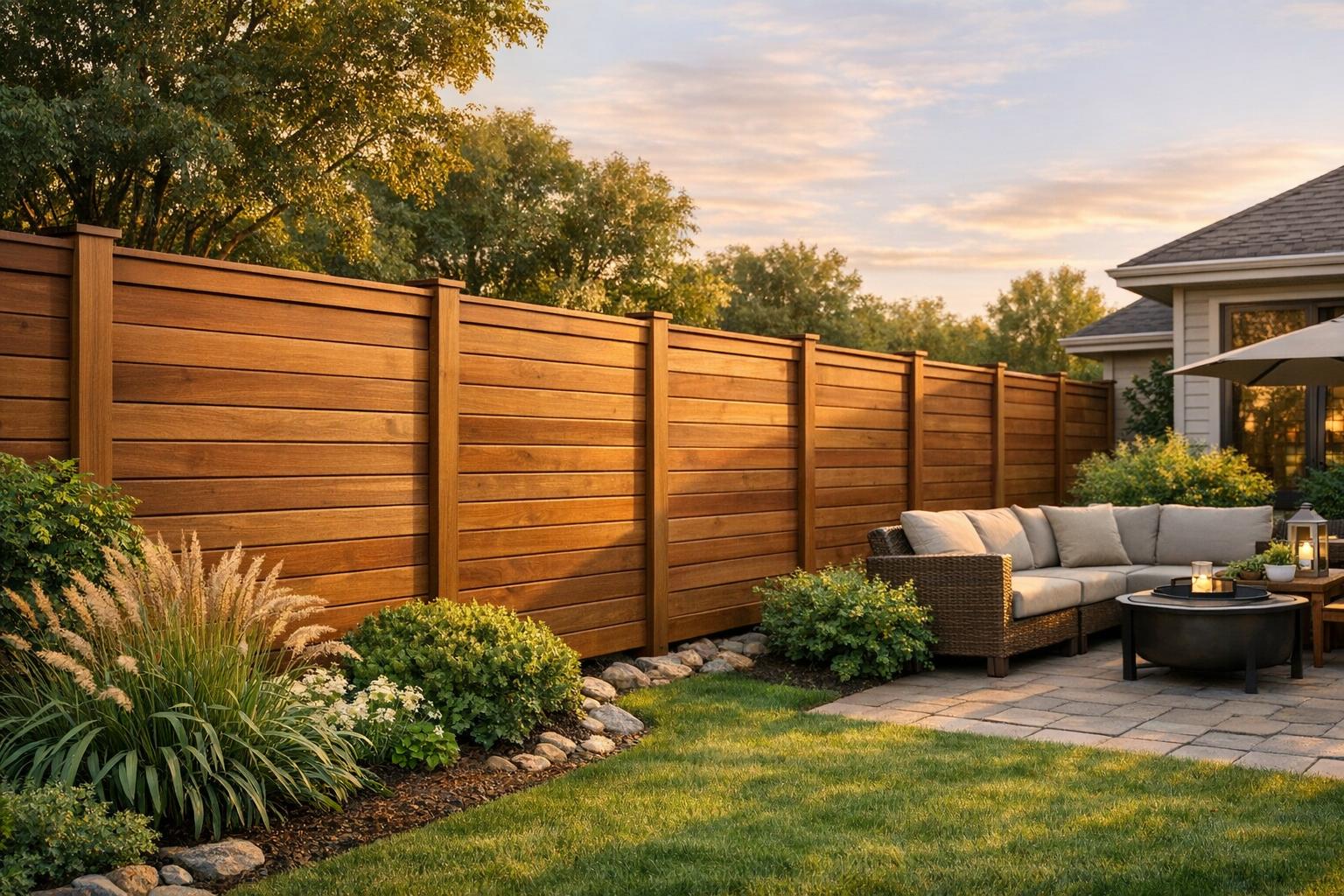
Want privacy, security, or style? Choosing the right fence matters. Here’s what you need to know to make the best decision:
- Privacy Fences: Typically 6-8 feet tall with solid, gap-free designs to block views and reduce noise.
- Materials: Options include wood, vinyl, composite, aluminum, and chain-link with privacy slats. Each has unique costs, lifespans, and maintenance needs.
- Costs: Professional installation averages $35 per linear foot, with total costs ranging from $1,500 to $8,000.
- Regulations: Check local zoning laws and HOA rules for height limits, materials, and setbacks.
- Styles: From board-on-board for full privacy to lattice-tops for light and airflow, design impacts both function and appearance.
Quick Tip: Match your fence to your privacy, security, and aesthetic goals while staying compliant with local rules. Investing in durable materials and proper maintenance can save money long-term.
Keep reading for a breakdown of materials, styles, and tips to ensure your fence meets your needs.
Evaluating Your Privacy Requirements
Set Your Privacy Objectives
Decide what you want your fence to achieve – whether it’s privacy, safety, noise reduction, or simply marking property boundaries.
The layout of your yard plays a big role in how effective your fence will be. For example, a 6-foot fence might not block views if nearby buildings are higher up. On the other hand, if your yard slopes down toward the street, even a 4-foot fence could provide enough privacy. To test this, try the "cardboard test." Hold up a piece of cardboard cut to the height of your planned fence along your property line to see if it effectively blocks sightlines.
Solid wood or vinyl panels completely block views, while designs like shadowbox or lattice-tops let in light and air while still offering good coverage. If your property borders open spaces or woods, you might opt for high-privacy materials near your neighbors and use a less expensive chain link fence where privacy isn’t a concern.
Finally, make sure your design choices comply with local regulations and HOA rules.
Review Local Regulations and HOA Requirements
Before finalizing your fence design, check your local zoning laws. Most cities allow 6-foot fences, but anything taller may require a special variance. Front yard fences often have stricter height limits – typically around 3 to 4 feet – to maintain visibility for sidewalks and intersections. Additionally, setback rules dictate how far your fence must be from property lines, roads, and sidewalks.
If you have a homeowner association (HOA), their rules may be even stricter than city codes. HOAs often specify what materials, colors, and fence designs are acceptable, and they may require the "finished" side of the fence to face outward. It’s essential to get their approval before moving forward. Keep in mind that the HOA review process can take anywhere from one to six weeks. Don’t forget to budget for permit fees and arrange for utility checks as needed.
Which Fence Type is Best for Your Home?
Comparing Fence Materials
Privacy Fence Materials Comparison: Cost, Lifespan & Maintenance
Material Comparison: Benefits and Drawbacks
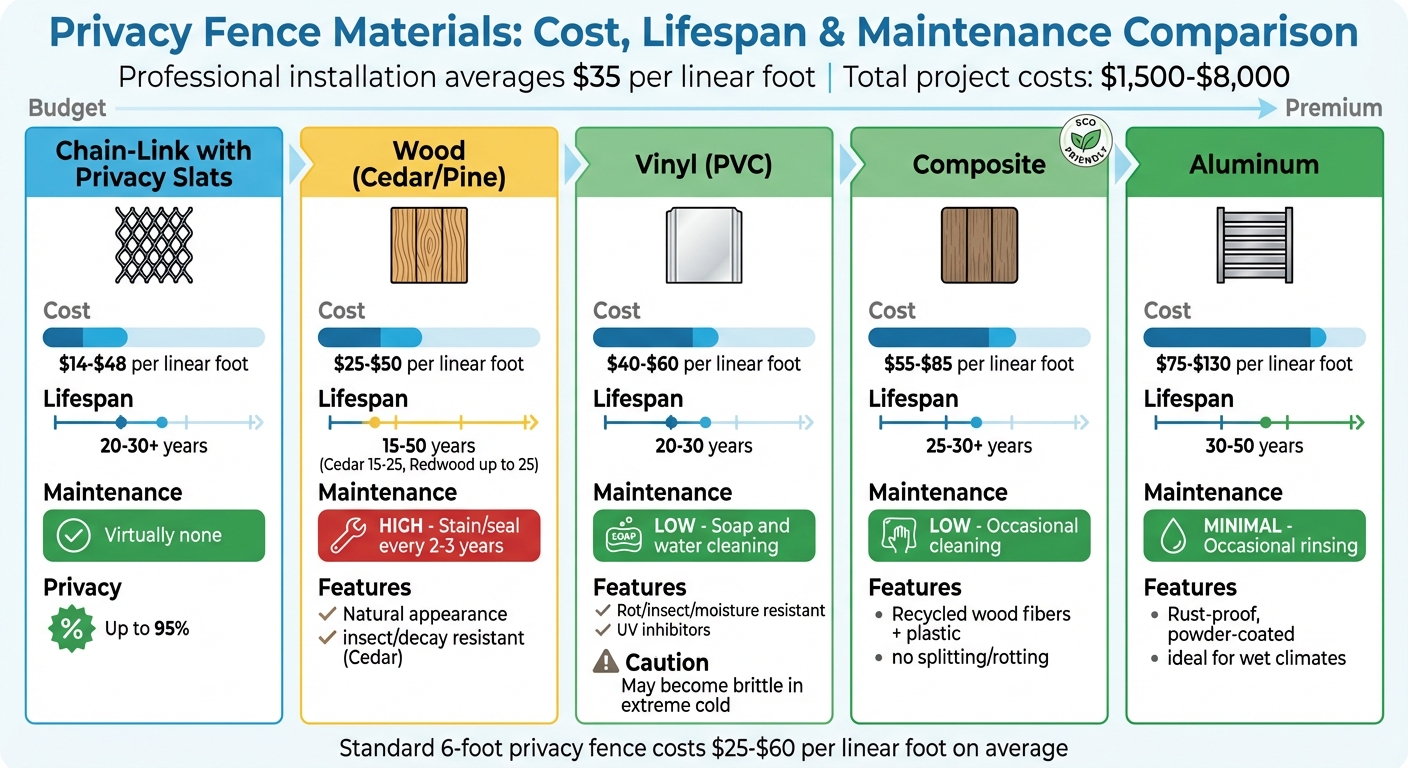
The material you choose for your fence significantly impacts its cost, maintenance needs, and lifespan. For instance, a standard 6-foot privacy fence typically costs between $25 and $60 per linear foot.
Wood is a favorite for its natural appearance and affordability, with costs ranging from $25 to $50 per linear foot. Cedar, known for its resistance to insects and decay, can last 15–20 years, while high-grade Redwood may last up to 25 years. However, wood does require regular upkeep – staining or sealing every 2–3 years – to prevent issues like rot and warping.
Vinyl (PVC) comes with a higher upfront cost of $40–$60 per linear foot but offers the advantage of resisting rot, insects, and moisture without needing staining. It typically lasts 20–30 years and only requires occasional cleaning with soap and water. However, vinyl may become brittle in extremely cold conditions and is prone to warping.
Composite fencing, made from a mix of recycled wood fibers and plastic, offers the look of wood without the risk of splitting or rotting. It costs about $55–$85 per linear foot and boasts a lifespan of 25–30+ years with minimal maintenance.
Aluminum is a premium option, costing $75–$130 per linear foot. It’s rust-proof and highly durable, lasting 30–50 years, making it a great choice for wet climates. However, aluminum fences typically require solid slats if complete privacy is a priority.
Chain-link with privacy slats is a budget-friendly option, providing up to 95% privacy for $14–$48 per linear foot.
| Material | Cost per Linear Foot | Lifespan | Maintenance Level |
|---|---|---|---|
| Chain-link with slats | $14–$48 | 20–30+ years | Virtually none |
| Wood | $25–$50 | 15–50 years | High (stain every 2–3 years) |
| Vinyl | $40–$60 | 20–30 years | Low (soap and water) |
| Composite | $55–$85 | 25–30+ years | Low (occasional cleaning) |
| Aluminum | $75–$130 | 30–50 years | Minimal (occasional rinsing) |
If sustainability is a priority for you, the next section highlights eco-conscious fencing options.
Eco-Friendly Material Choices
When choosing fencing materials, it’s worth considering their environmental impact alongside cost and performance. For those prioritizing sustainability, composite fencing stands out. Made from recycled wood fibers and plastic polymers, composite not only offers durability and low maintenance but also helps reduce landfill waste.
Wood, being naturally renewable and biodegradable, is another eco-conscious option. However, it often undergoes chemical treatments to extend its lifespan, which can lessen its environmental benefits. Cedar and Redwood are better choices in this category since their natural oils provide resistance to decay without relying on heavy chemical treatments.
For an added environmental benefit, consider working with companies that offset their carbon footprint. Tend Fencing, for example, plants a tree for every fence they install, contributing to habitat restoration while delivering quality fencing solutions in Plano, TX, and nearby areas.
Determining Fence Height and Style
Standard Fence Heights
Choosing the right fence height depends on your specific needs and the area of your property. For front yards, fences are usually 3–4 feet tall. This height helps define boundaries without obstructing views or diminishing curb appeal, making it perfect for decorative purposes while keeping the space open and welcoming.
In backyards, 6-foot fences are the most common choice. They provide a good balance of privacy and security, blocking sightlines from neighbors at ground level and keeping pets safely contained. However, if you live near multi-story homes or along a busy street, opting for a taller fence – around 7–8 feet – can offer better seclusion and even help reduce noise levels. In fact, a solid fence can lower noise by as much as 20 decibels.
When it comes to pets, a 4-foot fence works well for smaller animals and young children, but larger dog breeds may require fences that are 5–6 feet tall. Keep in mind that front yard fences often have stricter regulations, with height limits typically set at 3–4 feet to maintain visibility and safety in the neighborhood. Also, fences taller than 6 feet might need special permits and additional structural support.
| Fence Height | Primary Use | Privacy Level | Security Level |
|---|---|---|---|
| 3–4 Feet | Front yards, garden accents | Low | Low |
| 5–6 Feet | Standard backyard, pets | Moderate/High | Moderate |
| 7–8 Feet | Noise reduction, multi-story privacy | Maximum | High |
| 8+ Feet | Commercial, high-security | Maximum | Very High |
After determining the height, the next step is selecting a design style that aligns with your privacy and security needs while enhancing your property’s overall look.
Popular Design Styles
Once you’ve settled on the height, the fence’s design style plays a key role in its functionality and aesthetic appeal. For total privacy, board-on-board fences are a great option. Their vertical boards overlap, leaving no gaps. If you prefer some airflow while maintaining privacy, shadowbox fences are a smart choice. They alternate boards on both sides of the frame, creating a balance between seclusion and ventilation – especially useful in warm climates.
For those prioritizing security, stockade fences feature tightly spaced boards with pointed tops, making them tough to climb. If your home has a modern design, horizontal slats offer a sleek, contemporary look, with boards running parallel to the ground for a clean, minimalist appearance. For a softer, more decorative touch, lattice-top fences combine a solid lower section (usually 5–6 feet tall) with a lattice design on top. This style strikes a nice balance between privacy, light flow, and an elegant garden vibe.
"Privacy fences not only enhance your home’s aesthetic but also offer significant security advantages. Selecting the right privacy fence depends on balancing durability, maintenance, and style."
– Luke Beerman, Founder and CEO, Freedom Fence
The right design style will depend on what matters most to you – whether it’s privacy, airflow, or visual appeal. Each option brings its own set of benefits to suit your home and lifestyle.
sbb-itb-d1d0a96
Selecting Durable, Weather-Resistant Features
Materials That Resist Weather Damage
Plano’s climate can be tough on fences, with its mix of intense heat, high humidity, and occasional freezes. That’s why choosing the right material is key. One popular option in North Texas is Western Red Cedar. Thanks to its natural oils, it resists decay, insects, and moisture damage, lasting anywhere from 15 to 25 years when properly maintained.
Another long-lasting option is vinyl fencing, which can hold up for over 30 years. It’s designed with UV inhibitors to resist fading under the relentless Texas sun. If you want something that mimics the look of wood but offers better resistance to rot and moisture, composite fencing – a blend of wood fibers and plastic – is a great choice. For a sleek, modern look, powder-coated aluminum is an excellent pick. It’s rust-free and holds its color even in extreme weather.
For those working with a tighter budget, pressure-treated pine is an affordable choice at $12–$15 per linear foot, compared to cedar’s $20–$30. However, pine requires more care and usually lasts only 5 to 10 years.
Here’s a quick comparison of popular fencing materials:
| Material | Cost per Linear Foot | Lifespan (Years) | Weather Resistance |
|---|---|---|---|
| Pressure-Treated Pine | $12–$15 | 5–10 | Moderate |
| Cedar | $20–$30 | 15–25 | High (natural oils) |
| Vinyl | $20–$40 | 20–30+ | High (UV inhibitors) |
| Composite | $25–$55 | 25–30 | High (rot/moisture resistant) |
| Aluminum | $25–$50 | 30–40 | Excellent (rust-proof) |
Each of these materials is built to handle Plano’s challenging weather, and with the right care, they’ll last even longer. Speaking of care, let’s dive into maintenance tips.
Maintenance Guidelines for Extended Lifespan
Even the most durable fences need some TLC to stay in top shape. For wood fences, applying a UV-resistant, oil-based stain or a water-repellent sealant every 2 to 3 years (or every 1.5 to 2 years for fences in full sun) can add an extra 10 to 15 years to their lifespan.
"Maintaining a fence in Dallas means dealing with hot summers, humidity, occasional storms, and soil movement."
– Titan Fence
Here are some practical tips to keep your fence looking great:
- Keep the base clear: Trim vegetation near the fence to improve airflow and reduce moisture buildup.
- Check your sprinklers: Make sure sprinkler heads don’t spray directly on the fence, as this can wear down protective coatings.
- Mind the gap: Maintain at least a one-inch gap between the fence and the ground to prevent moisture absorption.
For structural stability, use galvanized steel posts with a minimum diameter of 2 3⁄8 inches. Set them in concrete footings – at least 24 inches deep for 6-foot fences and 36 inches for 8-foot ones. Regular inspections, ideally in spring and fall, can catch issues like loose boards, rot, pest damage, or shifting posts before they become major problems.
When it comes to vinyl and metal fences, maintenance is even simpler. A quick rinse with soap and water is usually enough to remove dirt. For wood fences, a gentle pressure wash every few years can help, but avoid high pressure that could damage the surface. Replace rusted hardware with stainless steel or galvanized parts, and tighten any loose screws annually.
At Tend Fencing, we follow these exact practices to ensure every installation is ready to handle Plano’s climate. With the right materials and a little upkeep, your fence will stand strong for years to come.
Adding Security and Custom Features
Security Upgrades
A privacy fence does more than just block unwanted views – it also serves as a deterrent to intruders. Features like pointed tops, such as spear tops or finials, make climbing significantly more difficult.
"A security fence is the first obstacle standing between a criminal and your home – but if it’s effective, it’s the only one you’ll need." – Top Rail Fence
To enhance access control, consider equipping gates with heavy-duty deadbolts, electronic keypads, or smart locks that allow remote operation. Use tamper-resistant fasteners to prevent disassembly, and install motion-activated lighting to illuminate dark areas. Research shows that well-placed lighting can reduce crime by 39% by eliminating potential hiding spots.
Structural design plays a big role in security as well. Placing horizontal rails on the inside of the fence removes climbing footholds, while ensuring the fence is close to the ground prevents intruders from crawling underneath. For higher security needs, opt for a fence that stands 7 to 8 feet tall, with deep post anchoring and durable materials like steel or aluminum. These choices not only increase security but also set the foundation for adding custom features.
Personalization Options
Once security is addressed, you can focus on adding personal touches to make your fence reflect your style. Tend Fencing offers custom wood and iron designs that balance security with aesthetics. Decorative post caps, for example, protect wooden posts from water damage while giving your fence a polished look. Lattice toppers are another option, allowing light and airflow while maintaining privacy at eye level.
Adjustable slat spacing offers flexibility – space boards slightly for better airflow in windy areas or place them closer together for maximum privacy. Powder-coated metal options come in various colors to complement your property’s design, with finishes that resist rust and fading over time. Shadowbox or board-on-board designs not only create visual depth but also reduce wind pressure on the structure.
For a more distinct look, consider ornamental iron scrollwork or sleek aluminum paired with vinyl panels. Tend Fencing can help you design a fence that’s as secure as it is personalized.
Conclusion
Selecting the right privacy fence means finding the sweet spot between functionality, design, and budget. Start by identifying your main priority – whether it’s creating privacy, keeping pets secure, enhancing security, or adding curb appeal. From there, weigh the pros and cons of various materials in terms of their appearance, maintenance needs, and cost.
Think about the long-term expenses, too. A fence that seems inexpensive upfront might lead to higher costs down the road due to maintenance, repairs, or treatments over a 10- to 20-year lifespan. Professional installation typically runs about $35 per linear foot, with total project costs ranging from $1,500 to $8,000. And don’t forget – local regulations and compliance are just as important as the budget.
Before moving forward, double-check that your design adheres to local codes and property boundaries. Homeowners association (HOA) rules and municipal codes often restrict fence height or dictate acceptable materials, and ignoring these rules could result in fines or expensive adjustments. A property survey can also help avoid potential boundary disputes with neighbors.
If you’re in North Texas, Tend Fencing offers expert installation and custom designs across areas like Dallas, Plano, Frisco, and McKinney. With over 15 years of experience, they handle everything from site evaluations to navigating permits. Their specialties include western red cedar, pressure-treated pine, and ornamental steel fencing, with options like board-on-board styles, horizontal designs, and custom gates.
"Choosing Tend Fencing was the best decision we made for our home. Their commitment to sustainability and excellent service truly sets them apart."
– Emma G.
Tend Fencing’s three-step process makes the entire experience easy, and their tree-planting initiative for every fence built adds a meaningful touch. By carefully balancing design, cost, and compliance, you can create a privacy fence that not only enhances your property’s security but also adds to its overall charm.
FAQs
What should I consider when selecting the right material for my privacy fence?
When selecting a material for your privacy fence, it’s essential to weigh durability and maintenance requirements. If you’re drawn to the natural charm of wood, options like cedar or pressure-treated lumber can deliver that classic look. However, they’ll need regular sealing or staining to fend off warping and rot. On the other hand, vinyl and aluminum are low-maintenance alternatives. Vinyl stands up well against insects and rot, while aluminum resists rust, though both may come with higher initial costs. Steel offers exceptional strength for security but might need protective coatings in humid climates. For those seeking a budget-friendly, low-maintenance solution, chain-link fencing is a practical choice.
It’s also important to factor in your budget, style preferences, climate, and local regulations. Your budget will guide whether you opt for premium wood, durable vinyl, or an economical chain-link fence. Style matters too – classic wood, modern metal, or solid vinyl panels should complement your home’s overall aesthetic. In regions like Texas, where heat, humidity, and termites are common, materials like vinyl, treated wood, or metal are better suited to withstand the elements. Be sure to check local HOA rules or city ordinances, as these often dictate height limits (usually 4–6 feet for privacy fences) and approved materials. For an eco-conscious choice, Tend Fencing offers custom installations paired with a tree-planting program, blending functionality with environmental care.
How do local laws and HOA rules impact my privacy fence design?
Local zoning laws and building codes lay out the basic rules for fences, covering things like height limits, setback distances, and safety standards. For instance, in many North Texas cities, you’ll need a permit for fences taller than 5 feet. Privacy fences are often capped at 8 feet in height, and there are specific setback requirements to ensure proper drainage and safety. Choosing a fence design that adheres to these regulations isn’t just about following the rules – it also helps you avoid fines or the hassle of making adjustments later.
In addition to city codes, homeowners’ associations (HOAs) often impose stricter aesthetic rules to maintain a cohesive neighborhood look. These might include height restrictions – like 6 feet for backyard fences or 3–4 feet for front yards – approved materials, or design features that match the neighborhood’s style. Skipping HOA approval before installing your fence could result in fines, orders to remove the fence, or expensive redesigns.
By ensuring your fence complies with both city regulations and HOA guidelines, you can simplify the approval process and sidestep potential issues. Tend Fencing offers custom designs tailored to meet these requirements, helping you create a fence that not only adds privacy but also boosts your property’s curb appeal.
What are the best ways to maintain my privacy fence and extend its lifespan?
To keep your privacy fence looking good and standing strong for years, regular maintenance is a must. Make it a habit to inspect your fence every month or two, as well as at the start of each season. Look out for common issues like loose posts, rust spots, or rotting wood. Tighten any loose screws or hinges, and trim back vegetation – like vines or bushes – that can trap moisture and lead to damage over time.
If you have a wood fence, protect it from the elements by applying a high-quality sealant or stain once a year. Re-stain every two years or repaint every four years for painted fences to keep them looking fresh. When cleaning, steer clear of harsh products that might harm the material. For metal fences, tackle rust as soon as you spot it, use rust-inhibiting paint for touch-ups, and ensure all fasteners are secure to prevent corrosion.
Prefer to leave it to the pros? Tend Fencing offers expert maintenance services to keep your fence in excellent shape. With consistent care, your fence will stay sturdy, appealing, and ready to serve its purpose for many years.