
Installing a fence contributes to greenhouse gas emissions through material production, transportation, and installation. These emissions, called embodied carbon, come primarily from raw material extraction, manufacturing, and logistics. Steel, concrete, and vinyl are particularly energy-intensive, while wood offers a lower carbon footprint due to its ability to store carbon during growth. Transportation can account for up to 24% of a fence’s total emissions, especially when materials are sourced from distant locations.
Key ways to reduce emissions include:
- Choosing low-impact materials like wood or recycled metals.
- Sourcing materials locally to cut transportation emissions.
- Planning for recycling or reuse at the end of the fence’s lifecycle.
- Using tools like Environmental Product Declarations (EPDs) to assess material impact.
Durable materials and precise installations further help reduce waste and emissions, making fences more efficient over their lifespan.
How Fence Installation Creates Carbon Emissions
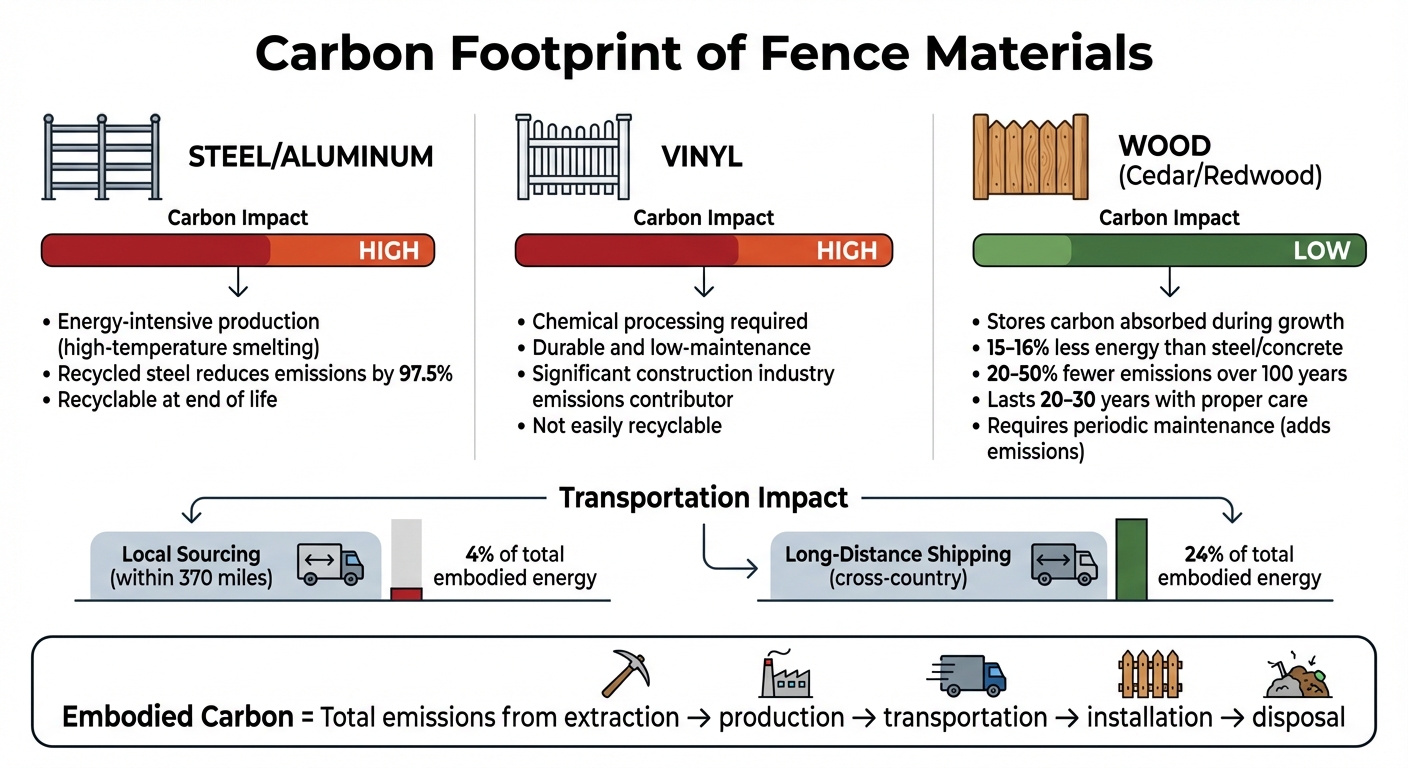
Carbon Footprint Comparison of Common Fence Materials
Installing a fence might seem like a straightforward task, but it comes with a hidden environmental cost: carbon emissions. From extracting raw materials – like mining ores for metals or harvesting timber – to the final disposal of the fence, each step consumes energy and releases greenhouse gases into the atmosphere.
The manufacturing process is one of the biggest contributors to these emissions. For example, steel production involves high-temperature smelting, vinyl requires chemical processing, and even treated wood emits carbon during its preparation. Factories that power these processes use significant amounts of energy, adding even more emissions. This highlights how the choice of materials and the logistics behind them can greatly influence the carbon footprint of a fence.
Embodied Carbon in Fence Materials
Beyond raw material extraction and manufacturing, the concept of embodied carbon helps us understand the total environmental impact of fencing materials. This term refers to all greenhouse gas emissions generated throughout a material’s lifecycle – covering extraction, production, transportation, installation, and eventual disposal.
Not all fencing materials are equal in terms of their carbon footprint. Metals like steel and aluminum are especially energy-intensive to produce. However, using recycled steel can dramatically reduce emissions – by as much as 97.5% compared to producing new steel. On the other hand, wood has a unique advantage: it stores carbon absorbed during its growth, which often results in a smaller net carbon footprint compared to synthetic materials. Vinyl fencing, while durable and low-maintenance, adds to the significant volume of carbon emissions linked to the construction industry each year.
The environmental impact doesn’t stop once the fence is installed. Wood fences, for instance, need regular maintenance such as staining, sealing, or painting. Each of these treatments requires manufacturing and transporting chemical products, adding to the overall emissions. When it’s time to replace or remove a fence, the energy used for demolition and transporting waste to landfills further contributes to its carbon footprint.
Transportation and Supply Chain Emissions
After materials are produced, getting them to the installation site creates another layer of emissions. Transporting heavy materials like steel or concrete over long distances can significantly increase the carbon impact of a fence.
Research from the National Renewable Energy Laboratory highlights how sourcing materials locally can make a big difference. For instance, when materials are sourced within 370 miles, transportation accounts for just 4% of the total embodied energy. However, shipping materials across the country can push that figure up to 24%. This underscores the importance of considering supply chain logistics when evaluating the environmental impact of a fence installation.
Materials and Practices That Reduce Carbon Footprint
Reducing the carbon footprint of fencing projects starts with smart material choices and thoughtful planning. By focusing on key stages of the fence’s lifecycle, it’s possible to lower emissions while maintaining durability and performance. Here’s how to make environmentally conscious decisions without cutting corners.
Choosing Low-Impact Materials
Wood is one of the most eco-friendly options for fencing. According to research from the US Forest Service, wood-based systems require 15% to 16% less energy than steel or concrete alternatives. Over a 100-year span, wood construction can produce 20% to 50% fewer greenhouse gas emissions compared to steel or concrete systems. This is largely due to wood’s ability to naturally store carbon absorbed during its growth.
When selecting wood, species like cedar and redwood are excellent choices. These types of wood are naturally resistant to rot and insects, which means fewer chemical treatments are needed – another win for the environment. With proper care, cedar fences can last 20 to 30 years, locking in carbon for decades. For those considering metal fencing, opting for materials that include recycled content is a great way to reduce environmental impact. Tools such as the Embodied Carbon in Construction Calculator (EC3) can help compare the carbon footprints of various materials before making a decision.
Additionally, planning for material reuse and recycling can further reduce the environmental toll.
Recycling and End-of-Life Planning
Thinking ahead to the end of a fence’s lifecycle is key to minimizing emissions. Using salvaged or reused construction materials is one of the best ways to cut down on a project’s overall carbon footprint. Prioritizing materials like untreated wood or aluminum, which can be easily disassembled and recycled, helps reduce landfill waste and lowers the need for new materials.
Environmental Product Declarations (EPDs) are becoming increasingly common in construction. These documents provide detailed insights into a material’s carbon footprint, including its disposal impact. With EPD use growing by 10% to 20% annually, requesting them from manufacturers can help identify materials designed for recycling and circular use.
Local Sourcing and Efficient Logistics
Transportation is another major contributor to carbon emissions, so sourcing materials locally is a smart way to cut down on this impact. Local suppliers reduce transportation distances, which in turn lowers fuel consumption and emissions.
For high-impact materials like steel and aluminum, sourcing locally can make a noticeable difference in a project’s carbon profile. Since these materials often have the largest environmental footprint, minimizing their transport distances is a big step toward reducing emissions. Tools like the "Map of Manufacturers with EPDs" can help contractors locate nearby production facilities, streamlining logistics and further reducing transportation-related emissions.
sbb-itb-d1d0a96
Tend Fencing: A Commitment to Eco-Friendly Practices

Eco-Friendly Practices at Tend Fencing
Tend Fencing weaves environmental responsibility into every project they undertake. Through a partnership with One Tree Planted, the company plants one tree for every fence installed, helping offset the carbon emissions generated during material manufacturing and transportation. This initiative not only aids in restoring forests but also replenishes the natural resources used in building fences.
To further minimize environmental impact, Tend Fencing prioritizes using long-lasting materials such as cedar and pressure-treated pine. These materials are chosen for their durability, reducing the frequency of replacements. Additionally, protective techniques like staining and sealing are applied to extend the lifespan of the wood, ensuring fences remain sturdy for years to come.
With over 15 years of experience in construction, the team at Tend Fencing employs proven methods to create installations that stand the test of time. By focusing on durability and quality, they help reduce the need for frequent, resource-intensive repairs, seamlessly integrating sustainability into every custom project.
Custom Solutions for Residential and Commercial Clients
Tend Fencing’s dedication to sustainability extends to their custom solutions for both residential and commercial clients throughout North Texas. Serving areas like Plano, Dallas, Frisco, and Richardson, their process begins with a free consultation and site assessment. This ensures every project is designed to meet specific needs while maintaining a balance between functionality and environmental responsibility.
Their precise design process is another step toward reducing material waste, avoiding over-ordering, and optimizing resources. Whether it’s wood, ornamental iron, automatic gates, or chain-link fencing, each project is crafted to enhance both security and aesthetics while staying true to eco-conscious principles. As Emma G. shared, "Choosing Tend Fencing was the best decision we made for our home. Their commitment to sustainability and excellent service truly sets them apart."
Conclusion
Choosing locally sourced, lighter materials can drastically reduce transportation-related emissions, while relying on distant sources can significantly increase a project’s carbon footprint. The type of material you use is equally important: natural options like wood and bamboo help absorb carbon, whereas materials like vinyl require energy-intensive production. Selecting materials with a high percentage of recycled content or those that are recyclable at the end of their life – such as steel, aluminum, or untreated wood – can also help lower embodied carbon.
Durability goes hand in hand with sustainability. A well-made fence that lasts 30 years instead of needing replacement in 15 years cuts down on emissions over time. Additionally, professional installation ensures precise measurements and efficient use of materials, reducing waste and making the most of available resources.
These practical strategies – local sourcing, durable materials, and expert installation – can guide your fencing decisions to minimize environmental impact while maintaining both security and visual appeal.
When it comes to design, your choices can support sustainability without sacrificing aesthetics or functionality. Every fence installation presents an opportunity to make environmentally conscious decisions that align with larger sustainability goals. By thinking through each step, you can create a fence that balances environmental responsibility with quality and practicality.
FAQs
How does fence installation affect carbon emissions, and how can I reduce its environmental impact?
Fence installation, like many construction activities, has an environmental cost. From extracting raw materials to manufacturing, transporting, and assembling the fence, each step contributes to carbon emissions. Materials such as wood, metal, and plastic often undergo processes that release CO₂, and over the life of a fence, the carbon embedded in these materials typically surpasses the emissions from the actual installation.
If you’re looking to reduce the environmental impact of your fence, consider using materials that are sustainably sourced. For instance, FSC-certified wood, recycled metal, or composite panels made from reclaimed materials are excellent options. Choosing locally sourced materials can also cut down on emissions tied to transportation. Additionally, efficient designs that minimize waste during construction can make a big difference.
Extending your fence’s lifespan is another way to lower its overall impact. Simple steps like applying protective coatings and tightening fasteners regularly can delay the need for replacement. For those seeking to go a step further, offsetting emissions is a practical solution. Planting trees, for example, is one way to balance the environmental toll – a practice embraced by companies like Tend Fencing as part of their commitment to sustainability.
Why is using locally sourced materials for fencing a good choice?
Using materials sourced locally for fencing offers both environmental and community advantages. When materials don’t have to travel far, fuel consumption and greenhouse gas emissions from transportation are significantly reduced. Plus, shorter transport distances mean less traffic congestion and better air quality in nearby neighborhoods.
Local materials, like wood or metal, often come from suppliers with environmentally responsible practices. For instance, wood from renewable sources can be replanted, and locally sourced metal frequently contains recycled components, which helps lower its overall impact on the environment. Beyond the ecological perks, choosing local materials also strengthens the regional economy and encourages sustainable practices.
For homeowners in Plano, TX, teaming up with a local installer like Tend Fencing amplifies these benefits. Their focus on nearby sourcing helps cut emissions, and their initiative to plant a tree for every fence built is a thoughtful way to give back to the environment.
Why is wood considered a more environmentally friendly fencing material than steel or vinyl?
Wood stands out as an environmentally friendly choice for fencing, thanks to its ability to naturally absorb and store carbon dioxide (CO₂) during a tree’s growth. This makes wood a carbon sink, locking in carbon throughout the lifespan of the fence. Compared to materials like steel or vinyl, wood has a notably smaller carbon footprint. Even its production process is less energy-intensive, as it often relies on bioenergy from wood residues, which is considered carbon-neutral.
On the other hand, steel fencing comes with a hefty environmental cost due to energy-intensive manufacturing processes, including high-temperature furnace operations that release large amounts of CO₂. Vinyl fencing, made from petroleum-based PVC, not only generates greenhouse gases during production but also lacks biodegradability, frequently ending up in landfills.
When sourced responsibly from sustainably managed forests, wood becomes a renewable and biodegradable option that allows for replanting, helping to balance its environmental impact. Opting for wood fences, like those from Tend Fencing, is a smart way to reduce carbon emissions while enjoying a durable and natural-looking fence.