
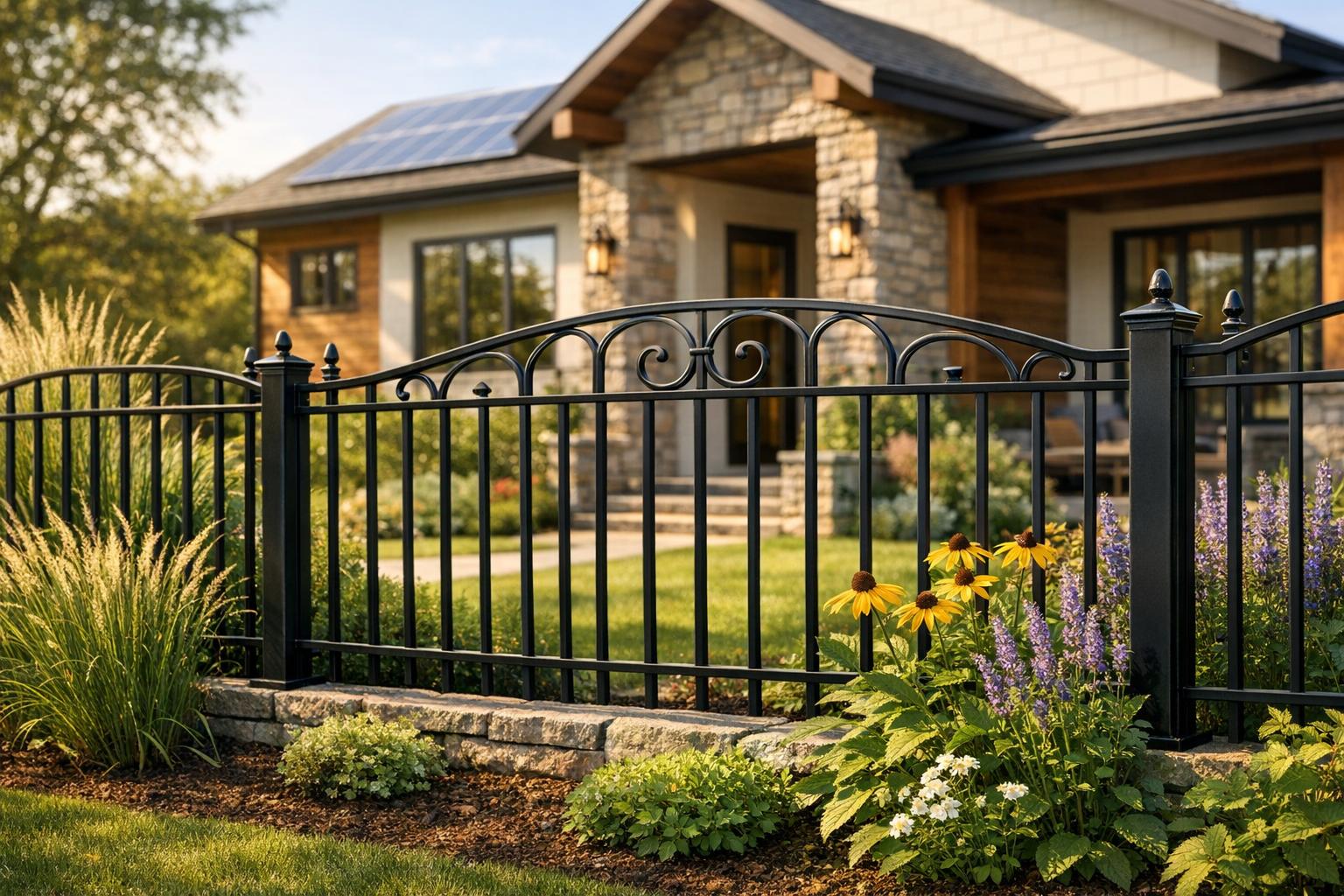
Ornamental iron fences are a durable, recyclable, and low-maintenance option for eco-conscious construction. Unlike wood or vinyl, they last 20–50 years, require minimal upkeep, and are made with up to 92% recycled steel. Their recyclability and energy-efficient production methods significantly reduce waste and emissions.
Key benefits include:
- Long lifespan: 20–50 years vs. 5–15 years for wood or vinyl.
- Recyclability: 100% recyclable, reducing landfill waste.
- Energy savings: Recycling steel cuts energy use by 75%.
- Low maintenance: Requires only occasional cleaning with eco-friendly soap.
- Eco-friendly coatings: Powder coatings and galvanization prevent rust and extend durability.
For green projects, ornamental iron fences contribute to certifications like LEED and support sustainable landscaping with open designs that promote plant growth. Though initial costs are higher, their longevity and recyclability make them a smart long-term investment.
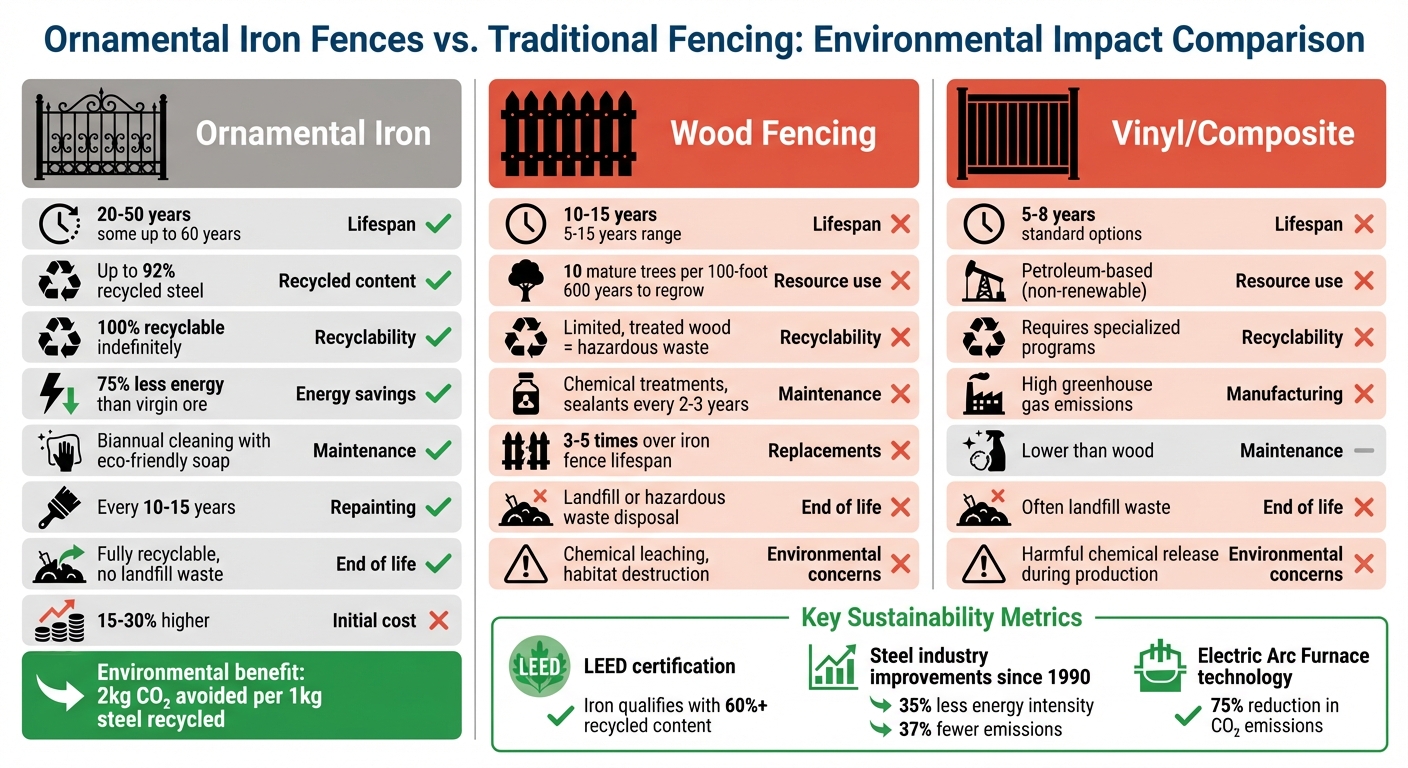
Ornamental Iron vs Traditional Fencing Materials Environmental Comparison
11 Upcycled Metal Fence Ideas 🔧 Industrial Chic Designs for a Stylish Outdoor Space
Problems With Conventional Fencing Materials
When it comes to eco-friendly construction, it’s crucial to consider not just the immediate but also the hidden environmental effects of building materials. Unfortunately, many traditional fencing options, like wood, vinyl, and composite materials, come with environmental and financial drawbacks that conflict with the goals of sustainable development.
Short Lifespans and Frequent Replacements
One major issue with conventional fences is their lack of durability. For example, wood fences typically last only 10 to 15 years before they need replacing. Over the lifespan of an ornamental iron fence, a wood fence might need replacing three to five times. To put it into perspective, building a 100-foot cedar fence, 6 feet high, requires about 10 mature trees – trees that could take up to 600 years to regrow naturally. And when these short-lived fences reach the end of their usefulness, materials like vinyl and treated wood often can’t be recycled. Instead, they end up in landfills, adding to environmental waste.
Resource Extraction and Habitat Loss
The production of standard fencing materials often takes a serious toll on ecosystems. Harvesting virgin wood for fences can lead to habitat destruction and significant damage to ecosystems, especially when forests aren’t managed responsibly. On top of that, vinyl and plastic fencing rely heavily on petroleum, a non-renewable resource. Metal production isn’t without its issues either – raw material extraction for metals can disrupt habitats and deplete resources. Plus, manufacturing synthetic fencing materials is energy-intensive, contributing to greenhouse gas emissions and pollution.
Chemical Treatments and Soil Contamination
Wood fences often require chemical treatments to prevent rot and pest damage, but these treatments can leach into the soil, harming local wildlife. Maintenance also involves applying weatherproof sealants every two to three years, and producing the paints and stains needed for upkeep creates additional environmental waste. When wood fences treated with chemicals reach the end of their life, they can’t simply be composted or recycled. Instead, they must be disposed of as hazardous waste to avoid further contamination. Even vinyl fencing, which requires less maintenance, has its drawbacks – its production releases harmful chemicals and greenhouse gases.
Recognizing these challenges helps lay the groundwork for understanding how ornamental iron fencing offers a more sustainable alternative to these conventional materials.
How Ornamental Iron Fencing Uses Sustainable Materials
Ornamental iron fencing stands out as an eco-friendly choice compared to traditional fencing materials. It incorporates recycled content, energy-efficient production methods, and meets green building standards – making it a smart option for environmentally conscious construction. Here’s a closer look at how recycled materials and modern manufacturing processes make ornamental iron fencing a sustainable solution.
Recycling and Circular Construction
Iron and steel are fully recyclable, which means they can be melted down and reused repeatedly without losing quality. This creates a circular system where old fencing, scrap metal, and decommissioned structures are reintroduced into production instead of becoming waste. By choosing ornamental iron fencing, you’re not just buying a recycled product – you’re also investing in something that can be recycled again at the end of its lifecycle.
"Steel is 100 percent recyclable, which means it can be recycled into the same material of the same quality again and again. When you buy steel, you are buying recycled." – American Iron and Steel Institute
In the U.S., steel products typically contain an average of 92% recycled content. Manufacturers like Iron World Fencing take this further: their Maverick Series panels and posts are made with at least 63% recycled steel, while their chain link products use steel rods containing at least 75% salvaged steel. This reliance on recycled materials significantly reduces the environmental toll of mining and processing raw ore.
Energy-Efficient Manufacturing
Modern steel production has embraced technologies like the Electric Arc Furnace (EAF), which uses scrap metal as its primary input. This method slashes CO₂ emissions by 75% compared to traditional blast furnaces.
"Producing a new steel product from recycled steel scrap uses approximately 75% less energy, on average, than making the same product from virgin ore." – Iron World Manufacturing, LLC
Since 1990, the American steel industry has cut its energy intensity by 35% and reduced greenhouse gas emissions by 37%. Some manufacturers are going even greener – Gerdau, for instance, launched an 80-megawatt solar farm in 2024 to power its production lines with renewable energy, further lowering the carbon footprint of its steel products. Additionally, sourcing locally manufactured ornamental iron helps minimize transportation-related emissions, adding another layer of sustainability.
Green Building Certifications
Ornamental iron fencing isn’t just sustainable – it also meets the criteria for green building certifications. Products with high recycled content can contribute to Leadership in Energy and Environmental Design (LEED) standards. To support green construction projects, look for manufacturers that provide Environmental Product Declarations (EPDs), which detail metrics like global warming potential and recycled content. For LEED compliance, aim to specify ornamental iron products with at least 60% recycled content, ensuring alignment with circular economy principles while earning valuable certification points.
Long-Term Performance And Lifecycle Benefits
Durability And Reduced Replacements
Ornamental iron fences are built to last, offering impressive longevity that helps conserve resources over time. Wrought iron fences, for example, can endure for an incredible 50 to 60 years or more with proper care. Similarly, galvanized and powder-coated metal fences boast an estimated lifespan of 50 years or longer. Compared to standard fencing options, which typically last only 5 to 8 years, ornamental iron stands out as a far more enduring choice.
Fewer replacements mean less demand for raw materials, reduced energy consumption during manufacturing, and lower transportation emissions. While the initial cost of ornamental iron fences is about 15–30% higher, their extended lifespan provides excellent long-term economic and environmental value. On top of that, their durability significantly cuts down on ongoing maintenance.
Low Maintenance Requirements
One of the standout features of ornamental iron fencing is how little upkeep it requires. A simple wash twice a year with mild, eco-friendly soap and water is usually all it takes to keep it looking great. This straightforward routine eliminates the need for the harsh chemical treatments, stains, or sealants that wood fences often require every 2–3 years.
Regular checks for coating damage are recommended to prevent rust from forming, which further extends the fence’s lifespan. In fact, with just biannual cleaning, occasional inspections, and repainting only every 10 to 15 years, ornamental iron fences maintain their resistance to corrosion and UV damage for decades.
End-Of-Life Recyclability
In addition to being durable and easy to maintain, ornamental iron is a standout choice when it comes to sustainability at the end of its life. Iron is 100% recyclable and can be melted down and repurposed into new products – like garden trellises, railings, or structural steel – without losing any quality. This ability to recycle keeps materials in circulation and out of landfills.
"Steel’s metallurgic properties mean that when recycled, no degradation occurs, allowing it to be melted down and reused an infinite number of times without compromise." – Steel Builders
Recycling iron also has a huge environmental payoff. For every kilogram of steel recycled, 2 kilograms of greenhouse gas emissions are avoided. When the time comes to replace a fence, reaching out to local scrap metal recyclers ensures the material re-enters the construction cycle. Unlike treated wood, which is often considered hazardous waste, or vinyl, which requires specialized recycling programs, iron is widely accepted by scrap yards and retains its value as a recyclable material.
sbb-itb-d1d0a96
Design And Coatings That Improve Sustainability
When it comes to ornamental iron fences, thoughtful design and advanced coatings take their sustainability to the next level. These features not only enhance durability but also contribute to environmental benefits.
Open Designs For Better Landscaping
Ornamental iron fences are designed with an open structure that benefits both the environment and your property’s appearance. Unlike solid wood panels that block airflow and sunlight, the slim pickets of these fences allow light and air to pass through freely. This promotes healthier plant growth and creates a more vibrant landscape. With a standard 4-inch picket spacing, these fences maintain clear sightlines – perfect for pool enclosures – while preserving the openness of your outdoor space.
Low-Impact Coating Technologies
When it comes to finishes, powder coating leads the way as a sustainable option for ornamental iron. This dry process creates a thicker, more durable layer compared to traditional liquid paints, all while avoiding toxic solvents and reducing high-VOC emissions.
"Oxidation is blocked if we can separate the iron from air and water with some sort of coating." – Scott Howell, Vice President and General Manager, Robinson Iron
Many manufacturers pair hot-dip galvanization with powder coating for added protection. The zinc layer from galvanization prevents rust, while the powder topcoat shields against UV damage. Some even use cathodic epoxy base coats, applied electrostatically under water, which seal microscopic pores through capillary action. These modern methods have replaced older, heavy-metal primers like lead and zinc chromate, offering a safer and more efficient alternative. Together, these coatings enhance the durability of engineered designs while minimizing material use.
Reduced Material Use Through Slim Profiles
Today’s ornamental iron fences are engineered for strength without unnecessary bulk. Instead of solid bars, most are made from hollow steel tubing, which provides excellent durability while using less material. This smart design reduces the need for raw material extraction and lowers transportation emissions, all without compromising the fence’s lifespan.
The slim profiles also bring practical advantages. They require less steel per linear foot but still deliver a service life of over 20 years, making them a resource-efficient and long-lasting choice.
How To Use Ornamental Iron Fences In Green Projects
Specifying Recycled Content and Environmental Benefits
When working on green projects, it’s crucial to gather documentation on the recycled steel content of ornamental iron fences. This paperwork is essential for meeting green certifications, such as LEED. Why? Producing steel from recycled scrap requires about 75% less energy compared to using virgin ore, making it a key factor in sustainable construction.
"The incorporation of green materials into construction projects can help reduce the environmental effects linked to the mining, transport, processing, and disposal of many steel industry resources." – Iron World Manufacturing
In addition to recycled steel, consider sourcing locally manufactured iron to cut down on transportation-related emissions. For example, companies like Tend Fencing in Plano, TX, not only provide the necessary certifications but also take extra eco-friendly steps, like planting a tree for every fence they build.
Pairing with Sustainable Landscaping
Once you’ve confirmed the recycled content, focus on integrating ornamental iron fences into eco-friendly landscaping designs. Thanks to their open structure, these fences allow sunlight and airflow to reach surrounding plants, promoting healthy growth. Unlike solid privacy fences that block light and create barren zones, ornamental iron supports vibrant, thriving greenery while maintaining clear boundaries.
To ensure minimal impact on landscaping, plan post placements early in the design stage. This approach helps avoid unnecessary root disruption and promotes proper drainage around both the fence foundation and nearby plants. For cleaning and maintenance, stick to water and environmentally safe soaps to protect the surrounding soil from harmful chemicals. And when the fence reaches the end of its long service life – typically over 20 years – old sections can be creatively repurposed as garden trellises or decorative elements instead of being discarded in landfills.
Professional Installation for Long-Term Performance
Even with sustainable materials and thoughtful design, proper installation is the key to achieving a fence’s full lifespan. Expert installers take into account factors like soil conditions and wind loads, ensuring the fence remains sturdy and functional for decades.
"The difference isn’t just aesthetic – it’s the difference between a fence that maintains structural integrity for decades versus one that begins failing at connection points within a few seasons." – Western Fence Company
A well-installed fence not only enhances durability but also reduces replacement waste. Techniques like precise welding and effective drainage systems help extend the fence’s service life while minimizing long-term resource consumption. While professional installation might cost 15–30% more upfront, it pays off in the long run. A professionally installed fence can last more than 20 years, compared to just 5–8 years for cheaper alternatives. This extended lifespan significantly reduces waste and resource use over time.
Conclusion
Ornamental iron fences stand out as a thoughtful choice for environmentally conscious construction projects. With their high recycled content and energy-efficient manufacturing process, they offer a sustainable option that balances durability and eco-friendliness.
These fences are built to last – often exceeding 20 years and sometimes reaching a lifespan of 50–60 years. This impressive longevity means fewer replacements, less waste, and a reduced strain on resources over time.
Maintenance is another area where ornamental iron shines. A simple cleaning with water and eco-friendly soap is all it takes – no need for harsh chemicals. Their open design not only enhances aesthetics but also allows sunlight and airflow, promoting healthier landscaping. And when their service life ends, the material is 100% recyclable, capable of being repurposed indefinitely without sacrificing quality.
"Choosing wrought iron marries style with eco-consciousness." – Artistic Iron Works
For property owners in Plano, TX, looking for sustainable and premium fencing solutions, Tend Fencing offers professional installations paired with green initiatives, like planting a tree for every fence built. While the initial cost of ornamental iron fences may be 15–30% higher, their long-term value and environmental benefits make them a smart investment.
FAQs
How do ornamental iron fences support eco-friendly construction?
Ornamental iron fences stand out as a smart, eco-friendly choice, thanks to their steel construction. Steel is not only incredibly durable but also highly recyclable. It can be reused over and over without losing its strength or quality, which helps reduce the demand for mining raw materials and cuts down on energy-heavy manufacturing processes. When an iron fence reaches the end of its use, it can be recycled into new steel products, keeping waste out of landfills and promoting a circular economy.
In the U.S., about 93% of steel materials are recycled, meaning most ornamental iron fences already include a significant portion of reclaimed steel. Opting for recyclable materials like these allows homeowners and builders to conserve resources, lower greenhouse gas emissions, and support long-term environmental responsibility – all while enjoying a fencing option that’s both sturdy and timeless.
What are the long-term cost advantages of choosing ornamental iron fences over other materials?
While ornamental iron fences might come with a higher upfront cost – typically 15–30% more than materials like wood or aluminum – they prove to be a wise investment in the long run. Thanks to their outstanding durability, these fences can last 20+ years, far outpacing the 5–8 years lifespan of standard wood or aluminum options. This extended lifespan means fewer repairs, replacements, and maintenance, which translates to significant savings over time.
Another advantage is that ornamental iron is recyclable, helping to reduce end-of-life costs while contributing to environmentally friendly practices. These qualities make ornamental iron fences a practical and economical choice for both residential and commercial properties.
How do ornamental iron fences contribute to sustainable construction and LEED certification?
Ornamental iron fences are a smart choice for eco-conscious construction projects, thanks to their long-lasting nature, recyclability, and responsible material sourcing. Built from steel or wrought iron, these fences can easily last over 20 years with little upkeep. This durability minimizes waste and the need for frequent replacements. Plus, when they eventually reach the end of their life, the metal is fully recyclable, which can contribute to LEED credits for both recycled content and waste reduction.
By opting for locally sourced materials, ornamental iron fences also help earn LEED points for regional sourcing, while cutting down on transportation-related emissions. Low-maintenance finishes, such as hot-dip galvanization, further boost their green credentials by reducing the need for harsh cleaning chemicals and excessive water usage. On top of that, their reflective surfaces can play a role in reducing the urban heat-island effect, aligning with LEED’s broader environmental goals.
Tend Fencing takes these efforts a step further by sourcing ornamental iron locally and planting a tree for every fence they install. This approach not only offsets environmental impact but also strengthens sustainable construction practices.