
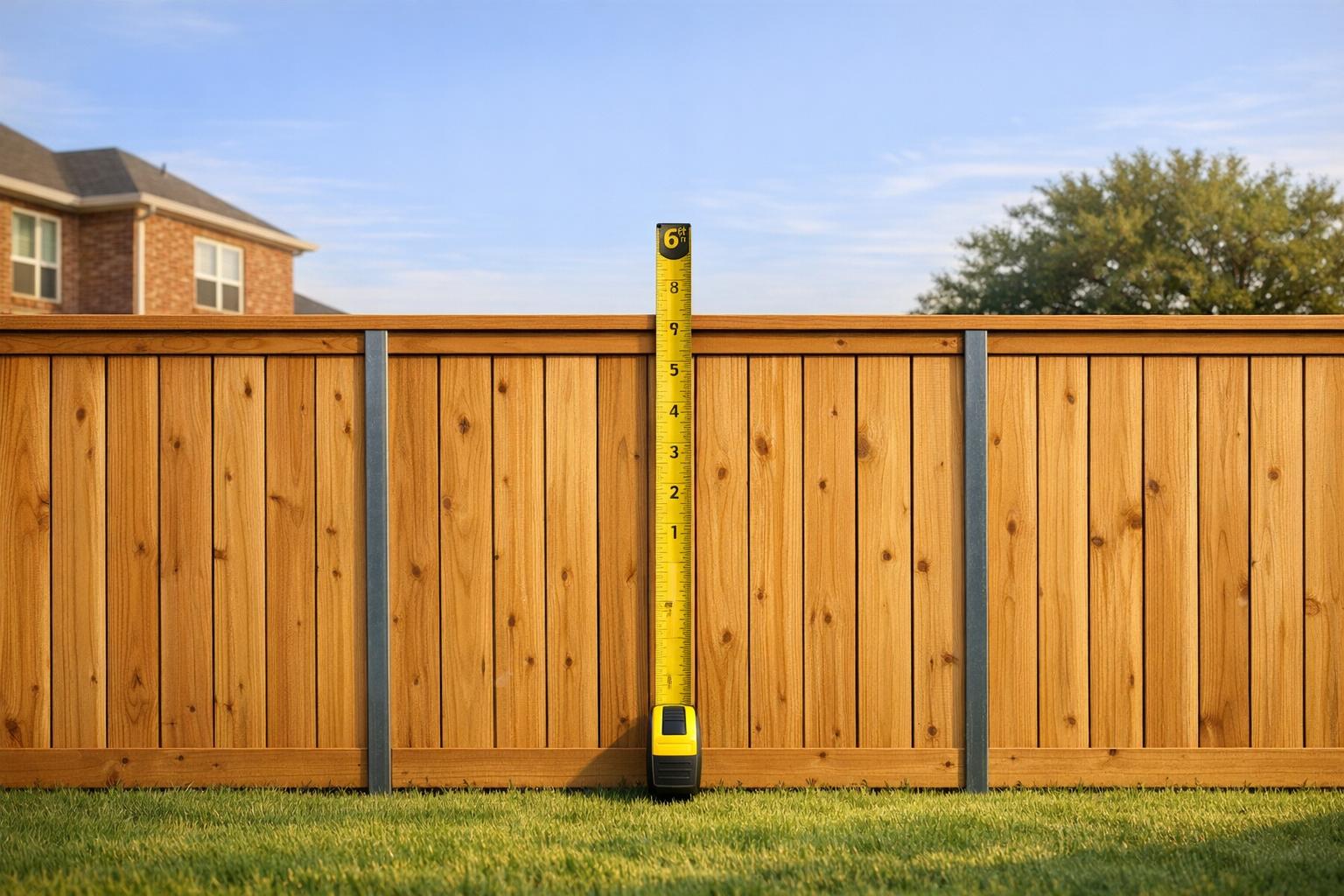
If you’re planning to install a fence in Plano, Texas, here’s what you need to know:
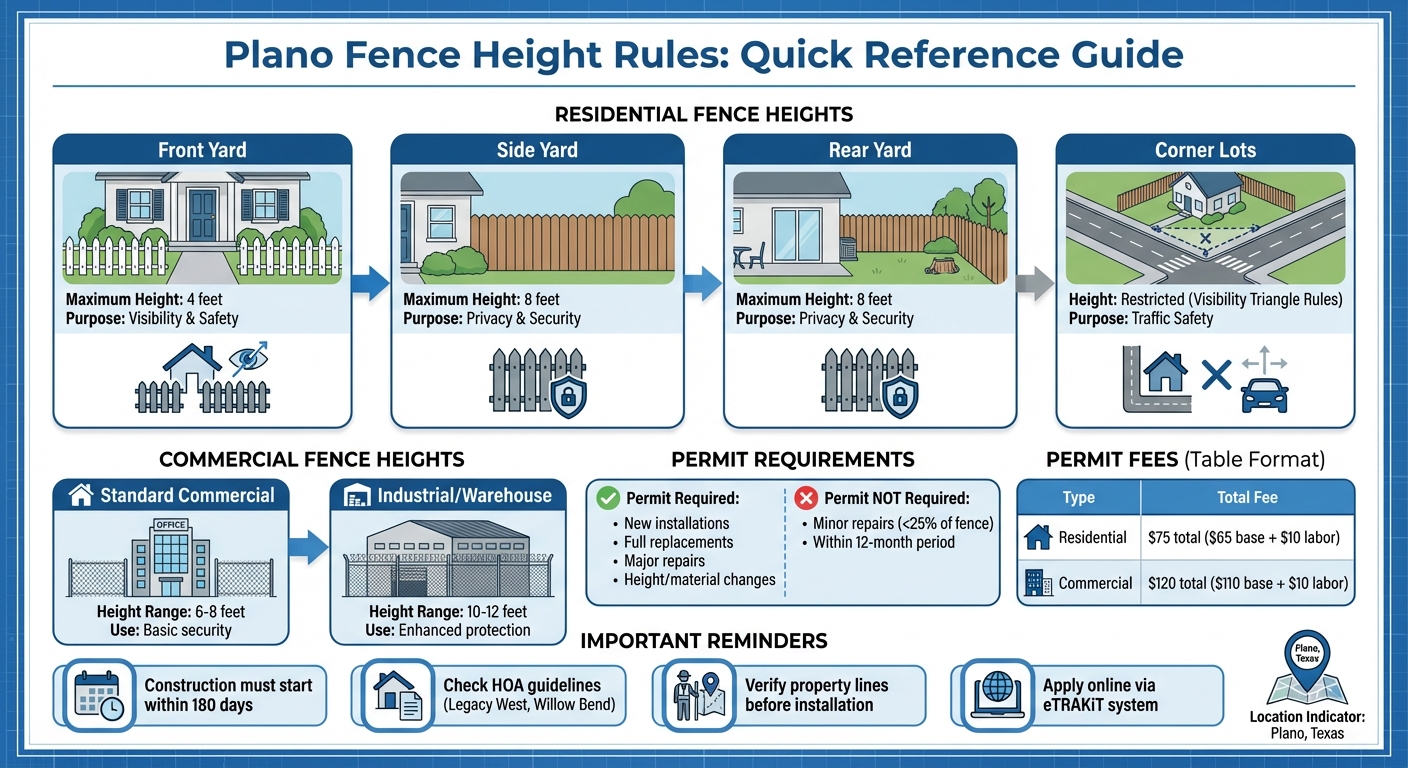
- Front Yard Fences: Maximum height is 4 feet to maintain visibility and safety.
- Side and Rear Yard Fences: Maximum height is 8 feet for privacy and security.
- Corner Lots: Special restrictions apply due to visibility triangle rules for traffic safety.
- Commercial Fences: Typically range from 6 to 8 feet, with some exceptions allowing up to 12 feet for industrial properties.
- Permits: Required for most new installations, replacements, or major repairs. Minor repairs (less than 25% of the fence) are exempt.
- HOA Guidelines: Homeowners in neighborhoods like Legacy West and Willow Bend must also comply with stricter HOA standards.
To ensure compliance, verify property lines, consult zoning regulations, and check HOA rules before starting. For smooth processing, apply for permits online through Plano’s eTRAKiT system and include detailed plans.
Hiring professional installers can simplify the process, especially for navigating local rules and ensuring proper materials are used. Companies like Tend Fencing handle everything from HOA submissions to installation, making the project hassle-free.
Understanding these rules upfront helps you avoid fines, disputes, or the need to redo your fence. Follow the guidelines, and your project will enhance your property while staying compliant.
Plano Texas Fence Height Limits by Property Location
Ask Me Anything: City of Plano Building Inspections

sbb-itb-d1d0a96
Residential Fence Height Limits
Plano’s residential fence height rules are clear but depend on the location of the fence on your property. These guidelines are designed to balance privacy, security, and safety while adhering to local codes. Here’s a breakdown of the rules based on yard placement:
| Yard Location | Maximum Allowable Height | Primary Purpose |
|---|---|---|
| Front Yard | 4 feet | Visibility and Safety |
| Side Yard | 8 feet | Privacy and Security |
| Rear Yard | 8 feet | Privacy and Security |
| Corner Lot (Intersection) | Restricted (Visibility Triangle) | Traffic Safety |
Front Yard Fence Rules
In Plano, front yard fences are limited to a maximum height of 4 feet. This restriction ensures clear sightlines for both drivers and pedestrians, particularly near streets and driveways. It also helps maintain the aesthetic appeal of the neighborhood.
For example, in 2024, Tend Fencing installed a 4-foot ornamental iron fence for Kylie Booth in Plano. The project adhered to the height limit while adding charm and curb appeal to her property. You can view similar projects in our gallery of completed works.
Side and Rear Yard Fence Rules
Side and rear yard fences can be up to 8 feet tall, offering enhanced privacy and security. This height accommodates the needs of homeowners who use their backyards for family activities, play areas, or as safe spaces for pets.
In 2023, Tend Fencing completed an 8-foot board-on-board cedar fence for Aji Kayamkulam, a Plano resident. The fence replaced one damaged in a storm and restored the privacy of his backyard, all while complying with the city’s height regulations. If you’re considering a fence taller than 8 feet, you’ll need to apply for a variance or special approval from the City of Plano’s Zoning Board.
Corner lots have additional restrictions due to the "visibility triangle" rule. This regulation limits fence height near intersections to maintain unobstructed sightlines for traffic safety. If your property is on a corner, it’s essential to consult the Plano zoning office before starting your project. They can provide detailed setback and height requirements tailored to your lot’s specifics.
Commercial Fence Height Rules
When it comes to commercial fences, the focus shifts from aesthetics to security and compliance with local regulations. In Plano, the height requirements for commercial fences differ from residential ones, reflecting the need for increased protection and traffic safety.
Typically, commercial fences are between 6 and 8 feet tall, providing basic security. However, properties like warehouses or industrial yards that require enhanced protection may be allowed to install fences as tall as 10 to 12 feet. These height guidelines serve as a starting point, but specific property uses can influence the design and size of the fence.
Plano’s regulations also draw a line between decorative fencing near public areas and security fencing for functional spaces like loading docks or service yards. Fences facing public streets must maintain clear sightlines, while those at the back of a property can prioritize functionality and height.
Another critical consideration is visibility at driveways, parking entrances, and intersections. To prevent traffic hazards, Plano enforces rules on fence height and opacity within these visibility triangles. If you’re planning to install a fence near an entrance or corner, it’s crucial to consult the city’s zoning office to ensure compliance with sightline codes.
In addition to height and design, commercial fences must meet material standards and permitting requirements. Most installations require a building permit and a plan review by the Building Inspections Department. When submitting your application, include a detailed site plan showing property lines, easements, setbacks, and fire lane access. Durable materials like 6- or 9-gauge chain link, steel, or architectural iron are mandatory to meet strength and wind-load standards.
Fence Permit Requirements in Plano
When You Need a Permit
In Plano, most new fence installations, full replacements, and major repairs require a building permit. The Plano Building Inspections Department ensures that projects meet safety and zoning standards before approval. If you’re planning to install or replace a fence, you’ll need to apply for a permit.
That said, not every fence project demands one. For example, minor repairs covering less than 25% of the total fence area within a 12-month period are exempt. On the other hand, significant changes – like altering the height or switching materials – must be approved by the city.
If your property is on a corner lot, you’ll also need to include plans for a visibility triangle to meet safety standards. Before you start the process, it’s a good idea to consult the Plano Planning & Zoning Department to confirm placement and height regulations for your specific property.
Once you’re ready, you can move on to the application process.
How to Apply for a Permit
You can apply online through the eTRAKiT system. Be prepared to submit scaled construction plans that clearly show your property lines, the proposed fence location, and its dimensions. The city also requires a plan check deposit – around 65% of the permit fee – when you apply.
Here’s a breakdown of the permit fees:
| Permit Type | Base Fee | Labor Fee | Total Cost |
|---|---|---|---|
| Residential Fence | $65 | $10 | $75 |
| Commercial Fence | $110 | $10 | $120 |
Once your application is submitted, multiple departments will review your plans to ensure they meet local codes and safety requirements. If revisions are needed, you’ll address them before paying the remaining fees. After approval, you can print your permit to display at the job site. Keep in mind: construction must start within 180 days (6 months), or the permit will expire.
Before starting, it’s wise to obtain a property survey to confirm boundaries and easements, which can help you avoid disputes or expensive corrections. If you live in a neighborhood with a Homeowners Association (HOA) – like Legacy West or Willow Bend – check their rules first. HOAs often have stricter guidelines for materials, colors, and styles than the city does.
When construction is complete, you’ll need to schedule an inspection through eTRAKiT, by calling 972-941-7140, or by texting. Skipping the permit process can lead to serious issues. As Military Exteriors explains:
"Violating zoning laws in Plano can result in fines, stop-work orders, or even the mandatory removal of your fence".
Following the proper steps not only keeps you compliant but also protects the value of your property in the long run.
Working with Professional Fence Installers
Benefits of Professional Installation
Hiring professional fence installers in Plano comes with plenty of advantages, especially when navigating the area’s specific regulations and requirements. These experts handle the entire Architectural Review Committee submission process, preparing detailed drawings and material specifications and securing HOA approval. For neighborhoods with strict design standards, this approval process typically takes about 7–14 days.
Their local knowledge also helps avoid expensive mistakes. Experienced installers ensure your project complies with Plano’s visibility triangle requirements and account for exceptions like alleyway setbacks or floodplain rules. They also ensure that pool barriers meet both Texas and Plano safety codes, which require a minimum height of 48 inches and gates that are self-closing and self-latching.
Most residential fence installations are completed within 1–2 days. Professionals use high-quality materials like galvanized steel posts set in concrete and Western Red Cedar, which can last 20–25 years with proper maintenance. By taking care of permit applications and ensuring compliance with local codes, professional installers not only simplify the process but also help maintain your property value. Their expertise makes the entire experience smooth and worry-free, especially when working with companies like Tend Fencing.
How Tend Fencing Can Help

Tend Fencing takes these professional benefits a step further by offering customized solutions to make fence installation as easy as possible. With over 15 years of experience in residential and commercial projects across Plano, they’ve built a reputation for quality. In fact, the company boasts a perfect 5.0/5 rating from customer reviews, with clients frequently highlighting their efficient installations, craftsmanship, and clear communication.
The process begins with a free consultation to discuss your goals and review local requirements. From there, Tend Fencing handles everything – from HOA submissions to the final installation – ensuring your fence meets all city codes and neighborhood standards. As a licensed and insured contractor, they also prioritize eco-friendly practices by partnering with One Tree Planted to plant a tree for every fence they build.
Conclusion
Plano’s height limits, setback requirements, and permit processes are all designed with safety and neighborhood aesthetics in mind. By understanding these fence height rules before you begin, you can avoid potential headaches like fines, disputes with neighbors, or even having to tear down your fence. Whether you’re envisioning a 4-foot decorative front yard fence or an 8-foot backyard privacy fence, knowing the specific guidelines for height, setbacks, and permits will help keep your project running smoothly. Staying compliant not only helps you avoid penalties but also protects the value of your property.
Hiring licensed contractors can simplify the process. They’ll confirm property lines, handle all necessary regulatory requirements, and ensure the use of durable materials like galvanized steel posts and premium Western Red Cedar.
"A qualified installer will ensure your fence meets all local regulations, including height limits, material guidelines, and required setbacks." – 76 Fence
Tend Fencing, with over 15 years of experience, has earned a 5.0/5 rating for expertly managing every step of the fencing process – from free consultations to final installation. Their focus on quality craftsmanship and their initiative to plant a tree for every fence built highlight their dedication to both customer satisfaction and environmental responsibility. Choosing a trusted local company like Tend Fencing ensures your project meets all necessary standards, safeguarding your investment and enhancing your property for years to come.
FAQs
How do I know if my fence is in the front, side, or rear yard?
To figure out whether your fence is in the front, side, or rear yard, start by reviewing your property lines and the zoning regulations specific to Plano, TX. Typically, fences are permitted in side or rear yards but are not allowed in front yards.
Measure your fence height by starting at the interior grade level and going up to its highest point. For accuracy, refer to your property survey and, if needed, consult local authorities to confirm that your fence placement complies with the rules.
What counts as a “minor repair” under Plano’s 25% rule?
Under Plano’s 25% rule, a "minor repair" refers to adjustments or replacements impacting no more than 25% of a fence’s total length or height. These repairs are limited to small fixes that don’t alter the fence’s overall structure or height in a noticeable way.
What documents do I need to apply for a Plano fence permit in eTRAKiT?
To get a Plano fence permit through eTRAKiT, you’ll need to provide two key things: a completed application form and a site plan that clearly shows where the fence will be located. Double-check all the details before submitting to prevent any delays in the approval process.