
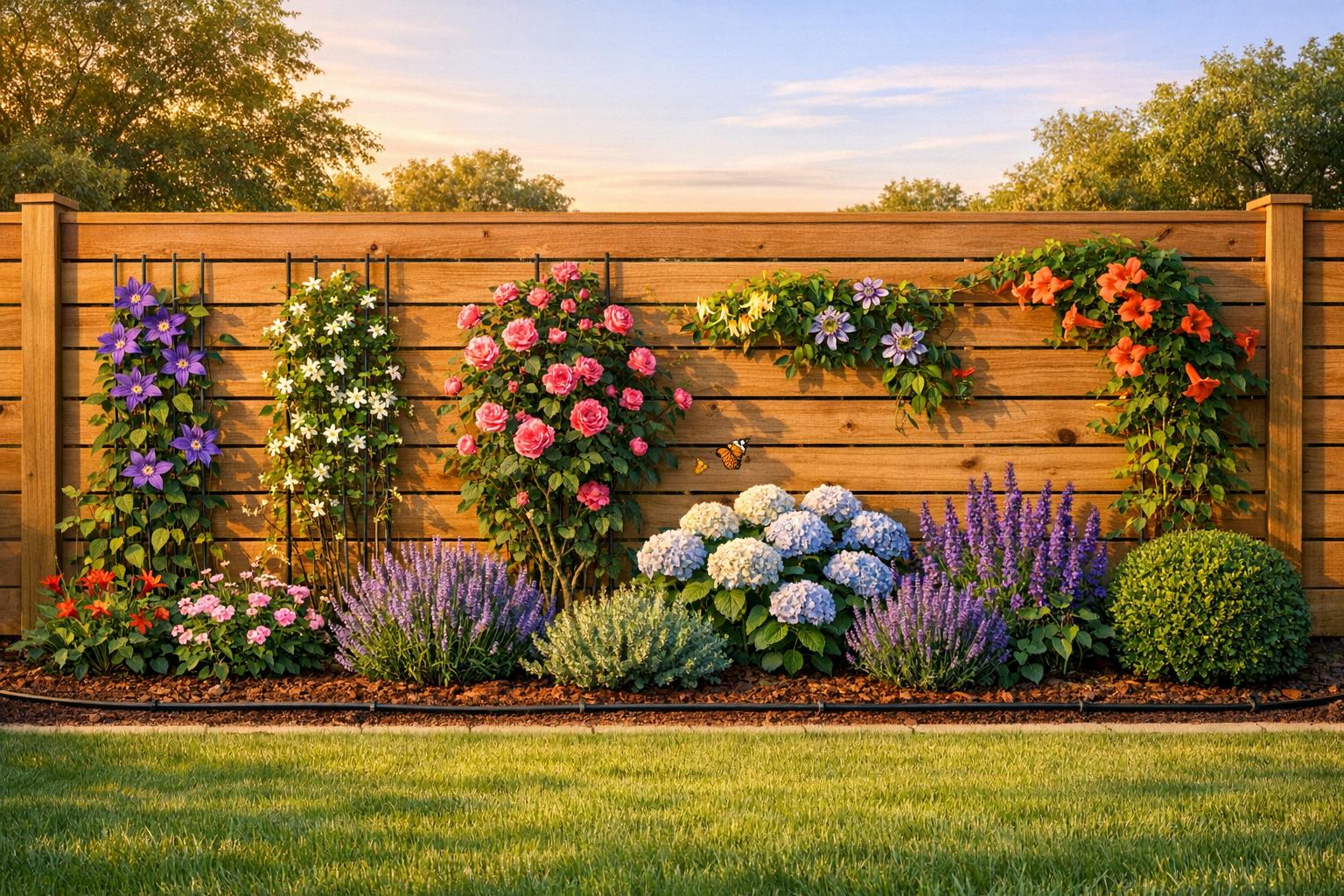
A fence can become more than just a boundary – it can be a vibrant vertical garden. The right plants not only add color and texture but also increase privacy and attract pollinators like bees and butterflies. Here are 10 plants that thrive near fences, each with unique growth habits, visual appeal, and care needs:
- Climbing Roses: Gorgeous blooms in various colors. Requires training and full sun for best results.
- Clematis: Fast-growing vine with stunning flowers. Needs support and shaded roots.
- Honeysuckle: Twining vine with fragrant flowers. Attracts hummingbirds and thrives in sun.
- Jasmine: Evergreen vine with sweet-smelling flowers. Grows quickly and adds elegance.
- Morning Glory: Annual vine with trumpet-shaped blooms. Low-maintenance and fast-growing.
- Wisteria: Woody climber with cascading flowers. Needs regular pruning and strong support.
- Ivy: Evergreen climber that grows quickly. Ideal for chain-link fences but requires monitoring.
- Hydrangea: Offers lush blooms in various colors. Works well with residential fences made of wood or iron.
- Hollyhocks: Tall flowers that lean on fences for support. Perfect for a cottage garden look.
- Arborvitae: Evergreen shrubs that create a dense privacy screen. Minimal upkeep required.
These plants can turn any fence into a living masterpiece, combining beauty with functionality. From fragrant jasmine to dramatic wisteria, there’s a perfect option for every garden style.
Quick Comparison
| Plant | Growth Type | Special Features | Sunlight Needs | Maintenance Level |
|---|---|---|---|---|
| Climbing Roses | Twining vine | Colorful blooms, needs training | Full sun | Moderate |
| Clematis | Twining vine | Varied flowers, prefers cool roots | Full sun | Moderate |
| Honeysuckle | Twining vine | Fragrant, attracts pollinators | Full sun | Low |
| Jasmine | Twining vine | Evergreen, fragrant flowers | Full to partial | Low |
| Morning Glory | Annual vine | Bright blooms, fast-growing | Full sun | Low |
| Wisteria | Woody climber | Cascading flowers, vigorous growth | Full sun | High |
| Ivy | Self-clinging | Evergreen, quick coverage | Full/partial sun | Low |
| Hydrangea | Shrub/climber | Large blooms, color-changing | Morning sun | Moderate |
| Hollyhocks | Tall flowers | Cottage garden style | Full sun | Low |
| Arborvitae | Evergreen shrub | Dense privacy screen | Full sun | Low |
Each plant offers unique benefits to suit different fence styles and garden needs. Choose based on your fence material, sunlight availability, and desired maintenance level.
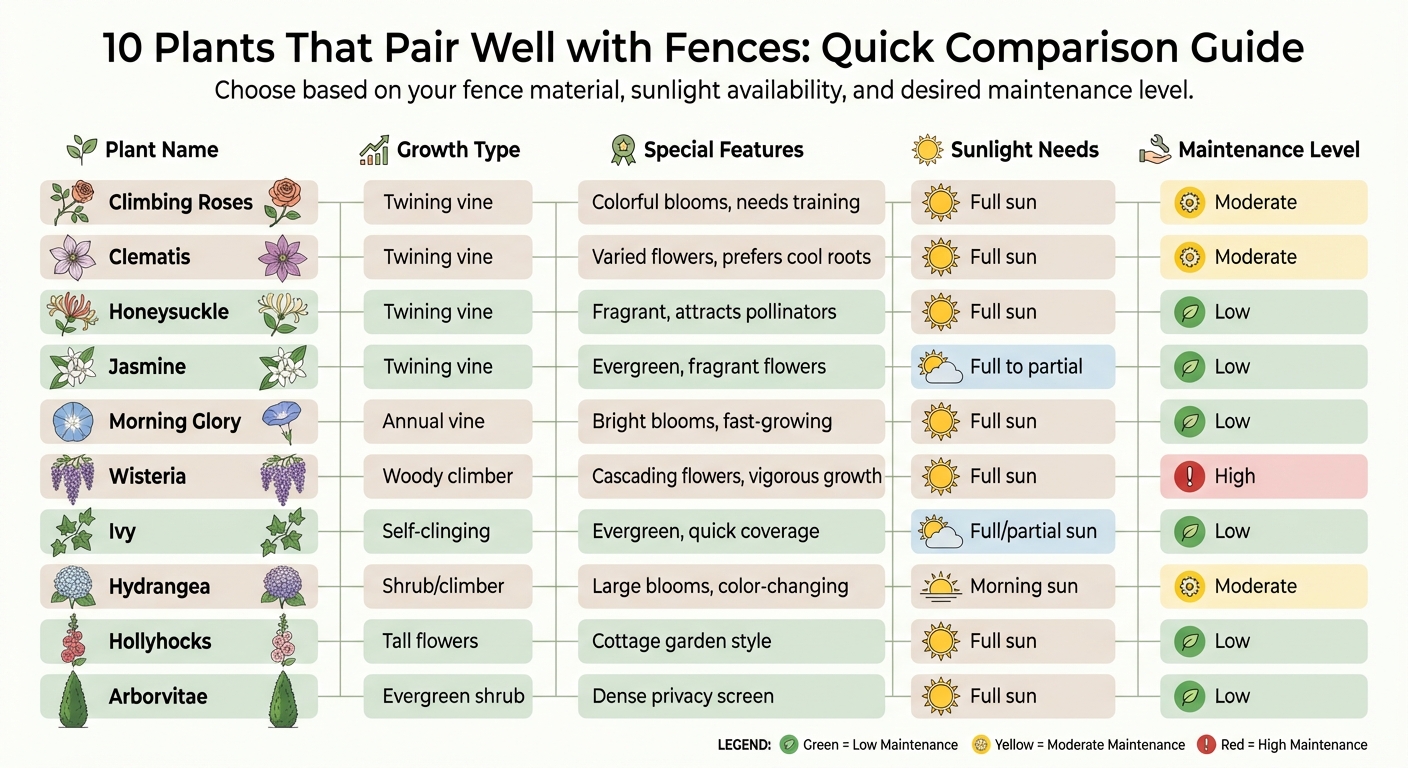
10 Best Fence Plants Comparison: Growth, Sunlight, and Maintenance Guide
1. Climbing Roses
Ability to Thrive Near Fences
Climbing roses are a fantastic choice for fences, with the potential to grow up to 10 feet in a single season. However, they do need some attention to thrive. Training their canes manually with soft ties or garden twine (steer clear of metal wires) is essential.
When planting, leave at least 2 feet of space between the rose and the fence. This gap allows their roots to develop properly and avoids creating a rain shadow where water might not reach. These roses flourish in full sun – at least 6 hours daily – and prefer soil that’s nutrient-rich, moist, and well-drained, with a pH between 6.0 and 7.0.
Once the plant is established, usually by the second or third year, train the canes horizontally. Doing so encourages side shoots, leading to fuller blooms and a more vibrant display. With their manageable care routine and vigorous growth, climbing roses are as practical as they are beautiful.
Aesthetic Appeal
"Climbing roses turn fences into vertical gardens brimming with natural artistry." – Robby, Tower Landscape Design
These roses bring undeniable charm to any outdoor space. Their blooms come in a stunning range of colors, from the apricot tones of ‘Lady of Shalott’ and the vivid pink of ‘Gertrude Jekyll’ to crimson, yellow, and the elegant double white of ‘Alba Plena’. For a dramatic statement, consider the ‘New Dawn’ variety, which can climb up to 15 feet high.
Compatibility with Diverse Fence Materials
Climbing roses are incredibly versatile, complementing a range of fence types. Wooden fences pair beautifully, especially when made from rot-resistant materials like cedar or redwood, as mature roses can add considerable weight and retain moisture. On chain-link fences, their pliable canes weave effortlessly through the mesh, softening the industrial feel. For a timeless, romantic look, ornamental steel and picket fences provide the perfect backdrop for their blossoms. This flexibility makes climbing roses an excellent choice for enhancing fences while adding value and charm to your property.
sbb-itb-d1d0a96
2. Clematis
Ability to Thrive Near Fences
Clematis can grow up to 8 feet in a single season, making it an excellent choice for turning plain fences into vibrant, living walls of greenery and flowers.
Unlike other climbers, clematis uses its petioles (leaf stems) to wrap around supports. This unique climbing style works best with thin structures like wire mesh or chain-link fences, where the plant can easily secure itself.
To keep clematis healthy, plant it with its crown in full sun but ensure its roots stay cool and shaded. While the vines need at least six hours of sunlight daily, the roots thrive in a cooler environment. You can achieve this by adding a thick layer of mulch or planting a small shrub nearby to provide shade for the root zone.
Aesthetic Appeal
"Known as the ‘Queen of the Vines’, Clematis dazzles gardeners with blooms ranging from star-shaped single flowers to dramatic double blossoms." – Nature Hills
Clematis is a visual treat, offering a wide variety of colors and flower types. The popular ‘Jackmanii’ variety, for instance, produces rich purple blooms that cover fences throughout summer and fall. For a more delicate appearance, ‘Nelly Moser’ stands out with its pale lilac petals adorned with pink stripes, thriving even in lightly shaded areas. If you’re aiming for a touch of sophistication, ‘Henryi’ offers large white flowers with striking violet-to-brown centers.
Some clematis varieties also appeal to the senses in other ways. The ‘Sweet Summer Love’ variety, for example, delivers cranberry-to-purple blooms with a fragrance strong enough to perfume an entire yard. For year-round interest, the ‘Evergreen Clematis’ (Avalanche) keeps its green foliage during the winter and bursts into white blossoms come spring.
Compatibility with Diverse Fence Materials
Choosing the right fence material for your clematis is just as important as selecting the perfect variety.
Chain-link fences are an ideal match, as the plant’s petioles easily grip the metal mesh. Aluminum fences also pair well with clematis since they resist moisture damage, making them a durable option.
Wood fences, however, require a bit more care. Clematis vines can trap moisture against the wood, which may lead to rot or structural issues over time. To avoid this, consider adding a trellis or wire grid between the plant and the wooden surface. This setup allows for better air circulation, preventing moisture buildup while still providing the necessary support.
If you’re planting clematis near professionally installed fences, check the warranty first. Some warranties may exclude damage caused by climbing plants. Also, remember that clematis is toxic if ingested by humans or pets and can cause minor skin irritation.
3. Honeysuckle
Ability to Thrive Near Fences
Honeysuckle is a climbing vine that loves to wrap itself around fences, making it perfect for vertical gardening. It grows best in full sunlight with well-draining soil and can handle a pH range from 5.5 to 8.0. This vine naturally twines around fences, creating a self-supporting and visually appealing display. Opting for native varieties like Coral Honeysuckle (Lonicera sempervirens) ensures a less invasive growth pattern while supporting local ecosystems. Its vigorous growth can turn any fence into a stunning focal point.
Aesthetic Appeal
"Nothing quite captures the essence of an English cottage garden like honeysuckle scrambling over a fence." – Lee Burkhill, Award Winning Designer
Honeysuckle blooms come in an array of colors, from coral red to creamy white with pink accents. Varieties like ‘Kintzley’s Ghost’ offer unique silver-blue bracts, adding an almost otherworldly charm to fence lines. These vines can grow 8–12 feet tall and spread 3–5 feet wide, quickly transforming bare fences into lush, flowering walls. Many types also release a delightful fragrance, particularly in the evening, with cultivars like ‘Scentsation’ specially bred for their enhanced nighttime scent. Beyond their beauty, honeysuckle flowers attract hummingbirds, bees, and butterflies, while the red berries that appear later in the season provide food for songbirds.
Ease of Maintenance
Honeysuckle is as easy to care for as it is beautiful. Once established, it requires very little maintenance. Annual pruning in late winter or early spring keeps it healthy and under control. To ensure proper spacing and airflow, plant vines 5–10 feet apart. When the plant is young, securing the stems with ties can help guide them along the fence until they start twining naturally.
Compatibility with Diverse Fence Materials
One of honeysuckle’s standout qualities is its ability to adapt to different fence materials. Its twining growth habit allows it to climb effortlessly on wood, chain-link, or iron fences without needing much extra support. On chain-link fences, its dense foliage can turn a see-through structure into a lush privacy screen. Wooden fences benefit from a soft, flowering fringe that balances their rigid lines. Choosing non-invasive varieties like Coral Honeysuckle or ‘Mandarin’ ensures the plant enhances your fence without harming the surrounding environment.
Top 7 Fence-Covering Plants for Instant WOW!! 🌺🌻🍃 // #gardeningideas
4. Jasmine
Jasmine brings a touch of elegance and a delightful fragrance to your fence garden, making it a standout choice for enhancing outdoor spaces.
Growth Near Fences
Jasmine is a twining vine that effortlessly wraps itself around supports. One of the most popular varieties, Star Jasmine (Trachelospermum jasminoides), grows quickly – about 3 to 6 feet per year – and can reach up to 25 feet with the right support system. It thrives in USDA zones 8–11, tolerating temperatures as low as 10°F to 15°F. To ensure full fence coverage, plant jasmine about 8 feet apart along the fence line.
Visual Appeal
Jasmine transforms fences with its shiny green leaves and delicate, star-shaped flowers. Star Jasmine typically blooms in late spring through early summer, filling the air with its sweet, inviting scent. Its evergreen foliage ensures your fence remains lush year-round. On chain-link fences, jasmine’s dense growth hides the mesh, while on wood or iron fences, it adds a touch of sophistication.
Low Maintenance Requirements
"Once it is established it needs nothing but pruning or cutting back to keep it in place." – Scott Simpson, Earthwise Horticultural Services
Jasmine is incredibly easy to care for once it has taken root. During the first two years, water it every 2 to 4 days to help the roots establish. After that, it requires little attention beyond occasional pruning after flowering to maintain its shape. When pruning, gloves are recommended since the plant’s stems release a milky sap that may irritate the skin. For a healthy growing season, apply organic compost or a balanced slow-release fertilizer in early spring. Be mindful of pests like aphids or scale insects, though they rarely cause significant issues.
Adaptability to Different Fence Types
One of jasmine’s strengths is its ability to adapt to various fence materials. Whether it’s chain-link, wood, or iron, jasmine naturally twines and climbs. For smoother surfaces, trellises can help support its growth. In the first year, manually guide the young vines by tying or wrapping them. Once established, they’ll climb effortlessly on their own. Star Jasmine is also deer-resistant and can handle some salt exposure, making it a versatile option for different fence locations.
5. Morning Glory
Morning glories are fast-growing annual vines that bring bursts of color to fence lines. Their twining stems naturally spiral around vertical supports, making them one of the simplest climbers to train along fences.
Growth and Sunlight Needs
These vines are champions of vertical growth, often climbing up to 12 feet or more in just one growing season. Their slim stems easily wrap around fence wires and rails, requiring little structural support. Morning glories are tough, thriving even in less-than-ideal spots like sidewalk cracks. For the best blooms, they need 6–8 hours of direct sunlight each day. Once established, they only require about 1 inch of water weekly and are suited for USDA hardiness zones 2 through 11.
Stunning Visuals
The true charm of morning glories lies in their trumpet-shaped flowers, which open at dawn and create a vibrant display throughout the day. These blooms come in striking shades of blue, pink, purple, white, magenta, and scarlet. Their heart-shaped green leaves add a rich, lush texture to fences, and the flowers are a magnet for hummingbirds, butterflies, and bees. However, the seeds are toxic and can be harmful if consumed, so it’s best to plant them out of reach of pets and children. With their stunning appearance and minimal care requirements, morning glories are a perfect choice for gardeners with busy schedules.
Easy to Care For
Morning glories are impressively low-maintenance once they’ve taken root. Surprisingly, they thrive better in leaner soil – overly rich soil can reduce flowering. To keep them blooming, deadhead spent flowers regularly, which also prevents the plant from becoming overly vigorous in future seasons. It’s worth noting the difference between ornamental morning glories from the Ipomoea genus and the invasive wild morning glory (Convolvulus arvensis), which can be a nuisance.
Fence-Friendly Climbing
These vines are incredibly adaptable to different fence materials, from chain-link to wooden or wrought-iron. On chain-link fences, their twining habit quickly fills the open mesh, creating a natural privacy screen. For smoother surfaces like wooden rails or iron fences, you might need to guide the vines initially until they latch on and climb on their own.
6. Wisteria
Aesthetic Appeal
Wisteria adds striking beauty to fences with its cascading flower clusters in shades of blue, purple, pink, and white. These vibrant blooms not only catch the eye but also provide dense seasonal foliage, making it an excellent natural privacy screen from spring through autumn. With its vigorous growth, wisteria can climb to impressive heights, often exceeding 30 feet.
"Wisteria is one of the best climbing plants for instant garden drama and a beautiful screen between you and the outside world." – Gardening With Ben
As the vines age, their woody trunks develop a rugged texture, adding depth and character to your garden. For optimal flowering, choose a sunny location to plant wisteria. Its stunning appearance is matched by its relatively simple care routine.
Compatibility with Diverse Fence Materials
Wisteria’s natural twining habit makes it ideal for chain-link and metal mesh fences, where the vines easily weave through the gaps. Metal fences, with their durability, offer strong support for the plant’s mature and heavy growth. If you’re working with wooden fences, horizontal wires or cables spaced 18–24 inches apart can help guide the vines while preventing damage to the wood.
For best results, plant wisteria 12–24 inches away from the fence base to allow enough room for root expansion and ensure proper air circulation. Use soft ties to secure new growth rather than letting the vines wrap tightly around posts, which could cause structural issues over time.
Ease of Maintenance
To keep wisteria healthy and blooming, regular pruning is key. Trim side shoots in late summer, leaving about 5–6 leaves, and cut them back to 2–3 buds in late winter to encourage flowering. For the first two years, train a single main stem vertically, then let side shoots spread naturally. Once established, water deeply once a week, increasing the frequency during particularly hot weather.
Wisteria’s combination of dramatic beauty, adaptability, and straightforward care makes it a standout choice for enhancing fence lines and creating a lush, vibrant landscape.
7. Ivy
Ability to Thrive Near Fences
Ivy is a self-clinging climber that can scale fences and walls without additional support, making it an effective option for covering large areas quickly. Once it takes root, ivy grows at an impressive pace of 8 to 9 feet per year, though it typically takes around three years to fully establish its climbing system.
This plant is highly adaptable, thriving in both full sun and full shade, which makes it suitable for nearly any fence location. For the best results, ivy prefers temperatures between 65°F and 85°F, soil with a pH between 5.5 and 6.5, and relative humidity levels of 40% or higher. When planting ivy, it’s a good idea to leave 12–18 inches of space between the plant and the fence. This spacing ensures proper air circulation and prevents the fence from blocking water from reaching the roots.
In addition to its fast growth, ivy brings a striking visual element that lasts all year.
Aesthetic Appeal
"Ivy stands out for its dense, evergreen foliage, offering a lush, green backdrop all year round." – Ace Fence Company Austin
Ivy delivers year-round greenery, thanks to its evergreen foliage, flowers, and berries. This makes it a popular choice for homeowners looking for continuous privacy and a vibrant, natural look in all seasons. Its dense growth can transform plain fences into lush green walls, particularly on chainlink and metal fences, where ivy weaves through gaps to create complete coverage.
Compatibility with Diverse Fence Materials
Ivy pairs especially well with chainlink and metal fences. Its self-clinging nature allows it to fill gaps and create a seamless green barrier. When it comes to wooden fences, however, some caution is necessary. Ivy can attach and thrive on wood, but its aerial roots may cause damage over time if left unchecked. To minimize this risk, you can install supportive wires to guide the plant’s growth and protect the fence, even though ivy typically doesn’t require extra support.
This versatility, combined with its ease of care, makes ivy a practical choice for many homeowners.
Ease of Maintenance
Despite its rapid growth, ivy is surprisingly low-maintenance. A yearly pruning – preferably at the end of winter or the beginning of spring – helps keep the plant looking tidy and prevents the vines from becoming too heavy for the fence. While ivy can tolerate poor soil, it’s important to ensure the soil drains well, as waterlogged or nutrient-poor conditions can harm the plant’s foliage. Additionally, confirm property boundaries before planting to avoid potential disputes.
Ivy not only adds beauty to fences but also boosts the overall appeal of your outdoor space.
8. Hydrangea
Ability to Thrive Near Fences
Hydrangeas are a fantastic choice for softening the look of wood or iron fences, often serving as natural screens or decorative climbers. Shrub varieties, like H. paniculata, can grow up to 15 feet tall, creating privacy, while climbing hydrangeas use aerial roots to scale masonry walls without causing harm.
To keep them healthy, plant hydrangeas about 4–5 feet apart to improve airflow and avoid overcrowding. Most types thrive with morning sun and afternoon shade, though panicle hydrangeas stand out for their tolerance to full sun and colder climates. In warmer areas, bigleaf hydrangeas may need extra shade to prevent leaf scorch.
For best results, plant hydrangeas in nutrient-rich, well-draining soil, and water them deeply – around one inch per week. Applying 3–6 inches of organic mulch helps retain moisture and keeps the roots cool.
Aesthetic Appeal
Hydrangeas offer a stunning range of colors, from crisp whites and vibrant blues to soft pinks, lavenders, and deep reds. Their lush, "pillowy" blooms soften the sharp lines of fences, creating a more inviting appearance. Some varieties, like ‘Seaside Serenade Bar Harbor,’ boast mophead blooms up to 10 inches wide.
"The buoyant blooms of mophead hydrangea are magical poking through the rails of a fence." – Kim Toscano, Southern Living
Panicle hydrangeas add even more visual interest with their ombre-like blooms, which shift from greenish-white to pink or red as the seasons change. To achieve specific bloom colors, adjust the soil’s pH: keep it between 5.0 and 5.5 for blue flowers using aluminum sulfate, coffee grounds, or pine straw; for pink tones, try garden lime or wood ashes.
Compatibility with Diverse Fence Materials
Hydrangeas pair beautifully with a variety of fence styles. Mophead varieties work particularly well with picket or split-rail fences, where their large blooms peek charmingly through the slats. Climbing hydrangeas, on the other hand, excel on solid surfaces like brick or stone, providing full vertical coverage.
"Chain link and ornamental iron fencing can easily withstand wisteria, climbing hydrangea, rambling rose, or other strong, woody climbers that other fences wouldn’t be able to handle." – Outback Fencing
For chain-link fences, fast-growing panicle varieties like "Endless Summer" can hide unattractive metal while adding lush greenery. If you’re planting climbing hydrangeas on smooth surfaces like metal or vinyl, consider using wire or trellises for support, as their aerial roots need something to grip. These versatile plants not only complement different fence types but are also easy to care for.
Ease of Maintenance
Hydrangeas are surprisingly low-maintenance. Plant them in spring or fall to make transplanting easier and encourage strong root growth. Pay attention to whether your hydrangea blooms on "old wood" or "new wood" – this determines the best time to prune. For old-wood bloomers, prune right after flowering; for new-wood varieties, prune in late winter. Climbing hydrangeas may take two to three years to establish themselves, but their eventual coverage makes the wait worthwhile.
9. Hollyhocks
Ability to Thrive Near Fences
Hollyhocks, standing tall at 4–12 feet, naturally lean on fences for support. Fences not only stabilize their heavy stalks but also shield them from strong winds, making them a perfect companion for these towering blooms.
To encourage healthy growth, plant hollyhocks 1–3 feet apart. This spacing improves air circulation and reduces the risk of rust. They flourish with 6–8 hours of direct sunlight daily. Because of their long taproots, it’s best to sow hollyhock seeds directly in their permanent spot rather than transplanting them. They prefer slightly acidic to neutral soil with a pH of 6.0 to 7.0.
"Hollyhocks are old-fashioned favorites we are used to seeing lined up against old houses and fences." – Laura Reynolds
This natural resilience makes them a striking choice for any garden.
Aesthetic Appeal
Hollyhocks are a showstopper in any garden, adding dramatic vertical interest. Their tall stalks are adorned with delicate, papery blooms that open gradually from early summer through fall. With a variety of colors and occasional double blooms, they bring a classic cottage feel to your space.
Their dense growth can turn a plain fence into a charming backdrop, even hiding less attractive features like chain-link fences or sheds. Pairing them with shorter flowers such as peonies or daisies can help disguise their lower stems, which may look a bit ragged later in the season.
Compatibility with Diverse Fence Materials
Hollyhocks adapt beautifully to different fence styles, enhancing the overall look of your garden. Wooden picket or split-rail fences amplify their rustic charm, while wrought-iron fences provide an elegant frame for their colorful spires. Their height and dense foliage are also perfect for screening chain-link fences. For open fences like wrought iron or chain-link, you can loosely tie the flower spikes to the structure with garden twine as they grow, ensuring they remain upright and secure.
Ease of Maintenance
Once established, hollyhocks require minimal care. To prevent rust and powdery mildew – common issues when foliage is pressed against a fence – water them at the base rather than overhead. After the first frost, trim their stalks to about 6 inches and apply mulch to protect the roots during winter.
Hollyhock rust, a fungal disease that causes orange-brown spots, is their main concern. Proper spacing and avoiding overhead watering can help manage this issue. Despite being biennial or short-lived perennials, hollyhocks reseed so effectively that they can continue to brighten the same spot for years. Their ease of care and ability to thrive make them a fantastic addition to any fence line.
10. Arborvitae
Ability to Thrive Near Fences
Arborvitae grows exceptionally well along fences due to its narrow, upright form and impressive resilience. These evergreens prefer full sun but can handle the partial shade that fences often provide, making them a great fit for various fence placements. They are hardy in USDA zones 2 through 7.
For a seamless privacy screen, plant arborvitae 3 to 4 feet apart. They need about 6 hours of sunlight daily and typically grow to heights of 12 to 15 feet. During their first few months, water them twice a week to help their roots establish. It’s important to ensure the soil drains well, as standing water near fences can harm these otherwise resilient plants. This adaptability makes arborvitae a smart choice for pairing with other fence-friendly greenery.
Aesthetic Appeal
Beyond being hardy, arborvitae adds visual charm to fence lines. Its glossy, scale-like leaves provide a lush emerald backdrop throughout the year, softening the hard edges of fences. With its natural pyramidal or columnar shape, it brings an elegant, structured look to any landscape. Unlike deciduous plants that lose their leaves in fall, arborvitae stays vibrant year-round, ensuring consistent visual interest.
Its dense foliage acts as a "living wall", offering both privacy and symmetry. Planting them in pairs at fence openings or along the edges creates a framed, polished appearance. Popular varieties like ‘Emerald’ can grow 15 to 20 feet tall with a narrow 4-foot spread, while ‘North Pole’ provides a more compact option, reaching 10 to 15 feet in height.
Compatibility with Diverse Fence Materials
Arborvitae pairs beautifully with a variety of fence types. It works wonders with chain-link fences, covering exposed metal with its thick foliage. Along wood or ornamental iron fences, its natural texture softens the utilitarian feel. Narrow varieties like ‘Emerald’ and ‘North Pole’ are perfect for tight spaces, with a typical width of just 3 to 5 feet, ensuring they don’t overhang onto the fence.
Unlike climbing plants, arborvitae grows vertically without requiring extra support. This makes it ideal for creating a "living fence" that complements or even replaces traditional fencing materials.
Ease of Maintenance
Once established, arborvitae requires little upkeep. These fast-growing evergreens naturally maintain their shape without constant pruning and don’t rely on support structures like climbing plants do. Their ability to form a dense privacy barrier with minimal effort makes them an excellent choice for enhancing any fence line. Arborvitae not only boosts privacy and aesthetics but also enhances the overall appeal of your landscape.
How to Plant and Care for Fence Plants
Follow these tips to help your fence plants thrive and enhance both their beauty and functionality.
Start with proper soil preparation. When planting near fences, dig the planting hole about 12 to 18 inches away from the fence. This allows for better air circulation and ensures the plants won’t miss out on rainfall. It’s also important to test your soil’s pH. For example, hydrangeas need acidic soil with a pH of 5.0–5.5 to produce blue blooms, while sweet peas prefer slightly alkaline soil closer to 7.5. If your fence has concrete posts, be cautious – lime can leach into the soil, making it too alkaline for acid-loving plants like azaleas.
Watering and mulching are key to compensating for the reduced rainfall near fences. Since fences often block natural rainfall, you’ll need to water these plants more frequently. Adding a 2- to 3-inch layer of mulch around the base can help retain moisture and regulate root temperature, which is especially helpful for plants sensitive to heat. As Kim Toscano from Southern Living explains:
"Clematis prefers to have its head in the sun and its feet in the shade, which makes it great for planting between a fence and other plant material that will shade its base".
For climbing plants, installing support structures is crucial. Self-clinging vines like ivy can attach directly to fences but may damage wooden surfaces over time. Twining plants, such as clematis and honeysuckle, require additional support like wires or trellises set about 12 inches from the fence to grow effectively. Rachel Brinkman, Manager of Horticulture at Arnold Arboretum, advises:
"Picking the right type of vine for the surface you wish it to climb up is important because vines use different methods to climb".
For climbing roses, tying the canes horizontally along the fence will encourage lateral growth, resulting in more blooms compared to vertical growth.
Once your plants are established, regular pruning is essential for maintaining their health and keeping your fence intact. Use the "30% rule" – prune back one-third of the plant’s growth for vigorous species to promote flowering without overwhelming the fence structure. For spring-blooming plants like Korean lilac, prune immediately after flowering to avoid cutting off next year’s buds. Woody vines like wisteria need consistent pruning to prevent damage to paint or flimsy fences. Fast-growing varieties like hardy kiwi or silver lace vine require frequent trimming, as silver lace vine can grow 10 to 15 feet in just one season.
Finally, consider fence orientation when selecting plants. South-facing fences, which get full sun, are ideal for heat-loving plants like roses and honeysuckle. North-facing fences, which tend to stay shaded, are better suited for plants like ivy or climbing hydrangea. If you have a wooden fence, treat it with a preservative before planting, as established vines can make maintenance difficult later on.
Professional Fencing Solutions from Tend Fencing
The right fence can transform your garden, especially if you’re planning to feature climbing plants and border perennials. Tend Fencing, with 15 years of construction expertise in the Plano, TX area, offers custom designs that combine beauty and functionality. Whether you prefer Western Red Cedar, Redwood, ornamental iron, or chainlink, these fences not only enhance your garden’s appearance but also provide practical support for your plants.
Our wood fences bring a natural charm to any garden while offering excellent support for vertical plant growth. Styles like board-on-board and horizontal cedar create sturdy backdrops for plants such as hollyhocks and Rose of Sharon. Western Red Cedar, known for its resistance to decay and insect damage, is particularly well-suited to Texas climates. For a more formal look, ornamental iron fences frame vibrant blooms like azaleas and cascading morning glories beautifully. Chainlink fences, often overlooked, work wonders as "living walls" when paired with dense, twining vines like ivy or grapevines.
Tend Fencing goes beyond standard designs, offering custom solutions with features like top caps, double trim, and heavy-duty curved press point steel. These enhancements ensure your fence remains durable, even under the weight of mature climbing plants. Additional options, such as Chicago brick columns and puppy panels, cater to both practical needs and HOA aesthetic standards.
Our fences pair perfectly with the 10 garden-friendly plants highlighted earlier, creating landscapes that are both functional and visually appealing. Plus, Tend Fencing takes sustainability seriously. Through a partnership with One Tree Planted, the company plants a tree for every fence they install.
"Our commitment to environmental sustainability means we plant a tree for every fence we build through One Tree Planted".
With a perfect 5.0/5 rating on Google, customers frequently commend the team’s integrity and their ability to handle large projects efficiently.
Conclusion
Pairing the right plants with your fence can turn an ordinary boundary into a vibrant, living feature. Whether you’re using fast-growing morning glories to cover a chain-link fence or planting jasmine for a natural privacy screen, the combination adds both beauty and function to your outdoor space.
These plantings do more than just look good – they also improve privacy and help reduce noise. For example, dense evergreens like arborvitae provide year-round coverage. When you combine a professionally installed fence with carefully selected plants, you create an inviting space that not only enhances curb appeal but also attracts pollinators and offers the seclusion you need.
"The right plants can transform a boring fence line into a garden showcase." – Kim Toscano, Gardening Expert
FAQs
Which fence plants are safest for pets?
If you’re looking for pet-friendly plants to grow along your fences, consider options like Haworthia, Ponytail Palm, Burro’s Tail, Orchid Cactus, and Christmas or Thanksgiving Cactus. These plants are non-toxic, making them safe for your furry friends, while also adding a touch of greenery and charm to your fence line.
What’s the fastest way to cover a chain-link fence?
The fastest way to cover a chain-link fence is by adding privacy slats or mesh screens. These options are easy to install, making them perfect for a quick DIY project. They not only provide immediate coverage but also improve privacy and give the fence a cleaner, more polished look – all without much hassle or time investment.
How far from a fence should I plant vines and shrubs?
Plant vines and shrubs at least 4 inches away from the fence. This spacing helps maintain proper airflow and reduces the risk of damage to the fence. If you’re dealing with woody or particularly aggressive plants, give them even more room to prevent possible structural problems down the line.