

Your fence isn’t just a boundary – it protects your home, boosts curb appeal, and keeps your loved ones safe. Ignoring damage can lead to costly repairs or replacements, reducing property value by 5%–10%. Routine inspections and timely fixes can extend your fence’s lifespan and save money.
Key Takeaways:
- Inspection Frequency: Wood fences need checks every 3 months; metal and vinyl fences every 6 months.
- Post-Storm Checks: Inspect after severe weather like high winds or flooding.
- Common Issues:
- Wood: Rot, warping, insect damage.
- Metal: Rust, corrosion, bent sections.
- Vinyl: Cracks, warping, mold.
- DIY Fixes: Tighten hardware, seal wood, or repaint metal.
- When to Call a Pro: Leaning posts, widespread rot, or storm damage.
Pro Tip: Regular maintenance can prevent small problems from turning into expensive replacements. A $200–$800 repair now is better than a $2,000–$5,000 replacement later.
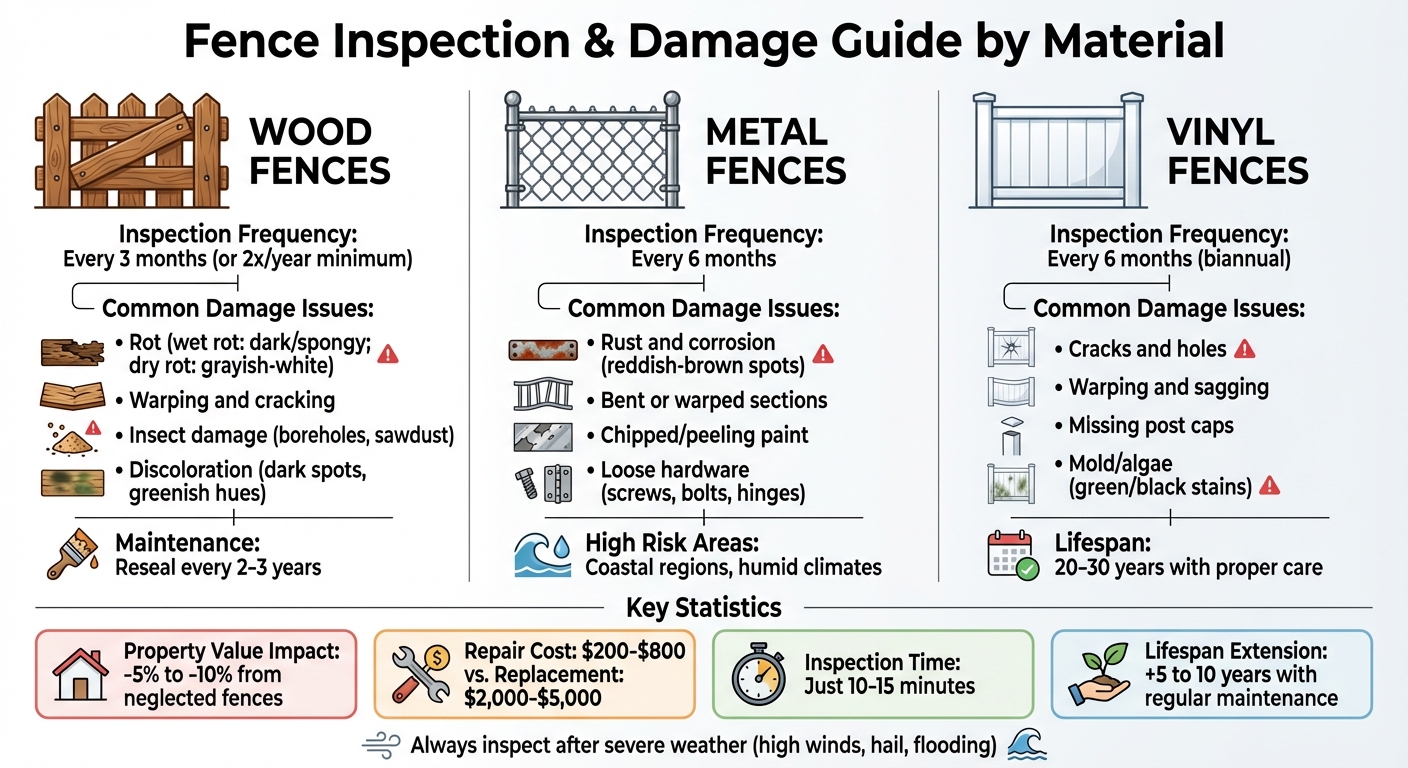
Fence Inspection Schedule and Common Damage by Material Type
How To Do A Visual Fence Post Inspection – Wood Fencing Repair
sbb-itb-d1d0a96
How Often Should You Inspect Your Fence?
How often you should inspect your fence depends on its material and the conditions in your area. Wood fences require the most care – aim to inspect them every three months, or at least twice a year. Metal fences like iron, aluminum, or chain link generally need inspections every six months. Vinyl fences, while low-maintenance, benefit from biannual checks, especially during winter and early spring when cold temperatures can make the material brittle.
It’s also wise to check your fence after severe weather, such as high winds, hail, or flooding. A quick 10–15 minute walk around your property can help you spot small problems before they grow into costly repairs. For commercial properties, quarterly inspections are a must due to heightened security and liability concerns.
What Affects How Often You Should Inspect?
Several factors influence how frequently you should inspect your fence:
- Climate: Coastal areas or humid regions can cause metal fences to rust more quickly, requiring more frequent checks. In colder climates, freeze-thaw cycles can lead to frost heave, shifting fence posts or cracking concrete footings. Extreme temperatures can also warp wood or crack vinyl.
- Vegetation: Overgrown plants can trap moisture, speeding up wood rot. Maintaining a 6–12 inch clearance around your fence can help. In autumn, fallen leaves can collect at the base, holding moisture and causing rot at the bottom of the fence.
- Fence Age: Older fences are more prone to hidden issues like internal rot, loose fasteners, or shallow foundations. As Stand Strong Fencing of Southlake notes:
We most commonly see storm damage reveal what homeowners didn’t know was wrong with their fence…until it was too late.
These factors highlight the importance of regular inspections to catch problems early and avoid major repairs.
Why Regular Inspections Save Money
Routine inspections can save you money by preventing small issues from becoming major expenses. Proactive maintenance can add 5–10 years to your fence’s lifespan and even boost your property value by 4%–6%. On the flip side, neglecting maintenance can lead to higher repair costs, with professional fixes ranging from $15 to $45 per linear foot. If 25%–30% of the fence is damaged, full replacement may be unavoidable.
Regular monthly checks – just 10–15 minutes of your time – are often enough to catch early warning signs. For instance, testing a wood fence’s sealant by pouring water on its surface can reveal if it’s time to reseal, which is typically needed every 2–3 years. A little effort now can save you significant costs down the road.
What Fence Damage Looks Like
Spotting fence damage early can save you from costly repairs. Since different materials wear down in unique ways, it’s helpful to recognize the specific signs of trouble for your type of fence. Here’s how to identify damage in wood, metal, and vinyl fences.
Signs of Wood Fence Damage
Wood fences are particularly vulnerable to rot, which is one of the most critical issues to address. Wet rot often appears as dark, spongy patches in shades of brown, black, or even greenish, while dry rot tends to look grayish-white and makes the wood crack or flake. A simple test involves pressing a flathead screwdriver into the wood – if it sinks in by 1/4 inch or more or you hear a hollow sound when tapping, the wood may have severe decay.
Other red flags include discoloration (like dark spots or greenish hues), warping, and cracking caused by moisture or temperature changes. Keep an eye out for insect damage, too – small boreholes and sawdust trails are telltale signs of termites or other pests.
Signs of Metal Fence Damage
Metal fences primarily face issues like rust and corrosion, which can weaken their structure over time. Early-stage rust looks like reddish-brown spots on the surface. If you use a wire brush and notice metal flaking or holes, it’s a sign of deeper corrosion. Severe pitting can compromise the fence’s strength significantly. As Austin Fence Company explains:
"Rust weakens metal structures, making them more susceptible to breakage and collapse."
Other indicators include chipped, peeling, or bubbling paint that exposes the underlying metal. Bent or warped sections can also signal structural problems, while leaning or sagging sections often point to unstable posts or damaged footings. Additionally, check for loose or missing hardware, such as screws, bolts, hinges, or latches. Metal fences are especially at risk in humid climates, rainy areas, or coastal regions where salt air speeds up corrosion.
Signs of Vinyl Fence Damage
Vinyl fences are prone to cracking, holes, and warping due to exposure to UV rays and temperature swings. Sudden temperature changes can cause vinyl to sag or warp, which might suggest installation issues like missing aluminum reinforcements. Missing post caps are another concern, as they allow water to seep in, freeze, and potentially damage the structure.
While vinyl avoids problems like rot, splintering, insect damage, and rust, it isn’t maintenance-free. Mold, algae, or mildew can develop as green or black stains in shaded, damp areas. Regular upkeep can help vinyl fences last their full 20- to 30-year lifespan.
How to Inspect Your Fence Yourself
Tools You’ll Need
Before diving into your fence inspection, gather a few key tools to make the process easier and more thorough. Start with a flashlight to illuminate dark spots under the fence or inside joints, a tape measure to check for uneven gaps or leaning sections, and a screwdriver to test hardware stability and probe for soft or damaged wood. A level will help confirm that posts and panels are properly aligned, while a knife or chisel can be used to scrape wood surfaces and check for signs of rot.
For a deeper look, a moisture meter can be handy to detect hidden moisture that might lead to internal wood decay. Another simple test is the "hose test" – spray water on your fence. If the water absorbs into the wood instead of beading up, it’s a sign that the protective stain is wearing off and may need reapplication within the next 3 to 4 years.
Don’t forget safety gear: goggles, heavy gloves, and closed-toe shoes with good traction are a must to protect yourself during the inspection. Once you’re ready, follow these steps for a detailed inspection.
Inspection Steps
To ensure your fence stays in great shape, inspect it by following these steps. Start by walking the entire perimeter to look for leaning panels, missing boards, or signs of rust. The best times for inspection are early spring – before plants and bushes grow too much – and late fall, to prepare for winter weather.
Check each post by gently pushing on it. A stable post should remain firm without any wobbling. Pay close attention to where the fence meets the ground. This area is especially vulnerable to rot, moisture damage, and pests. Watch for "sawdust-like" debris or small holes, which could indicate termite activity.
Test gates by opening and closing them multiple times to confirm they swing smoothly and that latches align and lock properly. Also, inspect all hardware, including nails, screws, brackets, and hinges, for rust, corrosion, or looseness. Tighten or replace anything that isn’t secure. Document any issues you find, noting their location and severity, so you can plan repairs or provide details to a contractor if needed.
Lastly, trim back any bushes or tree branches that touch the fence. These can create unnecessary stress on the structure, especially during strong winds.
When to Fix It Yourself vs. Call a Professional
Minor Repairs You Can Do Yourself
Some fence repairs are simple enough for homeowners to tackle on their own. For example, you can replace rusted or loose nails and screws with corrosion-resistant fasteners. If you notice cracked pickets, swap them out, and for metal fences, sand down small rust spots, treat them, and then repaint to prevent further damage.
Dealing with a sagging gate? Try tightening the hinges, applying silicone spray to lubricate them, or installing a turnbuckle kit for added support. For vinyl panels that have started to tilt, reattach brackets or reinforce the post base using gravel or concrete to bring them back into alignment.
Cosmetic fixes like cleaning mold or mildew and applying a fresh coat of stain or sealant are also manageable DIY tasks. Just remember to wear protective gloves and eyewear when using tools, and always check for underground utilities before digging. For wood repairs, consider using galvanized or stainless steel screws instead of nails – this provides a more secure hold as the wood naturally expands and contracts. However, if these quick fixes don’t solve the problem, it’s time to bring in a professional.
When You Need Professional Help
If minor repairs don’t work or the damage is more extensive, it’s best to call in a professional. For structural issues like multiple leaning posts, widespread rot, or significant storm damage, expert help is essential. Many fencing professionals rely on the "20% rule": if more than 20% of your fence needs repair, replacing the entire fence is often more cost-effective. Similarly, if over 30% of a specific post or panel is rotten, replacing that section is usually the smarter choice.
"If more than 20% of the fence needs to be repaired, it’s probably a better use of your money to replace the fence entirely." – Timothy Moore, Contributing Writer, Angi
You should also hire a professional if posts are leaning more than 15°, if there’s evidence of termite or carpenter ant damage, or if your fence doesn’t meet local safety codes. On average, professional fence repairs cost between $10 and $30 per linear foot, with most jobs falling in the $300 to $900 range.
If you’re in the Plano, TX area and need expert help, Tend Fencing specializes in wood, ornamental iron, and chainlink fence repairs and installations. They’re known for quality craftsmanship and a strong commitment to customer satisfaction.
What to Do When You Find Damage
Document and Assess the Damage
The moment you notice damage to your fence, start by taking clear, well-lit photos from multiple angles. These photos can be invaluable when discussing repairs with contractors or filing an insurance claim. Go a step further by using a tape measure to record the exact dimensions of gaps, cracks, or any damaged sections – this detailed information helps professionals give you more accurate repair estimates.
For wooden fences, test suspicious areas by gently scraping the surface with a tool. If the wood feels spongy or the tool easily penetrates, it could indicate active decay. Pay close attention to where the fence meets the ground since this area is prone to rot, moisture buildup, and pest-related damage. Keep an eye out for signs like wood powder or visible tunnels, which often point to pest activity.
"Identifying these issues early can help you tackle repairs before they worsen." – All Counties Fence & Supply
If the damage stems from a storm – whether caused by strong winds, hail, or fallen branches – review your homeowner’s insurance policy. Storm-related repairs might be covered (after your deductible), and having detailed documentation will make the claims process smoother.
Once you’ve gathered all the information, you’ll be in a better position to decide whether the damage is manageable through DIY fixes or if it requires professional attention.
Contact a Professional
After documenting the damage, evaluate whether professional help is necessary. Call in a contractor for major structural problems such as leaning posts, extensive rot, or severe storm damage. These types of issues often involve underlying problems that require a trained eye to diagnose and repair properly. Many contractors offer free estimates and can quickly provide on-site assessments.
For those in the Plano, TX area, Tend Fencing is a trusted option. They specialize in repairing and installing wood, ornamental iron, and chain-link fences. Whether it’s replacing a few broken boards or handling a complete fence overhaul, they take care of everything from initial evaluations to final installations.
Conclusion
Regularly inspecting your fence is one of the simplest ways to protect your property and avoid expensive repairs. Did you know that poorly maintained fencing can lower property values by 5% to 10%? Catching small issues early can prevent them from snowballing into major problems that require costly replacements. Just two inspections a year can make a huge difference, potentially doubling or even tripling your fence’s lifespan with proper care.
Think of it this way: a timely repair costing between $200 and $800 can save you from a full replacement that might run anywhere from $2,000 to $5,000. It’s all about timing. Much like regular car maintenance, routine fence upkeep keeps costs manageable and extends its usability. Plus, if you ever decide to replace your fence entirely, you could see a return on investment of 65% to 75% in terms of home value.
"Regular fence inspections are essential for maintaining structural integrity, ensuring security, and extending your fence’s lifespan." – Round Rock Fence Company
The key is consistency – inspect your fence, address any damage promptly, and know when to bring in professionals for more complex repairs. These steps ensure your fence continues to provide the security, privacy, and curb appeal it was meant to deliver.
Your fence does more than just define property lines. It’s a critical part of your home’s security and aesthetics. By staying proactive with inspections and maintenance, you can keep it in top shape for years to come.
If you’re in Plano, TX, and need expert help with fence inspections or repairs, reach out to Tend Fencing for reliable service and skilled craftsmanship.