

Vines might look beautiful on fences, but they can cause serious damage if left unchecked. Here’s a quick overview of how vines impact different residential fence materials and how to protect your fence:
- Moisture Traps: Vines hold moisture against fences, leading to wood rot, mold, and metal rust.
- Added Weight: Heavy vines can warp, sag, or tilt fences, especially during storms.
- Root Damage: Roots can crack or shift fence foundations, making repairs costly. In severe cases, you may need professional fence replacement services to restore your property’s boundary.
- Chemical Corrosion: Some vines, like English ivy, release acids that corrode metal coatings.
Fence Material Vulnerabilities:
- Wood: Prone to rot, cracking, and pest damage.
- Metal: Susceptible to rust and bending under pressure.
- Vinyl: Panels may separate or warp over time.
- Chain-Link: Can sag but is generally more resistant.
Protection Tips:
- Trim Vines Regularly: Prevent overgrowth and reduce weight.
- Use Trellises: Guide vines away from direct fence contact.
- Keep Bases Clear: Avoid moisture buildup by creating space between plants and the fence.
- Choose Non-Damaging Vines: Avoid aggressive species like English ivy or trumpet vine.
- Inspect Your Fence: Regular checkups can catch early damage.
Vines can shorten your fence’s lifespan, but with proper care and maintenance, you can enjoy their beauty without sacrificing durability.
HOW TO ELIMINATE INVASIVE VINES / BE CAREFUL WHAT YOU PLANT
sbb-itb-d1d0a96
How Vines Damage Fences
Vines can harm fences in several ways, leading to structural issues and reducing their longevity if left unchecked.
Moisture Buildup Leads to Rot and Decay
Thick vine growth traps moisture against fences, preventing it from evaporating. This damp environment encourages the growth of mold, mildew, fungi, and bacteria, which break down the wood’s natural strength.
"These organisms produce enzymes which break down the cellulose and lignin that give wood its strength, causing it to rot faster than it otherwise would." – Acosta Fence
This moisture doesn’t just affect wood. On vinyl fences, it can lead to algae buildup, while on metal fences, it promotes rust. Wooden fences are particularly vulnerable, as the dampness weakens the fibers, making them more susceptible to cracking and vine intrusion. The wet conditions also attract termites and other wood-damaging insects, compounding the problem.
Heavy Vines Create Stress on Structures
As vines grow, they add significant weight to fences, causing stress that can lead to leaning, sagging, or warping. Woody vines may crack or split wooden boards, while fast-growing species like wisteria can warp metal components. Even vinyl panels can buckle under the pressure, and chain-link fences often sag as vines weave through the mesh.
"In some cases, the vines can get so heavy that compromise the structural integrity of your fence. Instead of a few repairs, you’ll need to replace the whole thing." – Northwest Fence & Iron
This issue becomes even more pronounced during storms, as the vines act like sails, increasing lateral forces on fence posts. The added weight and movement can destabilize the fence’s foundation, making repairs more difficult.
Roots Compromise Fence Foundations
Vine roots can extend deep into the ground, putting stress on fence foundations. As woody vines like wisteria or trumpet vine mature, their thickening roots can twist metal bars or even lift entire sections of a fence.
"The vine’s strong wooden roots can get between the slats of a wooden fence or into existing cracks and cause breakage, especially on moisture-softened wood." – Fence Authority
Roots and climbing tendrils can also infiltrate small cracks in fence posts, gradually worsening structural damage. This kind of intrusion not only weakens the fence but also increases long-term maintenance needs.
Acidic Vines Corrode Metal Fences
Certain vine species, such as English ivy and Virginia creeper, produce oxalic acid, which can damage metal fences by corroding their protective coatings. Once these coatings are compromised, the exposed metal becomes more prone to rust and deterioration.
"Certain types of vines, such as English ivy or Virginia creeper, produce a substance known as oxalic acid. This substance can react negatively with certain fence materials, causing deterioration or corrosion." – Acosta Fence
When combined with the moisture trapped by dense foliage, this process accelerates corrosion, significantly shortening the lifespan of metal fences.
How Different Fence Materials React to Vines
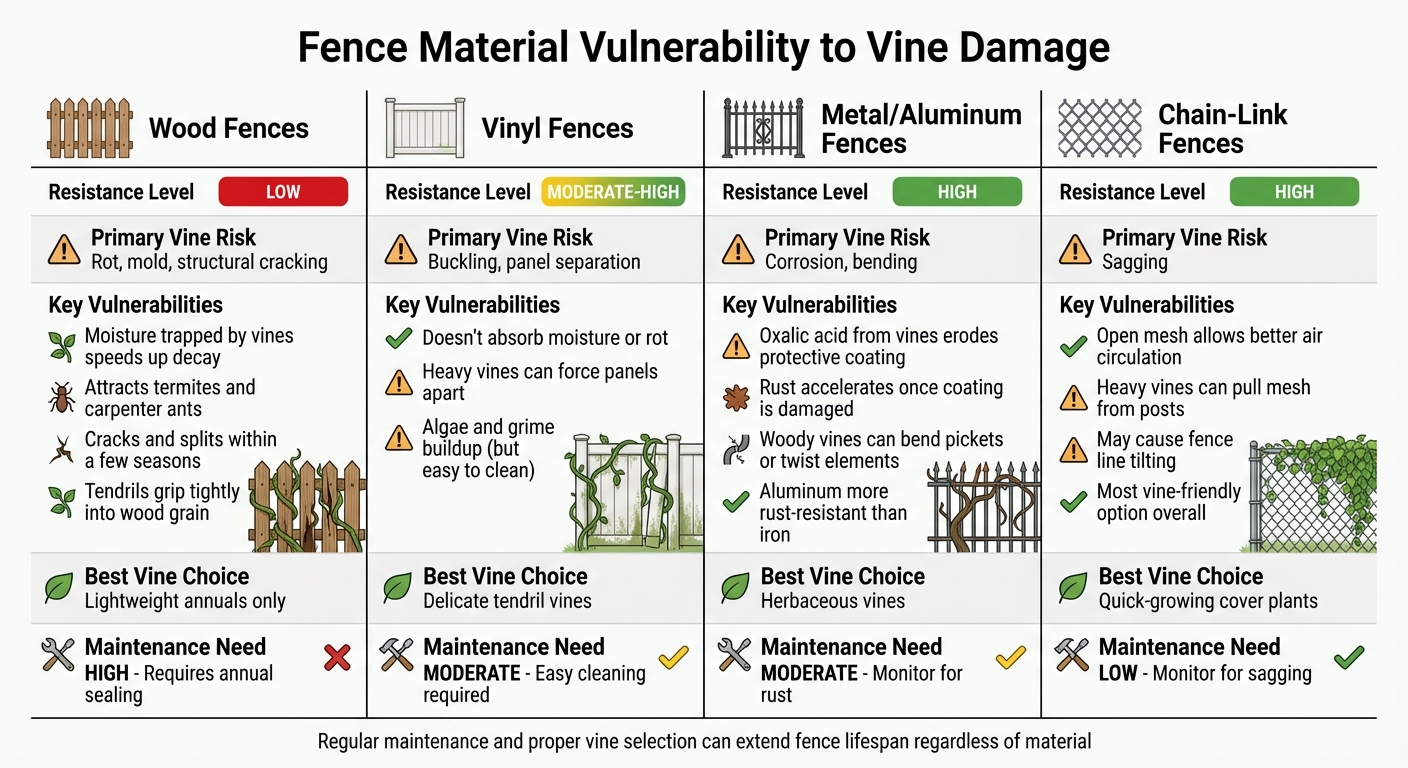
How Vines Affect Different Fence Materials: Damage Risks and Resistance Levels
Different fence materials interact with vine growth in unique ways, each presenting distinct challenges and maintenance needs. Let’s break down how various materials handle the weight and effects of climbing plants.
Wooden Fences
Wood is particularly vulnerable to damage from vines. Moisture trapped by clinging vines creates a humid environment that speeds up decay. Over time, this dampness can lead to rot and attract pests like termites and carpenter ants. The vines’ tendrils grip the wood tightly, making it even harder for the material to stay intact.
"Wood fences are particularly susceptible to this type of damage due to their natural material, which can be more easily compromised by the expanding vines." – Bri Myrick
Without regular sealing or staining, wooden fences can crack and split in just a few seasons. Since wood is organic, it offers both a gripping surface for vines and a material prone to breaking down under constant moisture exposure. Next, let’s see how metal fences compare.
Metal Fences
Metal fences face their own set of challenges when it comes to vine growth. While they don’t rot like wood, they can still suffer from corrosion and structural stress. Vines that produce oxalic acid, for example, can erode protective coatings, leaving iron and steel vulnerable to rust. Once the coating is damaged, moisture trapped by vine foliage accelerates rust formation.
"Metal bars can be bent and twisted by certain fast-growing vines, such as wisteria." – Big Jerry’s Fencing
Ornamental iron fences are designed to handle more weight than wooden ones, but woody vines can still apply enough pressure to bend pickets or twist decorative elements. Aluminum fences are more resistant to rust, making them a better choice for vine growth, though scratches from tendrils can expose the metal underneath to weathering.
Vinyl and Chain-Link Fences
Vinyl fences are highly resistant to moisture-related damage since they don’t absorb water or rot. However, vines can force panels apart over time. Dense foliage can also hide dirt, algae, or grime, though vinyl surfaces are easy to clean with basic soap and water.
"Vinyl fences won’t deteriorate because they don’t absorb moisture." – Big Jerry’s Fencing
Chain-link fences, on the other hand, are often seen as the most vine-friendly option. Their open mesh design allows for better air circulation, which helps reduce moisture buildup. However, heavy vines can cause sagging by pulling the mesh away from its posts or even tilting the entire fence line. Despite this, many homeowners encourage vine growth on chain-link fences to add privacy or improve their appearance.
| Fence Material | Primary Vine Risk | Resistance Level | Best Vine Choice |
|---|---|---|---|
| Wood | Rot, mold, structural cracking | Low | Lightweight annuals |
| Vinyl | Buckling, panel separation | Moderate/High | Delicate tendril vines |
| Metal/Aluminum | Corrosion, bending | High | Herbaceous vines |
| Chain-Link | Sagging | High | Quick-growing cover plants |
How to Prevent and Control Vine Growth on Fences
Once you understand how vines can harm fences, it’s time to take action. Protecting your fence requires regular upkeep and smart planning.
Trim Vines Regularly
Keeping vines in check with frequent pruning helps prevent them from overtaking your fence. Start by cutting away dead or diseased stems to lighten the plant and improve airflow. Trim tangled sections carefully to avoid damaging the fence boards. For summer or fall bloomers like honeysuckle, prune in late winter or early spring. For early bloomers like jasmine or wisteria, trim right after the flowers fade.
"Reducing a vine’s mass not only ensures that your fence won’t collapse, it also allows light and air to reach the plant’s interior." – Karen Davis Cutler, Author and Editor, Brooklyn Botanic Garden
Make sure to cut cleanly into healthy wood, avoiding stubs that attract pests and diseases, which could eventually harm your fence. Wooden fences, in particular, need extra care – frequent trimming prevents tendrils from slipping into cracks or heavy growth from bending boards. Staying on top of pruning keeps vines manageable and stops them from causing structural damage.
Use Trellises to Redirect Vines
A trellis can guide vine growth away from your fence, protecting it from direct contact. Position trellises at least an inch away from the fence to ensure proper airflow. For wooden fences, it’s a good idea to place the trellis a few feet inside the fence line to avoid any contact entirely.
"Many people place a series of posts a few feet inside their fence line and a string wire or other supports between each post, then guide their vines along these wires. Doing so can give you the full, rich look of creeping, climbing vines without putting your fence in danger." – The Fence Authority
You can even make a simple wire grid by drilling 1/8-inch holes in fence posts spaced about 6 feet apart, adding screw eyes, and running galvanized wire at 2-foot and 4-foot heights. Use soft ties like jute string or stretchy tape to loosely secure the vines without harming their stems. This setup supports the vines while keeping your fence safe.
Keep Plants Away from Fence Bases
Leaving space between your fence and plants is another way to prevent damage. A few feet of clearance can stop moisture buildup and prevent organic debris from rotting the fence. Add metal strips or plastic garden edging to create a clear barrier and limit vine spread.
"Keep vines off the wood boards, and you’ll extend the time between fence repairs." – Pacific Fence & Wire
Make sure sprinklers don’t spray directly on the fence, and if you use mulch, limit it to 2-3 inches and keep it away from fence posts. Seal any cracks in nearby walls to stop vines from taking root. These steps help reduce moisture-related damage and can extend the life of your fence.
Choose Vines That Won’t Damage Fences
Picking the right plants can make a huge difference. For wooden fences, go with lightweight, non-clinging annuals. On vinyl fences, pick vines with delicate tendrils. Avoid aggressive species like English ivy, trumpet vine, and Japanese honeysuckle. If you have a metal or chain-link fence, it can handle heavier perennials, but be cautious about sagging or rust. Choosing less invasive plants means less maintenance and a healthier fence.
Schedule Professional Fence Inspections
Regular inspections by experts can catch potential issues before they turn into costly repairs. Services like Tend Fencing can spot early signs of vine damage, identify moisture problems, and recommend maintenance plans tailored to your fence type. Based in Plano, TX, Tend Fencing specializes in wood, ornamental iron, and chain-link fences, offering advice on protecting your fence from vine-related damage. Their team can assess your landscaping and suggest ways to keep both your plants and fence in good shape. Professional checkups and consistent care are essential for keeping your fence strong over time.
Conclusion
Keeping vines in check is essential for maintaining your fence’s durability. Vines can weaken fences by trapping moisture, adding excessive weight, spreading invasive roots, and even causing chemical corrosion in the case of oxalic acid-producing plants. If left unattended, these problems can stay hidden beneath thick foliage, leading to expensive repairs or even the need for a full replacement.
To protect your fence, trim vines once or twice a season to promote airflow. You can also use trellises positioned a few feet away from the fence to enjoy climbing plants without direct contact. Additionally, maintaining a clear buffer zone around the base of your fence helps prevent moisture buildup and root-related damage.
Different fence materials require specific care. Wooden fences should be sealed annually to guard against rot, while metal fences, though sturdy, are prone to rust. Vinyl fences resist decay but can warp under heavy vine growth, and chain-link fences fare better thanks to their open structure.
Scheduling professional inspections can catch early signs of decay, pest issues, or structural weaknesses like loose posts. By combining regular checkups, thoughtful planting strategies, and consistent upkeep, you can significantly extend your fence’s lifespan and avoid costly replacements.
For homeowners in Plano, TX, Tend Fencing offers expert installations and inspections to help protect your investment. Take action today to ensure your fence stays strong for years to come.
FAQs
How can I tell if vines are hiding fence damage?
Inspect your fence carefully for any damage that might be hidden beneath vines. Look for cracks, splits, leaning or loosened posts, discoloration, rot, or signs of pest activity. Dense vines can put significant pressure on fences – especially wooden ones – potentially causing structural problems over time.
What are the safest vines to grow on a fence?
When selecting vines for fences, noninvasive species are the safest choice. Options like clematis, Virginia creeper, and native wildflowers not only enhance the visual appeal of your fence but also prevent potential damage. These plants are less likely to spread uncontrollably or compromise the structure, making them a smart and attractive addition to your outdoor space.
When should I call Tend Fencing for an inspection?
If you spot issues like cracks, splits, rot, mold, or any signs of structural weakness in your fence due to vine growth, reach out to Tend Fencing. Even if your fence looks fine, contacting them for preventive care can help protect it from future vine-related damage and keep it in top shape.