
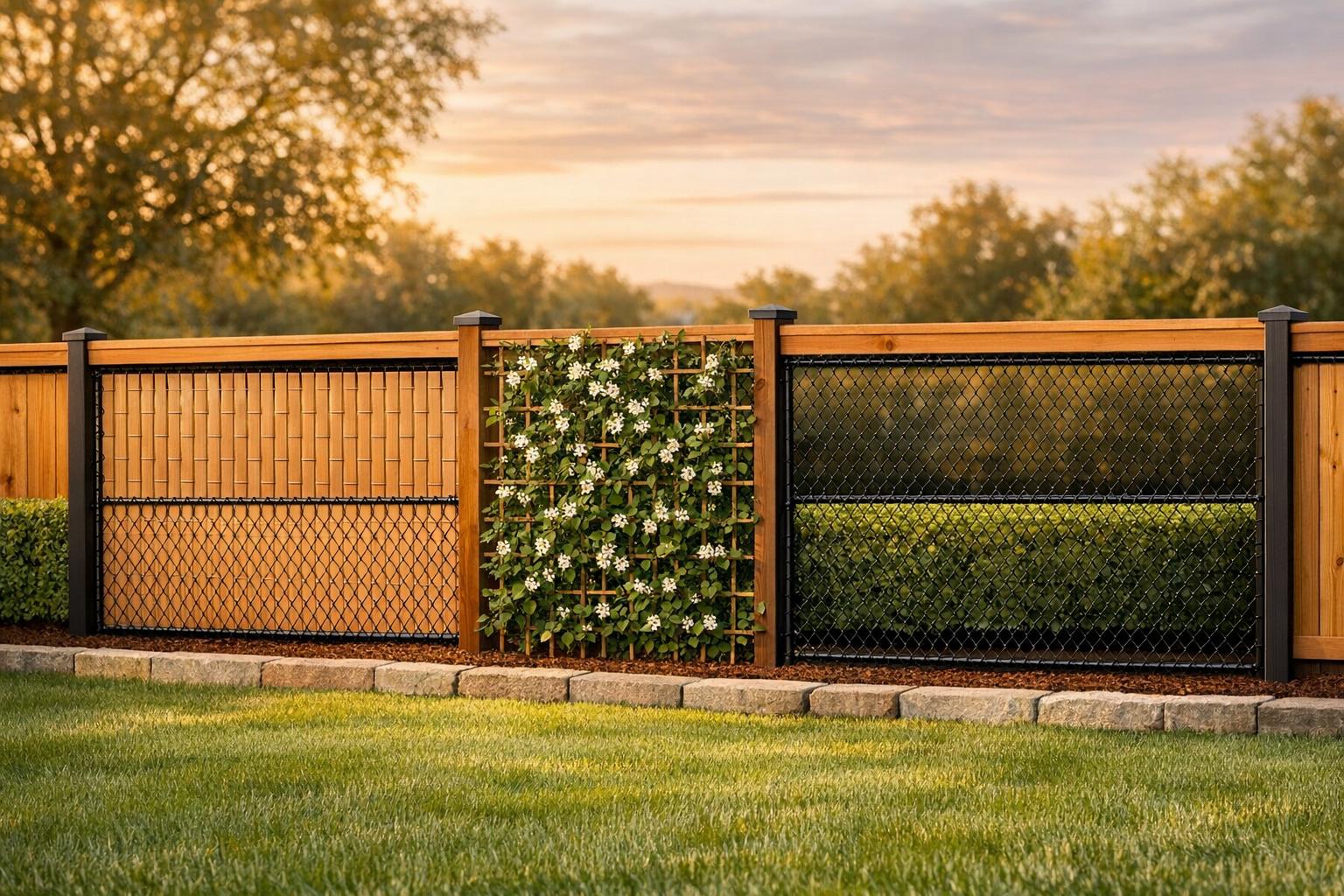
Chainlink fence installation is durable and budget-friendly, but their industrial look often leaves homeowners wanting more. Thankfully, there are simple ways to upgrade their appearance without sacrificing practicality. From adding privacy slats to incorporating climbing plants, these ideas can transform your fence into a more attractive feature. Here’s a quick rundown of the top options:
- Privacy Slats: Insert vertical strips for better privacy and style.
- Paint: Use rust-resistant paint for a bold or subtle new look.
- Climbing Plants: Grow vines like ivy or jasmine for a natural touch.
- Decorative Panels: Attach wood, vinyl, or bamboo panels for a polished finish.
- Vinyl Coating: Protect metal with a smooth, colorful layer.
- Wooden Accents: Add trellises or frames for a softer aesthetic.
- Hedges: Plant shrubs for a green privacy barrier.
- Decorative Toppers: Increase height with lattice or metal panels.
- Colorful Slats: Weave vinyl strips in patterns for a custom design.
- Combine Methods: Mix and match techniques for a standout look.
Each method can suit different budgets and styles, making it easy to upgrade your fence. Whether you prefer quick fixes or long-term solutions, these ideas can help your yard feel more welcoming.
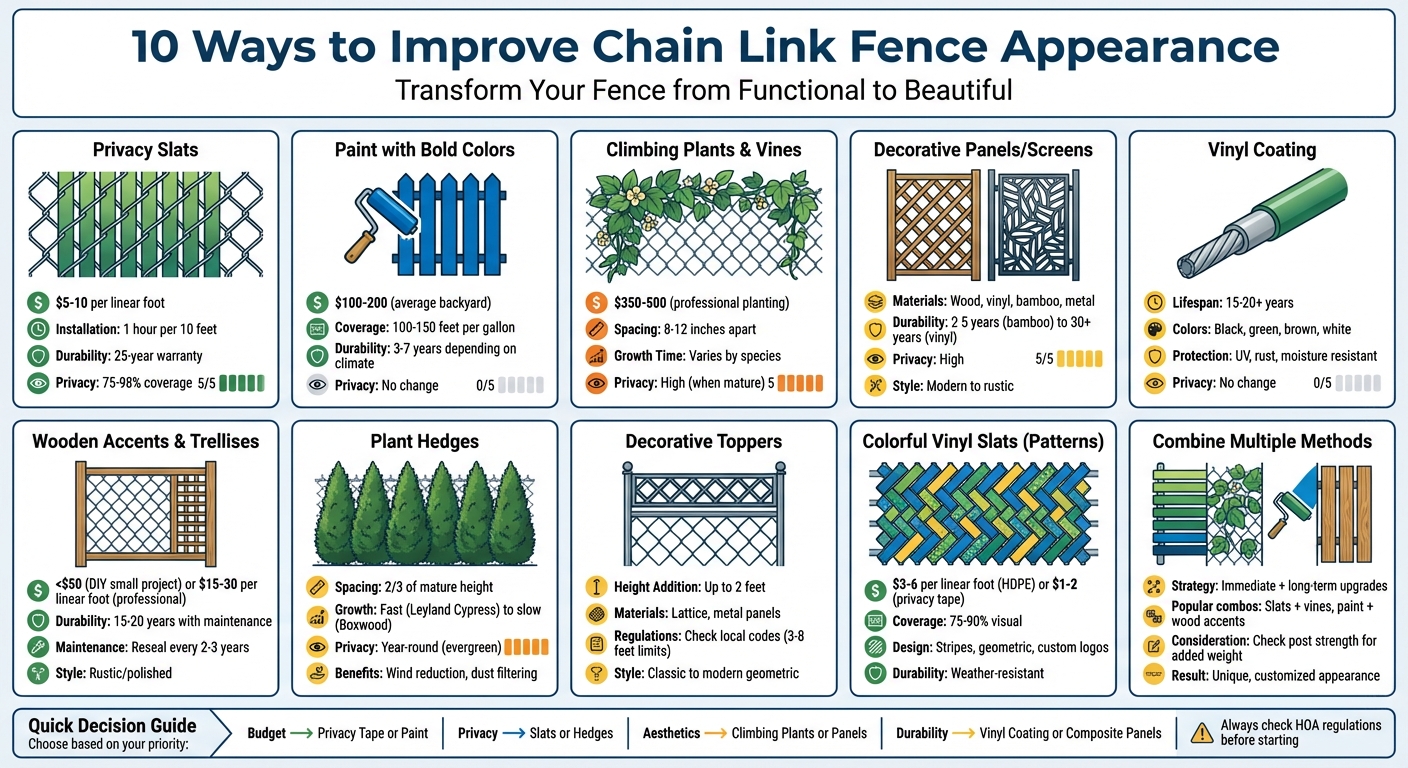
10 Chain Link Fence Improvement Methods Comparison Guide
5 Beautiful Ways to Cover Your CHAIN LINK Fence: Pros and Cons
sbb-itb-d1d0a96
1. Add Privacy Slats for Instant Coverage
Privacy slats are thin, vertical strips made from materials like HDPE, PVC, or aluminum that fit into your chain-link fence mesh. They can turn a transparent fence into a private barrier, cutting visibility by 75% to 98%, depending on the style you choose. A typical package covers 10 linear feet and includes UV inhibitors to protect against fading and cracking.
"Privacy slats are the ultimate fence makeover tool. These strips slip into existing chain link fences, changing them from see-through barriers into private sanctuaries." – Rob Thibeault, Author
Installing privacy slats is straightforward, taking about an hour for every 10 feet. Before purchasing, measure your fence’s mesh size – usually 2-inch or 2¼-inch diagonal openings – to ensure the slats fit correctly. There are different types of locking mechanisms to choose from: bottom-locking slats click into a horizontal track at the base, top-locking versions secure along the top edge for a clean finish, and winged slats grip the mesh directly without requiring additional channels.
The cost varies depending on the style. Standard slats average around $5 per linear foot, while decorative options like hedge-style slats can range from $9 to $10 per foot. They come in a variety of colors, including beige, forest green, black, and royal blue, allowing you to match your fence to your home’s exterior or landscaping. Many high-quality slats even come with a 25-year warranty against weather damage.
Keep in mind that adding privacy slats creates a wind barrier, so ensure your fence posts are sturdy enough to handle the added load. For enhanced privacy, lighter-colored slats can be a smart choice since they’re harder to see through.
Next, let’s dive into ways to add vibrant colors to elevate your fence’s appearance.
If you’re considering a professional upgrade, you can request a free quote for your project.
2. Paint Your Fence With Bold Colors
A fresh coat of paint can turn a chainlink fence from an eyesore into a standout feature. The secret lies in selecting the right paint – specifically, a rust-resistant formula designed for metal surfaces. Oil-based enamel or Direct-to-Metal (DTM) paints work best for galvanized steel, offering strong adhesion and better fade resistance than standard options. Paints with aluminum flake additives are especially effective, as the flakes overlap to form a watertight seal, giving your paint job extra durability.
Before painting, prep is key. Start by scrubbing off loose rust with a wire brush, then pressure wash at 1,500 PSI. Allow the fence to dry thoroughly for 24–48 hours. Apply a rust-inhibiting primer first, followed by two thin coats of paint. This method helps prevent drips and ensures an even finish that can last 3 to 5 years in humid areas or up to 5 to 7 years in milder climates.
When it comes to color, your choice can make a big impact. Darker shades like black, forest green, or dark bronze blend seamlessly with landscaping and hide imperfections better than lighter colors. For a sleek, modern vibe, try crisp white or deep charcoal to create a clean, architectural look. Feeling bold? Match your fence to a bright yellow front door or vibrant garden flowers for a cohesive, eye-catching focal point. Just remember to check with your homeowners’ association before committing to unconventional colors.
If you’re tackling this as a DIY project, expect to spend $100–$200 on materials for an average backyard fence. One gallon of paint usually covers about 100 to 150 feet of fencing. Use a long-nap roller (1.5 to 2 inches) to reach into the mesh, or opt for an airless sprayer for quicker, more even coverage. Go for a semi-gloss or gloss finish – they’re not only more durable but also easier to clean, helping your bold color stay vibrant for longer. This refreshed fence can become the perfect starting point for other design updates in your outdoor space.
3. Grow Climbing Plants and Vines
Transform your chainlink fence by adding climbing plants. These plants naturally weave through the fence’s mesh, softening its industrial feel while boosting privacy and adding vibrant colors. The trick lies in choosing the right plants for your climate, light conditions, and how much upkeep you’re willing to manage.
For a privacy-focused approach, vines with dense foliage like English Ivy, Boston Ivy, or Virginia Creeper are excellent options. If you’re looking to add a pop of color or fragrance, flowering vines such as Clematis, Star Jasmine, or Honeysuckle can do the trick. Rachel Brinkman, Manager of Horticulture at the Arnold Arboretum, notes:
"Twining vines twist their shoots up structures and they’re great for chain link fences or latticework".
Planting these climbers is relatively simple. Start by spacing your plants about 8 to 12 inches apart along the base of the fence. Loosen the soil to a depth of 6–8 inches and mix in 2–3 inches of compost to enrich it. After planting, add a 2-inch layer of mulch to help retain moisture and keep weeds in check. As the plants grow, guide young shoots through the mesh and secure them gently with soft garden twine or green stretch plant tape, which you can usually find for under $6.
For year-round coverage, Star Jasmine is a great evergreen option, while deciduous vines like Virginia Creeper offer striking seasonal changes with their vivid red leaves in the fall – though they leave the fence bare in winter. If your fence gets plenty of sunlight, consider Morning Glory or Scarlet Runner Bean. For shadier spots, English Ivy is a reliable choice. Native species like American Wisteria and Crossvine are also solid options, and they’re safer alternatives to invasive varieties.
If you’re thinking about heavier, woody vines like Wisteria, make sure your fence is sturdy enough to handle the weight. Regular pruning is essential to keep the plants looking tidy, encourage fuller growth, and prevent vigorous growers like Boston Ivy – which can climb over 50 feet – from taking over. Keep in mind, though, that annual vines may require complete removal at the end of their growing season, which can be a bit of a hassle since they tend to intertwine tightly with the fence. Alternatively, you can hire professionals for a planting project, which typically costs between $350 and $500.
4. Install Decorative Panels or Screens
Decorative panels are a quick and effective way to give a chain-link fence a fresh look. These panels attach directly to the fence and come in materials like wood, vinyl, metal, or natural options such as bamboo. Depending on your choice, they can create a modern, tropical, or rustic vibe while offering a base for further personalization.
Wood panels, especially those made from cedar or redwood, bring a timeless, natural aesthetic. You can install them as vertical pickets or horizontal boards for a layered "fence-on-fence" effect. If you’re looking for something easier to maintain, vinyl and composite boards are a great option and can last over 30 years. Aluminum screens are another durable choice since they’re lightweight and resistant to warping or cracking. For a tropical feel, natural materials like bamboo or reed rolls work well, though their lifespan is typically around 2 to 5 years, depending on weather exposure.
For a low-maintenance alternative, artificial greenery panels imitate the look of a living wall without the hassle. If you’d like something more unique, custom-printed fabric or mesh screens with patterns can be easily attached using UV-rated zip ties or clips.
When installing, make sure to secure heavier wood panels with horizontal rails at the top, middle, and bottom to keep them from bending. Lighter materials like fabric or vinyl screens can be attached with UV-rated zip ties or clips. For natural screens like bamboo, weaving galvanized wire through the mesh will help stabilize them. To extend the life of wood panels, apply a stain or sealant to protect them from the elements.
Before starting your project, check with your local HOA to ensure your decorative upgrades meet any applicable guidelines.
For professional help with these upgrades in Plano, TX, reach out to Tend Fencing.
5. Apply Vinyl Coating for Protection
Adding a vinyl coating to a chainlink fence not only improves its appearance with a smooth, rubber-like finish but also protects the metal from moisture, rust, and UV damage. This extra layer can help extend the fence’s lifespan to 15–20 years or more.
Vinyl coatings are available in a range of colors to suit different preferences. Black offers a sleek, modern look that blends seamlessly into the background. Green or brown options work well with natural landscapes, while white provides a classic, coastal aesthetic.
Compared to powder coating, vinyl coating is easier on the wallet. It’s also UV-stabilized to withstand long-term sun exposure, softer than raw metal for added safety, and built on a galvanized steel base, known for its durability over centuries.
However, proper maintenance is key to keeping the coating in good condition. Regular inspections can help spot cracks or peeling early, preventing moisture from causing damage. If repainting becomes necessary, it’s best handled by professionals to ensure quality results.
For homeowners in Plano, TX, Tend Fencing offers expert guidance in choosing the right color and provides professional residential fence installation of vinyl-coated chainlink fences that stand the test of time.
6. Use Wooden Accents and Trellises
Adding wooden accents to your chainlink fence can completely transform its appearance, giving it a softer, more polished look. For a modern vibe, consider rot-resistant woods like cedar or redwood for posts and rails. Pairing stained wood with black painted mesh creates a rustic, yet stylish, aesthetic.
"Stained cedar combined with black painted mesh makes for a rustic look." – Terry Schutz, Home Improvement Expert
Wooden accents also pave the way for decorative additions like lattice panels and trellises. Lattice panels, typically sold in 4×8-foot sections, can be attached to your fence using a "sandwich" method. This involves clamping the chainlink between the lattice and a 1×4 board, secured with deck screws. This method ensures stability with nine secure points per panel. Trellises, on the other hand, are ideal for supporting climbing plants such as ivy, jasmine, or clematis.
Before diving into installation, check the strength of your fence posts. Standard chainlink fences with 16-gauge tubing may not support the weight of solid wood panels. To safely handle heavier additions, posts should have a wall thickness of at least 0.085 inches (2.16 mm). If your posts aren’t up to the task, opt for lighter lattice panels or smaller decorative accents instead.
To attach 2×4 stringers to metal posts, use steel-to-wood brackets like WAP-OZ or conduit clamps. For lighter panels, UV-resistant zip-ties offer a quick and non-invasive solution. Always choose pressure-treated pine or naturally rot-resistant woods like cedar, and apply a sealant to all surfaces, especially cut edges, to prevent moisture damage. Adding post caps to wooden elements helps protect against water seeping into the end grain, reducing the risk of rot.
If you’re tackling a small project, you can expect to spend less than $50 on materials and about two hours of your time. For larger installations, hiring professionals typically costs $15–$30 per linear foot. With proper care, including resealing every 2 to 3 years, wooden accents can last 15 to 20 years or longer.
7. Plant Hedges Along the Fence Line
Adding hedges along your chain link fence can create a natural privacy barrier while softening its industrial look. This simple addition transforms the stark metal into lush greenery, boosting your property’s curb appeal and visual charm. Whether you’re aiming for privacy or aesthetics, there are plenty of evergreen and fast-growing hedge options to suit your needs.
Evergreen varieties like Arborvitae, American Boxwood, and Japanese Holly provide year-round coverage, effectively hiding the fence’s mesh design. If you’re looking for faster results, consider fast-growing options like Leyland Cypress or Privet hedges, which can fill out within just a few seasons. For a touch of color and to attract pollinators, flowering shrubs such as Forsythia, Hydrangeas, and Butterfly Bushes are excellent choices.
"Chain link fences are renowned for their functionality but are often criticized for their lack of aesthetic appeal. However, with a little creativity and effort, you can turn your utilitarian fence into a striking focal point of your property." – Ace Fence
To ensure healthy growth, space your plants correctly. A good rule of thumb is to plant shrubs at two-thirds of their mature height apart (e.g., a 6-foot hedge should have 4-foot spacing). This allows room for pruning and prevents crowding that could damage the fence foundation. Planting shrubs on the outer side of the fence ensures the metal is completely hidden as the plants mature.
Hedges also offer practical benefits beyond appearance. They can help reduce wind and filter dust, while also providing shelter and food for birds and other pollinators. To keep your fence and plants in good condition, trim branches regularly to avoid any damage to the fence structure.
8. Add Height With Decorative Toppers
Decorative toppers can elevate both the height and appearance of your chain-link fence. By using vertical fence extenders, you can add up to 2 feet to a standard 4-foot fence, creating a taller, updated look without replacing the entire structure. This approach complements earlier aesthetic upgrades seamlessly.
Lattice panels are a popular choice for toppers. These panels – available in vinyl, wood, or composite – typically come in 16-inch sections. You can opt for diamond lattice for a classic style, square lattice for a more modern feel, or laser-cut metal panels featuring geometric or nature-inspired patterns.
Before starting, check local regulations regarding fence height. Most areas allow fences between 3–4 feet for front yards, 4–6 feet for side yards, and 6–8 feet for backyards. Many residential zones permit extensions up to 6 feet without requiring a full fence replacement.
For installation, you can use the "sandwich" method, which involves fastening 1×4 boards to both sides of the lattice with deck screws. Alternatively, you can use slip-over post extensions with a 6–8 inch overlap, secured with 2–3 self-tapping screws. Adding top rail caps is another smart step to protect against water damage and prolong the life of your fence.
"The additional height creates a psychological barrier effect that makes potential intruders think twice before attempting to breach your property perimeter." – Veterans Fence
If you’re in the Plano, TX area and want a professional touch, Tend Fencing offers expert installation services. They can ensure your decorative toppers are securely installed and meet local codes.
9. Weave Colorful Vinyl Slats in Patterns
Adding colorful vinyl slats to your chain-link fence can completely change its look. You can weave the slats vertically, horizontally, or diagonally, creating a textured and visually appealing design. By alternating two or more colors, you can form bold stripes that turn a basic fence into a vibrant focal point.
For something more intricate, think of the chain-link mesh as a grid. Each diamond can act like a pixel, allowing you to create geometric patterns, animals, flowers, or even scenic designs with different colored slats. Some people take it a step further by spelling out words, family names, or even team logos using contrasting colors.
Vinyl slats made from HDPE are built to withstand sun, wind, and rain, offering 75%–90% visual coverage. These slats typically cost $3–$6 per linear foot. If you’re working with a tighter budget, privacy tape is a cheaper alternative at $1–$2 per foot, though it’s less durable than the rigid slats.
To get started, sketch your design on graph paper, treating each mesh diamond as a square. Before weaving, clean the fence with a vinegar-water solution to ensure a fresh surface. Secure the slats using brass fasteners or zip ties for a polished finish.
"Privacy tape is a budget-friendly option that you can weave through the links for a simple yet effective transformation." – Big Jerry’s Fencing
This method not only enhances your fence’s functionality but also gives it a personal, artistic touch. For more inspiration on customizing your yard, check out our latest fencing trends and tips.
10. Combine Multiple Methods
Blending different techniques can completely transform the look of your chainlink fence. Pairing privacy slats with climbing vines or combining painted mesh with wood accents creates a unique and tailored appearance. This strategy merges quick visual upgrades with long-term enhancements.
One popular combination is privacy slats with climbing vines. Privacy slats offer immediate coverage – ranging from 75% to 90% – while climbing plants gradually improve the fence’s aesthetic over time. The chainlink mesh provides a sturdy framework for vines, allowing them to grow without damaging the metal structure. However, if you’re planning to add both slats and dense greenery, make sure your fence posts can handle the extra weight. Upgrading to stronger posts, like SS40 instead of SS20, is a smart move in such cases.
Another option is mixing painted mesh with wood accents. Painting the chainlink fence in colors like black or dark green makes the mesh blend into the background, letting features like stained cedar frames or decorative panels stand out. According to home improvement expert Terry Schutz:
"Stained cedar combined with black painted mesh makes for a rustic look".
For commercial properties, combining privacy mesh with custom-printed logos turns a simple fence into a branding opportunity. Meanwhile, institutional settings can use similar creative accents to add personality to otherwise plain fences. The key is to choose combinations that match your property’s purpose. For residential areas, materials like bamboo or flowering vines add a natural touch. In contrast, commercial spaces benefit from durable options like HDPE slats or vinyl-coated mesh.
When combining enhancements, ensure your fence structure can handle the added weight and wind load. Keep enough space between plants and the fence for maintenance, and guide young vines by weaving them evenly through the mesh for consistent coverage. By thoughtfully merging these methods, you can achieve both an immediate transformation and lasting curb appeal.
For more tips on creating a beautiful and durable chainlink fence, check out Tend Fencing.
Conclusion
Chainlink fences don’t have to be purely functional – they can also become standout features of your property. With the right upgrades, such as privacy slats for coverage or climbing plants to create a lush, green wall, you can turn your fence into something that enhances your outdoor space. Choose options that suit both your style and budget. For a quick fix, painting the fence in dark colors like black or green helps it blend seamlessly with the surroundings. For something more durable, HDPE slats offer weather-resistant privacy that lasts.
Combining different upgrades can take the transformation even further. For example, pairing privacy slats with wooden trim or adding climbing vines to a freshly painted fence creates a unique and visually appealing look. As Curbly explains:
"By balancing functionality and beauty, your chain link fence can truly become an asset, adding value to your home and joy to your outdoor living".
Before diving into upgrades, make sure to check local HOA regulations and confirm property boundaries to avoid any issues.
If you’re in Plano, TX, and need professional assistance to bring your vision to life, Tend Fencing offers custom solutions for residential and commercial properties. Their team focuses on high-quality installations that improve security, define spaces, and boost curb appeal. Plus, they’re committed to sustainability, planting a tree for every fence they build.
FAQs
Which fence upgrade adds the most privacy fast?
Installing privacy slats in a chain-link fence is one of the easiest ways to increase privacy. These slats slide directly into the fence, forming a solid barrier while also improving its look. This straightforward addition enhances privacy and gives your outdoor area a more polished, decorative feel.
How do I prep a chain-link fence before painting?
To get your chain-link fence ready for painting, begin by giving it a thorough cleaning. Use a stiff brush along with a commercial degreaser to scrub away dirt, dust, and mildew. For any rust spots, tackle light rust with a wire brush or steel wool. If the rust is more severe, apply a rust-inhibiting primer to protect the metal. Once that’s done, power-wash the fence to remove any leftover debris. Make sure the fence is completely dry before you start applying paint or primer to ensure the best finish.
Will slats or panels make my fence fail in high winds?
Solid or semi-solid slats on fences can influence how well they handle wind, especially in areas prone to strong gusts. These designs may increase wind pressure, which could lead to damage if the fence isn’t securely installed or adequately reinforced. To minimize potential issues, using reinforced posts or opting for angled fencing can help. While slats are great for adding privacy and enhancing style, their ability to hold up against strong winds largely depends on the quality of the design, proper installation, and how well they suit the local wind conditions. Hiring a professional installer can make a big difference in ensuring your fence stays sturdy during high winds.