

Maintaining your wood fence can save you money, extend its lifespan, and keep it looking great. Regular care prevents common issues like rot, warping, and discoloration caused by weather, insects, and UV exposure. Here’s a quick summary of what you need to do:
- Inspect Monthly: Check for loose boards, rot, rusted fasteners, and insect damage.
- Clean Annually: Remove dirt, mildew, and buildup using mild soap or a bleach solution for tougher stains.
- Seal or Stain Every 2–3 Years: Use a high-quality product with UV blockers to protect the wood from sun damage and moisture.
- Repair Promptly: Replace cracked boards, tighten fasteners, and fix leaning posts or sagging gates.
- Seasonal Upkeep: Adjust care based on weather – reinforce before winter, clean after storms, and touch up during sunny seasons.
For tougher repairs or professional help, companies like Tend Fencing in Plano, TX, specialize in wood fence maintenance tailored to harsh climates.
Read on for detailed steps to keep your fence in top shape year-round.
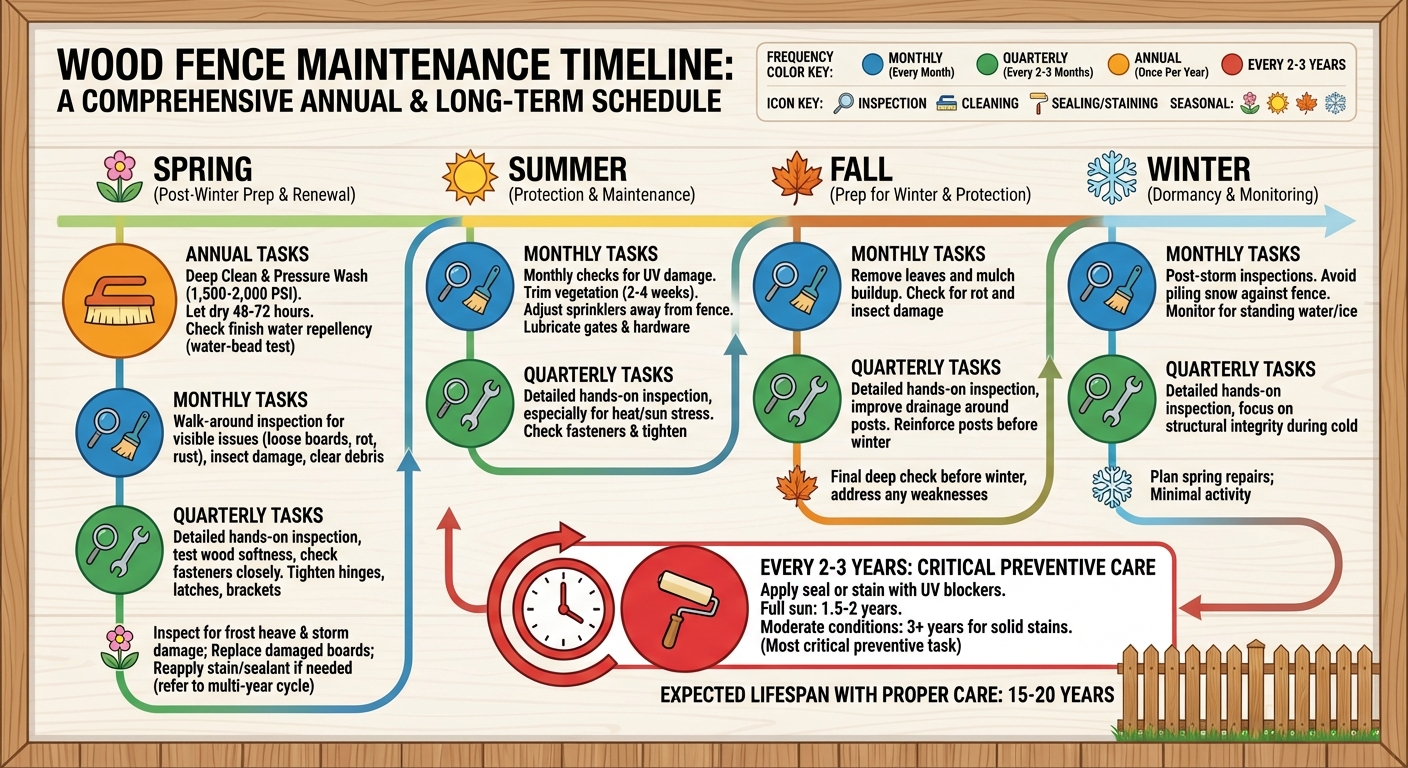
Wood Fence Maintenance Schedule: Monthly, Annual, and Seasonal Tasks
How to Properly Maintain a Wood Fence for Lifetime Durability | Expert Stain and Seal Tips
Regular Inspection Tasks
Catching small problems early can save you a lot of trouble down the road. Make it a habit to walk along your fence once a month to spot any visible issues. In addition to these quick checks, plan for more thorough, hands-on inspections at least twice a year – spring and fall are ideal. During these detailed inspections, you can test the wood for softness and check fasteners closely. If you live in areas with tough weather conditions, like heavy rain, snow, intense sun, or near the coast, bump up these detailed inspections to three or four times a year to stay ahead of wear and tear.
These regular checkups are the backbone of good fence maintenance.
What to Check During Inspections
Start with the posts, especially at corners and near gates. Give them a push to see if they’re loose and inspect the base where the post meets the ground for signs of rot. Pay close attention to the first few inches above and below ground level – this is where most issues begin. For rails and pickets, look for signs of warping, cracking, or boards pulling away from the frame. If any section feels soft or shows discoloration, it could be a sign of rot.
Next, examine all fasteners and hardware. Are there loose, missing, or protruding nails and screws? Rust is another red flag, as it can weaken connections and stain the wood. Hinges, latches, and brackets should be tightened at least twice a year since seasonal temperature changes can cause them to loosen.
Gates often experience more wear and tear, so check that they open and close smoothly. Look for dragging, sagging, or misalignment, and make sure there’s a small gap at the bottom to keep moisture away. Clear away dirt, grass, or landscaping that might be pressing against the fence, and inspect for standing water or drainage problems around the posts. Don’t forget to look for signs of insect activity like small holes, sawdust, or mold and mildew, particularly in shaded or damp areas.
Keeping a record of what you find will help you stay on top of repairs.
Recording Your Findings
Use a checklist to mark the condition of posts, rails, pickets, fasteners, and gates as “OK”, “Monitor”, or “Repair”. Taking dated photos of problem areas from the same angles during each inspection can help you track changes over time. This will make it easier to see if issues are improving, staying the same, or getting worse. A simple spreadsheet or a home-maintenance app can be a great tool for organizing your findings, prioritizing repairs, and even estimating yearly maintenance costs.
If you come across serious problems like extensive rot, multiple leaning posts, or widespread insect damage, it’s time to call in the pros. A company like Tend Fencing in Plano, TX, can provide a structural assessment and handle repairs that require specialized tools and expertise to ensure everything is fixed safely and cost-effectively.
Cleaning and Surface Care
Keeping your fence clean is a key step in maintaining its longevity and appearance. Dirt, mildew, and organic debris can trap moisture against the wood, speeding up decay and making it harder for stains and sealants to adhere. Regular cleaning not only protects your fence from damage but also keeps it looking its best. Here’s what you need to know about cleaning frequency and methods to ensure your fence stays in great shape.
How Often to Clean
For most fences, a light rinse 1–2 times a year is enough to remove pollen, dust, and loose debris. However, a deep clean should be done at least once annually, especially before applying any stain or sealant. If you live in a humid, coastal, or heavily shaded area – where mildew and algae grow faster – consider deep cleaning twice a year and inspecting your fence every few months for dark patches or fuzzy growth. Fences near roads, under trees, or exposed to sprinkler overspray may need more frequent rinsing to clear away sap, road grime, or mineral deposits.
Safe Cleaning Methods
Start with a garden hose and a spray nozzle to rinse off loose dirt, working from the top down. Pay extra attention to horizontal rails where debris tends to collect. For general cleaning, mix a small amount of mild dish soap with warm water in a bucket. Use a soft- or medium-bristle brush to scrub along the wood grain, then rinse thoroughly to remove soap residue, which could attract dirt or interfere with finishes.
If you spot black, green, or gray patches – common signs of mildew or algae – treat them with a diluted bleach solution (1 cup bleach per 1 gallon of water) or a commercial wood cleaner containing mildewcide. Apply the solution with a pump sprayer or sponge, let it sit for 5–10 minutes without letting it dry, then scrub gently and rinse thoroughly until the runoff is clear. Always test cleaners on a hidden section first to ensure they won’t discolor the wood. Wear gloves and eye protection, and protect nearby plants by covering them with plastic or pre-wetting them with water. Never mix bleach with ammonia-based products. For tougher cleaning jobs, you might consider pressure washing – details below.
Pressure Washing Guidelines
Pressure washing can be a great option for an annual deep clean if done carefully. Set the pressure washer to 1,500–2,000 PSI and use a 25° or 40° fan-tip nozzle to spread out the water stream. Keep the nozzle 12–18 inches away from the fence and move it in smooth, overlapping strokes from top to bottom. Avoid holding the nozzle in one spot for more than two seconds, as this can damage the wood. Test the pressure on a hidden area, like the back of a lower board, to make sure it doesn’t raise or etch the wood grain. For older, brittle, or heavily weathered fences, stick to a low-pressure rinse combined with hand scrubbing.
After cleaning, let the fence dry completely before applying any stain or sealant. A light wash typically requires 24–48 hours of drying time, while pressure washing or bleach treatments may need 48–72 hours to fully dry. Proper drying ensures that stains and sealants adhere correctly, giving your fence the protection it needs.
Sealing, Staining, and Painting
The right finish does more than enhance your fence’s appearance – it shields the wood from UV rays, moisture, and other elements that can cause graying, warping, or rot. A good sealer or stain, especially one with water repellents and UV inhibitors, can slow down this damage, discourage mildew growth, and significantly extend the life of your fence. Pair this with routine cleaning and inspections, and your fence could serve you well for many years to come. Once your fence is clean and thoroughly dry, applying the appropriate finish locks in protection and prolongs its durability.
Preparing the Surface
Preparation is key to ensuring your finish lasts. Start by inspecting and repairing your fence. Replace any rotted boards, secure loose posts, and tighten or swap out loose fasteners. After repairs, make sure the fence is clean and completely dry before moving forward. Next, sand down rough spots, raised grain, splinters, or peeling areas to help the finish adhere properly. Lastly, protect surrounding areas like plants, grass, concrete, and hardware by covering them with plastic sheets or drop cloths to prevent overspray or drips.
Selecting the Right Finish
The finish you choose depends on how much UV protection you need, how often you’re willing to reapply, and the look you prefer. Here are three common options:
- Water-repellent clear sealers: These maintain the natural look of wood but provide limited UV protection. While they guard against moisture, the wood will still gray over time. Expect to reapply every 1–2 years, especially in areas with full sun.
- Semi-transparent stains: These penetrate the wood, add color, and highlight the grain while offering moderate to strong UV protection. They typically last 2–3 years in many climates, though in intense sunlight (like in Texas), you may need to reapply every 1.5–2 years.
- Solid (opaque) stains: These provide the highest level of UV protection, concealing most of the wood’s grain and imperfections for a uniform look. They can last over 3 years in moderate conditions but may peel if applied to poorly prepped or damp wood.
| Finish Type | UV Protection | Lifespan Before Recoat | Appearance & Wood Visibility |
|---|---|---|---|
| Water-repellent sealer | Low–moderate | About 1–2 years in sun | Clear; grain visible |
| Semi-transparent stain | Moderate–high | About 2–3 years (1.5–2 years in full sun) | Adds color; shows grain and texture |
| Solid (opaque) stain | High | About 3+ years | Hides most grain; uniform color |
In areas with intense sunlight, like Plano, TX, experts often suggest semi-transparent or solid stains with strong UV blockers instead of clear sealers. These finishes provide better color retention and protection against the sun’s harsh effects. Companies like Tend Fencing can assist in selecting the right color and formula based on your local climate and exposure.
When to Reapply
Plan to reapply your finish every 2–3 years, but keep an eye on it annually for signs of wear. Fences exposed to full sun may require treatment more frequently, around every 1.5–2 years. A quick water-bead test can help you determine if it’s time: sprinkle water on a dry section of the fence. If the water soaks in instead of beading up, the water repellency has faded, and it’s time to reseal.
During your regular inspections, look for other signs of wear, such as fading color, patchy graying, raised grain, small cracks, or peeling. These indicators will tell you when your fence needs a fresh coat. Many homeowners find it convenient to schedule resealing along with other seasonal outdoor maintenance tasks.
sbb-itb-d1d0a96
Repairs and Component Replacement
Wood fences, like any outdoor structure, need occasional repairs to keep them in good shape and avoid costly overhauls. Regular inspections can help you catch small problems before they turn into major headaches. While many fixes are simple enough for a DIY approach, knowing when to bring in a professional can save you time, money, and unnecessary stress.
Common Repair Tasks
One of the most basic maintenance tasks is tightening fasteners. Walk along your fence and check every connection – rails, pickets, brackets, and hinges. Replace loose nails with exterior-grade screws, such as galvanized or stainless steel, for a sturdier and longer-lasting fix. Use a low-torque drill to avoid stripping the wood, and make sure the screws penetrate the post or rail by at least 1–1.5 inches.
Cracked, warped, or rotting boards should be replaced as soon as possible. Use the damaged board as a guide to cut the new one, seal the ends of the fresh wood to prevent water absorption, and secure it with corrosion-resistant screws. Proper sealing is crucial since untreated wood can quickly deteriorate when exposed to moisture. Align the new board evenly with the others, and apply matching stain to blend the repair with the rest of the fence.
If you notice leaning posts, examine the base to determine the cause. For loose or eroded soil, dig around the post, realign it using a level, and backfill with gravel or concrete. However, if the wood at or below ground level feels soft or crumbly, the post has likely rotted and needs to be replaced entirely. Improving drainage around the post by sloping the soil away from the base can help avoid future issues.
Sagging gates are another common problem. Start by tightening the hinge screws. If that doesn’t fix it, you may need to reposition the hinges or install an anti-sag kit, such as a turnbuckle cable or diagonal brace, to stabilize the gate. Replace any damaged hardware with corrosion-resistant options and lubricate the hinges to ensure smooth operation.
For more complex or recurring issues, such as structural damage or widespread deterioration, it’s best to consult a professional.
When to Hire a Professional
While many fence repairs are simple enough for a weekend project, some situations call for expert help. If you’re dealing with multiple leaning or broken posts, long sections that are out of alignment, or extensive rot at the base of several posts, it’s time to call in a pro. Structural problems, such as storm damage, freeze-thaw heaving, or repairs involving posts set in concrete, often require specialized tools and expertise.
Hiring a contractor also makes sense when repetitive small fixes start adding up in cost and effort. This is especially true for fences that serve critical functions, like those surrounding pools, commercial properties, or busy streets. If more than a quarter to a third of your posts or pickets are seriously deteriorated, or if the fence stays misaligned despite repeated attempts to fix it, a professional evaluation is a smart move.
Tend Fencing, a trusted name in the Plano, TX area, has proven expertise in both new installations and challenging repairs. For instance, in 2025, they replaced an 8×79-foot board-on-board fence for Aji Kayamkulam after storm damage, completing the project in just one day and leaving the site spotless. That same year, they managed a complex job for Robert Wright, involving 16 brick columns along with wood and ornamental fencing. They also helped Marcy Couturier by dismantling and reassembling an existing fence, leaving it in better condition than before. These examples highlight their ability to tackle a wide range of projects with skill and efficiency.
Before committing to major work, ask potential contractors about their licensing and insurance, the methods they recommend (including post size, depth, and concrete mix), and whether they use pressure-treated wood and corrosion-resistant hardware suited to your area’s climate. Request a detailed written estimate covering labor, materials, and cleanup, and inquire about warranties on both workmanship and materials. Companies like Tend Fencing, known for their craftsmanship and custom solutions, can also suggest design upgrades to enhance security, durability, and curb appeal.
Seasonal Maintenance Tasks
Taking care of your wood fence throughout the year helps it endure spring storms, summer heat, and winter freezes. Here’s a breakdown of tasks for each season to keep your fence in top shape.
Spring Tasks
As winter fades, spring is the time to inspect your fence for issues caused by frost, storms, or heavy snow. Look for frost heave, leaning posts, cracked boards, and any storm damage. Clear away debris like leaves and branches that trap moisture, as this can accelerate wood rot. Once the debris is cleared, wash the fence using a garden hose or a low-pressure washer (1,500–2,000 psi). Keep the nozzle about 18 inches from the surface to avoid damage, and use a mild detergent to remove grime, mildew, algae, and road salt. Allow the wood to dry completely – at least two days – before lightly sanding rough or gray areas. Replace any damaged boards and tighten loose hardware. If it’s been two to three years since the last application of stain or sealant – or if water no longer beads on the surface – reapply a protective coat when temperatures consistently stay above 50–55°F and dry weather is forecast.
Summer Care
Summer maintenance is all about protecting your fence from sun damage and managing fast-growing vegetation. Check monthly for signs of fading, cracks, or surface damage caused by UV exposure. If needed, apply a UV-protective stain to keep the wood from drying out or cracking. Trim nearby plants every 2–4 weeks to prevent them from pressing against the fence or holding moisture, which can lead to rot. If you use sprinklers, adjust them so water doesn’t spray directly on the fence, as this can speed up decay in hot weather. Inspect gates and hardware for loosening caused by heat expansion – tighten screws and bolts, and lubricate hinges and latches if they squeak or stick. In regions with intense sun, like Texas or the Southwest, pay extra attention to south- and west-facing sections, as they may need recoating more frequently, closer to the two-year mark.
Fall Preparations
Fall is the time to get your fence ready for winter weather. Remove leaves, mulch, and grass clippings that collect along the fence line, especially near posts, as trapped moisture during winter can lead to rot. Check for early signs of rot, insect damage, or loose hardware, focusing on areas like the bottom of boards, rail ends, and post bases. Rake away any soil buildup along the fence to improve drainage. If the finish looks faded or water no longer beads on the surface, clean and dry the fence, then reapply a water-repellent stain or sealant. Make sure temperatures are above 50°F, and there’s no rain in the forecast for at least 24 hours. In areas prone to high winds or heavy snow, reinforce any slightly loose posts and rails to prevent failures during winter storms.
Winter Checks
Winter requires lighter maintenance but still plays a key role in protecting your fence. After storms, check for leaning posts, broken rails, wind-damaged panels, or branches resting on the fence. Avoid piling shoveled snow against the fence or packing it around posts, as the extra weight and moisture can cause bowing or speed up decay at ground level. Be cautious when shoveling – using metal shovels or snow blowers directly on the fence can chip the wood or loosen fasteners. Keep an eye out for standing water or ice around posts, and if you notice consistent puddling, plan drainage fixes for spring. In colder regions, leave a small gap between the soil or mulch and the bottom of the pickets to prevent freeze-thaw cycles from pressing against the wood. Winter isn’t ideal for staining or sealing due to low temperatures and high humidity, so focus on monitoring and addressing minor issues, saving major repairs for early spring.
Climate and Property Type Considerations
Your local climate and the type of property you own play a big role in determining how you should maintain your fence. Beyond the usual seasonal upkeep, these factors can significantly influence the care your fence needs.
Adjusting for Climate and Wood Type
The climate you live in dictates how often you should inspect, clean, and reseal your wood fence. For instance:
- Humid or Coastal Areas (e.g., Gulf Coast, Southeast): High moisture levels mean you’ll need to inspect every 2–3 months, clean the fence twice a year, and reseal it every 1–2 years. Keep an eye out for soft spots, discoloration, moss, or mold – especially near the base of the boards.
- Sunny Regions (e.g., Southwest, Texas): In areas with intense sun, UV damage is the primary concern. Fences tend to gray, crack, and fade over time. Annual cleaning is common, but using a UV-resistant stain or sealant is critical. Reapply every two years, focusing on south- and west-facing sections that endure the most sun.
- Freeze–Thaw Zones (e.g., Upper Midwest, Northeast): In areas with harsh winters, the freeze-and-thaw cycle can wreak havoc on fences. Inspect and clean annually, paying special attention in spring to heaved posts, cracked boards, and loose fasteners. Water that seeps into cracks can freeze and expand, causing further damage. Improving drainage and sealing exposed end grains can help minimize these issues.
The type of wood your fence is made from also affects how you should care for it:
- Cedar: Naturally resistant to decay but prone to graying under the sun. Applying a breathable, semi-transparent stain every 2–3 years can help block UV damage while letting moisture escape. Prevent rot by keeping cedar pickets off damp soil and trimming nearby plants.
- Redwood: Durable and stable, but it fades quickly in sunlight. Use a high-quality penetrating stain with UV inhibitors to preserve its color and reduce surface cracks. Resealing intervals are similar to cedar but may stretch longer in drier climates.
- Pressure-Treated Pine: This wood is more likely to warp, crack, or split as it dries. Let it dry completely before applying the first stain. Afterward, a water-repellent sealer is key, and frequent checks are necessary to spot and replace damaged boards early.
Commercial vs. Residential Needs
The purpose of your fence – whether for a commercial or residential property – also affects how you approach maintenance.
- Commercial Fences: These often face higher wear and tear due to heavy traffic and potential vandalism. Inspections should be done as often as monthly, and strict adherence to local building codes is a must. Regular maintenance helps reduce liability, and detailed documentation is essential for compliance.
- Residential Fences: Typically focused on privacy and aesthetics, these fences generally need inspections twice a year and refinishing every 2–3 years, unless there are specific safety concerns.
For commercial properties, staying compliant with local building codes and safety regulations is critical. In areas like Plano, TX, working with an experienced contractor such as Tend Fencing can simplify maintenance. They can handle inspections, recommend finishes, and ensure repairs meet all regulations. Plus, they can help plan for long-term upgrades, like using more durable materials or adding automatic gates, to meet evolving business needs.
Conclusion
A wood fence can serve you well for 15–20 years with proper care. By sticking to a maintenance routine – seasonal inspections, yearly cleaning, sealing every 2–3 years, and handling minor repairs quickly – you can protect your fence from rot, warping, and UV damage. These steps not only keep your fence in great shape but also maintain its visual appeal, boost property value, and ensure privacy and safety for both residential and commercial spaces.
Taking care of your fence is a smart way to protect your investment and enhance your property’s charm. For larger repairs or new installations, it’s wise to call in a professional. If you’re in the Plano, TX area, Tend Fencing specializes in wood fence installation, repairs, and maintenance. With over 15 years of experience and top-quality materials, they’re ready to help.
Take a moment to inspect your fence today, and reach out to Tend Fencing for a free consultation on repairs or a tailored maintenance plan.
FAQs
How do I know if my wood fence needs to be resealed or stained?
To figure out if your wood fence needs resealing or staining, start by checking for signs of wear. Pay attention to fading, graying, or any peeling paint or stain. If the wood feels dry, looks dull, or has noticeable cracks, it’s probably time to give it some attention. Resealing or staining not only restores its appearance but also shields the fence from moisture and UV damage, helping it last longer.
Here’s a quick trick: sprinkle some water on the wood. If the water soaks in instead of forming beads on the surface, it’s a clear sign your fence needs a fresh coat of sealer or stain to rebuild its protective layer.
How can I tell if insects are damaging my wood fence?
Keep an eye out for small holes, tunnels, or areas of soft, crumbling wood – these are telltale signs of insect damage. You might also spot frass (insect droppings) near the base of the fence, or even see pests like termites or wood-boring beetles in action. Checking your fence regularly can help you catch these problems early and stop them from getting worse.
When should I hire a professional to repair my wood fence?
If your wood fence has major structural damage or safety concerns, it might be time to call in a professional. Issues like broken posts, extensive rot, warped wood, or weather-related damage often require expert attention. Professionals have the right tools and skills to handle these repairs properly, ensuring your fence stays strong and secure.
For repairs involving specialized materials or techniques – like replacing decorative elements or managing heavy sections – a professional can save you both time and effort. Plus, they’ll ensure the work is done efficiently and to a high standard.