

Automatic gates are a practical addition to both homes and businesses, offering security, convenience, and increased property value. They control access through features like keypads, remotes, or smartphone apps and close securely after each use. These gates deter intruders, protect children and pets, and enhance curb appeal. Here’s what you need to know:
- Types of Gates: Swing gates (classic look, require space), sliding gates (compact, durable), and vertical pivot gates (space-efficient for tight layouts).
- Materials: Steel (strong, rust-prone), aluminum (light, corrosion-resistant), wood (natural look, high maintenance), and composites (low maintenance, durable).
- Costs: Installation ranges from $8,000 to $15,000, with potential property value increases of up to 5%.
- Insurance Savings: Gated properties may qualify for 5–10% premium discounts.
- Smart Features: Options include remote access, smartphone integration, and safety devices.
For residents of Plano, TX, local installers like Tend Fencing can provide tailored solutions suited to your needs and environment. Whether you’re looking to enhance security or improve your property’s appeal, automatic gates are a smart investment.
How much does an automatic gate cost? Strong Fencing and Gates.
Benefits of Automatic Gates
Automatic gates offer a blend of security, convenience, and value, making them a practical addition to both residential and commercial properties.
Better Security
Automatic gates act as a strong barrier, giving you control over who enters your property. Equipped with features like keypads, card readers, fobs, or intercom systems, they let you verify and manage access with ease. Plus, they serve as a visible deterrent to potential intruders. For example, data from Nashville’s MLS shows that homes with gates experience a 33% lower burglary risk compared to those without. When paired with security cameras, motion detectors, and alarms, these gates become part of a comprehensive system that alerts you to unusual activity. For families, they provide a safe boundary to keep kids and pets secure, while businesses benefit from the added control and polished appearance. This added layer of security not only protects your property but also makes it more appealing to potential buyers.
Higher Property Value
Installing an automatic gate can boost your property’s curb appeal and market value. In fact, properties with automatic gates typically see an increase in value of around 5%. This rise is attributed to the combination of improved security and the stylish look these gates bring. Additionally, many insurance providers offer discounts of 5–10% on premiums for gated properties, as they are viewed as lower-risk. These factors make automatic gates a worthwhile investment for the long term.
Convenience and Smart Technology
Modern automatic gates are designed with convenience in mind. They can be operated remotely through keypads, smartphone apps, or even voice commands, saving you the hassle of stepping out of your car – especially useful during bad weather. Features like scheduled operations and seamless integration with home automation systems add another level of efficiency. For example, automation tools like sensors and timers can save homeowners an average of 30 hours per year. Many systems also come with backup batteries and manual release options to ensure functionality during power outages. These smart features make everyday life simpler and more efficient.
Types of Automatic Gates
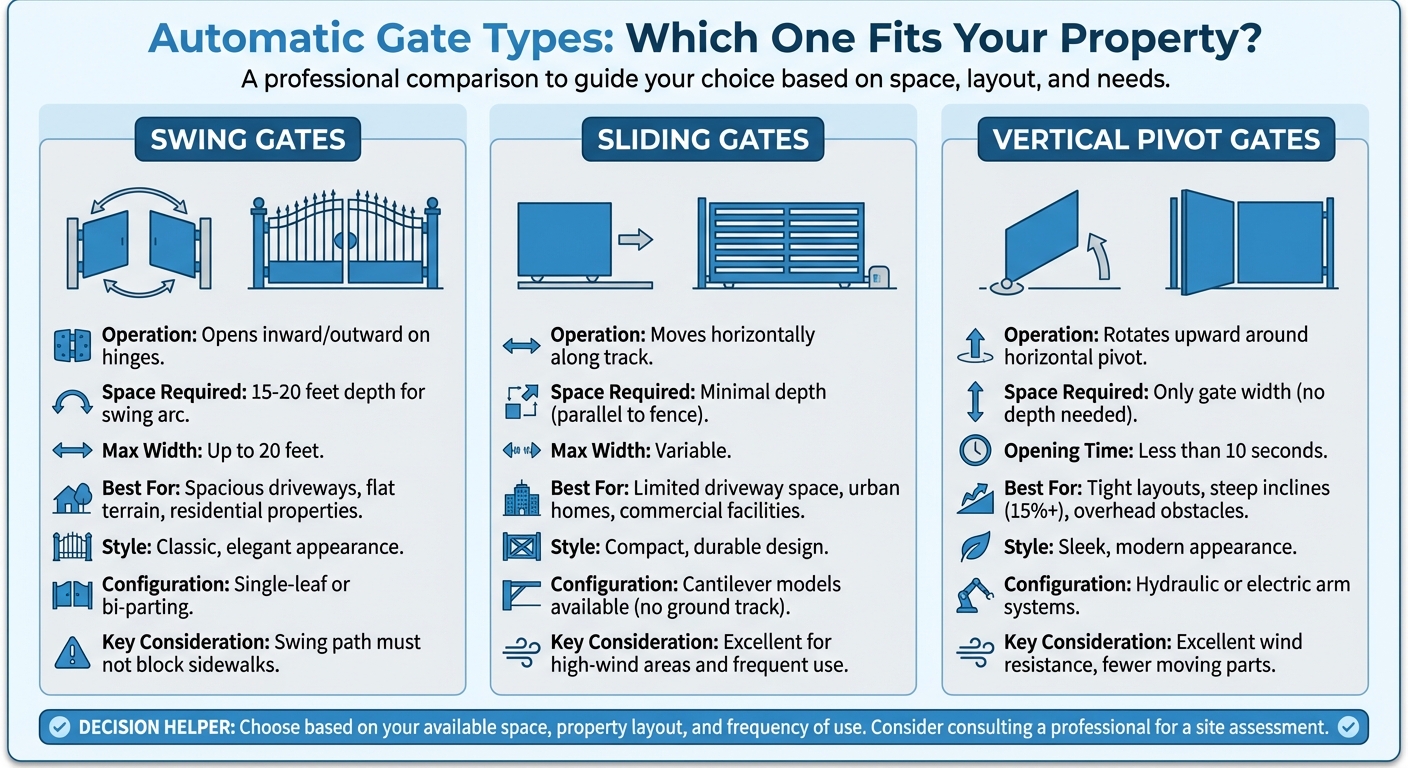
Automatic Gate Types Comparison: Swing vs Sliding vs Vertical Pivot Gates
Selecting the right automatic gate depends on your property’s layout, available space, and how you plan to use it. Each type operates differently and suits specific situations.
Swing Gates
Swing gates function much like traditional doors, opening inward or outward on hinges attached to sturdy posts. They can be operated with a remote control or smartphone app, but they do require a clear swing arc – about 15 to 20 feet of depth. This makes them a great option for properties with spacious driveways and flat terrain.
These gates are a popular choice for residential properties, especially in upscale neighborhoods, thanks to their timeless, elegant appearance. A wrought-iron swing gate, for example, can add a touch of sophistication and boost your home’s curb appeal. Swing gates can be designed as single-leaf gates or bi-parting gates (two separate leaves), with widths of up to 20 feet. They also integrate seamlessly with smart home systems, offering convenient remote access. However, it’s crucial to ensure the swing path doesn’t block sidewalks or disrupt traffic flow nearby.
If space is tight, sliding gates might be a better alternative.
Sliding Gates
Sliding gates move horizontally along a track that runs parallel to your fence line. Their compact design is a major advantage, as they don’t require the depth needed for a swinging motion. This makes them ideal for properties with limited driveway space, such as urban homes or commercial facilities.
These gates are built for durability and can handle heavy use and harsh weather conditions. They’re particularly effective in high-wind areas, and cantilever models – designed without ground tracks – help minimize debris-related issues. For instance, a commercial lot in Plano, Texas, used sliding gates paired with chain-link fencing to maximize space and improve security for frequent vehicle access. Sliding gates are versatile enough to work in both residential and commercial settings, especially where quick and repeated operation is required.
For properties that can’t accommodate either swing or sliding gates, vertical pivot gates provide a clever solution.
Vertical Pivot Gates
Vertical pivot gates open by rotating upward around a horizontal pivot point, much like a garage door. They’re lifted using hydraulic systems or electric arms, making them a perfect fit for spaces where swing or sliding gates simply won’t work. These gates are especially useful for properties with tight layouts, steep inclines over 15%, or overhead obstacles like trees or power lines. They fully open in less than 10 seconds and require minimal space – just the width of the gate itself.
This design works well in challenging or unconventional setups. For example, on a coastal property prone to storms, a vertical pivot gate provided reliable access while standing up to wind and debris. With fewer moving parts, these gates offer excellent wind resistance and bring a sleek, modern look that complements luxury homes or commercial properties requiring discrete security.
Choosing the right type of gate is just the first step. Once you’ve made your selection, you can explore various designs and materials to further enhance your property’s value and functionality.
Design and Material Options
The choice of gate material and design plays a key role in determining durability, maintenance needs, and overall curb appeal. Steel gates are known for their strength and security, making them a great option for high-security residential or commercial properties. They can handle heavy use and span large openings but require proper rust prevention, like galvanizing or powder coating – especially in humid or coastal climates. On the other hand, aluminum gates are lightweight and naturally resistant to corrosion, which reduces strain on motors and upkeep. Aluminum is a popular choice for residential driveways, offering the look of wrought iron at a fraction of the weight. However, it’s more susceptible to dents compared to steel.
Wood gates, often made from cedar, redwood, or treated pine, provide a warm, natural look and excellent privacy. However, they require regular sealing or staining, particularly in areas with harsh weather. Wood is prone to issues like warping, rot, and weathering, especially in regions with intense sun or heavy rain. Composite materials offer a practical alternative, combining the look of wood with better resistance to rot and insects. While these gates tend to have higher upfront costs, they require less maintenance over time. Vinyl or PVC gates are another low-maintenance option, offering good weather resistance. However, they lack the rigidity of other materials and may need internal metal reinforcement for larger automatic installations.
For a mix of durability and aesthetics, hybrid designs are an excellent choice. These often feature powder-coated steel or aluminum frames paired with cedar or composite infill, balancing strength and a warm, residential look. Companies like Tend Fencing specialize in custom hybrid gate designs that seamlessly blend with existing property styles. For instance, Tend Fencing in Plano, Texas, creates ornamental iron-style gates with wood privacy infill, offering a perfect combination of security, privacy, and visual appeal.
When it comes to design styles, the aesthetic of the gate is just as important as the material. Traditional ornamental gates with arches and decorative pickets complement classic homes, while minimalist designs with clean lines are ideal for modern properties. Ranch-style gates, whether open-rail or solid-panel privacy designs, add practical charm to a variety of settings. These design elements not only enhance your property’s appearance but also increase its security and long-term value.
Climate plays a big role in selecting the right finishes. In hot areas, UV-resistant, lighter coatings are ideal. Coastal regions benefit from aluminum or galvanized steel paired with stainless hardware, while snowy climates require sealed frames with proper drainage. According to U.S. contractors, powder-coated finishes on galvanized steel or aluminum can last over 10 years before needing a repaint, compared to just 3–5 years for standard painted steel in many environments. Choosing the right materials and finishes for your specific climate ensures your gate is not only functional but also adds lasting market appeal.
sbb-itb-d1d0a96
How Automatic Gates Affect Property Value
Return on Investment
Adding an automatic gate to your property typically costs between $8,000 and $15,000, depending on the size, materials, and technology used. Interestingly, research backed by Zillow shows that secure entry gates can boost property resale values by up to 5%. For a home valued at $500,000, that’s an additional $25,000 in value – often surpassing the installation cost.
For mid- to high-priced homes, homeowners often recover their initial investment – or even turn a profit – within 5 to 10 years when selling the property. Beyond the financial return, automatic gates offer daily benefits like enhanced security and convenience, delivering peace of mind that’s hard to put a price on. These advantages are further amplified by potential savings on insurance.
Insurance Benefits
Many insurance companies in the U.S. reward homeowners who install automatic gates with lower premiums. By reducing risks like theft, vandalism, and liability claims, these gates can earn policy discounts of 5–10%. For a typical $1,500 annual insurance premium, this translates to savings of $75 to $150 per year.
To qualify for these discounts, insurers often require proof of professional installation and evidence of integrated security features, such as cameras, keypads, or access logs. They may also ask for photos or an inspection to confirm the gate effectively secures the main vehicle entry point. It’s always a good idea to contact your insurance provider for a policy review to explore these potential savings.
Attracting Buyers
Automatic gates don’t just offer financial perks – they also make properties more appealing to buyers. In competitive real estate markets, a gated entry creates a standout first impression, helping homes shine in listings. Buyers often associate gated properties with luxury, enhanced privacy, and reduced crime – qualities that are especially appealing in suburban neighborhoods where curb appeal is key.
Real estate agents frequently emphasize features like "automatic gate", "gated entry", or "electric driveway gate" in property descriptions to attract attention. These gates appeal to a range of buyers, including families, professionals focused on security, and those seeking a more upscale lifestyle. By combining aesthetic appeal with practical benefits, automatic gates can significantly elevate a property’s desirability.
Installation Considerations
Cost Breakdown
Installing an automatic gate usually runs between $4,000 and $7,000, but the final cost depends on your specific requirements and site conditions.
The gate materials alone can range from $800 for a basic chain-link design to over $5,000 for custom ornamental iron. Then there’s the automation hardware, which includes motors, control boards, keypads, remotes, and safety devices. If you’re automating an existing gate, expect to spend between $1,500 and $3,500, depending on the power and features of the operator system.
Labor and site preparation also take up a big slice of the budget. This includes setting posts with proper concrete footings, grading, drainage work, running electrical wiring, and installing the operator and controls. For example, in areas with Texas clay soils, deeper footings and proper drainage are necessary to avoid misalignment and motor strain. Running 120V AC power to the gate can add significant costs, so in sunny regions, solar-powered operators might be a cost-effective alternative.
Don’t forget to account for permit and inspection fees. Many municipalities require permits for automatic gates, and homeowners associations often have rules about gate height, placement, and appearance. Planning for these expenses upfront – and hiring a local installer like Tend Fencing who knows the regional codes and soil conditions – can help you avoid unexpected delays and costs.
Once the budget is sorted, it’s time to focus on the features that will meet your specific needs.
Selecting the Right Features
The right features strike a balance between security and convenience. For most homes, a combination of handheld remotes or smartphone apps for family members and a keypad for guests and service providers works well.
Safety devices are non-negotiable. U.S. standards (UL 325 and ASTM F2200) require photo-eye sensors and safety edges to prevent entrapment. These features protect your family and lower liability risks. If power outages are common in your area, a battery backup ensures the gate can still operate – or at least open safely – during an outage.
For those building a smart home, consider gate operators with Wi-Fi or smartphone integration. These systems let you control the gate remotely, send notifications when it opens or closes, and connect with cameras, lights, and other smart devices. While these features increase upfront costs, they provide added convenience and security.
For commercial properties, more advanced access control is often necessary. Options include card or fob readers, vehicle tags, or coded keypads for employees, along with intercoms for deliveries. Integrating the gate with CCTV and alarm systems can also improve oversight and logging. A professional installer can help match the right technology to your property’s traffic patterns and security needs.
After selecting the features, maintaining the gate properly will keep it running smoothly for years.
Maintenance and Durability
Regular upkeep is essential for keeping your automatic gate in good condition and extending its lifespan. Experts suggest scheduling annual professional inspections to check the operator, hinges, rollers, chains or belts, and safety devices. Between these inspections, you can lubricate moving parts as needed and test photo-eyes and safety edges monthly. For sliding gates, make sure tracks stay clear of debris, ice, and vegetation.
Proper installation is just as important as maintenance. Accurate post depth, solid concrete footings, and correct wiring reduce strain on the system and improve reliability. Common installation mistakes – like shallow footings, poor drainage, or undersized operators – can lead to costly repairs later. Partnering with an experienced installer like Tend Fencing ensures the job is done right from the start.
In hotter areas like Texas and the Southwest, powder-coated steel or aluminum with UV-resistant finishes are better suited to withstand sun exposure and prevent corrosion. In coastal or humid regions, aluminum or galvanized steel minimizes rust. Plan for battery replacements (for backup or solar systems) every three to five years, and budget for occasional replacement of wear parts like rollers, hinges, and drive gears, especially for commercial gates with heavy daily use.
Choosing a local installer such as Tend Fencing, who understands the specific soil, weather, and permitting challenges in North Texas, ensures your gate is built with the right materials, expert craftsmanship, and ongoing support for long-term durability.
Combining Automatic Gates with Fencing
Pairing automatic gates with the right fencing creates a comprehensive security system that enhances both safety and aesthetics. While the gate acts as a controlled access point, the fencing forms a continuous barrier around your property. Together, they work as a unified solution to keep intruders out while maintaining a polished look. Properties with visible security measures like these are less likely to attract burglars, making this combination an effective deterrent. Beyond security, this setup can be tailored to match the specific needs of any property, whether residential or commercial.
Residential Uses
For homeowners, combining an automatic gate with complementary fencing offers a mix of privacy, safety, and style. For example, a swing gate paired with ornamental iron fencing adds an elegant touch while keeping children and pets secure. On the other hand, a cedar board-on-board fence with an automatic gate provides enhanced privacy and discourages unwanted visitors. The convenience of operating your gate remotely – whether via keypad, smartphone app, or remote control – means no more getting out of the car during bad weather. Some systems even send real-time alerts when the gate is accessed. Additionally, many insurance providers offer discounts of 5–10% for homes with automated gates, thanks to the reduced theft risk. And there’s more – this combination can also increase your home’s resale value by up to 5%, translating to an extra $25,000 on a $500,000 property.
Commercial Uses
For businesses, automatic gates paired with secure fencing provide crucial access control. Sliding gates combined with chainlink or ornamental iron fencing are especially useful for warehouses, office complexes, and retail spaces. These setups are space-efficient and highly secure. Automated systems like keycard readers, intercoms, or vehicle tags simplify access management, allowing employees and visitors to enter seamlessly while keeping detailed logs for security purposes. Features like scheduled operations also reduce the need for manual oversight and extend the system’s lifespan.
Custom Solutions with Tend Fencing
Tend Fencing takes these concepts further by offering tailored automatic gate and fencing solutions across Plano, TX, and nearby areas. Whether you need an 8-foot curved press point steel fence for added commercial security or a horizontal cedar design for residential privacy, their team customizes every detail to suit your property. Tend Fencing also prioritizes sustainability by planting a tree for every fence they install, ensuring their systems are both durable and environmentally conscious. Their expertise ensures your gate and fencing setup can handle the unique challenges of North Texas weather while meeting your specific needs.
Conclusion
Automatic gates bring a host of clear benefits to property owners. They boost security, add convenience, and even increase property value. Studies indicate that properties with automatic gates often see higher resale values and reduced insurance premiums, making them a practical choice for homeowners and businesses alike.
Today’s systems are smarter than ever, seamlessly integrating with home automation platforms. Features like remote access, visitor monitoring, and real-time smartphone alerts make managing your property’s security easier and more efficient. With proper maintenance, these gates are built to last, offering long-term reliability and peace of mind.
If you’re considering an upgrade, Tend Fencing provides tailored automatic gate and fencing solutions designed to enhance both security and curb appeal. With years of experience and a focus on quality, their team ensures a professional installation that meets your specific requirements.
Take the first step toward a more secure and stylish property. Contact Tend Fencing today to schedule a consultation and get a personalized quote. Their experts are ready to guide you in choosing the perfect gate and materials to bring your vision to life.
FAQs
How do automatic gates improve security for your property?
Automatic gates enhance security by providing controlled access, ensuring that only those with proper authorization can enter your property. Acting as a sturdy physical barrier, they help deter potential intruders and minimize the chances of unauthorized entry.
What’s more, many automatic gates can connect seamlessly with advanced security systems, offering features like remote operation and monitoring. This allows you to manage access conveniently through your smartphone or other devices, combining ease of use with added protection for your home or business.
What should I keep in mind when selecting an automatic gate for my property?
When selecting an automatic gate, it’s essential to weigh a few key factors. Start by assessing your security needs, the dimensions and layout of your property, and your design preferences. These elements ensure the gate fits seamlessly with your space and serves its purpose effectively.
You’ll also want to consider the gate’s automation features, your budget, and how much maintenance it might require over time. Don’t overlook how the gate aligns with your property’s overall style – it should not only boost security but also enhance the visual appeal and potentially increase the value of your home or business. A thoughtfully chosen gate delivers both practicality and a touch of sophistication.
Can installing an automatic gate help lower my insurance costs?
Installing an automatic gate might help you save on insurance costs. These gates enhance security by limiting unauthorized access and reducing the chances of property damage, which can lower your risk in the eyes of insurance providers. As a result, some insurers may offer discounts on your premiums.
It’s worth reaching out to your insurance company to find out if they provide any savings for adding security features like automatic gates.