
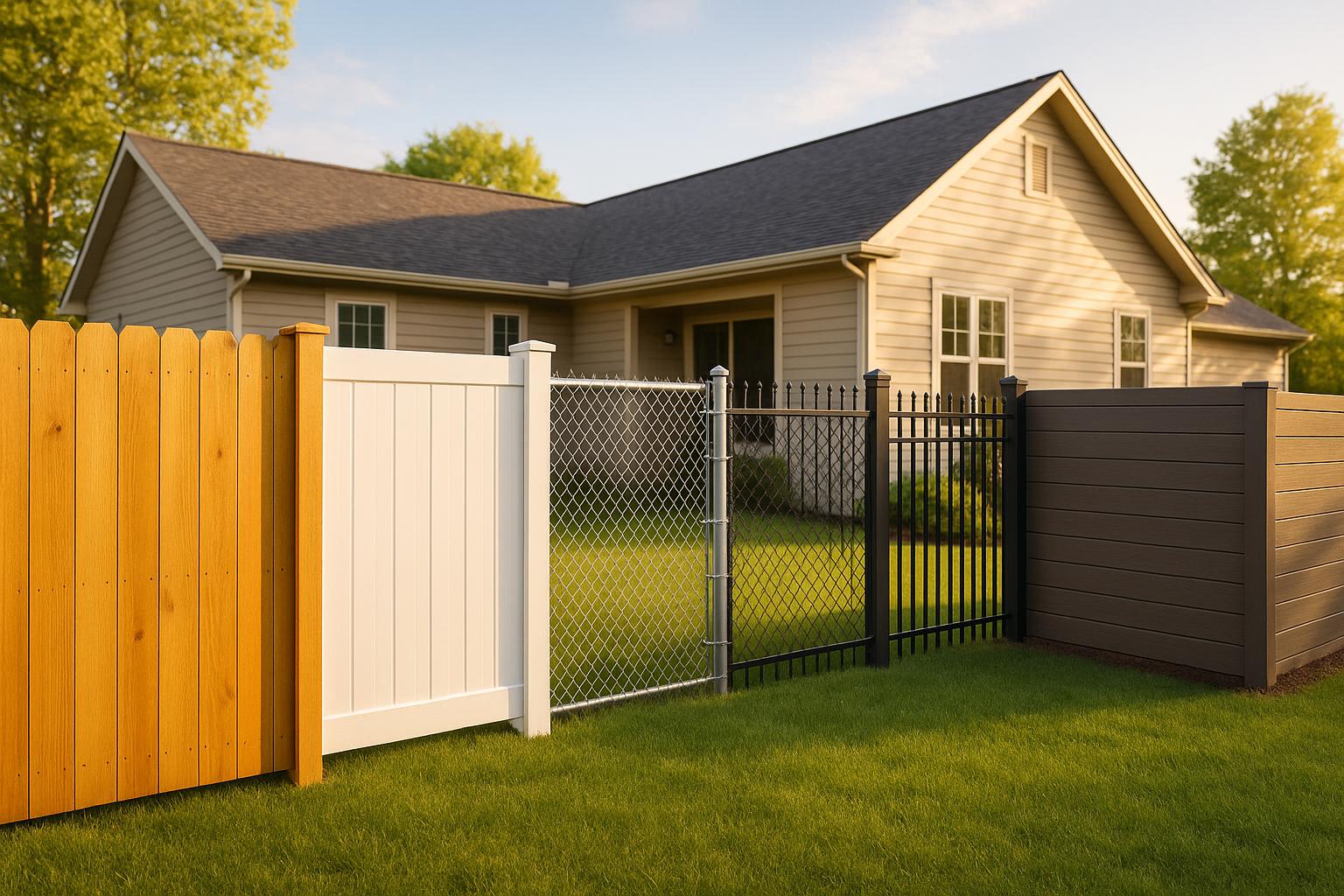
Investing in a fence can impact your property value, home sale speed, and daily life benefits like privacy and security. Here’s the core takeaway: the return on investment (ROI) depends on the material, installation quality, and how well the fence aligns with your home’s style and neighborhood standards.
- Wood fences: Affordable upfront, but require regular maintenance. ROI: 50–80% if well-maintained.
- Vinyl fences: Higher upfront cost, low maintenance, and long-lasting. ROI: Medium to high, depending on design.
- Chain link fences: Budget-friendly but limited curb appeal. ROI: Low, mostly functional.
- Ornamental iron/steel fences: Expensive but durable and stylish. ROI: 50–70% for upscale homes.
- Composite fences: Durable, low-maintenance, and modern. ROI: Medium to high for long-term homeowners.
Key takeaway: Matching the fence material to your goals (budget, aesthetics, or longevity) and investing in professional installation ensures better long-term value. Let’s dive deeper into costs, upkeep, and ROI for each option.
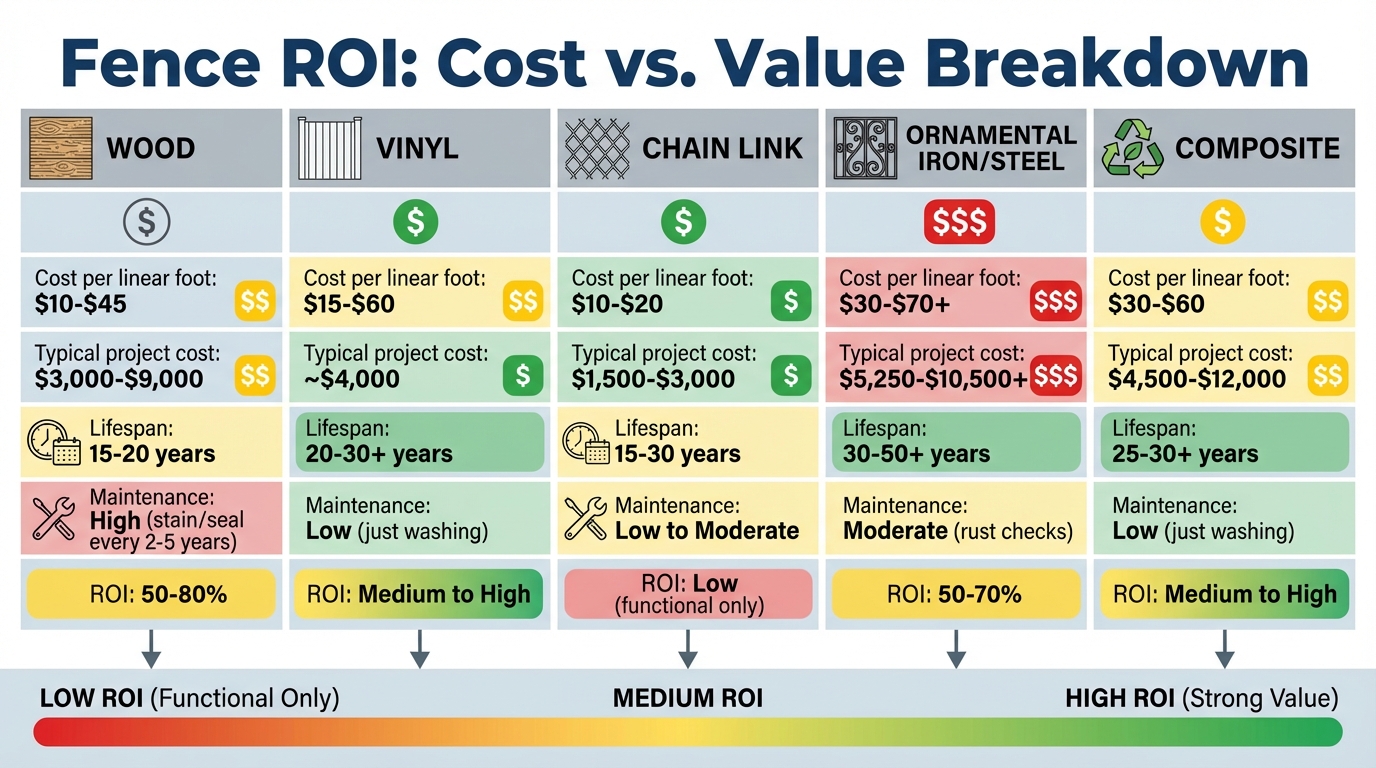
Fence Material Cost and ROI Comparison Chart
1. Wood Fences
Cost
Wood fences typically range from $10–$45 per linear foot for installation, with most residential projects falling between $15–$30 per foot, depending on factors like height, style, and wood species. For a standard backyard spanning 150–200 linear feet, homeowners can expect to spend between $3,000 and $9,000, with 6-foot privacy fences often averaging $4,000–$6,000. Among the material options, pressure-treated pine is the most budget-friendly, costing about $1–$5 per linear foot, while cedar ranges from $14–$28 per linear foot, and premium redwood starts at $28 per linear foot or more. Labor accounts for more than half of the total cost, making professional installation a worthwhile investment.
Lifespan
With proper installation and care, wood fences can last 15–20 years. Cedar and redwood, known for their natural resistance to rot and insects, often reach the higher end of this range, even in challenging climates like North Texas, where heat, intense sunlight, and shifting soil can accelerate wear. In contrast, pressure-treated pine has a shorter lifespan, often showing significant wear within 5–10 years without consistent maintenance such as sealing. Companies like Tend Fencing in Plano use high-quality cedar and proven installation techniques – like setting posts below the frost line and ensuring proper drainage – to extend the life of wood fences in tough conditions.
Maintenance
Wood fences require more upkeep than vinyl or metal options. Expect to clean and reseal your fence every 2–5 years, with professional services costing about $1–$3 per square foot. Over a 15–20 year period, these recurring maintenance costs can add up to thousands of dollars, making wood fences comparable in long-term expense to engineered materials, despite their lower upfront cost. Maintenance also includes replacing damaged boards due to warping, rot, or insect infestations – issues that are especially common in humid or termite-prone areas where untreated or poorly maintained wood deteriorates faster.
Property Value Impact
A well-maintained wood fence can boost curb appeal, privacy, and security, qualities that appeal to buyers in suburban and family-focused neighborhoods. Depending on the quality and condition, wood fences can recoup 50–80% of their cost at resale, particularly when they align with neighborhood standards. Privacy fences are especially valuable for homes near busy roads or in tightly packed subdivisions, helping properties stand out from unfenced homes. However, the return on investment (ROI) depends on matching the fence to the home’s value – a high-end redwood fence on a modest starter home may not pay off, while a poorly maintained or aging fence can negatively impact appraised value.
Next, we’ll take a closer look at how vinyl fencing compares in terms of cost, durability, and upkeep.
2. Vinyl Fences
Cost
Vinyl fencing typically costs between $15 and $60 per linear foot installed, with most projects averaging around $4,000. The total expense depends on factors like fence height, design complexity, and local labor rates. For instance, installing a 150-foot vinyl picket fence with decorative posts might range from $5,000 to $8,000, while a 6-foot privacy fence for the same length can cost roughly $2,250 to $6,000. Although vinyl fences tend to have a higher upfront cost compared to chain link (around $10–$20 per linear foot) and some wood options, they are generally more affordable than ornamental iron or wrought steel. Keep in mind that challenging installations, such as those on sloped terrain or with multiple corners, may push costs toward the higher end of the spectrum.
Lifespan
When properly installed, vinyl fences can last 20 to 30 years or more, far outliving many wood fences, which often need replacing after 10 to 20 years. Vinyl’s resistance to rot, warping, and rust makes it a strong contender in humid climates or areas with intense sunlight – conditions that can quickly wear down untreated wood. Many manufacturers offer limited lifetime warranties on vinyl fencing, showcasing their confidence in the material’s durability. To ensure maximum lifespan, professional installation is key. Proper post depth, drainage, and reinforcement – especially for taller panels exposed to wind – are crucial. In hot regions like North Texas, vinyl with UV inhibitors helps prevent fading and degradation.
Maintenance
Vinyl fencing is known for its low-maintenance nature, requiring only occasional cleaning with soap and water. Unlike wood, it doesn’t need staining or painting, which eliminates ongoing maintenance costs. However, homeowners should watch out for potential impact damage from lawn equipment or falling branches, as damaged panels often need complete replacement rather than simple repairs. Ensuring proper drainage around posts and periodically cleaning to avoid mold buildup will help maintain the fence’s appearance and value over time. This “set-it-and-forget-it” quality is a major reason why vinyl fencing is so appealing.
Property Value Impact
A professionally installed vinyl fence can significantly enhance a property’s curb appeal with its clean lines, consistent color, and low-maintenance features. While the exact return on investment depends on the neighborhood, a vinyl fence that complements the home’s style can attract stronger offers and faster sales. Buyers often appreciate the long-term savings on upkeep that vinyl provides. To maximize resale appeal, opt for neutral colors like white, tan, or gray, and choose timeless designs that blend well with the home’s architecture. Local experts, such as Tend Fencing, can guide homeowners in Plano, TX, to find vinyl options that balance privacy, durability, and aesthetics, ensuring a lasting impact on property value.
3. Chain Link Fences
Cost
When it comes to affordability, chain link fencing is one of the most budget-friendly options available. Installation typically costs $10–$20 per linear foot, depending on your location in the U.S.. For a standard 150-foot residential fence, homeowners generally spend between $1,500 and $3,000 – a fraction of the cost of wood, vinyl, or ornamental fencing. If you opt for a basic 4-foot galvanized chain link, you’ll find yourself at the lower end of that range. However, taller 6-foot fences, thicker 9-gauge wire, or black vinyl-coated mesh can push the price closer to $15–$20 per foot.
Want added privacy? Incorporating privacy slats will increase the cost by around $3–$5 per linear foot, bringing the total for a 150-foot fence to approximately $2,700–$3,750. Additional features like gates for walkways or driveways will add to the total, but even with these upgrades, chain link remains one of the most economical fencing choices.
Lifespan
A well-installed galvanized chain link fence typically lasts 15–25 years, thanks to its zinc coating that helps prevent rust. If you choose vinyl-coated chain link, you could see that lifespan extend to 20–30 years, as the vinyl layer provides extra protection against moisture and salt. In dry inland areas, even a basic galvanized fence can last for decades with minimal upkeep.
For maximum durability, professional installation is key. Proper post depth, drainage, and tensioning are critical to ensuring the fence withstands the elements. For example, in regions like North Texas, where heat and storms can challenge fence longevity, working with experienced installers like Tend Fencing can make a big difference.
Maintenance
One of the standout features of chain link fencing is its low-maintenance nature. Routine care typically involves occasional rinsing, addressing minor rust spots on galvanized systems, and trimming back vegetation that may grow into the mesh. There’s no need for staining, painting, or sealing, which means no recurring costs for materials or labor. Most homeowners can handle simple tasks like tightening loose ties or clearing debris without professional help.
Over a 20-year lifespan, this minimal upkeep makes chain link fencing one of the most cost-effective fencing options. To keep it in good shape, avoid letting posts sit in standing water and regularly trim back plants to prevent rust or damage. Compared to other fencing materials, chain link’s maintenance requirements are refreshingly simple.
Property Value Impact
While chain link fences are practical and affordable, they don’t usually score high on curb appeal. They excel in providing security, pet containment, and boundary definition, but they’re often viewed as “utility” fencing rather than an aesthetic feature that enhances resale value. This is especially true in upscale neighborhoods where decorative fencing is the norm.
That said, chain link fences can still support property value for buyers who value function over appearance, such as those purchasing rental properties, homes with large lots, or spaces where secure containment is a priority. To make a chain link fence more appealing, consider upgrades like black vinyl-coated mesh, privacy slats, or landscaping with hedges or vines to soften its industrial look.
Many homeowners strike a balance by using chain link fencing in less visible areas, such as side or backyards, while opting for more decorative materials in the front. For those in the Plano area, experts like Tend Fencing can help design layouts that combine security, function, and affordability without sacrificing too much on aesthetics.
4. Ornamental Iron/Steel Fences
Cost
Ornamental iron and steel fences are on the higher end of the price range for fencing options. On average, wrought iron fences cost $35–$70+ per linear foot installed, with standard designs typically priced between $30–$50 per foot, while highly customized styles can run upwards of $120+ per foot. Steel ornamental fencing is slightly more affordable, averaging $32–$45 per linear foot, and aluminum ornamental fencing, which offers a similar appearance but is lighter, generally costs $30–$50 per foot. For a typical 150-foot residential project, homeowners can expect to spend between $5,250 and $10,500+, with mid-range projects often totaling around $7,500.
Several factors influence the cost, including the design’s complexity, the fence’s height and length, and the type of hardware used. Simple, prefabricated panels are more affordable, but custom features like scrollwork, finials, or hand-welded details can push costs significantly higher. Gates and hardware, particularly decorative entry gates or automatic openers, can add thousands to the total. Labor costs may also rise due to challenging site conditions like sloped terrain or obstacles, as well as specific requirements from HOAs or intricate layouts. In high-end markets, experienced professionals like Tend Fencing ensure proper fabrication, installation, and compliance with local codes. While the initial investment may be steep, the fence’s durability often justifies the cost over time.
Lifespan
While ornamental iron and steel fences come with a higher upfront price, their longevity makes them a worthwhile investment. With proper installation and care, these fences can last 30 years or more, making them a near-permanent solution. Their strength and resistance to impact far surpass materials like wood, vinyl, or chain link. Unlike wood, which can rot, warp, or be damaged by insects, metal fencing maintains its structural integrity for decades when properly maintained. Modern options, often made with galvanized or powder-coated steel and aluminum, are designed to resist rust and corrosion much better than traditional raw iron, further extending their lifespan.
This durability reduces replacement costs over time and can increase property value. Even with a higher initial expense, the long-term cost becomes competitive when compared to materials that require frequent repairs or earlier replacement. For homeowners planning to stay put or seeking to enhance curb appeal with a lasting solution, ornamental iron and steel fences offer enduring value.
Maintenance
Maintaining ornamental iron and steel fences is straightforward but essential to prevent rust and corrosion. Basic upkeep involves annual inspections for scratches, chips, or rust spots, followed by spot-sanding, priming, and repainting as needed. A full repaint or recoat might be necessary every 5–10 years to keep the fence looking its best and protected from the elements. Hinges, latches, and welds should also be checked regularly to avoid sagging or mechanical problems.
Compared to wood, which requires frequent sealing or staining, ornamental metal needs far less maintenance. While vinyl and composite fences demand even less upkeep (mostly cleaning), they lack the strength and sophisticated look of metal. This balance of easy maintenance and high-end aesthetics makes ornamental metal fencing a practical and visually appealing choice.
Property Value Impact
Ornamental iron and steel fences are often seen as premium options that can elevate both the appearance and value of a property. Wrought iron, in particular, is admired for its classic and elegant look, comparable to materials like brick or stone, making it a popular choice for upscale homes where first impressions are key. A well-designed metal fence can also enhance security, which appraisers and buyers often consider when evaluating a property. This combination of durability and curb appeal can make a home stand out, especially in neighborhoods where quality fencing is the norm.
Although it’s challenging to pinpoint an exact national return on investment, industry experts generally place ornamental metal fencing – and high-quality wood fencing – among the top options for ROI, often yielding returns in the 50–70% range. The impact is most noticeable when the fence complements the home’s architecture and aligns with neighborhood standards. In areas like Plano, where outdoor aesthetics and curb appeal are prioritized, an ornamental iron fence around the front yard, driveway, or pool can become a defining feature. Companies like Tend Fencing specialize in custom designs that enhance both security and style while adhering to HOA guidelines and local expectations.
To get the most value for your money, consider using ornamental iron or steel in highly visible areas – like front yards, entry gates, or around pools – where their visual impact is strongest. Pairing these materials with more affordable options like wood or vinyl for less prominent sections can help you achieve a balanced look without exceeding your budget. This strategic approach maximizes curb appeal while keeping costs in check.
Transform Your Property with Expert Fencing Solutions
Enhance your property’s security, beauty, and value with Tend Fencing’s professional residential and commercial fence installation services. Contact us today to bring your vision to life!
5. Composite Fences
Cost
Composite fencing strikes a balance between durability and aesthetics, but it comes with a higher price tag. On average, it costs $30–$60 per linear foot, meaning a 150-foot project could range from $4,500–$9,000, while a 200-foot project might cost between $6,000–$12,000. These estimates include both materials and installation. However, costs can climb if you’re dealing with challenging terrain (like sloped or rocky areas), need taller fences (e.g., increasing from 4 to 6 feet), or want custom features such as decorative top rails or wide double-drive gates. Regional labor rates also play a role in pricing. While composite fencing is more expensive upfront compared to wood or chain link, it’s on par with vinyl and aluminum. In areas like Plano, TX, companies like Tend Fencing offer expert installation to ensure long-term performance.
Lifespan
One of the standout features of composite fencing is its longevity. These fences typically last 25–30+ years, significantly outpacing softwood fences, which often last only 15–20 years without consistent maintenance. This extended lifespan makes composite a solid long-term investment.
Maintenance
If you’re looking for low-maintenance fencing, composite is a fantastic option. Like vinyl, it requires minimal effort – usually just a quick rinse with water and a mild detergent to keep it clean. Unlike wood, composite doesn’t need painting, staining, or sealing. However, it’s not entirely maintenance-free. In damp, shaded areas, surface mildew can form, and darker-colored fences may experience slight fading under prolonged exposure to intense sunlight. Another consideration: if a specific composite product line gets discontinued, finding matching replacement boards for repairs can be tricky.
Property Value Impact
A well-installed composite fence can significantly enhance your property’s curb appeal and resale value. Its sleek, modern appearance and low-maintenance design appeal to buyers looking for minimal future upkeep. This is especially true in neighborhoods where upscale, low-maintenance materials are preferred, often in line with homeowners’ association standards. For homeowners planning to stay put for 15–20+ years, the durability and lower ongoing costs of composite fencing make it a smart choice. Plus, many composite products are made with a high percentage of recycled materials, which can be a selling point for eco-conscious buyers. Using composite fencing in highly visible areas can further boost your home’s overall appeal.
Does Building A Fence Increase Property Value? – CountyOffice.org
Pros and Cons
Here’s a quick overview of the advantages and disadvantages of popular fencing materials, based on cost, durability, upkeep, and impact on property value. The table below breaks it all down:
| Fence Type | Cost (per linear foot) | Lifespan | Maintenance | Property Value Impact | Key Pros | Key Cons |
|---|---|---|---|---|---|---|
| Wood | $25–$45 | 15–20 years | High (stain/seal every 2–3 years) | Medium (classic, warm look when maintained) | Affordable upfront; customizable; natural aesthetic | Requires frequent upkeep; shorter lifespan; prone to rot and pests |
| Vinyl | $25–$60 | 20–30+ years | Low (just washing) | Medium to High (modern, clean appearance) | Minimal maintenance; long-lasting; pest and rot resistant | Higher initial cost; may crack in extreme cold or fade over time |
| Chain Link | $10–$20 | 20–30 years | Low to Moderate (rust checks, tightening) | Low (functional, not decorative) | Budget-friendly; durable for pets and security | Limited curb appeal; lacks privacy unless slats are added |
| Ornamental Iron/Steel | $25–$55+ | 25–50+ years | Moderate (rust checks, touch-ups) | High (elegant, upscale design) | Boosts curb appeal; extremely durable; strong security | Expensive upfront; rust can occur if coating is damaged |
| Composite | $30–$60 | 25–30+ years | Low (just washing) | Medium to High (modern, private, upscale look) | Long-lasting; low maintenance; great for privacy | High initial cost; repairs can be tricky if product lines are discontinued |
Each material comes with its own strengths and weaknesses, making the choice highly dependent on your priorities. Wood fences are a favorite for their natural charm and flexibility in design, but they demand regular maintenance and have a shorter lifespan. On the other hand, vinyl and composite fences offer longer life and minimal upkeep, with composite excelling in privacy and a more polished look – ideal for those planning to settle in for the long haul. Chain link fences are unbeatable for budget and practicality, especially for securing pets, though they don’t do much for curb appeal. Meanwhile, ornamental iron and steel fences bring a touch of elegance and security, particularly for front yards in high-end neighborhoods, though they require occasional rust prevention to keep their appeal intact.
These trade-offs play a big role in determining your return on investment (ROI). Working with local experts like Tend Fencing can help you choose materials that align with neighborhood standards and buyer preferences, ultimately boosting your property’s value. Striking the right balance between cost, upkeep, and visual appeal ensures your fencing investment will pay off both now and when it’s time to sell.
Conclusion
Selecting the right fence is all about balancing cost, durability, and your specific goals – whether that’s improving curb appeal, increasing property value, or keeping pets safe. Chain link fences are the most affordable choice for basic security and containment, though they don’t add much to home value. Wood fences offer a timeless look at a reasonable price but require ongoing maintenance. If you’re looking for a low-maintenance option with a long lifespan, vinyl and composite fences are ideal, especially for homeowners planning to stay put for a decade or more. Ornamental iron and steel fences, while more expensive, deliver both security and a polished appearance that can elevate your home’s exterior.
However, the material is only part of the equation. The quality of installation plays a crucial role in the fence’s longevity and value. Professional installation ensures your fence is sturdy, properly aligned, and free from issues like sagging or leaning. Experienced contractors can also handle permits, verify property lines, and ensure compliance with HOA rules. For homeowners in the Plano, TX area, working with trusted experts like Tend Fencing guarantees a durable fence that aligns with your home’s style and local regulations, enhancing both day-to-day functionality and future resale value.
Ultimately, the best fence depends on your needs and circumstances. If you’re working with a tight budget, chain link or basic wood fences provide reliable solutions without overspending. For those prioritizing low maintenance in suburban settings, vinyl or composite fences are worth the higher upfront cost due to their longevity. In higher-end neighborhoods, ornamental iron or premium wood designs can boost your home’s appeal and help it stand out in a competitive market.
The key is to align your fence choice with your priorities and timeline. Need an affordable security option? Chain link or basic wood works well. Planning to stay for years and avoid maintenance headaches? Vinyl or composite is a smart investment. Want to make a lasting first impression? Ornamental iron or custom wood creates the wow factor buyers appreciate. And no matter the material, expert installation and proper care ensure your fence delivers value for years to come.
FAQs
What’s the best fence material for my property?
The ideal fence material hinges on what matters most to you – whether it’s security, appearance, durability, or budget. If you’re after a natural, customizable aesthetic, wood is a solid choice. Ornamental iron combines strength with a touch of elegance, while chain link stands out for being both affordable and low-maintenance. Materials like vinyl or composite are great options if you’re looking for something long-lasting with minimal upkeep.
When making your decision, consider factors like your local climate, the level of privacy you need, and how much maintenance you’re ready to take on. For a tailored solution, reaching out to a professional fencing company can provide valuable guidance specific to your property’s requirements.
What factors affect the long-term value of a fence installation?
When considering the long-term value of a fence, a few critical factors come into play. These include the strength and durability of the materials, the quality of the installation, and how well the fence’s design aligns with your property’s overall look. Additionally, factors like maintenance requirements and the fence’s ability to withstand local weather conditions – be it scorching heat, heavy rainfall, or freezing temperatures – are equally important.
Opting for a fence that strikes the right balance between functionality and aesthetics can boost your property’s value. It not only enhances security but also clearly defines boundaries, offering benefits that last for years.
Does professional installation affect the return on investment for a fence?
When it comes to getting the most out of your fence investment, hiring professionals for the installation is a smart move. Skilled installers bring precision and expertise to the job, which means your fence will be sturdy, long-lasting, and visually appealing. A properly installed fence doesn’t just stand the test of time – it can also enhance your property’s curb appeal and even bump up its overall value.
Another big perk? Professional installation helps you sidestep costly errors that can come from DIY attempts or improper setup. In the end, paying for expert installation isn’t just about getting the job done right – it’s about ensuring your fence adds both immediate and lasting value to your property.