

Automatic gates combine durable materials with motorized mechanisms for efficient access control. Regular maintenance is key to ensuring their safety, reliability, and longevity. Here’s what you need to know:
- Types of Gates: Swing, sliding, and cantilever gates, each suited for different spaces and conditions.
- Why Maintenance Matters: Prevents breakdowns, reduces motor strain, ensures safety, and avoids costly repairs.
- Key Tasks:
- Inspect structure and hardware for rust, wear, and alignment every 2–3 months.
- Clean and lubricate hinges, rollers, and tracks every 6–12 months.
- Test electrical components, backup batteries, and safety sensors regularly.
- Seasonal Care: Adjust maintenance for weather conditions like debris in fall or freezing in winter.
- When to Call a Professional: For electrical issues, misalignment, or recurring problems.
Proactive care keeps your gate functioning smoothly and avoids expensive repairs. Start with simple cleaning, inspections, and safety tests today!
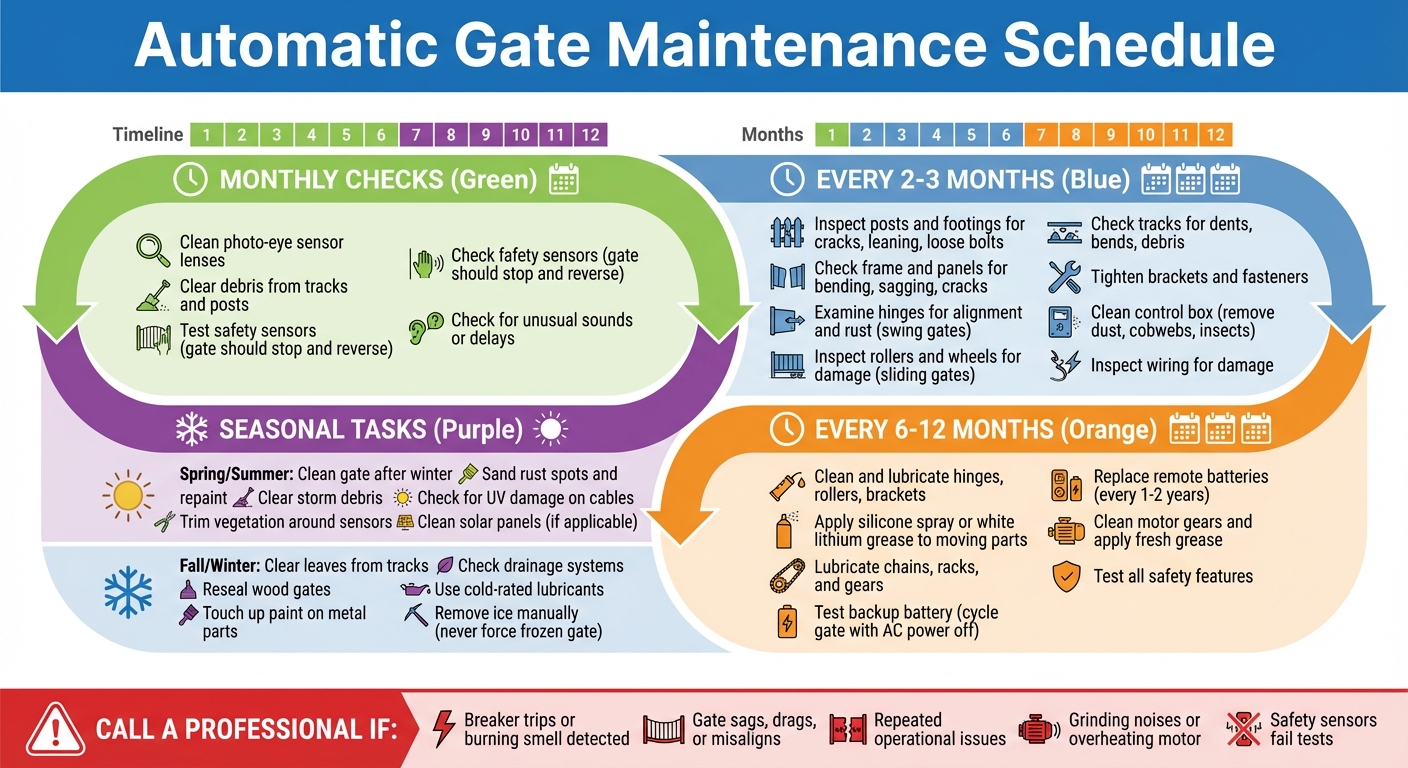
Automatic Gate Maintenance Schedule and Checklist
Gate Operator Preventative Maintenance
Gate Structure and Hardware Maintenance
Keeping your gate’s structure and hardware in good condition is just as important as electrical maintenance for reliable performance.
Structure and Hardware Inspection Checklist
Check your gate every 2–3 months to catch potential problems before they escalate:
- Posts and footings: Look for leaning, cracked concrete, loose bolts, or signs of erosion.
- Frame and panels: Ensure there’s no bending, sagging, cracks, or loose welds. The gate should close squarely and stay level.
- Swing gates: Check that hinges are aligned properly and have no excessive movement. Be on the lookout for rust streaks, grinding sounds, or metal shavings.
- Sliding and cantilever gates: Inspect rollers and wheels for flat spots, wobbling, or cracks. Make sure they stay securely in their tracks.
- Tracks: Look for dents, bends, frost damage, or gaps at the joints. Clear away any debris that could obstruct the gate’s movement.
- Brackets and fasteners: Tighten or replace loose hinge plates, stop plates, guide brackets, and operator mounts.
Run the gate through a full open-close cycle. Watch for dragging, sagging, uneven gaps, or contact with posts. Alignment issues should be corrected immediately to prevent motor damage.
After the inspection, clean and lubricate all moving parts to maintain smooth operation.
Cleaning and Lubrication
Start by wiping down hinges, rollers, and brackets with a soft cloth or brush to remove old grease, dust, and cobwebs. For sliding gates, sweep the tracks regularly and flush out fine grit with water. In winter, carefully remove ice and avoid packing sand or gravel into the rails.
Lubricate moving parts every 6–12 months, or every 3–6 months if the gate is used frequently or exposed to harsh conditions. Use silicone spray or white lithium grease on hinge pins and pivot points. For ball-bearing hinges, apply grease via zerk fittings or at the bearing seams. Lightly lubricate roller bearings and axles, wiping off any excess to prevent dirt buildup. For sliding gates, apply a thin coat of white lithium grease to wheel running surfaces, and, if recommended, lightly grease track contact areas.
For exposed chains, racks, and gears, apply gate-grade lubricant sparingly and cycle the gate to distribute it evenly. If your gate has hydraulic arms, clean the exposed ram surfaces, apply a light grease film, and cycle the gate to spread the lubricant. Be cautious not to over-lubricate – excess grease can attract abrasive dust. In coastal areas, follow the manufacturer’s recommendations, as some gates may require hinge lubrication every two months to combat salt-air corrosion.
Finally, adjust these steps based on your gate’s material to ensure long-term durability.
Care Tips for Different Gate Materials
- Wood gates: Check for rot, warping, splitting, or insect damage, especially near the base and fasteners. Refinish as needed with exterior-grade paint, stain, or sealer. Keep screws and bolts tight to prevent softening or cracking.
- Ornamental iron and steel gates: Rust is a common issue, particularly at welds, joints, and lower rails. Sand rust spots to bare metal, then prime and repaint with exterior metal paint. In damp or coastal areas, wash frequently, touch up paint when needed, and lubricate hinges generously to fight salt corrosion.
- Aluminum gates: While rust-resistant, aluminum can chalk or fade over time. Wash periodically to remove dirt and road salts. Use touch-up paint on scratches or bare spots to avoid pitting. Avoid abrasive cleaners that might harm the protective coating.
- Vinyl gates: Clean with mild soap and water to remove mildew, pollen, and grime. Avoid harsh solvents that can stain or weaken the material. Inspect for cracks, brittleness, or UV damage, especially in sunny climates, and replace any damaged sections. Ensure internal reinforcements, like steel inserts in rails, and hardware connections remain secure and wobble-free.
Gate Operator and Electrical System Maintenance
Your gate’s electrical system is the heart of its operation, powering every open and close. By keeping the motors, control boards, and power systems in good shape, you can prevent unexpected breakdowns and extend the life of your equipment.
Gate Operator Components
The motor and gearbox are what physically move your gate. Depending on your setup, this might involve a swing arm, linear actuator, or sliding track drive. The control board acts as the brain, processing signals from remotes, keypads, or sensors to direct the motor’s actions. Limit switches or encoders ensure the gate stops at the right points, preventing over-travel that could damage the system or strain the motor.
The power system typically includes a 120 V AC supply (common in U.S. homes), a transformer for low-voltage setups, integrated wiring, and often a battery backup or solar panel to keep things running during power outages. Many operators also rely on capacitors for motor start-up and include relays and overload protection. To keep everything running smoothly, regular maintenance is crucial.
Electrical System Maintenance Tasks
Before working on your gate’s electrical components, always disconnect the AC power at the breaker and remove any battery leads. Once the power is off and indicator LEDs have gone dark, you can safely proceed with maintenance.
- Open the control box every two to three months and remove dust, cobwebs, and insects using compressed air or a dry brush.
- Check for moisture, rust, or corrosion on the circuit board and terminals. If you spot water damage, address it immediately with professional help.
- Inspect all visible wiring for issues like cracked insulation, discoloration, rodent damage, or loose connections. Repair or replace any damaged sections.
- Ensure all terminals are securely connected and watch for signs of overheating, such as darkened plastic or a burned smell.
Test your backup battery twice a year by cutting off AC power and cycling the gate a few times. If the gate moves sluggishly, have the battery load-tested and replace it if needed. Most sealed lead-acid or AGM batteries last about two to three years, though hotter climates may shorten their lifespan. Clean any light corrosion on battery terminals with a baking soda solution (while the system is powered down) and double-check that all cables are secure and correctly connected. For solar-powered systems, clean the panels with a cloth and mild detergent to remove dust or debris, and confirm the charge controller is working properly.
Once a year, take additional steps to maintain the operator. Disconnect power, remove the cover, and clean grease and grime from gears using a brush and degreaser. Apply fresh white lithium grease or the lubricant recommended by the manufacturer. For chain-driven slide gates, clean the chain, check for rust or stiff links, and apply a light coat of lubricant. For swing gate arms or linear actuators, clean the exposed arm, remove grit, and apply a thin layer of grease before cycling the gate to spread it evenly. Pay attention to any unusual noises like grinding or squealing during operation – these could indicate worn bearings, misaligned mounts, or motor problems that may require professional attention. Experts like Tend Fencing can replace worn motors or gearboxes before they fail completely.
Access Controls and Safety Sensors
Once the core electrical components are in good shape, focus on access controls and safety features. For remotes, replace coin-cell batteries every one to two years (or sooner if the range decreases), keep them dry, and avoid extreme heat. If a remote is lost, delete it from the control board to maintain security.
For keypads, clean the faceplate with a damp cloth, check for sticking keys, ensure the weather gasket is intact, and replace the internal battery if needed. Test stored codes to confirm everything is functioning correctly. Similarly, for intercoms or call boxes, verify audio clarity, check camera image quality, and ensure all buttons work properly.
Safety sensors are just as important. Clean photo-eye lenses monthly with a soft cloth to remove dust or spider webs. Make sure the transmitter and receiver are securely mounted, aligned, and free from obstructions like landscaping or parked vehicles. Test the sensors by closing the gate and passing an object through the beam – the gate should stop and reverse immediately.
If your gate has edge sensors, press along the edge while the gate is closing; it should stop and reverse on contact. Many systems also include current-sensing or obstruction detection. Lightly resist the gate while it’s closing to ensure it stops and reverses instead of continuing to push. If any safety device fails these tests, stop using the gate automatically and contact a qualified specialist – like Tend Fencing – to address the issue or upgrade to a UL 325–compliant system.
sbb-itb-d1d0a96
Seasonal Maintenance for Different Climates
North Texas weather brings its own set of challenges, and your gate system needs some seasonal care to keep it running smoothly year-round.
Spring and Summer Maintenance
Once winter’s chill has passed, give your gate and operator housing a good cleaning with mild soap and water. Take a close look at hinges, brackets, and fasteners for any signs of rust. If you spot rust, sand it down and apply a rust inhibitor followed by outdoor paint to protect the metal. Spring storms often leave behind debris like twigs, acorns, and trash, which can clog tracks and strain the operator. Make it a habit to sweep or vacuum tracks, rollers, and the area around posts to keep everything clear.
Storm damage is another concern in spring. Look for bent tracks, misaligned posts, cracked welds, or sagging sections. If you find any structural issues, stop using the gate and call in a professional right away. As summer temperatures rise, heat can take a toll on motors and control boards. Open the control box to clear out dust, insects, and cobwebs, and make sure the vents are unobstructed. Check cable insulation, conduits, and plastic covers for UV damage, replacing anything brittle or cracked. Also, trim back vegetation around the operator, hinges, and safety sensors to improve airflow and prevent insect nests.
If the motor housing feels too hot to touch or the gate slows down during heavy use, reduce its cycling and have a technician inspect the system. For solar-powered gates, clean the panels and ensure they’re getting full sunlight. High summer energy production might hide wiring or battery issues, so it’s worth a checkup. If heat-related problems arise, local experts like Tend Fencing in Plano, TX, can assess your system and suggest ways to improve ventilation or address other concerns.
As the weather cools, shift your focus to managing fall debris and preparing for winter’s chill.
Fall and Winter Maintenance
With fall comes leaves and other debris that can clog sliding gate tracks, jam swing gate hinges, or pile up near posts. Use a broom, blower, or vacuum to keep these areas clear, reducing strain on the operator. Also, check control and junction boxes for any obstructions that might trap moisture, which can lead to corrosion or electrical shorts. Make sure the drainage around your gate is working properly to prevent standing water from rusting the base of posts or operator pads.
Before winter hits, inspect your gate’s finish. Reseal dry spots on wood gates and touch up any peeling paint or rust on metal parts with a rust-preventive primer and paint. Use cold-rated lubricants on all moving parts to ensure smooth operation in freezing temperatures.
During icy or snowy conditions, manually remove ice and packed snow from tracks, wheels, and bottom rails before using the gate. Forcing a frozen gate can strip gears or burn out the motor. Familiarize yourself with the manual release mechanism so you can safely disengage the operator if needed. After extreme cold, check the control board and operator housings for condensation. If you find moisture, dry it carefully and improve the seals or ventilation to prevent future issues. Technicians in the Dallas–Fort Worth and Plano area can also test your battery’s load, charging system, and backup runtime to make sure your gate stays dependable throughout the winter months.
When to Call a Professional
While regular upkeep can prevent many issues, some problems are better left to the experts.
Signs You Need Professional Help
Routine cleaning and lubrication can keep your gate functioning well, but certain problems go beyond the scope of DIY fixes. Electrical issues are a major red flag. If your breaker trips, you notice a burning smell, sparks, or melted insulation, turn off the power immediately and call a technician. These situations pose serious risks like shock and fire, requiring specialized tools and expertise to address safely.
Structural and alignment problems are another area where professional intervention is essential. If your gate starts sagging, dragging, or misaligning – even if it still operates – stop using it and consult an expert. Fixing these issues often involves tools like welding equipment and recalibrating limit switches. Attempting to fix it yourself could strain the motor and lead to more costly repairs.
If your gate experiences repeated issues like stopping mid-cycle, needing frequent resets, erratic movements, or unresponsive safety sensors, it’s time to call a professional. These symptoms often point to deeper electrical or logic board problems that require expert diagnosis. Other warning signs include grinding noises, overheating motors, fast-draining batteries, or damage from impacts – all of which can escalate if left unaddressed.
How Tend Fencing Can Help

For electrical, structural, or safety sensor issues, Tend Fencing offers over 15 years of experience working with residential and commercial automatic gates in Plano, TX, and nearby North Texas areas. Their team provides a full range of services that go beyond regular maintenance. These include in-depth diagnostics for operators and control boards, repairs or replacements for motors, chains, rollers, and hinges, as well as electrical troubleshooting from the control box to the power source.
As specialists in wood, ornamental iron, and automatic gates, Tend Fencing understands the balance between security and aesthetics. They can realign sagging gates, reinforce posts with proper concrete foundations, and repair or upgrade access control systems like keypads, card readers, and vehicle loops. They also help bring older systems closer to modern safety standards, such as UL 325 and ASTM F2200. Their familiarity with North Texas weather – heat, storms, and shifting soil – allows them to recommend hardware and maintenance schedules suited to the local climate.
When reaching out to Tend Fencing, it helps to provide details like your gate type, operator brand, what occurred before the issue began, any error codes, unusual sounds, and how the gate responds to different controls. Clear photos or short videos of the gate, hinges, tracks, operator, and control box can help their team assess the problem quickly, bring the right parts, and often resolve the issue in a single visit. For critical gates – like those securing driveways, commercial properties, or perimeters – they also offer scheduled maintenance plans (typically every 6–12 months). These plans include inspections, cleaning, lubrication, safety testing, and early detection of potential problems to avoid expensive repairs down the road.
Conclusion
Keeping your automatic gate in top shape requires consistent care. Routine inspections, cleaning, and lubrication can help fend off rust, binding, and electrical problems. Make it a habit to check the wiring, battery health, and safety sensors to ensure your gate operates safely and reliably.
These simple steps go a long way in reducing wear and tear on mechanical parts, minimizing friction and corrosion, and preventing costly repairs or even full operator replacements. Clearing debris from tracks helps motors run more efficiently and avoids derailments or jams, while regular electrical checks can catch loose connections before they lead to bigger issues. Addressing minor fixes promptly can save you from major breakdowns down the line.
When working on your gate, always disconnect the power to avoid accidents, and never bypass safety devices. Stick to the manufacturer’s recommendations for lubrication, inspection schedules, and testing. Keep a log of your maintenance activities – record the dates, tasks completed, and who performed them. This not only helps you track wear and tear but can also support warranty claims or service requests if needed.
By combining regular maintenance with professional servicing, you can maintain both the functionality and appearance of your gate. In many neighborhoods and commercial areas across the U.S., a well-maintained automatic gate is key to providing consistent security and controlled access. Companies like Tend Fencing in Plano, TX, specialize in restoring and optimizing gate performance, ensuring your system stays in excellent working order.
Why not start today? Walk along your gate and operator area to clear visible debris and check for any unusual sounds, delays, rust, or damage. Test the safety features – like photo-eyes and auto-reverse – following your operator’s manual, and make sure remotes, keypads, and other access controls are functioning properly. Scheduling maintenance now can help you tackle small issues before they turn into bigger, costlier problems.
FAQs
How often should I maintain my automatic gate?
To keep your automatic gate running smoothly and prolong its life, plan for maintenance every 6 to 12 months. This involves cleaning the gate, lubricating its moving parts, and checking the electrical components for any wear or damage.
Sticking to a regular maintenance schedule not only keeps your gate reliable but can also save you from expensive repairs later. If you’re unsure about how to handle certain tasks, reaching out to a professional can ensure everything is done properly and safely.
How can I tell if my automatic gate needs professional repair?
If your automatic gate isn’t functioning as it should, it might be time to bring in a professional. Pay attention to warning signs like trouble opening or closing, unusual noises when it operates, electrical glitches, or any visible damage. If basic troubleshooting hasn’t fixed the issue, a professional can pinpoint the problem and get it sorted out quickly.
How does weather throughout the year affect the maintenance of automatic gates?
Weather shifts throughout the year can significantly affect how well automatic gates function and how much care they need. In winter, freezing temperatures can cause metal components to contract, which might lead to misalignment or make the gate harder to move. Snow and moisture can also heighten the risk of rust and corrosion, especially if the gate’s electrical parts aren’t properly sealed against the elements.
In summer, the story flips. Extreme heat can cause metal to expand, potentially interfering with the gate’s movement or putting extra pressure on its electrical systems. High humidity and heavy rain can speed up rusting or harm delicate components. To ensure your gate operates smoothly no matter the season, regular upkeep – like cleaning, lubricating, and applying protective coatings – is key to keeping everything in top shape year-round.