

Maintaining your fence seasonally is the key to extending its lifespan, avoiding costly repairs, and keeping it secure. Each season presents unique challenges that require specific care:
- Spring: Inspect for winter damage like frost heave, clean surfaces, and repair cracks or rust. Treat wood with sealant and repaint metal sections.
- Summer: Trim vegetation to prevent moisture damage, tighten hardware, and apply UV-resistant coatings to protect against heat and sun.
- Fall: Clear debris, ensure proper drainage, and prepare materials with sealants or rust-proof coatings before winter sets in.
- Winter: Monitor for storm damage, remove snow carefully, and prevent salt exposure to avoid corrosion or rot.
Regular inspections and small repairs, like tightening screws or replacing damaged boards, ensure your fence stays safe and looks great year-round. For major issues like leaning posts or severe damage, consider professional help to avoid further complications.
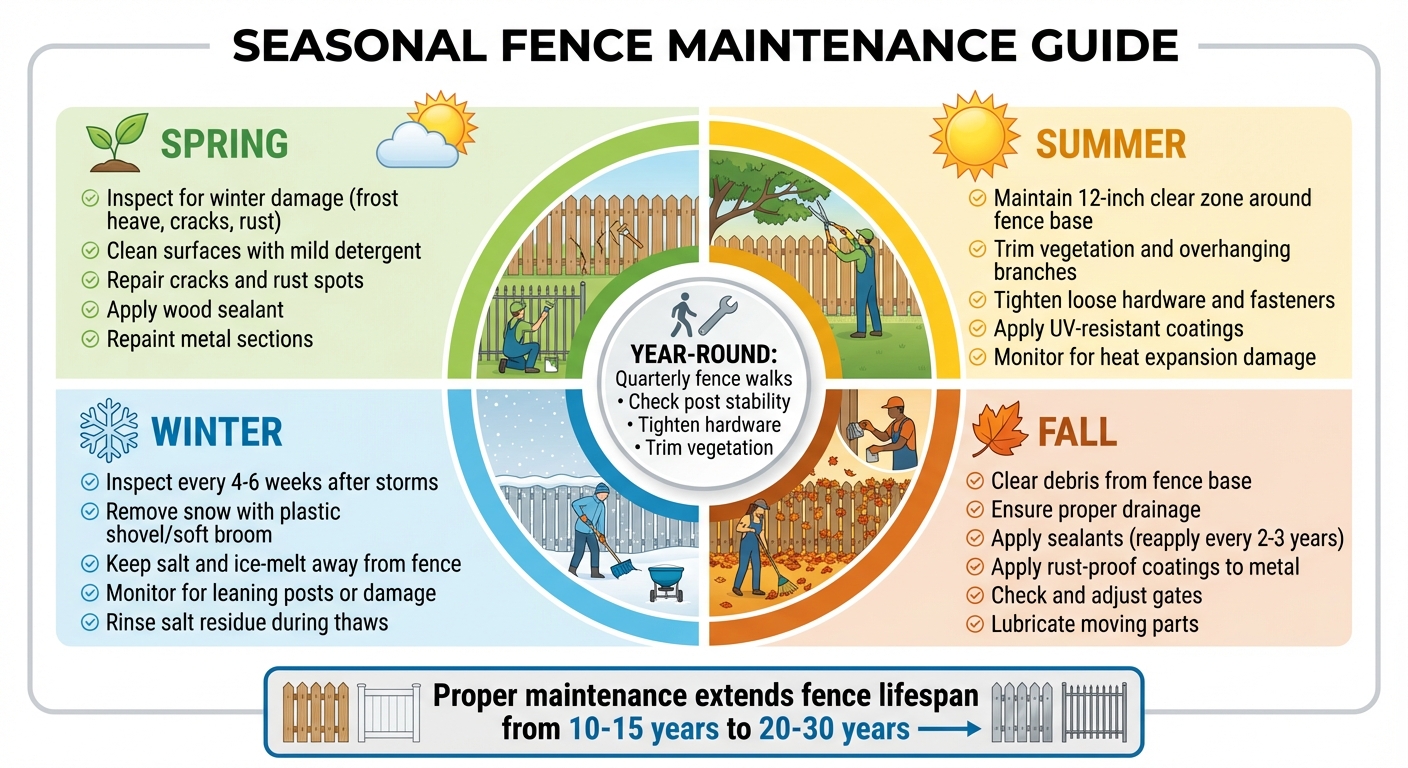
Seasonal Fence Maintenance Checklist: Spring, Summer, Fall, Winter Care Guide
Spring Fence Inspection and Repairs
Check for Winter Damage
As soon as the ground thaws, take a walk along your fence line to check for any damage caused by winter. One common issue is frost heave – when frozen ground expands and pushes fence posts upward, leaving them wobbly or tilted. Test each post by giving it a firm shake. If it moves, you may need to re-tamp the soil around it or reset it in concrete.
For wooden fences, look for cracks, splits, or soft spots that could indicate moisture-related rot, especially near the bottom rails. Metal fences are prone to rust, so inspect welds, fastener holes, and the lower sections where moisture tends to collect. Step back and view the fence from both ends to spot any sagging or bowing caused by heavy snow loads during the winter.
Once you’ve identified any damage, it’s time to clean and protect the fence to prevent further wear.
Clean and Treat Surfaces
Start with a good rinse using a garden hose to wash off loose dirt and debris. For a deeper clean, use a mild detergent or fence cleaner along with a soft brush – this works well on wood, vinyl, or composite materials. Avoid harsh scrubbing tools that might scratch or damage the surface. If you notice mildew or algae on wood, use a cleaner specifically designed for exterior wood. Rinse thoroughly and allow the fence to dry completely, which usually takes about 24–48 hours.
Once dry, apply a penetrating wood sealer or stain to protect the wood from moisture and UV rays. Pay extra attention to the tops of boards and rails where water tends to collect. For metal fences, sand down any rust spots, apply a rust-inhibiting primer, and finish with a weather-resistant exterior paint.
After cleaning and treating, move on to making necessary repairs to ensure your fence is ready for the season ahead.
Complete Basic Repairs
Use a level to check that all posts are standing straight. If a post has shifted slightly, re-tamp the soil and gravel around it. For posts that have moved significantly, dig them out, realign them, and reset them in concrete for better stability. Replace any loose or rusted hardware with durable, exterior-grade fasteners.
If you spot broken, rotted, or warped boards and rails, replace them right away to avoid creating weak spots that could lead to further damage. Tighten or replace loose hardware, and make sure gate hinges are properly adjusted so gates close securely. Don’t forget to lubricate any moving metal parts with a weather-resistant lubricant to keep them functioning smoothly. Lastly, clear away any soil, mulch, or debris piled up against the bottom of the fence to reduce the risk of moisture damage.
Taking these steps not only restores your fence’s strength and appearance but also ensures it’s ready to handle the warmer months ahead.
Summer Protection and Moisture Control
Trim Vegetation Around Fences
After tackling spring repairs, summer maintenance is all about keeping heat and moisture from wreaking havoc on your fence. The combination of summer heat and humidity often leads to overgrown vegetation, which traps moisture against your fence. This can speed up rot and attract insects. To combat this, experts suggest keeping a 12-inch clear zone on both sides of your fence base to help preserve wood fences longer.
Make it a habit to walk along your fence line during the summer and trim back any plants or weeds that encroach too closely. Overhanging tree branches? Trim those, too. Allowing sunlight and airflow around your fence helps the wood dry out faster after rain or morning dew. Pull weeds by hand or use an eco-friendly herbicide, and consider adding a layer of mulch or landscape fabric to slow down regrowth. Just be sure to keep the mulch a few inches below the fence rails to avoid trapping moisture right against the wood.
Once you’ve cleared the vegetation, it’s time to focus on protecting your fence from heat-related wear and tear.
Heat Expansion
Summer heat causes materials to expand, which can loosen fasteners and other connections over time. Inspect your fence regularly and tighten bolts, clips, and fasteners as needed. Pay special attention to areas under stress, like gate hinges, corner braces, and points where fence sections connect.
While you’re at it, look for signs of heat damage. Wooden boards might warp, bow, or crack, while metal parts could show stress marks near joints or welds. Spotting these issues early can save you from costly repairs down the line.
With mechanical stress under control, the next step is shielding your fence from the sun’s relentless rays.
Apply UV-Resistant Coatings
The summer sun can fade your fence and break down its protective finish. Start by cleaning the fence with a mild detergent and a soft brush, then let it dry completely – this usually takes 24–48 hours. For wood fences, apply a high-quality exterior stain or clear sealant every few years. Look for products specifically designed to block UV rays, as these help prevent graying and cracking. Pay extra attention to the tops of boards and post caps, which endure the most direct sunlight.
For metal fences, deal with rust by sanding it down, applying a rust-inhibiting primer, and finishing with weather-resistant exterior paint. Vinyl fences are simpler to maintain – just give them a good wash with mild soap. However, some manufacturers offer UV-resistant protectants, so check if these are recommended to reduce fading and brittleness over time.
How to Prep & Protect Your Fence From the Heat
Fall Preparation for Winter
As summer fades into fall, it’s time to focus on shoring up your fence before winter arrives. With dropping temperatures and falling leaves, this season offers the last opportunity to tackle potential problems before snow, ice, and freezing conditions set in. Neglecting these tasks can result in cracked wood, rusted metal, and misaligned gates – issues that become far more challenging and costly to fix once the ground freezes.
Clear Debris and Ensure Proper Drainage
Start by inspecting your fence line and clearing away any leaves, grass clippings, or other organic debris that has gathered at the base. These materials hold moisture against the fence, which can accelerate wood rot or metal corrosion. Aim to maintain a 12-inch clear zone on both sides of the fence by raking debris away.
Pay attention to any low spots or areas where water pools along the fence. Standing water can lead to frost heave, a process where freezing water pushes fence posts out of alignment. To prevent this, grade the soil so it slopes away from the fence and fill any depressions with gravel or well-draining soil. If you use mulch, keep it a few inches below the fence rails to avoid trapping moisture against the wood.
Protect Fence Materials from Winter Moisture
Adding a protective barrier is key to safeguarding your fence from winter’s harsh conditions. For wood fences, apply a penetrating, exterior-grade sealant or stain after thoroughly cleaning the surface with a mild detergent and ensuring it’s completely dry. Experts recommend resealing wood every 2–3 years, and fall is an ideal time to do this, as the conditions allow the sealant to cure properly before freezing weather sets in. Pay extra attention to the tops of boards, post caps, and any areas where water tends to collect.
For metal or ornamental iron fences, use a wire brush to remove rust spots, then apply a rust-inhibiting primer followed by weather-resistant paint. Inspect welds, fasteners, and bottom rails – these areas are especially prone to moisture, soil, and ice buildup. If you have a chain link fence, check for rust at ground level and touch up any exposed metal with protective coatings.
Check Gates and Hardware
Gates endure the most stress during winter, so it’s essential to ensure they’re functioning properly. Open and close each gate to check for any signs of dragging, sagging, or binding, as these issues will only worsen under the weight of snow. Tighten all loose hinges, latches, and brackets, and replace any hardware that’s bent or rusted. If a gate post wobbles, secure or reset it now – frozen ground will make repairs much harder later.
Lubricate all moving parts with a silicone-based or graphite lubricant that stays fluid in cold weather. Avoid heavy oils, as they can thicken in low temperatures, causing latches to stick or hinges to seize. Make sure latches engage fully and self-closing mechanisms operate smoothly – this will be especially helpful when you’re dealing with gloves and icy conditions.
sbb-itb-d1d0a96
Winter Monitoring and Emergency Care
Winter presents unique challenges that require more frequent and careful attention to your fence. Instead of sticking to routine checks, aim for a visual inspection and a detailed fence walk every 4–6 weeks, especially after storms. Look for leaning posts, broken boards, or damaged hardware before these issues turn into expensive repairs. Even in milder climates, like much of Texas, heavy rain, ice, or strong winds can wreak havoc on fences. These winter-specific steps complement regular seasonal maintenance by addressing the added strain cold weather can bring.
Remove Snow Safely
Heavy snow can stress your fence, so clearing it promptly is key. Use non-abrasive tools like a plastic snow shovel or a soft broom to gently push snow parallel to the fence – this helps avoid accidental damage. For wood fences, lightly brush snow off the rails and pickets, but avoid using metal tools or chipping at bonded ice, as these can cause splintering or gouging. Vinyl fences are particularly brittle in freezing temperatures, so stick to a soft broom and avoid hitting or flexing the panels. With ornamental iron fences, carefully remove snow from decorative elements to reduce moisture exposure and prevent rust, but avoid scraping the paint or coating.
A crucial tip: never pile cleared snow against the fence base. Excess weight and prolonged moisture exposure can lead to leaning posts, warped panels, or rotting wood. Keep a clear space of a few inches around posts and bottom rails to minimize damage.
Inspect After Storms
After a storm, take a walk along your entire fence line to spot potential issues. Check for leaning posts or sections that shift when lightly pushed, as well as cracked, broken, or missing boards. Look for sagging areas or chain-link mesh that may have pulled away from the posts. Pay special attention to gates – test for misalignment, sticking latches, or bent hinges, and inspect fasteners for signs of rust or pull-out, particularly around corners and gate areas.
If you find any structural damage, address it immediately to maintain the fence’s safety and security. While minor cosmetic issues like small cracks or rust spots can wait a few weeks, tackling them sooner rather than later can prevent more serious damage down the line.
Prevent Salt Damage
Winter maintenance doesn’t stop at structural concerns – chemical exposure can also harm your fence. Road salt and many ice-melt products contain chlorides that speed up corrosion on metal fences and cause staining, discoloration, and moisture imbalance in wood. Salt-laden meltwater can accelerate decay and rust, so it’s best to keep salt and ice-melt products several feet away from your fence. Instead, opt for sand or non-corrosive traction products near the fence, and pile plowed snow in areas where salty meltwater won’t pool against posts or panels.
If salt contact is unavoidable – such as along a sidewalk – rinse the affected sections of the fence with plain water during a thaw. This helps dilute the residue and reduces the risk of long-term damage to your fence’s materials.
Year-Round Maintenance Tasks
Keeping your fence in good shape requires regular, straightforward upkeep. By dedicating a little time to routine checks, you can spot problems early and avoid expensive repairs. Most of these quarterly inspections take just 15–30 minutes for an average suburban fence and work hand-in-hand with your seasonal deep-cleaning and repair efforts.
Quarterly Fence Line Walks
Take a walk around your entire fence at least once per season – or more often if there’s been a big storm or strong winds. While walking, watch for signs of trouble like shifted posts or areas where soil might be eroding. Check for loose or missing fasteners and inspect the chain-link fabric for bends or breaks. Trim back any overgrown vines, shrubs, or roots pressing against the fence. Keeping a few inches of clearance on both sides not only prevents trapped moisture but also makes it easier to spot potential damage. Looking at the fence from different angles can help you catch bows or warps that aren’t obvious from a straight-on view.
Post Stability and Ground-Level Checks
Fence posts are the foundation of your structure, so it’s vital to check their stability regularly. Stand by each post and push firmly in different directions at about waist height. If you feel wobbling, hear creaking, or notice movement at the base, it could be a sign of loosening or rot. Pay close attention to gate posts – if a post shifts or the gate sags when you open or close it, there’s likely an issue that needs fixing.
At ground level, watch for signs of soil erosion or mounding that could affect the post’s alignment. Standing water or persistently damp soil near the posts can also lead to trouble. Use a screwdriver to test for rot by gently pressing into the post base – if it sinks in easily, the wood may be compromised. For metal posts, check for rust, and inspect concrete footings for cracks or gaps. Tackling these problems early – whether it’s improving drainage, compacting soil, or replacing damaged posts – can save you from bigger headaches later.
Once you’ve ensured the posts are stable, secure any loose hardware right away to keep the fence solid and secure.
Regular Hardware Tightening
Make it a habit to check and tighten all hardware at least every few months, and even more often for gates that see heavy use, like those at driveways or pool areas. Tighten screws, nuts, and bolts carefully – just enough to secure them without over-tightening. Keep moving parts, such as hinges and latches, in good shape by applying a silicone or graphite-based lubricant. This helps prevent squeaking, sticking, and unnecessary wear.
Look for signs of rust or corrosion on metal hardware. If you spot light rust, use a wire brush to clean it off, then apply a rust-inhibiting primer and paint to stop it from spreading. Make sure gates open and close smoothly – no dragging, binding, or slamming. Adjust hinges or latches as needed to keep everything aligned. Staying on top of these small details not only makes your fence safer but also reduces strain on its structure, helping you avoid bigger problems like gate or latch failures later on.
Professional Fence Maintenance Support
When to Call a Professional
While regular inspections and minor repairs can keep your fence in good shape, there are times when calling in a professional is the smartest move. If you notice leaning or sagging sections, loose posts, ground-level damage, rot, insect infestations, or rust on post bases, rails, or fasteners, it’s time to bring in an expert. Similarly, if your gates are dragging or won’t latch properly, a professional can address alignment or structural issues that might be causing the problem.
After severe weather events like storms, high winds, heavy snow, or fallen tree limbs, it’s also a good idea to have a professional check for hidden damage in areas like footings or drainage systems. For more complex projects – like custom designs, automatic gates, or access control systems – professional expertise is essential. Annual inspections by a contractor are especially useful for businesses, homeowners associations, or properties with pools or additional security needs. These inspections ensure your fence remains structurally sound, hardware functions properly, and everything complies with local codes. When problems go beyond simple fixes, professional support is invaluable.
Tend Fencing‘s Services

If you’re looking for professional help, Tend Fencing offers a range of services to meet your needs. Based in Plano, TX, and serving nearby areas, Tend Fencing specializes in residential and commercial fence installation and maintenance. Their custom designs not only enhance security and define property lines but also boost the overall look of your outdoor space.
With over 15 years of experience, their team is known for using high-quality materials and proven techniques to deliver durable and visually appealing results. Customers appreciate their craftsmanship, clear communication, and quick resolution of any issues. On top of that, Tend Fencing shows its commitment to the environment by planting a tree for every fence they build, combining sustainability with exceptional service.
Conclusion
Taking care of your fence year-round is one of the best ways to protect your investment. Simple actions like routine cleaning, tightening hardware, sealing, and trimming nearby vegetation can extend the lifespan of a wood fence from 10–15 years to an impressive 20–30 years. Plus, addressing small issues like replacing a few boards or touching up rust spots is far more cost-effective than having to rebuild entire sections.
A well-maintained fence not only secures your property but also keeps it looking great. Regular inspections can help you catch problems like loose posts, broken latches, or storm damage before they turn into safety risks for kids or pets. And let’s not forget the added curb appeal – clean, straight fence lines with a fresh finish can enhance your home’s overall value. Consistent upkeep saves you money in the long run and makes fence care much easier by spreading tasks across the seasons.
Breaking maintenance into seasonal tasks keeps it manageable. Spring is perfect for repairs, summer for trimming vegetation, fall for prepping your fence for winter, and winter for monitoring any weather-related wear. A quick walk around your fence line every few months can help you spot trouble early, often in just a few minutes. Pairing fence care with other outdoor chores can make it feel less like a burden.
For larger repairs or structural issues, it’s smart to bring in professionals. Leaning posts, major damage, or complex fixes require expertise to ensure everything is done safely and correctly. If you’re in the Plano, TX area, Tend Fencing offers expert evaluations, repairs, and installations for wood, ornamental iron, automatic gates, and chainlink systems – all backed by years of experience and a dedication to quality craftsmanship.
FAQs
How often should I check my fence for damage during the year?
Keeping an eye on your fence at least once per season is a smart move to spot and fix issues before they escalate. Seasonal weather – whether it’s scorching heat, freezing cold, or heavy rainfall – can take a toll on your fence. During inspections, watch for loose boards, rust, or leaning sections. Tackling these problems early can save you from dealing with larger, costlier repairs later.
How can I protect my fence from moisture damage?
To keep moisture from damaging your fence, regular care is key. Begin by applying a waterproof sealant or stain to shield the wood from rain, snow, and humidity. Make it a habit to check your fence for issues like cracks, peeling paint, or warped boards, and fix them as soon as you spot them to avoid bigger problems down the road.
Clear away overgrown plants and debris near your fence, as they tend to trap moisture and speed up decay. Also, make sure the area around your fence has proper drainage to prevent water from pooling at the base, which can weaken the structure over time. With consistent upkeep, your fence will not only last longer but also maintain its appearance throughout the year.
How do I know when to hire a professional for fence maintenance?
If your fence has significant damage, structural issues, or uses complex materials like ornamental iron or automated gates, bringing in a professional is often the smartest move. Professionals can also be a lifesaver if you’re pressed for time or not confident in proper upkeep methods. They’ll make sure your fence is repaired and maintained the right way.
Tend Fencing specializes in professional services, handling everything from repairs to custom installations. They’ll help keep your fence secure, functional, and looking great.