

Automatic gates are convenient and secure, but safety is critical. Modern systems include built-in features to protect people and property from accidents. Here are the seven key safety features you should look for:
- Photoelectric Sensors: Detect obstacles (like people, pets, or vehicles) before contact.
- Sensing Edges: Stop and reverse the gate upon physical contact.
- Entrapment Protection Zones: Prevent pinch, crush, or shear hazards with physical guards and design standards.
- Emergency Stop & Manual Release: Allow quick halts or manual operation during power outages or emergencies.
- Safety Signage & Control Placement: Warn users and keep controls safely away from moving parts.
- Audible & Visual Alerts: Warn nearby people of gate movement with sounds and lights.
- Professional Installation & Compliance: Ensure proper setup following UL 325 and ASTM F2200 safety standards.
These features work together to minimize risks, meet U.S. safety regulations, and ensure reliable operation. Professional installation and regular maintenance are essential for long-term safety and compliance.
Top Gate Opener Safety Accessories You NEED to Know – Gate Opener Safety Basics & UL325 Explained
Understanding Safety Standards and Regulations
In the United States, automatic vehicular gates must meet two key safety standards: UL 325 and ASTM F2200.
UL 325, created by Underwriters Laboratories, focuses on the equipment that powers the gate – the operator and electrical controls. It outlines requirements for safety features like entrapment protection devices, automatic reversal systems, monitored safety mechanisms, and warning labels. The most recent update to this standard, effective August 1, 2018, applies to various gate types, including horizontal slide gates, vertical lift gates, swing gates, and vehicular barrier arm operators.
ASTM F2200, on the other hand, addresses the physical gate design and installation. This standard ensures the gate itself is structured to minimize risks, such as crush, pinch, or shear hazards, by regulating aspects like frame construction, spacing between bars, and guarding of moving parts. While UL 325 governs the operator and controls, ASTM F2200 focuses on the gate’s physical layout and design.
These standards are critical for understanding the safety features built into modern automatic gate systems. Let’s dive deeper into how these standards define entrapment protection and gate design criteria.
Entrapment Protection Requirements
UL 325 mandates that automatic gates include two forms of entrapment protection for each direction of travel. These protections fall into the following categories:
- Type A: Inherent protection built into the operator. This includes motor force limits that detect resistance when the gate encounters an object, triggering an automatic stop or reversal.
- Type B1: Non-contact sensors, like photoelectric eyes, which create an invisible beam across the gate opening. If the beam is interrupted, the gate halts or reverses before making contact.
- Type B2: Contact sensors, such as safety edges mounted on the gate. These edges activate when compressed by an object, signaling the operator to stop or reverse the gate.
Other types of monitoring devices exist but are less commonly used.
A typical residential gate system combines inherent force monitoring (Type A) with monitored photoelectric eyes (Type B1) and safety edges (Type B2) to meet UL 325 requirements. Additionally, external entrapment devices must be monitored by the operator. If a device fails or is disconnected, the gate will not operate, adding another layer of safety.
Physical Design and Entrapment Zones
ASTM F2200 focuses on eliminating or shielding potential entrapment zones – areas where someone could get caught between the moving gate and a fixed object. Specific construction rules help reduce crush and shear hazards:
- For slide gates: The gate and adjacent fence must prevent a 2¼-inch sphere from passing through up to 48 inches above ground level. This design helps protect small children from inserting their arms or heads into dangerous areas.
- For swing gates: Entrapment zones larger than 4 inches but smaller than 16 inches must be protected. Additionally, swing gates must avoid protrusions along the bottom edge that could catch clothing or feet. Exposed rollers and moving hardware must also be covered to prevent injuries.
These requirements ensure that pinch, crush, and shear points are either eliminated or adequately protected. Property owners can confirm compliance by reviewing gate openings, picket spacing, and roller guards against ASTM F2200 criteria.
Pedestrian Separation and Control Placement
Both UL 325 and ASTM F2200 emphasize the importance of separating pedestrians from vehicular gates [10]. This separation reduces the risk of accidents involving moving vehicles or heavy gate machinery.
Compliant installations include a dedicated pedestrian entrance or gate, clearly marked and located away from vehicle areas. The vehicular gate should open inward toward the property to prevent risks to pedestrians on sidewalks or public pathways [10].
Access controls – such as keypads, card readers, or push buttons – must be installed at least 6 feet away from any moving parts of the gate. This placement ensures users cannot reach through the gate or stand in its path while operating the system. Controls should also be positioned to give users an unobstructed view of the gate during operation [10][11].
Safety Signage and Warning Labels
UL 325 also requires warning signs or labels to be installed on or near the gate system. These signs alert users to potential hazards, such as the risks of climbing, sitting, or riding on the gate. They also remind users that the gate is for vehicular use only and provide instructions for manual release and emergency procedures.
To be effective, these signs must be clearly visible. Common placements include the gate leaf, nearby fence panels, or near control stations [11].
Verifying Compliance
Property owners and managers can take practical steps to ensure their automatic gate system complies with UL 325 and ASTM F2200. Start by confirming that the gate operator is UL 325-certified and that the gate design adheres to ASTM F2200 standards.
Inspect the system to ensure it includes at least two forms of entrapment protection for each direction, such as force monitoring, photo eyes, and safety edges. Check that the gate construction meets spacing and guarding requirements, and verify that entrapment zones are adequately protected [10].
Also, ensure there is a separate pedestrian entrance, that access controls are installed at least 6 feet from moving parts, and that the gate opens inward where applicable [10]. Finally, confirm that all required warning signs are present, clearly visible, and easy to read [11].
For peace of mind, consider hiring a professional installer familiar with UL 325 and ASTM F2200 standards. Specialists, such as Tend Fencing in Plano, TX, can ensure your system meets all safety requirements. They are trained to select compliant operators, integrate monitored safety devices, and construct gate panels that align with ASTM F2200 guidelines.
Professional installation and routine inspections are essential to maintaining compliance and ensuring the gate system operates safely throughout its lifespan. Proper setup, adjustments, and maintenance keep safety features functioning as intended.
1. Photoelectric Safety Sensors and Presence Detection
Photoelectric safety sensors, often referred to as photo eyes, are essential components in modern automatic gate systems. These sensors create an invisible infrared beam across the gate’s opening. If anything – be it a person, vehicle, pet, or object – interrupts this beam, the sensor sends a signal to the gate operator to immediately stop and reverse the gate, preventing any potential contact [12].
Unlike safety edges, which require physical contact to activate, photo eyes operate without contact. This makes them especially effective for safeguarding children, pets, and vehicles from harm, as they can detect obstacles before any physical interaction occurs [12].
How UL 325 Classifies Photoelectric Sensors
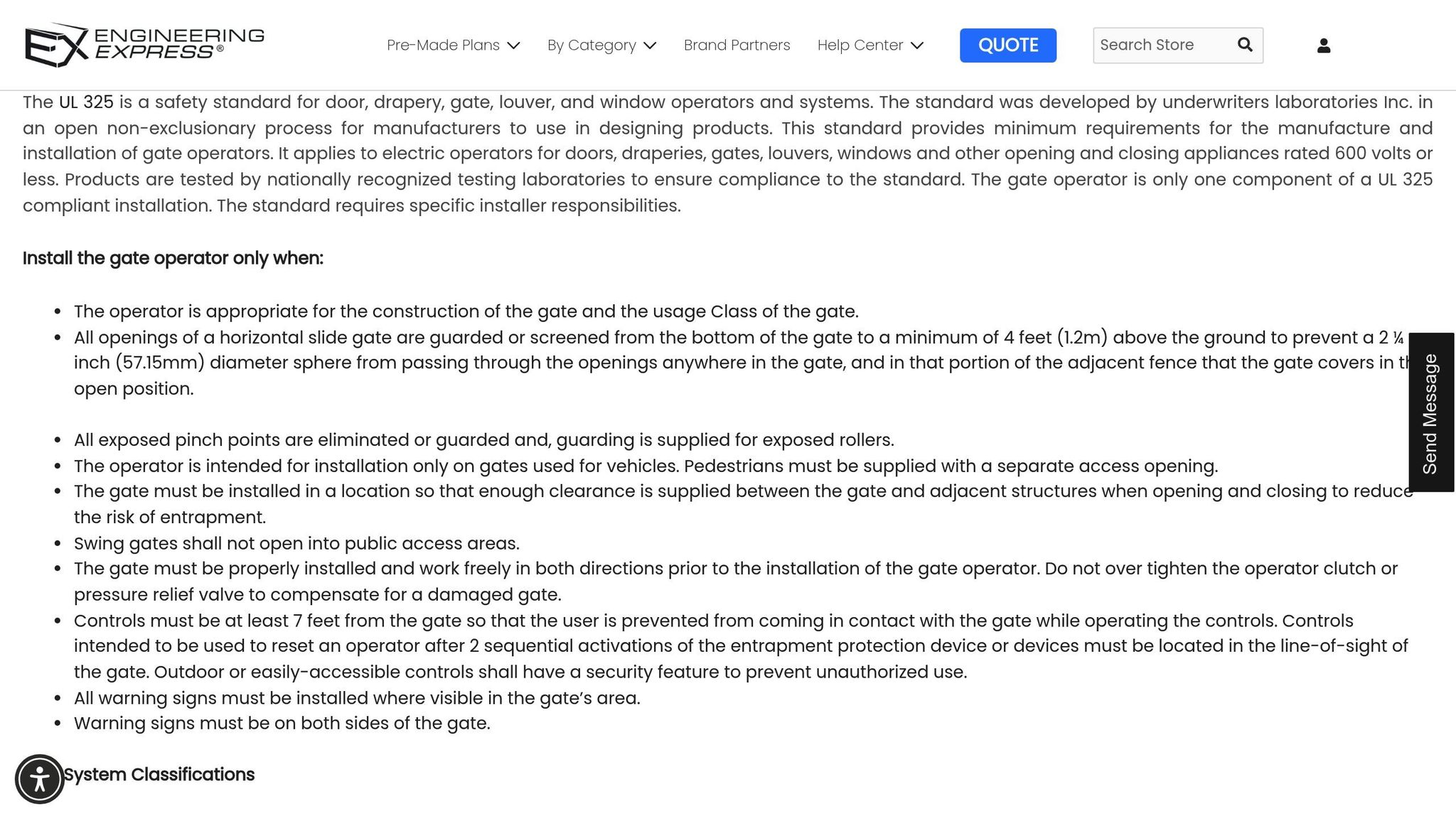
According to UL 325 standards, photo eyes are categorized as Type B1 non-contact entrapment protection devices. UL 325 mandates that gate operators must incorporate at least two independent safety mechanisms. A typical configuration includes inherent force sensing (Type A), photoelectric sensors (Type B1), and safety edges (Type B2). Together, these systems create multiple layers of protection. Additionally, the gate operator monitors external devices like photo eyes to ensure the gate won’t function if a sensor is blocked, disconnected, or malfunctions.
ASTM F2200 complements UL 325 by addressing the physical design and construction of gates. It outlines requirements such as minimizing gaps that could trap individuals, limiting openings in fencing, and safeguarding rollers and pinch points. When combined with photoelectric sensors, these measures create a comprehensive safety system.
Placement and Integration
For both swing and slide gates, photo eyes are usually installed as paired beams across the gate opening, positioned just a few inches above ground level to detect smaller objects. In commercial or high-traffic areas, additional sensors may be placed at varying heights to enhance detection [12].
UL 325 also advises that access controls, like keypads or card readers, be positioned at least 6 feet away from the gate’s moving parts. This ensures individuals aren’t standing in the danger zone when activating the gate. Meanwhile, the sensors continuously monitor the gate’s opening to detect obstructions.
Photoelectric sensors are wired directly into the gate’s control board and configured as monitored safety devices. When integrated properly, breaking the beam triggers an immediate stop and reversal, regardless of how the gate was activated – whether through a remote, keypad, or phone app.
Real-World Accident Prevention
Photoelectric sensors play a crucial role in preventing injuries caused by gates. For example, they can detect a child running through the gate, a car partially blocking the opening, or a pet lingering in the gate’s path. In such cases, the gate stops or reverses before any contact occurs [10][12].
Modern safety standards have emphasized the importance of photo eyes, making them one of the most impactful advancements in automatic gate safety [10].
Performance in U.S. Weather Conditions
While photo eyes are designed to prevent accidents, their performance can be affected by environmental factors. Outdoor sensors in U.S. gate systems are built to withstand various weather conditions, but heavy rain, snow, ice, or dust on the lenses can interfere with the infrared beam. This may cause false activations or sensor failures unless the sensors are regularly cleaned and aligned [12].
To address these challenges, installers often mount sensors slightly above typical snow levels and use protective hoods or enclosures to shield them from rain and glare. Selecting models rated for outdoor use in climates ranging from sunny Texas to snowy northern states ensures reliable operation year-round.
Maintenance and Testing
Regular maintenance is key to ensuring photo eyes work as intended. Property owners should inspect sensors monthly, checking for damage, dirt, or misalignment. Cleaning the lenses and testing the system by interrupting the beam can confirm that the gate stops and reverses as it should [11].
Professional inspections are also important for maintaining UL 325 compliance. These checks involve verifying the functionality of safety devices, inspecting wiring for damage, and ensuring that monitored sensors disable the gate operator if they’re disconnected or blocked. Such inspections reduce liability and ensure safety for both residential and commercial properties.
Professional Installation Considerations
Proper installation is critical for the effective operation of photoelectric sensors. Professional installers assess factors like the gate type (swing, slide, or vertical lift), traffic patterns, and site conditions to select the right sensors and position them correctly. They also ensure compliance with UL 325 and ASTM F2200 standards by covering all potential entrapment zones and integrating the sensors with operator controls.
Experienced companies specializing in automatic gates, such as Tend Fencing in Plano, TX, ensure that photo eyes and other safety devices are installed and configured to meet safety requirements and handle local environmental conditions.
Residential vs. Commercial Configurations
Residential gates typically use one set of photo eyes across the opening, while commercial or high-traffic gates often include multiple sensors at different heights. These setups, combined with advanced access control systems, accommodate frequent vehicle movement while maintaining safety [12].
In environments with higher risks – like multifamily housing, industrial sites, or commercial lots – designers often use redundant detection systems and conservative sensor placement to minimize the chance of undetected obstructions.
When selecting or upgrading an automatic gate, ensure the operator meets UL 325 standards and that external sensors are monitored and compatible. Look for documentation referencing ASTM F2200 design criteria, and verify the inclusion of at least two safety devices, such as photoelectric sensors classified as Type B1.
2. Sensing Edges and Obstruction Detection
Sensing edges, paired with photoelectric sensors, play a key role in ensuring safety around automatic gates. These pressure-sensitive rubber strips are installed along the moving parts of gates and activate only upon physical contact. If a person, pet, or object compresses the edge, it immediately signals the gate’s control panel to stop and reverse its movement, preventing potential injuries like crushing or shearing.
How Sensing Edges Work
A sensing edge consists of a flexible rubber profile mounted within an aluminum channel. When compressed, the embedded sensor inside the rubber is triggered. This sends a signal to the gate’s control board, which halts the gate and typically reverses its direction. Unlike photoelectric sensors, which detect objects before any contact, sensing edges serve as a critical last line of defense – especially in areas where children, pets, or vehicles may come into close proximity.
UL 325 and ASTM F2200 Compliance
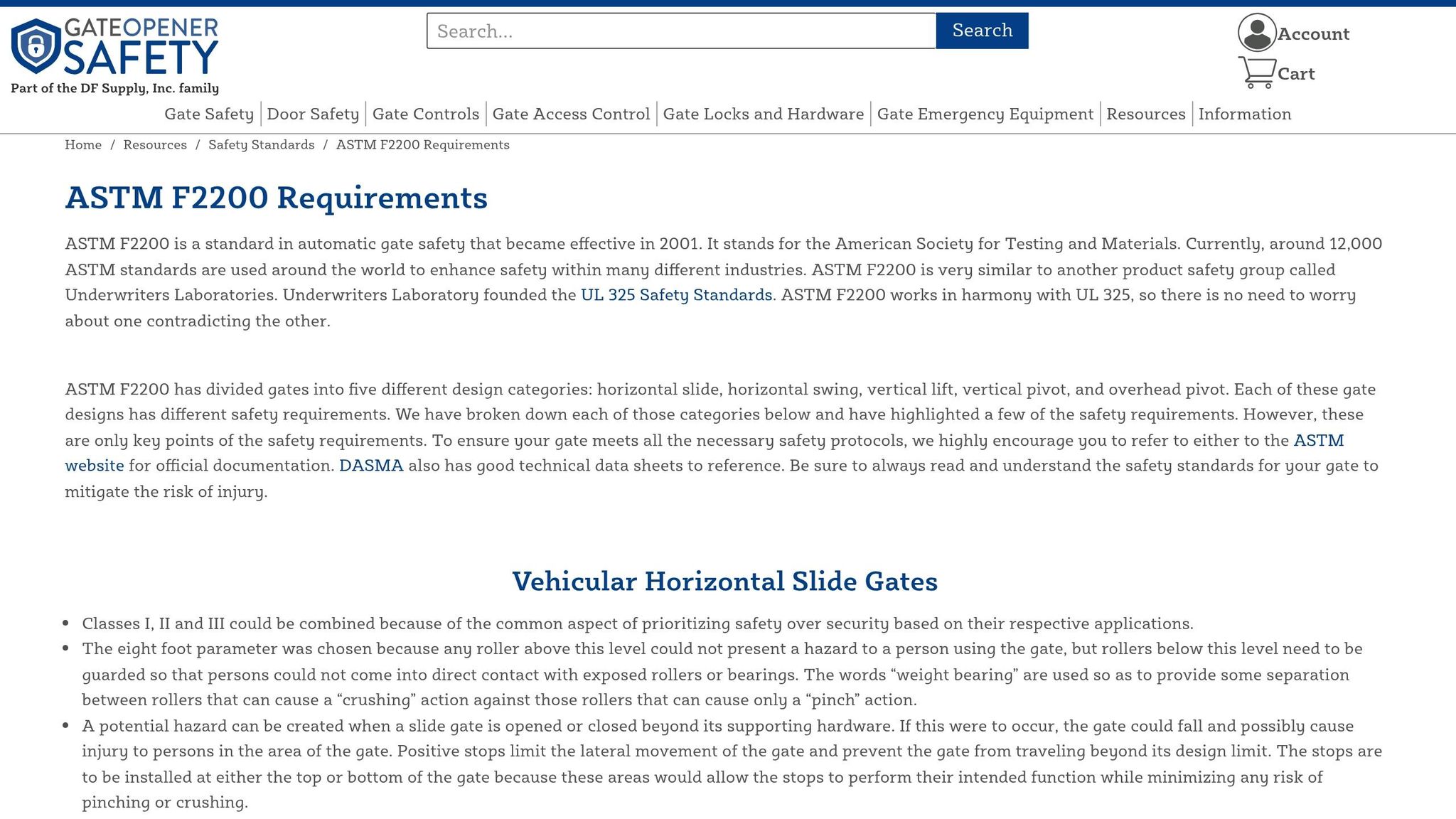
Under UL 325 standards, sensing edges are classified as Type B2 contact sensors. Gate operators must include at least two types of entrapment protection devices, with safety edges serving as one of these essential components. If a sensing edge detects contact, the gate must immediately stop and reverse. Additionally, UL 325 requires continuous monitoring of external sensors. If a sensing edge becomes damaged, disconnected, or fails, the system must shut down the gate until the issue is resolved. ASTM F2200 complements this by mandating that slide gates and adjacent fences be designed to prevent a 2‑1/4 inch sphere from passing through up to 48 inches above the ground, further reducing entrapment risks.
Strategic Placement and Integration
Sensing edges should be installed on all moving edges where contact might cause harm. For sliding gates, the edge is typically mounted on the leading side that closes against a fence or post. On swing gates, sensing edges are placed on the hinge side, trailing edges, and nearby vertical supports. Modern control boards are equipped with dedicated terminals for safety edges, photoelectric sensors, and loop detectors, ensuring that any triggered sensor stops and reverses the gate automatically [12]. This strategic placement strengthens the overall safety system of automatic gates.
Multi-Layered Protection Strategy
Sensing edges work best as part of a broader safety system. While photoelectric sensors detect obstacles before contact, inductive loop detectors embedded in driveways add another layer of protection by keeping the gate open when necessary [12]. This layered setup ensures that even if one safety feature fails, others remain active to minimize risks.
Weather Resistance and Durability
Sensing edges are built to withstand outdoor conditions. Their aluminum channels resist rust, while the rubber remains functional across varying temperatures – from scorching Texas summers to freezing northern winters. However, proper installation and upkeep are vital; damaged rubber or loose fittings can reduce their effectiveness.
Testing and Maintenance Requirements
Routine testing is crucial for safety. Lightly pressing the edge during gate closure should cause the gate to stop and reverse immediately. If it doesn’t, adjustments or replacements may be needed. Keeping the rubber clean and inspecting it regularly for cracks or wear helps maintain performance. Under UL 325 standards, any damage or disconnection in the sensing edge triggers a fault that prevents gate operation until resolved.
Professional Installation Considerations
Installing sensing edges properly requires both mechanical and electrical expertise. The aluminum channel must be securely mounted, and wiring should be routed to avoid interference. Control board connections must be configured correctly to detect edge activation and faults. Companies like Tend Fencing in Plano, TX, specialize in ensuring sensing edges meet UL 325 and ASTM F2200 standards. Their technicians assess each site to optimize placement and integration based on gate type, traffic flow, and surroundings.
Additional Physical Safeguards
Physical measures can further enhance safety. For example, mesh panels on open-bar gates prevent limbs from reaching moving parts. Access controls like keypads should be positioned at least 6 feet away from the gate’s moving components. Pedestrians should use designated walkways instead of passing through the gate opening. While sensing edges significantly reduce risks, they work best alongside safe practices. Clear warning signs can remind users to stay clear of moving gates and avoid unsafe behavior [11].
3. Entrapment Protection Zones and Physical Guards
Entrapment zones are areas where moving gates can trap people or objects against fixed structures. While sensors and detection edges help prevent accidents before contact, physical guards act as permanent barriers, adding another layer of protection. Identifying and safeguarding these zones is critical to prevent injuries and meet U.S. safety standards.
Identifying High-Risk Entrapment Areas
Different types of gates create specific hazard zones. For swing gates, the hinge side presents a risk, especially in gaps ranging from 4 to 16 inches where the gate moves toward a column or wall. For slide gates, the danger lies between the moving gate and nearby fences or posts, with ASTM F2200 limiting openings to 2¼ inches up to 48 inches above the ground. Another key area is the tail section, where the gate slides into its receiver. These risks highlight the importance of using physical barriers to complement electronic safety measures.
How UL 325 and ASTM F2200 Work Together
UL 325 requires two safety measures for each direction of gate travel, while ASTM F2200 focuses on design specifications to reduce entrapment risks.
Physical Guarding Solutions
Physical guards create a permanent barrier to keep people and objects out of hazardous zones. Mesh panels or closely spaced pickets help block access to moving parts, reducing the risk of crushing injuries. Solid panels in the tail section prevent access to the area where the gate slides into its receiver, while roller covers protect against clothing or fingers being pulled into drive mechanisms. For swing gates, wedge-shaped gaps between 4 and 16 inches should either be eliminated or covered with guards.
Strategic Placement and Integration
Physical guards work hand-in-hand with sensor-based protections by creating a permanent safety net around entrapment zones. For slide gates, guards are typically installed from ground level up to at least 48 inches, aligning with ASTM F2200’s sphere-test requirement. Swing gates often need guards on the hinge side and along the closing edge where the gate meets a post. Access controls like keypads or card readers should be placed at least 6 feet away from moving parts to prevent accidental entry, while pedestrians should use separate, clearly marked walkways.
Climate Durability and Material Selection
To ensure guards last in various weather conditions, use UV-resistant, powder-coated metals and weather-rated components. In areas with frequent rain, snow, or coastal exposure, stainless steel or galvanized steel with proper drainage designs can help prevent corrosion and extend the lifespan of the guards.
Monitored Safety Systems
UL 325 requires that external entrapment devices, such as photoelectric sensors, are continuously monitored by the gate operator. If a sensor is damaged or fails, the system will halt normal operation until the issue is fixed. This fail-safe design ensures that physical guards and electronic sensors work together to prevent unsafe gate operation.
Residential vs. Commercial Requirements
Residential gates often prioritize child safety and aesthetics. For example, a home in Plano, TX might use a UL 325-listed operator with built-in force limits, dual photoelectric sensors covering the driveway and tail section, and tight picket spacing that meets the 2¼-inch sphere requirement. On the other hand, commercial and industrial gates typically require full-height mesh panels, bollards, and multiple safety devices to handle heavier traffic and larger vehicles. These setups also include clearly marked pedestrian access routes to enhance safety.
Professional Installation and Compliance
Installing physical guards correctly requires expertise in safety standards and mechanical design. Installers must choose a UL 325-listed operator suitable for the gate type and ensure all external safety devices, like sensors and edges, are connected to the operator’s monitoring system for fault detection. Gate construction should follow ASTM F2200 guidelines, covering infill spacing, roller guards, and protected entrapment zones. Companies like Tend Fencing in Plano, TX specialize in integrating UL 325-compliant operators with ASTM F2200-compliant gates, ensuring systems are built to withstand Texas weather while meeting safety regulations.
Maintenance and Inspection
Regular maintenance is essential to keep physical guards effective. Inspect mesh panels, roller covers, and infill sections to ensure they remain securely attached and free from damage or corrosion. Any weakened or damaged guard should be repaired immediately, as compromised barriers increase the risk of entrapment – even if electronic sensors are functioning. Routine functional tests should confirm that physical and electronic safety features work together seamlessly. Monthly inspections are recommended for residential gates, while high-traffic commercial systems may require more frequent checks.
4. Emergency Stop, Manual Release, and Power Loss Safety
No matter how advanced your automatic gate system is, unexpected situations can still arise – like a person stepping into the gate’s path, a vehicle breaking down mid-cycle, or a sudden power outage. In these moments, emergency stop buttons, manual release mechanisms, and power loss safety features are crucial to preventing accidents or injuries.
Emergency Stop Buttons: Quick Action When It Counts
Emergency stop buttons are designed to immediately halt gate movement. According to UL 325, all control stations must have easily accessible emergency stop buttons and manual overrides. These controls are also required to be installed away from moving parts to ensure user safety. Real-life scenarios where an emergency stop is vital include a child or pet unexpectedly entering the gate’s path, a stalled vehicle blocking the closing zone, or even a maintenance worker needing to pause operations. Automatic gates are capable of exerting significant force, which can cause serious harm if not stopped instantly[10]. Alongside these buttons, manual release mechanisms provide a backup option when power is lost.
Manual Release Mechanisms: Keeping Access Possible During Power Outages
Manual release mechanisms allow you to disengage the gate from its automatic operator, enabling manual operation during power failures. These systems often include a dedicated emergency release key for easy use. In a power outage, a reliable manual release ensures no one is trapped on either side of the gate, which is especially important for emergency vehicles, evacuations, or daily use. These mechanisms operate mechanically, ensuring they function even when the power is out. Industry safety guidelines emphasize that manual release systems should always be accessible and easy to use. Clear instructions, unobstructed access, and smooth manual operation are key to ensuring these systems are effective, even on sloped surfaces.
Power Loss Safety: Balancing Security and Access
Battery backup systems and fail-safe designs ensure gates remain functional – or secure – during power outages[12]. For example, gates in fire lanes may default to an open position to allow emergency vehicle access, while gates at high-security locations might lock to maintain protection.
Compliance Standards: UL 325 and ASTM F2200
UL 325 and ASTM F2200 work together to mandate the inclusion of emergency stop buttons and manual release mechanisms. These standards ensure that both manufacturers and installers adhere to federal safety requirements.
A Layered Safety Approach
Emergency stop and manual release features are part of a broader safety system. While automated systems like photoelectric sensors and entrapment protection devices detect obstructions, emergency stop buttons provide a manual override for situations where automation might not respond quickly enough. This layered approach creates redundancy, so even if one component fails, safety is still prioritized.
Soft Start and Soft Stop Features: Reducing Wear and Tear
Soft start and soft stop functions help protect both the gate and its users during sudden stops. A soft start gradually increases motor speed to prevent jarring movements, while a soft stop slows the gate down before it halts, reducing stress on mechanical parts. These features ensure the gate remains reliable and ready for future emergencies.
Clear Communication Through Warning Signs
Warning signs and labels, required under UL 325, play a critical role in safety awareness[10]. These signs should clearly indicate the location and purpose of emergency stop buttons and provide instructions for using the manual release. For multi-tenant or commercial properties, posting clear instructions near the gate or including them in building manuals ensures all users know how to operate these safety features.
Regular Maintenance and Testing
Just like sensor systems, emergency controls need regular inspections to stay functional. Monthly visual checks should confirm that emergency stop buttons are accessible, clearly labeled, and free from obstructions. Functional tests, conducted quarterly, should ensure these buttons stop the gate immediately and that manual release mechanisms work smoothly. Annual inspections by qualified technicians are recommended to test the entire emergency system under different scenarios, including simulated power outages. Maintenance records should document these activities to comply with safety standards. A basic safety checklist includes verifying emergency stop functionality, ensuring the manual release can be activated quickly (with tools nearby if needed), and confirming that all users understand emergency procedures: stop the gate, engage the manual release, and stay clear of the gate’s path.
Professional Installation and Local Expertise Matter
Installing emergency stop and manual release systems requires expertise in safety standards and practical applications. Companies like Tend Fencing in Plano, TX, specialize in installing UL 325-compliant gate operators with properly positioned emergency controls and accessible manual release mechanisms. Their experience with local conditions ensures these systems remain effective despite extreme weather, power fluctuations, or other challenges common to the area.
Safety experts and manufacturers strongly advise against attempting DIY repairs on internal gate components. If your gate behaves unpredictably, rely on its emergency stop and manual release systems, and contact a qualified technician for assistance[11]. Additionally, children should never operate the manual release, as it disengages the gate, leaving it free-moving and potentially dangerous[11].
Transform Your Property with Expert Fencing Solutions
Enhance your property’s security, beauty, and value with Tend Fencing’s professional residential and commercial fence installation services. Contact us today to bring your vision to life!
5. Safety Signage, Access Control Placement, and Pedestrian Separation
Automatic gates can become hazardous if users don’t fully understand how they operate. That’s where safety signage, smart placement of access controls, and clear pedestrian separation come into play. These elements work together with sensors and guards to create a more complete safety system, reducing risks and keeping both people and property secure.
Required Safety Signage Under UL 325 and ASTM F2200
To keep users informed and safe, gates must display clear, weatherproof warning signs. These signs should combine text and pictorial warnings to ensure everyone – regardless of age or literacy level – can understand the risks. Common messages include:
- “Warning: Moving Gate Can Cause Serious Injury or Death”
- “Keep Clear”
- “No Pedestrians”
- “Do Not Climb or Play on Gate” [11].
Access Control Placement: The 6-Foot Rule
Access controls like keypads, push buttons, and card readers should be installed at least 6 feet away from any moving gate parts. To prevent children from activating the gate, keypads should be mounted 48 inches above the ground. These controls should also allow the operator a clear view of the gate while it’s in use, ensuring safer operation.
Pedestrian Separation: Keeping People Out of Harm’s Way
Automatic gates designed for vehicles should never double as pedestrian entrances. Compliance with UL 325 and ASTM F2200 requires a separate, clearly marked pedestrian gate. Additionally, vehicular gates should swing inward toward the property to avoid impacting public walkways [10]. Physical barriers like fences, bollards, or guardrails can further prevent pedestrians from entering potentially dangerous areas.
Entrapment Protection and Reach-Through Prevention
Beyond signage and access control placement, preventing reach-through hazards is another critical safety measure. For slide gates, ASTM F2200 mandates that openings must not allow a 2.25-inch sphere to pass through up to 48 inches above ground. Swing gates with entrapment zones larger than 4 inches but smaller than 16 inches must have guards or screens extending from the gate’s bottom edge to at least 4 feet high [10].
| Safety Feature | Key Requirement | Purpose |
|---|---|---|
| Access Control Distance | Place controls ≥6 feet from gate movement | Prevents accidental activation near the gate |
| Keypad Height | Install keypads at 48 inches above ground | Reduces risk of child activation |
| Pedestrian Entrance | Provide a separate pedestrian entrance | Ensures gates are for vehicle access only |
| Gate Swing Direction | Gates must open inward toward the property | Protects passersby from potential impact |
| Slide Gate Openings | Limit openings to a 2.25-inch sphere max | Prevents limb entrapment |
Weather Resistance and Durability
Safety features need to stand up to the elements. Materials like stainless steel or powder-coated aluminum are ideal for signage and access controls due to their resistance to corrosion. UV-resistant materials help prevent fading, while secure mounting ensures durability in areas with high winds or heavy snow. Professional installers, such as Tend Fencing in Plano, TX, can recommend materials and methods tailored to local weather conditions.
Balancing Security with Safety
A well-designed gate system doesn’t just protect property – it also prioritizes pedestrian safety. Modern systems often include password-protected keypads or motion-activated remotes to prevent unauthorized use while remaining accessible to those who need it. Clear signage ensures users understand how to operate the gate safely and responsibly.
Maintenance and Inspection Protocols
Regular upkeep is essential for long-term safety. Monthly checks should confirm that safety signage is legible and weather-resistant. Access control devices should be tested quarterly, while pedestrian separation features and entrapment protection mechanisms require routine inspections. Keeping detailed documentation of these activities demonstrates compliance with UL 325 and ASTM F2200 standards.
Professional Installation and Compliance Documentation
Installing an automatic gate system according to safety standards requires expertise. Professional installers provide detailed documentation, including photos of properly placed signage, access controls positioned at the required 6-foot distance and 48-inch height, and clearly marked pedestrian areas. These records not only reassure property owners but also serve as essential references for ongoing maintenance and liability concerns. Companies like Tend Fencing in Plano, TX, specialize in UL 325-compliant installations, bringing together all the critical safety measures into a seamless, reliable system.
6. Audible and Visual Alerts, Soft Start/Stop, and Speed Control
Automatic gates are equipped with audible and visual alerts to warn nearby users before the gate moves. Together with sensors and physical guards, these features form a safety system designed to minimize the risk of accidents.
Warning Buzzers, Horns, and Flashing Lights
When a gate begins to move, audible and visual alerts – such as buzzers, horns, and flashing lights – activate to give drivers, pedestrians, children, and pets enough time to step away from the area. These alerts are particularly useful in busy U.S. driveways or parking lots, especially at night, during poor weather, or near blind spots where movement might go unnoticed until it’s too late.
Many gate operators allow users to adjust alert settings. Manufacturers increasingly include warning lights as standard accessories for both residential and commercial gates, reflecting a growing emphasis on combining visible and audible warnings. These systems integrate seamlessly with motion controls, further enhancing safety.
UL 325 Requirements for Audio Alarms
UL 325 mandates audio alarms as part of modern gate safety systems, alongside sensors and guards, to prevent entrapment incidents [10]. Some systems are designed to sound an alarm if two separate entrapment protectors are triggered in succession, signaling a potential issue and alerting those nearby to possible danger [10].
Although UL 325 doesn’t classify soft start/stop or adjustable speed features as primary safety devices, these functions help gates comply with safety standards. By ensuring smoother motion, they reduce the severity of contact before the gate’s entrapment protection system activates.
How Soft Start and Soft Stop Work
Controlled motion is another layer of safety. Soft start/stop technology gradually accelerates and decelerates gate movement, avoiding abrupt motions that could lead to minor collisions or mechanical strain. This smoother operation not only reduces wear and tear on components like hinges and gearboxes but also extends the lifespan of the gate system, cutting down on maintenance needs over time.
For families with children or pets, soft start/stop makes the gate’s motion less intimidating. It’s a common feature in DC motor operators and ensures vehicles aren’t startled by sudden movements while maintaining efficient operation.
Adjusting Gate Speed for Safety and Convenience
Speed control allows gate movement to be fine-tuned for both safety and convenience. Slower speeds reduce the force of impact if the gate encounters an object or person, giving safety devices more time to detect obstructions and stop or reverse the gate.
On the other hand, faster speeds can be appropriate for high-traffic areas, such as busy residential streets or commercial driveways. However, these settings must be carefully balanced against safety concerns, especially in areas with children or limited visibility. Gate speed is typically adjusted based on factors like weight, layout, and traffic patterns, with many operators offering customizable settings.
Supporting ASTM F2200 Compliance
ASTM F2200 outlines design standards for automated vehicular gates, focusing on features like eliminating pinch points, limiting openings, and keeping pedestrians away from moving gates. Audible and visual alerts play a role in meeting these standards by clearly signaling that the gate area is for vehicles, not pedestrians.
Integration with Other Safety Systems
Modern gate operators often include terminals for integrating warning lights and buzzers, ensuring alerts activate automatically during gate movement. These systems can be wired to low-voltage outputs on the control board, triggering alerts whenever the gate opens or closes.
Alerts can also work with other safety systems, such as photoelectric sensors, safety edges, loop detectors, and access controls. This integration ensures alerts only sound during motion and stop if the gate halts or reverses due to an obstruction. In homes and businesses using smart access systems, alerts can be linked to automation hubs or security systems, triggering notifications, cameras, or lights when the gate operates.
Accident Prevention
Audible and visual alerts are highly effective in reducing unexpected incidents by warning people before and during gate motion. This is especially valuable for families with children who might run near a driveway while playing. Soft start/stop reduces sudden jolts that could catch someone off guard and helps prevent hardware wear that might lead to unsafe malfunctions.
Speed control also plays a key role, keeping moving parts at safer velocities and giving safety devices more time to react when an obstruction is detected. While these features don’t replace UL 325 entrapment devices, they significantly reduce both the frequency and severity of accidents when used together and properly maintained.
Installation Best Practices
Professional installation is crucial for ensuring a gate system meets UL 325 standards. Installers should test alarm outputs, flashing lights, and motion controls to confirm proper functionality before turning the system over to the owner. Visual alerts should be positioned for maximum visibility, and audible alarms should be loud enough to be effective without violating noise ordinances.
Soft start/stop and speed settings should be tailored to the gate’s size, weight, and operator model, then tested with safety sensors to ensure smooth operation and quick response to obstructions. Homeowners should also be educated on normal alert patterns and how to test the system periodically.
For homes with small children, installers might prioritize moderate speeds, smooth motion, and easily visible LED beacons to create a family-friendly setup. In contrast, commercial sites with higher traffic might require brighter strobes, louder alarms, and slightly faster speeds to maintain efficiency while staying compliant with safety standards. Companies like Tend Fencing in Plano, TX, specialize in designing systems that match site-specific risks, traffic needs, and aesthetic preferences.
Maintenance for Long-Term Reliability
Regular maintenance is essential to keep safety features functioning properly. Property owners should frequently test warning lights and buzzers to ensure they activate during gate movement, replacing any components that fail or dim over time. Observing gate motion can help identify issues like abrupt movements or unexpected speed changes, which could indicate motor or control problems.
Keeping hinges, rollers, and tracks clean and lubricated ensures smooth operation, allowing soft start/stop and speed control features to work as intended. Together with professional installation, these practices create a safer and more reliable automatic gate system.
7. Professional Installation and Safety Compliance
Ensuring the safe operation of an automatic gate system starts with professional installation. Safety features can only function effectively when installed correctly and in compliance with established safety standards.
Why Professional Installation Is Crucial for Safety
Automatic gates involve moving parts, electrical systems, and areas where vehicles and pedestrians often cross paths. Even small installation mistakes can lead to serious risks, such as crushing, impact injuries, or entrapment. Professional installers are trained to position gates, operators, safety sensors, and guards in ways that minimize these dangers. By addressing potential hazards like striking vehicles, pinching fingers, or dragging objects, they ensure the gate operates safely and reliably.
Understanding UL 325 Requirements
UL 325 outlines strict guidelines for gate operators to reduce entrapment and impact hazards. These standards require at least two independent safety mechanisms – such as force-limiting technology paired with monitored photo eyes or safety edges. Professional installers ensure these devices are properly selected, positioned, and wired to protect against risks in all movement directions. UL 325 also mandates that safety devices be monitored, so the system won’t operate if a device is disconnected or malfunctions. Additional requirements cover the placement of control stations, emergency stop/manual override controls, and the use of clear warning labels to enhance safety.
Following ASTM F2200 Standards for Gate Design
ASTM F2200 focuses on the physical design of gates, aiming to eliminate pinch points and hazardous entrapment zones. This standard works hand-in-hand with sensor and alert systems, ensuring a safer overall design.
Proper System Integration
For a safe and compliant setup, start with a UL 325–listed operator and integrate it with monitored safety devices. Installers position photo eyes across the gate opening and along the travel path, attach safety edges to key pinch points, and connect these components to the operator’s safety inputs according to the manufacturer’s specifications. Access controls, like keypads or card readers, are placed at least 6 feet away from moving parts to prevent accidental activation. Pedestrians are guided to separate entry points, ensuring their safety.
Reducing Everyday Accident Risks
A well-installed gate operates smoothly, with controlled speeds and force limits to minimize impact. Installers carefully level and balance the gate, set precise travel limits to avoid overtravel, and incorporate audible and visual alerts to warn pedestrians and drivers. These features are especially important in residential driveways, where children, strollers, and bicycles are often present.
Long-Term Reliability and Cost Savings
Experienced installers match the gate’s operator, hardware, and power supply to its weight, usage frequency, and local conditions. This helps prevent premature wear and mechanical issues. Proper alignment and secure installation of rollers, hinges, tracks, and posts prevent problems like sagging or binding, which can compromise safety over time. Additionally, following electrical codes and using weather-resistant materials protect the system from shorts and ensure long-lasting performance, reducing the need for emergency repairs.
Choosing the Right Installer
Selecting a qualified installer is key to maintaining safety and compliance. Look for professionals with expertise in UL 325 and ASTM F2200 standards, relevant certifications, and experience in managing pedestrian safety and access control placement. For those in North Texas, Tend Fencing offers professional installation services and custom designs that prioritize safety, security, and aesthetic appeal for both residential and commercial properties.
Documentation and Handover
A professional installer should provide detailed documentation during the handover process. This includes information about the gate type, operator model, safety device locations, and confirmation that the system complies with UL 325 and ASTM F2200 standards. They should also demonstrate emergency stop controls, manual release points, and disconnects, testing all safety features, such as photo eyes and safety edges, in the owner’s presence. Additionally, they should provide manuals, maintenance schedules, and a safety checklist for future reference.
Ongoing Professional Maintenance
Over time, factors like shifting posts, worn hinges, or misaligned sensors can affect the safety of an automatic gate. Regular professional maintenance ensures the system continues to operate safely. This includes checking reversal forces, testing monitored safety circuits, verifying safe distances for control stations, and inspecting physical guards and rollers. Routine maintenance helps keep the system in optimal condition throughout its lifespan.
Safety Feature Comparison
Creating a safe automatic gate system involves combining various technologies to address potential hazards. Each safety feature has its own strengths and limitations, so the most effective solutions use a mix of approaches to cover different risks. Let’s dive into the details.
Non-Contact vs. Contact Detection
Gate safety devices fall into two main categories: those that detect hazards before contact and those that respond after contact.
- Non-contact sensors like photoelectric beams or loop detectors stop the gate when their beam is interrupted. These are great for detecting vehicles or pedestrians in open areas, preventing accidents before they happen.
- Contact sensors, such as safety edges, are pressure-sensitive strips that activate when compressed. These are perfect for protecting pinch points, like the leading edge of a sliding gate or the hinge area of a swing gate.
Each type has its role. Non-contact sensors provide early warnings, while contact sensors catch issues missed by others, like a hand reaching into a gap. UL 325 standards recognize this difference, requiring at least two forms of entrapment protection – one non-contact and one contact – for each direction of gate travel.
Single-Beam vs. Multi-Beam Photo Eyes
Photoelectric sensors, or photo eyes, come in two configurations:
- Single-beam photo eyes use one infrared beam, typically set at bumper height. They’re affordable and simple to install but only protect at one level, which means smaller objects like pets or crawling children might go undetected.
- Multi-beam photo eyes stack multiple beams at different heights, creating a broader detection zone. While they provide better coverage, they’re more expensive, require precise alignment, and involve more maintenance.
| Feature | Single-Beam Photo Eyes | Multi-Beam Photo Eyes |
|---|---|---|
| Coverage | Limited to one height | Covers multiple heights |
| Cost | Lower | Higher |
| Installation | Easier setup | More complex alignment |
| Maintenance | Fewer components to monitor | Requires regular cleaning and calibration |
| Best For | Simple residential gates | Family driveways, commercial properties |
For areas with higher risks – like driveways where children play – the added protection of multi-beam systems is often worth the investment.
External Safety Edges vs. Inherent Force Detection
Modern gate operators include inherent force detection, which monitors motor resistance. If the motor detects unusual resistance, the gate stops or reverses. While this built-in feature is always active, it’s not perfect. Light impacts, such as from a small child or flexible object, might not generate enough resistance to trigger the system.
External safety edges, on the other hand, respond immediately to contact. These rubber or foam strips are mounted on critical areas, such as the leading edge of sliding gates or the hinge points of swing gates. They detect even light pressure, making them a reliable backup to inherent force detection.
Loop Detectors and Their Limitations
Loop detectors, embedded in the ground, are excellent for vehicle detection. These systems sense the metal mass of cars and trucks, preventing gates from closing on vehicles. However, they cannot detect pedestrians, so they should always be paired with other safety devices like photo eyes or safety edges.
Monitored vs. Unmonitored Safety Devices
UL 325–compliant systems require continuous monitoring of safety devices. If a device disconnects or fails, the gate will lock out to prevent unsafe operation. This fail-safe design ensures that all safety features are functional every time the gate operates, adding an extra layer of reliability.
Combining Technologies for Complete Protection
The best safety systems combine multiple technologies to address a range of hazards. For example:
- Residential gates might include inherent force detection, multi-beam photo eyes, safety edges, and a loop detector.
- Commercial gates often add mesh guarding, separate pedestrian gates, and audible or visual alerts.
This layered approach ensures that if one system misses a hazard, another will catch it. Professional installers can assess your specific gate layout and recommend the best combination of features for optimal safety.
Tailoring Safety Features to Gate Type
Different gate designs come with unique risks, which call for specific safety measures:
- Sliding gates create crushing hazards where the gate meets posts or walls. Safety edges on the leading edge and posts, along with photo eyes, are essential.
- Swing gates introduce pinch risks around hinges and between the moving leaf and fixed structures. Safety edges and mesh guarding are critical here.
- Vertical lift gates pose risks both underneath and overhead. Photo eyes and safety edges on lower bars help mitigate these dangers.
Matching the right safety devices to the gate’s motion pattern is key to effective protection. Professional installation ensures that all potential entrapment zones are covered.
Testing and Verification
Regular testing keeps your safety system reliable. Monthly checks should include:
- Breaking the photo eye beam to ensure the gate stops or reverses.
- Pressing the safety edge to verify it triggers the correct response.
- Lightly obstructing the gate to confirm force detection works.
Testing helps catch alignment issues or sensor failures before they become a problem.
Conclusion
Automatic gates offer both security and convenience, but their true value lies in how well their safety features work together. The seven key safety elements – photoelectric sensors, safety edges, entrapment protection zones, emergency stop and manual release mechanisms, properly placed signage and access controls, audible and visual alerts with speed control, and professional installation – each address specific risks at various stages of operation. Photoelectric sensors and loop detectors help prevent accidents before contact occurs, safety edges react immediately upon contact, physical guards eliminate pinch points, emergency controls provide quick intervention, clear signage and separate pedestrian entrances reduce operational risks, and alerts combined with controlled speed minimize impact severity.
These systems are designed to complement each other. For instance, while a photoelectric beam might not detect a small child crouching low, a safety edge will respond upon contact. Similarly, while inherent force detection monitors motor resistance, it might not react to light impacts – this is where external safety edges become essential as a backup. Standards like UL 325 and ASTM F2200 acknowledge the importance of redundancy by requiring at least two forms of entrapment protection for each direction of gate travel. This ensures that if one system fails to detect an obstacle, another is there to prevent harm.
An expertly installed system ties all these features together. Professional installers can identify every potential entrapment zone for a specific gate type and configure the control boards so that monitored safety devices trigger fail-safe responses. If a sensor disconnects or malfunctions, the system locks out the gate to prevent unsafe operation. This approach ensures that all devices work together to maximize safety.
For homeowners and businesses in the Plano, TX area, Tend Fencing brings this expertise to every project. With extensive experience in residential and commercial fencing and automatic gates, they design systems that comply with UL 325 and ASTM F2200 standards while addressing the unique layout, traffic flow, and security needs of your property. Whether you’re installing an ornamental iron gate for a driveway or a heavy-duty automatic gate for a business entrance, Tend Fencing ensures the right combination of sensors, safety edges, physical guards, and warning systems. They also strategically place pedestrian gates, keypads, and signage to provide real-world protection in daily use.
Ongoing maintenance is just as critical as installation. Regular testing – checking photoelectric beams, safety edge responses, and audible alerts – keeps all safety layers functioning properly. Scheduling professional service visits annually or biannually ensures that sensors remain operational under UL 325 guidelines, physical guards meet spacing requirements, and tracks and hinges are clear and well-lubricated.
Modern automatic gates, when installed and maintained by skilled professionals, are built around rigorous safety standards that address risks older systems often overlooked. By following these standards and committing to regular upkeep, automatic gate systems can reliably safeguard families, employees, and visitors. Partnering with experienced installers who understand both technical requirements and the specific challenges of American residential and commercial properties ensures you get a system that’s secure, user-friendly, and prioritizes safety for everyone.
FAQs
What role do UL 325 and ASTM F2200 standards play in automatic gate safety?
Automatic gates must adhere to strict safety standards, and UL 325 and ASTM F2200 play a key role in this. UL 325 addresses the electrical and operational safety of gate systems, requiring features like sensors to detect obstacles and prevent accidents. On the other hand, ASTM F2200 focuses on design and construction, ensuring proper spacing and structural strength to minimize risks during use.
By working together, these standards create a safer environment for both residential and commercial properties, reducing potential dangers to people and property.
What regular maintenance is needed to ensure the safety features of my automatic gate work properly?
To keep your automatic gate operating safely and efficiently, regular maintenance is a must. Begin by checking the sensors and giving them a good cleaning to remove any dirt or debris that could block their function. Test the entrapment protection devices to make sure they respond as they should, and verify that the emergency stop function works properly when activated.
Don’t forget to lubricate moving parts like hinges, rollers, and tracks to reduce friction and avoid unnecessary wear. Inspect the gate for any signs of damage or misalignment, and take care of these issues as soon as possible. If your gate has a battery backup system, test it regularly to confirm it will kick in during a power outage. For added peace of mind and consistent performance, it’s a smart idea to schedule routine check-ups with a professional technician.
Why is professional installation important for ensuring the safety and proper functioning of automatic gates?
When it comes to automatic gates, getting them professionally installed is a smart move. Why? Because it ensures your gate operates safely, works efficiently, and adheres to local regulations. Trained installers know how to correctly set up key safety features like sensors, entrapment protection, and emergency stop functions. This helps minimize the chances of accidents or mechanical issues.
Professional installation also guarantees your gate complies with safety standards and building codes. This not only keeps users safe but also helps you avoid any legal or liability headaches down the road. Trusting experts means you can rest easy, knowing your automatic gate is secure, dependable, and built to last.