
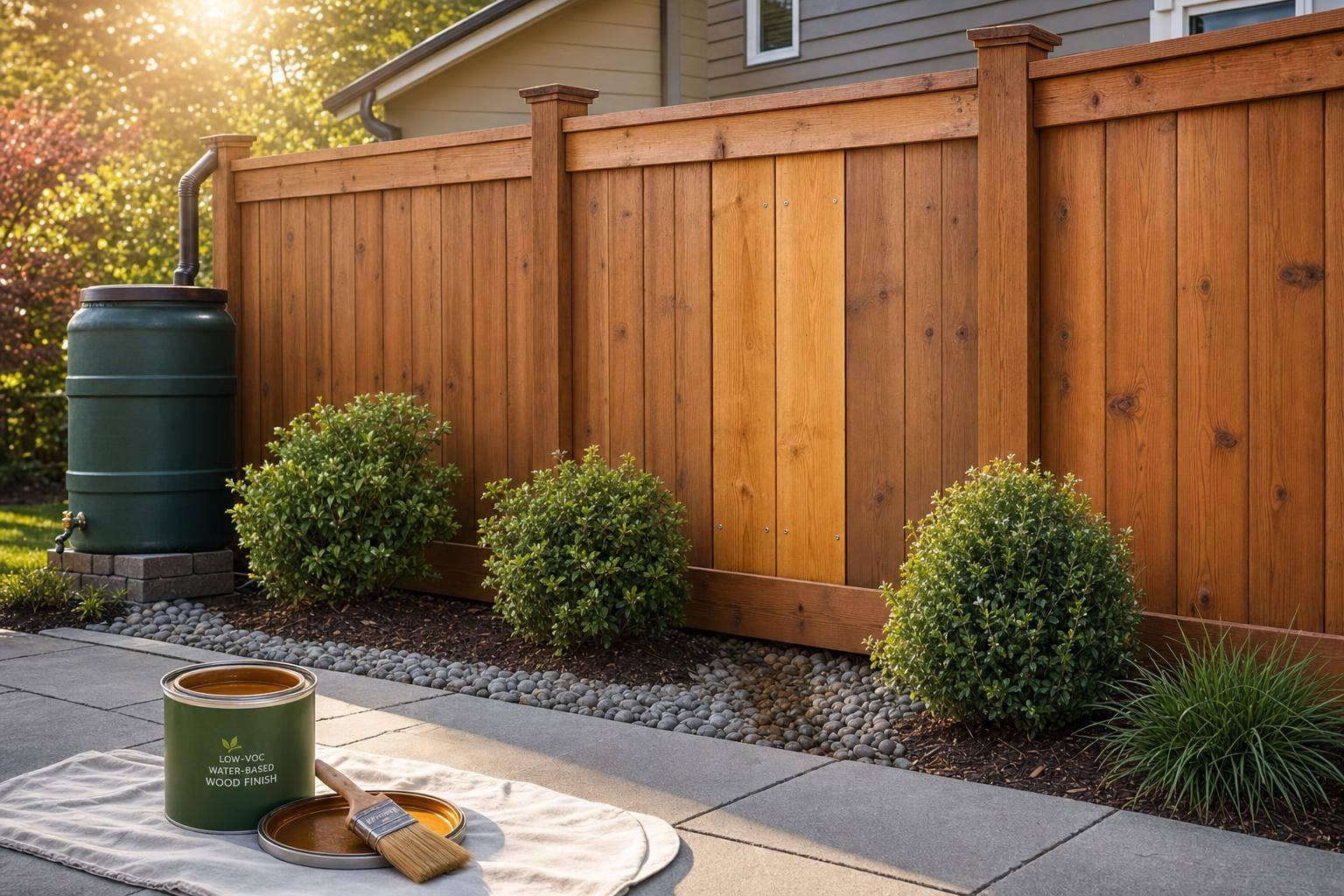
Maintaining your fence doesn’t have to mean wasteful replacements or harmful chemicals. By focusing on eco-friendly repairs, you can prolong your fence’s life, save money, and reduce environmental impact. Here’s how:
- Use sustainable materials: Replace damaged parts with FSC-certified or reclaimed wood, recycled composites, or recyclable metal.
- Choose safer products: Apply low-VOC stains, plant-based sealants, and oxygen bleach instead of chlorine bleach.
- Stick to a maintenance schedule: Inspect annually, clean regularly, and seal wood every 1–3 years to prevent costly damage.
- Address drainage and vegetation: Redirect water, trim plants, and add gravel to avoid moisture-related issues.
- Repair over replace: Fix individual pickets, treat rust, and stabilize posts instead of replacing entire sections.
These steps not only extend your fence’s lifespan but also cut costs by up to 80%. For larger projects, work with contractors who recycle materials and prioritize repairs over replacements. A well-maintained fence is both durable and eco-conscious.
How to Plan Eco-Friendly Fence Maintenance
Know Your Fence Materials
Start by identifying the materials your fence is made of – using the wrong products can lead to damage.
Wood fences are the most common but require the most care. Cedar and redwood naturally resist rot due to their oils, while pressure-treated pine needs more frequent maintenance. You can often recognize pressure-treated pine by its slight greenish tint or chemical markings. On the other hand, vinyl and composite fences are much easier to maintain since they don’t rot or warp. Metal fences, like ornamental iron or aluminum, are prone to rust and corrosion if left unprotected, but they have the advantage of being highly recyclable at the end of their lifespan.
"Sustainable fencing materials are those that minimize harm to the environment – both in how they’re produced and how they hold up over time." – Mark Macy, Owner, M&C Fence DFW
If you’re unsure whether your wood fence needs treatment, try this simple test: sprinkle water on the surface. If the water beads up, the seal is still good. If it soaks in within 10 seconds, it’s time for treatment.
Once you know what your fence is made of, you can create a maintenance plan tailored to its needs.
Build a Green Maintenance Schedule
Sticking to a regular maintenance schedule can help avoid costly repairs and reduce waste. Regular upkeep also ensures you stay within the terms of your fence warranty. Here’s a guide to eco-friendly upkeep:
| Maintenance Task | Frequency | Eco-Friendly Approach |
|---|---|---|
| Visual Inspection | Annually | Look for loose hardware, rot, and pest activity |
| Cleaning | Annually | Use oxygen bleach instead of chlorine |
| Staining/Sealing | Every 1–3 years | Choose low-VOC or plant-based stains |
| Deep Inspection | Every 5 years | Check post bases, rail connections, and concrete crowns |
| Hardware Check | As needed | Replace with galvanized or stainless steel components |
This schedule helps extend your fence’s life while keeping waste to a minimum.
For best results when staining, let new wood dry to a moisture level of 12–15%. This typically takes 3–6 months. Apply stain when temperatures are between 50°F and 80°F to avoid rapid evaporation of the solvents.
Where to Find Eco-Friendly Materials and Tools
After setting up your maintenance plan, it’s time to gather the right materials. Choosing environmentally friendly products not only protects your fence but also supports sustainable practices.
For cleaning, steer clear of chlorine bleach, which can harm wood fibers and nearby plants. Instead, use a biodegradable mix: combine 1 cup of oxygen bleach (like OxiClean) with 1 gallon of warm water. Apply it with a garden sprayer and scrub gently with a soft-bristle brush. This method is safe for vegetation and effective at cleaning.
When it comes to staining and sealing, opt for low-VOC or plant-based products. These reduce air pollution and chemical runoff, which is especially important during hot weather, as traditional stains tend to release more fumes in high heat. For hardware, choose galvanized or powder-coated steel screws and brackets. They resist rust longer, meaning fewer replacements over time. If you need to replace wood, consider FSC-certified lumber or reclaimed wood to minimize deforestation and landfill waste while maintaining quality.
sbb-itb-d1d0a96
Revive Your Fence In 3 Easy Steps For CHEAP
How to Spot and Prioritize Fence Repairs
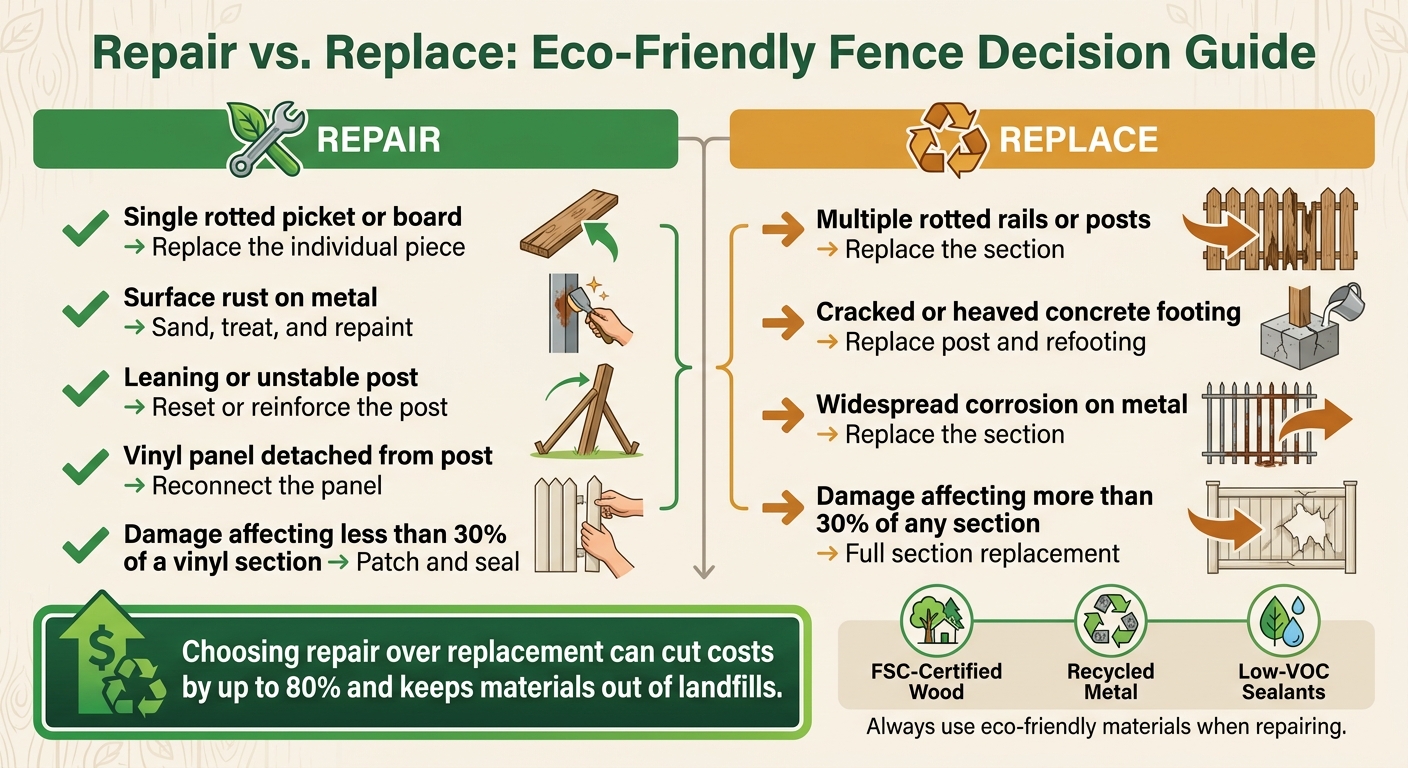
Eco-Friendly Fence Maintenance: Repair vs. Replace Decision Guide
How to Do a Thorough Fence Inspection
Start by checking the base of each post. Gently press to test its stability – any movement could indicate trouble. From there, examine the rails and pickets for cracks, warping, or loose fasteners.
Walk the entire fence line slowly, noting any concerns or snapping photos for reference. After heavy rain or storms, inspections are especially important since issues like shifted posts or cracked footings can become more noticeable. These observations help you focus on specific repairs instead of considering residential fence installation.
Repair or Replace: How to Decide
Smaller, localized problems – like a loose rail, a rotted picket, or minor rust – are often better handled with targeted repairs. This approach saves money and minimizes waste. However, if the damage is more extensive or structural, such as multiple decayed posts or widespread instability, replacing the affected section is the smarter choice for long-term durability.
| Damage Type | Severity | Recommended Action |
|---|---|---|
| Single rotted picket or board | Isolated | Repair – replace the individual piece |
| Surface rust on metal | Minor | Repair – sand, treat, and repaint |
| Leaning or unstable post | Moderate | Repair – reset or reinforce the post |
| Multiple rotted rails or posts | Widespread | Replace the section |
| Cracked or heaved concrete footing | Structural | Replace the post and refooting |
| Widespread corrosion on metal | Severe | Replace the section |
Choosing repair methods that are eco-conscious not only extends the life of your fence but also supports sustainable practices.
Fix Drainage and Vegetation Problems
Structural fixes are important, but environmental factors like water and vegetation also play a major role in fence maintenance. Saturated soil can lead to fungal growth and wood rot, so if water pools near your fence, redirect downspouts to drain water away. Adding a gravel bed or a French drain around post bases can improve drainage significantly.
Vegetation can also be a culprit. Overgrown plants trap moisture and block airflow, speeding up decay. Trim back plants and shrubs to allow proper clearance around the fence. For new installations, placing 3–4 inches of gravel at the bottom of post holes can reduce moisture contact and improve drainage. In areas with expansive clay soils, be aware that repeated wet–dry cycles may cause posts to shift or crack concrete footings.
Green Repair Methods for Every Fence Type
Eco-Friendly Wood Fence Repairs
When fixing a wood fence, focus on replacing only the damaged boards, such as those that are cracked or rotted. For replacements, opt for FSC-certified or reclaimed wood to reduce the need for new timber. Reclaimed wood is an excellent choice for minimizing environmental impact.
To seal the repairs, use low-VOC, plant-based products. Traditional sealants can release harmful VOCs, especially in warmer temperatures. As Mark Macy, Owner of M&C Fence DFW, explains:
"Instead of reaching for harsh chemical sealants, go with eco-friendly, low-VOC (Volatile Organic Compounds) stains and sealers."
While you’re at it, tighten any loose screws or fasteners. Addressing these small issues early can prevent bigger problems down the line and help reduce material waste. These same principles apply to maintaining metal fences, which often require attention to rust.
How to Repair and Protect Metal Fences
Rust is a common issue with metal fences, but tackling it early can save you from more extensive repairs. Start by sanding the rusted areas, cleaning them thoroughly, and applying a rust-inhibiting primer before repainting. For the paint, choose a low-VOC option to reduce air pollution during the process.
For a more durable finish, consider powder coating instead of traditional liquid paint. Powder coating provides a tough, even layer that resists moisture and UV damage, reducing the need for frequent repainting. Additionally, metal fences – whether made of steel, aluminum, or wrought iron – are highly recyclable. If any parts are beyond repair, take them to a recycling center instead of discarding them. Recycling aluminum, for instance, saves up to 95% of the energy needed to produce it from raw materials.
If your fence is made of vinyl, you’ll need a different approach to ensure environmentally friendly upkeep.
How to Care for Vinyl Fences the Green Way
Vinyl fences don’t rot, but they can crack or fade over time. Address small cracks or damage as soon as possible to prevent them from worsening, especially during colder months when vinyl becomes more brittle. If a panel has detached from a post, reconnecting it is usually a simple fix that avoids replacing an entire section.
For sustainability and cost savings, repair rather than replace sections when damage affects less than 30% of the area. This approach minimizes waste while extending the life of your fence.
Long-Term Habits for Keeping Fences in Good Shape
Taking care of your fence doesn’t stop at quick fixes and occasional inspections. These long-term habits can make a big difference in how well your fence holds up over time.
Simple Habits That Prevent Fence Damage
Small, consistent efforts can go a long way in keeping your fence in top shape. Make it a habit to inspect your fence every spring and fall. Look for things like loose screws, sagging panels, or the beginnings of rot. Catching these issues early means you can handle them with a quick adjustment or by swapping out a board, instead of facing a major repair down the line.
Another easy step? Keep plants and shrubs trimmed back so they don’t press against the fence. Vegetation can hold moisture, which speeds up rot for wood fences and rust for metal ones. If you’re refinishing wood sections, opt for plant-based or low-VOC sealants. These not only protect your fence from the elements but are also better for the environment.
"Sustainability isn’t just about what your fence is made of – it’s also about how you care for it over time." – Mark Macy, Owner of M&C Fence DFW
These small steps not only protect your fence but also encourage a more thoughtful approach to reusing materials and working with eco-conscious professionals.
How to Reuse and Recycle Fence Materials
Before tossing out old fence parts, see if they can be reused. Items like hinges, brackets, and screws can often be cleaned and repurposed for repairs, cutting down on costs and waste. For sections that are beyond saving, take the time to separate materials. Metal components, such as steel brackets or aluminum rails, should go to a recycling facility instead of the trash. Recycling aluminum, for example, uses up to 95% less energy than producing it from scratch.
Wood boards that are still in decent condition can be donated to local reuse centers or community workshops. This keeps them out of landfills and gives them a second life in other projects.
If the job feels too big or complicated, working with experienced professionals can make all the difference.
Working With Fence Professionals Who Care About the Environment
When repairs require expert help, look for fencing professionals who prioritize repairs over full replacements. This not only saves money but also conserves resources. Ask about their materials – do they use FSC-certified or reclaimed wood? What about their stains and sealants? Low-VOC options are better for both your health and the environment.
Another key question: How do they handle old materials? A responsible contractor will recycle metal parts and salvage usable wood instead of sending everything to the landfill. For example, Tend Fencing, a Plano, TX-based company, plants a tree for every fence they build, helping offset the environmental impact of new installations. Their understanding of local conditions, like the clay-heavy soil and scorching summer heat, also means they can recommend materials and maintenance schedules that are well-suited to the area.
"A professional fencing company familiar with Texas weather conditions… can recommend materials and treatments that last longer here, saving you money and reducing waste." – Mark Macy, Owner, M&C Fence DFW
Conclusion: Keep Your Fence Standing and Your Footprint Small
Taking care of your fence not only keeps it standing strong but also helps you save money over time and minimize your environmental impact. Opting for green repairs – like fixing instead of replacing and choosing sustainable materials – can make a big difference.
Simple steps like regular inspections, using low-VOC finishes, and incorporating reclaimed wood or recycled metal can significantly extend your fence’s life. These choices ensure that each repair contributes to reducing your overall footprint.
For repairs that go beyond what you can handle yourself, consider working with eco-conscious professionals like Tend Fencing. Located in Plano, TX, they offer local expertise tailored to Texas’s unique challenges, such as its intense heat and clay-heavy soil. Plus, they plant a tree for every fence installed, blending environmental care with high-quality results.
FAQs
How do I know if my fence needs sealing now?
To determine if your fence needs sealing, take a close look for signs of wear and tear. Check for things like weather damage, loose or broken pickets, wobbly posts caused by shifting soil, or a buildup of debris. Horizontal surfaces, such as caps and rails, should ideally be resealed every year, particularly if you live in an area with tough weather conditions. If you notice any of these issues – or if it’s been more than a year since the last sealing – it’s time to reseal your fence.
What’s the greenest way to clean a dirty wood fence?
To clean a wood fence in an environmentally friendly way, stick to simple tools like water and a scrub brush or a pressure washer with a low PSI setting. For tougher grime or moss, try applying a mix of vinegar and water or sprinkling baking soda before scrubbing. Steer clear of harsh chemical cleaners to keep nearby plants and the environment safe.
When is it smarter to replace a fence section instead of repairing it?
If more than 20% of a fence section requires repair, it’s often better to replace the entire section. This usually signals extensive damage that might not be worth patching. Similarly, replacement is advised if over 30% of a post or panel shows signs of rot or insect damage. Other serious problems, like sinking, sagging, warping, or widespread rust and corrosion, can weaken the structure and make replacement both a smarter and more economical choice.