
Protecting your fence from weather damage doesn’t have to harm the environment. Eco-friendly sealers are non-toxic, low in VOCs (volatile organic compounds), and safe for people, pets, and plants. These sealers penetrate deep into the wood, repel water, block UV rays, and prevent rot, all while being better for the planet.
Key Takeaways:
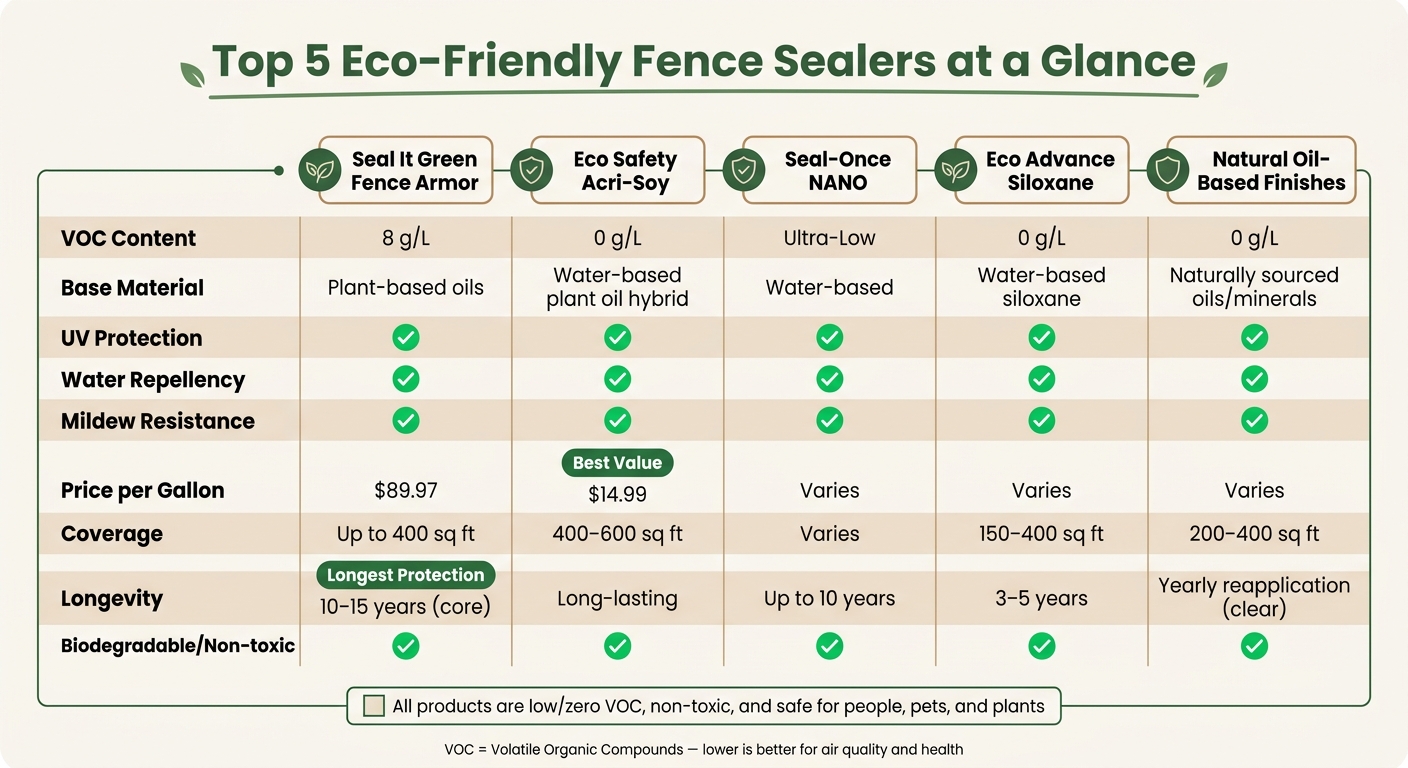
- Seal It Green Fence Armor: Plant-based oils, 8 g/L VOC, long-lasting protection.
- Eco Safety Acri-Soy Sealer: 0 g/L VOC, affordable at $14.99/gallon, quick drying.
- Seal-Once NANO: Ultra-low VOC, nanotechnology for deep penetration.
- Eco Advance Siloxane Waterproofer: 0 g/L VOC, invisible barrier, 5-year warranty.
- Natural Oil-Based Finishes: Zero petroleum, biodegradable, safe for gardens.
Quick Comparison:
| Sealer Name | VOC Content | Key Features | Price (Per Gallon) |
|---|---|---|---|
| Seal It Green Fence Armor | 8 g/L | Plant-based, UV-resistant | $89.97 |
| Eco Safety Acri-Soy | 0 g/L | Non-toxic, quick drying | $14.99 |
| Seal-Once NANO | Ultra-low | Deep penetration, UV protection | Varies |
| Eco Advance Siloxane | 0 g/L | Invisible, breathable barrier | Varies |
| Natural Oil-Based Finishes | 0 g/L | Biodegradable, natural oils | Varies |
Proper application is critical: clean the wood, ensure it’s dry, and apply in the right conditions. For complex projects, professional services can ensure even better results.
Top 5 Eco-Friendly Fence Sealers Compared
Non Toxic Deck Sealing: Vermont Natural Coatings Penetrating Water Proofer
sbb-itb-d1d0a96
What Makes a Fence Sealer Eco-Friendly
Just because a product is labeled "natural" or "green" doesn’t necessarily mean it’s eco-friendly. A truly eco-friendly fence sealer meets specific environmental standards and is designed with both the planet and your health in mind during residential fence installation.
One of the key factors is low volatile organic compound (VOC) content. VOCs are harmful chemicals that release into the air during application, negatively impacting air quality and health. Eco-friendly sealers are formulated to keep VOC levels at zero or near zero. For instance, some products have VOC levels as low as 0 g/L, which not only meet but exceed U.S. regulatory standards.
Another essential component is the binder material. Many eco-friendly sealers use plant-based oils, like soy derivatives, instead of petroleum-based hydrocarbons. These natural oils penetrate deeply into the wood, preserving its fibers without causing them to dry out or leach toxins into the soil. Unlike film-forming sealers, these penetrate the wood, preventing issues like peeling, cracking, or flaking. This also eliminates the need for harsh chemical strippers during reapplication. By combining low VOCs with plant-based binders, these sealers protect the wood while maintaining environmental integrity.
"By infusing wood surfaces with natural plant oil derivatives rather than petrochemicals that dry out wood prematurely, our non-toxic wood stain rejuvenates and preserves the wood." – Eco Safety Products
Here’s a breakdown of the eco-friendly features in some of the top-performing sealers:
| Sealer | Base Material | VOC Content | UV Protection | Water Repellency | Mildew Resistance |
|---|---|---|---|---|---|
| Seal It Green Fence Armor | Plant-based oils | 8 g/L | ✓ | ✓ | ✓ |
| Acri-Soy Penetrating Sealer | Water-based plant oil hybrid | 0 g/L | ✓ | ✓ | ✓ |
| Seal-Once NANO | Water-based | Ultra-low | ✓ | ✓ | ✓ |
| Eco Advance Siloxane Waterproofer | Water-based | <50 g/L | ✓ | ✓ | ✓ |
| Natural Oil-Based Finishes | Naturally sourced oils/minerals | 0 g/L | ✓ | ✓ | ✓ |
Additional features like UV inhibitors and mildew resistance further enhance the effectiveness of eco-friendly sealers. UV stabilizers protect the wood’s lignin from breaking down under sunlight, helping to prevent a gray, brittle appearance. Meanwhile, mildew resistance guards against biological growth in damp conditions. Together, these attributes ensure that these sealers provide thorough weatherproofing, going beyond just a "green" label.
1. Seal It Green Fence Armor Plant Based Wood Fence Sealer
Seal It Green Fence Armor brings a plant-based approach to wood protection. Its formula uses sustainably sourced plant-derived oils, steering clear of mineral oils, cedar oil, toxic solvents, or petroleum-based ingredients. Made in the USA and cruelty-free, it’s a choice that aligns with eco-conscious values.
VOC Content
With a VOC level of just 8 g/L, this sealer easily meets the strictest U.S. environmental standards. Its low VOC content also reduces harmful off-gassing, making it a safer option for enclosed areas.
Water Repellency
This formula penetrates deeply into wood fibers, offering robust protection against rot, cupping, curling, cracking, and splitting. A single gallon can cover up to 400 square feet, making it an efficient choice for larger projects.
UV Resistance
Equipped with UV inhibitors, the sealer protects wood from sun damage, preventing graying and structural wear. While the surface may naturally silver over 3 to 5 years, the wood core remains protected for 10 to 15 years, though professional installations often come with their own warranty information. If you prefer to maintain the original look, a deck brightener followed by a refresh coat can restore its appearance.
Biodegradability
This sealer avoids petrochemicals, making it safe for use around people, pets, and plants. Cleaning up is simple – just use warm, soapy water, with no need for harsh solvents. Pricing starts at $89.97 per gallon (regularly $119.99), while a 5-gallon pail is available for $429.99 (regularly $489.99).
Up next, we’ll take a look at another eco-friendly option that builds on these benefits.
2. Eco Safety Products Acri-Soy Penetrating Wood Sealer
The Eco Safety Products Acri-Soy Penetrating Wood Sealer is a water-based, plant oil hybrid emulsion that eliminates petroleum-based ingredients entirely. It delivers solid protection while offering eco-conscious benefits. At just $14.99 per gallon, it’s also one of the most affordable options in the eco-friendly category.
VOC Content
This sealer contains 0 g/L VOCs, meaning it won’t release harmful fumes, harsh odors, or pollutants. Plus, its non-combustible nature removes the fire risks typically associated with oil-based sealers.
Weatherproofing Performance
Thanks to its penetrating formula, Acri-Soy bonds deeply within the wood, forming a breathable seal. This allows moisture to escape while blocking water, effectively preventing rot. UV stabilizers protect the wood from sun damage and graying, while its resistance to mold, mildew, and stains enhances durability. Since it doesn’t create a surface film, there’s no risk of peeling or flaking. Each gallon covers 400 to 600 square feet, depending on the wood’s porosity, and dries to the touch in as little as 30 minutes to 1 hour.
Environmental Benefits
Acri-Soy’s formula is 100% non-toxic, making it safe for people, pets, and the environment. It meets green building standards such as LEED v4, WELL, ILBC, and Green Globes, making it a suitable choice for wood fence installation projects with strict sustainability guidelines. Reapplication is easy – no stripping or sanding required – when the protective layer begins to wear off.
| Feature | Specification |
|---|---|
| VOC Content | 0 g/L |
| Coverage | 400–600 sq. ft. per gallon |
| Dry Time | 30 minutes to 1 hour |
| Appearance | Natural matte (clear) |
| Safety | Non-toxic, non-combustible |
| Price | $14.99/gallon |
3. Seal Once Eco Friendly Wood Sealer And Stain Lines
Seal‑Once, developed by U‑C Coatings, uses advanced nanotechnology to penetrate up to 3/8″ into wood. This creates a flexible, breathable barrier that blocks liquid water while letting moisture vapor escape. By doing so, it helps protect wood from rot and decay, ensuring longer-lasting performance for fences and other wood structures. This product reflects a commitment to environmentally friendly, high-quality sealers designed for durability.
VOC Content
Seal‑Once formulas are either Zero VOC or Ultra‑Low VOC, meeting rigorous environmental regulations in all 50 states. The water-based composition is odorless and non-flammable, addressing concerns about chemical smells or fire risks.
"Our water‑based, ultra‑low VOC sealers and stains deliver the exceptional performance of traditional oil‑based products – without harmful chemicals, strong odors, or environmental harm." – U‑C Coatings
UV and Water Resistance
The clear Seal‑Once options protect against water penetration, while tinted versions include trans-oxide pigments that filter UV rays, helping to reduce fading over time. Unlike traditional top-coat products, this sealer is film-free, so it won’t peel or flake – a common issue with other finishes.
Sustainability Profile
Seal‑Once is safe to use around people, pets, plants, and aquatic life, making it an excellent choice for fences near gardens or water features. Cleanup is simple and only requires soap and water.
Here’s a breakdown of the main product lines and their specifications:
| Product Line | Best For | VOC Rating | Longevity |
|---|---|---|---|
| NANO Penetrating Sealer | Fences, siding | Ultra‑Low VOC | Varies by exposure |
| Marine Grade | Fences near water, docks | Zero VOC | Up to 10 years |
| Fence Guard Concentrate | All wood fence types | Ultra‑Low VOC | Up to 3 years |
| Clear Waterproofer | Decks, fences, siding | Zero VOC | Up to 4 years |
For best results, apply a second coat within 20–30 minutes on damp wood to ensure proper absorption.
4. Eco Advance Exterior Wood Siloxane Waterproofer
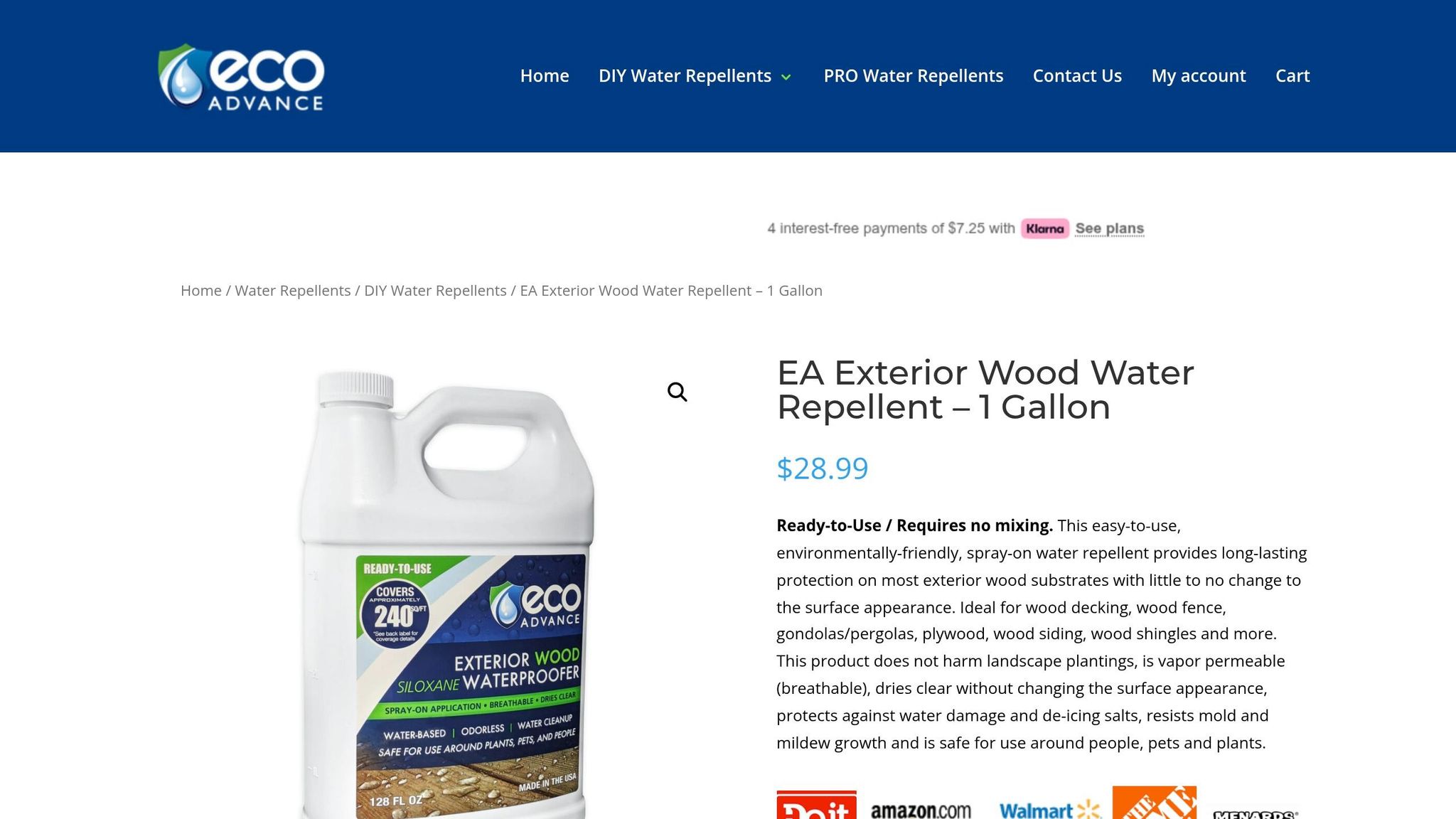
Eco Advance offers a water-based siloxane formula designed to deeply penetrate wood fibers, creating an invisible barrier that protects against moisture. Thanks to a specialized surfactant, the siloxane blends seamlessly with water, eliminating the need for harsh chemical solvents.
"The product contains a surfactant which allows the siloxane material to be water-friendly so we don’t have to add harsh solvents." – Eco Advance FAQ
VOC Content
This product boasts a 0 g/l VOC content, making it a safe choice for use around people, pets, and plants. Its water-based, non-flammable formula ensures there’s no risk of toxic fumes or off-gassing.
Water Repellency
The siloxane barrier effectively repels water but remains breathable, allowing moisture to escape. This feature helps prevent common wood issues like rot, warping, and cracking over time.
"Vapor permeable (breathable) water repellent prevents moisture being trapped behind the surface." – Eco Advance Product Description
For vertical applications, the protection lasts between 3 and 5 years, and the product is backed by a limited 5-year warranty. Coverage varies depending on the wood type: one diluted gallon treats 150–250 sq. ft. of rough-sawn wood or 300–400 sq. ft. of smooth-sawn wood.
Biodegradability and Eco Safety
The formula is film-free, so it won’t peel or flake into the environment. Over several weeks, the surfactant naturally leaches out of the wood. If you’re applying it near raised garden beds, rinsing the treated wood 24–48 hours after application can help speed up this process.
| Feature | Specification |
|---|---|
| VOC Level | 0 g/l |
| Finish | Dries clear; no color change |
| Dry Time | 1–2 hours |
| Longevity (Vertical) | 3–5 years |
| Warranty | Limited 5-year |
| Cleanup | Soap and water |
Next, explore a natural oil-based finish that balances eco-conscious design with long-lasting protection.
5. Natural Oil-Based Exterior Finishes for Fences
Natural oil-based finishes work differently from water-based sealers. Instead of creating a surface layer, these oils soak into the wood fibers, strengthening them from within – making them an excellent choice for outdoor fences.
Plant-Based Composition
The top natural oil finishes steer clear of petroleum ingredients. Instead, they feature components like tung oil for added hardness and water resistance, aged linseed oil for deep absorption, beeswax for water repellency and flexibility, and citrus solvents as a safer alternative to traditional mineral spirits.
"Heritage Natural Finishes contain NO petroleum products, or metallic drying agents whatsoever! We use only the highest quality ingredients from the most sustainable sources possible." – Heritage Natural Finishes, LLC
Rubio Monocoat Oil Plus 2C exemplifies this approach, using a linseed oil base that is GREENGUARD Gold certified, safe for food contact, and even approved for toys. This natural formulation highlights essential performance considerations for fence maintenance.
VOC Content
Rubio Monocoat Oil Plus 2C boasts a 0% VOC and solvent-free certification. In contrast, other options like Bioshield Hard Oil contain 250 g/L, and Osmo Exterior Oil Woodstain can go up to 400 g/L. If low VOC levels are important, always check the product label – just because a product is labeled "natural" doesn’t mean it has low emissions. Low VOC finishes not only reduce environmental impact but also enhance the oil’s ability to penetrate and protect the wood.
Weatherproofing Performance
Natural oils are microporous, allowing the wood to breathe and adapt to seasonal changes. This helps prevent cracking, peeling, and chipping – issues often seen with surface-level coatings. Many formulas also incorporate zinc, a natural UV blocker and mildewcide, similar to how it’s used in sunscreen. Coverage rates typically range between 200–400 sq. ft. per gallon, depending on the wood’s texture and porosity. However, clear natural oils offer limited UV protection and often need yearly reapplication for continued effectiveness.
Biodegradability and Safety
These finishes are designed to protect fences while reducing environmental harm. Unlike film-forming coatings that peel off in chunks, natural oil finishes wear away gradually. Many modern formulations are also moving toward being PFAS-free, removing harmful "forever chemicals" from their ingredients.
"Outdoor Oil is a PFAS-free exterior wood maintenance preservative. As General Finishes strives for a cleaner and healthier environment, all future product development will be free of ‘Forever Chemicals.’" – General Finishes
Safety note: Be cautious with oil-soaked rags, especially those containing linseed oil, as they can spontaneously combust if left in piles. Always dispose of them safely – either by placing them in a water-filled metal container or laying them flat outdoors to dry completely before discarding.
How to Choose and Apply Eco-Friendly Sealers for Privacy Fences
When selecting a sealer for your privacy fence, start by considering the type of wood. For example, porous woods like cedar and redwood absorb oils more easily, whereas dense hardwoods like IPE require sealers that penetrate deeper into the wood fibers. If you’re working with new pressure-treated pine, let it dry for 4–6 weeks before sealing to prevent moisture from getting trapped, which can lead to peeling and rot.
In areas with high humidity or shade, choose sealers containing mildewcides to combat mold. For fences exposed to sunlight, opt for sealers with UV inhibitors to protect against the effects of UV rays, which can make wood brittle and gray over time. According to the U.S. Forest Service, cycling between wet and dry conditions, combined with UV exposure, is one of the main reasons outdoor wood deteriorates.
"A properly stained fence helps block harmful UV rays that break down wood fibers and reduce moisture absorption that leads to swelling and rot." – Preservan
Preparing and Applying the Sealer
Proper preparation is essential for the sealer to work effectively. Begin with a splash test: sprinkle water on the fence. If the water beads up, your fence is still protected. If it soaks in within five seconds, it’s time to reseal. Clean the surface thoroughly using a solution of 1 gallon of warm water mixed with 1 cup of oxygen bleach to remove mold and dirt. If you prefer using a pressure washer, maintain a pressure between 1,500 and 2,000 PSI. Use a 25° spray tip and keep it about 12 inches away from the wood surface to avoid damage.
Once cleaned, let the fence dry completely – this usually takes at least 48 hours – before applying the sealer. Use a sprayer for application and follow up with a natural-bristle brush to ensure the sealer penetrates deeply, especially into the end grains, which are most vulnerable to moisture. For best results, apply the sealer when temperatures are between 45°F and 95°F, and make sure there’s no rain in the forecast for at least 24–48 hours. After sealing, trim any nearby plants to improve airflow around the fence, helping to reduce moisture buildup.
For a professional touch, companies like Tend Fencing can tailor the sealing process to your specific wood type and environmental conditions. Their experts check moisture levels before sealing, ensure even application across all areas (including joints and post tops), and address factors like soil drainage and post depth to extend the life of your fence.
Conclusion
Switching to an eco-friendly sealer is a smart way to protect your fence while prioritizing outdoor safety. These sealers shield wood from moisture, UV rays, and rot – all without compromising the well-being of your family or the environment. With 94 million U.S. households owning at least one pet, opting for a non-toxic solution has never been more important.
The gap in performance between eco-friendly and conventional sealers has narrowed significantly. As U-C Coatings explains:
"Modern water-based, ultra-low VOC sealers now match or beat the durability of traditional toxic formulas. You get lasting protection without exposing your family to dangerous fumes."
Top-notch eco-friendly options, such as Seal It Green Fence Armor and Eco Safety Products Acri-Soy, offer protection for vertical surfaces that can last 10 years or more. While these sealers may cost 15–25% more upfront, their extended lifespan makes them a wise long-term investment. This durability highlights the practicality of choosing green sealers for lasting protection.
However, even the best sealer won’t perform well without proper application. Preparing the surface, applying the product correctly, and timing the process are all critical steps. For larger or more intricate projects, hiring professionals like Tend Fencing can ensure the job is done right the first time. This not only saves time and reduces waste but also prevents the need for costly rework. By choosing eco-friendly practices, you’re not just extending your fence’s lifespan – you’re actively contributing to a healthier planet.
FAQs
How do I know if my fence needs resealing?
To figure out if your fence needs resealing, try a quick water test. Splash some water onto the wood. If the water beads up, your sealant is still doing its job. But if the water soaks into the wood, it’s time to reseal. Additionally, keep an eye out for signs of wear, such as faded or uneven color, a dry or rough surface, small cracks, or mildew growth. These are clear indicators that your fence might need some attention.
Which eco-friendly sealer is best for my wood type and climate?
To choose the right eco-friendly wood sealer, start by considering the type of wood and the climate conditions in your area. For woods like cedar, pine, or pressure-treated lumber, water-based penetrating sealers work well. If you’re dealing with humid or shaded environments, look for sealers that include mildewcide or fungicide to prevent mold and mildew growth.
For dense hardwoods such as teak or Ipe, go with specialized penetrating formulas designed for these types of wood. Sanding the surface beforehand can help improve absorption. Lastly, always check the product label to ensure it’s compatible with your wood’s porosity – this step is key to achieving durable, long-lasting protection.
Can I seal a new pressure-treated fence right away?
When dealing with a new pressure-treated fence, patience is key before sealing it. The wood is typically loaded with moisture and preservatives, and sealing it too early can lead to poor absorption and peeling issues. For standard pressure-treated pine, it’s best to wait about 2–4 months. If you’re working with kiln-dried after treatment (KDAT) wood, it might be ready much sooner – just a few weeks.
To be absolutely sure, try the water bead test. Sprinkle a little water on the surface of the wood. If the water beads up, the wood isn’t dry enough yet. If it soaks in, you’re good to go!