
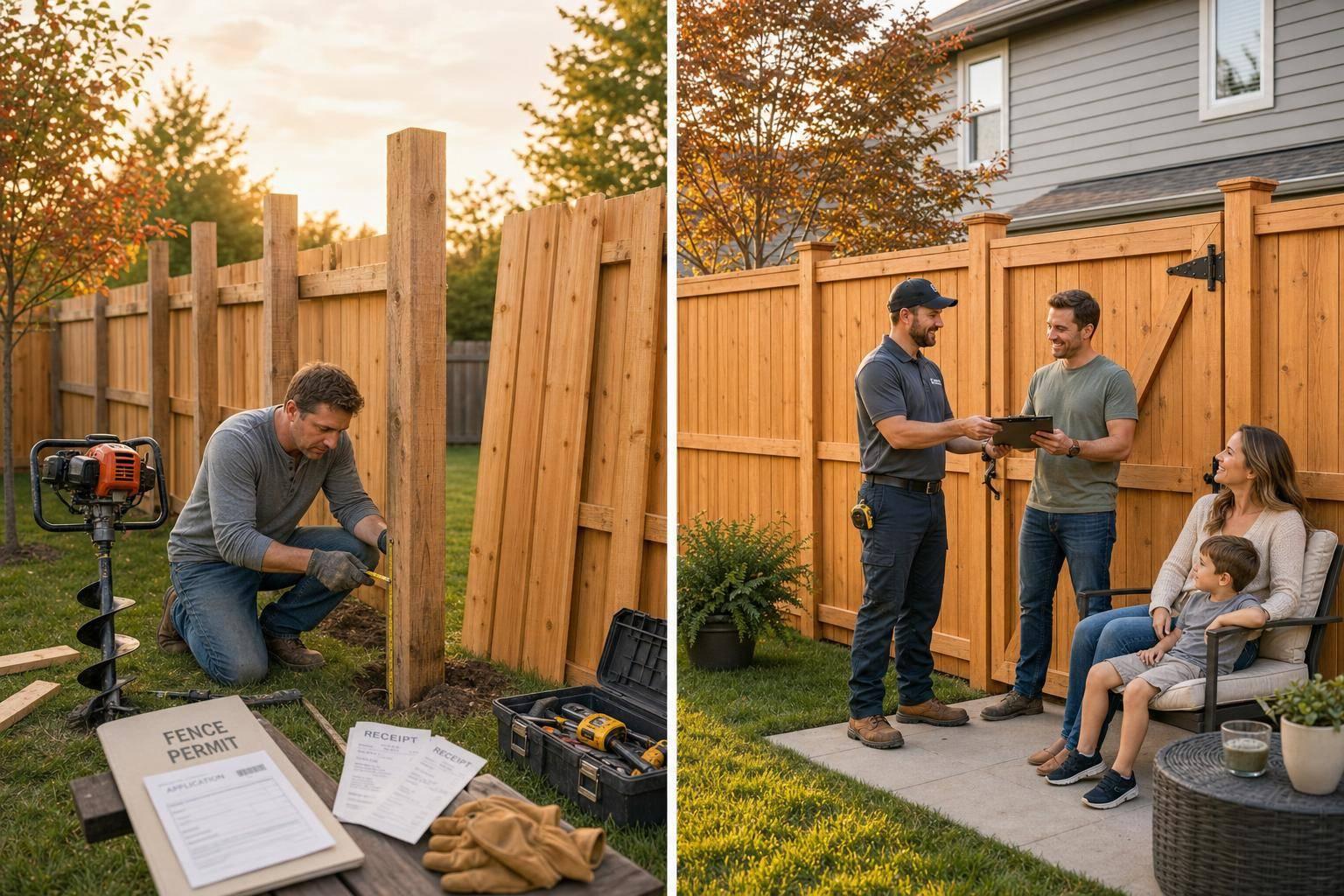
If I only look at the sticker price, DIY often seems cheaper. If I count tools, permits, my time, waste, and fix-it costs, hiring a pro can end up close in price or even lower.
Here’s the short answer: DIY usually cuts upfront cash cost, while professional wood fence installation often cuts delay, errors, and repeat spending. For a wood fence in Plano, TX, I also have to factor in city permits through eTRAKiT, 811 utility marking, soil conditions, gate layout, and the risk of rework.
Before I choose, I’d compare:
- Material cost: pressure-treated pine vs. cedar
- Tool cost: auger, mixer, saws, and other rentals
- Permit and utility steps: Plano permit process and 811 checks
- Labor and time: weekends of digging, setting posts, and fastening pickets
- Waste and mistakes: bad cuts, crooked sections, or post-setting problems
- Site conditions: roots, rocky soil, waterlogged ground, and old fence removal
- What pro pricing includes: labor, materials, site prep, and often permit handling
- Long-term cost: warranty, fewer repairs, and less chance of paying twice
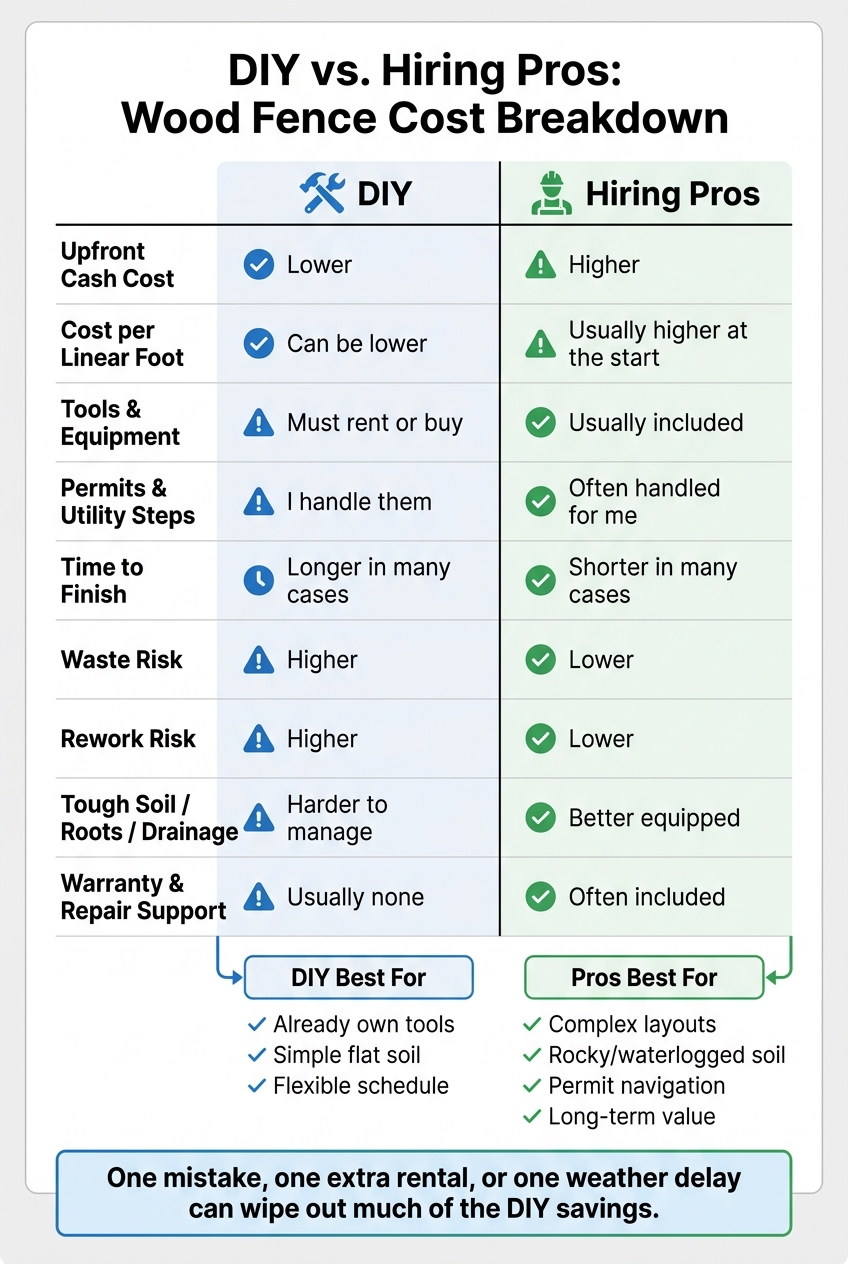
A wood fence job can shift fast once hidden costs show up. One mistake, one extra rental, or one weather delay can wipe out much of the DIY savings.
DIY vs. Pro Wood Fence Installation: True Cost Comparison
DIY vs PRO – Is DIY Fence Building Really Cheaper?
sbb-itb-d1d0a96
Quick Comparison
| Cost Factor | DIY | Hiring Pros |
|---|---|---|
| Upfront cash cost | Lower | Higher |
| Cost per linear foot | Can be lower | Usually higher at the start |
| Tools and equipment | I may need to rent or buy | Usually included |
| Permits and utility steps | I handle them | Often handled for me |
| Time to finish | Longer in many cases | Shorter in many cases |
| Waste risk | Higher | Lower |
| Rework risk | Higher | Lower |
| Tough soil, roots, drainage issues | Harder to deal with | Better fit |
| Warranty and repair support | Usually none | Often included |
My bottom line: if I already own the tools, have simple soil, and have time, DIY can work. If the yard is rough, the layout is tricky, or I want fewer problems after install, paying a pro often makes more financial sense.
That’s the core math this article breaks down.
DIY Wood Fence Costs: Materials, Tools, and Time
Material Costs for Pressure-Treated Pine and Cedar
DIY fence costs usually start with the obvious stuff: posts, rails, pickets, concrete, fasteners, and any stain or sealant you want to use. If you’re choosing between pressure-treated pine and cedar, cedar will usually cost more.
But those base materials are just the starting line. Once you begin adding the extra pieces that come with the job, the total can climb fast.
Tool Rentals, Permit Fees, and Utility Coordination
Tool rentals can push DIY costs up, especially if you need a post-hole auger, concrete mixer, or fence-cutting tools. Those items aren’t always part of the first budget people sketch out, and that’s where numbers can start to drift.
In Plano, TX, permits go through eTRAKiT, and 811 line marking adds time to the schedule but can help you avoid costly damage. After you factor in those fixed costs, the next big swing points are labor and the chance of rework.
Time Commitment and Rework Risk
A DIY fence install usually takes more than a weekend once you include post setting, framing, and picket fastening. On paper, it can look simple. In the yard, it’s a different story.
Small mistakes can slow the whole job down. Skipping pilot holes, for example, can create problems that eat up time and add labor and rework costs. Delays can also increase the total through extra rentals, more supply runs, and added labor. That’s why DIY fence costs are often easier to underestimate than they first appear, especially before you compare them with professional pricing.
Professional Wood Fence Installation Costs: What You Get for the Price
Installed Cost per Linear Foot
Most pros price wood fence installation by the linear foot. But that base number isn’t the whole story. Your final cost usually comes down to fence height, layout, gates, and site conditions.
What Professional Pricing Usually Includes
A pro quote often covers more than just labor and materials. In many cases, it also includes permit handling, material ordering, and site prep. Materials are ordered to match the layout, which can cut down on waste. Site prep may cost more if old fencing or job-site debris needs to be hauled away.
Warranty, Craftsmanship, and Local Value in Plano, TX
For homeowners in Plano, TX, part of the price goes toward cleaner workmanship, fewer repair problems, and a finished fence that tends to hold up better over time. Tend Fencing offers custom wood fence installation in cedar or pressure-treated pine, along with licensed and insured service and one tree planted for every fence built.
That makes the DIY-versus-pro comparison a lot more accurate.
DIY vs. Hiring Pros: Side-by-Side Cost Comparison
Upfront Cash Cost and Cost per Linear Foot
For a wood fence project, DIY usually means less cash out of pocket at the start. You’re paying for materials, tools, and permit-related fees, but not labor. Hiring pros costs more upfront because labor is built into the total price, but it also means you’re not the one digging post holes, cutting boards, and setting panels.
DIY can also lower the cost per linear foot if you keep waste under control and material prices don’t jump mid-project. That part matters more than many people expect. A few bad cuts here, a little extra scrap there, and the math can change fast.
Hidden Costs That Change the Math
The base price rarely tells the whole story. A few less-obvious costs can shift the total in a hurry.
- Permits: They add both time and money for DIYers. In Plano, skipping the permit step can lead to fines or even removal of fencing that doesn’t meet code.
- Material waste: Standard-length boards often lead to extra cuts and leftover pieces, which pushes DIY costs higher.
- Mistakes: This is the big wild card. If a DIY fence later needs pro help, you may end up paying not just to finish the job, but also to fix damage caused by the original error.
Completion Time and Opportunity Cost
Time changes this comparison just as much as money does. DIY fence work can get dragged out by weather, and rain can stop outdoor structural work for several days at a time. So even if all your materials are sitting in the driveway, the project may still stall.
There’s also the cost of your own time. Hours spent measuring, hauling, digging, and rebuilding a section that came out crooked are part of the real DIY price. That cost doesn’t always show up on a receipt, but it still counts.
Which Option Is More Cost-Effective for Your Property
Cost-effectiveness comes down to three things: your property, your skill level, and how much time you can give the job.
When DIY Makes Financial Sense
DIY usually makes the most sense when you already own the tools and equipment needed for removal and digging. If you don’t, the math can change fast. Renting or buying gear can eat into your savings, and mistakes during post-setting can do the same. DIY savings also tend to vanish when the project uncovers hidden issues or you can’t set posts the right way.
That price advantage can slip away even faster if layout errors or tough soil lead to rework. What looked cheaper at the start can end up costing more once you have to redo sections of the job.
When Hiring Pros Makes Financial Sense
Hiring pros often makes more sense when the site is tougher to work with. Rocky or arid soil, thick root systems, and heavy grass thatch can slow the job down and make digging and post-setting much harder. In those cases, crews with the right equipment and hands-on experience often get the work done with fewer setbacks.
In Plano, TX, there’s another layer to think about: permits and utility coordination. The city uses the TRAKiT system, and contractors who already know that process can move through it with less hassle and help keep the project in line with local code.
Waterlogged ground or repeated tree damage can also tip the scales toward hiring pros. Why? Because repeat repairs add up over time, and the lower upfront DIY cost may not hold up once those repairs start piling on.
When those issues are in play, paying more at the start can lead to a lower total cost.
These conditions usually make the choice clearer:
| Condition | Favors DIY | Favors Hiring Pros |
|---|---|---|
| Already own equipment for removal and digging | ✓ | |
| No hidden surprises or rework risk | ✓ | |
| Rocky or arid soil | ✓ | |
| Thick root systems or heavy grass thatch | ✓ | |
| Plano permit and utility coordination | ✓ | |
| Waterlogged ground or recurring tree damage | ✓ |
FAQs
How much can DIY really save?
DIY can look cheaper on paper. And sometimes it is.
But those savings depend on sidestepping costs that sneak up on people, like permit and inspection fees, material errors, and rework caused by misalignment or posts that aren’t set deep enough.
If you price a DIY project on materials alone, you might come out about even. Once you add your time, tool costs, and fixes, those savings can shrink fast.
What hidden fence costs surprise most homeowners?
Most homeowners get caught off guard by permit and inspection costs, along with delays and the contractor paperwork and compliance fees that come with the job. Those costs aren’t optional.
In many areas, you also need to set aside money for the permitting process itself, plus any required updates, before installation can even start.
When is hiring a pro the cheaper choice?
Hiring a professional often saves money when your project calls for specialized craftsmanship, custom designs, or a more complex installation.
Pros like Tend Fencing help you avoid costly mistakes and early repairs by installing your wood fence the right way, using high-quality materials and professional-grade workmanship.