
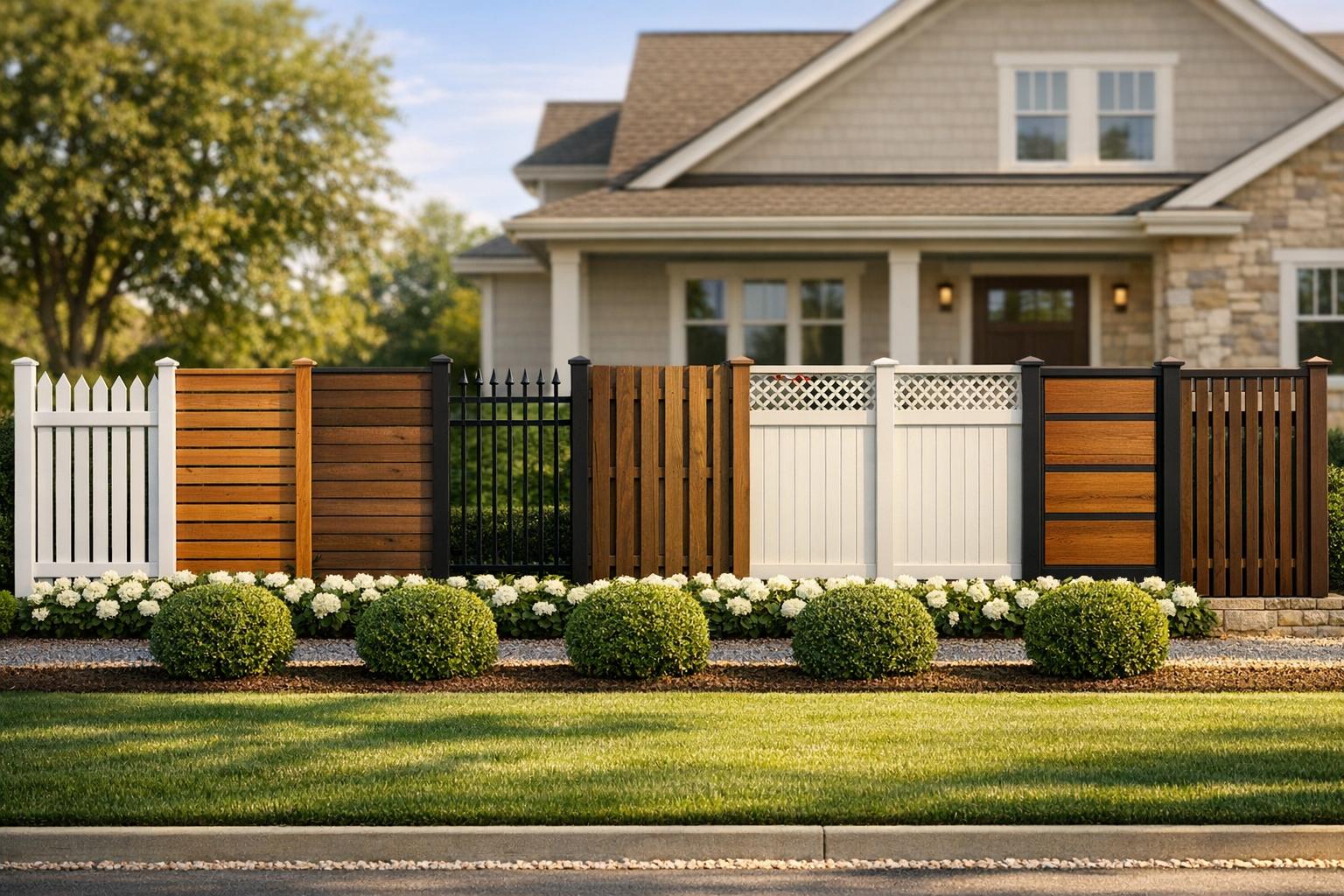
Fences are more than boundaries – they shape your home’s first impression. Whether you prefer classic pickets, sleek horizontal slats, or intricate wrought iron, the right fence design can add style, privacy, and value to your property. This guide explores eight fence styles, from timeless white picket fences to modern slatted designs, and highlights how finishes, materials, and landscaping can transform your outdoor space. Key takeaways include:
- Classic Picket Fences: Timeless charm with customizable profiles like scalloped tops or Gothic points. Ideal for framing gardens and maintaining openness.
- Modern Horizontal Slats: Clean lines and mixed materials like wood and aluminum for a contemporary look. Great for smaller yards.
- Board-on-Board Designs: Overlapping pickets for lasting privacy and a polished appearance.
- Shadowbox Fences: Alternating pickets for a two-sided, visually appealing design.
- Wrought Iron: Durable, customizable, and elegant with options like finials and scrollwork.
- Lattice and Trellis Accents: Add height, texture, and climbing plant support.
- Painted and Stained Finishes: Match your home’s style with colors like white, charcoal, or natural wood stains.
- Landscaping Complements: Use plants like hydrangeas, climbing roses, or grasses to integrate the fence into your garden.
For homeowners in Plano, TX, Tend Fencing offers custom designs in wood and ornamental iron, ensuring a fence that aligns with your style and lasts for years. A well-chosen fence combines function and aesthetics, making it a standout feature of your home.
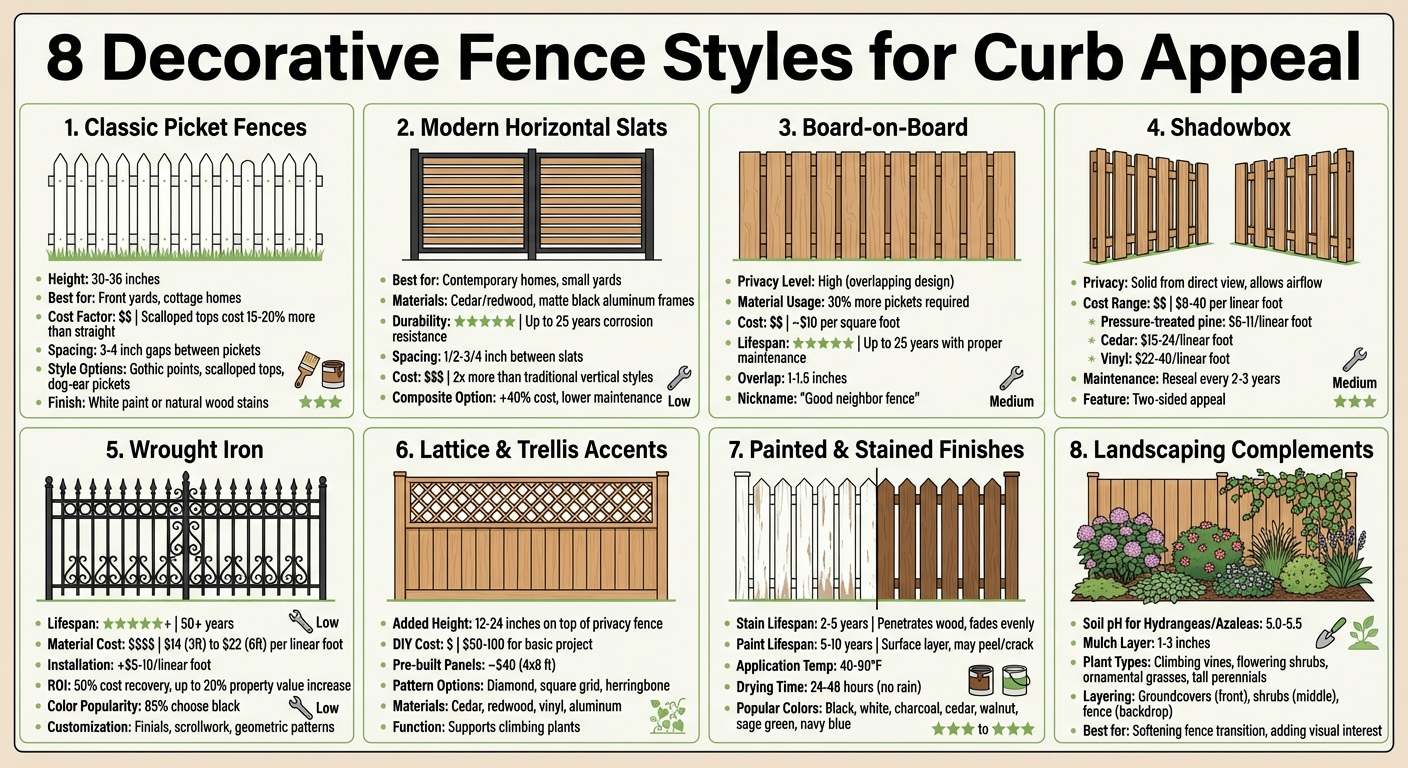
8 Decorative Fence Styles Comparison Guide
1. Classic Picket Fences
White Picket Perfection with Custom Profiles
The classic picket fence has long been a favorite for front yards, offering a welcoming aesthetic with its evenly spaced vertical slats. It defines property lines without obstructing the view of your home, making it an ideal choice for enhancing residential curb appeal. Typically, these fences stand at 30–36 inches tall, striking a balance between functionality and style. The charm of a picket fence often lies in the details, particularly the design of the picket tops.
Different picket profiles can match various architectural styles. For example, Gothic points pair beautifully with Victorian or Tudor homes, while scalloped tops add a softer touch to cottage-style properties. If simplicity is your goal, dog-ear pickets – flat tops with angled corners – offer a clean and understated look. It’s worth noting that scalloped designs tend to cost 15–20% more than straight-topped options because of the precision required for their curved cuts.
To achieve the perfect balance between privacy and openness, opt for 3–4 inch gaps between pickets. This spacing frames your landscaping while maintaining a defined boundary.
When it comes to finishes, white paint is a classic choice that highlights the design, while natural wood stains, like cedar or redwood tones, provide a more rustic, earthy feel.
Ryan Fitzgerald, Owner of UpHomes, shares, "Painting the fence white and brown to mimic the house gives a wonderful finish and makes this home look like a showpiece".
For a low-maintenance alternative, modern homeowners are increasingly choosing vinyl or aluminum picket kits. These materials replicate the look of wood while significantly reducing upkeep.
This enduring design continues to inspire, offering a timeless foundation for exploring more contemporary fencing options.
sbb-itb-d1d0a96
2. Modern Horizontal Slats
Sleek Lines with Mixed-Material Frames
Horizontal slat fences are a popular choice for contemporary homes, thanks to their clean, geometric lines that stand apart from traditional vertical designs. These fences create the illusion of a larger yard by drawing the eye along their long, uninterrupted lines – a feature especially useful for urban properties where space is at a premium.
One standout feature of modern horizontal slat fences is the use of mixed materials. Pairing wood infill, such as warm cedar or redwood, with matte black powder-coated aluminum frames delivers a polished, architectural look often seen in design magazines. Beyond aesthetics, the metal framework offers up to 25 years of corrosion resistance, making it a durable choice. For the best balance of privacy and airflow, experts recommend spacing slats 1/2–3/4 inch apart, which also creates subtle shadow patterns that enhance the fence’s visual appeal.
"Horizontal designs have shifted from traditional vertical pickets to become the dominant choice for contemporary installations, offering clean sightlines and geometric precision", says Chic Frontiers.
Proper installation is key to achieving both durability and style. Using spacer blocks ensures perfectly straight lines, while maintaining a 1–2 inch clearance from the ground helps prevent moisture damage. Sealing all edges also minimizes warping over time.
However, this sleek design comes at a premium. Horizontal slat fences typically cost twice as much as traditional vertical styles due to the higher-quality materials and labor involved. Composite options, while adding about 40% to the price, significantly reduce maintenance needs. The attention to detail in both materials and installation ensures a fence that’s as functional as it is visually striking.
For those in Plano, TX, Tend Fencing specializes in installing these modern designs with a focus on precision, craftsmanship, and long-lasting quality.
3. Board-on-Board Designs
Overlapping Pickets for Lasting Privacy
Board-on-board fences bring a stylish, architectural touch to traditional stockade designs. By layering the pickets in an overlapping pattern, these fences create a sense of depth and shadowing that delivers a polished, custom look. This design doesn’t just enhance aesthetics – it can also significantly improve curb appeal.
Often called a "good neighbor fence", this style is equally attractive from both sides, making it a great choice for properties where both neighbors have a view of the fence. Beyond its visual appeal, the overlapping pickets address a common problem with standard side-by-side fences: weather-related gaps.
As wood naturally expands and contracts with changes in temperature and humidity, traditional fences can develop gaps over time. Board-on-board fences, however, use a 1-inch to 1.5-inch overlap to maintain consistent privacy, even as the wood shifts.
"Board-on-board fences won’t suffer these gaps with time… the overlap of a board-on-board privacy enclosure helps to reduce the gaps that this natural fluctuation in the wood can create", explains DesigningIdea.
These fences do require more materials – about 30% more pickets – and typically cost around $10 per square foot. However, when built with durable woods like cedar or redwood and properly maintained, they can last up to 25 years. To ensure longevity, it’s best to stain or paint the boards before installation, as the overlapping edges become hard to reach once assembled. Adding a decorative top cap not only gives the fence a finished look but also protects the exposed end grain from moisture damage.
4. Shadowbox Fences
Alternating Pickets for Two-Sided Appeal
Shadowbox fences, often called "good neighbor" fences, stand out for their alternating picket design, which ensures an attractive appearance from both sides.
This staggered layout not only hides the "backside" of the fence but also adds visual depth through light and shadow effects. Plus, the spacing improves airflow, making the fence more resistant to wind. From a direct view, the fence offers solid privacy, while the gaps allow light and air to pass through naturally.
You can personalize your shadowbox fence with different top profiles to suit your style. Options include dog-eared for a relaxed vibe, arched for a touch of elegance, flat-top for a clean, modern look, or French Gothic for a more classic feel.
"The alternating pickets add interest, making them more pleasing to the eye and more modern than the stockade-style picket fence that hearkens back to 18th-century forts", explains Tony Carrick, Contributing Writer at Angi.
Costs for installation range from $8 to $40 per linear foot, depending on the material. Pressure-treated pine typically costs $6–$11 per linear foot, cedar runs about $15–$24, and vinyl options are priced between $22–$40 per linear foot. If you choose wood, it’s important to stain it before assembly and reseal it every 2–3 years to maintain its look and durability. Shadowbox fences combine style and practicality, making them a versatile choice for modern fencing projects.
5. Wrought Iron Styles
Timeless Elegance with Customizable Accents
Wrought iron fences bring a blend of timeless style and durability to any property. Known for their sophisticated appearance, these fences not only enhance curb appeal but can also last over 50 years with minimal maintenance. Their sturdy construction makes them highly resistant to both physical impact and harsh weather conditions.
One of the standout features of wrought iron is its ability to be customized. Decorative elements like fleur-de-lis finials can add a regal touch, spearheads provide extra security, and ball tops offer a smoother, family-friendly option. For those seeking more intricate designs, scrollwork with swirls, heart shapes, or floral patterns adds a romantic flair, while modern styles tend to favor clean geometric shapes such as squares, diamonds, and hexagons.
"Wrought iron fence work has for centuries served as a marker of luxury and nobility, boosting the castle curb appeal", says House Digest.
Color choices can further personalize the look of your fence. Black remains the most popular choice – accounting for about 85% of installations – but other options can create unique effects. Dark green blends seamlessly with landscaping, while white can evoke a cottage-like charm and make smaller spaces feel larger. For those wanting a touch of opulence, gold or silver accents on finials or medallions can create a striking contrast against traditional black iron.
When it comes to cost, material prices range from $14 per linear foot for 3-foot fencing to $22 per linear foot for 6-foot options. Installation typically adds $5–$10 per linear foot. While the initial expense is higher compared to wood or vinyl, wrought iron fences offer a solid return on investment. On average, homeowners can recoup 50% of the cost, with well-installed fences potentially increasing property values by up to 20%.
Tend Fencing specializes in creating ornamental steel fence installation in Plano, TX. Their designs not only enhance security and define boundaries but also elevate the overall aesthetic of outdoor spaces.
6. Lattice and Trellis Accents
Vertical Interest with Functional Beauty
Lattice and trellis accents can transform a plain fence into a standout feature that combines style and practicality. Adding a 12–24 inch lattice strip on top of a privacy fence not only enhances its appearance but also allows more light and airflow. This helps avoid the closed-off feeling that often comes with tall, solid fences. Plus, in areas where building codes restrict solid fences, you can often add up to 2 feet of open trellis on top without issue.
The pattern you choose plays a big role in defining the fence’s overall look. Diamond lattice brings a timeless, romantic vibe that pairs perfectly with traditional or cottage-style homes. On the other hand, square grid patterns offer a sleek, modern appeal that complements contemporary designs. If you’re looking for something truly eye-catching, herringbone patterns deliver a zigzag texture that’s not only stylish but also sturdier than standard designs. With so many options, it’s easy to match the fence’s design to your home’s personality.
"Using a trellis or lattice as part of the redesigned fence gives you more options for installing plants and creating new features in your yard", explains Hilltop Farm & Fence.
When it comes to materials, your choice will depend on your climate and how much maintenance you’re willing to do. Cedar and redwood are naturally resistant to rot and age beautifully, developing a weathered patina over time. For a low-maintenance option, vinyl and powder-coated aluminum are great picks – they resist fading and hold up well in harsh weather, including heavy snow or rain. If you’re going the DIY route, pre-built wood trellis panels (4×8 ft) generally cost around $40, and U-shaped brackets are about $30 for a six-pack. This means you can set up a basic project for $50–$100.
For those who want to use the lattice or trellis for climbing plants, consider the weave size. A tighter weave works well for added privacy, while a 4-inch grid is perfect for vigorous climbers like roses or clematis. Don’t forget to apply professional fence staining and sealing to wooden components while they’re flat – it makes the application much easier.
7. Painted and Stained Finishes
Color Choices That Match Your Home’s Personality
Once you’ve chosen your fence style, the finish you pick ties the whole look together. Dark charcoal and matte black finishes offer a bold contrast while also hiding dirt, making upkeep a bit easier. For a more timeless vibe, crisp white is a classic choice, especially for traditional or farmhouse designs. The undertones matter – warm whites with yellow hints pair well with farmhouse aesthetics, while cool whites with blue undertones are better suited for Scandinavian-inspired styles.
If you prefer to highlight the wood’s natural beauty, stains in cedar, walnut, or chocolate tones are versatile and complement nearly any architectural design. For a more nature-inspired look, sage green or earth tones blend wonderfully with garden settings. Coastal homes shine with light blues or deeper ocean-inspired navy shades.
"Among the best fence colors are black, green, blue, or natural wood stain", says Carrie Elizabeth Bradon.
Paint vs. Stain: What to Consider
Choosing between paint and stain involves weighing their differences. Stain penetrates the wood, offering a natural look that fades evenly over time without peeling. It typically lasts 2 to 5 years before reapplication is needed. On the other hand, paint forms a protective layer on the surface, which can last longer – around 5 to 10 years – but it may crack or peel, requiring more effort for maintenance, like scraping and sanding before repainting.
Prep Work: The Key to a Professional Finish
No matter what product you choose, preparation is the real secret to a finish that looks polished and lasts. Start by cleaning, sanding, and repairing the fence to create a smooth surface for the finish. For the best results, try the "back-brushing" technique – after spraying or rolling, use a brush to work the wet product into the wood grain. This ensures even absorption and prevents unsightly lap marks.
Timing is also critical. Apply your finish when temperatures range between 40°F and 90°F, with low humidity. Make sure there’s no rain in the forecast for at least 24 to 48 hours to allow proper drying.
"A fence that was cleaned, repaired, sanded, and properly stained will always outlast one that was slapped together in a weekend", stresses Brush & Roll Painting.
8. Landscaping Complements
Strategic Planting for Maximum Impact
With the right plants, your fence can become a standout feature in your garden. Climbing vines like clematis and coral honeysuckle can provide vertical interest, while climbing roses require added support, such as ties or wire, to thrive effectively.
Flowering shrubs like mophead hydrangeas and azaleas are perfect for fence lines, particularly in shaded areas. These plants flourish when the soil pH is maintained between 5.0 and 5.5. For striking contrasts, consider textural grasses like purple fountain grass against white fences. Tall perennials such as hollyhocks and foxgloves bring a touch of classic cottage charm. You can also layer your plantings – use low-growing groundcovers like creeping thyme at the front, shrubs in the middle, and let your fence act as a natural backdrop. These thoughtful arrangements enhance decorative fence designs and create visually engaging focal points.
"Adding plants at the base of a fence softens the transition from vertical to horizontal planes, and visually stitches the fence into the landscape", explains Yardzen.
Open-style fences, such as picket or split-rail designs, pair beautifully with plants that weave through their structure. Meanwhile, solid board-on-board fences look best with a mix of plant heights to break up the visual monotony. Applying a 1 to 3-inch layer of mulch around your fence-line plants can help suppress weeds and retain soil moisture. Just be sure to keep the mulch away from plant stems to avoid rot.
20 Fence Ideas for Privacy, Style and Curb Appeal
Conclusion
A thoughtfully designed fence does more than just outline your property – it introduces your home with style and purpose, setting the tone for everything beyond it. By drawing inspiration from the variety of styles mentioned earlier, your fence can become a standout feature that combines practicality with aesthetic appeal, all while enhancing the overall value of your property.
The secret lies in harmonizing materials, colors, and finishes with your home’s architectural details. For instance, matching your fence to your home’s trim or shutters creates a unified look, while bold colors like navy blue or charcoal gray can add a touch of drama. When paired with carefully planned landscaping, your fence evolves from a mere boundary to a refined feature that enhances your outdoor space. This attention to detail ensures a seamless and polished installation process.
"A well-chosen fence does more than just mark property lines – it adds style, increases privacy, and enhances the overall look of your home."
– Chad Swartzell, Owner, Good Neighbor Fencing
Professional installation ensures your fence is secure, meets local codes, and stands the test of time. For homeowners in Plano, TX, and nearby areas, Tend Fencing offers custom solutions that perfectly align with your home’s unique style. Their craftsmanship, combined with high-quality wood and ornamental iron options, ensures durability and beauty. Plus, their commitment to sustainability – planting a tree for every fence they build – means your investment also supports the environment.
Every design decision you make contributes to creating a home that feels welcoming and complete. The right fence strikes the perfect balance between form and function, offering privacy, security, and a clear sense of boundary. With expert advice and premium materials, your fence becomes more than just a structure – it’s a long-lasting feature that elevates your home’s exterior and leaves a lasting impression.
FAQs
Which fence style adds curb appeal without blocking the view?
Fences such as picket, split-rail, or wire mesh are excellent choices for boosting curb appeal while keeping visibility intact. These designs offer an open and welcoming aesthetic, adding character to your property without completely blocking the view.
What fence material is best for low maintenance?
Vinyl fences are a great choice if you’re looking for something that’s easy to care for. They don’t warp, discolor, or rot over time. To keep them looking their best, all you need is a quick rinse with a garden hose every now and then.
How do I choose a fence color that matches my house?
To choose the right fence color for your home, start by looking at your house’s exterior color, trim, and overall style. For classic or traditional homes, neutral shades or natural wood stains are a safe bet. If your home leans toward a modern design, bolder colors can make a striking statement. A white fence pairs beautifully with lighter exteriors for a clean, unified look, while darker tones like black or green can provide contrast and a touch of sophistication. Whatever you choose, make sure your fence complements your home’s curb appeal and fits within any neighborhood rules or guidelines.