
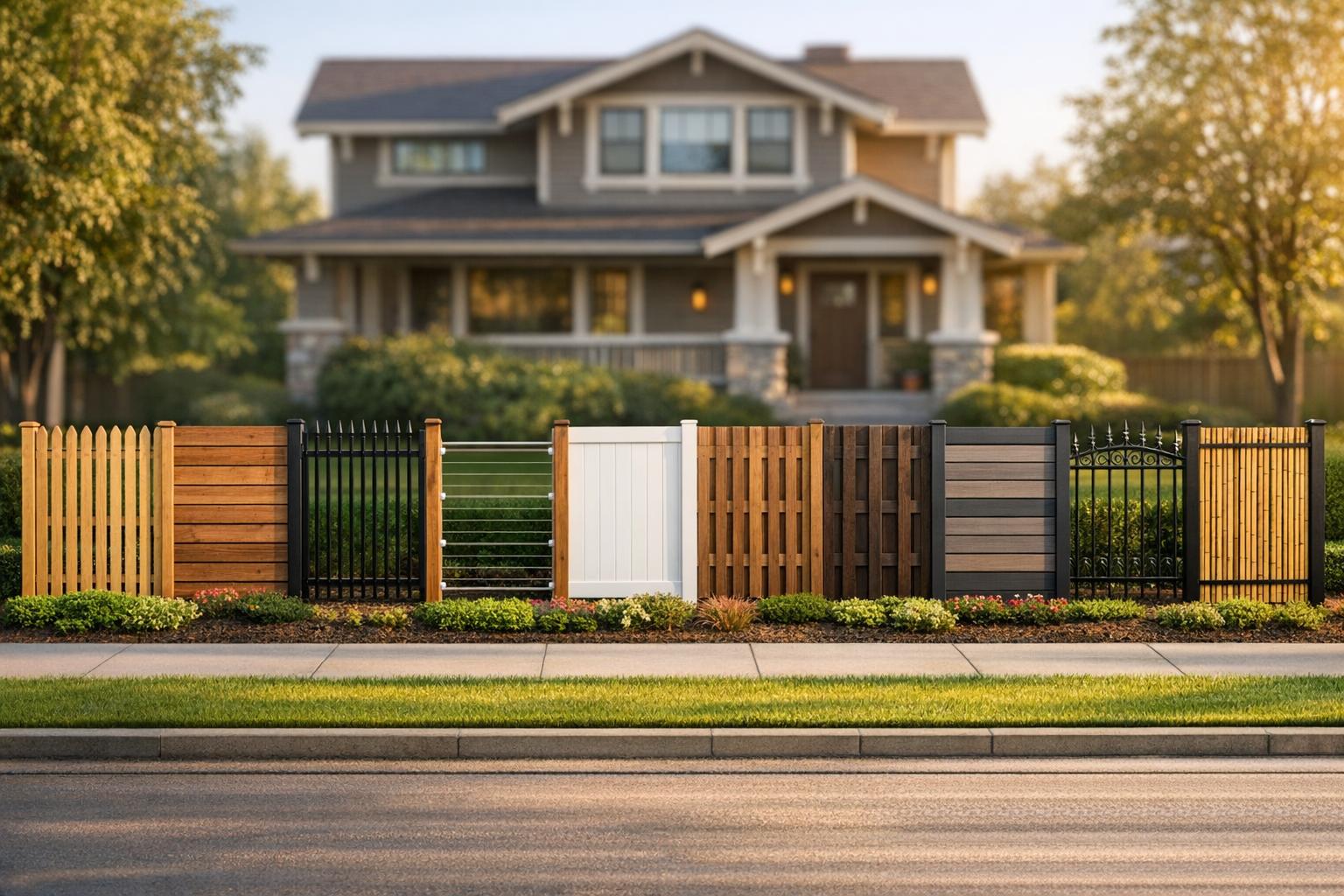
Looking to boost your home’s curb appeal? A well-designed fence can make a big difference. Whether you’re prioritizing privacy, durability, or aesthetics, there’s a style and material to suit your needs. Here’s a quick overview of 10 popular fence styles, their features, and what makes them stand out:
- Classic Picket Fence: Timeless charm, ideal for Colonial and cottage homes. Available in wood or low-maintenance vinyl.
- Wrought Iron Fence: Elegant and durable, perfect for Victorian or Mediterranean designs.
- Vinyl Fence: Low-maintenance and versatile, with options for privacy or decorative styles.
- Composite Fence: Mimics wood but resists rot and insects, great for eco-conscious homeowners.
- Horizontal Wood Fence: Sleek, modern look with customizable spacing for privacy.
- Decorative Metal Fence: Combines security with intricate designs, suitable for upscale homes.
- Horizontal Metal Fence: Contemporary and durable, great for modern or industrial aesthetics.
- Split Rail Fence: Rustic and open, ideal for ranch or farmhouse properties.
- Bamboo Fence: Exotic and lightweight, fits Zen gardens or tropical themes.
- Hog Wire Fence: Blends rustic and modern styles, often used for gardens or open landscapes.
Each fence style offers a unique combination of materials, maintenance needs, and costs. For example, vinyl is virtually maintenance-free, while wood requires regular staining. Metal options like wrought iron or horizontal steel are long-lasting but may need occasional rust prevention. Costs range widely, from $4 per linear foot (split rail) to $70+ for premium materials like wrought iron.
Quick Comparison
| Fence Style | Materials | Maintenance | Cost (per ft) | Lifespan | Best For |
|---|---|---|---|---|---|
| Classic Picket | Wood, Vinyl | Moderate | $10–$75 | 15–40 years | Cottage, Colonial, Suburban |
| Wrought Iron | Steel, Iron | Low | $30–$70+ | 30–50 years | Victorian, Mediterranean |
| Vinyl | PVC | Very Low | $25–$60 | 20–30+ years | Modern, Ranch, Suburban |
| Composite | Wood Fiber & Plastic | Low | $28–$55 | 25–35 years | Eco-friendly, Modern |
| Horizontal Wood | Cedar, Redwood | High | $17–$90 | 15–25 years | Modern, Contemporary |
| Decorative Metal | Aluminum, Steel | Low | $24–$50 | 25+ years | Upscale, Pool Areas |
| Horizontal Metal | Steel, Aluminum | Low | $17–$90 | 20–50 years | Industrial, Modern |
| Split Rail | Wood, Vinyl | Low | $15–$35 | 10–30 years | Ranch, Rustic |
| Bamboo | Natural Bamboo | Moderate | $9–$35 | 5–15 years | Zen, Tropical |
| Hog Wire | Steel, Wood | Low | $35–$50 | 15–40 years | Farmhouse, Garden |
Choosing the right fence depends on your home’s style, local climate, and budget. If privacy is key, solid panels like vinyl or composite work well. For a more open feel, options like hog wire or decorative metal add charm without blocking views. Always check local zoning laws and HOA regulations before starting your project.
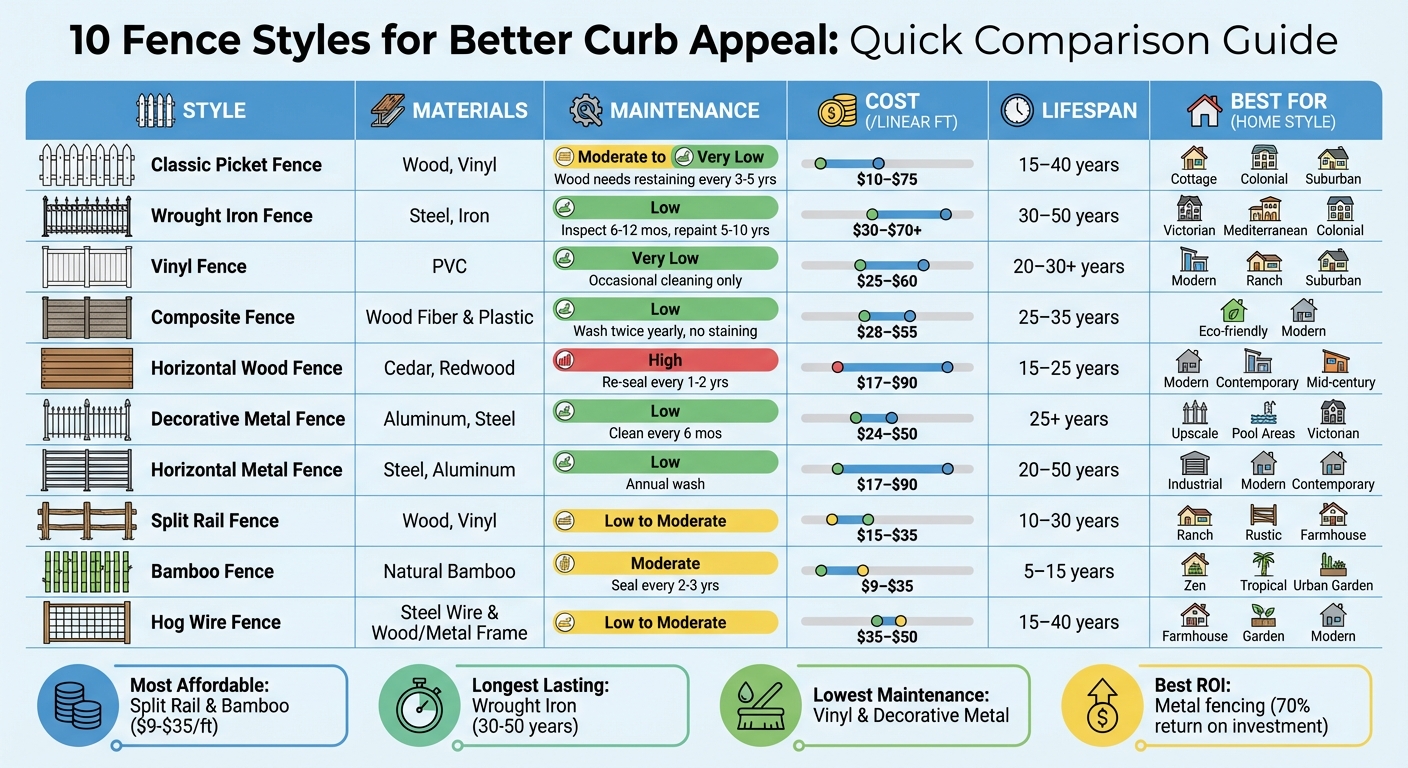
10 Fence Styles Comparison: Cost, Durability, and Maintenance Guide
1. Classic Picket Fence
Aesthetic Appeal
The classic white picket fence is a hallmark of traditional American charm. As Bob Vila puts it:
Nothing is quite as much a part of our American consciousness as the traditional white picket fence, one of the most well-loved fence styles of all time.
Unlike taller privacy fences, picket fences enhance your home’s curb appeal by framing it rather than hiding it. The evenly spaced vertical boards, typically set 3 to 4 inches apart, create a balanced and inviting look. You can also tailor the design with various picket tops, such as pointed Gothic styles for a formal touch, rounded dog-ear tops for a softer vibe, or scalloped curves for added elegance. While white remains the classic choice, experimenting with soft neutrals, pastels, or colors that match your home’s trim can give the fence a cohesive and personalized look. This timeless aesthetic is paired with solid performance.
Material Durability
When it comes to durability, wood fences typically last 15–20 years, with premium options like cedar or redwood extending up to 40 years. Vinyl fences surpass 20 years and resist rot and insect damage. Composite materials offer the look of wood with excellent weather resistance, and powder-coated metal fences provide outstanding longevity.
Maintenance Requirements
Wooden picket fences require repainting or restaining every 3–5 years to protect against UV rays and moisture. Regular upkeep, like annual pressure washing and applying sealant every 2–3 years, can significantly extend their lifespan. For reduced maintenance, vinyl fences are a great option – they only need occasional cleaning with soap and water. If you’re using wood, solid-color stains are a better choice than paint, as they allow the material to breathe and minimize peeling. These maintenance tips can help you choose a fence style that fits your home’s needs.
Best Fit for Architectural Style
Classic picket fences are a natural match for Colonial, Victorian, and cottage-style homes. Pointed or turned picket designs emphasize Colonial and Greek Revival elegance, while ornate, ball-topped styles enhance Victorian aesthetics. For modern homes, sleek vinyl pickets offer a clean, polished look. Pairing the fence with landscaping – like flowering shrubs or climbing roses – can further enhance its charm.
For homeowners in Plano, TX, Tend Fencing provides expert installation services, combining quality craftsmanship with sustainable practices.
sbb-itb-d1d0a96
2. Wrought Iron Fence
Aesthetic Appeal
Wrought iron fences bring a timeless elegance to any property, thanks to their intricate scrollwork, decorative finials, and floral patterns. Unlike solid wood or vinyl, their transparent design allows you to showcase your landscaping while creating the illusion of a larger yard. While black remains the most popular color – accounting for about 85% of modern iron fences – custom powder coating offers a variety of color options to match your home’s exterior. For a personalized touch, you can incorporate custom monograms, crests, or even house numbers into the gate or fence panels.
Material Durability
With proper care, a wrought iron fence can last between 30 and 50 years. Modern wrought iron is often crafted from steel or aluminum alloys, which provide better resistance to rust and are more cost-effective. Josh Manley, owner of The Iron Shop, explains:
Most fencing today is manufactured with modern steel which is better than cast and is much more flexible.
The forging process gives wrought iron exceptional strength, making it far sturdier than wood or vinyl. It can endure harsh weather conditions without bending or warping. Additionally, its open design minimizes wind resistance, making it ideal for areas prone to high winds.
Maintenance Requirements
To keep your wrought iron fence looking its best, inspect for paint damage every 6–12 months, clean it 1–2 times a year using warm, soapy water, and lubricate hinges annually to prevent sticking. Scratches or chips should be addressed immediately with a rust-inhibiting primer and touch-up paint to prevent oxidation. Adjust irrigation systems to avoid spraying water directly on the fence, as mineral deposits can create a hazy buildup on the metal. Professional repainting is recommended every 5–10 years, and powder coating for rust prevention typically costs between $6 and $10 per square foot. These steps help maintain the fence’s functionality and stylish appearance, ensuring it complements your home for years to come.
Best Fit for Architectural Style
Wrought iron fences pair beautifully with Victorian, Colonial, Mediterranean, and Craftsman-style homes. Ornate scrollwork and spear-top designs are perfect for Victorian, Gothic Revival, and Colonial properties. For modern and contemporary homes, minimalist designs featuring clean lines and geometric patterns like squares, diamonds, or hexagons create a sleek and understated look. Mediterranean or Spanish-style homes shine with wrought iron accents such as arched gates or Mediterranean-inspired details. Plus, metal fencing can offer a 70% return on investment. For homeowners near Plano, TX, Tend Fencing provides expert ornamental iron installations that combine durability with aesthetic appeal.
3. Vinyl Fence
Aesthetic Appeal
Vinyl fencing brings a modern edge to traditional designs, offering a wide range of styles to suit different homes. Whether you’re after the charm of a classic white picket fence for a Colonial or cottage-style property, sleek horizontal slats for contemporary architecture, or rustic split-rail designs for ranch homes, vinyl delivers plenty of options. You can also explore decorative touches like basketweave patterns, lattice tops, or stylish post caps. Beyond the standard white, vinyl comes in colors like tan, brown, and gray, as well as wood-grain textures that mimic cedar or redwood – all without the hassle of constant upkeep.
Material Durability
Crafted from polyvinyl chloride (PVC), vinyl fencing is built to last. Unlike wood, it doesn’t rot, decay, or attract insects, which means it can outlive wood fences by decades. While wood fences often need replacing after 10 to 20 years, vinyl can hold up for 20 to 30 years – or even longer – with proper care. High-quality vinyl resists yellowing and cracking, and many products come with lifetime warranties. Plus, it won’t warp, shrink, or fade over time, as long as it’s cleaned periodically. Installation costs typically range from $2,350 to $5,960, with prices per linear foot between $15 and $40, depending on the style you choose.
Maintenance Requirements
One of vinyl fencing’s biggest perks is how little maintenance it requires. Forget about painting, staining, or sealing – it’s all taken care of. As Home DIY Expert Joseph Truini puts it:
"Vinyl fences are attractive, insect-proof and never need to be painted – nor scraped, sanded and repainted".
Most of the time, a quick rinse with a garden hose is enough to keep it looking clean. For tougher stains, you can use a mixture of one cup of white vinegar or bleach in a gallon of water. Just avoid abrasive cleaners or scouring pads that could scratch the surface. Be careful with string trimmers near the fence base, and check posts and rails annually to ensure everything stays secure. This easy upkeep makes vinyl fencing a practical choice for any home.
Best Fit for Architectural Style
Vinyl fencing adapts beautifully to a variety of architectural styles. White picket fences enhance the classic appeal of Colonial, cottage, and traditional homes. Horizontal slats add a sleek, modern touch perfect for mid-century or contemporary designs, while split-rail options blend seamlessly with rustic or ranch aesthetics. For urban settings, solid panel privacy fences offer both seclusion and noise reduction. Plus, installing a vinyl fence could increase your property value by up to 10% – a bonus for homeowners looking to invest in curb appeal.
4. Composite Fence
Aesthetic Appeal
Composite fencing brings the charm of natural wood with the added advantage of durability. It replicates the grain and texture of wood but skips the issues like rot, warping, or splintering. With its matte finish and realistic wood grain, composite fencing is a popular choice for homeowners seeking a polished look. You can choose from various designs like classic picket, decorative lattice, or sleek horizontal slats, all available in rich wood tones or bold, solid colors. Amy Freeman, a Contributing Writer at Angi, highlights this advantage:
"Composite fences can look more attractive than vinyl fences, which often tend to be shiny, white, and plastic-looking. A composite fence can imitate the look and feel of wood".
Material Durability
Made from a mix of recycled plastics and wood fibers, composite fencing is built to last longer than its individual components. It stands up well against rot, insects, and splintering, with a lifespan of 25 to 35 years. However, extreme climates can shorten this by about 5 to 7 years. In terms of cost, installation ranges from $25 to $55 per linear foot. Privacy fences fall between $30 and $55 per linear foot, while post-and-rail designs are priced lower, at $20 to $40 per linear foot.
Maintenance Requirements
One of the biggest perks of composite fencing is its low maintenance. Forget about staining, sealing, or painting – it only needs a simple wash with soap and water or a composite cleaner twice a year to keep it looking fresh. While new composite fences might fade slightly in the first six months due to natural extractives, high-quality boards often include UV resistance to reduce long-term fading. That said, darker shades may still fade over time. This easy upkeep makes composite fencing a practical choice for busy homeowners while maintaining its stylish appearance across different home styles.
Best Fit for Architectural Style
Composite fencing complements a variety of home designs. Horizontal slats offer a clean, modern aesthetic, while vertical picket styles work well with more traditional homes. For rural properties, post-and-rail designs add a rustic touch. Plus, since composite fencing is made from recycled materials like milk cartons, grocery bags, and reclaimed wood fibers, it’s a great option for eco-conscious homeowners. Combining style, durability, and sustainability, composite fencing is an excellent way to enhance your home’s curb appeal.
5. Horizontal Wood Fence
Aesthetic Appeal
Horizontal wood fences bring a sleek, modern look to any property with their clean lines and minimalist design. The horizontal layout creates an optical illusion that makes yards feel broader and more open. You can tweak the style by adjusting the spacing between the slats – tight gaps provide complete privacy, while wider gaps (around 1/2 to 3/4 inch) let in light and air. Opting for smooth-planed boards instead of rough-cut lumber enhances the appearance, creating subtle shadow lines that add depth and sophistication.
Material Durability
Since horizontal fences rely on longer boards, they require high-quality lumber to prevent sagging over time. The horizontal orientation of the end grain helps slow moisture absorption, which means less deterioration. With proper care, a cedar horizontal fence can last over 25 years. Costs for standard horizontal cedar fencing typically range from $15 to $35 per linear foot, while premium options can climb to $45 to $90 per linear foot. Professional installation usually adds another $10 to $30 per linear foot.
Maintenance Requirements
To keep your fence in great shape, leave a 1- to 2-inch gap between the bottom board and the ground to avoid moisture damage. Seal all sides and edges of the boards before installation, and use stainless steel or exterior-coated screws to prevent rust stains or reactions with wood tannins. Re-sealing or re-staining every 1 to 2 years helps maintain the wood’s natural color and UV protection, though stained cedar may only need touch-ups every 3 to 5 years.
Best Fit for Architectural Style
Horizontal wood fences pair beautifully with modern, mid-century, and modern farmhouse designs. Their low profile also works well with ranch and prairie-style homes. For a bold, high-contrast look, consider combining warm wood slats with black powder-coated metal posts for an industrial-chic vibe. Alternatively, natural wood tones can emphasize a minimalist Scandinavian or Zen-inspired aesthetic, blending seamlessly with other contemporary fencing styles.
For homeowners in Plano, TX seeking to enhance their property’s curb appeal, Tend Fencing offers custom-designed horizontal fences crafted from premium materials, ensuring both style and durability.
6. Decorative Metal Fence
Aesthetic Appeal
Decorative metal fences do more than just secure your property – they elevate its visual charm. With design options that include intricate scrollwork, fleur-de-lis accents, and laser-cut geometric patterns, these fences create an open, elegant look that doesn’t block your view. The classic black powder coating mimics the timeless appeal of wrought iron, while aluminum and steel can be tailored to a variety of colors. For a modern twist, some designs incorporate laser-cut privacy screens with nature-inspired patterns, blending functionality with artistry. Decorative metal fences turn boundaries into striking features, adding both style and security to your home.
Material Durability
Materials like wrought iron, aluminum, and galvanized steel bring both strength and longevity to decorative metal fences. Wrought iron stands out for its enduring sturdiness, aluminum naturally resists rust, and galvanized steel offers a mix of strength and corrosion resistance. Costs vary depending on the material, with wrought iron priced around $26–$34 per linear foot, aluminum ranging from $19–$76, and galvanized steel falling between $23–$45 per linear foot. These options ensure there’s a perfect fit for both traditional and modern homes.
Maintenance Requirements
Keeping your decorative metal fence in great shape is simple with regular care. Wash it every six months using soapy water and a soft brush to remove dirt and grime. Check for scratches in the protective coating and quickly repair them with rust-inhibiting primer and paint to prevent further damage. If you live near the coast, a powder-coated finish can provide extra protection against scratches and salt-air corrosion. Also, adjusting sprinklers to avoid direct contact with the fence helps prevent mineral deposits from dulling its finish.
Best Fit for Architectural Style
Decorative metal fences adapt beautifully to a variety of architectural styles. Ornate designs with scrollwork and spearhead finials are ideal for historic homes, such as Victorian, Georgian, or Colonial styles. On the other hand, sleek panels with geometric patterns complement modern and contemporary homes. For a unique, rustic vibe, hybrid designs that combine metal panels with wood accents can achieve a "coastal industrial" look. This flexibility in design and materials makes decorative metal fences a standout choice for enhancing your home’s exterior charm.
Tend Fencing offers expert ornamental iron installations in Plano, TX, crafting custom designs that balance security with eye-catching curb appeal through skilled craftsmanship. Request a free quote to start your project today.
7. Horizontal Metal Fence
Aesthetic Appeal
Horizontal metal fences bring a sleek, modern vibe that vertical designs just can’t match. The horizontal slats or panels create clean, continuous lines that highlight your home’s design while giving the illusion of a larger yard. It’s almost like a visual magic trick – those horizontal lines naturally draw the eye outward, making compact spaces feel more open and expansive.
Designers often add depth and character by varying slat sizes (usually between 3/4" and 2") and adjusting the spacing between them. Powder-coated finishes – whether matte, satin, or gloss – are especially popular, with black being a standout choice for its bold, polished look. These finishes hold their color even in extreme temperatures ranging from -40°F to 180°F. If a lighter, more open feel is your style, cable rail systems or floating panels offer transparency while clearly marking property lines. Beyond the aesthetics, the materials used in these fences are built to last, combining beauty with durability.
Material Durability
"Metal is one of the most durable of all fencing materials. Hollow steel fences last upwards of 20 years. Aluminum fences, as well as solid metal and iron ones, can last a lifetime." – Chris Deziel, Freelance Service Journalist and Landscaping Expert
Horizontal metal fences are tough. Powder-coated steel or aluminum frameworks can resist corrosion for up to 25 years, far outlasting wood posts, which often rot within 7–10 years. Cable rail systems, a popular choice for horizontal designs, require proper tensioning (200–300 pounds per line) to meet structural and code standards. This durability makes them a smart investment for long-term performance.
Maintenance Requirements
When it comes to upkeep, horizontal metal fences are refreshingly low-maintenance. A simple annual wash with a pH-neutral cleaner is all it takes to keep the protective coating intact and prevent UV damage. For optimal results, aim for a slat-to-gap ratio between 1:1 and 3:1 to balance privacy and airflow. Just one tip: avoid planting heat-sensitive greenery too close to sun-exposed panels, as the heat can damage the plants.
Best Fit for Architectural Style
Thanks to their durability and easy care, horizontal metal fences are a natural match for contemporary, modern, and mid-century ranch homes. These fences enhance the overall look by emphasizing horizontal lines, which complement the low, streamlined profiles of these architectural styles. For transitional homes or updated cottages, mixing black metal frames with wood slats creates a balanced aesthetic that combines industrial strength with a touch of warmth. Urban and industrial properties, on the other hand, pair well with corrugated metal panels and black steel frames.
To take the design up a notch, align the horizontal slats with features like window headers or fascia boards. This small detail ties the fence seamlessly into the overall look of your home, creating a cohesive and polished appearance.
8. Split Rail Fence
Aesthetic Appeal
Split rail fences bring a rustic charm that never goes out of style. Their rough-hewn beams and open design create a vintage look that fits beautifully into large yards or rural landscapes without obstructing the view. Over time, cedar develops a silver-gray patina, adding to its natural, weathered appeal. The open-rail setup clearly marks property lines while maintaining an inviting, open feel – ideal for those who want defined boundaries without a closed-off vibe. With posts spaced 8–10 feet apart, these fences have a relaxed, rhythmic appearance that complements their surroundings. Plus, the materials are designed with longevity in mind, making them as practical as they are attractive.
Material Durability
Split rail fences are typically crafted from rot-resistant woods like Western Red Cedar or black locust, which can last 20–30 years thanks to their natural oils. For a more budget-friendly option, pressure-treated pine is available, though it generally lasts around 10 years. Modern alternatives like vinyl and composite materials are gaining popularity for their ability to replicate the look of wood while offering a lifespan of over 30 years with minimal risk of decay or weather damage. To ensure stability, posts are usually installed 24 inches deep in concrete.
"Western red cedar… naturally resists insects and weather better than other wood types." – Craig Fenderson, Owner, Budget Fence N Deck
This durability translates to less hassle in the long run.
Maintenance Requirements
Split rail fences are among the easiest to maintain. Wooden versions require occasional inspections, while vinyl and composite options need little to no attention. If you opt for pressure-treated pine, regular cleaning and sealing every one to three years can help extend its lifespan. Repairs are simple, as individual rails can be swapped out without dismantling entire sections. Many homeowners are now adding black-coated wire mesh to the inside of these fences for pet containment. The mesh stays nearly invisible from a distance, preserving the rustic aesthetic while adding functionality.
Best Fit for Architectural Style
Split rail fences are a natural match for ranch, farmhouse, cottage, and colonial-style homes. They’re also great for properties with uneven terrain, as their flexible construction can adapt to ground movement without requiring heavy grading. The rugged texture pairs well with stone homes and natural landscaping. In suburban areas, they work beautifully as decorative accents in front yards, defining property lines or driveways without creating a barrier. For cottage-style gardens, the rails make a perfect framework for climbing roses or vines, adding to that charming "cottage garden" feel. Costs for basic wood materials range from $4 to $8 per linear foot, while professional residential fence installation typically runs between professional installation typically runs between $15 and $35 per linear foot5 and $35 per linear foot.
9. Bamboo Fence
Aesthetic Appeal
Bamboo fences bring a distinct, exotic vibe to any outdoor space, setting them apart from traditional wood options. They come in a variety of colors, including natural tan, mahogany, and black, and offer styles like rolled poles, split half-round textures, or decorative edging. Whether you’re aiming for full privacy screens or accenting flower beds and pathways, bamboo delivers a unique touch to your landscaping. Its texture creates a warm and inviting atmosphere, often evoking the feel of a tropical retreat.
"Bamboo provides a unique, exotic look that can enhance the visual appeal of gardens and landscapes. Available in various heights, colors and styles, bamboo can fit into many design themes, from tropical to modern." – Forever Bamboo
Material Durability
Don’t let bamboo’s lightweight appearance fool you – it’s incredibly strong. With tensile strength exceeding many steel alloys and natural resistance to termites due to its high silica content, bamboo is built to last. Untreated bamboo fencing typically holds up for 5–8 years, but with a UV-protective sealant, you can extend its lifespan to 10–15 years or more. Some CALI bamboo products even come with a 7-year limited warranty for added peace of mind. The rounded canes allow wind to pass through, making the fence sturdy during storms. While minor vertical cracks may appear due to temperature changes, they rarely compromise the fence’s structural integrity.
Maintenance Requirements
Bamboo fences require moderate care to keep them looking their best. Applying a UV-protective sealant every 2–3 years helps prevent fading and weather-related damage. To avoid rot, it’s a good idea to place gravel or stones at the base, keeping the bamboo from direct contact with damp soil. When cutting bamboo poles for installation, trim them just above the joints to prevent water from pooling inside the hollow canes. Regular cleaning with mild soap and water ensures the fence stays fresh, and drilling slightly oversized pilot holes before nailing can prevent cracking during installation. With these simple steps, bamboo fences retain their beauty and functionality.
Best Fit for Architectural Style
Bamboo is incredibly versatile, making it a great fit for a wide range of architectural styles. It’s a natural choice for Japanese Zen gardens, often featured in traditional designs like the "Four-Eyed Fence" (Yotsume-Gaki) or "Rail Fence" (Kinkakuji-Gaki). Its aesthetic also blends seamlessly with tropical and modern themes. For a sleek, minimalist look, black bamboo (Phyllostachys nigra) pairs beautifully with concrete or metal frames in contemporary homes. Bamboo’s lightweight and eco-friendly qualities make it perfect for urban balconies or coastal properties, while its affordability – ranging from $2 to $10 per linear foot – adds to its appeal for budget-conscious homeowners. Whether you’re aiming for a serene garden or a modern urban escape, bamboo fencing delivers both style and practicality.
10. Hog Wire Fence
Aesthetic Appeal
Hog wire fences offer a stylish mix of modern and rustic elements, making them a standout choice for enhancing curb appeal. Their open grid design ensures clear views of your landscape while providing a secure boundary – ideal for showcasing a garden or scenic property without feeling enclosed. Plus, these wire panels can double as a trellis, supporting climbing plants like jasmine, clematis, or roses.
"A mainstay on ranches for decades, hog wire panels [have] been discovered by homeowners and landscape designers as an affordable, low-profile solution for maintaining a wide-open view while keeping animals out." – Gardenista
You can personalize the look by pairing the wire panels with redwood or cedar frames for a warm, natural feel. Alternatively, sleek black metal frames can blend seamlessly into surrounding greenery, offering a minimalist, industrial vibe. This combination of strength and charm makes hog wire fences both practical and visually appealing.
Material Durability
Hog wire panels are built to last. Made from heavy-gauge steel rods welded at every intersection, they’re hot-dip galvanized with a zinc coating to resist rust and corrosion. This sturdy design prevents sagging and withstands harsh weather conditions. The lifespan of your fence largely depends on the frame material – metal frames can endure for decades, while wood posts, even those made from rot-resistant cedar or redwood, typically last 15 to 40 years with proper maintenance.
Maintenance Requirements
Hog wire fences require minimal upkeep. The galvanized steel panels need occasional cleaning to maintain their protective coating. To enhance safety and aesthetics, sharp wire edges can be concealed with 1-by-1-inch wood strips or metal U-channels. The heavy-gauge wire ensures the structure retains its shape over time. For added functionality in gardens, burying the wire mesh 1 to 2 feet underground can deter pests, while securing wood posts in concrete provides extra stability, especially in windy areas.
Best Fit for Architectural Style
Hog wire fences complement a variety of home styles, from Modern and Midcentury Modern to Farmhouse, Ranch, and Cottage designs. Pairing wood posts with wire panels is a hallmark of modern farmhouse aesthetics, blending rustic charm with industrial functionality. In contemporary settings, black steel frames create clean, minimalist lines that accentuate modern architecture.
This style not only adds security but also elevates the overall appearance of your property. Professional installation costs for a 6-foot-high wood-and-wire fence typically range from $35 to $50 per linear foot. A 5-foot version is generally about $10 less per foot. While pricier than chain-link fencing, it’s a more budget-friendly option compared to solid cedar privacy fences. Hog wire fences strike a balance between form and function, making them a popular choice for homeowners looking to enhance their outdoor spaces.
20 Fence Ideas for Privacy, Style and Curb Appeal
Fence Style Comparison
Choosing the right fence style involves balancing your budget, maintenance preferences, and the overall look of your property. Here’s a breakdown of 10 popular fence styles to help you decide:
| Fence Style | Primary Materials | Maintenance Needs | Cost per Linear Foot (Installed) | Durability | Suitable Home Styles |
|---|---|---|---|---|---|
| Classic Picket | Wood or Vinyl | High for wood; Low for vinyl | $10–$75 | 15–20+ years | Cottage, Traditional, Suburban |
| Wrought Iron | Steel or Iron | Low (occasional rust checks) | $30–$70+ | Very High | Victorian, Colonial, Formal |
| Vinyl | PVC/Plastic | Very Low (occasional cleaning) | $25–$60 | 20–30+ years | Modern, Suburban, Ranch |
| Composite | Wood fiber & Plastic | Low (no staining required) | $28–$45 | High | Modern, Eco-friendly |
| Horizontal Wood | Cedar, Pine, Redwood | High (staining or sealing) | $17–$45 | Moderate to High | Modern, Contemporary, Urban |
| Decorative Metal | Aluminum or Steel | Very Low (especially aluminum) | $24–$50 | High (25+ years) | Modern, Upscale, Pool areas |
| Horizontal Metal | Corrugated Steel/Panel | Low (occasional rust checks) | $17–$90 | Very High | Industrial-chic, Modern |
| Split Rail | Wood or Vinyl | Low to Moderate | $15–$35 | 10–15 years | Ranch, Farm, Rustic |
| Bamboo | Natural Bamboo | High (regular sealing) | $9–$35 | Moderate | Zen, Tropical, Urban Garden |
| Hog Wire | Steel Wire & Wood/Metal | Low to Moderate | $35–$50 | High | Rustic, Modern Farmhouse, Garden |
This table provides a quick snapshot of the options, but remember to factor in local building codes and installation specifics when making your decision.
If you’re looking for low-maintenance choices, vinyl and aluminum fences are excellent options. They naturally resist rot, rust, and insect damage, requiring little more than occasional cleaning. On the other hand, wood and bamboo fences need regular sealing to maintain their appearance and durability. For long-lasting strength, wrought iron, steel, and horizontal metal fences can last for decades, while split rail wood fences may need replacement within 10–15 years.
For budget-conscious homeowners, split rail and bamboo fences are affordable options. If you’re willing to invest a bit more upfront, composite and vinyl fences offer savings in the long run by eliminating the need for ongoing staining or painting.
"Vinyl picket fencing… modern vinyl options look surprisingly like real wood but never need painting." – Seth Williams, Founder, RETipster
When considering privacy fences like horizontal wood or vinyl, keep in mind that they can act like sails in strong winds, often requiring reinforced posts in areas with heavy gusts. Open designs such as wrought iron or hog wire allow better airflow, reducing structural stress.
Ultimately, the right fence not only enhances your home’s curb appeal but also meets your practical needs. Just make sure to check local building codes and HOA rules before starting your project.
Conclusion
When selecting a fence style, think about your home’s design, how much maintenance you’re willing to handle, and your budget. A well-chosen fence should complement your home’s character and blend seamlessly with its architectural details for a cohesive look.
Before making a decision, check local building codes, HOA rules, and property lines. Skipping this step can lead to mismatched choices, like pairing a stone fence with vinyl siding on a ranch-style home, which can disrupt the overall harmony.
Your primary goal for the fence is key. If privacy is your focus, solid panels like horizontal wood or vinyl are great options. For security, wrought iron stands out for its strength and durability. If aesthetics are your priority, picket or ornamental styles can add charm and visual appeal.
Don’t forget to factor in how your local climate impacts the fence’s longevity. Wood works best in mild climates, composite resists humidity, and vinyl holds up well in cold weather. With proper care, wood fences can last 15–20 years if restained every two years, while vinyl often exceeds 20 years with minimal maintenance.
For homeowners in Plano, TX, and nearby areas, Tend Fencing provides professional installation services for wood, ornamental iron, automatic gates, and chain-link fences. Their team ensures your fence is not only durable and well-built but also visually complements your property. Plus, they plant a tree for every fence installed, adding an eco-friendly touch.
The right fence does more than secure your home – it enhances its overall curb appeal.
FAQs
Which fence style adds the most curb appeal for my home’s architecture?
A white picket fence is a classic choice that brings a timeless charm to traditional homes. On the other hand, a horizontal slat fence delivers a clean, modern aesthetic, perfect for contemporary designs. Picking a fence style that aligns with your home’s architecture can make a big difference in boosting its curb appeal.
What’s the best low-maintenance fence for my climate?
Vinyl fencing is a great choice for homeowners who want a low-maintenance option that works well in most climates. It stands up to warping, rotting, and pests, so you won’t have to worry about constant upkeep. A quick rinse with a hose or a simple wash with soap and water is usually all it takes to keep it looking good. Its long-lasting nature and minimal care needs make it a favorite for those looking for an easy fencing solution.
Do I need permits or HOA approval before installing a new fence?
Yes, before installing a fence, you’ll likely need permits and approval from your Homeowners Association (HOA), if applicable. Local rules or HOA guidelines often dictate specifics like the fence’s height, materials, and placement. For instance, in places like Allen, TX, there are clear requirements that fences must meet. It’s essential to check with your city and HOA to make sure your project stays within the required guidelines.