
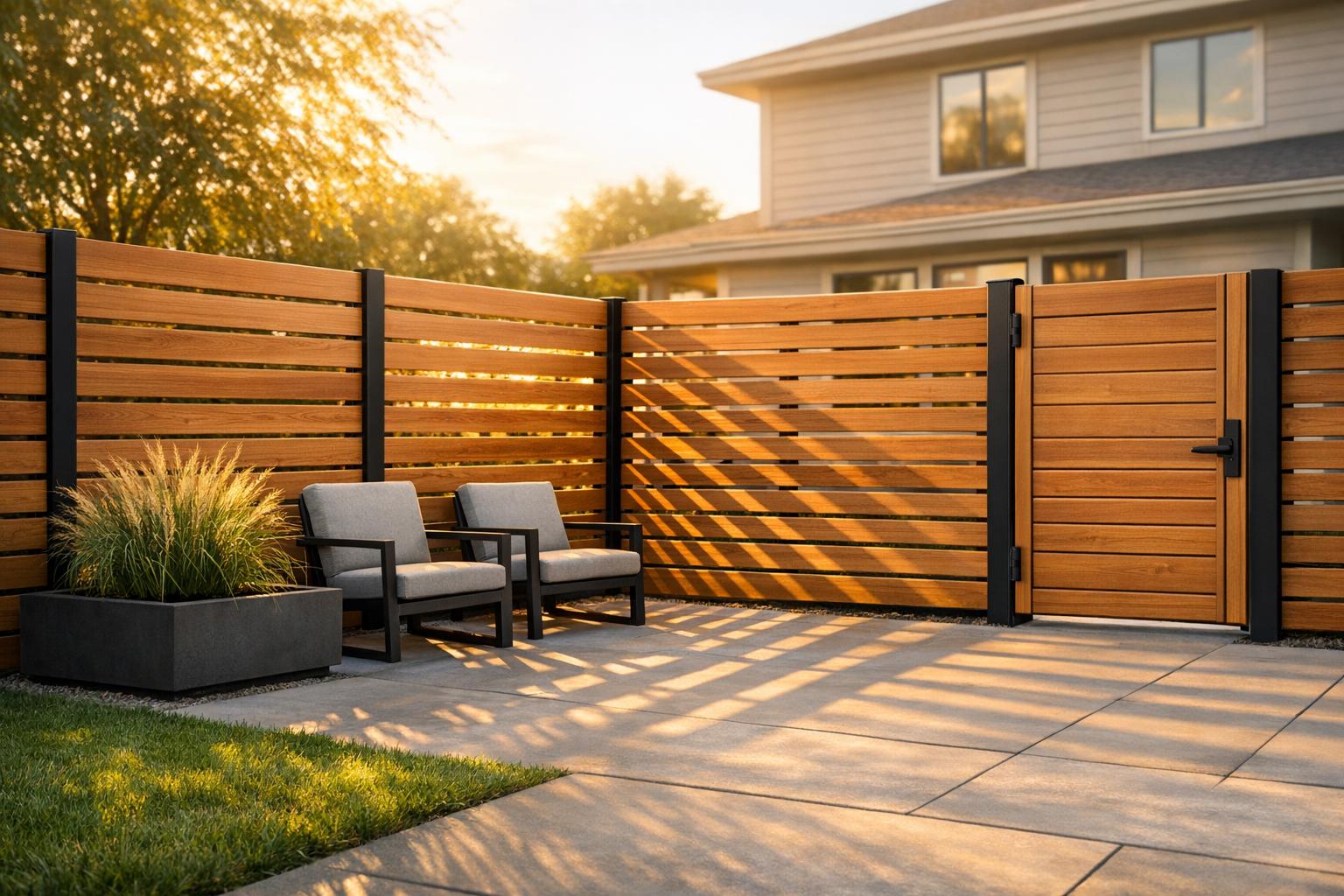
A fence isn’t just a boundary; it’s a blend of function and design. The right fence offers privacy, security, and noise reduction while elevating your property’s look. But finding the balance between privacy and style can be tricky, especially with so many material and design options.
Here’s a quick breakdown:
- Privacy is key: Solid wood, vinyl, or chainlink with slats provide seclusion and safety.
- Style matters: Materials like cedar, ornamental iron, or mixed designs boost curb appeal and property value.
- Material choices: Wood offers warmth but needs maintenance, vinyl is low-maintenance, and aluminum is durable.
- Design options: Lattice toppers, mixed materials, or semi-private panels combine aesthetics with function.
- Budget concerns: Chainlink is affordable, while decorative wood or metal costs more but lasts longer.
Whether you prioritize privacy, style, or both, choosing the right material and design ensures your fence enhances your outdoor space.
The Privacy vs. Style Challenge
Why Privacy Matters in Fence Design
Privacy fences do more than just block prying eyes – they turn outdoor spaces into personal sanctuaries, perfect for relaxing or hosting gatherings. In tightly packed suburban neighborhoods like Plano, TX, where homes are often just a stone’s throw apart, having a private retreat becomes a key part of daily comfort. Beyond privacy, solid fences help reduce noise, deter intruders, and keep children and pets safely within your yard.
Typically, privacy fences range from 6 to 8 feet in height.
How Aesthetics Affect Property Value
A fence is often the first thing people notice about a home, making it a critical part of curb appeal. A thoughtfully designed fence not only enhances a property’s appearance but can also increase its market value. The material you choose plays a big role here: natural cedar adds a cozy, rustic charm that pairs beautifully with traditional homes, while aluminum provides a sleek, wrought-iron style that suits more formal designs.
"An attractive fence can serve as a defining feature that enhances curb appeal, making the property more inviting and potentially increasing its value."
– Plano Fencing
Adding decorative features like lattice toppers, post caps, or solar lighting can transform a standard fence into a striking design element. However, merging these aesthetic touches with the need for privacy is often easier said than done.
Common Obstacles When Combining Privacy and Style
Finding the sweet spot between privacy and visual appeal isn’t always straightforward. One of the biggest challenges homeowners face is choosing materials. A tall, solid wood fence may provide excellent privacy but can feel bulky or block sunlight from reaching garden areas. On the other hand, ornamental metal fences offer a more elegant look but may need extra screening to ensure adequate privacy.
Local regulations and homeowners’ association rules add another layer of complexity. For instance, while an 8-foot privacy fence might be ideal for seclusion, many neighborhoods enforce height limits of 6 feet or have strict guidelines on materials and colors. These restrictions can force compromises, making it tricky to achieve both the desired functionality and the preferred aesthetic. Collaborating with contractors who are familiar with local codes can help homeowners navigate these hurdles and create a fence that balances practicality with style.
sbb-itb-d1d0a96
20 Fence Ideas for Privacy, Style and Curb Appeal
Choosing Materials for Privacy and Aesthetics
Picking the right material is essential to balancing privacy with style.
Wood Fences: Timeless and Adaptable
Wood fences provide complete privacy along with a natural, warm look. Cedar, known for its durability, can last 20–30 years and resists both rot and insects. Pressure-treated pine is another option, lasting 15–20 years at a cost of $15–$30 per linear foot. Both materials can be customized with board-on-board or tongue-and-groove designs, which minimize gaps for added privacy.
"Cedar fences bring a natural warmth to your landscape. Their rustic aesthetic and ability to blend with natural greenery… make them a favorite."
– Cedar Rustic Fence Co.
However, wood fences require some upkeep. Staining or sealing every 3 to 5 years helps prevent UV damage and warping. Despite the maintenance, cedar fences can yield a resale return of 50–70%, making them a worthwhile investment.
Next up, ornamental iron offers a blend of sophistication and practicality.
Ornamental Iron: Stylish and Durable
Ornamental metal fences, whether aluminum or steel, deliver a sleek and upscale appearance, lasting over 50 years with minimal maintenance. For added privacy, you can include closely spaced pickets or slats between the bars. Aluminum is rust-proof and lightweight, making it perfect for humid areas, while steel offers a sturdier, industrial vibe and develops a protective patina over time. Installation costs range from $20 to $60 per linear foot, with matte black powder-coated finishes being a trendy choice for mid-century-inspired designs.
For those prioritizing low maintenance, vinyl and composite fencing are excellent alternatives.
Vinyl and Composite: Low-Maintenance Solutions
Vinyl and composite fences mimic the look of wood while eliminating the need for frequent maintenance. These materials resist rot, pests, and moisture, requiring only an annual wash with soap and water to prevent mold. High-quality vinyl fences can last 50 years or more, with many manufacturers offering 30-year warranties against fading and staining.
"Vinyl fences are a great choice if you want a low-maintenance option. They provide full privacy and keep their appearance without the need for staining, painting, or sealing."
– Cedar Rustic Fence Co.
With installation costing $24–$60 per linear foot, vinyl fences provide a polished, modern look that appeals to contemporary buyers, offering a return on investment of 45–65%.
For budget-conscious homeowners, chainlink fences with privacy enhancements are a practical option.
Chainlink with Privacy Slats
If you’re on a tight budget, chainlink fencing with vinyl or aluminum privacy slats is a cost-effective way to enhance privacy. Basic chainlink costs $25–$45 per linear foot, with privacy slats adding $3–$8 per linear foot. This combination boosts privacy without sacrificing durability, as chainlink fences can last over 20 years. While chainlink fences have a lower return on investment (30–45%) compared to premium options, they are ideal for large properties or when security and affordability are top priorities. Plus, privacy slats can easily be added to existing chainlink fences for a quick upgrade.
With these material choices outlined, we can now focus on design techniques that blend privacy with aesthetic appeal.
Design Methods to Balance Privacy and Style
Finding the perfect balance between privacy and visual appeal is easier when you use creative design approaches. With your materials chosen, it’s time to fine-tune your fence design to combine seclusion with eye-catching style.
Add Lattice Toppers to Wood Fences
A lattice topper is a great way to enhance both the height and charm of a wood or vinyl fence. The lower 6-foot solid section ensures complete privacy, while the lattice adds an extra 1–2 feet of decorative height, allowing for sunlight and airflow. This design is especially useful in areas where zoning regulations limit solid fence heights but allow for decorative extensions. Plus, lattice toppers can double as a framework for climbing plants like ivy or jasmine, turning your fence into a vibrant, green feature.
Use Semi-Privacy Panels
Semi-privacy panels provide a clever middle ground. Shadow box designs, for instance, alternate boards on either side of the rail, blocking direct views while still allowing air to flow through. Meanwhile, horizontal slat designs deliver a sleek, modern look that complements contemporary homes. These fences, typically 4 to 6 feet tall, effectively define property lines without the heavy feel of a fully enclosed barrier.
Combine Materials for Mixed Designs
Mixing materials is a stylish way to elevate your fence design. For example, pairing cedar panels with aluminum posts or using stone columns to support vinyl sections creates a polished, high-end appearance. The combination of industrial elements like black powder-coated steel with natural materials such as Western Red Cedar achieves a striking modern-rustic vibe. Beyond aesthetics, metal frameworks offer practical benefits, such as preventing sagging or warping in wooden fences. They also allow for easy updates – simply swap out the infill materials while keeping the original posts intact. This approach not only enhances curb appeal but also adds long-term versatility.
Add Textured or Accented Panels
Textured finishes and decorative accents can transform a basic fence into a standout feature. Options like wood-grain vinyl or laser-cut panels with intricate geometric or nature-inspired designs add depth and personality while maintaining privacy. These textured panels also improve sound insulation and require little upkeep. High-quality vinyl options with UV-resistant technology ensure the fence maintains its vibrant look over time, making them a practical and stylish choice.
"Combining materials creates custom looks that stand out. Consider cedar panels with aluminum posts, metal accents on wood fencing, or stone columns supporting vinyl sections."
– Cedar Rustic Fence Co.
Fence Type Comparison: Privacy, Style, and Practicality
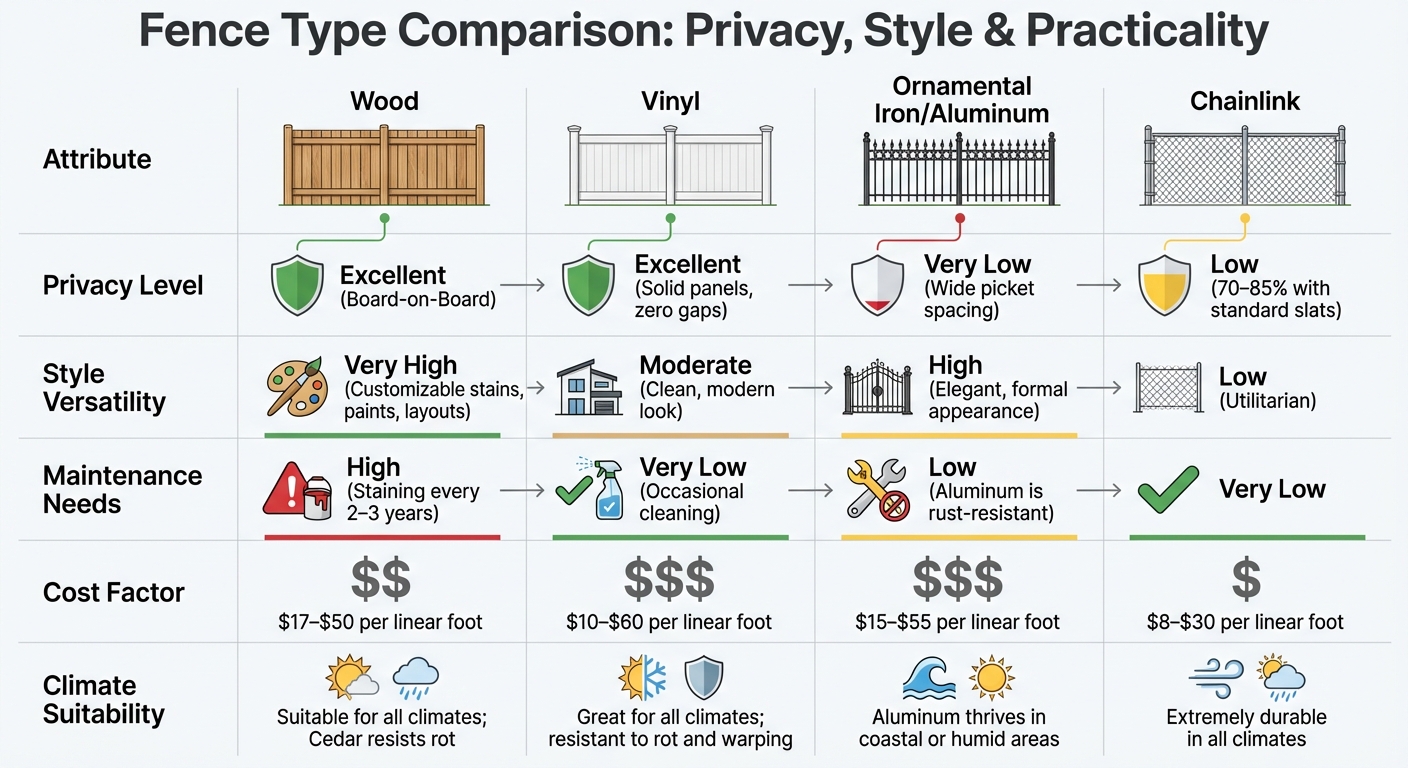
Fence Type Comparison: Privacy, Style, Maintenance, Cost and Climate Suitability
Choosing the right fence involves balancing privacy, aesthetics, and practicality. Each material has its strengths, and understanding these differences can help you select the best option for your property.
Fence Type Comparison Table
| Fence Type | Privacy Level | Style Versatility | Maintenance Needs | Cost Factor | Climate Suitability |
|---|---|---|---|---|---|
| Wood | Excellent (Board-on-Board) | Very High (Customizable stains, paints, layouts) | High (Staining every 2–3 years) | $17–$50 per linear foot | Suitable for all climates; Cedar resists rot |
| Vinyl | Excellent (Solid panels, zero gaps) | Moderate (Clean, modern look) | Very Low (Occasional cleaning) | $10–$60 per linear foot | Great for all climates; resistant to rot and warping |
| Ornamental Iron/Aluminum | Very Low (Wide picket spacing) | High (Elegant, formal appearance) | Low (Aluminum is rust-resistant) | $15–$55 per linear foot | Aluminum thrives in coastal or humid areas |
| Chainlink | Low (70–85% with standard slats) | Low (Utilitarian) | Very Low | $8–$30 per linear foot | Extremely durable in all climates |
This table highlights key features of each fence type, but let’s dive deeper into their specific advantages and challenges.
Wood fences are the go-to choice for customization. You can stain, paint, or design them to fit your style, and board-on-board construction ensures excellent privacy by eliminating gaps caused by wood shrinkage. However, they require significant upkeep – staining every 2–3 years – and typically last 15–20 years with proper care.
Vinyl fences are a low-maintenance solution that offers solid panels for complete privacy. These fences can last 25–30+ years, making them a durable "install and forget" option. While the upfront cost is higher than wood, you’ll save on maintenance in the long run.
Ornamental iron and aluminum fences focus on style and security rather than privacy. Their elegant appearance can boost property value by 1–3% when well-maintained. Aluminum, in particular, stands out for its rust resistance and suitability for coastal or humid environments, with a lifespan of over 40 years. However, their wide picket spacing makes them less ideal for privacy needs.
Chainlink fences are the most affordable option, offering durability and functionality. Adding privacy slats (costing $3–$8 per linear foot) can increase screening to around 90% when using winged slat designs. While not the most stylish, they’re practical and long-lasting.
"Vinyl or aluminum options offer long-term cost savings due to their durability."
– John Smucker, Owner, Smucker Fencing
For sloped properties, wood is the most adaptable option, as individual boards can be adjusted to follow the terrain. Meanwhile, aluminum fencing’s resistance to corrosion makes it a top choice for areas with high humidity or salt exposure. When deciding, weigh immediate costs, long-term durability, and privacy needs to find the best fit for your property. You can also request a quote to get professional pricing for your project.
Why Choose Tend Fencing for Custom Fence Solutions
With more than 15 years of experience and a perfect 5.0-star rating, Tend Fencing specializes in creating custom fence designs that seamlessly blend colors, textures, and materials to enhance your home’s curb appeal.
Tend Fencing’s 3-Step Installation Process
Tend Fencing makes the installation process smooth and stress-free with their straightforward three-step approach. It begins with a free consultation to understand your vision, followed by a carefully scheduled project that minimizes any disruptions, and ends with expert installation. Customers frequently praise owner Cory for his responsiveness, noting impressive results like an 8×79-foot board-on-board fence completed in just one day.
Tree-Planting Program
Tend Fencing is dedicated to environmental responsibility. For every fence built, they plant a tree in partnership with One Tree Planted. Each tree absorbs over 48 pounds of CO₂ annually, while also contributing to energy savings and property value. For example, homes in Portland, Oregon, with street trees sold for an average of $7,130 more and sold faster.
Improving Property Value with Tend Fencing
Tend Fencing doesn’t just install fences – they enhance property value through sustainable practices and tailored designs. Their custom fences combine privacy, style, and expert craftsmanship, making homes more appealing to potential buyers. Strategic tree planting offers additional environmental and community benefits, while their expertise in material matching ensures a cohesive look that buyers appreciate. Serving the Dallas–Fort Worth area, including Plano, Frisco, and McKinney, Tend Fencing also navigates HOA regulations and local durability needs with ease.
As Tend Fencing puts it:
"We’re in the business of crafting dreamscapes"
– Tend Fencing
Conclusion
Striking the perfect balance between privacy and style doesn’t mean compromising one for the other. In fact, privacy is often the top priority for homeowners when designing outdoor spaces. Modern fencing options make it possible to enjoy both seclusion and curb appeal.
Achieving this harmony depends on smart material choices and thoughtful design. Proven fence designs can transform your yard into a peaceful retreat, shielding you from prying eyes and noise while maintaining an open, welcoming feel.
Materials like cedar, vinyl, and aluminum deliver immediate advantages, offering durability that can last anywhere from 20 to over 50 years. These materials not only reduce upkeep costs but also help minimize environmental impact. Combine them with design features like horizontal slats, decorative panels, or landscaping, and your fence becomes more than a boundary – it becomes a striking part of your outdoor space.
This blend of materials and design solves the challenge of merging privacy with aesthetic appeal. Tend Fencing takes this a step further with a residential fence installation tailored to your needs. Their three-step installation process, dedication to sustainability through tree planting, and expertise in local regulations in Plano, TX, and nearby areas ensure your fence enhances your property value while creating the private sanctuary you’ve envisioned.
Want to bring both privacy and style to your yard? Visit Tend Fencing at https://tendfencing.com to schedule your free consultation.
FAQs
What fence height is usually allowed by HOAs and city codes?
HOAs usually permit fence heights ranging from 3 to 6 feet. For front yards, fences are often restricted to 3 or 4 feet, while backyard fences might be allowed to reach 5 or 6 feet, depending on the HOA’s regulations and local city ordinances. It’s important to review the specific rules in your area to make sure your fence meets all requirements.
How can I add privacy without making my yard feel closed in?
To achieve privacy without making your space feel boxed in, semi-privacy fences are a great option. These designs let in light and air while still offering a sense of seclusion. Modern styles such as staggered panels, tiered heights, or decorative screens strike a balance between privacy and openness. Combining materials like wood and steel mesh or adding decorative touches can create a softer, more welcoming look, all while boosting the visual appeal of your yard.
Which fence material has the lowest long-term upkeep cost?
Vinyl fencing stands out for its low long-term maintenance costs. Thanks to its resistance to weathering, insects, and decay, it requires very little upkeep over the years. This durability makes it a practical and budget-friendly choice for homeowners looking for a hassle-free fencing solution.