
When it comes to fences, professional installation makes all the difference. While a DIY approach might seem cheaper, it often leads to issues like misaligned posts, structural failures, and costly repairs. A professionally installed fence not only lasts longer but also adds value to your property, enhances curb appeal, and avoids legal or permit-related headaches.
Key Takeaways:
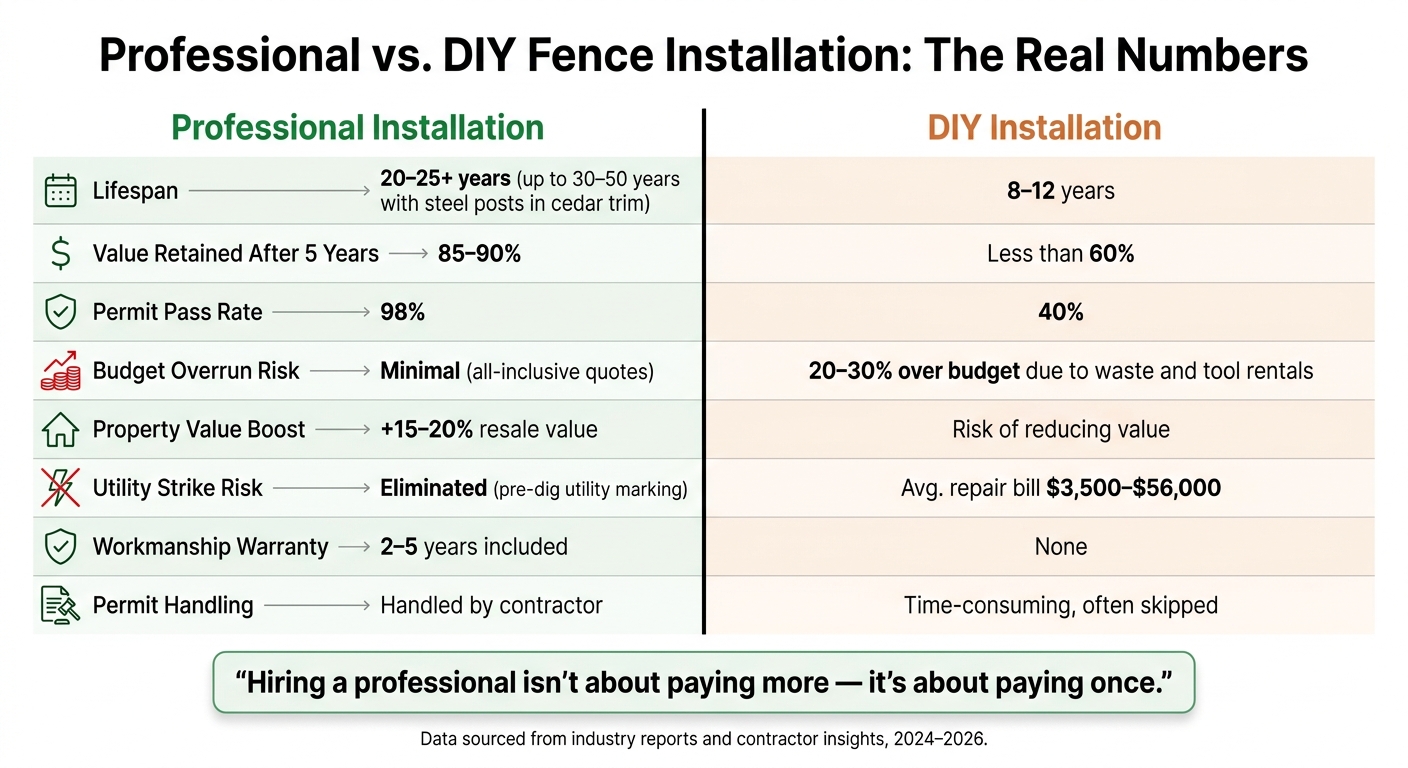
- Longevity: Professionally installed fences can last 20–25+ years, compared to 8–12 years for DIY fences.
- Cost Efficiency: DIY projects often go 20–30% over budget due to material waste and tool rentals, while professionals handle everything efficiently.
- Property Value: A well-installed fence can boost resale value by 15–20%.
- Avoiding Errors: Professionals ensure proper post depth, material selection, and compliance with permits and HOA rules.
Cutting corners with DIY might save money upfront but can lead to expensive fixes later. Investing in professional installation ensures a durable, compliant, and visually appealing fence that stands the test of time.
Professional vs. DIY Fence Installation: Cost, Lifespan & Value Compared
Fence Estimates: Costly Mistakes Homeowners Make
sbb-itb-d1d0a96
Common Problems with DIY Fence Installation
Taking on a DIY residential fence installation might seem like a great way to save money, but common mistakes can lead to more than just an uneven look. These errors can lower property value and significantly increase costs in the long run.
Planning and Design Errors
One of the biggest pitfalls in DIY fence installation is misplacing the fence line. Even a small error, such as installing the fence a couple of inches onto your neighbor’s property, can lead to major headaches. As Iman R. from Charles & Hudson explains:
"A fence installed two inches over the line is still on your neighbor’s land… that can mean a formal dispute, a forced removal, or a rebuild cost that wipes out anything you saved by doing it yourself."
Hiring a professional surveyor, which costs between $500 and $2,000, can help you avoid this issue entirely. Another critical step is checking for underground utilities before digging. Skipping this can result in repair bills averaging $3,500 – or as high as $56,000 if you hit a major utility line. Unfortunately, these planning missteps often lead to bigger structural problems.
Structural and Material Failures
Structural issues are another common problem with DIY fences, often caused by skimping on post depth. Fence posts should be buried at least one-third of their total height to ensure stability. Ignoring this standard can result in leaning fences and a shorter lifespan. For instance, in September 2025, a homeowner in Lawrenceville, Georgia, named Tom, spent $1,800 on materials and tools for a DIY fence. However, because he didn’t set the posts deep enough to handle Georgia’s red clay soil, the fence started leaning after heavy rainfall within six months. Tom eventually had to pay $2,400 for a professional crew to redo the job, bringing his total cost to $4,200 – far above the $2,800 professional quote he originally declined.
Material choices can also make or break a fence. Using untreated wood, low-quality hardware, or improper concrete techniques can lead to rotting, rusting, and moisture damage. In fact, poor material selection and installation errors account for over 70% of early fence failures. Beyond structural issues, failing to address permits and codes can create even more complications.
Code and Permit Violations
Skipping the permit process might seem like a shortcut, but it’s a costly gamble. Fence permits typically cost between $100 and $500, which is far less than the fines or rebuild costs that can result from a violation. Texas Inspector Aaron D. Miller sums it up well:
"The city will wait until it’s built before telling you to remove it."
Homeowners’ association (HOA) rules can add another layer of complexity. Even if your fence meets city regulations, it might not comply with HOA standards for style, material, or color. These violations can surface during home inspections and turn your DIY project into a liability.
| Regulation Type | DIY Challenge | Contractor Advantage |
|---|---|---|
| Building Permits | Time-consuming research | Established relationships with permit offices |
| Property Lines | Survey uncertainty | Professional surveying network |
| HOA Rules | Complex documentation | Experience with local HOA standards |
| Utility Marking | Multiple coordination points | One-call system expertise |
How Professional Installation Fixes These Problems
Every issue discussed earlier – misaligned fence lines, shallow posts, and permit hassles – can be addressed effectively by hiring a professional. Here’s how experienced installers tackle these challenges.
Site Assessment and Custom Design
Professionals begin with a detailed site assessment, taking into account factors like soil type, slope, drainage, and property boundaries. This step ensures common DIY mistakes are avoided right from the start. They also handle utility locates to prevent any underground surprises. By evaluating the site thoroughly, they can design fences that are both functional and visually appealing. For example, on sloped properties, they decide whether to use stepped or racked panels to maintain a clean, level look. They also consider your specific needs – be it pool safety, keeping pets secure, or reducing noise – and recommend appropriate materials to meet those goals. You can also find installation tips for various fence types on our blog. Once the design is finalized, they ensure every element is built to high standards.
Structural Integrity and Code Compliance
In regions like North Texas, proper post installation is crucial to prevent issues caused by clay soil shifts or strong winds. DIY projects often fail to meet these requirements, leading to leaning fences or early failures.
"Post depth and spacing vary by material, height, and local climate. Professional fencing crews know how to size footings, select the right concrete mix, and account for frost heave and wind loads." – Fence Guys
Professionals take these factors seriously, using pre-mixed concrete instead of dry-pour methods to create a strong, lasting base for each post. They also ensure the fence complies with local codes and handle the often-confusing permit process, so you don’t have to.
Quality Materials and Skilled Workmanship
Once the groundwork is prepared, professionals rely on high-quality materials and expert craftsmanship to ensure the fence’s durability. They use contractor-grade lumber, premium fasteners, and components designed to withstand the local climate – unlike the standard materials found at big-box stores. Cedar, for instance, naturally resists insects and rot, making it a better option than pressure-treated pine under Texas’s intense heat and humidity. Many installers now use steel posts encased in cedar trim, which significantly increases the fence’s lifespan. Compared to a DIY fence with inconsistent post depths and general-purpose materials, the difference is clear.
The Tend Fencing Advantage
A great example of this professional approach is Tend Fencing. With over 15 years of experience, their licensed and insured team serves Plano, TX, and nearby areas, specializing in wood privacy fences, ornamental iron, chain link, and automatic gates. Their services cover everything from the initial site evaluation to permit handling and final installation. Customers consistently give them a perfect 5.0/5 rating, often praising their "impeccable craftsmanship" and "excellent communication".
What makes Tend Fencing stand out even more is their partnership with One Tree Planted. For every fence they build, they plant a tree – a thoughtful initiative that reflects their commitment to the environment.
The Financial and Practical Case for Professional Installation
Lower Repair and Maintenance Costs
While hiring professionals to install a fence might seem pricier upfront, it often saves money in the long run. For example, a professionally installed cedar fence in North Texas can last 15–25 years, and with steel posts encased in cedar trim, that lifespan extends to an impressive 30–50 years.
On the other hand, DIY projects come with hidden expenses. Renting tools and the potential of hitting an underground utility line can quickly add up. Striking a utility line could lead to repair bills ranging anywhere from $1,000 to over $10,000. Professional crews handle utility marking before digging, eliminating this risk entirely.
"The true cost of a fence is spread across years of use. A lower upfront price can cost more long-term if repairs are frequent." – Fence Guys
Another advantage? Most professional installations include workmanship warranties (usually 2 to 5 years) and manufacturer-backed material warranties. These warranties cover installation defects, protecting you from surprise expenses down the road.
By reducing repair costs and ensuring long-term durability, professional installations not only save money but also boost your property’s overall appeal.
Better Results During Resale and Appraisals
A well-installed fence does more than just mark boundaries – it sends a message to buyers that the property has been well maintained. Clean lines and sturdy gates can make a strong impression, while sagging or misaligned gates can raise red flags during inspections. Professionals use reinforced posts and heavy-duty hardware to ensure gates remain functional and visually appealing.
"Professionally installed fences are a selling point for many buyers, signifying care and quality." – College Station Fencing
DIY fences, however, often come with risks. Issues like leaning posts, encroaching on property lines, or unpermitted work can lead to expensive rework or even legal disputes when selling. These problems can significantly affect property value, especially in competitive markets like Plano, TX.
Why It Matters in the Plano, TX Market
In Plano’s suburban neighborhoods, a high-quality fence isn’t just about looks – it adds privacy, security, and curb appeal, all of which directly impact property value.
Plano’s unique soil conditions make professional installation even more critical. The area’s dense clay expands when wet and contracts when dry, putting stress on fence posts. Professionals address this by setting posts 24 to 36 inches deep and using proper concrete footings, ensuring the fence can withstand these challenges.
"In Plano, TX, local conditions also influence pricing. Soil composition, for example, affects how deep and wide post holes must be, which directly impacts labor time and concrete usage." – Fence Pros of Texas
For commercial properties in Plano, professional installation ensures clear boundaries and long-lasting durability, which are essential for maintaining property integrity and functionality.
Conclusion: Why Professional Installation Is Worth the Cost
Key Takeaways
Professional fences are built to last, with a lifespan of 20–25+ years. They retain 85–90% of their value after five years and pass permit inspections 98% of the time. Compare that to DIY fences, which typically last only 8–12 years, hold less than 60% of their value, and clear permits just 40% of the time. Professionals handle critical factors like soil conditions, permit filings, post depth, and material selection – addressing the most common reasons for early fence failure reported between 2024 and 2026.
"Hiring a professional isn’t about paying more – it’s about paying once. Anyone can build something that stands. Professionals build something that lasts." – Kirby Smith, Legacy Fence
By choosing a professional, you avoid the frustrations and unexpected costs of DIY. It’s an investment that pays off in durability, value, and peace of mind.
Getting Started with Tend Fencing
Looking to protect your property’s value with a professionally installed fence? Tend Fencing combines local expertise, high-quality materials, and an efficient process to ensure your investment is secure from start to finish. Serving Plano, TX, and nearby areas, their team takes care of everything – from permits and HOA approvals to the final installation – often completing the work in just 1–2 days. Plus, through their partnership with One Tree Planted, they plant a tree for every fence built. With a perfect 5.0/5 customer rating for clear communication and superior craftsmanship, Tend Fencing is a trusted choice for your fencing needs.
FAQs
How do I know my fence is on the correct property line?
To make sure your fence is built on the correct property line, it’s best to hire a licensed land surveyor. They can accurately mark your boundaries and identify any easements. Guessing or relying on outdated markers might seem easier, but even minor mistakes can lead to expensive legal disputes or having to remove the fence entirely. If you’re in Plano, TX, or nearby areas, Tend Fencing provides professional installation services. They ensure your fence meets local regulations, setbacks, and property deed requirements.
What permits or HOA approvals do I need before installing a fence?
Before putting up a fence, make sure to check if your local zoning or building codes require a permit. In many cases, you might also need approval from your HOA, which could involve reviewing the fence’s height, material, and design. Skipping these steps can lead to fines or even having to take the fence down.
Don’t forget to confirm your property lines, easements, and setbacks. If you’re unsure about the boundaries, hiring a surveyor can help clarify things. Tend Fencing can offer assistance with permits and approvals to make the process smoother.
What fence materials hold up best in Plano’s clay soil?
Plano’s clay soil is known for its shrink-swell behavior and tendency to retain moisture, which can lead to fence post failures. To combat these challenges, it’s crucial to use durable materials and construction methods. Options like concrete foundations with proper gravel drainage provide stability, while high-quality cedar panels – when sealed – can resist both rot and warping. For even greater durability, galvanized steel chain-link fences are an excellent choice, as they resist corrosion even in harsh weather. These materials are designed to offer lasting performance, even in tough soil conditions.