

Privacy fences don’t have to look plain or boring. By adding decorative elements, you can improve both the look and functionality of your outdoor space. Here are seven ways to upgrade your fence:
- Lattice Panels: Add elegance while maintaining airflow and light. They can be used as toppers or full panels.
- Post Caps and Finials: Protect posts from damage while adding style. Options include solar caps for lighting.
- Horizontal Slat Designs: Create a modern look with adjustable privacy levels. These often require higher-quality materials.
- Custom Top Trim: Add height and personality with wood, metal, or lattice trim.
- Integrated Lighting: Improve safety and ambiance with solar, LED, or motion-activated lights.
- Mixed Material Accents: Combine wood, metal, or other materials for a striking design.
- Climbing Plant Trellises: Use trellises for a natural privacy screen with vines like ivy or jasmine.
These upgrades can fit various budgets, with costs typically ranging between $30 and $60 per linear foot. Whether you’re after full privacy or a decorative touch, these features can turn your fence into a standout element.
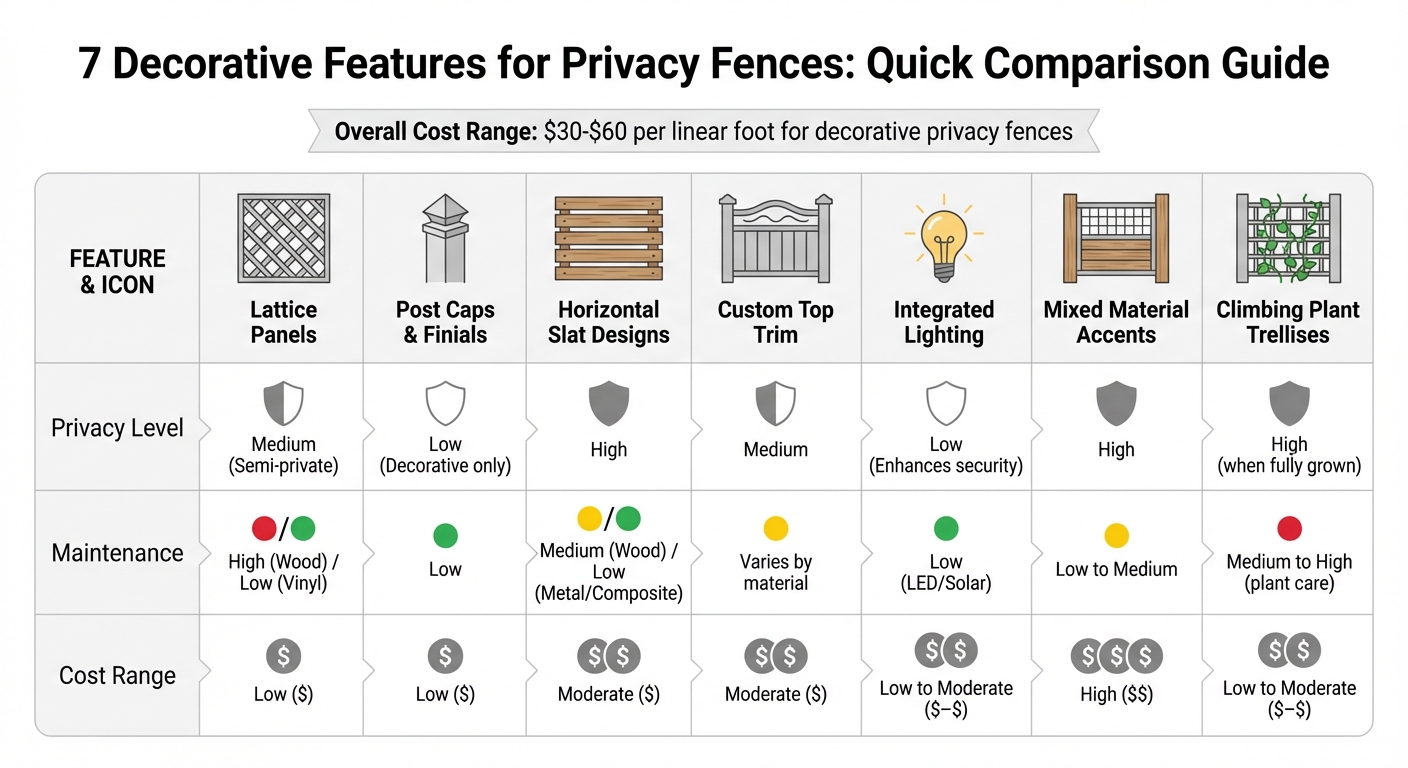
Privacy Fence Decorative Features Comparison: Privacy, Maintenance & Cost
7 Backyard Fence Ideas for Privacy & Style | DIY, Modern Designs & Low-Maintenance Tips 2025
sbb-itb-d1d0a96
1. Lattice Panels
Lattice panels bring a touch of elegance while maintaining light and airflow. Their crisscross design allows sunlight and air to pass through, yet they still block direct views, making them an excellent choice for homeowners who want privacy without the confined feeling of a solid fence .
The level of privacy depends on the grid density. A tighter 3/4-inch grid provides almost complete privacy, while a wider 2-inch gap serves more as a decorative feature. Many homeowners opt to use lattice panels as toppers, typically 12–24 inches high, on top of a solid 4- to 6-foot privacy fence. This not only adds height but also enhances the overall look. For a lush, natural vibe, consider pairing the lattice with climbing plants like ivy or jasmine. Alternatively, a solid-back membrane can be installed to completely block views .
Privacy Level (Semi)
Lattice panels generally fall into the semi-privacy category, as their open weave blocks most views while still letting natural light through . For those who prefer full privacy, options like "privacy lattice" or "triple lattice" use offset slats to eliminate gaps entirely.
Maintenance Needs (Low to High)
Maintenance requirements vary depending on the material. Wood lattice panels need repainting or restaining every 2–7 years to protect against rot and UV damage . On the other hand, vinyl or cellular-PVC lattice panels are much easier to maintain, requiring just an occasional wash. Metal options, such as aluminum or wrought iron, are even more durable and require virtually no upkeep.
Cost Range (Low to High)
Costs for lattice panels depend on the material. Pressure-treated pine or cedar is the most budget-friendly option . Vinyl or PVC panels are mid-range in price but offer great long-term value due to their low maintenance . Higher-end choices like metal, composite, or bamboo lattice – especially with custom designs like "piano key" patterns – are the most expensive . Before installing a lattice topper, check local building codes and HOA rules, as many areas limit fence heights to 6–8 feet.
For homeowners in Plano, TX, looking for stylish and durable lattice panel installations, Tend Fencing offers expert craftsmanship and custom solutions tailored to your needs.
2. Post Caps and Finials
Post caps and finials are a simple way to upgrade a plain privacy fence. They not only boost the fence’s appearance but also protect the posts from moisture damage, which can be a common issue. For wooden posts, caps help prevent water absorption through the end-grain, reducing the risk of rot and swelling. On vinyl or metal posts, caps block water from pooling, which helps avoid rust or damage caused by freeze-thaw cycles.
You’ll find plenty of style options to suit your taste, from basic flat or pyramid caps that efficiently shed water to more decorative finials that add a touch of elegance and complement your home’s overall look.
Some caps even come with built-in solar or low-voltage LED lighting, which can provide soft, ambient light for pathways or enhance security. These electric caps are a practical choice, lasting 3 to 7 years if installed properly and shielded from harsh winter conditions. Like lattice panels, post caps combine function with style to elevate the overall design of your fence.
Maintenance Needs (Low to High)
Keeping post caps in good shape is just as important as their aesthetic appeal. Maintenance requirements vary widely depending on the material.
- Wood caps need re-staining or painting every 3–5 years to protect them from weather damage.
- Vinyl and powder-coated aluminum caps are much easier to care for, requiring just an occasional cleaning.
- Composite caps offer the ultimate convenience, lasting over 25 years with almost no maintenance, making them a great "set it and forget it" option.
Cost Range (Low to High)
The cost of post caps can fit almost any budget. Affordable options include plastic, vinyl, and pressure-treated wood. Mid-tier choices include aluminum or composite materials, while premium designs, such as copper caps with integrated lighting, sit at the higher end of the price range.
For the best impact, consider using decorative finials or illuminated caps at key spots like gate entries or fence corners. This approach adds both charm and functionality to your fence.
3. Horizontal Slat Designs
Horizontal slat fencing brings a sleek, modern look to any property, offering both style and functionality. Unlike traditional vertical fences, horizontal slats create the illusion of a larger yard by extending sightlines, making them a great choice for compact spaces.
One of the key benefits of this design is the flexibility it offers in terms of privacy. You can adjust the spacing between slats to suit your needs. For maximum privacy, options like tongue-and-groove or board-on-board layouts work well. If you prefer semi-privacy, wider gaps between slats allow for better airflow and light while maintaining a sense of enclosure. For areas prone to strong winds, shadowbox or louvered designs are ideal because they let air pass through while still offering effective screening.
That said, horizontal fences come with a few downsides. They often cost more than vertical designs because they require higher-quality materials to prevent sagging over longer spans. As lifestyle writer Tessa Cooper points out:
Horizontal fences tend to cost more than vertical fences, because they require higher quality wood. Cheaper wood can start to sag on a horizontal fence.
Additionally, the horizontal layout can create footholds, which might reduce security.
Privacy Level (Full/Semi)
For full privacy, tongue-and-groove or board-on-board designs are excellent choices as they account for natural wood shrinkage while maintaining complete coverage. If semi-privacy is more your style, wider slat spacing creates a "floating" effect that allows natural light and airflow while still defining your property boundaries.
Maintenance Needs (Low to High)
The maintenance required for horizontal slat fences depends heavily on the materials used. Natural woods like cedar or redwood need regular care – staining or sealing every 3–5 years – to protect against rot, warping, and UV damage, especially since horizontal installations are more exposed to these risks. On the other hand, vinyl and composite materials are much easier to maintain, needing only occasional cleaning with a hose or mild detergent. These materials keep the modern look intact with minimal effort.
Cost Range (Low to High)
The cost of horizontal slat fencing depends on the materials and complexity of the design. Decorative privacy fences typically range from $30 to $60 per linear foot, including both materials and installation. Horizontal designs often fall on the higher end of this spectrum due to their need for premium materials and more labor-intensive construction. Composite materials can cost about 40% more than wood but significantly reduce maintenance expenses over time. While the upfront investment may be higher, the clean, contemporary style and customization options make horizontal slat fencing a favorite for homeowners looking to add a modern touch to their outdoor space.
4. Custom Top Trim
Custom top trim adds a touch of personality and sophistication to your fence, complementing features like lattice panels and decorative post caps. Positioned at the very top, this element not only enhances the design but also increases the fence’s height by 1–2 feet, offering a blend of style and functionality. Options range from simple horizontal caps, which give a clean finish while protecting posts from water damage, to intricate ornamental metal panels featuring geometric or nature-inspired patterns.
For a modern aesthetic, materials such as corrugated metal or wood-poly composite work well. If you prefer a softer, more traditional look, lattice or decorative cutouts can filter light while maintaining privacy. As All Around Fence puts it:
"Wood fences are the easiest to customize… you can pick out existing architectural elements and bring those to life with your fence top."
Before diving into customization, check local regulations regarding fence height – usually capped at 6–8 feet – and ensure your posts can handle the added weight, especially if you’re using heavier materials like composite or metal. These considerations help ensure your top trim integrates seamlessly with your fence’s design.
Privacy Level (Full/Semi)
Your choice of top trim impacts how much privacy your fence offers. Solid board extensions or corrugated metal panels provide full privacy, completely blocking sightlines. On the other hand, lattice, spindle accents, or laser-cut panels allow light and airflow while maintaining a semi-private feel. Consider whether you want total seclusion or a more open connection with your surroundings.
Maintenance Needs (Low to High)
Different materials come with varying maintenance requirements. Vinyl, PVC, and powder-coated metal toppers are low maintenance, needing just a quick rinse now and then. Composite materials fall into the medium maintenance category, while wood trim requires high maintenance, including regular staining or sealing to prevent damage like warping or rot. Natural materials such as reed are less durable, typically lasting only 3 to 5 years.
Cost Range (Low to High)
Top trim options come in a wide price range to suit different budgets. Wood lattice panels are the most affordable, priced at about $15 to $30 per 8-foot section. Vinyl lattice toppers cost around $70 for the same length or $260 for a 24-foot kit. Moving up the scale, wood-poly composite panels cost roughly $146 for 12 linear feet, while laser-cut metal designs sit at the higher end of the spectrum. For a 300-foot fence, material costs can range from $560 for basic wood lattice to over $2,600 for vinyl.
Custom top trim is a perfect example of how a simple addition can turn a practical fence into a stylish feature that balances privacy, security, and visual appeal. For expert guidance and professional installation, check out Tend Fencing. Based in Plano, TX, their team specializes in creating fences that meet local standards while enhancing both form and function with quality craftsmanship.
5. Integrated Lighting
Integrated lighting transforms your privacy fence into a functional feature that works beautifully day and night. Not only does it add a touch of elegance, but it also improves safety by reducing dark areas around your property. In fact, a study involving 80 New York City public housing developments found a 39% drop in nighttime crime after outdoor lighting was improved. As Fortitude Fencing puts it:
"Illuminating your fence is not just for looks; it’s a good decision that can literally add up to making a huge difference in the ways safety and security are increased."
This combination of safety and style makes integrated lighting a smart choice.
There are plenty of options to suit your needs. Solar post caps, recessed LED panels, and string lights can create a welcoming ambiance while enhancing security. Uplighting can showcase architectural details or nearby landscaping. For even more control, smart lighting systems let you adjust brightness, set schedules, or even change colors right from your phone – perfect for setting the mood on different occasions.
Focus lighting on key areas like pathways, seating areas, and entry points. Warm yellow tones create a cozy atmosphere, while cool white offers a sleek, modern look. Adding motion sensors at gates or entryways can provide an extra layer of security.
Maintenance Needs (Low to High)
- Low-maintenance: Solar and LED lights require little upkeep beyond occasional cleaning.
- Moderate upkeep: Low-voltage electric systems need periodic checks on wiring and transformers.
- Higher maintenance: Battery-operated lights require frequent battery replacements.
Cost Range (Low to High)
- Affordable options: Solar-powered lights and string lights are budget-friendly and energy-efficient.
- Mid-range: Low-voltage electric kits and decorative post caps offer better reliability but involve some wiring and a transformer.
- Premium: Professional recessed lighting and smart home integrations provide top-tier functionality and aesthetics but come with a higher price tag.
6. Mixed Material Accents
Mixed material accents are a great way to enhance both the look and functionality of your fence. By combining different materials, you can create a fence that’s not only visually appealing but also practical. One popular choice is blending natural wood with metal frames. For example, warm cedar planks paired with matte black steel or powder-coated aluminum bring a modern, rustic vibe to your yard. Another striking option is using corrugated steel panels framed with cedar, which offers full privacy while making a bold architectural statement. This approach merges style and utility, giving you a fence that’s as versatile as it is attractive.
The real advantage of mixed materials lies in their adaptability. You can go for solid panels – like corrugated metal or board-on-board wood – for complete privacy. Alternatively, add elements like hog wire mesh, laser-cut inserts, or decorative screens to allow airflow while maintaining semi-privacy. As FenceTrac explains:
"By skillfully combining materials, property owners can achieve the perfect balance between visual appeal and practical utility." – FenceTrac
For an extra touch of creativity, try color blocking. Alternating panel colors or painting frames in dark neutrals can give your fence a sleek, contemporary edge while helping metal accents blend seamlessly into the design.
Privacy Level (Full/Semi)
Mixed material fences offer flexibility when it comes to privacy. Solid panels deliver full seclusion, while features like decorative inserts or slats can create a semi-private design that allows for ventilation and a touch of visibility.
Maintenance Needs (Medium)
Metal and vinyl components are relatively low-maintenance, but wood sections will need annual sealing to protect against moisture and warping. To ensure durability, use corrosion-resistant fasteners where materials meet and avoid combining untreated wood with uncoated metals, as this can lead to staining and structural problems.
Cost Range (Medium to High)
Decorative mixed material fences typically cost between $30 and $60 per linear foot, including both materials and labor. To keep expenses in check, consider using premium materials like ornamental metal for focal points (e.g., gates) and more budget-friendly options like wood or vinyl for the main sections.
7. Climbing Plant Trellises
Climbing plant trellises offer a dynamic way to create a living privacy screen that changes with the seasons. By attaching a trellis to your fence – whether as a topper or a full panel – you can add an extra 12 to 24 inches of height without the bulk of solid extensions. Once vines take hold, these panels transform into lush green walls that block views while still allowing light and air to pass through. This combination of function and natural beauty blends seamlessly with other decorative elements.
As East Coast Fencing puts it:
"Trellis is the design world’s Swiss Army knife for British gardens in 2026. It brings privacy without heaviness, lets sunlight and air pass, frames views, supports climbers, and finishes fence runs with a crafted, architectural line."
Choosing the right plants for your climate zone is essential. In colder areas (Zones 3–5), Virginia Creeper is a standout, growing 30 to 50 feet in a season and showcasing vibrant red leaves in fall. For temperate zones (5–9), American Wisteria and Trumpet Honeysuckle not only provide dense coverage but also attract hummingbirds and butterflies with their fragrant flowers. In warmer zones (7–11), evergreen options like Carolina Jessamine offer year-round coverage, though it’s important to note they are toxic to pets and children. If speed is your priority, Black-Eyed Susan Vine can climb up to 8 feet in just a month.
Privacy Level (Semi to Full)
Trellises offer customizable privacy options. Without plants, they provide semi-privacy, particularly at seated eye level. However, as vines mature and fill in, they can offer full privacy similar to solid fencing. For immediate screening, consider "Privacy Square" trellis designs that feature smaller openings . Evergreen climbers like Boston Ivy or Star Jasmine ensure consistent coverage, even during winter.
Maintenance Needs (Medium)
The trellis itself – especially if made from durable materials like metal or vinyl – requires minimal upkeep. However, the plants demand regular attention. Low-maintenance climbers like Virginia Creeper and Honeysuckle only need occasional trimming to keep them in check. On the other hand, plants like Wisteria and Climbing Roses require more intensive care, including seasonal pruning, feeding, and sturdy support systems to manage their growth. Inspecting your trellis annually for rust or loose fittings can prevent small issues from becoming bigger problems.
Cost Range (Low to Medium)
Trellis panels are an affordable way to upgrade your fence. Small toppers (around 6 feet by 1 foot) start at about $18, while larger full-height panels (approximately 6 feet by 6 feet) can cost up to $60. Don’t forget to budget for plants and fertilizers, as these will add to the overall expense.
For professional installation and custom designs, check out Tend Fencing in Plano, TX. They can help bring your vision of climbing plant trellises to life.
Feature Comparison Table
The table below breaks down privacy, upkeep, and cost for various decorative features.
| Decorative Feature | Privacy Level | Maintenance Requirements | Cost Range |
|---|---|---|---|
| Lattice Panels | Medium (Semi-private) | High (Wood) / Low (Vinyl) | Low |
| Post Caps & Finials | Low (Decorative only) | Low | Low |
| Horizontal Slat Designs | High | Medium (Wood) / Low (Metal/Composite) | Moderate |
| Custom Top Trim | Medium | Varies by material | Moderate |
| Integrated Lighting | Low (Enhances security) | Low (LED/Solar) | Low to Moderate |
| Mixed Material Accents | High | Low to Medium | High |
| Climbing Plant Trellises | High (when fully grown) | Medium to High (plant care) | Low to Moderate |
This comparison highlights how these features address different needs in privacy, maintenance, and budget.
Privacy levels range from purely decorative to full coverage. For example, horizontal slat designs and mixed material accents offer the best privacy, while post caps and integrated lighting focus more on aesthetics and added security.
Maintenance varies significantly. Vinyl and metal options require minimal upkeep, while wood and climbing plant trellises demand more attention, such as seasonal treatments or plant care. Costs also span a broad spectrum, from budget-friendly options like lattice panels and post caps to higher-end choices such as mixed material accents, which can cost $30–$40 per linear foot.
Conclusion
Privacy fences don’t have to be all about function – they can bring style and personality to your outdoor space too. The seven decorative features we’ve covered, from lattice panels to climbing plant trellises, show how you can combine security with aesthetic appeal. For example, post caps not only protect against water damage but also add a polished look. Horizontal slats offer a sleek, modern vibe while maintaining privacy, and integrated lighting turns your fence into a nighttime feature that adds both security and atmosphere.
Each decorative feature offers something different. If you’re working within a budget, horizontal slats or lattice panels provide excellent privacy without breaking the bank. For a more upscale look, combining wood with black steel creates a striking, contemporary design. Even small upgrades like custom stains or decorative finials can turn your fence into an eye-catching element instead of just a functional barrier.
Professional installation is key to ensuring your fence performs well over time. Proper foundation work and spacing not only improve durability but also maintain airflow. Custom designs allow your fence to seamlessly match your home’s architecture, creating a unified and inviting outdoor space.
For expert guidance, Tend Fencing offers custom fencing solutions tailored to your privacy and design needs. Their team specializes in incorporating decorative features that balance security with style. Plus, Tend Fencing takes an eco-conscious approach by planting one tree for every fence they install, helping to restore local habitats and reduce the environmental impact of construction.
Whether it’s subtle charm with lattice panels or dramatic flair with LED lighting, these enhancements can transform a simple fence into a standout feature that elevates your entire yard.
FAQs
Which decorative fence upgrade provides the most privacy for the money?
Wooden fences, such as those made from cedar or reclaimed wood, are often a budget-friendly choice for privacy. They’re not only affordable but also easy to personalize with a coat of paint or by adding plants for a decorative touch. Vinyl fences, on the other hand, provide a durable, low-maintenance alternative that can be a smart investment over time. If you’re looking for an even cheaper option, DIY pallet fences or lattice panels are worth considering – they strike a balance between cost savings and privacy.
Do I need permits or HOA approval to add lattice toppers or increase fence height?
In most situations, you won’t need a permit or HOA approval to add lattice toppers or raise your fence height. That said, local regulations or HOA rules might set height restrictions or require approval beforehand. To avoid any issues, it’s a good idea to check the specific laws and HOA guidelines in your area before making any changes.
How do I choose low-maintenance materials for a decorative privacy fence?
For a decorative privacy fence that doesn’t require much upkeep, think about using vinyl panels, composite materials, or metal elements. Vinyl is almost effortless to maintain and usually comes with warranties for added peace of mind. Composite materials are tough, environmentally friendly, and built to resist fading or warping over time. Metal choices like aluminum or steel bring a sleek, modern look, combining strength with style while keeping maintenance to a minimum.