
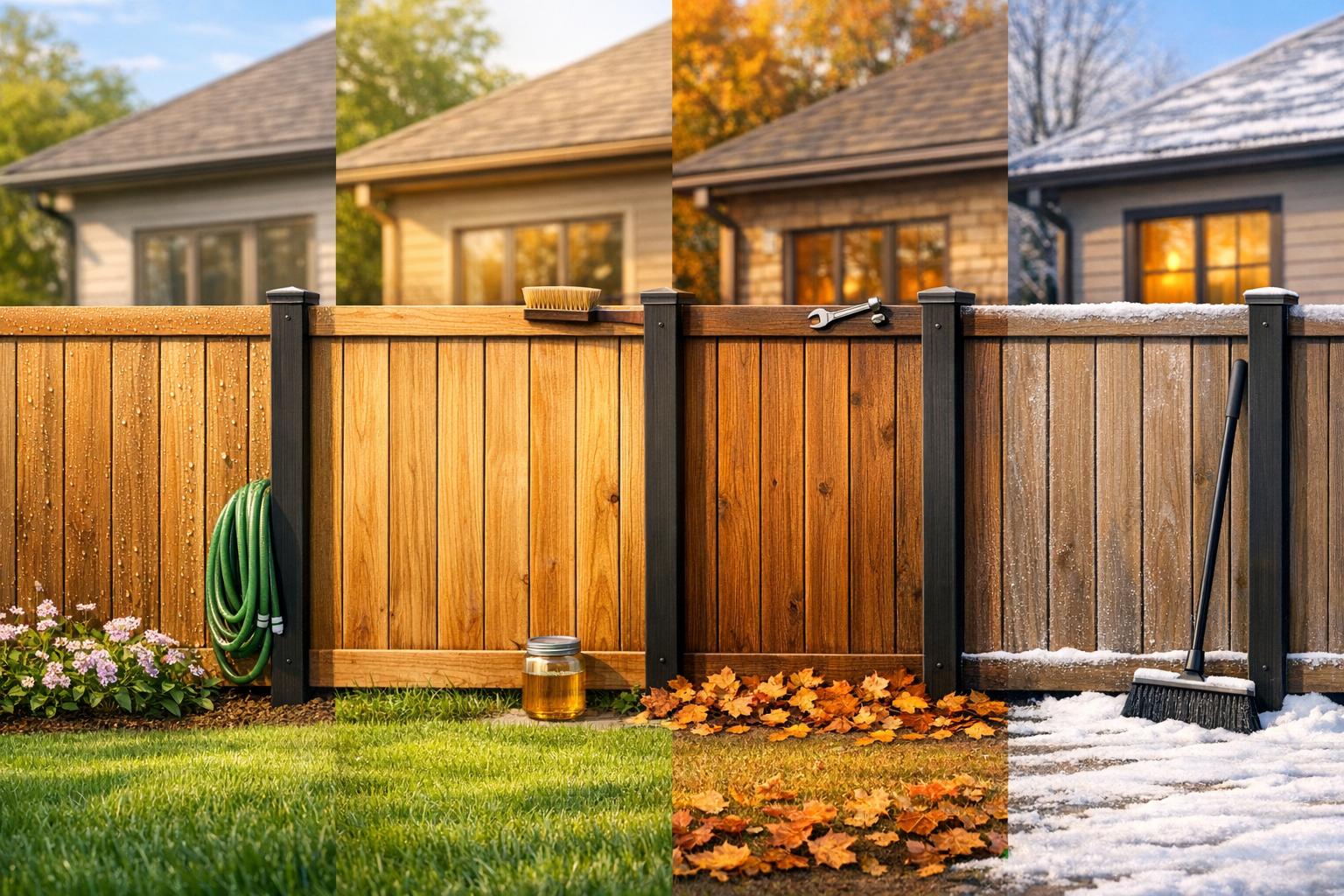
Taking care of your fence throughout the year is crucial to maintaining its durability, appearance, and function. Seasonal maintenance helps prevent small problems from turning into costly repairs or replacements. Here’s a quick breakdown:
- Spring: Inspect for winter damage, clean grime, and fix minor issues like rust or loose screws.
- Summer: Protect against UV damage with sealants, check for pests, and trim plants to avoid moisture buildup.
- Fall: Clear debris, tighten hardware, and apply protective coatings to prepare for winter.
- Winter: Remove snow gently, avoid harmful de-icers, and inspect for storm damage.
Each fence material – wood, metal, vinyl, or chain-link – has specific care needs. Regular inspections, cleaning, and timely repairs can significantly extend its lifespan. A monthly 10–15 minute check and occasional deeper maintenance can save you from expensive fixes later. Many long-term issues are also covered under a comprehensive fence warranty. Taking these steps ensures your fence stays strong and looks great year-round.
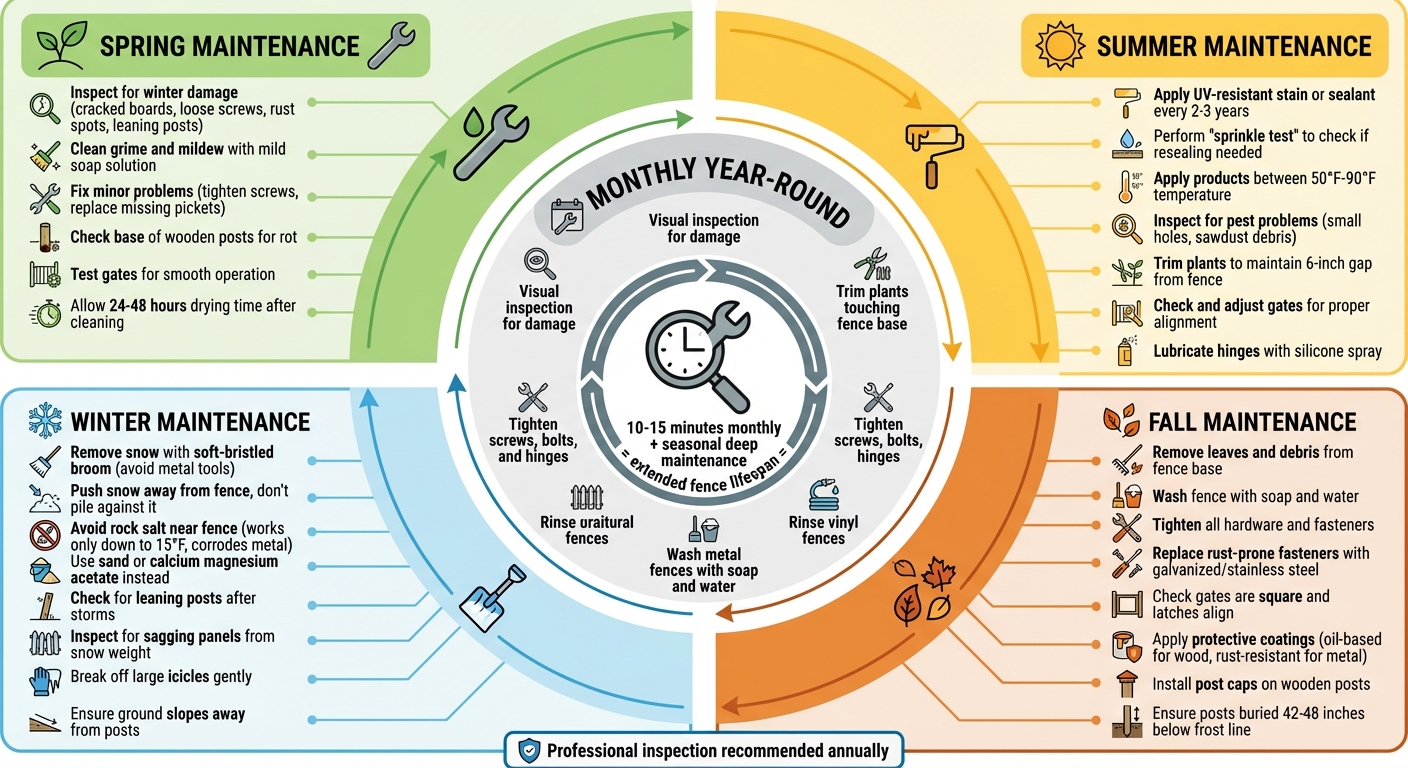
Year-Round Fence Maintenance Schedule by Season
How to Prep & Protect Your Fence From the Heat
sbb-itb-d1d0a96
Spring Maintenance: Inspection, Cleaning, and Repairs
Winter can take a toll on your fence, leaving behind damage that needs attention. Spring is the perfect time to walk along your fence line and check for problems like cracked boards, loose screws, rust spots, or leaning posts. Pay close attention to the base of wooden posts, as moisture can cause rot, and examine metal sections for any worn protective coatings. Vinyl fences might also show cracks or bends from heavy snow or freezing temperatures.
Check for Winter Damage
Start by giving each post a wiggle to see if it’s stable. Frost heave can shift posts, making them unstable. Look over all hardware, such as hinges and gate latches, for rust or looseness – road salt is often the culprit. Test each gate by opening and closing it to ensure the hinges are smooth and the frames haven’t sagged. Before inspecting, clear away fallen leaves and debris to uncover hidden rot and prevent moisture from lingering against the wood.
Clean Your Fence
Winter grime, dirt, and mildew can build up, so give your fence a good cleaning. Use a mild soap solution and a soft brush for wood, a non-abrasive sponge for vinyl, and a soft brush with warm water for metal. Work from the bottom up, let the cleaner sit for about 20 minutes, then rinse thoroughly. Allow the fence to dry for 24–48 hours before moving on to repairs.
Fix Minor Problems
Address small issues before they get worse. Tighten loose screws and nails, and replace any missing pickets or corroded fasteners. For rust spots on metal fences, sand the area with fine sandpaper, apply a rust-resistant primer, and finish with a touch-up of paint. If a post feels loose, you can stabilize it with extra soil or gravel. However, if it’s significantly unstable, resetting it in concrete may be necessary. For sagging gates, check the hinges and tighten or replace them as needed.
"Spotting these issues early on could mean a simple fence repair vs. a complete fence replacement." – Amerifence
Summer Maintenance: UV Protection and Pest Control
The scorching summer sun can be tough on your fence. Ultraviolet rays break down paint, plastics, and wood fibers, leading to fading, graying, and even brittleness. On top of that, high temperatures can cause materials like vinyl and aluminum to expand, sometimes resulting in warping or loosened joints. Wood isn’t spared either – dry heat can make it shrink, crack, or split. And let’s not forget: summer is prime time for pests like termites and carpenter ants, which thrive in hot, humid conditions.
Apply Stains or Sealants
Protecting wood fences from the sun is essential. Applying a UV-resistant stain or sealant every 2–3 years helps shield the wood and prolong its lifespan. Wondering if it’s time for a new coat? Try the "sprinkle test" – splash some water on the wood. If it soaks in instead of beading up, it’s time to reapply. Before starting, clean the fence thoroughly and let it dry for 48–72 hours. For the best results, apply the stain or sealant when the temperature is between 50°F and 90°F. Avoid working in direct sunlight, as this can cause the product to dry too quickly, preventing proper absorption. Early mornings or evenings are ideal for this task.
"The ‘sprinkle test’ is a good indicator: if water absorbs into the wood instead of beading up, it’s time to apply a stain or sealant." – Globus Gates
Look for Pest Problems
Summer also means staying vigilant against pests. Inspect your fence for small holes or sawdust-like debris, which could indicate boring insects. Pay close attention to posts and boards near the ground, checking for soft spots that might signal termite damage. Overgrown vegetation can create a pathway for pests and trap moisture against the wood, so trim plants to maintain at least a six-inch gap between them and the fence. Redirect lawn sprinklers to keep water from pooling around the base, which can attract insects. If you spot mud tubes or extensive damage, contact a pest control expert immediately. Once the pests are addressed, make sure the fence is clear of obstructions and that gates open and close smoothly.
Trim Plants and Adjust Gates
Keeping plants, vines, and grass away from your fence not only improves airflow but also reduces moisture buildup, which can lead to long-term damage. While trimming foliage, take a moment to check your gates. Open and close them a few times to ensure they’re functioning properly. If you notice squeaking, apply silicone spray to the hinges. For gates that drag or seem misaligned, tighten the hinge screws or adjust the frame before the problem worsens. A little preventative care now can save you from bigger headaches later.
Fall Maintenance: Getting Ready for Winter
Fall offers the perfect window to prepare your fence for the challenges of winter. Cooler temperatures and dry weather make it easier to handle maintenance tasks that can save you from expensive repairs later. Freeze-thaw cycles during winter can turn small issues into big headaches, so taking action now is a smart move.
Remove Leaves and Debris
Start by clearing away leaves, dirt, and debris from your fence, especially around the base. Wet leaves can quickly lead to mold, rot, or rust, and once they settle, they can be a pain to remove. Use a sturdy tarp to rake and haul away leaves from the fence line. Avoid piling leaves or mulch against the fence, as constant moisture can damage wood and corrode metal. Trim back any vines or overhanging branches to reduce moisture buildup during winter .
After clearing the area, wash the fence with soap and water, and let it dry thoroughly before inspecting for loose boards, rusty spots, or leaning posts that may need fixing. This is also the time to check all fasteners and posts to ensure your fence is ready to withstand winter conditions.
Tighten Hardware and Strengthen Stability
Inspect each post for wobbling and secure any loose fasteners. If you hear rattling in the wind, it’s a sign that panels or fixings might need attention. Replace rust-prone fasteners with galvanized or stainless steel ones to handle the stress of freeze-thaw cycles. Rachel Halladay from BTL Timber explains:
"Timber expands and contracts with the weather, and rusty nails can weaken the overall structure of the fence".
Pay close attention to gates. Make sure they’re square and that the latch aligns properly with the striker. If a gate is sagging, adjust the hinge pins and tighten all screws to keep it aligned through winter. Chad Swartzell, Owner of Good Neighbor Fencing, advises:
"A well-aligned gate is less likely to warp or pull at the posts during winter heaving".
In regions with harsh winters, ensure fence posts are buried at least 42–48 inches below the frost line to prevent frost heave.
Add Protective Coatings Before Cold Weather
Once your fence is clean and stable, apply protective coatings to shield it from winter damage. For wood fences, use oil-based treatments for deep protection or water-based sealants if moisture levels are higher. Make sure to clean the fence with a mild detergent or low-pressure washer before applying any treatment to ensure it adheres properly.
For metal fences, apply rust-resistant primers and paints. Use a long-nap roller for chain link fences, and for vinyl fences, apply sprays like 303 Aerospace Protectant to guard against winter wear. To further protect wooden posts, install post caps to keep moisture out. Lastly, avoid using salt near fences for traction, as it can corrode metal and weaken wood fibers.
Winter Maintenance: Managing Snow and Ice
Winter weather can be tough on fences, with heavy snow, ice, and fluctuating temperatures taking their toll. Snow can warp wood panels and cause vinyl to sag, while ice buildup stresses posts and hardware. To maintain your residential fence, clear snow promptly and inspect it after storms.
Remove Snow Safely
When clearing snow from your fence, stick to a soft-bristled broom. Metal shovels or ice scrapers can damage finishes, crack vinyl, or splinter wood. Push snow away from the fence instead of piling it against panels or posts, as this can lead to moisture buildup and unnecessary weight. For ice, tap lightly to dislodge it – avoid prying or scraping to prevent damage.
If you hire a snow plowing service, consider placing temporary markers a few feet from your commercial fence to prevent accidental strikes. Before winter storms, trim back overhanging branches that might snap under the weight of ice and snow. After heavy snowfall, check gate hinges and latches, and lubricate them to ensure smooth operation and to prevent rust.
Once the snow is cleared, it’s time to think about safe ways to manage ice.
Skip Harmful Chemicals
Rock salt, a common de-icing solution, can cause wood to swell, crack, and rot, and it speeds up rust on metal parts. Justin Mansberger, an Extension Educator at Penn State University, notes that rock salt "contains cyanide as an anti-caking agent that can be toxic to underwater life and is the most harmful for plants due to its high chloride levels". Plus, rock salt doesn’t work well in temperatures below 15°F.
Here’s a quick guide to de-icing materials and their effects on fences:
| De-icing Material | Effective Temperature | Impact on Fences |
|---|---|---|
| Rock Salt (Sodium Chloride) | Down to 15°F | Corrodes metal, damages wood, toxic to plants and pets |
| Calcium Chloride | Down to -25°F | Gentler on plants but still contains chloride |
| Calcium Magnesium Acetate (CMA) | Varies | Non-corrosive and safer for materials |
| Sand / Bird Seed | N/A | Provides traction without chemical damage |
For areas near your fence, sand works well for traction and won’t harm the materials. If you need to use a de-icer, apply it sparingly to high-traffic zones away from the fence and sweep up any leftover material after the ice melts.
Once you’ve handled snow and ice, it’s essential to assess how your fence has weathered the winter conditions.
Check for Winter Damage
After major storms, inspect your fence for signs of damage. Look for leaning posts, which can result from freeze-thaw cycles shifting the soil and displacing footings. Check for sagging panels caused by snow weight and ensure all fasteners are secure. Freeze-thaw cycles can also widen cracks, further weakening the structure.
Moisture issues should be addressed right away to avoid long-term damage. Seal cracks or gaps to stop water from seeping in before the next freeze. If large icicles form on rails or top caps, gently break them off to reduce strain on the panels. Finally, check that the ground around fence posts slopes away from the structure to prevent water from pooling and freezing, which can push posts out of place.
Care Tips by Fence Type
Taking care of your fence requires attention to its specific material, as each type has unique needs. While seasonal maintenance is essential for all fences, tailored care ensures your investment stays in top shape for years to come.
Wood Fences: Staining and Preventing Rot
Wood fences, especially those made from treated cedar, can last up to 40 years with proper care. One of the most effective ways to extend their life is by staining and sealing them every 2–3 years.
"A good oil-based stain/sealer keeps moisture out and protects the wood from UV rays… This can add 10 to 15 years to the life of your fence." – Mark Macy, Owner, M&C Fence DFW
Oil-based stains are preferred because they penetrate deeper into the wood, offering better defense against moisture and UV rays. Cleaning your wood fence every 12–18 months with a 1:10 bleach-to-water solution helps remove mold and mildew. Graying wood is often a sign of damage from UV exposure or mold, so addressing it early is crucial.
For localized rot, cut out the damaged section and treat the surrounding wood with borate or wood hardener. Keep the base of the fence clear by trimming grass and shrubs, as this prevents moisture buildup. Adjust sprinklers to avoid hitting the fence directly, as water exposure can wear down the protective stain.
Ornamental Iron Fences: Preventing Rust
Ornamental iron fences are durable but vulnerable to rust if not cared for properly. Wash the fence every six months with warm, soapy water and a soft cloth or sponge. Use a fine brush for intricate details where dirt and moisture tend to collect.
Inspect the fence annually for rust, scratches, or loose hardware. When you spot rust, sand it down with a wire brush or fine sandpaper, then apply a rust-inhibiting primer or cold galvanizing compound. Finish with a matching rust-resistant enamel spray for protection.
To keep the fence looking its best, apply a coat of car wax or furniture wax after cleaning. This creates a water-repellent barrier and restores its shine. Keep plants at least one to two feet away, as vines and shrubs can trap moisture and scratch the metal, leading to rust. In winter, rinse the fence after snowstorms to remove road salt and deicing chemicals, which accelerate corrosion. Avoid using bleach, steel wool, or abrasive cleaners – they strip the protective finish and encourage oxidation.
Chainlink Fences: Tightening Wire and Cleaning
Chainlink fences are relatively low-maintenance but still require attention to prevent rust and sagging. Clean the fence annually to remove debris, and use a water-and-vinegar solution to tackle mold or mildew in humid areas.
Rust is a common issue with chainlink fences. Address surface rust quickly by scrubbing with a wire brush and applying rust-resistant paint. Trim any grass or vines near the base to improve airflow and reduce moisture buildup.
Regularly check and tighten bolts on tension bands and gate hinges using a wrench. Loose or missing tie wires – used to secure the mesh to the rails – can make the fence unstable. Re-twist loose ties or replace them with new galvanized wires, spacing them every 12–18 inches for stability. If the mesh sags, use a fence stretcher or "come-along" tool to pull it tight, then secure it with a tension bar and bands at the terminal post.
Automatic Gates: Lubrication and Alignment
Automatic gates need consistent maintenance to function smoothly and avoid costly repairs. Lubricate moving parts like hinges, rollers, and tracks every three to six months using silicone-based spray or white lithium grease. Avoid oil-based lubricants, as they attract dirt and debris.
Check the gate’s alignment every few months by observing its movement through a full cycle. Misalignment can lead to uneven wear on motors and tracks, so adjust brackets or hinges as needed to keep the gate level. Inspect safety sensors monthly to ensure they are clean and aligned – wipe the lenses with a soft cloth and test their functionality.
The auto-reverse feature is a critical safety component. Test it regularly by placing an object in the gate’s path during closing. If the gate doesn’t reverse upon contact, adjust the force settings based on the manufacturer’s instructions or consult a professional. Keep the gate track clear of leaves, rocks, and other debris to prevent obstructions and damage to the wheels.
Year-Round Fence Care Checklist
Here’s a handy guide to keep your fence in top shape all year. Regular maintenance helps prevent small issues from turning into costly repairs.
Monthly tasks are all about quick visual inspections. Walk along your fence line to spot any damage like loose boards, rust, or cracks. Trim back any plants or grass touching the fence base. Tighten screws, bolts, and hinges as needed. For vinyl fences, rinse them monthly to clear off dust. Metal fences benefit from a wash with soap and water to avoid grime buildup.
Seasonal maintenance adapts to the changing weather. In spring, focus on deep cleaning and fixing any winter damage. Summer is the time for applying UV-protective coatings and keeping vegetation trimmed. During fall, clear away debris and lubricate hinges. In winter, gently remove snow and avoid using corrosive materials near the fence.
Annual tasks go deeper. For wood fences, a thorough cleaning and re-staining or sealing every one to three years is essential. Test the stability of wooden posts with a screwdriver – if it penetrates easily, rot may be present and repairs are needed. Look out for signs of pest damage, like small holes or sawdust, which could indicate termites or carpenter ants.
"Early detection of problems during your initial preparation and inspection of the fence before each season can save you considerable time and cost in the long run." – Acosta Fence
This checklist serves as your guide to keeping your fence strong and looking great throughout the year.
Conclusion and Professional Help from Tend Fencing

Taking care of your fence is essential for maintaining its appearance and durability, protecting your property, and ensuring it lasts for years to come. While many seasonal maintenance tasks can be handled on your own, there are times when professional expertise makes all the difference.
Tend Fencing brings over 15 years of construction experience to Plano, TX, and nearby areas, offering services that range from full fence installations to emergency repairs. They also handle specialized tasks like welding for metal gates and hardware adjustments. Their work spans a variety of projects, including storm damage repairs and custom designs, such as combining Chicago brick columns with ornamental steel and cedar. This versatility and quick response time, even under harsh conditions, highlight their commitment to quality service [51, 53].
No matter the season, Tend Fencing ensures every project meets the highest standards. For example, in early 2024, during an active ice storm, they provided next-day service to repair a broken metal gate lock, enhancing security for a client’s new pet. Their 5.0-star rating and customer reviews speak volumes about their responsiveness, professionalism, and the owner’s direct involvement in the work.
Tend Fencing also prioritizes sustainability by partnering with One Tree Planted to plant a tree for every fence they build. This initiative not only supports the environment but also complements their installation practices, which are designed to extend the lifespan of your fence and preserve your property’s value [51, 53].
They offer free consultations and customized quotes to fit your specific needs. Their process is designed to minimize disruptions while delivering lasting results. With Tend Fencing, fence maintenance becomes a seamless part of protecting your property throughout the year. Whether it’s routine care or a complex project, they’ve got you covered.
FAQs
How can I tell if my fence post is rotting?
Inspect for signs of damage like softened or crumbling wood, dark discoloration, deep cracks, or sagging areas. Pay special attention to the base – if the post feels loose or wobbles when pushed, it could mean rot or decay below ground. Keeping an eye out with regular visual checks can help spot issues early and save on expensive fixes.
What’s the safest de-icer to use near a fence?
When choosing a de-icer to use near your fence, opt for pet-safe and non-toxic products. These de-icers are designed to be gentle on pets, landscaping, and your fence materials. Plus, they help prevent staining and damage, keeping your outdoor spaces in good condition while reducing any potential harm to the environment.
When should I call Tend Fencing instead of fixing it myself?
If your fence is showing signs of serious damage, it’s time to call Tend Fencing for professional assistance. Issues like leaning or tilting posts, large cracks, rot, broken panels, severe warping, structural instability, or extensive damage from weather or pests often require expert attention. Professionals ensure the repair or replacement process is handled safely and efficiently, keeping your fence sturdy and visually appealing.