
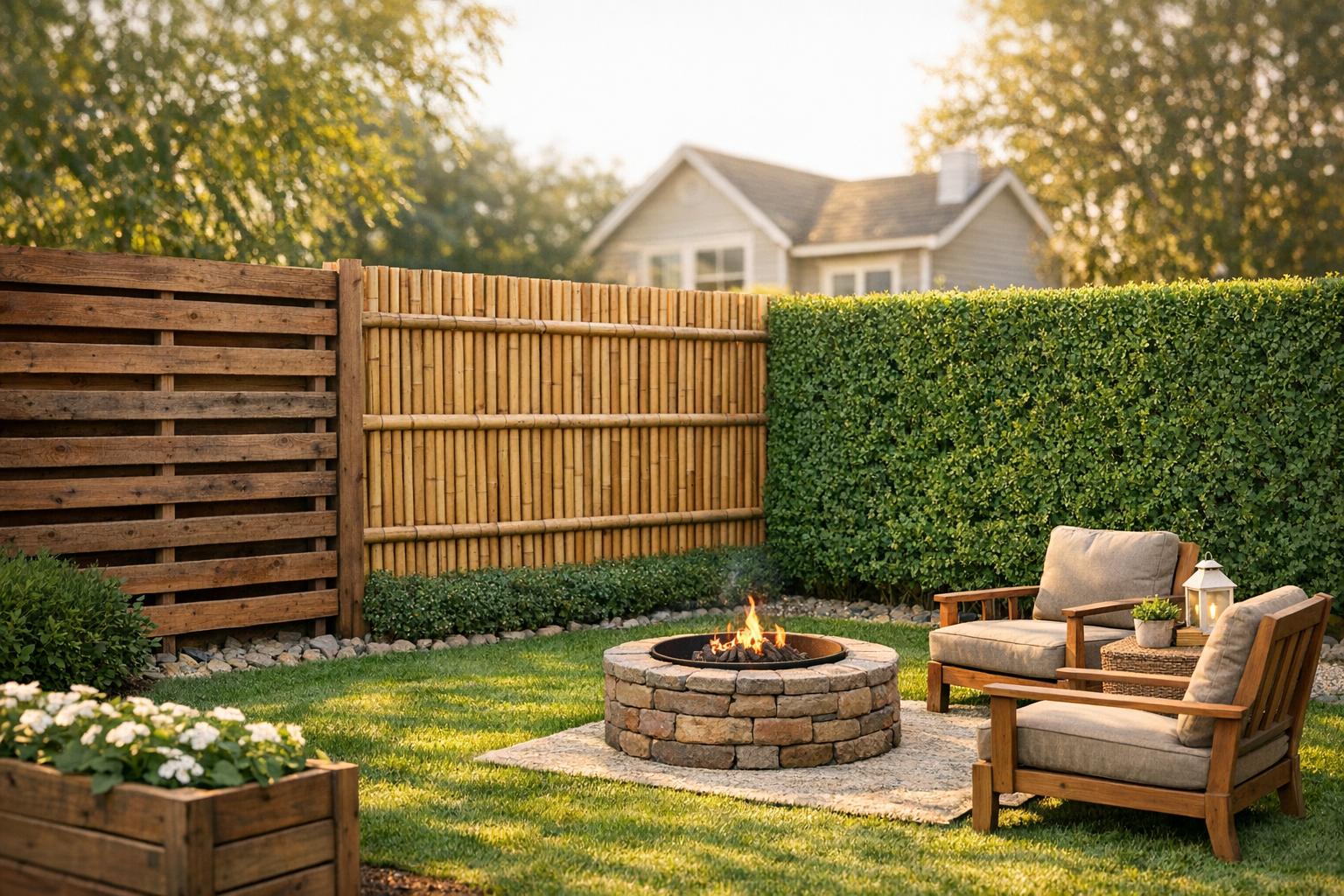
Looking for affordable ways to create privacy in your outdoor space? Here are 10 DIY fence ideas that save money and add style to your yard. From wood and bamboo to living hedges and recycled pallets, there’s an option for every budget and skill level. Here’s a quick rundown of the ideas:
- Wood Privacy Fence: Classic and cost-effective, especially if built with individual pickets.
- Bamboo Fence Panels: Stylish and budget-friendly, with easy installation.
- Chain Link with Privacy Slats: Upgrade an existing chain-link fence with durable slats.
- Recycled Pallet Fence: Use free or cheap pallets for a rustic, low-cost solution.
- Reed or Woven Willow Fencing: Natural and lightweight, ideal for small spaces.
- Shade Cloth or Fabric Panels: Quick and affordable privacy screens.
- Living Fences or Hedges: Plant fast-growing shrubs for a green barrier.
- Vinyl Fencing: Long-lasting and low-maintenance, though pricier upfront.
- Decorative Panels: Use lattice, bamboo, or repurposed wood for a stylish touch.
- Modular Privacy Screens: Targeted privacy for specific areas like patios or trash bins.
Each option balances cost, durability, and maintenance differently. Whether you’re looking for a quick fix or a long-term solution, there’s a DIY fence idea here to fit your needs. Always check local building codes and utility lines before starting your project.
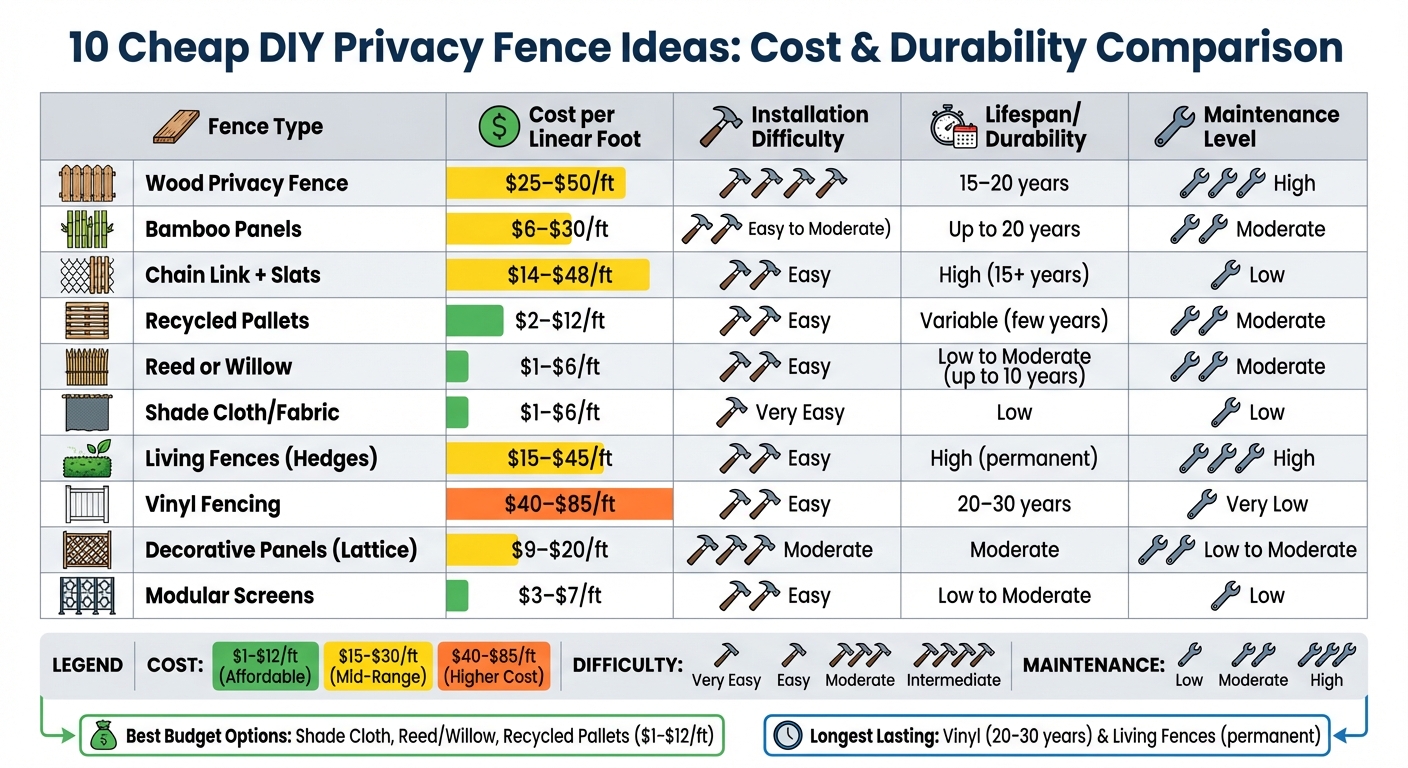
DIY Privacy Fence Cost and Durability Comparison Chart
BACKYARD CHEAP PRIVACY FENCE DESIGN IDEAS | 10 LOW-COST YARD FENCING OPTIONS FOR OUTDOOR SPACE
sbb-itb-d1d0a96
1. Wood Privacy Fence
A classic wood privacy fence remains one of the most wallet-friendly choices for DIY enthusiasts. If you’re building it yourself, using individual pickets and 2×4 rails will set you back about $175 for an 8-foot section, while pre-fabricated panels cost closer to $230 for the same length.
Cost-Effectiveness
When it comes to affordability, wood stands out. Pressure-treated pine pickets range from $1 to $4 each, whereas cedar pickets cost between $1 and $6. Compare that to vinyl, which can cost $40–$85 per linear foot, or aluminum, priced at $75–$130 per linear foot. Plus, the board-and-stringer method works well on sloped or uneven terrain, which might save you from needing extra grading work.
Ease of Installation
Installing a wood fence is a moderately challenging DIY project. Pre-fabricated panels can speed up the process but are heavy – some weigh as much as 100 pounds – so you might need a helping hand. On the other hand, constructing a board-and-stringer fence offers flexibility, letting you adjust the design to fit your yard’s contours. The tools you’ll need include a post hole digger, level, tape measure, drill, and circular saw.
Durability and Maintenance
To keep a wood fence looking good and standing strong, regular maintenance is a must. Wash it annually to clear away dirt and mold, and apply a fresh coat of stain or sealant each year to guard against moisture and sun damage. Clear debris from under the boards to prevent water damage, and trim back any vines to reduce moisture retention. With proper care, a wood fence can last anywhere from 15 to 50 years.
Aesthetic Appeal
One of the biggest perks of a wood privacy fence is its design flexibility. You can paint or stain it in any color to match your home’s exterior. Boards can be installed vertically for a traditional look or horizontally for a more modern vibe. Adding lattice panels is another way to increase both height and visual charm. For humid climates, pressure-treated lumber is a solid choice, while cedar and redwood are naturally resistant to rot, making them ideal for drier regions – though they do come with higher upfront costs. Hand-selecting your materials at the lumberyard can also help you avoid issues like warped or improperly dried wood.
2. Bamboo Fence Panels
Bamboo fencing offers an affordable and stylish solution for those looking to enhance their outdoor spaces. Bamboo panels are priced at around $150 for an 8-foot section, while bamboo reed rolls cost approximately $23.27 for a 6′ x 16′ section. These price points make bamboo a budget-friendly option for DIY enthusiasts.
Cost-Effectiveness
When it comes to affordability, bamboo stands out as a top choice for privacy fencing. It’s particularly effective for smaller areas where you want privacy without overspending. Plus, bamboo’s rapid growth and natural replenishment make it an environmentally friendly material.
Ease of Installation
One of bamboo’s biggest perks is how simple it is to install. For most DIYers, attaching lightweight bamboo panels to an existing chain-link fence is a breeze. All you need are heavy-duty zip ties or galvanized wire, along with basic tools like a drill, level, and measuring tape. If you’re going for a standalone setup, you can build a basic wooden frame using 4×4 posts and 2×4 horizontal rails, then secure the panels with galvanized screws. For thinner reed rolls, doubling the material or adding a black landscaping barrier can help prevent gaps. To keep your fence in top shape, plan for yearly maintenance.
Durability and Maintenance
With proper care, bamboo fences can last up to 20 years. Without regular upkeep, though, their lifespan may shrink to just 5 to 10 years. To protect your fence from sun and rain, apply a UV-rated clear sealant or exterior stain annually. Bamboo thrives in moderate climates but may struggle in extreme heat, cold, or heavy rain. To avoid moisture damage, keep the panels about 2 inches off the ground to prevent rot.
Aesthetic Appeal
Bamboo brings a tropical charm to outdoor spaces. Its natural golden-brown color works beautifully on its own, but you can also stain it to match your home’s exterior. Rolled bamboo fencing provides a clean, uniform look, while individual bamboo poles create a rustic, custom vibe – though they do take more effort to install. The design allows for gentle breezes to flow through while maintaining privacy, making bamboo fencing perfect for crafting a serene outdoor retreat.
3. Chain Link with Privacy Slats
If you already have a chain link fence, adding privacy slats is an affordable and practical way to turn it into a privacy barrier. These slats are thin strips of durable plastic, often made from high-density polyethylene, or aluminum. They are designed to weave vertically through your existing fence, offering both privacy and a polished look. At $3 to $10 per linear foot, privacy slats are a mid-range option – more budget-friendly than wood panels, which can cost around $25 per linear foot, while offering more durability and coverage than basic mesh screens.
Cost-Effectiveness
The main advantage of privacy slats is that they allow you to repurpose your existing chain link fence rather than replacing it entirely. For a typical section, expect to spend $60 to $150. These slats provide 75% to 85% visual coverage, making them effective at blocking most views while still allowing airflow. However, one important consideration is the added wind resistance. As First Fence of Georgia explains:
"Adding these slats will increase the fence’s wind load… we recommend ensuring that your posts are SS40 instead of the smaller SS20 posts".
If your fence posts aren’t heavy-duty or spaced closely enough (ideally 8 to 9 feet apart), you might encounter repair costs in the future.
Ease of Installation
Installing privacy slats is simple but requires patience. Each slat must be manually slid through the chain link weave, and a 10-foot section typically requires around 82 slats. Start by attaching a horizontal locking channel at the base of the fence. Then, slide each slat through the mesh, ensuring the notched end faces downward for a secure fit. While the process doesn’t require technical skills, it can be time-consuming.
Durability and Maintenance
Privacy slats are built to last, especially when made from high-quality, weather-resistant materials. According to home improvement expert Ryaan Tuttle:
"Chain link slats are thin pieces of durable, weatherproof plastic that can last up to 15 years in your fence".
UV-rated slats can endure for decades without fading or becoming brittle. Maintenance is minimal – just rinse them occasionally with a garden hose to remove dirt and debris. While the slats themselves won’t rust or rot, it’s a good idea to periodically check that they remain aligned and ensure your fence posts stay sturdy.
Aesthetic Appeal
Privacy slats offer a clean, modern look that fits well in suburban settings. Available in colors like green, tan, and black, they create a neat, uniform appearance while also enhancing security by making it harder to climb. While they don’t provide the natural charm of wood or bamboo, they deliver a polished, industrial aesthetic that’s much more appealing than a bare chain link fence.
4. Recycled Pallet Fence
If you’re looking for a residential fence installation to add privacy to your yard, a recycled pallet fence might just be the perfect solution. Pallets are often available for free or at a very low cost from local businesses, warehouses, hardware stores, or online platforms like Craigslist and Facebook Marketplace. Many businesses are eager to get rid of them to avoid recycling fees, meaning you could potentially build an entire fence for almost nothing if you already own basic tools. Even with hardware expenses, the cost typically falls between $25 and $50 – far less than the $230 average for pre-made panels.
Cost-Effectiveness
A pallet fence not only gives new life to discarded materials but also offers flexible installation options. You can use whole pallets, break them down into individual pickets, or stack them vertically to create a privacy barrier as high as 6 feet – or even taller. Using whole pallets is particularly practical for temporary fencing or rental properties since their weight often provides enough stability without requiring deep posts. This affordability is matched by the simplicity of installation.
Ease of Installation
To get started, dig post holes about 30 inches deep (roughly one-third of the post’s length) and fill the bottom with 4 to 6 inches of gravel for drainage. Secure 4×4 posts in concrete to create a sturdy base. Align the pallets with their slats running horizontally, and attach their solid vertical edges to the posts using outdoor-rated screws. As Angi explains:
"Pallet wood can withstand all kinds of outdoor weather conditions… [they] are low-cost, easy to install, and can withstand sun and rain exposure without rotting".
With basic tools and preparation, you can usually finish building a pallet fence in just one day.
Durability and Maintenance
While pallets are often pre-treated for industrial use and built to last, they do require some upkeep to handle outdoor conditions. Without regular maintenance, they may only last a few years. To keep your fence in good shape, check for protruding nails or staples and sand any rough spots to avoid splinters. Applying an oil-based stain, weatherproof sealant, or wood preservative annually can help protect against moisture and UV damage. For added longevity, avoid placing pallets directly on the ground to reduce the risk of rot. If you’re using the fence near gardens or pet areas, make sure the pallets haven’t been treated with harmful chemicals.
Aesthetic Appeal
Beyond being practical and affordable, a recycled pallet fence can add charm to your outdoor space. Its rustic, textured appearance pairs well with farmhouse or cottage-style homes. You can also customize it to suit your taste – add built-in planters in the pallet gaps, lattice tops for climbing plants, or paint and stain for decorative flair. For a sleek, modern look, install the slats horizontally; for a classic picket style, arrange them vertically. Creative homeowners might even experiment with multicolored "checkerboard" designs or a whitewashed finish for a contemporary farmhouse vibe. As Woodsmith puts it:
"A DIY pallet fence not only adds a touch of charm to your outdoor space but also repurposes materials that might otherwise go to waste".
5. Reed or Woven Willow Fencing
If you’re looking for a natural, budget-friendly fencing option, reed and woven willow might just be the perfect fit. Reed fencing is crafted from peeled freshwater reeds bound together with galvanized steel wire, while willow comes in rolled panels or can even be planted as a "living fence" using live cuttings. These materials bring a rustic charm, making them a great choice for cottage-style or traditional English gardens.
Cost-Effectiveness
Reed fencing is one of the most affordable choices for creating privacy. A 6’×16′ roll costs around $23.27 (approximately $1.45 per linear foot), making it incredibly wallet-friendly. Woven willow panels are a bit more expensive at about $127 per 8-foot roll, but they still cost far less than traditional wood or vinyl options.
As Farima Ferguson explains:
"Natural reed fencing is a great alternative for a bamboo fence… at an even more budget-friendly price point".
However, since reed is naturally thin, you might need to double-layer it or back it with black landscape fabric (about $25 for a 150-foot roll) to achieve full privacy. This low-cost approach also makes installation quick and easy, perfect for a weekend project.
Ease of Installation
Both reed and willow fencing are extremely DIY-friendly and can often be installed in just one afternoon. These lightweight materials come in rolls that are easy to handle. To set them up, simply unroll the fencing along your desired area and secure it to existing structures like commercial-grade fencing, wooden posts, or heavy-duty tomato stakes using zip ties or galvanized wire spaced every 8 to 12 inches.
For standalone installations without an existing structure, you can create a support frame by driving 6-foot tomato stakes about a foot into the ground every few feet. Be sure to pull the material tight as you attach it to prevent sagging, especially in windy conditions.
Durability and Maintenance
Reed fencing offers decent durability but requires reasonable expectations. While it can initially rival bamboo in strength, it won’t last as long as treated wood. Over time, exposure to strong sun and harsh weather can cause reed to break down. High-quality willow panels, on the other hand, can last up to 10 years depending on your climate. They’re also naturally resistant to pests.
Both materials will fade over time – willow’s rich brown shade typically weathers to gray, though this doesn’t affect its structural strength. To prolong their lifespan, you can treat or paint the fencing annually and trim back any creeping vines that might trap moisture or add weight. For living willow fences, you’ll need to coppice (prune) the plants each winter to encourage fresh growth. Besides being functional, these materials add a charming, natural aesthetic to your outdoor space.
Aesthetic Appeal
Reed and willow fencing bring a soft, earthy texture that blends beautifully with gardens and other outdoor spaces. The natural brown hues of these materials work well with greenery, while willow panels, featuring slender branches (1/8–1/2 inch in diameter), offer a classic woven look that has been a staple in English gardens for centuries. Reed, with its tightly woven reeds, provides a finer texture.
Both options are eco-conscious choices, as they are renewable and sustainable. You can customize the appearance by painting or staining the panels, or simply let them age naturally to develop a weathered patina that enhances their rustic charm.
6. Shade Cloth or Fabric Panels
If you’re looking for a quick, affordable way to add privacy to your outdoor space, shade cloth or fabric panels could be the perfect solution. These options are ideal for those on a tight budget who need something effective and fast. Fabric panels can transform existing structures, like chain link fences, into functional privacy screens, making them a practical choice for homeowners seeking a cost-effective upgrade.
Cost-Effectiveness
When it comes to budget-friendly options, fabric panels are hard to beat. For comparison, pre-fabricated wood panels can cost around $230 per 8-foot section, while a basic 4-foot-tall, 8-foot-long lattice panel – often used as a frame – runs under $30. On the other hand, professional wood privacy fences can cost between $31.80 and $76.50 per linear foot. This makes fabric panels an economical choice, especially for situations where taller fences are needed to block views from neighbors situated on higher ground. They offer a practical way to enhance privacy without the hefty price tag of traditional fencing.
Ease of Installation
One of the biggest perks of fabric panels is how easy they are to install. You don’t need advanced tools or skills – just a drill, an Allen wrench, and a bit of time. Here’s a simple breakdown of the process:
- Build a support frame using wood or metal pipes. Modular pipe fittings, like Kee Klamp, can make the assembly even easier.
- Secure the frame to the ground or an existing fence.
- Attach the fabric using clips or ties, making sure it’s pulled tight to avoid sagging.
If you’re working with an existing chain link fence, you can simply attach the fabric with zip ties or clips. For those building a free-standing shade wall, modular pipe fittings allow for easy adjustments without the need for welding or threading. Most installations can be completed in just an afternoon, making this a quick and straightforward choice for enhancing privacy.
Durability and Maintenance
While fabric panels are not as long-lasting as permanent wood or vinyl fences, they hold up well with a little care. To extend their lifespan, secure them with weights and apply a UV-rated sealant to prevent fading. Keeping the fabric taut also helps reduce wind damage and sagging. And if they do wear out, their low cost makes replacement easy, making them a smart choice for temporary or semi-permanent privacy solutions.
Aesthetic Appeal
Fabric panels offer plenty of style options to suit your outdoor space. With a range of colors and textures available, they can fit into a variety of design themes – from sleek and modern to warm and inviting. Unlike solid wood or metal, the fabric creates a softer visual barrier, allowing filtered light to pass through while still blocking direct views. Plus, the ability to swap out or update the panels seasonally adds a level of flexibility that permanent fencing simply can’t match. Whether you’re aiming for a minimalist vibe or a cozy backyard retreat, fabric panels can help you achieve the look you want.
7. Living Fences or Hedges
Living fences and hedges are a natural and budget-friendly way to create privacy in your outdoor space. Instead of shelling out thousands for traditional fencing, you can plant saplings for under $20 each and let them grow into a lush, green barrier over time. If you’re looking for quick growth, species like Arborvitae, English Laurel, Privet, and Leyland Cypress can grow about 3 feet per year once established. Podocarpus is another great option, often growing 3 to 4 feet annually. Below, we’ll break down the costs, installation process, upkeep, and aesthetic perks of living fences.
Cost-Effectiveness
Saplings are an affordable choice, often priced below $20 each. For the budget-conscious, nurseries frequently offer steep discounts – up to 75% off – on shrubs like Arborvitae during fall months, typically October and November. Want something a bit more unique? You can create an espalier fence by training dwarf fruit trees to grow flat against a frame. This decorative option costs around $100 to $150 for an 8-foot section. If you’re aiming for a no-cost solution, try building a "dead hedge" by weaving fallen branches and twigs between upright posts.
Ease of Installation
Setting up a living fence is pretty simple but does require a bit of planning. Proper spacing is crucial – plant your saplings close enough so their branches will eventually overlap, creating a seamless screen. Doing the planting yourself can save you a lot compared to hiring a professional. Keep in mind, though, that living fences take several years to fully mature. If you need quicker coverage, fast-growing climbing vines like ivy can be trained to grow on a trellis or chain-link fence. Once your fence is in place, regular maintenance will ensure it thrives.
Durability and Maintenance
While living fences are beautiful, they do need consistent care to stay healthy and effective. Fast-growing hedges like Privet may require trimming up to four times a year to maintain their shape. Young plants, on the other hand, will need weekly watering during their first summer and fall. Espalier fences demand a bit more attention – light pruning in late winter helps maintain their structure, and removing fruit buds in the first two years directs energy into branch growth instead of fruit production. Keep in mind that some popular hedge plants, like Privet, have toxic leaves and berries, so exercise caution if you have kids or pets.
Aesthetic Appeal
Living fences don’t just provide privacy – they also enhance the beauty of your landscape. Evergreens like Arborvitae and Holly offer year-round coverage, while flowering shrubs such as Lilacs and Forsythia bring vibrant colors and fragrant blooms in spring. Thick rows of trees and shrubs can even help reduce noise from nearby streets or neighbors. For homeowners dealing with strict HOA rules, living fences can be a clever workaround, as they often bypass restrictions on traditional fencing materials like wood or vinyl. If deer are a concern in your area, consider planting less appealing species like Eastern Red Cedar.
8. Vinyl Fencing
Vinyl fencing offers a mix of upfront investment and long-term durability, lasting 20–30 years with virtually no maintenance. If you’re handy, it’s a great DIY project that can save you significant money over time. Pre-built panels typically range from $99 to $150 for a 6 ft. H x 8 ft. W section, with white vinyl being the most budget-friendly choice. The big savings come when you skip professional installation, cutting out labor costs of $35 to $50 per hour.
Ease of Installation
Installing vinyl fencing is a straightforward process, especially when using pre-built panels. Here’s the basic rundown: mark your fence line, dig post holes (about one-third the post height), set the posts in fast-curing concrete, and attach the panels. Most systems use a simple slide-in design where panels fit into rail brackets or pre-routed post holes.
Before you start digging, make sure to call 811 to have underground utility lines marked – this step can save you from costly mistakes. For better drainage, add a 6-inch layer of gravel at the bottom of each post hole. Also, leave a small gap between panels to allow for expansion and contraction due to temperature changes.
Durability and Maintenance
One of vinyl fencing’s standout features is its minimal maintenance. Unlike wood, it doesn’t rot, splinter, or attract pests. Plus, it resists shrinking or developing gaps over time. Keeping it clean is as simple as an annual wash with soapy water and a rinse. As writer Ezekiel Maina puts it:
"Insects won’t compromise its integrity, for starters, and it will hardly splinter or snap when the weather goes wild".
This durability, combined with its sleek appearance, makes vinyl fencing a reliable choice for homeowners.
Aesthetic Appeal
Vinyl fencing is designed for privacy, featuring gap-free planks that block visibility entirely. While white vinyl remains the most economical option, there are plenty of styles to suit different home designs. The material retains its look year after year – it won’t fade, peel, or require repainting. For homeowners looking for a low-maintenance yet attractive fencing solution, vinyl is a practical option.
If you’d prefer professional installation, Tend Fencing offers custom vinyl fence services in Plano, TX.
9. Decorative Panels (Bamboo, Lattice, Repurposed Wood)
Decorative panels are a fantastic way to combine style and function without breaking the bank. Whether you choose bamboo rolls, wood lattice, or repurposed materials like reclaimed barn wood or old doors, each option brings its own flair while offering an affordable and practical privacy solution.
Cost-Effectiveness
When it comes to affordability, decorative panels are hard to beat. Wood lattice typically costs between $9 and $20 per linear foot, and standard 48-by-96-inch panels often come in under $30. Bamboo rolls are another budget-friendly choice, ranging from $6 to $30 per linear foot. For a truly unique and cost-saving option, consider reclaimed barn wood or old doors, which not only add character but are often cheaper than buying new materials. You can save even more by sourcing discarded materials locally.
Ease of Installation
One of the best things about decorative panels is how easy they are to install, even for DIY beginners. Bamboo rolls, for instance, can be effortlessly attached to an existing chain-link or wooden frame using zip ties or wire. Lattice panels can be cut to size with a circular saw and secured to 4×4 posts. For repurposed materials like pallets, a simple stack-and-nail approach works well, though items like old doors or shutters may require brackets or hinges for added stability. Just make sure to attach all panels to a sturdy frame or posts, or hire expert fence installation services to prevent warping over time. These straightforward installation methods make it easy to create a personalized privacy solution.
Durability and Maintenance
To keep bamboo panels looking their best, apply a clear sealant to protect against rain and sun damage. Cedar lattice, when properly framed, is long-lasting, and repurposed wood can thrive with treatments like linseed oil. As Wade Shaddy points out:
"Lattice has long been used for privacy. It’s airy, easy to work with and attractive".
Regular maintenance, such as cleaning the base to prevent moisture buildup, will help extend the life of your panels.
Aesthetic Appeal
Each type of decorative panel adds its own unique charm. Bamboo brings a tropical vibe, while lattice offers a classic, open design that balances privacy with airflow. You can enhance lattice panels by adding fast-growing vines like clematis or ivy to create a lush, living screen. Repurposed materials, on the other hand, add a rustic and handmade touch to your yard. As My Garage And Gates notes:
"Repurposing wood keeps materials out of landfills and gives your yard a unique, handmade look".
10. Modular Privacy Screens
Modular privacy screens are a practical choice when you need to block specific areas rather than enclosing your entire yard. These panels, which can be purchased pre-made or built as a DIY project, are perfect for concealing unsightly items like trash cans, air conditioners, or compost bins. They’re also great for creating a cozy, private nook on your deck or patio. Built with a wood frame and filled with materials like decorative metal, lattice, wood slats, or fabric, these screens offer plenty of design options to suit your outdoor space. They’re a smart way to add privacy without committing to a full-scale fence.
Cost-Effectiveness
If you’re looking for an affordable privacy solution, modular screens can be a good fit. Pre-made panels typically cost around $230 for an 8×6 section, while a DIY board-and-stringer alternative runs closer to $175. For those on a tighter budget, 8-foot white picket panels are available for about $40, compared to $130–$150 for vinyl sections. The key advantage here is their targeted use – you only need to install screens where privacy is essential, saving money compared to fencing your entire property.
Ease of Installation
Installing modular privacy screens is straightforward but may require an extra set of hands for larger panels, which can be up to 8 feet wide, 6 feet tall, and weigh as much as 100 pounds. For freestanding screens, attach brackets to posts (two per side) and drill holes in the panels for secure mounting. Heavier screens are more stable when paired with posts set in concrete. To prevent water damage, use ground spacers like scrap 2x4s to keep the bottom edge about 2 inches off the ground.
Durability and Maintenance
Materials like vinyl and wood-composite are standout choices for durability since they don’t shrink over time, which helps avoid gaps between boards. As Lee Wallender explains:
"Vinyl and wood-composite fence materials are excellent choices for privacy fences because neither will shrink over time to cause gaps between boards".
For wood screens, annual cleaning and restaining are recommended to protect against decay. It’s also a good idea to trim back any vines growing on the screens to reduce moisture buildup.
Aesthetic Appeal
One of the biggest draws of modular screens is their design versatility. Laser-cut metal panels can give your space a sleek, modern edge, while latticework adds a touch of traditional garden charm. For a more industrial look, corrugated metal is an excellent option. Grace Gallagher highlights its benefits:
"Corrugated metal is not only a cost-effective privacy fence idea but also more durable and easy to care for than wood".
To elevate the look, consider adding solar-powered deck lights or stringing bistro lights across your screens. These small touches can create a warm, inviting atmosphere – without breaking the bank.
Comparison Table
Here’s a quick overview of the DIY privacy fence options we’ve discussed. Use this table to weigh your budget, skill level, and maintenance preferences against the available choices:
| Fence Type | Cost (per linear foot) | Installation Difficulty | Durability | Maintenance Needs |
|---|---|---|---|---|
| Wood Privacy Fence | $25–$50 | Intermediate | 15–20 years | High (annual staining/cleaning) |
| Bamboo Panels | $6–$30 | Easy to Moderate | Moderate to High | Moderate (treating/sealing) |
| Chain Link + Slats | $14–$48 | Easy | High | Low |
| Recycled Pallets | $2–$12 | Easy | Variable | Moderate (sealing required) |
| Reed or Willow | $1–$6 | Easy | Low to Moderate | Moderate (treating) |
| Shade Cloth/Fabric | $1–$6 | Very Easy | Low | Low (replace if torn) |
| Living Fences (Hedges) | $15–$45 | Easy (planting) | High (permanent) | High (pruning/watering) |
| Vinyl Fencing | $40–$85 | Easy | 20–30 years | Very Low |
| Decorative Panels (Lattice) | $9–$20 | Moderate | Moderate | Low to Moderate |
| Modular Screens | $3–$7 | Easy | Low to Moderate | Low |
Looking for affordability? Shade cloth/fabric, recycled pallets, and modular screens are your most economical picks, ranging from $1–$12 per linear foot. On the other hand, wood privacy fences cost $25–$50 per linear foot but demand regular upkeep like staining and cleaning.
If durability is a priority, vinyl fencing stands out with a lifespan of 20–30 years and minimal maintenance, though it comes with a higher price tag of $40–$85 per linear foot. For beginners, no-dig options such as mesh screens, privacy slats, and pallet fences are straightforward to install. Meanwhile, board-and-stringer wood fences require some carpentry skills, and living fences need time to grow and regular care.
When it comes to weather resistance, vinyl and metal fences outperform natural materials like bamboo or reed, which need periodic treatments to hold up against the elements. Choose the option that fits your lifestyle and keeps your outdoor space looking great!
Conclusion
Creating a private outdoor space doesn’t have to break the bank, especially when you choose a project that aligns with your DIY abilities. Whether you opt for quick, no-dig solutions like modular screens and privacy slats or take on more advanced projects like board-and-stringer fences, there’s an option to fit your budget, skill level, and design preferences. Each approach strikes its own balance between ease of installation, durability, and long-term maintenance costs.
If you’re new to DIY, pre-assembled panels are a great starting point – they’re easy to install and require minimal tools. On the other hand, seasoned DIY enthusiasts can save even more money by taking on more intricate builds.
Keep in mind that different materials come with varying levels of upkeep. For example, wood fences need annual staining to prevent rot, while vinyl and metal options are built to last for decades with little to no maintenance. If you’re drawn to a more natural look, living fences can create a lush, green barrier, though they’ll need regular pruning to thrive and enhance their appeal over time.
Before you dive in, check local zoning codes, as many areas restrict fence heights to 6 or 8 feet. To stretch your dollar further, consider buying materials in late summer or fall when demand tends to drop – this can lead to significant savings.
If you’re in Plano, TX and prefer to leave the hard work to the pros, Tend Fencing offers professional installation services with a focus on craftsmanship and sustainability.
Choose the option that best fits your needs, and enjoy the beauty and functionality of a private outdoor retreat tailored to your home.
FAQs
What are some affordable DIY privacy fence ideas?
If you’re searching for wallet-friendly DIY privacy fence ideas, there are plenty of creative options to explore. One popular choice is using reclaimed or recycled wood, which can run as low as $1–$15 per linear foot. Another budget-friendly solution is building a pallet fence – pallets are often available for free or at a minimal cost. For a touch of greenery, you could upgrade a basic chain-link fence by training climbing vines to grow on it, creating natural privacy.
Other affordable alternatives include corrugated metal panels, which offer both durability and a modern look, or crafting a simple screen with chicken wire and plants for an inexpensive yet effective barrier. These ideas not only help you maintain privacy but also allow for customization to match your outdoor space and personal style.
If you’re leaning toward a more professional and long-lasting fencing solution, consider reaching out to Tend Fencing. They specialize in custom residential and commercial fence installations tailored to fit your specific needs.
What’s the best fence material for my local climate?
Choosing the right fence material often comes down to how well it can handle the weather in your area. If you’re in a humid or rainy region, vinyl and pressure-treated wood are solid choices. Vinyl stands up to moisture and requires minimal maintenance, while pressure-treated wood is specially designed to resist rot and pests.
For areas with intense sun and heat, cedar and redwood are excellent options. These woods naturally resist decay and hold up well under harsh sunlight, though they tend to be on the pricier side.
If your region experiences strong winds or extreme temperature swings, metal fences like aluminum or corrugated steel are worth considering. Aluminum is lightweight and resists rust, while corrugated steel offers impressive strength without breaking the bank. For areas with mixed weather conditions, composite panels – made from a mix of wood fibers and plastic – provide a great balance of durability, moisture resistance, and UV protection.
Still unsure which material is the best fit for your climate? Tend Fencing can guide you through the process, helping you select and install a custom fence that matches your local weather, personal style, and budget. Plus, they’re committed to sustainability, planting a tree for every project they complete.
What tools and skills do I need to build a DIY wood privacy fence?
Building your own wood privacy fence isn’t as daunting as it might sound, but it does call for the right tools and a bit of know-how. To get started, you’ll need some essential tools: a post-hole digger, measuring tape, level, circular saw (or a jigsaw for any curved cuts), drill with bits, nail gun (or a trusty hammer), and, of course, safety gear like gloves and eye protection. These will cover everything from digging and measuring to cutting and securing your fence.
When it comes to skills, you’ll need to be comfortable measuring and marking your fence line with precision, digging and setting posts to the proper depth, and cutting boards to the right size. Ensuring that everything stays level and properly aligned is key to a sturdy and polished result. A basic understanding of framing techniques and safe use of tools like a nail gun is also important to keep the project running smoothly.
If you’re aiming for a more custom design or feel like you could use a hand, Tend Fencing in Plano, TX, offers professional installation services to help turn your ideas into reality.