
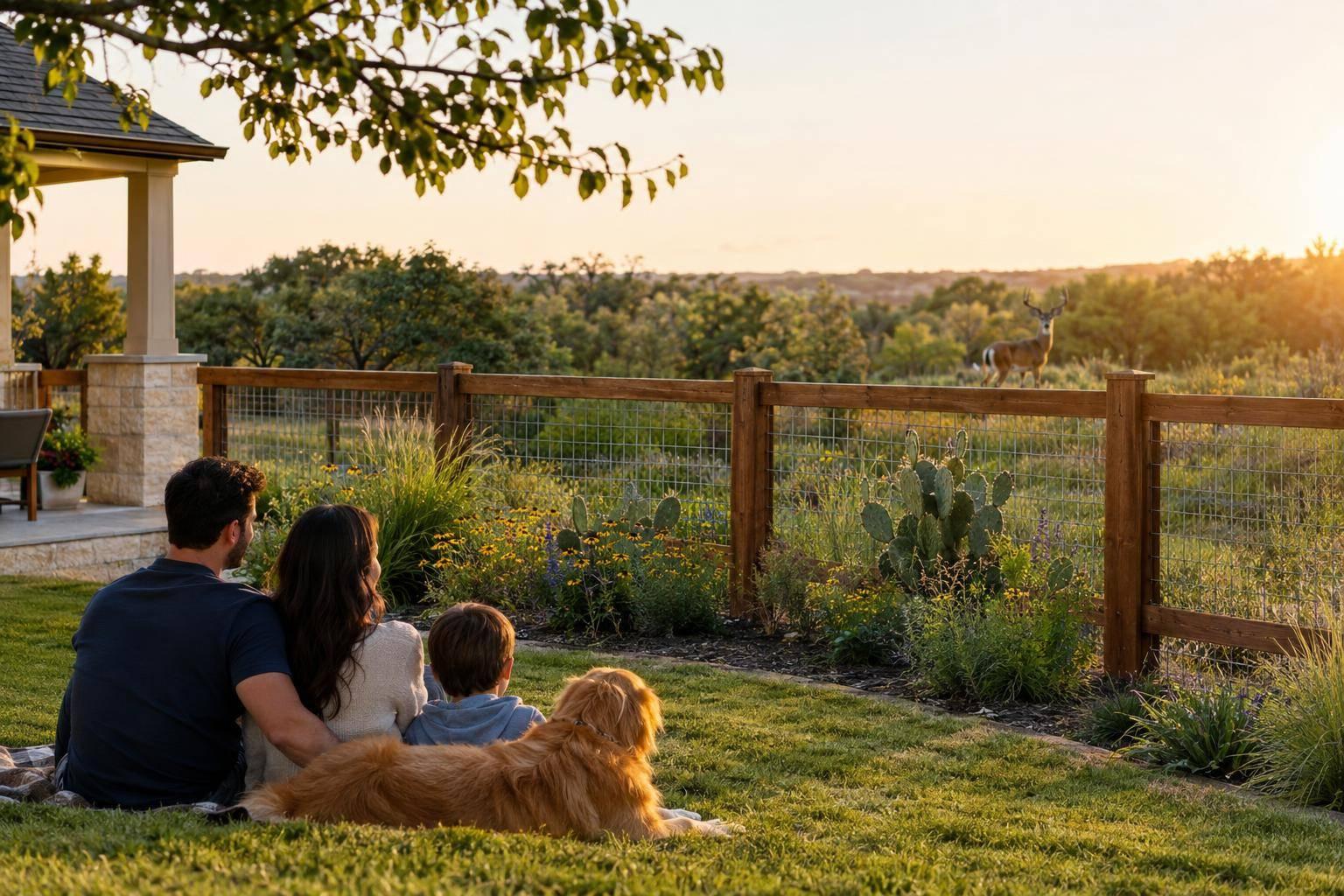
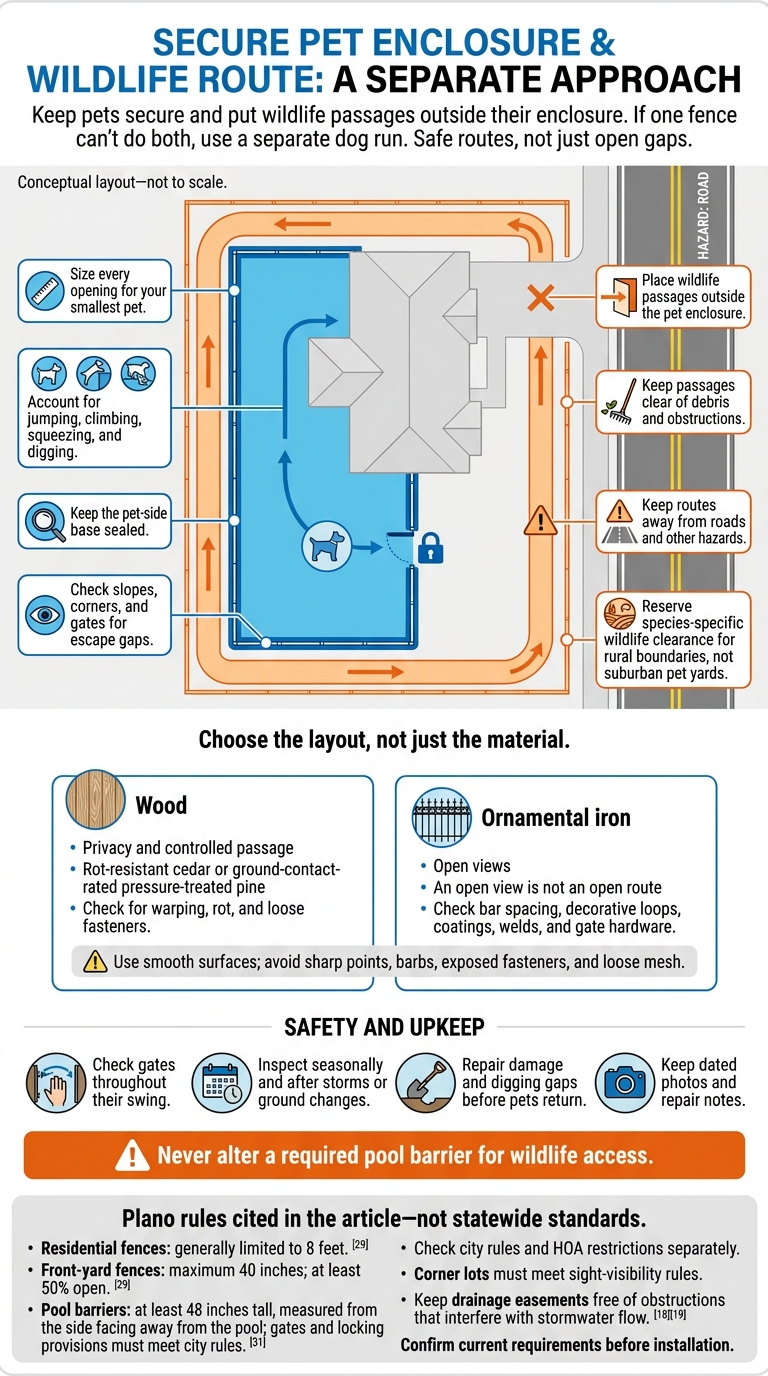
My rule for a wildlife-friendly Texas fence: keep pets secure and put wildlife passages outside their enclosure. If one fence can’t do both, I’d use a separate dog run – not leave gaps that let pets escape.
I’d plan around three things:
- Fit and materials: Size openings for your smallest pet, account for jumping and digging, and choose smooth wood or ornamental iron without sharp points.
- Placement and rules: Check slopes, gates, drainage, wildlife routes, and city and HOA limits. In Plano, front-yard fences cannot exceed 40 inches and must be at least 50% open.
- Safety and upkeep: <u>Never alter a required pool barrier for wildlife access.</u> Keep passages away from roads and other hazards, and check gaps and latches after storms or ground changes.
The goal is safe routes, not just open gaps – with secure pet areas and room for wildlife elsewhere.
Wildlife-Friendly Texas Fences: Separate Pet Zones and Wildlife Routes
Wildlife Friendly Fencing
sbb-itb-d1d0a96
Set fence height, spacing, and ground clearance
Start with three measurements: opening size, fence height, and bottom clearance.
Match height and openings to your pets
Size every opening for your smallest pet, and choose a fence height that accounts for jumping and climbing. Plan for squeezing and digging, too. Cats can clear fences that hold dogs.
Avoid sharp picket points, exposed fasteners, barbs, protruding wire, and loose mesh that could catch paws, legs, or antlers.
Use wildlife-style spacing only outside the pet area. Every opening in the pet barrier must be sized for the smallest animal you need to keep inside. Once that’s set, allow bottom clearance only where wildlife access belongs.
Allow ground clearance only where pets stay secure
Wildlife passages need enough bottom clearance for the target species, but those same openings can let small pets escape. Place wildlife passages outside the pet enclosure and keep the pet-side base sealed. Keep lower fence parts smooth, with no barbs or loose wire.
Next, check corners and gates. Small gaps often show up there first.
Check gaps at slopes, corners, and gates
Measure bottom clearance from the actual soil surface along each section. Pay close attention to downhill edges and triangular gaps beside corner braces.
Check gate thresholds, hinge and latch sides, and the clearance throughout the gate’s swing. Recheck after rain, drought, mowing, or grading, and fix new gaps right away.
Compare wood and ornamental iron fences
Choose the layout, not just the material. Match it to the slope, drainage, and wildlife routes. Wood provides privacy with planned openings, while ornamental iron keeps views open. Wildlife-friendly passage depends on spacing and layout – not material alone.
Wood fences for privacy and controlled passage
Choose rot-resistant cedar or ground-contact-rated pressure-treated pine. Keep boards smooth and firmly fastened, and check for warping, rot, and loose fasteners. Solid boards work well for private pet yards; keep planned wildlife openings outside pet areas.
Ornamental iron fences for open views
Iron works well for front yards, visible property lines, and selected greenbelt edges. An open view is not an open route: bars and decorative loops can trap animals or lead them to attempt risky jumps. Set spacing for the smallest pet, and check for gaps that could trap a pet’s head or legs. Smooth tops are preferable to spear points, but crossing hazards remain.
A low bottom rail reduces under-fence gaps but also limits wildlife movement at ground level. Moving the rail higher or leaving it out adds clearance, but pets may squeeze under, dig, or chase animals. Check coatings, welds, and gate hardware.
Match the fence layout to your Texas property
Once you’ve chosen the material, fit the layout to your property. On residential lots, local site limits matter most.
In Plano, keep pet-yard spacing secure and leave creek or greenbelt routes outside the fenced pet area. Drainage easements must remain free of obstructions that interfere with stormwater flow.
On rocky Hill Country sites, stepped panels or carefully set posts can prevent irregular clearance.
Reserve species-specific wildlife clearance for rural boundaries, not suburban pet yards. When wildlife passage conflicts with pet safety, use a separate pet enclosure.
Plan fence installation and upkeep
Map pet needs, wildlife routes, and site limits
Once you’ve chosen the height, spacing, and material, put the plan in writing. Keep pet areas secure and designated wildlife openings clear. Note each pet’s size and habits, including jumping, climbing, squeezing through gaps, and digging. Over several days, record wildlife tracks, repeated entry points, and seasonal routes.
On a scaled site plan, mark fixed limits that affect fence placement. Include fence height, materials, spacing, bottom clearance, corners, and transitions. For each gate, specify its width, swing direction, latch location, and closing function.
Plan custom fence installation in Plano
Check city rules and HOA restrictions separately before installation. Plano requires a site plan and generally limits residential fences to 8 feet. Front-yard fences cannot exceed 40 inches and must be at least 50% open. Corner lots must also meet sight-visibility rules.
Masonry fences or columns may require footing drawings. When required, the permit holder must request footing and final inspections. Use these rules to settle the fence height, spacing, and gate placement.
Tend Fencing offers custom wood and ornamental-iron fence installation with gate integration in Plano and nearby North Texas communities.
Never modify a required pool barrier for wildlife passage. Plano requires a barrier at least 48 inches tall, measured from the side facing away from the pool, plus gates and locking provisions that meet its rules. Keep wildlife openings outside the pool enclosure.
Keep wildlife openings clear and pet zones sealed
Keep pet zones sealed and wildlife openings unobstructed. After installation, check the fence against the plan. Inspect it seasonally and after storms, flooding, erosion, freezes, or ground movement.
Measure any gaps that have changed, look for places where animals could snag themselves or become trapped, and test every gate’s closure and latch. Repair damage and digging gaps before letting pets back into the area. Clear wildlife passages of stored items, debris, branches, and temporary barriers.
Keep dated photos and repair notes. Review the design whenever pets, wildlife activity, landscaping, or drainage patterns change.
Conclusion: Separate wildlife routes from pet areas when needed
Once you’ve chosen the material, decide how the fence will keep pets secure while allowing wildlife to pass. Material alone doesn’t make a fence wildlife-friendly. The layout and openings determine where animals can move.
Keep openings tight in pet areas, and add clearance beneath the fence only outside those zones. Check that slopes and corners don’t leave gaps that let pets escape. If one fence line can’t serve both purposes, separate them: a dog run can keep pets contained while leaving routes open for wildlife elsewhere on the property.
FAQs
How can I identify wildlife routes in my yard?
Start with a sketch of your property, marking where people, pets, and vehicles move each day. Walk your yard in the morning, midday, and late afternoon. Check for activity around existing trees, drainage areas, and established paths.
Then, look at those same spots from your main windows and patio seats. These views can help you spot likely wildlife routes and decide where a wildlife-friendly fence could allow animals to pass safely.
Can I retrofit my fence for safer wildlife passage?
Yes. The right approach depends on your fence materials and local wildlife goals. Adjusting the clearance beneath your fence or adding openings in select spots can let smaller animals pass through while keeping pets contained.
For uneven terrain or passages that fit your existing layout, Tend Fencing offers consultations in Plano, TX. They can customize wood, ornamental iron, and chainlink fences with both security and local wildlife needs in mind.
How can I keep coyotes out while helping smaller wildlife?
Choose a tall, sturdy wood or ornamental iron fence, typically 6 feet or higher. Secure the perimeter, too – coyotes can climb fences and dig underneath them.
To let smaller wildlife pass through, consider small gaps along the bottom in low-traffic areas. Keep gaps small enough that pets can’t escape. Ornamental iron fencing with carefully chosen picket spacing can also help deter larger predators while letting smaller animals through.