
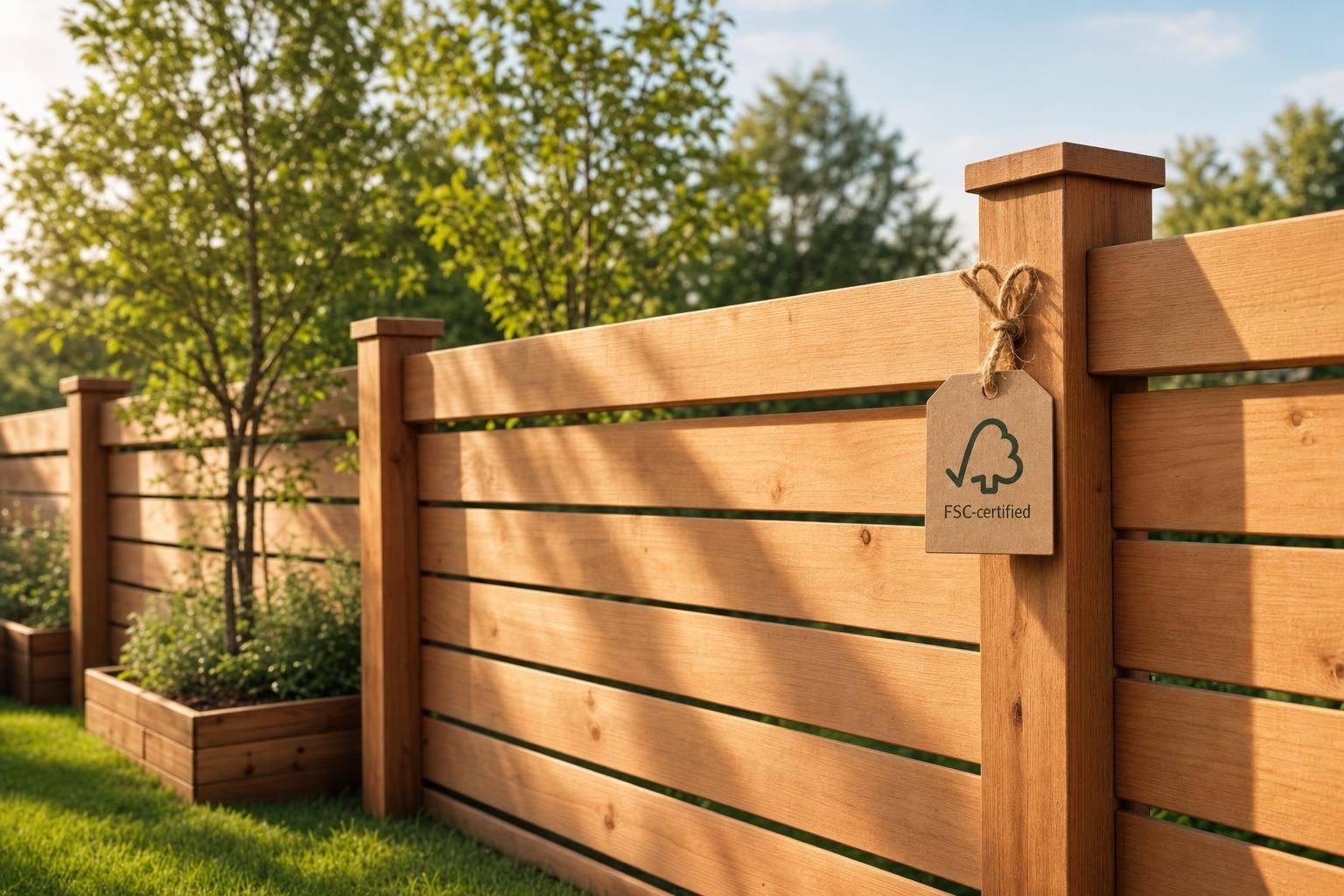
FSC certification tells me the wood in a fence comes from a tracked supply chain tied to forests managed under set rules. It does not tell me how long the fence will last, how strong the boards are, or whether the wood is the right fit for my climate and use.
If I’m buying FSC-certified fencing, I need to check 3 things first:
- the FSC claim: FSC 100%, FSC Mix, or FSC Recycled
- the chain of custody: every seller in the supply chain must be certified
- the paperwork: the invoice or delivery note should show the claim and certificate code
Here’s the short version:
- FSC is about where the wood came from
- It can apply to boards, posts, rails, panels, and gates
- It may cost 0% to 20% more, though some markets are closer to 0% to 5%
- It can help with project documentation, including LEED v4.1
- It does not guarantee durability, grade, or service life
I also need to verify the supplier in the FSC Public Search before installation. That one step helps me avoid paying for a claim that the delivered materials can’t support on paper.
This article breaks down what the label means, how the supply chain works, what the common FSC labels mean, where the limits are, and what I should confirm before the fence shows up on-site.
FSC and Construction: Building Sustainably with FSC-certified Wood
sbb-itb-d1d0a96
How FSC Certification Works in the Fence Supply Chain
FSC 100% vs FSC Mix vs FSC Recycled: What Each Label Means for Fencing
FSC certification uses a chain-of-custody system to track wood from the forest all the way to the finished fence. Every company that takes legal ownership of the wood – from the forest manager to the distributor – needs FSC Chain of Custody (CoC) certification and must record each transfer. If even one uncertified company interrupts that chain, the product can’t carry an FSC claim.
That paper trail is what gives an FSC label real weight on fence boards, posts, panels, and gates.
Forest Management, Chain of Custody, and Project Certification
For fencing, three FSC certification types matter most:
- Forest Management (FM): certifies the source forest.
- Chain of Custody (CoC): tracks certified wood through processors and traders.
- Project Certification: certifies FSC materials used in a specific fence project.
Together, FM, CoC, and Project Certification decide whether a fence product can legally carry an FSC claim.
Which Fence Materials Can Carry FSC Claims
Common FSC fence materials include cedar, redwood, pressure-treated pine, and some hardwoods such as ipe.
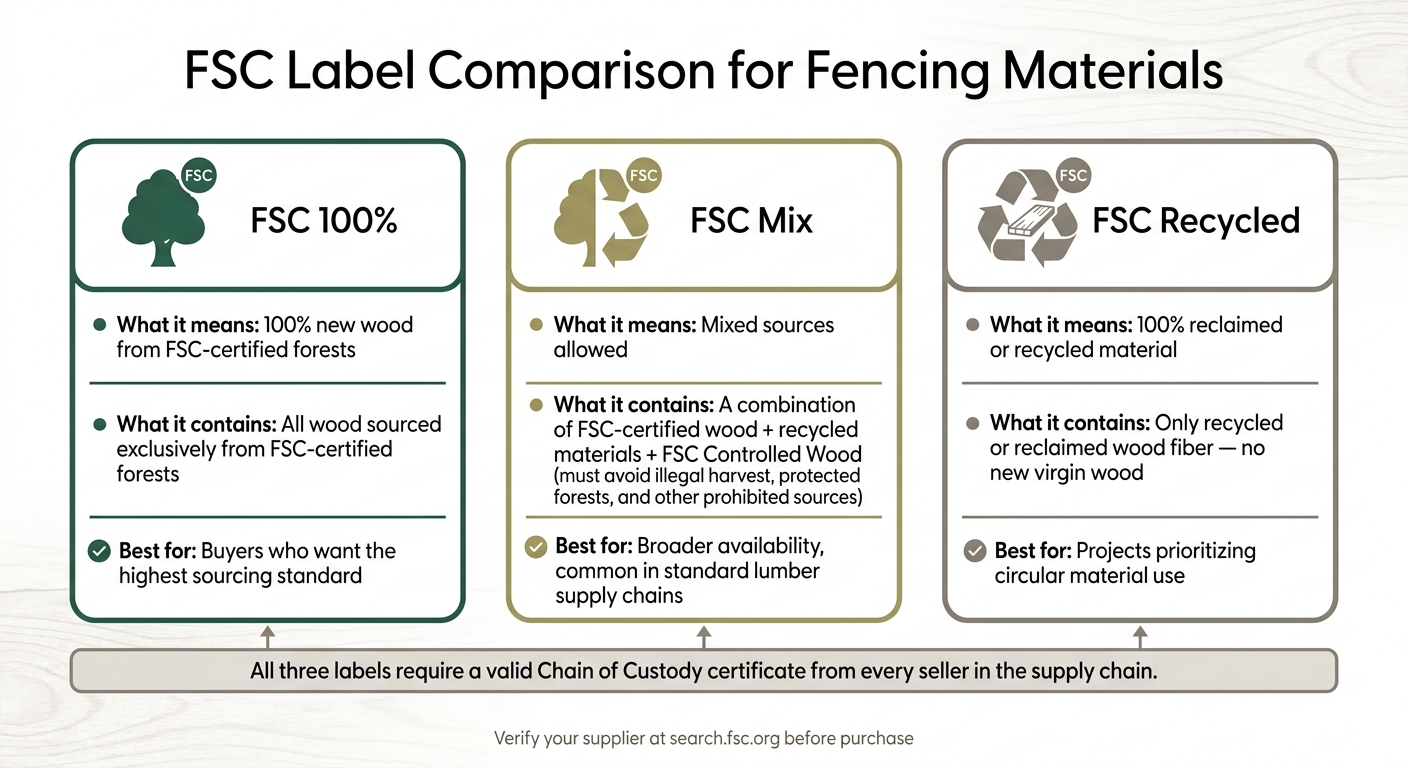
What FSC 100%, FSC Mix, and FSC Recycled Mean
| FSC Label | What It Means | What It Contains |
|---|---|---|
| FSC 100% | 100% new wood from FSC-certified forests | All wood comes from FSC-certified forests |
| FSC Mix | Mixed sources | A combination of FSC-certified wood, recycled materials, and/or FSC Controlled Wood |
| FSC Recycled | Reclaimed material | 100% recycled or reclaimed wood fiber |
FSC Controlled Wood is noncertified wood that can be used in FSC Mix products only if it avoids illegal harvest, protected forests, and other prohibited sources.
These labels give buyers a simple way to compare certified fencing before looking at cost, availability, and performance. They also set up the tradeoffs that come next.
Benefits and Limits of FSC-Certified Fencing
FSC affects both sourcing and paperwork for fence projects. After you verify an FSC claim, the next step is figuring out what that claim means for price, supply, and documentation.
Environmental and Social Benefits
One of the main upsides is less pressure on unmanaged forests. FSC-certified forestry operations must follow harvesting and natural regeneration rules that support long-term forest use. That matters because deforestation is tied to about 20% of total global greenhouse gas emissions.
FSC-certified forest managers also have to identify and protect High Conservation Values (HCVs), such as critical habitats and places with importance to local communities. In plain terms, the standards are meant to help protect biodiversity, water resources, and soil health.
The rules don’t stop at forests. They also apply to workers and local communities. Certified operations must follow International Labour Organization (ILO) core conventions, including fair wages, safe working conditions, and the right to collective bargaining. Indigenous Peoples’ rights are also part of the standard through Free, Prior, and Informed Consent (FPIC) for land-use decisions.
Practical Tradeoffs for Property Owners
For property owners, those upsides matter most when they show up in the quote, the delivery timeline, and the project file.
FSC-certified lumber often costs 0% to 20% more than non-certified options, depending on the species, where you’re buying, and current market conditions. In more competitive markets, that gap can drop to 0% to 5%. Rare species, on the other hand, may cost more.
Supply can be a sticking point too, especially if you need special dimensions. A common board size may be easy to source, while a less common profile can take more time. So even if the price looks fine, availability can still shape the job.
For commercial work, the paperwork needs extra attention. Invoices should clearly list the supplier’s FSC license code and the exact product claim – FSC 100%, FSC Mix, or FSC Recycled – so the chain of custody stays intact. That same documentation can also matter if the project is meant to support green building credits like LEED v4.1.
One point is easy to miss: FSC does not guarantee durability. The wood species and any treatment used still determine how the fence performs over time.
How to Verify FSC-Certified Fencing Before Installation
After you compare price and availability, check the FSC claim before you place the order. Just knowing FSC is part of the deal isn’t enough. You need to make sure the boards, posts, and panels that show up on-site match the claim on paper.
Labels, License Codes, and Public Search Verification
Some fencing products come with FSC labels on the wood or on the packaging. But here’s the catch: once timber is cut into smaller pieces, those pieces may not be marked one by one. That’s why the paperwork matters most.
On invoices and delivery tickets, look for the FSC claim and certificate code. In retail listings, you may see a promotional license code instead.
Before you buy, cross-check the supplier in the FSC Public Search at search.fsc.org. Make sure the certificate is active and that it covers the product category you’re buying.
What to Confirm With Your Fence Supplier or Installer
It helps to sort this out at the quote stage, not the day the truck arrives. Ask the supplier or wood fence installation professional if they hold a valid FSC Chain of Custody certificate. Then confirm a few key points:
- which FSC claim applies to the materials
- whether the sizes you need are stocked as certified material
- whether the delivery note will show the claim and certificate code
- for larger jobs, whether project certification can cover the installation
That early check can save a lot of hassle. It helps the supplier source certified stock in time and get the paperwork ready, which cuts down the risk of last-minute swaps or missing documents at delivery.
Using FSC-Certified Wood in Fence Projects
Once the FSC paperwork checks out, the next step is simple: make sure the wood lines up with the project’s sustainability goals.
FSC-certified wood can support sustainable building targets for residential, commercial, school, and managed-property fence projects. In the U.S., it may help support LEED v4.1 MR credit for responsibly sourced materials and meet project documentation needs.
That said, sourcing is only part of the story. Installation and service life matter too. With quality materials, proper drainage, and correct installation, a wood fence can last 15 to 25 years or more. And that matters. A fence that stays in service longer needs fewer replacements, which means less material waste over time.
At the end of its life, wood can often be chipped for mulch or composted, which can cut down on disposal burden.
For fence projects in Texas, Tend Fencing can help put those sourcing goals into practice. Tend Fencing helps clients choose and install wood fencing that supports responsible sourcing goals. The company also plants one tree for every fence built.
Key Takeaways for Homeowners and Property Managers
For homeowners and property managers, FSC’s value comes down to the paperwork. Before delivery, confirm:
- the Chain of Custody
- the FSC claim
- the invoice certificate code
FAQs
How do I verify an FSC claim before delivery?
First, check that your supplier has a valid FSC chain of custody certificate in the official FSC database.
Then, when you place the order, ask for FSC-certified materials and make sure the right FSC claim appears on the sales documents, such as FSC 100% or FSC Mix.
When the shipment arrives, review the invoice or delivery note. Look for the certified products, the supplier’s FSC certificate code, and the exact FSC claim listed on the paperwork.
Does FSC certification mean the fence will last longer?
Not necessarily. FSC certification mainly means the wood comes from responsibly managed forests.
That said, FSC-certified lumber is often tied to better durability and day-to-day performance. In many cases, it has stronger wood fiber, better dimensional stability, and more resistance to warping, splitting, and weather damage.
For a fence, that can mean a longer lifespan and less maintenance over time.
Which fencing materials can be FSC certified?
FSC certification applies to forest-based materials.
For fencing, that mostly means wood, including cedar and hardwoods like Ipe, Cumaru, Teak, and Tigerwood. Bamboo can also qualify for FSC certification.
These materials may be certified as solid wood, plywood, or veneers.