
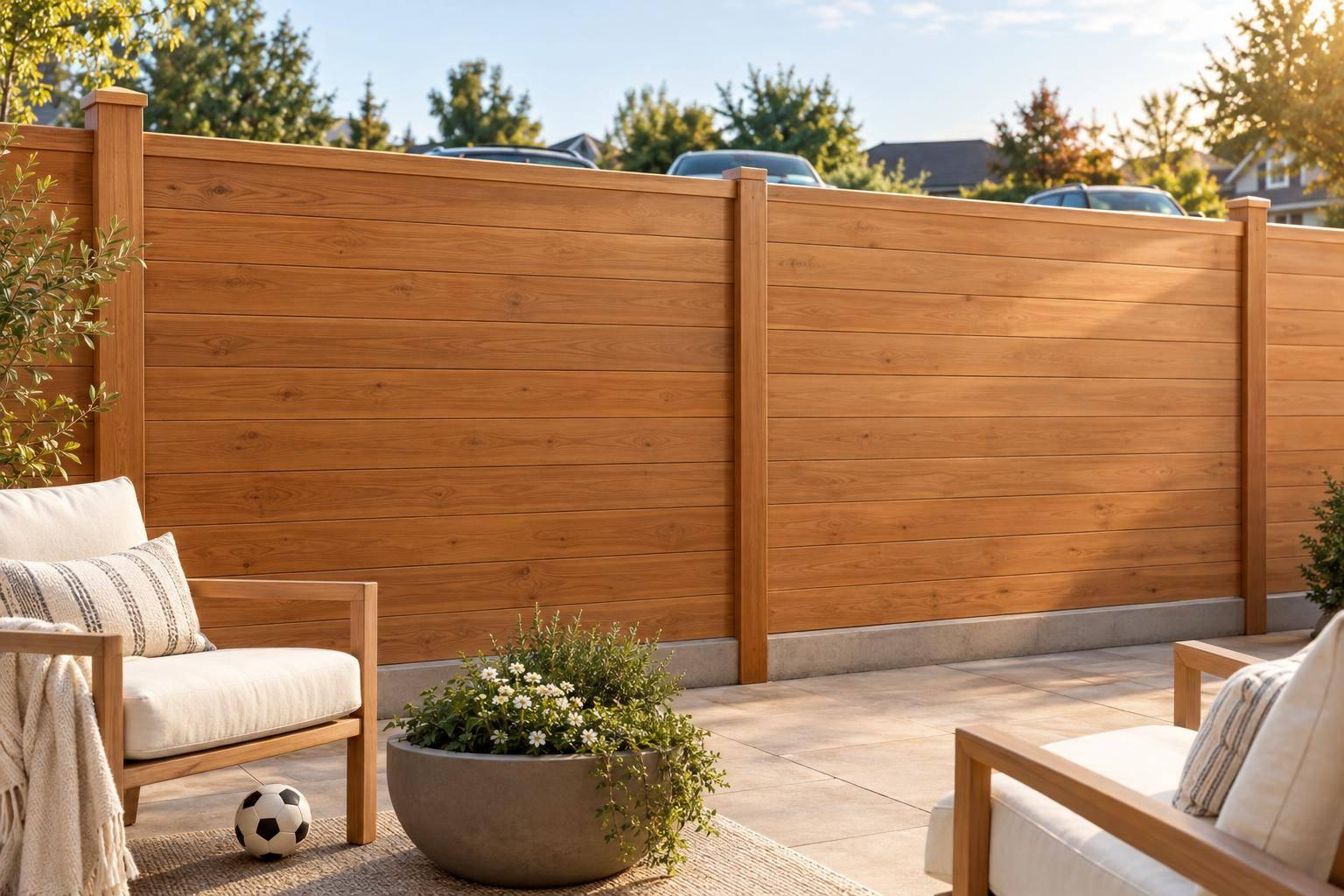
I’d start by blocking the view between the road and your seating area – not just choosing a taller fence. For highway traffic, a barrier that just blocks that sightline may reduce noise by about 5 dB, though results depend on your yard.
Here’s what I’d check before building:
- Height and location: Account for slopes, road height, and seated or standing listeners. Upstairs windows may remain exposed.
- Length and gaps: Limit paths around fence ends, beneath panels, and through gates. Use solid, dense panels with tight joints.
- Site rules and safety: Confirm Plano permits, property lines, drainage, and structural needs. Contact Texas 811 at least two working days before digging.
My goal would be <u>a quieter outdoor space</u> – not complete silence. A site-plan review with a local installer, such as Tend Fencing, can help check the layout before construction.
Noise-Reducing Fences: Height, Placement, and Sound Paths
DIY Acoustic Fence
sbb-itb-d1d0a96
How Fence Height Changes Sound Paths
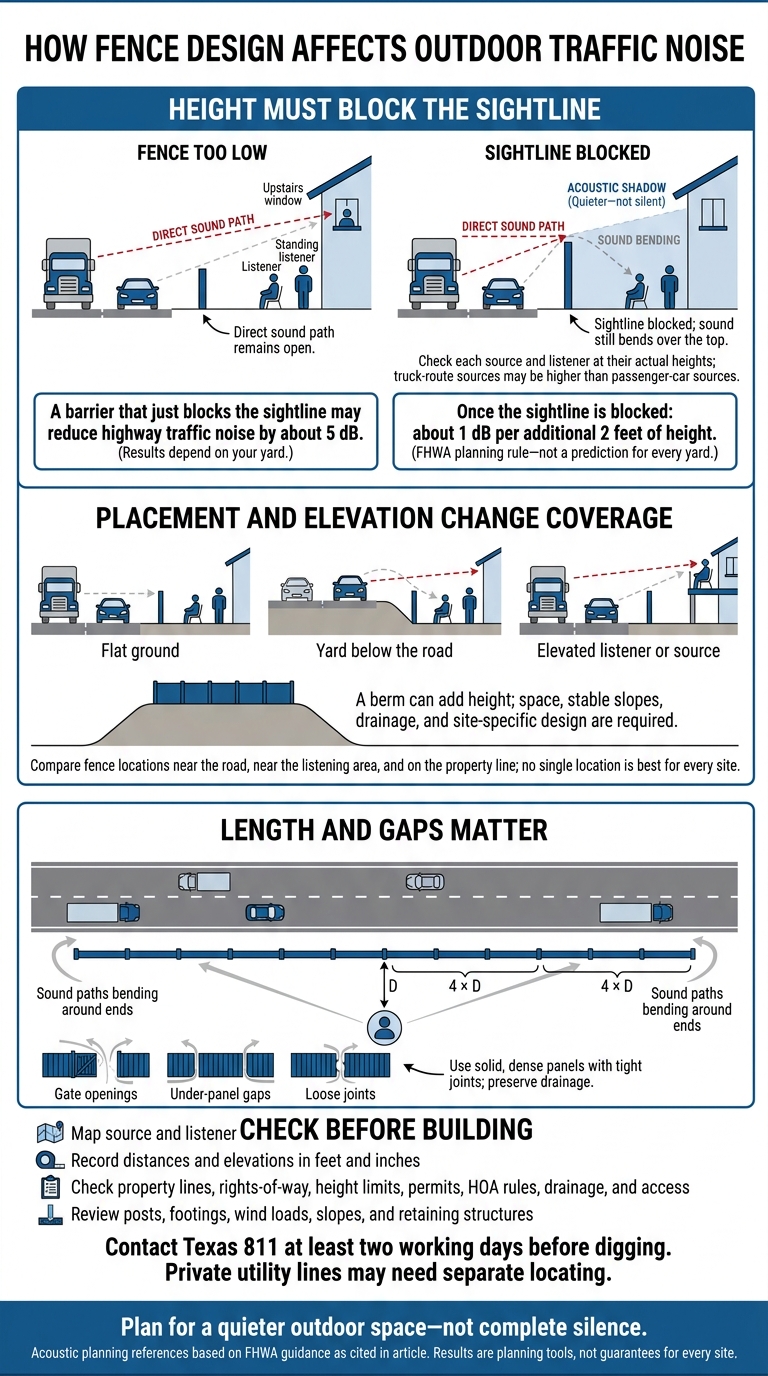
When a fence blocks the line of sight, sound must bend over the top or around the ends. The quieter space behind it is called the acoustic shadow. It’s quieter – not silent – because some sound still gets through those paths.
Match Fence Height to the Source and Receiver
Draw a side-view sketch connecting the noise source and listening point at their actual heights. The fence top must cross that line. Check seated and standing positions separately. Along truck routes, use the highest relevant noise source, not just passenger-car height. Fence height needs to account for both the source and the listener.
Once the sightline is blocked, FHWA uses about 1 dB per additional 2 feet of height as a planning rule – not a prediction for every yard. Extra height generally does less than blocking the sightline in the first place. Check gaps and paths around the ends before building higher.
Why Fences Often Leave Upstairs Windows Exposed
A second-story window, balcony, or elevated deck may sit above the acoustic shadow. Each needs its own sightline check. A taller fence can help, but its location determines how much of the sound path it blocks.
Privacy Fences vs. Noise Barriers
Residential privacy fences block views. Noise barriers are sized for a specific source, listening point, and target noise reduction. Both allow some sound to bend over the top and around the ends, so sightline coverage matters more than the label.
Where to Place a Fence on Flat or Sloped Ground
Fence location matters as much as height. Choose a line that blocks the clearest path between the sound source and the listener without interfering with drainage, access, or property limits.
Once you’ve mapped that line of sight, find where you can block it with the fewest site conflicts.
Roadside Fence Placement and Length
A roadside fence can screen traffic from the yard, but it must stay outside the public right-of-way. It also needs to keep sight lines clear at intersections and driveways while leaving room for drainage, utilities, and maintenance access. If those limits rule out a useful location, placing the fence closer to a patio or courtyard may work better.
To limit sound traveling around the ends, FHWA suggests extending a barrier in each direction by about four times the distance between the listener and the fence. This is a planning reference, not a rule for every site. Driveway openings, intersections, and gaps can reduce performance.
Terrain also changes a fence’s effective height. The same fence line can perform very differently on a hill, in a cut, or on a berm.
How Slopes, Road Elevations, and Berms Affect Placement
Use actual elevations – including retaining walls and elevated patios – not just fence height.
- Flat ground: Check whether the fence’s acoustic shadow covers both seated and standing listeners.
- Yard below the road: Elevated vehicles may remain exposed. A barrier near the top of a cut slope can use the existing ground height.
- Yard above the road or an elevated neighboring source: Listeners or sound sources may sit above the acoustic shadow. Check each patio and window separately.
A berm can add height beneath the barrier, but it needs space, stable slopes, drainage planning, and a site-specific design. Don’t pile soil against an existing retaining wall without a structural and drainage check.
Before choosing a fence line, map the sound path from above and from the side.
Map Sound Paths Before Choosing a Fence Location
Draw a top-down site plan showing traffic direction, boundaries, rights-of-way, driveways, proposed fence lines, and the patios, rooms, or windows you want to protect.
Compare three fence locations: near the road, near the patio or window, and on the property line. Check whether views of the roadway remain open around either end of each fence.
Record distances and heights in feet and inches, including road grade, retaining walls, and patio elevations. Then draw a side view for each listening point to compare the fence lines.
Build a Solid Fence and Check Site Requirements
Panel Weight, Ground Gaps, and Gates
Once you’ve set the height and placement, focus on construction. Sound control depends on density, continuity, and sealed joints that interrupt the sound path. Use dense panels, tight board spacing, strong posts, and sealed joints. Heavier solid panels need stronger posts and deeper footings.
On uneven ground, use stepped or racked panels while keeping drainage paths open. Don’t bury wood or block swales just to close a gap.
Check gates, corners, joints, and gaps caused by seasonal shrinkage. Closely fitted gates, overlapping sections, or returns can help reduce direct sound paths.
Plano Permits, Property Lines, and Structural Checks
Permits, property lines, and structural limits may rule out an otherwise effective fence line. Before ordering materials, confirm local rules for height, setbacks, permits, inspections, driveway visibility, rights-of-way, HOA approval, and drainage. Check survey boundaries and easements, too. Plano permit materials typically require a site plan and footing details for masonry fences or masonry columns.
Contact Texas 811 at least two working days before digging so participating utilities can mark underground lines. Private utility lines may need separate locating.
Arrange a professional structural or site review for tall fences, slopes, retaining structures, road-facing sites, automatic gates, and commercial properties. Added height and heavier panels require stronger posts, deeper footings, and wind-load checks.
Review Your Fence Layout With Tend Fencing
For a local installer’s review before construction, bring your site plan to Tend Fencing. The team can offer guidance on height, placement, terrain changes, panel continuity, and gate access.
Conclusion: Plan Around the Noise Source and Listening Area
Start by mapping the noise source and the patio, seating area, or window you want to shield. Check elevations and sightlines before choosing a fence height and location that meet local code.
The barrier needs enough height, length, and continuity to limit sound passing over the top or around the ends.
Even with a well-planned layout, upstairs windows may sit above the fence’s protection zone and remain exposed to direct traffic noise. Before construction, confirm that the layout meets local rules and structural requirements.
FAQs
Should I raise my fence or move it closer to my patio?
Place the fence closer to the noise source, not the patio. This generally works better because it blocks the direct sound path earlier. Make the fence long enough to limit sound traveling around its ends. A taller, solid fence can also reduce noise.
Before making changes, check local height limits and permit requirements. Plano allows fences up to 8 feet tall in side and rear yards.
How can I tell if a fence will block truck noise?
Check whether the fence would block the direct line of sight between the truck noise source and the area you want to protect. The fence needs to be solid and tall, with no gaps at the joints, gates, or base.
Low-frequency traffic noise is hard to block. Consult a professional for an acoustic or structural review, especially if you’re trying to protect upstairs windows. In Plano, TX, Tend Fencing can assess your site’s noise-reduction needs.
What can I do if my upstairs windows remain exposed?
Sound can pass over a ground-level fence and reach upstairs windows directly. A standard residential fence can’t practically be built high enough to block that path. Get a professional acoustic or structural review to assess whether noise can be meaningfully reduced upstairs.
In the meantime, make sure windows, doors, and ventilation points are properly insulated and sealed to help reduce noise entering those rooms.