
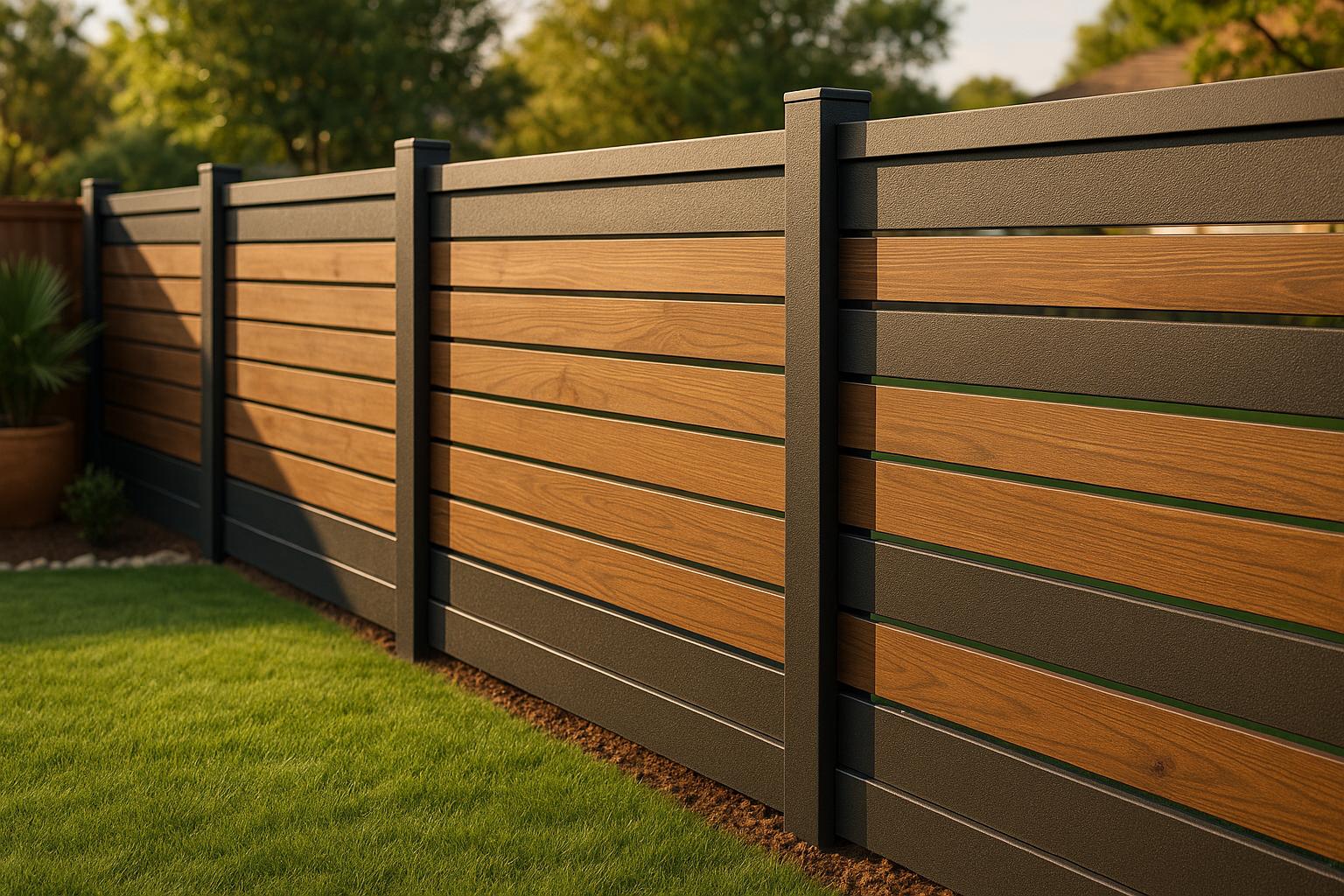
Fencing in 2025 has evolved beyond simple property boundaries. Today, fences combine design, durability, and functionality, reflecting personal style and modern architecture. In Plano, TX, and North Texas, homeowners and businesses demand fences that are visually appealing, low-maintenance, and eco-conscious. Here’s a quick breakdown of the top trends shaping fencing this year:
- Sustainable Materials: Recycled composites, bamboo, and FSC-certified woods offer durability and reduced environmental impact.
- Mixed Materials: Combining wood and metal creates striking designs that balance strength and beauty.
- Horizontal Slats: Sleek, modern designs with clean lines that enhance privacy and curb appeal.
- Textured Finishes: Patterns like chevron or basket weave, paired with bold colors like matte black or dark green, turn fences into standout features.
- Personalized Designs: Custom touches like laser-cut panels, integrated lighting, and unique stains reflect individual or brand identity.
These trends highlight the importance of expert craftsmanship to ensure precision, longevity, and compliance with local regulations. Companies like Tend Fencing lead the way by combining modern aesthetics with eco-friendly practices, such as planting a tree for every fence built. Whether for residential or commercial properties, today’s fences are about more than security – they’re a blend of style, functionality, and long-term value.
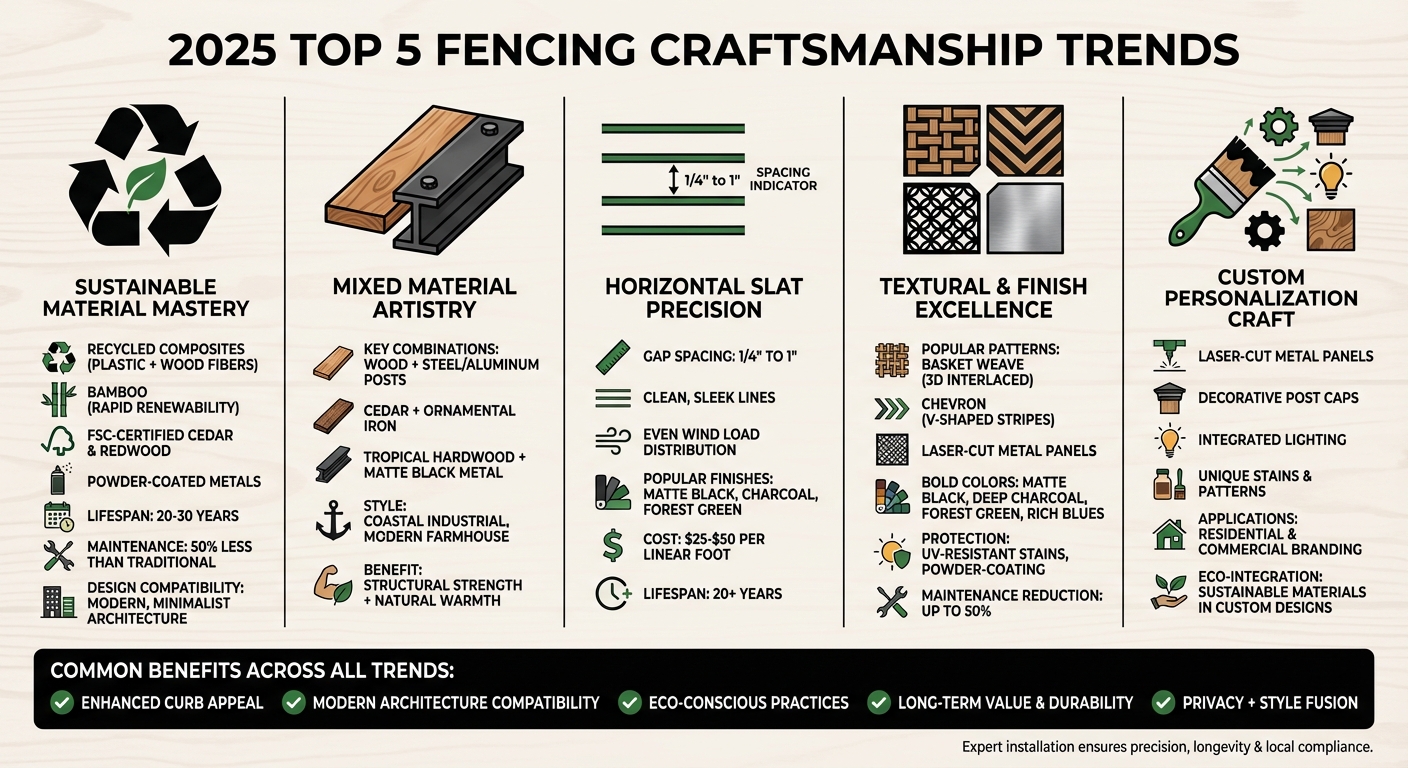
Top 5 Fencing Craftsmanship Trends 2025: Materials, Durability & Design
1. Sustainable Material Mastery
Eco-friendly materials and practices
Recycled composite boards, made from a blend of recycled plastics and wood fibers, not only reduce waste but also resist rot and insect damage. Bamboo, known for its rapid renewability, brings a natural warmth to various designs. For those seeking durability with minimal chemical use, FSC-certified cedar and redwood offer beautiful natural grains and long-lasting performance.
Today’s professional installers focus on more than just material selection – they also adopt techniques that extend the lifespan of these materials. For instance, powder-coated metals and composites help reduce the need for frequent replacements, and proper treatments enhance bamboo’s ability to withstand weather. Tend Fencing takes it a step further by partnering with One Tree Planted to plant a tree for every fence built, combining craftsmanship with environmental responsibility. These eco-conscious materials are not only sustainable but also exceptionally durable.
Durability and material strength
When it comes to durability, sustainable materials stand toe-to-toe with traditional options. Recycled composites, for example, match the strength of wood and vinyl while requiring far less maintenance. Properly treated bamboo fences can endure harsh weather for years, performing as reliably as conventional wood. Cedar and redwood, especially when left with natural finishes, handle North Texas weather with ease, needing little upkeep. Powder-coated aluminum or steel, on the other hand, can last for decades, cutting down on repainting and chemical treatments.
The long lifespan of these materials means lower costs in the long run. Fences that last 20 to 30 years lead to fewer replacements, less material waste, and reduced maintenance expenses over time. This combination of strength and sustainability makes them a smart choice for both residential privacy fences and commercial installations, all while enhancing the aesthetic appeal of modern architecture.
Compatibility with modern architecture
Sustainable materials seamlessly align with contemporary design trends. Horizontal slats crafted from composite or sustainably sourced wood create sleek, minimalist lines that pair perfectly with modern homes. Mixed-material designs, like bamboo paired with black metal posts, offer a rustic-meets-modern vibe while staying environmentally conscious. These materials also complement neutral color palettes and bold contrasts, making them a natural fit for urban and suburban landscapes across Plano and nearby areas. The result? Fencing that not only boosts curb appeal but also prioritizes sustainability and security.
2. Mixed Material Artistry
Visual Appeal and Design Detail
Blending wood and metal in fencing creates a striking contrast that enhances curb appeal. The natural warmth of wood combined with the sleek, industrial look of steel or aluminum adds depth and texture to any property. Picture tropical hardwood slats paired with matte black steel posts – this combination exudes a coastal industrial vibe. On the other hand, wood matched with black metal posts fits seamlessly with modern farmhouse aesthetics. Custom designs, like laser-cut metal panels paired with the rich grain of natural wood, bring a sense of harmony to both residential and commercial properties in Plano.
Wood’s organic texture softens the rigid appearance of metal, achieving a perfect balance that works well for both privacy and decorative fences. For example, Tend Fencing has completed projects that combine Chicago brick columns with ornamental iron and cedar wood. These designs blend multiple elements to create a unique charm and character, enhancing not just the aesthetic appeal but also the property’s value. This fusion of materials doesn’t just look good – it also ensures a sturdy and visually captivating structure.
Durability and Material Strength
Mixed material fences are built to last by combining the best features of each material. Metal frames and powder-coated posts provide the structural strength needed to resist corrosion and withstand the test of time with minimal maintenance. Meanwhile, wood adds a touch of natural beauty and even provides some insulation. This hybrid approach ensures durability, reducing the need for frequent repairs or replacements. For instance, projects that integrate 6-foot ornamental steel with cedar wood demonstrate how this combination delivers both longevity and visual appeal.
Compatibility with Modern Architecture
Beyond their strength and style, wood–metal fences are a perfect match for modern architectural trends. Their clean lines and neutral tones make them a natural choice for contemporary homes. Horizontal wood slats mounted on black metal posts, for example, complement minimalist designs while adding a touch of warmth to urban industrial aesthetics. These fences align effortlessly with modern color schemes, offering combinations like charcoal gray metal with natural cedar or stained wood, creating a polished and professional look that defines boundaries without obstructing views.
This blend of materials also ties into sustainable design practices, offering long-lasting style and functionality. Wood-metal fences are becoming a defining feature of 2025 residential designs, thanks to their versatility across architectural styles. Whether enhancing a modern farmhouse, a coastal retreat, or a commercial space, this combination elevates outdoor areas while maintaining the open, airy feel that modern architecture values.
3. Horizontal Slat Precision
Visual Appeal and Design Detail
Horizontal slat fencing brings a sleek, modern touch to outdoor spaces. Its clean lines create an open, inviting look while maintaining privacy. The craftsmanship behind these fences is all about precision, with evenly spaced gaps – usually between 1/4 inch to 1 inch – that let in just the right amount of light. This thoughtful design transforms the fence from a simple boundary into an eye-catching feature.
Popular finishes like matte black, charcoal, and forest green provide striking contrasts against natural surroundings or lighter home exteriors. For added flair, designs such as chevron-patterned slats or stained wood paired with steel posts introduce texture and depth. These styles have become especially popular in 2025, aligning with coastal and modern farmhouse trends. A great example is Tend Fencing, which installs horizontal cedar fences that consistently impress homeowners.
Durability and Material Strength
Horizontal slat fences aren’t just about looks – they’re built to last. Their design distributes wind loads more evenly than traditional vertical fences, reducing strain on individual components. Materials like powder-coated metal, aluminum, and treated composites are resistant to rust, fading, and warping, making them excellent choices for long-term use. For those who prefer a mix of materials, wood-metal hybrids combine the natural charm of wood with the strength of industrial-grade metals.
Cedar remains a top pick for horizontal installations due to its natural resistance to weathering. Its durability is further enhanced when installed with proper drainage and ventilation, key factors in extending the lifespan of the material. Tend Fencing emphasizes this approach:
"We use only the finest materials and employ industry-leading techniques to ensure that your fence not only looks stunning but also stands the test of time." – Tend Fencing Owner
While the upfront cost ranges from $25 to $50 per linear foot, the investment pays off with a lifespan exceeding 20 years and lower maintenance needs. This durability makes horizontal slat fences both practical and stylish.
Compatibility with Modern Architecture
Horizontal slat fences pair beautifully with contemporary and minimalist homes, thanks to their clean, balanced appearance. Neutral or bold finishes complement a variety of exterior styles, from beige and white facades to stone accents. These fences fit seamlessly into architectural designs ranging from craftsman bungalows and coastal ranches to modern urban homes.
For instance, stained wood slats combined with black metal posts create a sophisticated urban vibe, while composites deliver a sleek, industrial look. This versatility aligns perfectly with 2025’s trend of blending materials, making horizontal slat fences a natural choice for modern design enthusiasts.
NEW Garden Fence Design Trends for 2025 | Backyard Garden Wall Ideas | Modern Home Exterior Design
sbb-itb-d1d0a96
4. Textural and Finish Excellence
Modern fencing has taken a bold step forward, blending innovative materials and cutting-edge designs to achieve a new standard in texture and finish.
Visual Appeal and Design Detail
A fence isn’t just about function anymore; it’s also about making a statement. Homeowners in 2025 are stepping away from plain, single-tone surfaces and embracing textures that add character. Basket weave patterns, for instance, interlace horizontal and vertical slats to create a woven, three-dimensional effect. Chevron designs bring energy with their dynamic V-shaped stripes, while laser-cut metal panels offer intricate, custom patterns that feel like works of art.
When it comes to color, bold choices are taking center stage. Matte black has become a favorite for its versatility, acting like a picture frame that highlights the natural beauty of landscaping. Deep charcoal, forest green, and rich blues are also gaining popularity, offering striking contrasts against lighter home exteriors. These finishes transform fences into architectural features, adding both style and substance.
Durability and Material Strength
Modern finishes are not just about looks – they’re built to last. Powder-coated finishes on metals like aluminum, steel, and ornamental iron provide a protective layer that resists weathering while maintaining their sleek appearance. For wood fences, UV-resistant stains enhance the natural beauty of cedar and pine while guarding against warping and fading.
Recycled composite materials have also become a go-to option. They mimic the look of wood but come with added benefits, such as resistance to rot, insects, and warping. Even in challenging climates like North Texas, these materials can cut maintenance efforts by up to 50%.
Compatibility with Modern Architecture
The clean lines and minimalist designs of modern homes pair perfectly with textured fencing when done right. Horizontal wooden slats combined with matte black metal posts create a seamless extension of contemporary and mid-century designs. This balance of warm wood tones and sleek metal frames brings together natural and industrial elements, reflecting a broader trend of merging aesthetics with functionality.
Tend Fencing specializes in delivering this craftsmanship to homes in Plano, TX. Their textured finishes on ornamental iron not only enhance durability and style but also align beautifully with modern architectural trends, all while supporting eco-conscious practices.
5. Custom Personalization Craft
Modern fence design is no longer just about functionality – it’s about making a statement. Today, customization plays a central role in fence craftsmanship, blending style, practicality, and even sustainability.
Visual Appeal and Design Detail
Fences have evolved into a platform for creative expression. Homeowners and businesses now see them as an extension of their personality or brand, not just as barriers. Custom touches like laser-cut metal panels, decorative post caps, integrated lighting, and unique stains allow fences to stand out while enhancing the overall look of a property.
Take Tend Fencing’s project for Robert Wright, for example. It featured specialty Chicago brick columns, varying ornamental fence heights, and board-on-board cedar to create a striking look across an expansive property. Another standout project, led by Gunnar Thompson, combined an 8-foot board-on-board cedar fence for privacy with a 6-foot ornamental fence in the front yard. These examples show how personalization can meet both aesthetic desires and practical needs.
This emphasis on customization ensures that fences not only look great but also blend seamlessly with the surrounding architecture.
Compatibility with Modern Architecture
A well-designed custom fence can enhance a home’s architectural style. For instance, horizontal slats, clean lines, and darker finishes work beautifully with contemporary and mid-century modern homes. On the other hand, ornamental ironwork and warm wood tones often complement classic or craftsman designs. The secret lies in customizing every detail – such as panel height and slat spacing – to create a cohesive look that feels like a natural extension of the property.
Lucas Frederking’s horizontal cedar fence is a great example of this. Its sleek, modern design perfectly complements contemporary architecture. In cases where homeowners must adhere to HOA rules, customization can still strike a balance between individuality and compliance. A prime example is Jacob Kelly’s project, which featured a 5-foot ornamental fence with a puppy panel – a design that met both functional and aesthetic requirements while staying within HOA guidelines.
Eco-Friendly Materials and Practices
Customization doesn’t have to come at the expense of the environment. Many personalized designs now incorporate sustainable materials like recycled composite boards, bamboo, powder-coated metals, and responsibly sourced wood. These materials not only reduce environmental impact but also allow for creative patterns like chevron or basket weaves.
Tend Fencing embraces this approach, offering custom solutions in wood, ornamental iron, chain link, and automatic gates. Their designs reflect personal style while prioritizing sustainability, making them a go-to choice for eco-conscious homeowners in the Plano, TX area.
Personalized fences today are more than just boundaries – they’re a fusion of style, functionality, and environmental responsibility.
Conclusion
The trends shaping fencing in 2025 highlight the artistry and precision required to bring them to life. From the use of sustainable materials like powder-coated metals and recycled composites to the sleek appeal of horizontal slats and bold finishes, these five craftsmanship trends – sustainable material mastery, mixed material artistry, horizontal slat precision, textural and finish excellence, and custom personalization – combine durability, modern design, and environmental awareness. Together, they offer fences that enhance security, elevate curb appeal, and reflect a commitment to eco-conscious practices.
However, these trends are only as effective as their execution. Expert installation ensures not only flawless engineering and seamless integration of smart features but also strict adherence to local regulations, making professional craftsmanship a cornerstone of these advancements.
In Plano, Tend Fencing has been at the forefront of this evolution, with over 15 years of experience creating custom fences that balance security, style, and functionality. Using top-tier materials and innovative designs, they bring these trends to life.
"At Tend Fencing, we believe in more than just putting up barriers; we’re in the business of crafting dreamscapes." – Tend Fencing
In step with modern sustainability efforts, Tend Fencing goes a step further by planting a tree for every fence they build. This initiative aligns with the industry’s growing focus on environmental responsibility, ensuring that each fence not only protects and beautifies your property but also contributes to conservation efforts. Together, these elements define the future of fencing – where exceptional design meets a commitment to sustainability.
FAQs
What are the advantages of choosing sustainable materials for fencing?
Choosing eco-conscious materials for fencing comes with multiple advantages. For starters, it’s a step toward protecting the planet by cutting down on waste and preserving natural resources. Plus, these materials tend to be tougher and longer-lasting, which means fewer repairs or replacements over time.
What’s more, sustainable fencing fits perfectly with today’s environmentally-friendly mindset, giving homeowners and businesses the chance to make responsible decisions without compromising on appearance or quality. On top of that, it can reduce maintenance expenses in the long run, making it a win for both your wallet and the environment.
How do mixed material fences add to modern architectural styles?
Mixed material fences offer a striking mix of textures, colors, and materials that can elevate the look of modern architecture. By blending components such as wood, metal, and stone, these fences create eye-catching designs that pair beautifully with contemporary homes and commercial properties.
Beyond their stylish appearance, these fences are highly adaptable, offering endless opportunities for customization to fit individual design tastes. They also bring practical benefits like enhanced durability, added privacy, or eco-friendly options, making them a smart choice for property owners looking to combine function with flair.
What are the customization options for creating a unique fence design?
When creating a custom fence, there are plenty of ways to make it fit your style and needs. You can opt for detailed patterns and designs, wood staining and sealing to boost durability and color, decorative steel accents, or customized gate setups. Even chain-link fences can be customized with unique layouts to enhance both functionality and appearance.
These choices not only add to the security of your property but also elevate its visual charm, ensuring your fence blends seamlessly with your outdoor space while meeting all practical needs.