
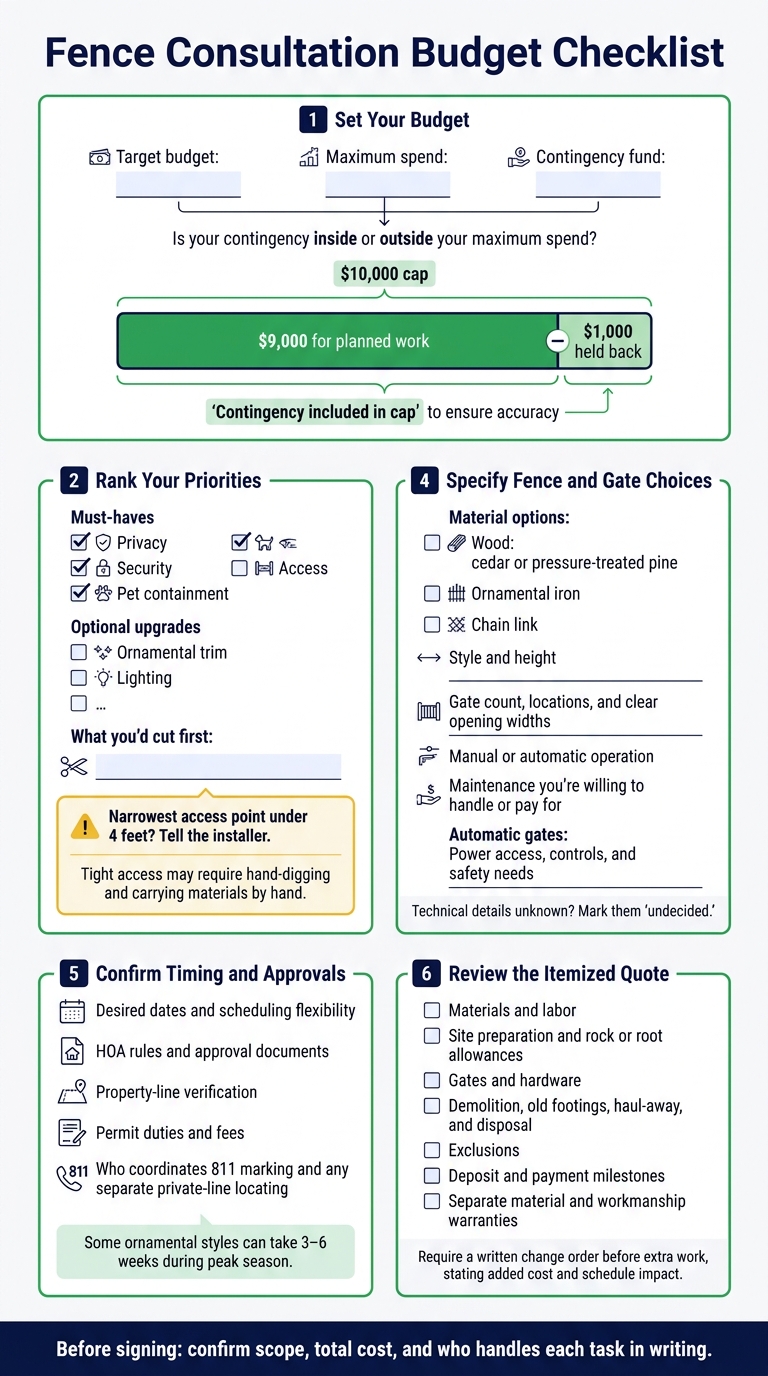
I’d bring three numbers to a fence consultation: my target budget, spending limit, and contingency fund. I’d also state whether that reserve is inside or outside my limit – a $10,000 cap with $1,000 held back leaves $9,000 for planned work.
My consultation packet would include:
- Priorities: Must-haves, optional upgrades, and what I’d cut first.
- Site details: Fence lengths, heights, gate openings, survey, and photos of obstacles or tight access.
- Fence choices: Privacy, security, pet needs, materials, style, and upkeep.
- Timing and approvals: Desired dates, HOA rules, permits, property lines, and utility locating.
- Quote terms: Itemized costs, exclusions, payment dates, warranties, and written approval for extra work.
Before signing, I’d <u>confirm the scope, total cost, and who handles each task in writing</u>.
Fence Consultation Budget Checklist
3 Mistakes Homeowners Make When Getting Fence Quotes (That Cost You Money)
sbb-itb-d1d0a96
Property Measurements and Site Conditions
Use your site details to turn your budget into a realistic residential fence layout.
Bring Measurements, Surveys, and Sketches
☐ Approximate length of each fence run: _____ linear feet
☐ Planned height of each section: _____ feet
☐ Specific gate locations
Bring any surveys you have, along with a simple labeled sketch or photos showing corners, height changes, slopes, obstacles, and equipment access. This helps the installer confirm the scope and spot problems before preparing an estimate.
Photograph Obstacles and Access Limits
☐ Slopes and grade changes
☐ Trees, exposed roots, rocks, and dense brush
☐ Concrete, sheds, and AC units
☐ Drainage concerns
☐ Existing posts and footings
☐ Narrow access points, parking, and material staging space
Walk and photograph the full route from the street to the fence line. Note the narrowest entry point, plus any valve boxes, low-voltage lighting, hidden drain lines, roots, or rock. These details help narrow down material choices and installation pricing.
If the narrowest point is under 4 feet, tell the installer so they can check equipment access. Tight access may require hand-digging and carrying materials by hand, adding labor and installation time.
Fence Purpose, Materials, and Gates
Match your fence type, gates, and accessories to your budget and site conditions. Start with what the fence needs to do, then choose your gate setup and materials.
Define Privacy, Security, and Access Needs
Mark each need below as must-have or optional. Taller fences and extra or broader gate openings affect materials, hardware, posts, footings, and labor. Gate placement and opening width also shape the final scope.
☐ Full privacy ☐ Partial screening ☐ Open views
☐ Security ☐ Pet containment ☐ Boundary definition
☐ Gate count: _____; clear opening width for each: _____ feet
☐ Gate locations: _____; operation: manual or automatic. For automatic gates, list power access, controls, and safety needs.
☐ People, vehicle, and service access
☐ Pet size and containment needs
List Material and Design Preferences
☐ Wood: cedar or pressure-treated pine ☐ Ornamental iron ☐ Chain link
☐ Height: _____ feet; style: board-on-board / side-by-side / other
☐ Top caps, trim, or post casing
☐ Posts, rails, hardware, and footings: specified or undecided
☐ Decorative gate details: specified or undecided
☐ Maintenance you are willing to handle or pay for: _____
Bring photos and note the features you want, including privacy level, spacing, trim, caps, or post casing. Unsure about technical details? Mark them undecided rather than guessing. Tend Fencing can recommend specifications that fit your priorities and spending limit.
Compare Material Costs and Maintenance
| Material | Best for | Cost drivers | Maintenance needs |
|---|---|---|---|
| Wood | Privacy and classic yards | Cedar, layout, trim, and finish choices affect price. | Budget for staining or sealing every 2–3 years. |
| Ornamental iron | Security and open views | Custom designs and gate details increase fabrication costs. | Occasional cleaning and rust prevention if not coated. |
| Chain link | Pet containment and perimeter security | Height, length, and gate needs affect total cost. | Routine condition checks and hardware upkeep. |
Compare installed scope, not just material names. Height, length, site conditions, gate specifications, and future upkeep all affect the total. When reviewing itemized quotes line by line, ask which optional design details you can remove without losing your must-have functions.
Scheduling, Approvals, and Quote Review
Once you’ve set the scope, confirm dates, approvals, and quote terms before finalizing the fence quote.
Share Deadlines and Approval Documents
- ☐ Desired consultation and installation dates
- ☐ Project deadline and scheduling flexibility
- ☐ HOA guidelines, approval letters, survey, and easement documents
- ☐ Permit status and 811 marking date
- ☐ Site access dates
With approvals and timing clear, move on to pricing and contract terms.
Check property-specific rules – not just local requirements. Ask about corner-lot visibility triangles, HOA requirements, and clipped-corner restrictions. Before installation, document property-line verification, permits, fees, and inspections to confirm the job can proceed as quoted. If boundaries are disputed, hire a licensed surveyor.
Agree on who will coordinate 811 marking and any separate locating for private sprinkler, lighting, pool, or septic lines. Share access restrictions and unfinished site work early. Before committing to a deadline, check material lead times: some ornamental styles can take 3–6 weeks during peak season.
Review Itemized Costs and Contract Terms
- ☐ Material types, grades, dimensions, quantities, and linear footage by run
- ☐ Labor, site preparation, and rock or root allowances
- ☐ Gates and hardware
- ☐ Demolition, old concrete removal, haul-away, and disposal fees
- ☐ Permit duties and fees
- ☐ Deposit, payment milestones, quote expiration, and price-escalation terms
- ☐ Written material and workmanship warranties, including exclusions
- ☐ Installation timing and how weather delays affect scheduling
Ask for itemized costs and exclusions, not just a total. Confirm whether the crew will remove old footings or cut posts at grade. Require a written change order before any extra work begins, with the added cost and effect on the schedule spelled out.
Compare the total with your target budget and maximum spend. Flag allowances that could increase the final bill, and confirm the final scope before signing. Tie payments to project milestones, and make sure warranty terms list material and workmanship coverage separately.
Conclusion: Bring Your Consultation Packet
Bring these documents and details to your consultation:
- [ ] Budget, maximum spend, and contingency funds
- [ ] Must-haves and optional upgrades
- [ ] Fence run measurements, heights, and sketches
- [ ] Site photos showing slopes, obstacles, and access
- [ ] Survey or plat
- [ ] Material, style, and gate preferences
- [ ] Target completion date and schedule
- [ ] HOA and permit documents
Rank optional features by what you’d drop first. Also, make clear whether your contingency funds are included in your maximum spend.
Review the packet with Tend Fencing, and confirm the scope, itemized costs, and responsibilities in writing before work begins.
FAQs
How much should I set aside for unexpected fence costs?
Set aside extra money for unexpected site prep, like leveling uneven ground or removing old fencing. Budget $100 to $500 for permits and utility markings, plus about 10% extra materials for adjustments or future repairs.
These budget allowances help prevent shortages and delays. They can also help you avoid paying more later to fix drainage, grading, or installation problems.
What if my must-haves exceed my fence budget?
Share your priorities early so your project’s scope fits your budget without cutting corners on security or zoning compliance. You could choose materials with lower upfront costs, adjust the fence height, or start with the sections that matter most.
Tend Fencing offers consultations in Plano, TX, to help tailor a fence design to your vision and budget.
Can I get an estimate without a property survey?
You can usually get a preliminary estimate without a property survey, but it may come with assumptions or conditions.
For a reliable quote, Tend Fencing recommends using your survey or plat to confirm measurements and property boundaries, plus checking HOA and permit rules. If you don’t have either document, plan for a site visit. The estimate may not be firm until the boundaries are clear.