
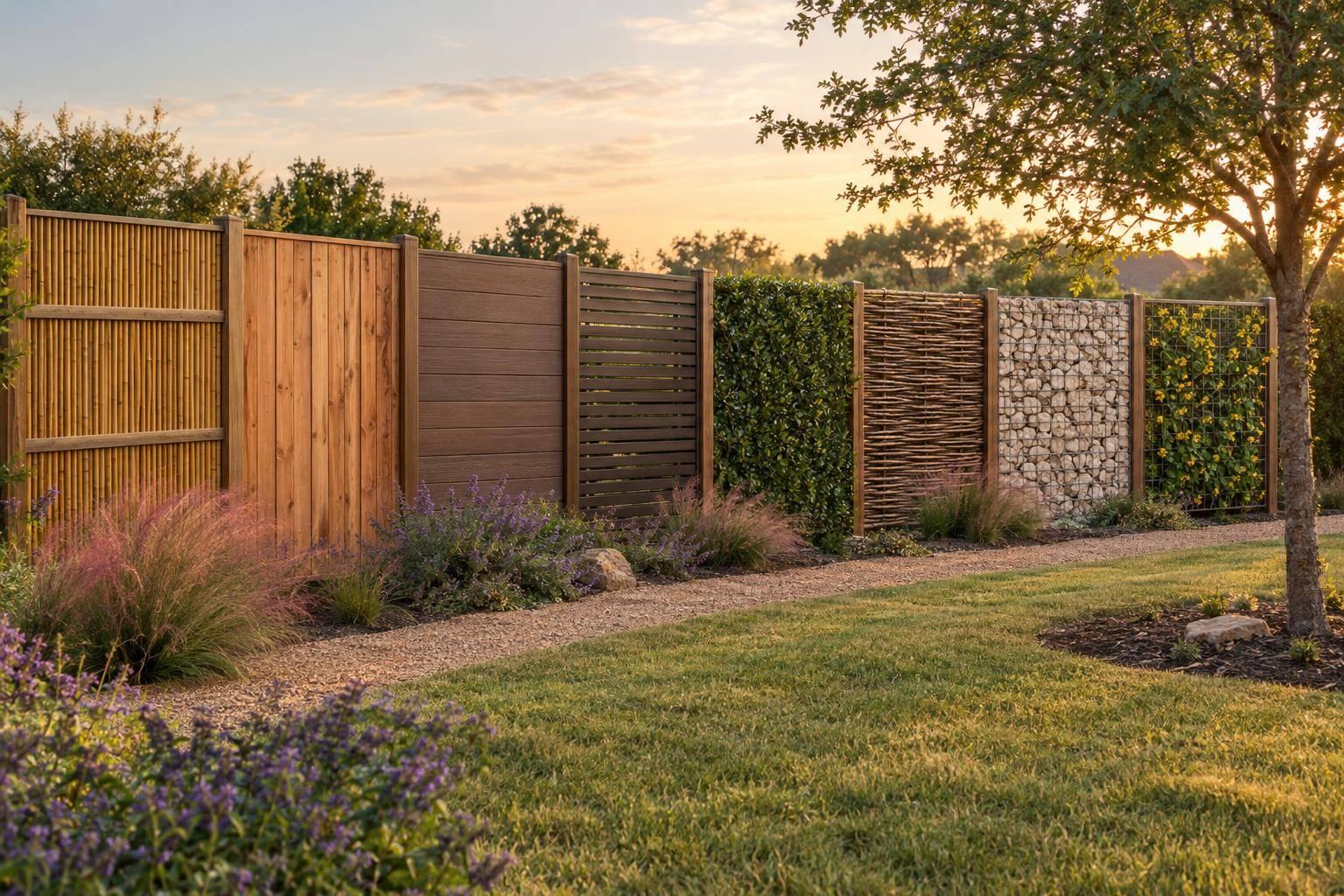
I’d choose a fence by how long it will last in your yard – not just its “green” label. For immediate privacy, I’d start with wood, recycled plastic, or composite. For open boundaries, I’d consider recycled-content metal. Before buying, check drainage, wind exposure, and who will accept the material after removal.
I compare eight options by source, upkeep, lifespan, and disposal, plus privacy and fit for Plano’s heat, storms, and clay soil.
Quick Comparison
| Option | Source | Upkeep | Lifespan outlook | Disposal |
|---|---|---|---|---|
| Bamboo | Fast-growing poles | Regular sealing; moisture control | Short to medium; treatment matters | Reuse; compost only clean, untreated pieces |
| Reclaimed or FSC-certified wood | Salvaged or certified lumber | Periodic staining or sealing | About 10–20 years | Reuse; recycle clean, untreated wood where accepted |
| Recycled plastic | Recovered plastic | Washing; hardware checks | Depends on product and sun resistance | Confirm resin-specific recycling or take-back |
| Wood-plastic composite | Wood fibers mixed with plastic | Cleaning; drainage checks | About 15–25+ years | Reuse; recycling is limited |
| Recycled-content metal | Steel or aluminum with documented recycled content | Coating and corrosion checks | Decades | Reuse or scrap-metal recovery |
| Woven willow, hazel, or brushwood | Harvested stems and branches | Tie checks; section replacement | Willow: 5–8 years; hazel: 10–15 | Compost untreated material where accepted |
| Native living hedges | Locally suited native plants | Watering and pruning | Decades with suitable care | Compost healthy trimmings |
| Stone or salvaged masonry | Local reclaimed stone, brick, or block | Drainage and joint checks | Decades with proper construction | Salvage units or recycle clean rubble |
Lifespans are estimates, not guarantees. <u>Recycled content does not mean a fence can be recycled again.</u>
In Plano, I’d check city and HOA rules before choosing a design – including the 8-foot residential height limit and 40-inch front-yard cap. The best fit is one that does its job, holds up on your site, and needs care you can keep up with.
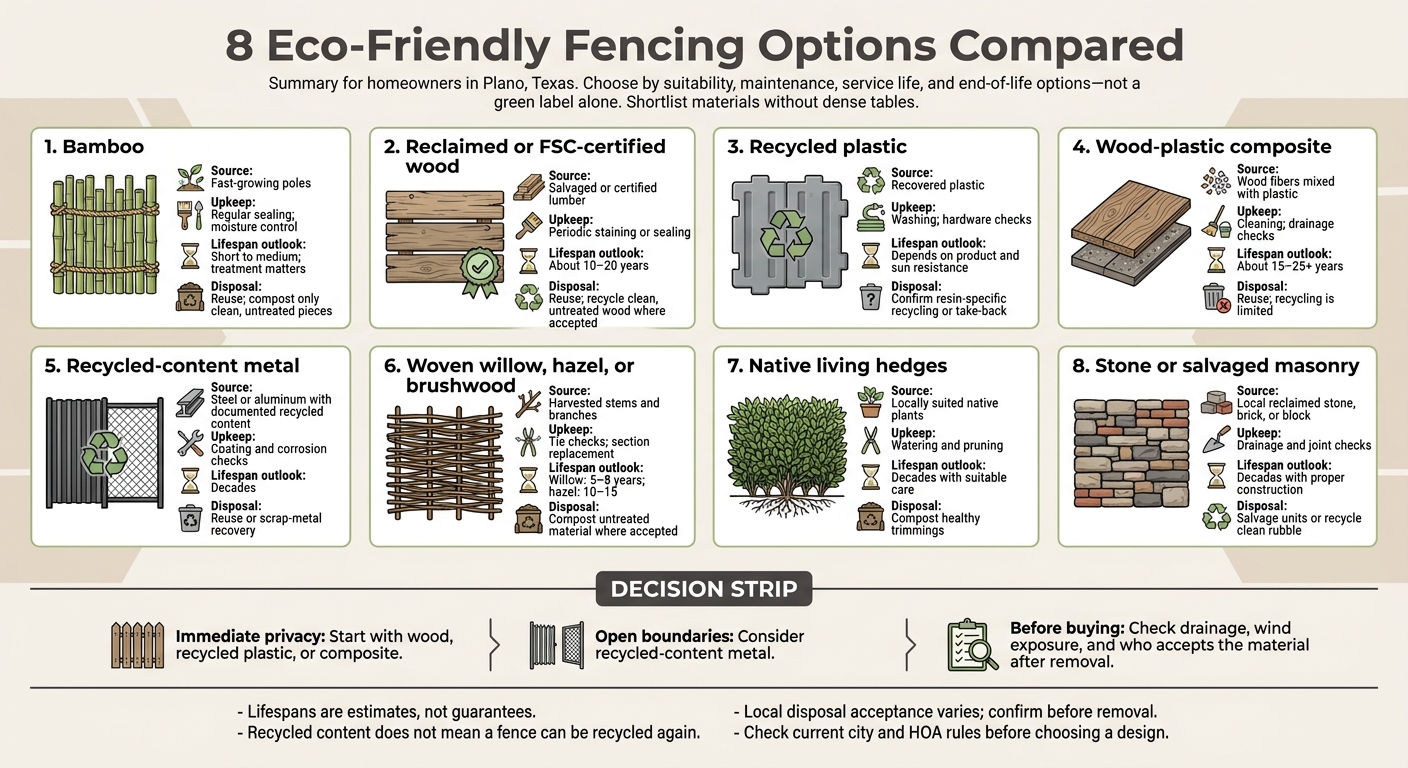
8 Eco-Friendly Fencing Options Compared
1. Bamboo Fencing
Material Source
Choose FSC-certified bamboo or bamboo from documented responsible plantations. Check that the certification covers both the product and its supply chain.
Also confirm whether the bamboo is heat-treated, borate-treated, or otherwise preserved for outdoor use. Treatment affects durability, disposal, and maintenance needs.
Routine Upkeep
Plano’s heat, strong sun, storms, and irrigation drift make solid support and moisture control a must. For privacy screens, install tightly spaced poles or panels on a sturdy wood or metal frame as part of a residential fence installation with corrosion-resistant fasteners.
Keep the bottom 2–4 inches above finished grade, allow room for drainage and airflow, and point sprinklers away from the fence. Inspect it at least twice a year and after severe storms.
Clean bamboo gently and let it dry before applying an exterior UV- and water-resistant sealer or suitable oil. Recoat every 1–3 years, based on exposure and the product’s instructions.
Expected Lifespan
Outdoor bamboo doesn’t have a fixed lifespan. Untreated bamboo can deteriorate in under 2 years in exposed conditions. Quality panels that receive regular care may last 10–15 years in moderate climates.
Strong sun fades and weakens poles, while repeated wet-dry cycles can cause cracks. Small surface checks are usually cosmetic. Soft poles, large splits, or loose connections call for repair or replacement. Check the frame separately – it may outlast the bamboo screening.
For lighter privacy needs, bamboo is a temporary-to-medium-term choice rather than a good fit for fully exposed boundary runs.
End-of-Life Disposal
Reuse sound poles as garden stakes or trellises. Compost only clean, untreated bamboo that has never been painted, stained, glued, sealed, or chemically preserved. Cut it into small pieces first.
Check local disposal rules. Keep coated, treated, or mold-damaged bamboo out of home compost, and never burn coated or treated bamboo.
For a longer-lasting natural option in exposed Plano yards, compare bamboo with reclaimed or FSC-certified wood next.
sbb-itb-d1d0a96
2. Reclaimed or FSC-Certified Wood
Material Source
Reclaimed or FSC-certified wood offers a natural fence option with a longer service life than bamboo.
Reclaimed wood comes from salvaged lumber; FSC-certified wood comes from responsibly managed forests. Reject reclaimed boards with rot, insect damage, unknown preservatives, or chemical contamination. For new lumber, ask for FSC certification and chain-of-custody records. Western red cedar, redwood, and cypress are common choices because they resist decay and insects. Certification confirms sourcing – not durability or treatment safety.
For privacy in Plano, board-on-board construction blocks sightlines. Build with sound boards, durable posts, and galvanized or stainless fasteners. Short reclaimed pickets can work well for garden borders.
Routine Upkeep
Check post bases, end grain, joints, and fastener holes for softness, insect galleries, and trapped moisture. Keep wood out of soil and mulch, direct runoff away from posts, and choose ground-contact-rated posts. Apply a low-VOC exterior stain or sealer only when the wood is clean and dry. Depending on exposure and label directions, you may need to reapply it every 2–3 years. Never coat over deteriorated reclaimed boards.
Expected Lifespan
A well-built wood fence commonly lasts 10–20 years. Maintained cedar and redwood fences tend to reach the upper end of that range. With reclaimed lumber, you can’t reliably estimate lifespan without knowing its condition and previous use. Posts and gates may need repairs before the boards do, while persistent ground moisture and poor drainage can cut years off the fence’s life.
End-of-Life Disposal
Save sound boards for reuse, or recycle clean, untreated wood where accepted. Keep stained, painted, glued, pressure-treated, and unknown-history pieces out of garden mulch and clean-wood recycling streams. Plano’s DIY disposal rules exclude fence panels from standard trash loads, so arrange an approved disposal method before demolition.
For less maintenance than wood, the next option is recycled plastic.
3. Recycled Plastic Fencing
Material Source
Recycled plastic fencing may contain HDPE, polypropylene, or PVC from discarded packaging or industrial scrap. Ask for a product data sheet that lists the resin type, recycled-content percentage, and post-consumer share. Labels like “plastic lumber” or “vinyl” don’t prove recycled content. Also confirm whether the boards are entirely recycled plastic or a wood-plastic composite. These materials age differently and need different disposal methods.
Once you’ve checked the material, review its cleaning needs and how well it handles sun exposure.
Routine Upkeep
Wash the fence with mild soap, water, and a soft brush. Unlike wood, recycled plastic doesn’t need staining, painting, or chemical preservatives. It also resists rot and insect damage, making it a practical option for low-maintenance borders and screened utility areas.
Inspect panels, posts, fasteners, and gates once or twice a year, plus after severe storms. Keep sprinklers, vines, and dense vegetation from making constant contact with the fence, and clear away debris. Avoid abrasive pads, harsh solvents, and pressure washing unless the manufacturer allows them.
Expected Lifespan
Durability depends on the product – not recycled content alone. Before buying, check outdoor testing, UV stabilization, and warranty terms. For Plano summers with temperatures in the 90s °F, review maximum temperature limits, expansion-gap instructions, and wind-load ratings.
Solid panels offer privacy, but they also catch more wind. Follow the product’s post-spacing and footing requirements. Ask whether the warranty covers or excludes fading, UV-related brittleness, cracking, storm damage, and impact damage.
End-of-Life Disposal
Before buying, confirm take-back, refurbishment, or recycling options for the exact resin, additives, and panel size. Don’t assume bulky boards can go in curbside recycling; check local acceptance before removing the fence. Reuse sound sections when possible, and never burn plastic fencing.
Next, compare wood-plastic composite fencing, another low-maintenance option with different material and disposal needs.
4. Wood-Plastic Composite Fencing
Material Source
Wood-plastic composite (WPC) combines wood fibers or sawdust with recycled plastic, virgin plastic, or a mix of both. Ask for the recycled-content percentage and the sources of the wood and plastic.
WPC falls between natural wood and fully plastic fencing. It offers plastic’s low-maintenance appeal, but the added wood content makes installation details more important.
Routine Upkeep
Composite doesn’t need routine staining or sealing. Clean it with mild detergent and a soft brush. Each season, clear leaves and soil from the base, check gates and hardware, and keep drainage paths open. Panels shouldn’t sit in standing water.
Expected Lifespan
Expect about 15–25+ years of service, depending on the product and installation. Follow the manufacturer’s requirements for post spacing, footings, ground clearance, and expansion gaps.
For sunny Plano yards, check the product’s heat, UV, and fade performance. Dark panels can get hot. Use closely spaced panels for privacy screens rather than loose garden borders, and make sure the installation is rated for wind.
End-of-Life Disposal
Bonded wood fibers and plastic are hard to separate. Before buying, ask about take-back programs or specialty recycling options. Reuse intact boards, and remove metal hardware before disposal.
Next, compare recycled-content metal fencing.
5. Recycled-Content Metal Fencing
Material Source
Ornamental steel fencing offers strength and impact resistance. Aluminum weighs less and resists corrosion. Ask for recycled-content percentages for panels, posts, and gates, broken down into pre-consumer and post-consumer content. Get documentation covering the full system.
Powder coating is a finish – not proof of recycled sourcing. According to EPA, recycling steel saves about 60%–74% of the energy needed to make steel from raw materials. Recycled aluminum can require less than 5% of the energy used to make primary aluminum.
Routine Upkeep
Inspect the fence annually and after severe weather. On steel, check welds, cut edges, and fasteners for rust. On aluminum, look for oxidation, impact damage, loose connections, and galvanic corrosion where different metals meet.
Keep sprinklers aimed away from the fence. To repair scratches, clean and dry the area, then prime and touch up with manufacturer-approved products. Leave damaged welds and heavily corroded posts to a professional.
Expected Lifespan
With proper coating and hardware care, both metals can last decades. Hinges, latches, and automatic-gate parts may need replacing before the structural metal does.
Open designs work well along garden borders and in front yards, but they don’t provide privacy. Plano limits front-yard fences to 40 inches in height and requires them to be at least 50% open. Pool barriers generally must be at least 48 inches tall, have openings that cannot pass a 4-inch sphere, and use compliant gates.
End-of-Life Disposal
Reuse sound panels, posts, and gates first. For scrap recovery, separate aluminum from steel. Remove concrete, plastic, and electrical parts as the recycler requires, and confirm acceptance or arrange pickup before demolition.
Recyclable does not mean made from recycled material. Check sourcing when you buy, and plan for recovery when you remove the fence.
For a softer, more natural look, the next option is woven willow, hazel, or brushwood.
6. Woven Willow, Hazel, or Brushwood
Material Source
Willow and hazel can come from coppiced stands, where stems regrow after cutting. Brushwood uses branches that might otherwise be chipped or discarded. Ask where the material was harvested and whether the panels contain preservatives, plastic ties, or synthetic backing.
Willow bends most easily, hazel lasts longest, and brushwood forms a looser, rustic screen.
Routine Upkeep
Mount the fence on secure posts, keeping its base 1–2 inches above the soil with airflow on both sides. Keep sprinkler spray and runoff away. In Plano, heat, storms, and clay soil make good drainage and airflow a must.
Check ties annually and inspect the fence after severe storms. To replace a broken rod, weave a matching rod through the nearby pieces. If several rods have decayed, rebuild that section instead of covering the damage.
Expected Lifespan
In favorable conditions, expect 5–8 years for willow and 10–15 years for hazel. Plano’s weather can shorten both ranges. Willow suits short-term screening, while hazel makes a sturdier border. Wet bases, intense sun, and wind can reduce service life. Brushwood also settles over time.
Choose willow for temporary screening, hazel for a longer-lasting rustic fence, and brushwood for informal edging. None is a good choice for high-security fencing or dependable privacy. Don’t use woven edging as a retaining wall unless it’s engineered to handle that load.
End-of-Life Disposal
Untreated rods can usually be chipped or composted if the receiving facility accepts woody material. These natural materials are generally simpler to dispose of than coated composites.
First, remove metal fasteners, plastic ties, synthetic backing, and treated posts. Keep preserved, painted, or stained pieces out of home compost, and follow local disposal rules. Don’t compost live willow cuttings where they could take root.
For a planted screen that lasts longer but needs time to establish, compare native living hedges next.
Natural Fence Designs for Summer Gardens 🪵| Rustic & Sustainable Outdoor Privacy
7. Native Living Hedges
Native hedges offer lower material impact, but privacy takes time. Your living screen grows over the years and needs care while it gets established.
Material Source
Buy correctly identified native plants from a local nursery. Check Texas A&M AgriLife resources to make sure they suit your site.
Texas privet (Forestiera texana) forms an 8–12-foot screen; evergreen wax myrtle provides a larger screen, typically 8–12 feet wide; dwarf yaupon holly ‘Nana,’ typically 3–5 feet wide, suits garden borders.
Check how each plant spreads, and leave enough room to keep growth off sidewalks and neighboring property.
Routine Upkeep
Water deeply at planting, then weekly through the first summer. Once plants are established, cut back on watering except during drought.
Use drip irrigation and maintain 2–3 inches of mulch, keeping it away from stems. Prune to the plant’s natural shape rather than following a rigid shearing schedule. Check for pests, discoloration, and dieback.
Expected Lifespan
A hedge planted in the right spot can last decades. Still, drought, disease, construction damage, or severe weather may mean replacing individual shrubs. Find the cause of plant failure before planting replacements, and continue deep watering during extreme drought.
End-of-Life Disposal
Compost healthy trimmings or use Plano’s yard-trimmings service when the material is accepted. Keep diseased or pest-infested material out of home compost. Contain it separately, and check disposal instructions with the city or waste provider.
For a harder, longer-term landscape edge, compare hedges with stone or salvaged masonry next.
8. Stone or Salvaged Masonry
Material Source
Choose locally salvaged stone, reclaimed brick, or salvaged concrete block from nearby salvage yards or suppliers. Heavy masonry loses value when hauled long distances. Before buying, check for cracks, spalling, embedded contaminants, and uneven dimensions.
Masonry is one of the most permanent – and least flexible – options in this lineup. In Plano yards, it works best for decorative borders and low garden walls. A lighter fence or planted screen is usually more practical for privacy. Think permanent landscape edges, not a fast privacy fix.
Routine Upkeep
Inspect masonry yearly and after heavy rain. Look for leaning, bulging, cracked mortar, loose stones, widening joints, base erosion, and blocked drainage. Keep soil, mulch, and leaves out of drainage paths.
Reset loose units and repoint deteriorated joints with compatible mortar. Avoid pressure-washing fragile reclaimed brick or soft stone. Dry-stacked masonry may need resetting, while mortared work needs periodic joint repairs.
Expected Lifespan
With a proper foundation and drainage, stone and masonry can last for decades – often longer than bamboo, wood, willow, or hedges. Settlement, drainage, mortar quality, soil movement, and impact affect lifespan more than the stone itself.
Retaining walls need free-draining backfill and a drainage outlet. Any wall that holds back soil is a retaining structure, not ordinary edging. It needs a site-specific assessment of soil pressure, drainage, and nearby loads. In Plano, masonry fences, brick columns, and retaining walls over 4 feet high need engineering certification and footing details.
Masonry lasts a long time, but it requires extensive structural planning and is difficult to change. Weigh that tradeoff when comparing life-cycle cost, effort, and reuse potential.
End-of-Life Disposal
Dry-laid and mechanically assembled masonry is easier to take apart and reuse than heavily mortared work. Separate intact, reusable units from soil, trash, treated materials, and other contaminants.
Local facilities may accept clean rubble for crushing into aggregate or base material. Check their acceptance policies and local rules before demolition.
Next, compare all eight options by source, upkeep, lifespan, and disposal.
Life-Cycle Comparison of All 8 Options
Compare all eight options below, from upkeep and lifespan to privacy and disposal.
Lifespans are planning estimates, not guarantees. Privacy depends on height, spacing, and, for hedges, growth.
| Option | Material source | Expected lifespan | Maintenance frequency | Disposal pathway | Privacy level | Plano landscape fit |
|---|---|---|---|---|---|---|
| Bamboo | Fast-growing bamboo, usually made into panels or rolls | About 5–15 years, depending on treatment, moisture, and installation | Inspect annually; reseal or replace damaged sections periodically | Reuse sound material; chip or compost untreated bamboo where accepted; follow disposal guidance for treated material | Medium to high with close-set panels | Privacy screens and contemporary yards |
| Reclaimed or FSC-certified wood | Salvaged lumber or certified wood from responsibly managed forests | About 10–25 years with suitable species, sound construction, and regular care | Inspect annually; stain, seal, or paint about every 2–5 years as needed | Salvage or reuse first; recycle clean, untreated wood where accepted; keep treated or painted wood out of yard waste | High with solid boards; medium with pickets | Privacy fences and garden borders |
| Recycled plastic | Post-consumer or post-industrial plastic, often including high-density polyethylene | About 20–40 years | Low; wash occasionally and inspect fasteners | Reuse or find a plastics recycler that accepts the specific resin; otherwise, dispose of it as construction waste | Medium to high, depending on panel design | Low-maintenance privacy screens |
| Wood-plastic composite | Wood fibers or flour mixed with recycled or virgin plastic | About 15–30 years | Low; clean periodically and check for warping or fastener movement | Reuse when possible; recycling options are limited because the materials are hard to separate | High with solid panels | Contemporary privacy screens |
| Recycled-content metal | Recycled steel, aluminum, or iron, sometimes mixed with virgin metal | About 20–50+ years | Inspect annually; remove rust and repair or recoat exposed areas as needed | Well suited to scrap-metal recovery when separated from concrete, wood, and plastic | Low to medium for ornamental or chain-link styles; high with solid metal panels | Boundaries, security, and open landscapes |
| Woven willow, hazel, or brushwood | Renewable branches or locally harvested woody stems woven into panels | About 5–15 years outdoors | Inspect annually; trim encroaching vegetation and replace deteriorated sections | Reuse, chip, or compost untreated material where local rules allow | Medium; generally higher with closely woven panels | Garden borders and naturalistic screens |
| Native living hedges | Living native shrubs or small trees planted as a continuous boundary | Potentially decades with proper care | Water during establishment; prune one to several times yearly, depending on species | Compost or chip prunings; transplant viable plants; follow local guidance for diseased material | Low initially; medium to high after establishment | Borders and soft privacy screens |
| Stone or salvaged masonry | Reclaimed stone, brick, concrete block, or locally sourced masonry | About 50–100+ years with a proper foundation and drainage | Low; inspect joints, drainage, settlement, and vegetation annually | Salvage for another wall or hardscape; crush clean masonry for aggregate where facilities accept it | High for solid walls; low for low borders | Permanent boundaries and garden walls |
Plano’s heat, wind, hail, soil movement, and drainage can sharply change these lifespan estimates.
Local sourcing and shorter transport distances can matter more than a material’s green label. Upkeep also adds water use and impacts from coatings and cleaning, especially for wood, bamboo, and hedges. Before buying, confirm where the material can go at the end of its life. Local facility acceptance matters more than whether a material can technically be recycled, and curbside recycling generally won’t accept fencing.
Pros, Cons, and Best Uses in Plano
Choose the fence’s job before its material. A decorative border, pet enclosure, and security boundary each need different heights, gaps, gates, and supports.
Use the life-cycle comparison above to match materials to that job. Then narrow your options based on Plano’s conditions.
| Option | Main advantage | Main trade-off | Best landscape use | Plano caution |
|---|---|---|---|---|
| Bamboo | Renewable screening with a natural look | Limited strength as a security barrier | Screened patios and backyard privacy | Keep panels off wet soil; check HOA material rules |
| Reclaimed or FSC-certified wood | Easy to customize and repair | Salvaged boards need careful inspection | Privacy fences and custom gates | Check reclaimed lumber’s condition and preservative history |
| Recycled plastic | Little routine coating needed | Factory-made look; movement caused by heat | Low-maintenance privacy screens | Follow the manufacturer’s expansion-gap requirements |
| Wood-plastic composite | Wood-like appearance without regular staining | Heavier panels and higher upfront cost | Contemporary privacy screens | Confirm that posts and hardware can support the system |
| Recycled-content metal | Strong boundaries with open views | Open styles offer little privacy | Ornamental boundaries, gates, and security edges | Repair damaged coatings promptly; choose corrosion-resistant finishes |
| Woven willow, hazel, or brushwood | Lightweight divisions with a natural look | Not a dependable security barrier | Decorative garden borders | Anchor panels against wind |
| Native living hedges | Habitat and soft screening | Needs growing room and time to establish | Landscape screening and garden boundaries | Leave room for pruning and keep sightlines clear |
| Stone or salvaged masonry | Permanent, solid boundary | Difficult to move or change | Low garden walls and permanent boundary accents | Check foundations, drainage, and easements before building |
Plano’s heat, wind, and clay soil make support, drainage, and corrosion resistance just as important as material choice.
Match your shortlist to the conditions in your yard:
| Need or yard condition | Suitable choices | Design priority |
|---|---|---|
| Immediate backyard privacy | Wood, bamboo, recycled plastic, or composite panels | Supports designed for wind and a permitted height |
| Garden borders | Woven willow or hazel, low stone, open metal, or a native hedge | Avoid shading plants or blocking access |
| Exposed, windy yard | Open recycled-content metal or a partially open wood design | Reduce uninterrupted solid surfaces |
| Wet ground or irrigation overspray | Elevated or well-drained metal, plastic, or composite systems | Fix drainage rather than relying on rot resistance |
| Shifting soil | Light, repairable systems with proper footings | Proper post footings and accessible connections |
| Pool or required security boundary | A permitted fence-and-gate system | Verify barrier requirements – not just material choice |
Before ordering, verify the 8-foot residential limit, 40-inch front-yard limit, 50% openness rule, and 30-inch visibility zones. Also check permits, utility access, easements, drainage, and HOA rules.
A hedge does not satisfy pool or security barrier rules.
Conclusion: Choose a Fence for Your Yard and Care Needs
Use this scorecard as a quick filter, not a ranking. Ratings depend on the product, finish, climate, installation, and maintenance. The table compares life-cycle tradeoffs to help you narrow your choices.
| Option | Renewable/recycled sourcing | Privacy potential | Maintenance demand | Longevity | Disposal complexity | Plano fit |
|---|---|---|---|---|---|---|
| Bamboo | High with documented responsible sourcing | High with close-set panels | Moderate | Moderate | Moderate if treated or bonded | Outdoor-rated privacy screens |
| Reclaimed or FSC-certified wood | Moderate to high, depending on source | High | Moderate to high | Moderate | Moderate to high if coated or treated | Standard wood privacy fences; plan for sealing |
| Recycled plastic | High with verified post-consumer content | Moderate to high | Low | High | Moderate; local acceptance varies | Low-care privacy and boundaries |
| Wood-plastic composite | Moderate to high; content varies | High in solid designs | Low to moderate | High | High | Privacy screens; check heat movement and fading |
| Recycled-content metal | High with documented scrap content | Low to moderate in open designs | Low to moderate | High | Low to moderate | Open boundaries, gates, and front yards |
| Woven willow, hazel, or brushwood | High when responsibly harvested | Moderate initially | High | Low to moderate | Low if untreated | Garden borders and temporary screens |
| Native living hedges | High renewable value | High when mature and dense | High | High with suitable plants | Low; removal can produce large amounts of green waste | Soft screens; allow time and growing room |
| Stone or salvaged masonry | High when reused locally | High in solid walls | Low after proper construction | High | High | Permanent boundaries; verify structural and drainage needs |
High sourcing scores require documented responsible harvesting or recycled content. Bonded parts and coatings make disposal harder. Composite content varies, and new stone is not renewable.
A longer-lasting fence may need fewer replacements. But its sourcing, upkeep, and disposal still shape its impact on the planet.
For privacy, consider bamboo panels, wood, recycled plastic, composite, or a mature hedge. For borders, choose hedges, woven willow or hazel, low masonry, or open metal. Recycled-content steel or aluminum suits open yards.
Start with privacy, exposure, and appearance. Then weigh installation and lifetime costs against the care you’ll actually provide. Before buying, check who accepts discarded materials, whether parts can be separated, and whether removal is included.
Check current city and HOA rules, too. Plano’s permit exemption covers repairs of no more than 25% of existing fence area within 12 months – not unrestricted replacement.
Plano’s 8-foot residential limit, 40-inch front-yard cap, and visibility-triangle rules can also rule out otherwise suitable designs.
FAQs
Which eco-friendly fence has the lowest lifetime cost?
Recycled composite fencing has the lowest lifetime cost among the eco-friendly options discussed. It lasts about 20–30 years and needs little upkeep, typically without staining or sealing. While the upfront price is higher at roughly $25–$45 per linear foot, lower repair and replacement costs help offset that expense over time.
Can I combine fencing with native hedges?
Native shrubs and perennials along your fence line do more than look good. They create natural privacy screens, cut maintenance, and give pollinators and other local wildlife a place to live. Native plants can also reduce water use by up to 50% compared with conventional landscapes.
Tend Fencing offers custom designs that pair fencing with native plantings. The company also plants a tree for every fence it builds to support the local ecosystem.
How can I verify a fence’s environmental claims?
Start with the material and its certifications. For wood, look for FSC certification, which identifies wood from responsibly managed forests. Ask whether the wood is reclaimed or harvested using responsible forestry practices. For composites, check the recycled content percentage – it can range from 50% to 96%.
Check the company’s efforts to reduce its impact, too, such as planting a tree for every fence built. Choose durable, recyclable materials like aluminum or steel to cut long-term waste and resource use.