
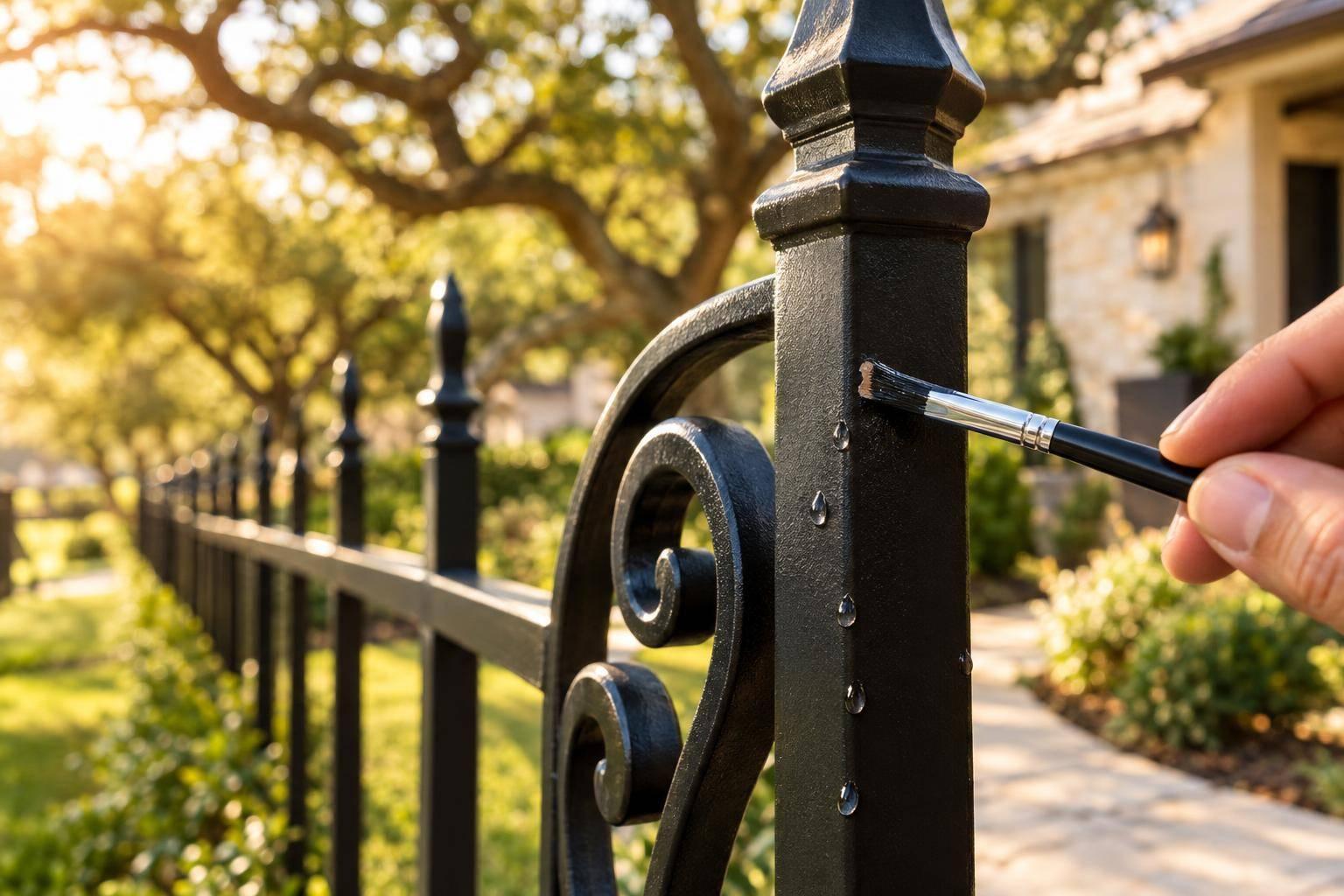
My rule for Texas iron fence care: keep it dry, repair coating damage early, and check the gate monthly. Aim sprinklers away from the metal, clear vegetation from post bases, and wash the fence at least once a year.
Here’s what I’d focus on:
- Protect the finish: Match touch-up products to the ornamental steel and coating. Let wear – not age alone – guide repainting.
- Watch for movement: North Texas clay soil can shift posts and throw gates out of alignment.
- Check gate safety: Keep hinges and latches working, and test powered-gate safety features only as the manufacturer directs.
- Track trouble spots: Keep dated photos and repair notes, especially near sprinklers, pools, and standing water.
- Know when to call: <u>Deep pitting, cracked welds, loose posts, or a faulty gate need professional attention.</u>
I’d use monthly checks, seasonal cleanup, and an annual wash as a starting schedule – and inspect again after severe storms.
How to Repair Rusted Metal Fence with $100 Materials
sbb-itb-d1d0a96
Cleaning, Rust Repair, and Repainting
When rust appears, clean the affected area and reseal the coating before it spreads.
Match repair products to the base metal and existing finish. Many Texas ornamental fences are painted steel or galvanized steel with a zinc undercoat. The coating guides the repair method because painted and galvanized surfaces fail differently in Texas heat and moisture.
Clean the Fence and Limit Moisture
Wash the fence with water at least once a year to remove debris. Point sprinkler heads away from the metal and keep drainage clear at the base. Keep soil and vegetation from touching the fence so moisture doesn’t linger.
Repair Paint Chips and Light Rust
Remove loose finish and sand away loose rust, then let the surface dry completely. Apply a rust-inhibiting primer, followed by two thin coats of exterior metal paint.
When to Repaint or Recoat
Plan to repaint every 2 to 3 years in harsh exposure; in milder conditions, 5 to 10 years is common. Let coating wear, sun exposure, sprinkler contact, and drainage guide the timing. Check fences near pools more often because pool chemicals speed up corrosion.
| Condition | Appropriate next step |
|---|---|
| Isolated chips or light surface rust | Touch up the affected spots. |
| Fading paint in direct sunlight | Plan to repaint sooner. |
| Extensive coating failure | Sand and recoat the entire surface. |
| Structural corrosion or severe pitting | Get a professional assessment. |
| Corrosion near pools | Prepare and recoat promptly. |
Include hinges and latches in the same maintenance cycle. Their moving parts wear through coatings faster than flat rails.
Gate and Hardware Care
After repairing the finish, check the gate hardware. Moving parts wear faster than fixed rails. In North Texas, clay soil can shift during drought and heavy rain, causing posts to lean and interfering with latches and self-closing mechanisms.
Check Hinges, Latches, and Gate Alignment
Inspect hinges, fasteners, posts, and latches for loose parts or rust. Tighten loose hardware promptly, lubricate hinges and rollers as needed, and test the gate again.
A manual gate should swing freely and latch securely. A self-closing gate should close and latch as intended. Look for standing water or sprinkler overspray around the posts, since moisture can affect alignment and speed up corrosion. Recheck after major weather swings. If the gate needs major adjustments or you suspect post movement, call a qualified professional.
Check Automatic-Gate Safety Features
For powered gates, safety checks matter just as much as alignment. Inspect the photoelectric sensors, safety edges, reversal function, and manual release according to the manufacturer’s instructions. Test only as the manufacturer directs.
If the gate binds, drops, fails to latch correctly, or malfunctions, stop using it and have a qualified professional inspect it.
Inspection Schedule and Long-Term Care
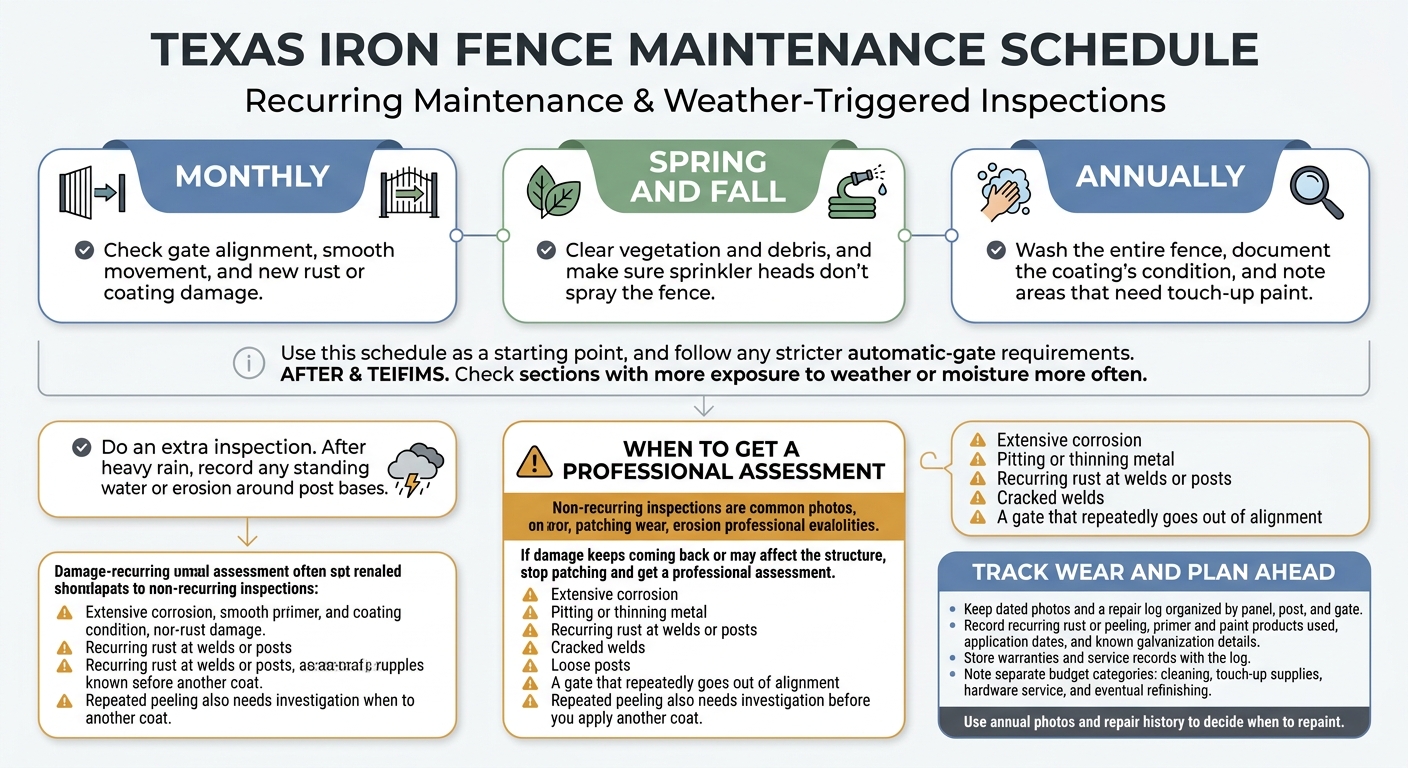
Texas Iron Fence Maintenance Schedule
After cleaning, touch-ups, and hardware checks, set a regular inspection schedule to catch new damage early.
Monthly, Seasonal, and Annual Checks
Use this schedule as a starting point, and follow any stricter automatic-gate requirements.
- Monthly: Check gate alignment, smooth movement, and new rust or coating damage.
- Spring and fall: Clear vegetation and debris, and make sure sprinkler heads don’t spray the fence.
- Annually: Wash the entire fence, document the coating’s condition, and note areas that need touch-up paint.
- After severe storms: Do an extra inspection. After heavy rain, record any standing water or erosion around post bases.
Check sections with more exposure to weather or moisture more often.
Keep Records and Plan Maintenance Costs
Let actual wear guide maintenance – not guesswork. Keep dated photos and a repair log organized by panel, post, and gate. Record recurring rust or peeling, the primer and paint products used, application dates, and any known galvanization details. Store warranties and service records with the log.
Set separate budgets for cleaning, touch-up supplies, hardware service, and eventual refinishing. Get an estimate in U.S. dollars for your property that includes surface preparation and rust removal. Use annual photos and repair history to decide when to repaint.
When to Get a Professional Assessment
If damage keeps coming back or may affect the structure, stop patching and get a professional assessment.
Call for an assessment if you find extensive corrosion, pitting or thinning metal, recurring rust at welds or posts, cracked welds, loose posts, or a gate that repeatedly goes out of alignment. Repeated peeling also needs investigation before you apply another coat. Plan refinishing before corrosion gets worse, and have damaged components checked to determine whether they need repair or replacement.
Conclusion: Protect the Finish and Repair Damage Early
Base maintenance on exposure, not a fixed repaint date. Keep moisture off the metal, repair coating damage promptly, and pay extra attention to poolside sections – pool chemicals speed up corrosion.
Keep hinges and latches moving smoothly. In North Texas, recheck gate clearance after major soil movement. Small repairs now help prevent bigger corrosion and hardware problems later.
FAQs
How can I tell if my fence is galvanized?
Paint or another finish can make it hard to tell whether steel is galvanized. Galvanizing adds a zinc coating that protects steel from moisture and rust. Check areas where paint has chipped for signs of zinc. Deep pitting or advanced corrosion may mean the protective layer is missing.
If you’re unsure, have a professional inspect your fence to confirm its material and maintenance needs.
What weather is best for repainting my fence?
Plan to repaint your ornamental iron fence in mild, dry weather. High humidity and extreme heat can interfere with paint adhesion and drying. In North Texas, skip the peak summer heat and intense direct sunlight. Both can make paint dry too fast and weaken the finish.
Before you paint, make sure the surface is clean, dry, and free of rust or debris.
Is my sagging gate caused by hinges or shifting soil?
Shifting soil often causes gates to sag. In North Texas, clay soil swells and shrinks as moisture levels change. This movement can shift gate posts and throw them out of alignment, especially when posts aren’t set deep enough or anchored properly.
If your gate sags, check the alignment of both the posts and hinges. Professional installation, the right footing depth, and stable ground help keep gates opening and closing smoothly.