
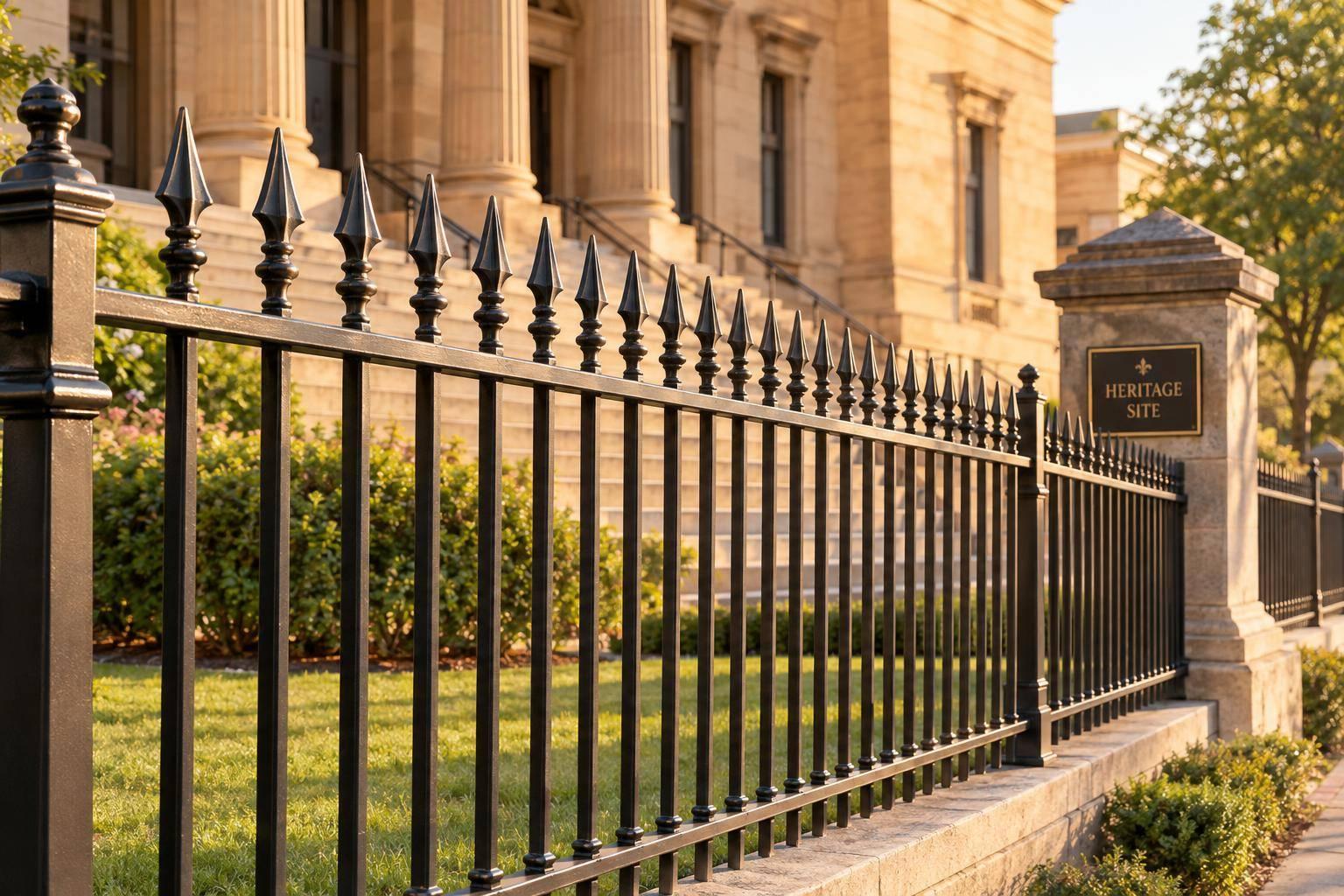
I’d start with the site’s history – not a fence catalog. Iron can secure a courthouse, memorial, or government office while keeping views open, but I’d repair existing ironwork where feasible before choosing a replacement.
Here’s what I’d check before work begins:
- Site and access: Record fence damage, protect historic features, and plan gates for public access, accessibility, and security.
- Materials: Compare iron, wood, and chain link against historic records, appearance, sightlines, security needs, and upkeep.
- Maintenance: Identify the metal before repairs, plan annual washing, and budget for recoating about every 5–10 years, depending on condition.
- Approvals and installation: Confirm permits, preservation reviews, utility locations, and archaeology needs before digging. Set clear fabrication instructions and test gates before closeout.
My rule: <u>plan care before construction</u>. A fence should fit the setting and have funding to keep it in good repair. If you are ready to begin, you can request a quote for your project.
Fence Placement, Access, and Design
Choose Where Iron Fencing Fits
Use the site inventory to place iron fencing where it supports security without blocking historic views. It should define boundaries, preserve sightlines, and deter entry without permission.
Keep panels clear of soil, vines, shrubs, and standing water, and aim sprinklers away from the metal. In expansive clay soil, place gates where the ground moves least. Once you’ve set the fence line, use gate locations to control entry.
Control Pedestrian and Vehicle Access
Position gate openings to separate public entry from restricted areas and keep pedestrian and vehicle routes clear. These openings should guide traffic without crowding the historic setting.
Match Fence Details to the Site
Match picket spacing, rail profiles, finials, and proportions to the site’s historic metalwork and nearby masonry.
sbb-itb-d1d0a96
Metal and Stone – Restoring a heritage fence
Compare Iron, Wood, and Chain Link
Choose based on site history, security needs, and upkeep – not looks alone.
Once the fence line and gates are set, compare materials against the site’s documented history and the maintenance your team can handle.
| Material | Best fit | Appearance | Visibility/privacy | Security characteristics | Maintenance | Preservation concerns | Situations to avoid |
|---|---|---|---|---|---|---|---|
| Ornamental iron | Formal civic settings and prominent public boundaries | Formal and decorative | High visibility; keeps views open | Strong; deters trespassers | Repaint every 5–10 years; lubricate hardware | Corrosion; loss of decorative detail | – |
| Wood | Documented vernacular or rural heritage settings | Natural, rustic | Can be configured for high privacy | Defines boundaries; provides screening | Apply stain/sealant; replace warped rails | Rot and structural weathering | Soil contact; standing water; unshaded heat |
| Chain link | Discreet service areas | Functional and utilitarian | High visibility; little privacy | Basic boundary control | Inspect coatings and connections | Coating failure; hardware corrosion | High-moisture areas; prominent historic vistas |
Choose Materials Based on History and Upkeep
Use iron for formal, visible boundaries in civic settings. Choose wood only when historic records support it, and reserve chain link for discreet service areas.
At heritage sites, tie the material choice directly to the maintenance plan. Use that choice to set the coating and inspection schedule.
Plan Maintenance, Approvals, and Installation
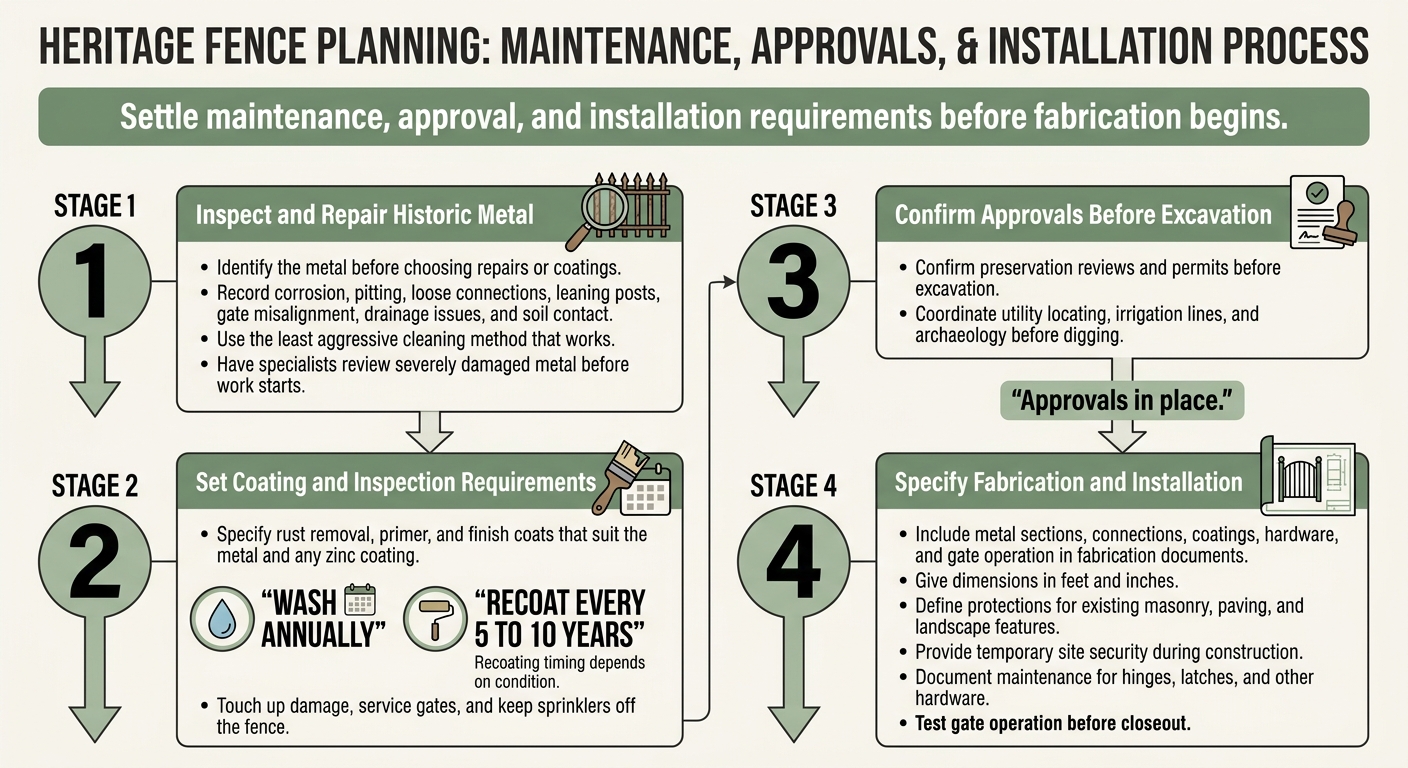
Heritage Fence Maintenance and Installation Workflow
Once you’ve selected the material, settle maintenance, approval, and installation requirements before fabrication begins.
Inspect and Repair Historic Metal
Identify the metal before choosing repairs or coatings. Record corrosion, pitting, loose connections, leaning posts, gate misalignment, drainage issues, and soil contact. Use the least aggressive cleaning method that works. Have specialists review severely damaged metal before work starts.
Set Coating and Inspection Requirements
Specify rust removal, primer, and finish coats that suit the metal and any zinc coating. Plan to recoat every 5 to 10 years, wash annually, touch up damage, service gates, and keep sprinklers off the fence.
Once the maintenance schedule is set, confirm permits and site protections before disturbing the ground.
Confirm Approvals Before Excavation
Confirm preservation reviews and permits before excavation. Coordinate utility locating, irrigation lines, and archaeology before digging.
With approvals in place, turn the design into clear fabrication and installation instructions.
Specify Fabrication and Installation
Include metal sections, connections, coatings, hardware, and gate operation in the fabrication documents. Give dimensions in feet and inches.
Define how crews will protect existing masonry, paving, and landscape features, and provide temporary site security during construction. Document maintenance for hinges, latches, and other hardware. Test gate operation before closeout.
Conclusion: Heritage Fence Project Checklist
Use iron where a historic site needs visible perimeter control, open sightlines, and durable security that doesn’t draw attention. Preserve existing ironwork when repair is feasible.[4]
Before authorizing work, confirm that the project includes:
- Condition records and a clear reason for repair or replacement
- Compatible materials and design
- An accessibility and security review
- Required approvals and installation specifications
- Maintenance funding
FAQs
How do I know if historic ironwork is repairable?
Check the ironwork and its foundation for bends, corrosion, and loose or leaning posts that could weaken the structure. Surface rust or chipped paint can often be treated with rust-preventive paint. Deep pitting or advanced corrosion, however, may point to more extensive damage.
If you’re unsure how serious the damage is, ask a professional to assess it and discuss maintenance or repair options.
Can automatic gates fit a historic government site?
Yes. Ornamental iron gates have the sturdy construction needed to support electronic access controls and automation. Professional planning must ensure the system meets local building codes, safety regulations, and government security requirements without compromising the site’s architecture.
Tend Fencing provides custom automatic gate installation that complements the site’s historic character while meeting its security needs.
How can I match missing historic fence details?
Look for decorative details that suit the property’s era, such as detailed scrollwork and custom finials. To replace missing features, choose custom post caps or ornate gates that maintain the property’s architectural character.
For complex designs, consult a professional installer like Tend Fencing. They can help match new components to existing site features while meeting local building codes and aesthetic standards.