
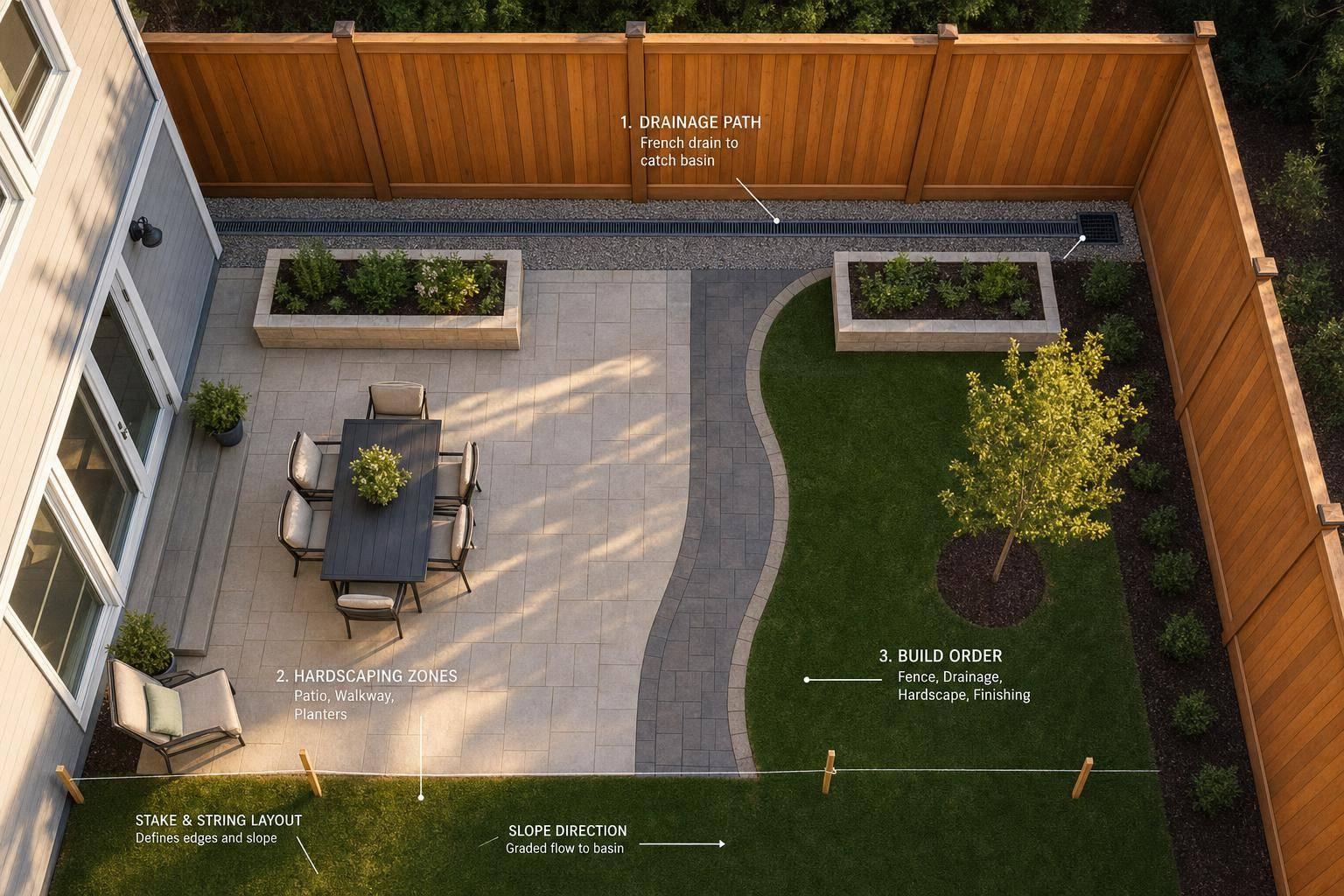
If your fence goes in before you map drainage, gates, slopes, and patio edges, you can end up paying twice. A well-planned yard can add 5% to 15% in home value, but only when the fence, hardscape, and planting areas are planned together.
If I were planning this kind of project, I’d keep it simple:
- Map the site first: patios, walkways, retaining walls, utilities, slopes, sprinkler heads, and access points
- Check the rules early: permits, HOA limits, setbacks, pool fence rules, and fence height caps
- Match the layout to daily use: place gates where people already walk and make paths at least 3 feet wide
- Plan for soil and drainage: in North Texas clay soil, posts often need to be set 2 to 3 feet deep
- Pick materials based on look and upkeep: cedar, ornamental iron, and chain-link each fit different yard types
- Build in the right order: grading, drainage, utilities, hardscape, fence, then plants
A few details matter more than most people expect. A gate that’s too narrow for a mower becomes a weekly hassle. A fence near a retaining wall can fail if water has nowhere to go. And a tall solid fence on a west-facing yard in Plano can make heat and airflow worse during summer afternoons.
Here’s the main idea: don’t treat the fence and hardscape as separate jobs. I’d plan them as one layout, one material story, and one install sequence so the yard looks right, drains right, and holds up over time.
| Focus Area | What I’d check first | Why it matters |
|---|---|---|
| Site layout | Patio lines, paths, walls, slopes, access | Keeps the yard feeling planned |
| Code and HOA | Height, setback, pool rules, approvals | Helps avoid fines or removal |
| Movement | Gate location, path width, equipment access | Makes daily use easier |
| Materials | Wood, iron, or chain-link next to stone or concrete | Keeps the look consistent |
| Installation order | Drainage before fence posts | Cuts down on rework |
Bottom line: I’d start with a site map, not a fence style. That one step helps shape layout, drainage, material choice, and install order from the start.
TRANSFORM YOUR YARD: Privacy Fence Ideas AND Pro Tips from a Landscape Architect
sbb-itb-d1d0a96
Assess the Site Before Choosing a Fence Layout
A site map helps you place posts, gates, and panel lines around the hardscape and traffic paths that already shape the yard. The aim is simple: line the fence up with patios, walkways, walls, slopes, and access points so the yard feels planned as one space, not pieced together later.
Map Patios, Walkways, Retaining Walls, Slopes, and Access Points
Start with a basic sketch of the yard. Mark every fixed element: concrete slabs, paver paths, retaining walls, steps, and the driveway. Then add drainage patterns and the paths people, pets, and vehicles use every day.
Gate clearance belongs in this sketch from the start. If a gate is too narrow for a mower or trash bin, that turns into an annoying problem over and over again. It’s much easier to fix on paper than out in the yard.
Map utilities and drainage first to avoid costly conflicts with finished hardscape. Rerouting utilities under finished hardscape is costly, so map them first.
On sloped ground, stepped or level panels usually follow the grade more cleanly. Near retaining walls or steps, those shifts should look like part of the plan, not something added at the last minute. It also helps to mark sprinkler head locations. Constant overspray can shorten the life of fence posts, paint, and sealants.
Walk the property line at a few points during the day – morning, midday, and late afternoon. That gives you a better sense of how the yard actually works. In North Texas, west-facing areas can be too hot to use from midday to sunset in summer. That can affect whether solid panels make sense or whether a more open design will work better. Sun angle and wind patterns should shape those calls before you pick materials.
Your sketch should also flag any spots where access, drainage, or fence clearance may be tight.
Match the Layout to Privacy, Security, and Code Requirements
Once you’ve mapped the site, run the layout through privacy needs, security needs, and local code. A backyard built for privacy calls for a different setup than one centered on pet containment or pool safety. Picking the top one or two priorities early can save a lot of backtracking later.
Permits are often required before installation, and zoning codes set height limits. Backyard fences are commonly 6–8 feet, while front yard fences are typically capped at 3–4 feet. Setback rules control how close the fence can sit to the property line, and corner lots often have tighter visibility rules so intersections stay safe.
If your property has an HOA, get approval on materials, color, and height before work starts. An unapproved fence can lead to fines or even mandatory removal.
Pool areas need extra attention. Local codes often require self-closing, self-latching gates, non-climbable panel designs, and set minimum heights for any fence around a pool. In clay soils, post depth matters too. Moisture cycles can move the ground over time, which may cause posts to lean and gates to sag. Setting posts deep in concrete helps maintain structural integrity through those soil changes.
Before you lock in the layout, set gate width for mowers, trash bins, and other daily equipment.
Design Fence and Hardscape Layouts for Visual Flow
Once your site map is done and the layout clears code, the next move is making the fence feel like it was part of the plan from day one. If a fence ignores the patio, walkway, or retaining wall, it can look tacked on. The layout should follow how people move through the yard and where the eye naturally goes, not just the property line. At this stage, the goal is to make each hardscape area feel tied together.
Align Gates, Walkways, and Patio Edges
Gates should land where people already want to walk, not wherever the lot line makes that easiest. If the main path runs from the driveway to the back patio, place the gate at that meeting point. When gates miss the path, you often end up with awkward leftover corners that don’t get used.
Fence runs that stay parallel to patio edges help echo the shape of the space. A horizontal slat fence, for example, works well with a geometric paver patio because both use clean, parallel lines that can make the yard feel wider and more open. Check the view from main windows and seating areas so you know what should be screened and what should stay open.
Keep connecting walkways at least 3 feet wide so people can move through them easily. If a path leads to a gate, line the gate up with that path.
Once those circulation lines are in place, the fence should follow the same geometry.
Handle Height Changes Near Retaining Walls and Steps
On sloped sites, the fence should step along with the same lines as the wall and stairs. In plain terms, the fence should match the wall and stair pattern instead of fighting it. Retaining walls need drainage behind them, and trapped water can push both the wall and the fence out of line. Posts set into or right behind the wall can also weaken the wall if they’re placed without care.
Step the fence with the wall or grade instead of letting it drop all at once. That layered look reads as planned and gives each level a clear edge.
Common Layout Strategies Compared
These three layouts are the main ways to tie fence lines into patios, planting buffers, and retaining walls.
| Layout Strategy | Advantages | Drawbacks | Ideal Use Case |
|---|---|---|---|
| Fence Aligned with Patio Edge | Defines a clear "outdoor room"; maximizes usable patio space | Can feel boxed in if the fence is tall and solid | Small urban backyards or modern geometric designs |
| Fence Offset with Planting Buffer | Softens hard edges; provides a more refined look; allows easier fence repairs | Requires more total yard space; plants need regular trimming | Large suburban lots; traditional or garden-focused homes |
| Fence Above a Retaining Wall | Maximizes usable level space on sloped lots; creates clear tiers | More complex structural planning; requires drainage management | Sloped properties; terraced gardens |
Go with the simplest layout that fits the site and keeps the yard looking clean. Small urban backyards often work best when the fence sits close to the patio edge. Bigger yards and garden-focused homes usually look better when a planting buffer softens the shift between hardscape and fence. On sloped lots, a retaining wall is often needed to create flat, usable tiers, and solid drainage planning from the start helps protect both the wall and the fence.
After the layout is locked in, the next step is matching materials and hardware to the hardscape so everything feels pulled together and holds up well.
Coordinate Materials, Finishes, and Long-Term Performance
Once the layout is set, the next step is picking materials that echo the yard’s lines and can handle local weather and day-to-day use.
Pair Wood, Ornamental Iron, and Chain Link with Hardscapes
Material choice should follow the same basic idea as the layout: match the fence to the hardscape’s lines, how open it feels, and how much upkeep you’re willing to take on.
Wood – especially cedar – can soften hardscape surfaces. It brings warmth next to flagstone, earthy pavers, and rough-cut stone. Cedar privacy fences usually last 15–20 years if they’re stained or sealed every two to three years. The stain color should work with the hardscape too. Warm chestnut or cedar shades fit red or tan brick, while cooler gray stains look better with slate, bluestone, or modern concrete.
Ornamental iron keeps the yard feeling open instead of boxed in. Open pickets can frame masonry details like brick columns or stone retaining walls without blocking the view, which makes this a smart pick when sightlines matter. It can last 25+ years with just occasional touch-ups. In humid areas, aluminum may be a better fit than steel because it won’t rust.
Chain-link is the most utility-first option of the three. Left uncoated, it can feel industrial. But a black vinyl coating or a planted shrub screen can help it sit better in the landscape, especially around driveways, utility zones, or dog runs. It needs the least upkeep and works well with concrete pads when toughness matters more than looks.
Plan Automatic Gates and Driveway Entries as Part of the Hardscape
The gate entry should be planned as part of the driveway itself, not treated like an add-on. Tend Fencing can line up automatic gates, power, drainage, and driveway paving as one system.
Material and Hardscape Combinations Compared
| Material Combination | Aesthetics | Privacy | Maintenance |
|---|---|---|---|
| Cedar Fence + Flagstone Patio | Warm, natural, rustic | High (solid panels) | Moderate – stain every 2–3 years |
| Ornamental Iron + Brick Columns | Elegant, open, traditional | Low – needs landscaping to screen | Low – occasional touch-ups |
| Chain-Link + Concrete Pad | Functional, industrial | Low – unless screened with shrubs | Very low |
After the materials are chosen, line up grading, drainage, hardscaping, and fence installation in the right order so the whole setup works together.
Plan the Project and Work With a Professional Installer
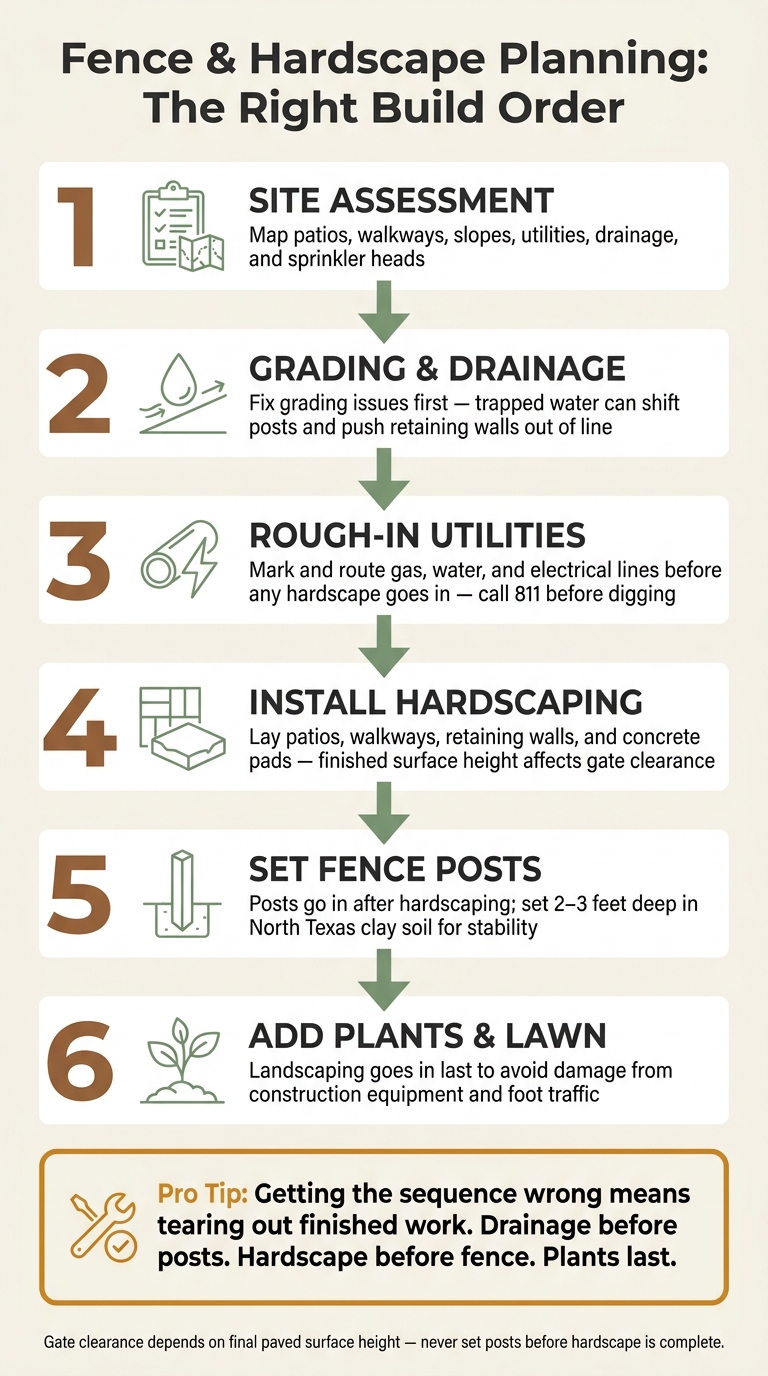
Fence & Hardscape Planning: The Right Build Order
Sequence Grading, Drainage, Hardscaping, and Fence Installation
Once the design and materials are set, the next step is getting the build order right. Each part needs to support the next one. A clean sequence helps you avoid damage, delays, and expensive do-overs.
Build in this order: assess the site, fix grading and drainage, rough in utilities for gas, water, and electricity, install hardscaping, and then set fence posts. Plants and lawn should go in last so construction equipment and foot traffic don’t tear them up.
Fence posts should go in after hardscaping. The finished height of pavers, decking, or concrete affects gate clearance. If posts go in too early, you can end up with gates that drag or won’t swing once the surface is done.
Before any digging starts, verify easements and property lines on the survey. Also call 811 to have underground gas, electrical, water, and sewer lines marked. In North Texas, posts should usually be set 2 to 3 feet deep to deal with clay soil and wind loads.
What to Bring to a Fence and Hardscape Consultation
A clear plan makes the consultation much more useful. At minimum, bring:
- Measurements
- Site photos
- Priorities
- Budget
- HOA or permit rules
Plano-area homeowners can use Tend Fencing for custom consultations on wood, ornamental iron, automatic gates, and chain-link fencing. Every fence they build also includes a tree planted through their partnership with One Tree Planted.
Conclusion: Build a Yard That Feels Connected, Durable, and Intentional
A yard that works well doesn’t come from choosing a fence and a patio as separate projects. It comes from treating both as one system from the start.
Start with site conditions like drainage, slopes, utilities, and property lines. Then line up the fence layout with how people move through the space. Choose materials that can handle local weather and look right next to the hardscape surfaces around them. After that, follow the right installation order so nothing needs to be torn out and done again.
The result is a yard that feels intentional and works as one system.
FAQs
How do I start planning fence and hardscape together?
Treat your fence and hardscape as one project, not two separate jobs. Start with a site walk. Check drainage, existing trees, root zones, and sun orientation. Then look at the yard from your main windows and patio seating. That helps you decide what you want to show off and what you’d rather block from view.
From there, map out outdoor zones for dining, lounging, or entertaining. As you do that, line up your materials so the fence works well with your patio and your home, instead of feeling like an add-on.
What can go wrong if drainage is planned too late?
Waiting too long to plan drainage can get expensive fast, especially when fencing and hardscaping are involved.
When water collects around fence posts, trouble usually follows. Posts can start to lean, rot, or lose support because the soil stays wet for too long.
Hardscaping has its own set of problems. Poor drainage can cause surfaces to shift, settle, or crack over time. And in most cases, fixing those issues later costs more than dealing with grading and site prep at the start.
Which fence material works best with my patio style?
Match your fence to your patio’s style and color palette. Horizontal wood slats work well with modern, geometric patios. Natural stone or textured wood fits spaces built around earthy brown or beige tones.
If you want more contrast, go with dark-stained wood or black metal against lighter pavers. That contrast can make the fence feel more intentional instead of fading into the background. Tend Fencing offers custom wood and ornamental iron designs to complement your outdoor space.