

Looking for a fence that looks great and requires minimal upkeep? Here’s a quick breakdown of the top five low-maintenance fencing materials:
- Vinyl: Durable, moisture-resistant, and easy to clean with soap and water. Costs $25–$45 per foot and lasts 30–50 years.
- Aluminum: Rust-resistant and ideal for humid or coastal areas. Costs $30–$50 per foot, with a lifespan of 40–70 years.
- Composite: Combines wood and recycled plastic for a natural look with no staining needed. Costs $30–$55 per foot and lasts 25–40 years.
- Chain Link: Budget-friendly and functional, with costs ranging from $10–$25 per foot. Lifespan is 15–25 years.
- Treated Cedar: Natural wood with added durability. Costs $20–$35 per foot and lasts 20–40 years with proper care.
Each material offers unique benefits depending on your climate, budget, and style preferences. For privacy, durability, or aesthetics, there’s an option for every need.
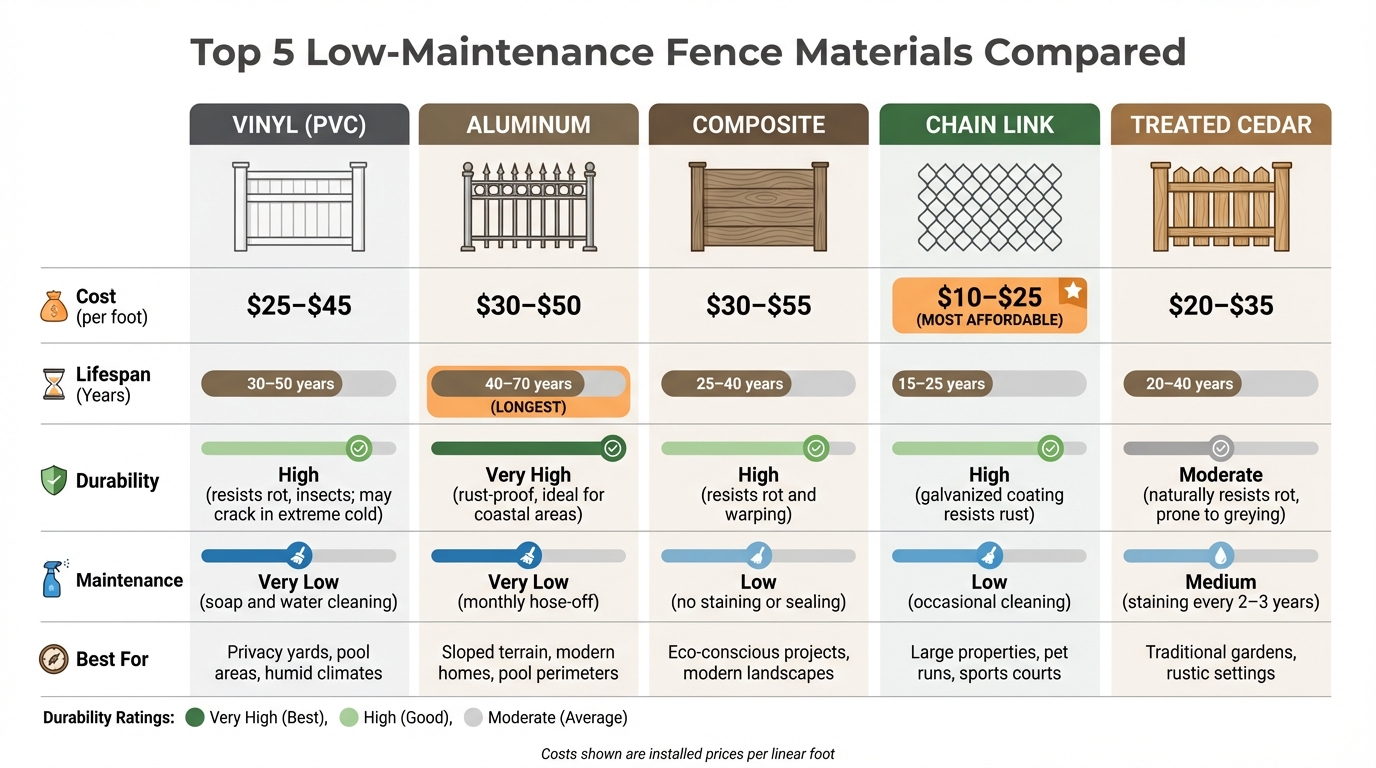
Low-Maintenance Fence Materials Comparison: Cost, Lifespan, and Durability
Backyard Fence Ideas for Privacy & Style | DIY Options, Modern Designs, Low Maintenance Tips 2025
sbb-itb-d1d0a96
1. Vinyl Fencing
Vinyl fencing is a standout option for modern outdoor spaces, known for being both durable and low-maintenance. Crafted from polyvinyl chloride (PVC), it resists rot, decay, and damage from wood-boring insects. Thanks to additives like titanium dioxide and UV stabilizers, vinyl fences also resist cracking, brittleness, and fading caused by sun exposure. With five times the tensile strength of wood, high-quality vinyl can handle tough conditions like strong winds and storms.
"Vinyl fencing is often called the longest-lasting low-maintenance fence material – and for good reason." – Modern Fence Co.
Here’s a closer look at why vinyl fencing is a popular choice for durability and style.
Durability
Vinyl fencing holds up well in a variety of climates. It’s highly resistant to moisture, making it an excellent option for pool areas. However, extreme heat might lead to warping, and low-quality vinyl can become brittle in freezing temperatures. When installed under ideal conditions, vinyl fences can last over 100 years.
Maintenance Needs
One of vinyl’s biggest advantages is its low upkeep. Unlike wood or metal fencing, vinyl doesn’t need painting, staining, or sealing. Cleaning is simple – just rinse with water and use mild soap for tougher spots. For more stubborn stains, a soft brush and soapy water will do the trick. Its minimal maintenance offsets the higher initial cost of installation.
Cost per Foot (Installed)
The cost to install vinyl fencing ranges from $25 to $45 per linear foot. For example, a 200-foot fence would cost approximately $3,800. While pressure-treated pine fences are cheaper upfront at $15–$25 per linear foot, vinyl’s lack of repair and staining costs often makes it more economical over time.
Lifespan
Vinyl fences typically last between 30 and 50 years, far surpassing the average lifespan of wood fences, which is around 15 years.
Best Landscaped Use
Vinyl fencing is perfect for spaces that need privacy and water resistance. Its solid panel design makes it a popular choice for backyard privacy and perimeter boundaries, with heights ranging from 6 to 8 feet. Thanks to its waterproof nature, it’s also ideal for pool enclosures and other moisture-heavy areas. Beyond practicality, vinyl’s sleek and modern aesthetic complements minimalist landscaping. Available in styles like classic white picket, semi-private, and lattice-top designs, it comes in a range of colors, including white, tan, gray, and brown.
2. Aluminum Fencing
Aluminum fencing offers the timeless appeal of wrought iron paired with modern toughness and minimal upkeep. Its naturally rust-resistant properties make it a great fit for areas with high moisture, such as coastal locations, wet climates, and pool enclosures. Most aluminum fences also come with a powder-coated finish, which helps protect against fading, peeling, and cracking, ensuring they stay visually appealing for years.
Durability
Aluminum holds up well under extreme weather conditions, maintaining its shape without warping or becoming brittle. Its resistance to rust and corrosion makes it a standout choice for homes near the ocean, where salty air can quickly wear down other materials. That said, aluminum is softer than steel, so it’s more prone to dents if hit by heavy objects like lawn equipment or stray baseballs.
Maintenance Needs
One of aluminum fencing’s biggest perks is its low maintenance. A simple wash once a year with mild soap and water is usually enough to keep it clean. There’s no need for painting, staining, or sealing. To keep it in top shape, it’s wise to occasionally check fasteners and trim back any nearby plants that could scratch the powder-coated surface. This combination of minimal upkeep and durability makes aluminum a practical choice for a variety of outdoor spaces.
Cost per Foot (Installed)
When budgeting for aluminum fencing, expect installed costs to range between $25 and $60 per linear foot. For residential installations, prices typically fall between $30 and $40 per foot. Decorative designs are slightly higher at $35–$45 per foot, while commercial-grade fences are priced at $45–$55 per foot. While aluminum may have a higher upfront cost compared to some other options, its long lifespan and low maintenance can make it a smarter long-term investment.
Lifespan
Aluminum fences are built to last, with a typical lifespan of 30 to 50 years. This durability makes them an appealing option for homeowners looking for a long-term fencing solution that doesn’t require frequent upkeep or replacement.
Best Landscaped Use
If you’re prioritizing both looks and durability, aluminum fencing is a versatile option that works in many settings. Around pools, it’s a standout choice due to its resistance to water damage and ability to meet safety standards, all while offering clear visibility to monitor swimmers. Its rackable panels make it ideal for sloped yards, ensuring a snug fit even on uneven ground. For modern homes, horizontal slat designs bring a sleek, minimalist vibe, while classic picket styles boost curb appeal. And for coastal properties, aluminum’s resistance to salt air makes it a reliable and stylish solution.
3. Composite Fencing
Composite fencing is a popular choice for modern landscapes, offering a natural appearance while requiring minimal maintenance. By combining 30–70% wood fibers with recycled plastics, it delivers the look of wood with the durability of engineered materials. A co-extruded cap layer protects it from moisture and UV damage, eliminating the need for sealing or staining.
Durability
Composite fencing is built to handle tough weather conditions and resists moisture, rot, and mold. However, it’s worth noting that some fading can occur during the first six months as wood oils naturally leach out. After this period, the color stabilizes. For areas prone to strong winds or coastal conditions, using metal posts and reducing the spacing between them can strengthen the installation. These features make composite fencing a reliable option for a variety of settings.
Maintenance Needs
One of the biggest perks of composite fencing is how little upkeep it requires. A simple rinse twice a year with mild soap, water, and a soft-bristled brush is usually enough to keep it clean. For tougher stains or mildew, a gentle scrub will do the trick. It’s important to avoid pressure washers or abrasive tools, as these can damage the surface.
Cost per Foot (Installed)
Though composite fencing comes with a higher upfront cost – ranging from $25 to $45 per linear foot for installation – it offers long-term value due to its low maintenance. Gates are an additional expense, with pedestrian gates costing around $200–$400 and drive-through gates starting at $600 or more. While wood fencing costs less initially ($15–$25 per foot), composite fencing’s durability and minimal upkeep make it a smart investment over time.
Lifespan
With a lifespan of 20 to 30 years, composite fencing outlasts traditional wood fences by two to three times. High-quality installations can even boost property value by an estimated 3–5%.
Best Landscaped Use
Composite fencing shines in areas like poolside settings, thanks to its splinter-free and moisture-resistant surface, which adds both safety and durability. It’s also ideal for privacy screening in modern landscapes, offering a sleek and uniform look without the overly artificial appearance of vinyl. For environmentally conscious projects, many composite options are made with 50% to 95% recycled materials, including reclaimed wood and post-consumer plastics. Additionally, in regions with extreme temperature swings or high humidity, composite fencing holds up better than wood or vinyl, resisting sagging and moisture damage. Its adaptability makes it suitable for various styles, from modern panels to classic picket or decorative lattice-top designs.
4. Chain Link Fencing
Chain link fencing is a budget-friendly and practical choice for securing large spaces while maintaining clear sightlines. Made from galvanized steel or vinyl-coated wire woven into a diamond-shaped mesh, it offers reliable performance with minimal effort to maintain.
Durability
The steel mesh design is built to handle tough conditions. Its open structure allows wind to pass through, reducing pressure on the fence and preventing ice buildup. Unlike wood, chain link fencing doesn’t warp, splinter, or rot over time [3, 23]. Protective coatings help guard against rust and corrosion, and if a section gets damaged – say, from a falling branch – you can simply replace the affected portion instead of the entire fence. This makes it a practical choice for areas with harsh weather.
Maintenance Needs
Taking care of chain link fencing is straightforward. A quick rinse with water and mild soap is usually enough to keep it clean [2, 23]. If you’ve added mini-mesh or privacy slats, cleaning once a month can help prevent dirt and debris from building up in the smaller openings.
Cost per Foot (Installed)
Chain link fencing stands out as one of the most affordable options, with installation costs ranging from $11 to $29 per linear foot. Opting for vinyl-coated versions increases the range to $15 to $45 per linear foot. Material costs alone fall between $4 and $15 per foot. Additional features like walk gates cost $150–$400, while double-drive gates range from $800 to $1,500.
Lifespan
With a lifespan of 20 to 50 years, chain link fencing offers great value for its cost [3, 23]. It outlasts wood fences, which typically last around 15 years, and even surpasses vinyl fencing, which holds up for 20–30 years.
Best Landscaped Use
Chain link fencing works well for dog runs, garden enclosures, and property boundaries where security is a priority but visibility and natural light are still important [2, 23, 24]. Vinyl-coated options in black or green blend more naturally with outdoor surroundings, offering a softer look compared to standard silver galvanized steel [26, 29]. Its open design also makes it a smart choice for windy areas, as it won’t obstruct views or create unnecessary wind resistance [2, 3].
For more privacy, you can add vinyl slats or let climbing plants weave through the mesh [26, 28]. However, keep in mind that standard chain link is relatively easy to climb and doesn’t offer much privacy on its own. It’s best suited for functional spaces rather than front yards in areas with strict aesthetic guidelines [2, 23, 26]. Next, take a look at the rustic appeal and easy care of Treated Cedar Fencing.
5. Treated Cedar Fencing
Treated cedar combines the natural warmth of wood with enhanced durability, making it a standout choice for low-maintenance fencing. Cedar naturally contains oils, known as thujaplicins, that help protect it from moisture, rot, decay, and pests like termites. Adding pressure treatment boosts its longevity even further.
Durability
Cedar’s structure is stable, meaning it resists shrinkage and warping better than many other woods. High-quality vertical grain Heartwood boards are especially good at standing up to moisture and decay. As Tim McCullough from McCullough Fencing explains:
"Any of our privacy and picket fencing consists of red cedar due to the durability of the wood".
Another plus? If a single board gets damaged, you can replace it without tearing down the entire fence.
Maintenance Needs
Cedar’s natural resistance to weathering makes it a low-maintenance choice, but applying a seal or stain every 2–5 years helps preserve its original color. If you prefer the weathered, silver-gray look, you can skip treatment without worrying about durability. To avoid moisture-related issues, use stainless steel or hot-dipped galvanized fasteners and ensure good airflow around the fence. This balance of resilience and minimal upkeep makes treated cedar a practical and attractive option.
Cost per Foot (Installed)
Professional installation costs range from $30 to $90 per linear foot, depending on the fence style, while gates can add $150–$900. If you’re only looking at materials, expect to pay between $3 and $7 per linear foot for cedar boards.
Lifespan
With proper care, treated cedar fences can last anywhere from 15 to 40 years, depending on factors like wood quality and local climate. For comparison, untreated spruce fences often only last 4 to 7 years. Cedar’s natural resistance to moisture makes it an ideal option for humid areas like Texas, where weather can be tough on other types of wood.
Best Landscaped Use
Treated cedar isn’t just functional – it also enhances outdoor spaces with its natural beauty. It’s perfect for marking property lines, creating garden borders, or serving as a privacy screen. Cedar’s ability to reduce street noise makes it a great choice for homes near busy roads. Plus, because it doesn’t release harmful chemicals, it’s safe for enclosing vegetable gardens or areas where kids and pets play. Its reddish-brown tones bring warmth to any yard, blending effortlessly with a variety of outdoor designs.
Material Comparison Table
Selecting the right fence material involves balancing several factors. The table below provides a quick overview of five low-maintenance fencing options to help guide your decision.
| Material | Durability | Maintenance Requirements | Installed Cost (per foot) | Lifespan | Recommended Landscape Applications |
|---|---|---|---|---|---|
| Vinyl (PVC) | High; resists rot and insects but may crack in extreme cold | Very low; occasional soap and water cleaning | $25–$45 | 30–50 years | Privacy yards, pool areas, humid climates |
| Aluminum | Very high; rust-proof, ideal for coastal areas | Very low; monthly hose-off | $30–$50 | 40–70 years | Sloped terrain, modern homes, pool perimeters |
| Composite | High; resists rot and warping but heavier | Low; no staining or sealing required | $30–$55 | 25–40 years | Eco-conscious residential projects |
| Chain Link | High; galvanized coating resists rust | Low; occasional cleaning | $10–$25 | 15–25 years | Large properties, pet runs, sports courts |
| Treated Cedar | Moderate; naturally resists rot but prone to greying | Medium; requires staining every 2–3 years | $20–$35 | 20–40 years | Traditional gardens, rustic settings |
Aluminum stands out for its long lifespan and minimal upkeep, making it worth the higher price tag. On the other hand, chain link is a practical choice for those on a tight budget, offering durability and functionality over style. Vinyl strikes a great balance, combining privacy, durability, and ease of maintenance for residential settings. For homeowners who prioritize sustainability and aesthetics, composite is an appealing option due to its recycled content and polished look. Lastly, treated cedar is perfect for those who appreciate the warmth of natural wood and are willing to invest time in periodic maintenance. Each material offers unique benefits, ensuring there’s a solution for every landscape style and maintenance preference.
Conclusion
Choosing the right low-maintenance fence comes down to matching your landscape’s needs with the strengths of each material. Vinyl fencing is a hassle-free option that resists rot, rust, and pests, requiring only an occasional rinse with a hose. Aluminum fencing delivers the classic look of wrought iron without the rust issues, making it ideal for humid or coastal areas. Its powder-coated finish adds durability, needing just periodic cleaning. For those who love the look of wood but want something sturdier, composite fencing blends recycled plastic with wood for a material that won’t warp, splinter, or attract insects – perfect for eco-conscious homeowners.
Chain link fencing stands out as a budget-friendly choice. Its galvanized or vinyl-coated construction resists corrosion, while its open-weave design maintains visibility and holds up well in stormy conditions. If you prefer a more traditional aesthetic, treated cedar offers natural beauty and curb appeal. Pressure-treated options further enhance its durability, making it resistant to moisture and termites. Regardless of the material, proper installation is key to ensuring your fence stands the test of time.
As Paige Bennett, Contributing Writer for Angi, explains:
"Proper installation can make a big difference in your fence’s maintenance needs."
Professional installation ensures your fence is aligned, structurally sound, and built to last – especially for heavier materials like composite. Skilled installers also handle local building codes and permits, which are often required for fences taller than 6 feet. This expertise is just as important as the material you choose.
For homeowners in Plano, TX, and nearby areas, Tend Fencing offers expert residential and commercial installations, specializing in wood, ornamental iron, automatic gates, and chain link. Their dedication to sustainability – planting a tree for every fence they build – aligns with the values of those who prioritize recyclable, low-maintenance materials while enhancing their outdoor spaces.
FAQs
Which fence material is best for my climate?
The ideal fence material largely depends on the climate in your area. For colder regions, vinyl is a solid choice. It stands up well to moisture and won’t rot, warp, or crack. However, be aware that extreme cold can make it brittle over time.
In areas with heavy rainfall or high humidity, materials like aluminum and galvanized steel are excellent options as they resist rust. If you’re looking for something durable and low-maintenance, composite or recycled plastic fences are eco-friendly alternatives that can handle a variety of weather conditions with ease.
What’s the best low-maintenance fence for privacy?
Vinyl fencing stands out as an excellent low-maintenance choice for privacy. It’s built to last, resisting fading, warping, and pests, making it a reliable option. Plus, upkeep is a breeze – just an occasional wash is usually enough to keep it looking neat and polished.
Do I need a permit to install a 6-foot fence?
In general, you don’t need a permit for a 6-foot fence. However, there are exceptions. For example, if the fence uses materials like masonry or concrete and exceeds 6 feet, or if it’s being built in a flood-prone area, a permit might be required. Since local rules can differ, it’s always a good idea to check with your city or county before beginning the installation.