

Sealing your wood privacy fence protects it from rain, sunlight, and temperature changes, preventing swelling, warping, rot, and cracks. It extends the fence’s lifespan while saving you money on repairs or replacement services. DIY sealing typically costs $190–$230 for a 500 sq. ft. fence, compared to $500–$650 for professional services.
Key Steps:
- Preparation: Clean the fence, remove old coatings, and ensure the wood’s moisture content is under 12%.
- Sealant Choice: Use oil-based sealants for deep penetration and flexibility or water-based ones for faster drying.
- Application: Apply thin, even coats with sprayers, rollers, or brushes, and allow proper curing time.
Maintain your sealed fence by inspecting it twice a year, cleaning regularly, and resealing every 2–3 years. A simple water splash test helps determine when resealing is needed. Proper care ensures your fence remains strong and visually appealing for decades.
DIY Fence Cleaning & Sealing | Save Money with These Pro Tips | Homeowner’s DIY Guide
sbb-itb-d1d0a96
Tools and Materials You’ll Need
Before diving into sealing your fence, it’s crucial to gather all the tools and materials you’ll need. The right setup not only makes the process faster but also ensures the seal is even and long-lasting.
Required Tools
You can break down the tools into three main categories: cleaning, preparation, and application.
- Cleaning tools: A pressure washer (under 1,000 PSI) is ideal for cleaning without damaging the wood. If you don’t have one, a garden hose with a spray nozzle can work, though it requires more effort. Pair this with a stiff-bristle brush and a quality wood cleaner to remove dirt and grime effectively.
- Preparation tools: Smooth out rough spots with 80–120 grit sandpaper or a power sander. Use painter’s tape to protect hardware, and lay down drop cloths to shield the ground. A moisture meter is also essential – make sure the wood’s moisture content is below 12% before sealing. Sealing damp wood can trap moisture, leading to rot over time.
- Application tools: A pump sprayer is great for covering large areas quickly and evenly. Rollers work well on flat surfaces, while brushes are perfect for getting sealant into tight spaces, cracks, and corners. For high areas, an extension pole can save you from constantly climbing a ladder.
- Safety gear: Don’t forget to protect yourself. Use an organic-filter respirator, safety goggles, and chemical-resistant gloves when applying the sealant.
Sean Chapman, a tool expert, advises: "A good tool stays with you for many years and choosing carefully ensures the job is done right, your work is neat, and the tool is always a pleasure to use".
Once your tools are ready, the next step is selecting the best sealant for your needs.
How to Choose the Right Sealant
Picking the right sealant depends on your local weather and the level of UV protection your fence requires.
- Oil-based sealers: These penetrate deep into the wood and flex with temperature changes, making them a great choice for hot, sunny, and dry climates. They resist peeling and cracking but typically take about 24 hours to dry.
- Water-based sealers: These dry much faster – around 4 hours – which is especially helpful in humid areas where unexpected rain might be an issue. However, they tend to sit on the surface, which means they might flake over time in harsher conditions.
If your fence gets a lot of direct sunlight, look for a sealant with UV-blocking pigments or a sealer-stain combo to prevent the wood from graying. For new fences, keep in mind that cedar benefits from a primer for better adhesion. Pressure-treated lumber, on the other hand, should weather for 3 to 12 months before sealing to allow its protective chemicals to leach out.
For the best results, apply the sealant when temperatures are between 50°F and 90°F, and make sure no rain is expected for at least 24 to 48 hours. This ensures the sealant cures properly without trapping moisture, setting you up for a smooth and effective sealing process.
How to Seal Your Privacy Fence: Step-by-Step
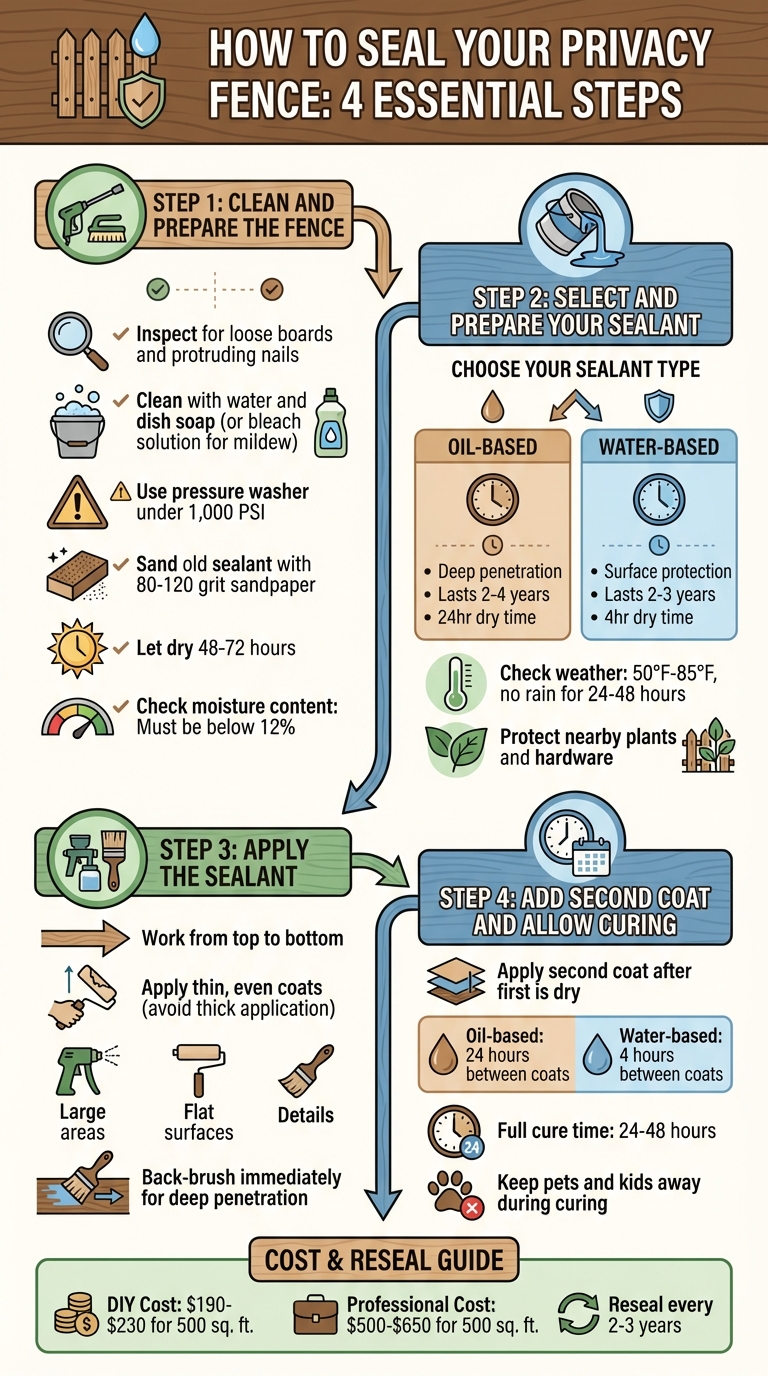
4-Step Guide to Sealing a DIY Privacy Fence
With your tools and sealant ready, it’s time to get started. By following these steps, you’ll give your fence the protection it needs to handle rain, sun, and snow.
Step 1: Clean and Prepare the Fence
Start by examining your fence for any loose boards, broken panels, or protruding nails. Tighten hardware and replace damaged sections as needed. Trim back any nearby plants or bushes to reduce moisture buildup.
For cleaning, use a mixture of water and dish soap to scrub away dirt and grime. If you spot mildew or algae, mix 1 cup of bleach with 4 gallons of water for a more effective solution. A pressure washer can also help with stubborn dirt – just keep the pressure under 1,000 PSI and hold the nozzle 12 to 18 inches away from the wood to avoid damage.
If the fence has an old sealant or paint, sand the surface with 80–120 grit sandpaper to remove the coating and open up the wood pores. For new fences, apply a wood brightener to get rid of the "mill glaze", a smooth layer that can block sealant absorption. After cleaning, let the fence dry for 48 to 72 hours. Use a moisture meter to ensure the wood’s moisture content is below 12% before moving on to sealing.
Step 2: Select and Prepare Your Sealant
Choose a sealant that’s suitable for your local climate. Here’s a quick comparison of water-based and oil-based sealants to help you decide:
| Feature | Water‐Based Sealant | Oil‐Based Sealant |
|---|---|---|
| Protection | Sits on the surface; may peel or flake over time | Penetrates deep into wood fibers to resist rot and mold |
| Durability | Lasts 2–3 years | Lasts 2–4 years |
| UV Resistance | Better UV resistance and color retention | Often includes UV-blocking pigments |
Before sealing, check the weather forecast – no rain should be expected for at least 24 to 48 hours. Ideal conditions are temperatures between 50°F and 85°F with humidity below 70%. Protect nearby plants, patios, and hardware with drop cloths or plastic to prevent overspray.
Step 3: Apply the Sealant
Once your sealant is ready, begin applying it from the top of the fence downward. This approach helps you manage drips more effectively. Apply in thin, even layers instead of a thick coat, as heavy applications can lead to bubbling, peeling, or uneven drying.
Use the appropriate tool for your sealant. Sprayers work well for covering large areas quickly, rollers are great for flat surfaces, and brushes are perfect for detailed work like corners and edges. Back-brush immediately after applying to ensure the sealant penetrates deeply and creates a uniform finish. For oil-based sealants, use natural bristle brushes, and for water-based ones, go with synthetic brushes.
Step 4: Add a Second Coat and Allow Curing
After the first coat is completely dry, check for any missed spots or areas that look thin. Applying a second coat increases durability and provides extra protection against moisture, mold, and UV rays. Use the same thin, even application as the first coat.
Allow the sealant to cure for 24–48 hours in dry weather. Oil-based sealants typically need at least 24 hours between coats, while water-based options may dry in as little as 4 hours. Keep kids and pets away from the area during the curing period, and avoid exposing the fence to rain or heavy use until it’s fully set.
How to Maintain Your Sealed Fence
Once your fence is sealed, keeping up with regular maintenance is key to ensuring it lasts and continues to protect your investment.
Cleaning and Inspection Schedule
Plan to inspect your fence twice a year – once in spring and again in fall. During spring, look for any cracks or rot caused by winter weather. In summer, keep an eye out for warping or issues with gates. By fall, check for loose fasteners or signs of rot before the frost sets in. After winter storms, inspect for ice damage or stress from snow buildup.
Make it a habit to clean your fence annually to prevent mold and mildew. Use a soft-bristle brush with mild soap and water, or opt for gentle cleaning methods that won’t harm the seal. If mildew appears, a diluted bleach solution (1 cup bleach per 4 gallons of water) works well.
In between these inspections, take steps to reduce moisture exposure. Trim back vegetation to keep it a few inches away from the fence, improving airflow. Adjust sprinklers so they don’t spray directly on the wood, clear fallen leaves from the base in the fall, and use a broom – rather than a metal shovel – to remove snow during winter. These small efforts can help prevent issues from escalating and keep the seal intact.
How Often to Reapply Sealant
Plan to reseal your fence every 2–3 years, or sooner if needed. A simple splash test can help you determine when it’s time. Throw some water on the wood – if it soaks in and darkens the surface instead of beading up, it’s time to reseal.
"Simple! Just do a little splash test – throw some water on the wood surface. If the water no longer beads up but gets quickly absorbed, making the wood darker, it’s time for that resealing work." – Robin M, Tool Testing Expert, SkilledHub
Other signs that it’s time to reapply sealant include fading color, a graying appearance, or wood that feels rough, dry, or shows visible surface cracks.
Conclusion: Protect Your Fence for Years to Come
Taking the time to seal your privacy fence can make a world of difference in its lifespan. A sealed cedar fence can last 20–25 years, while untreated wood may only hold up for 5–10 years. That’s a major difference – not just in durability but also in the money you save over time.
"Regular upkeep is more economical than replacing your wood fence, and is a smarter use of your time." – Superior Fence & Rail
By following the steps in this guide – cleaning, preparing, applying the right sealant, and keeping up with regular inspections – you’ll shield your fence from moisture, UV rays, temperature shifts, and pests. Plus, you’ll preserve its structural strength and keep it looking great.
If you’d rather leave the hard work to the pros, Tend Fencing offers expert fence installation and maintenance services in Plano, TX, and nearby areas. They’re known for their high-quality wood fencing and craftsmanship. And here’s a nice touch: for every fence they build, they plant a tree – combining great service with care for the environment.
Whether you choose to seal your fence yourself or bring in the experts, the most important step is to act now. A well-maintained fence not only protects your property but also enhances the beauty of your outdoor space.
FAQs
Can I seal a fence that’s still damp?
Sealing a damp fence is a bad idea. The wood needs to be thoroughly cleaned and fully dried before applying any sealant. If you seal a wet fence, the trapped moisture can lead to problems like rot or mildew down the line. To ensure the fence lasts longer and stays in good condition, always wait until it’s completely dry before sealing.
Do I need a sealer or a stain-and-sealer?
When deciding between the two, it comes down to what you want for your wood’s protection and appearance. Sealers are great for shielding the wood from moisture while keeping its natural look intact. On the other hand, stain-and-sealer products combine color, UV protection, and moisture resistance in a single application.
If preserving the wood’s original appearance is your priority, go with a sealer. But if you’re after added color along with extra weather protection, a stain-and-sealer is the better choice.
What should I do if it rains before the sealant cures?
If rain occurs before the sealant has fully cured, allow the surface to dry completely before proceeding. Rain can compromise the sealant by washing it away, which can affect how well it protects your fence. Once the area is dry, inspect it for any damage or uneven application. If necessary, reapply the sealant to ensure consistent coverage. Always stick to the drying and curing times recommended by the manufacturer for the best results.