

When it comes to modern fencing, the right design can enhance privacy, security, and curb appeal while complementing your home’s style. This guide covers 10 popular fence styles that combine functionality with contemporary aesthetics:
- Horizontal Slat Wood Fences: Sleek, clean lines that make small yards feel larger. Cedar and tropical hardwoods offer durability and visual appeal.
- Mixed-Material Wood and Iron Fences: Combines the warmth of wood with the strength of metal for a modern, industrial look.
- Aluminum Ornamental Fences: Lightweight, rust-resistant, and perfect for wet climates or pool areas.
- Vinyl Privacy Fences: Durable, low-maintenance, and available in a variety of colors and designs, including horizontal slats and wood-like textures.
- Steel Minimalist Fences: Bold, industrial designs with powder-coated finishes for long-lasting durability.
- Composite Horizontal Fences: Made from recycled wood and plastic, offering the look of wood without the upkeep.
- Chain Link with Privacy Slats: Affordable and customizable with slats for added privacy and style.
- Glass Panel Fences: Transparent, modern designs that preserve views while defining boundaries.
- Bamboo Fences: Eco-friendly and stylish, with options like black bamboo for a contemporary touch.
- Custom Automatic Gate Fences: Adds convenience and security with modern materials and tech like smartphone controls.
Each style has its own benefits, material options, and maintenance needs. Whether you’re seeking a minimalist look, durability, or eco-friendly materials, there’s a fence to suit your outdoor space.
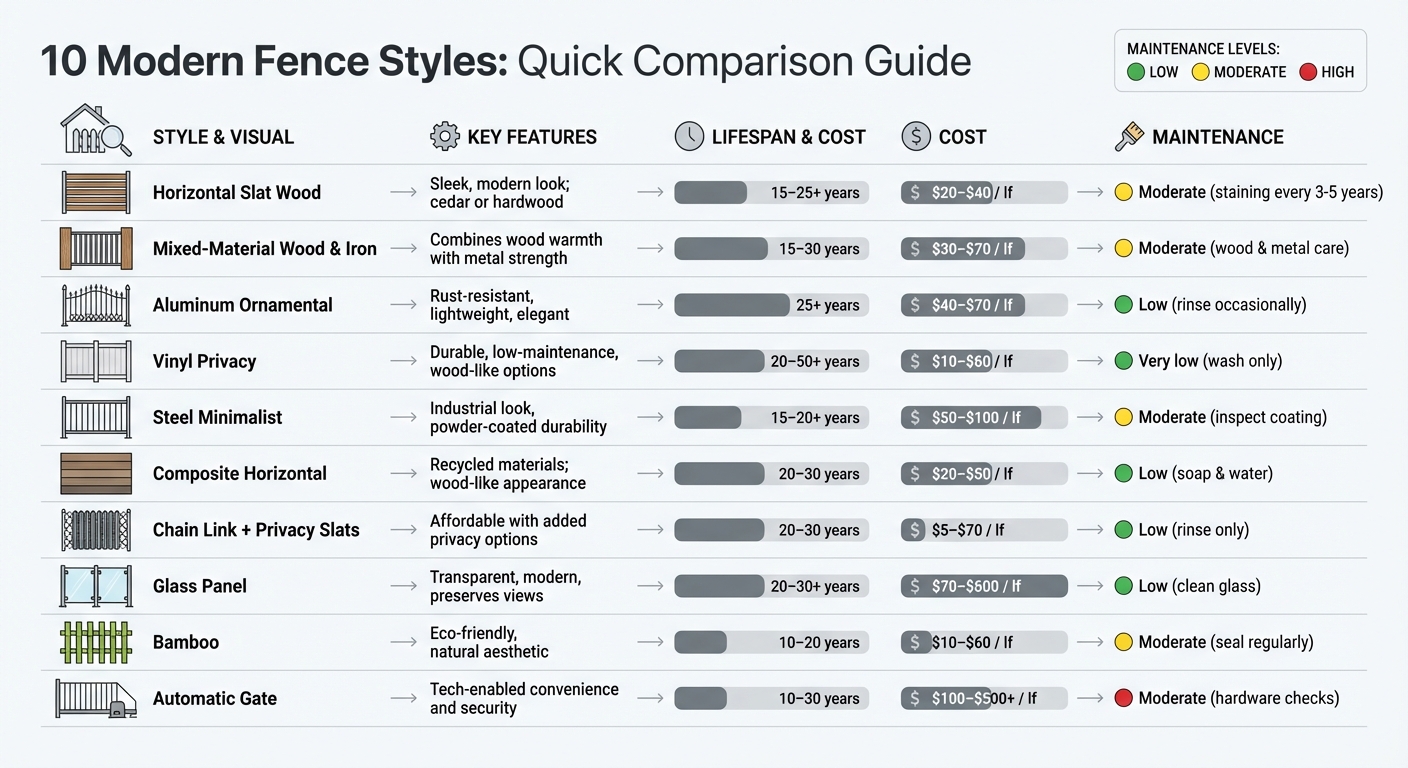
Quick Comparison:
| Fence Style | Key Features | Lifespan | Cost (per linear foot) | Maintenance |
|---|---|---|---|---|
| Horizontal Slat Wood | Sleek, modern look; cedar or hardwood | 15–25+ years | $20–$40 | Moderate (staining) |
| Mixed-Material Wood & Iron | Combines wood warmth with metal strength | 15–30 years | $30–$70 | Moderate (wood & metal) |
| Aluminum Ornamental | Rust-resistant, lightweight, elegant | 25+ years | $40–$70 | Low (rinse occasionally) |
| Vinyl Privacy | Durable, low-maintenance, wood-like options | 20–50+ years | $10–$60 | Very low |
| Steel Minimalist | Industrial look, powder-coated durability | 15–20+ years | $50–$100 | Moderate (inspect coating) |
| Composite Horizontal | Recycled materials; wood-like appearance | 20–30 years | $20–$50 | Low |
| Chain Link + Privacy Slats | Affordable with added privacy options | 20–30 years | $5–$70 | Low |
| Glass Panel | Transparent, modern, preserves views | 20–30+ years | $70–$600 | Low (clean glass) |
| Bamboo | Eco-friendly, natural aesthetic | 10–20 years | $10–$60 | Moderate (seal regularly) |
| Automatic Gate | Tech-enabled convenience and security | 10–30 years | $100–$500+ | Moderate (hardware checks) |
Choose a fence style that aligns with your budget, aesthetic preferences, and maintenance capacity to transform your outdoor space into a modern haven.
Modern Fence Styles Comparison: Features, Costs, and Maintenance Guide
Top 100+ Modern and Creative Fence Design Ideas to Elevate Your Home’s Curb Appeal
sbb-itb-d1d0a96
1. Horizontal Slat Wood Fences
Horizontal slat wood fences bring a sleek, modern look to outdoor spaces while making them feel more open. With boards running horizontally, these fences highlight width and create clean sightlines, which can make smaller yards feel larger. This design often complements the straight, linear patterns of modern architecture, helping the fence blend naturally with your home’s exterior. The simplicity of the layout enhances the sense of space and sets the tone for contemporary outdoor aesthetics.
Material Quality and Durability
The type of wood you select plays a big role in the fence’s lifespan and overall appearance. Cedar is a top choice because its natural oils protect against rot, decay, and insects while keeping the wood stable. Though it costs more than pine, cedar can last over 25 years with proper maintenance. Redwood is another strong option, offering great rot resistance and a striking appearance, albeit at a higher price point. For a premium look and unmatched durability, tropical hardwoods like Ipe are excellent choices, as they resist warping and stand up to the elements.
"Cedar stays straighter and more dimensionally stable than pressure-treated pine, with less risk of warping, twisting, or cupping." – Taj Mitchell, Writer, Rocky Mountain Forest Products
Horizontal fences demand higher-grade lumber compared to vertical ones because each board needs to span the distance between posts. To ensure stability, posts should be spaced no more than 6 feet apart, unlike the 8- or 9-foot spacing often used for vertical fences . Using metal posts, such as galvanized steel or powder-coated aluminum, can further extend the fence’s life by preventing wood-to-ground contact.
Aesthetic Appeal for Modern Spaces
This fence style doesn’t just hold up well – it also looks great. The horizontal arrangement can make small yards feel more spacious. Spacing the slats strategically, usually between ½ inch and 2 inches apart, allows for airflow while balancing privacy. This approach aligns with minimalist design principles. For added visual interest, some designs alternate board widths, such as combining 1×4 and 1×6 slats. Dark finishes like black or charcoal stains on cedar create a striking contrast against greenery, enhancing the modern aesthetic.
Maintenance Requirements
New wood fences should dry for about a month before being stained. Once stained, cedar fences typically need recoating every 3 to 5 years to protect against UV damage and prevent graying. This maintenance schedule is far less demanding than the yearly upkeep often required for painted fences. Before re-staining, use a pressure washer set to a maximum of 1,200 PSI to clean the surface without harming the wood fibers.
To reduce moisture-related warping, stain all sides of the boards, including the ends, before installation, and leave a ¼-inch gap at the base for drainage . Stainless steel fasteners (304 or 316 grade) are essential to avoid rust stains on the wood. By following these steps, you can keep your horizontal slat fence looking sharp and standing strong for years to come.
2. Mixed-Material Wood and Iron Fences
Combining wood with metal adds a sleek, modern touch to traditional fence designs. This pairing not only enhances durability but also creates a stylish, contemporary look. The metal frame acts as the sturdy backbone, while the wood panels bring warmth and a softer, natural vibe – perfect for modern outdoor spaces.
Material Quality and Durability
Using materials like galvanized steel or powder-coated aluminum ensures long-lasting performance. These metals resist rot, warping, and pests, maintaining over 90% of their strength even after 10–15 years of outdoor exposure. Aluminum-framed hybrid fences often last 20–30 years, while steel-framed versions typically hold up for 15–20 years.
"Think of it this way: the metal is the skeleton. The wood is the skin. And the fasteners are the nervous system connecting them." – Jadon Allen, Founder, Eagle Claw
For these mixed-material designs, high-quality fasteners are crucial. Using 316-grade stainless steel prevents corrosion where metal meets wood. This is especially important in coastal areas – within about 20 miles of the ocean – where salt exposure can accelerate wear. When working with ACQ-treated lumber, stainless steel or aluminum fasteners are recommended to avoid chemical reactions.
This thoughtful combination of materials not only ensures long-term durability but also creates a modern, industrial-inspired aesthetic.
Aesthetic Appeal for Modern Spaces
Mixed-material fences stand out with their industrial-chic vibe, blending the natural beauty of wood with the sleekness of metal. Horizontal wood slats emphasize a clean, open look, and spacing them ½ inch to 2 inches apart creates striking shadow gaps that allow for airflow. Pairing black metal frames with horizontal cedar or ipe slats creates sharp, geometric lines that complement modern architecture. For an eco-conscious twist, reclaimed or weathered wood can add character while enhancing the industrial aesthetic.
Maintenance Requirements
To keep your fence looking great, wood panels should be sealed or stained annually, while metal components need regular rinsing every 6–8 weeks in coastal areas. Isolation gaskets at contact points help accommodate the metal’s thermal expansion. Inspect metal parts yearly for chips or scratches in the powder coating, and repair any damage promptly to prevent rust. Bolted connections should also be checked regularly, as they can loosen over time due to temperature changes or wind.
Proper maintenance not only extends the life of your fence but also preserves its modern, stylish appearance. For those looking to achieve this balanced look, professional installation is key. In Plano, TX, Tend Fencing offers custom installations that combine expert craftsmanship with eco-friendly practices – like planting a tree for every fence built – helping you bring your modern outdoor vision to life.
3. Aluminum Ornamental Fences
Aluminum ornamental fences are a modern favorite, blending style with practicality. They offer the elegant look of wrought iron but without the hassle of rust or excessive weight. Naturally resistant to rust, rot, and corrosion, these fences are an excellent choice for wet climates or coastal properties within 3,000 feet of saltwater. The powder-coated finish provides an enamel-like hardness that’s far more resistant to chipping, fading, and scratching compared to standard paint. This makes aluminum fences a stylish and durable option for homeowners.
Material Quality and Durability
Aluminum fences are built to last, often maintaining their structure and appearance for 25 years or more with minimal maintenance. Unlike wood, they won’t warp, crack, or attract termites. For added strength, commercial-grade aluminum is 1/8 of an inch thicker than residential-grade, making it ideal for high-traffic areas or containing animals. Many flat-top aluminum designs are pre-engineered to meet safety codes for pool enclosures, ensuring proper height and picket spacing.
"Aluminum metal gives you the sleek and impenetrable look of iron without the weight or ongoing aging/maintenance concerns." – Garon Fence
Aesthetic Appeal for Modern Spaces
Black powder-coated finishes with straight, clean lines are especially popular for urban and industrial-style landscapes. Horizontal aluminum slats can mimic the appearance of high-end wood without the risk of rotting. For properties with scenic views, aluminum posts combined with glass or acrylic panels offer security while preserving sightlines. On average, installing a full aluminum fence costs around $4,200. This combination of low maintenance and modern design makes aluminum fences a standout choice.
Maintenance Requirements
One of aluminum’s biggest perks is its low-maintenance nature. A quick wash with mild soap and water once or twice a year is enough to keep the powder-coated finish looking fresh. There’s no need for staining, sealing, or repainting. A simple annual check for loose fasteners or gate hinges is usually all the upkeep required. This eliminates the recurring maintenance costs that come with wood or wrought iron, making aluminum a smart long-term investment.
Environmental Sustainability
Aluminum is one of the most recycled materials globally, with many fence designs incorporating recycled content and being fully recyclable. Unlike pressure-treated wood, aluminum doesn’t require toxic chemical treatments, making it a safer, eco-friendly option for homeowners aiming to reduce their environmental impact.
For homeowners in the Plano, TX area looking to upgrade their outdoor spaces, Tend Fencing provides expert installation and custom design services for aluminum ornamental fences.
4. Vinyl Privacy Fences
Vinyl privacy fences provide a durable and low-maintenance way to create seclusion. They resist rot, warping, splintering, insect damage, rust, and corrosion – making them an excellent option, even in coastal areas prone to harsh conditions. Many modern vinyl panels use tongue-and-groove systems to manage natural expansion and contraction, and they include solar stabilizers to guard against UV damage.
Material Quality and Durability
The lifespan of a vinyl fence depends heavily on the materials used. High-quality virgin PVC and proper installation can extend the typical 20–30-year lifespan to over 50 years. However, opting for lower-grade recycled vinyl can result in failure within just 10 years.
When it comes to costs, standard vinyl privacy fences range from $10 to $40 per linear foot, while premium options can cost $25 to $60 per linear foot. For optimal privacy, fences should be at least 6 feet tall with tightly fitted panels. Additionally, a galvanized steel or aluminum insert in the bottom rail is essential for wider panels (like 8-foot sections) to prevent sagging over time.
Aesthetic Appeal for Modern Spaces
Today’s vinyl fences offer more than just the traditional white picket style. Black vinyl privacy fences are gaining popularity, especially for modern homes with matching black window frames or trim. Two-tone designs, such as brown panels with black frames, add depth and visual interest to larger fence sections. Horizontal slats are another stylish option, providing clean, geometric lines that pair well with contemporary architecture.
"Black privacy fences are one of the newest contemporary fence styles we’re installing… used to complement upscale modern homes, looking fantastic when paired with black window frames or black home trim." – John Smucker, Lead Designer, Smucker Fencing
Advancements in manufacturing also allow vinyl to replicate wood-grain textures in rich shades like Weathered Cedar or Chestnut Brown. This gives homeowners the rustic charm of wood without the hassle of ongoing maintenance.
Maintenance Requirements
One of vinyl’s biggest advantages is its minimal upkeep. Unlike wood or metal, vinyl doesn’t require painting, staining, or sealing. Dirt can usually be rinsed off with a garden hose and mild soap, while tougher mildew stains can be tackled with basic household cleaners. Thanks to its embedded color, vinyl won’t chip, peel, or need refinishing.
Although the upfront cost of vinyl fencing is higher, its durability and low maintenance make it a cost-effective choice in the long run. This combination of easy care and lasting performance makes vinyl a practical solution for modern outdoor spaces.
| Feature | Vinyl | Wood | Aluminum |
|---|---|---|---|
| Maintenance | Very Low (wash only) | High (stain/paint/seal) | Low (wash only) |
| Lifespan | 20–30 years (up to 50+ years with high-quality installations) | 10–20 years | 30+ years |
| Privacy Level | Complete solid panels | Varies by style | Limited (open pickets) |
| Cost | $10–$40 per linear foot | $15–$20 per linear foot | Higher for ornamental |
5. Steel Minimalist Fences
Steel minimalist fences add a sleek, industrial vibe to modern residential outdoor spaces with their clean lines and bold finishes. Built with heavy-gauge steel (14-gauge or thicker), they offer better resistance to impacts and harsh weather compared to lighter materials. Galvanized or powder-coated finishes protect against rust and corrosion, giving these fences a lifespan of 15–20 years or more with proper care.
Aesthetic Appeal for Modern Spaces
Minimalist designs focus on sleek horizontal lines and solid panels, creating a seamless visual flow. Matte black powder-coated steel remains the top choice for 2025–2026, offering a refined look that enhances natural greenery and complements modern architecture. For those seeking variety, corrugated metal panels provide an affordable industrial feel that works well with mid-century modern or urban homes. Meanwhile, laser-cut geometric patterns – like hexagons or abstract shapes – turn fencing into a striking architectural feature.
"Steel’s sleek finish complements the natural warmth of wood, creating designs that suit both contemporary and rustic settings." – Perimtectx
This combination of modern style and robust construction makes steel fences a standout option.
Material Quality and Durability
Powder-coated steel holds up impressively over time, retaining more than 90% of its strength even after 10–15 years in tough conditions. Corrugated metal panels, when securely anchored, can endure wind speeds up to 130 mph. For coastal areas within 3,000 feet of saltwater, using 316-grade stainless steel fasteners is essential to prevent corrosion and rust streaks. Avoid welding pre-coated panels, as it damages their protective finish.
Maintenance Requirements
While steel fences are built to last, regular upkeep ensures their longevity. Inspect the fence annually for chips or scratches in the powder coating, and repair any damage promptly to prevent rust. In coastal regions, rinse the fencing every 4–6 weeks to remove salt deposits. Additionally, galvanized steel panels benefit from a professional zinc coating check every five years to maintain their protective layer.
Environmental Sustainability
Modern steel fencing incorporates recycled materials and energy-efficient production methods, making it an environmentally friendly choice. Its long lifespan and recyclability mean less waste compared to materials that need frequent replacement. This eco-conscious approach aligns beautifully with the modern aesthetic themes discussed throughout this article.
6. Composite Horizontal Fences
Composite horizontal fences are made from a mix of recycled wood fibers and HDPE plastic, offering the appearance of stained wood while avoiding the flaws typically found in natural wood materials. This blend provides resistance to rot, decay, and insect damage, while the plastic component ensures protection against moisture-related issues. The result? A fence that stays durable and maintains its shape for 20–30 years without warping, splintering, or cracking, even under constant sun and weather exposure.
Material Quality and Durability
These fences are built to last 20–30 years, outliving traditional wood fences, which often need replacement after 15–20 years. Some composite systems are even rated to withstand winds up to 100 mph, making them ideal for areas prone to high winds. High-quality composite panels also achieve an STC rating of 24, which reduces outdoor noise by more than 75%. For context, a 6 ft. H x 69 in. W composite fence kit typically costs around $397.95.
"Our composite wheat-based formula ensures a wood-like look and feel that avoids the maintenance hassles of traditional wood. Our products will not splinter, rot, or crack over time due to sun exposure and weather changes." – Natures Composites
Aesthetic Appeal for Modern Spaces
The horizontal slat design creates sleek, contemporary lines that can make outdoor spaces feel larger and more open. Unlike natural wood, which fades or requires frequent upkeep, composite materials maintain bold, consistent colors – such as matte black or deep gray – over time. Some premium options even feature embossed wood grain textures, offering the warmth and charm of stained wood without the roughness of traditional cedar boards. Many designs also incorporate black metal frames, delivering a polished, industrial-modern look that’s both stylish and functional. Plus, the durability of composite materials ensures minimal upkeep.
Maintenance Requirements
Caring for composite fences is straightforward. Cleaning every 6–12 months with soap, water, and a soft bristle brush is all that’s needed. There’s no need for staining, painting, or sealing. To prevent moisture buildup, install the boards 2 inches above the ground and allow airflow. Use 316-grade stainless steel fasteners to avoid rust streaks, and pre-drill holes before screwing to prevent splitting. Leave a 1/8-inch gap between boards to account for thermal expansion and contraction during installation.
Environmental Sustainability
Composite fences often incorporate 95% to 96% recycled materials, such as reclaimed wood fibers and recycled plastics. Some brands even include renewable by-products like wheat straw in their formulas. Their long lifespan means fewer replacements, reducing waste over time. With 66% of Americans willing to pay more for eco-friendly products, composite fencing fits perfectly into this growing demand for sustainable solutions. This makes it a smart, environmentally conscious choice for modern outdoor spaces.
For homeowners in Plano, TX looking for a stylish, low-maintenance fencing option, Tend Fencing provides professional installation services to bring these sustainable composite fences to life. Check out their offerings at Tend Fencing.
7. Chain Link with Privacy Slats
Chain link fences with privacy slats combine affordability with a touch of style. While the chain link itself can last 20–30 years, the addition of slats – crafted from materials like High-Density Polyethylene (HDPE), UV-resistant PVC, or aluminum – elevates the basic design into something more suited for residential spaces. Standard slats offer about 75% privacy coverage, but if you’re looking for more, winged or hedge-style slats can block 90–95% of visibility. Material costs hover around $5 per linear foot.
Material Quality and Durability
The chain link’s galvanized or vinyl-coated construction ensures it can endure for decades. Slats, which are built with UV inhibitors, are replaceable if they get damaged. However, it’s important to note that adding slats increases wind resistance. In areas prone to high winds, stronger posts like SS40 and closer post spacing (8–9 feet instead of the usual 10 feet) are recommended to prevent the fence from toppling. For homeowners in coastal regions, aluminum or UV-rated plastic slats are better choices since they resist salt spray and harsh sunlight.
These features create a durable, yet adaptable, fencing solution.
Aesthetic Appeal for Modern Spaces
Privacy slats don’t just enhance durability – they also bring a modern, polished look. They add color and texture, turning the fence into an attractive focal point or a subtle backdrop for landscaping. Sleek aluminum slats offer an industrial edge, while hedge-style slats mimic natural greenery. For a creative twist, privacy tape can be used to create custom patterns or even murals. Popular color choices today include Midnight Black, Coastal Grey, and Coffee Brown, which pair well with contemporary roofing and trim styles.
When it comes to cost, the total installed price of these fences ranges from $40–$70 per linear foot. This makes them about 35% to 60% cheaper upfront compared to wood, vinyl, or composite privacy fences.
Maintenance Requirements
One of the biggest perks of chain link fences with privacy slats is their low maintenance. There’s no need for staining, painting, or sealing. The HDPE or PVC slats are built to withstand the elements, whether it’s sun, rain, or wind, and a simple rinse with a hose is usually all they need. For slats designed to look like greenery, applying a UV-protectant spray can help maintain their color and extend their lifespan. If you’re installing slats, make sure the fence’s diamond mesh size is 2 inches, which is the standard fit for most privacy slats.
For homeowners in Plano, TX seeking an affordable and stylish privacy solution, Tend Fencing offers professional chain link installations with customizable privacy slat options. Visit Tend Fencing to learn more.
8. Glass Panel Fences
Glass panel fences offer a sleek, transparent way to define your property boundaries without blocking the view. These fences use tempered or laminated safety glass, typically ranging from 8 mm to 12 mm in thickness. Frameless designs often require the thicker 12 mm panels to ensure stability. To withstand harsh conditions like poolside or coastal environments, these systems incorporate 316 marine-grade stainless steel posts, clamps, and spigots, which are resistant to rust. Tempered glass is heat-treated to make it up to eight times stronger than regular glass. When it breaks, it crumbles into small, blunt pieces, minimizing the risk of injury.
Material Quality and Durability
Glass panels stand out for their ability to resist warping, rotting, or UV damage, even in extreme heat over 90°F. They are engineered to handle high lateral loads, with some building codes requiring them to withstand a 200-pound concentrated load at the top rail and 50 pounds per square foot of uniform pressure. For pool barriers, California building codes specify a minimum height of 60 inches and a gap no larger than 4 inches. These fences also act as effective windbreaks for patios and pools while maintaining clear visibility. Installation costs can vary significantly, ranging from $150 to $600 per linear foot. Frameless systems typically cost between $110 and $220 per linear foot, while post or framed systems range from $70 to $140 per linear foot. Their durability and functionality make them a popular choice for modern outdoor spaces.
Aesthetic Appeal for Modern Spaces
Glass panel fences are a perfect fit for contemporary designs, offering an elegant and unobtrusive look. They create a "floating" or "invisible" effect that enhances modern architecture. As US Glass Fence describes, they provide "an elegant, minimalist, and invisible look". The transparency ensures that spaces remain open and bright, making even small yards or patios feel larger. You can choose from various glass options, including clear, tinted (gray, bronze, blue), frosted, or etched finishes, to balance privacy with style. For the clearest view, low-iron glass eliminates the slight greenish tint found in standard glass. Pairing these panels with black powder-coated aluminum or stainless steel hardware can further complement modern trims and window designs.
Maintenance Requirements
Maintaining glass fences is straightforward. A soft microfiber cloth and a mild glass cleaner or a vinegar-and-water solution work well for regular cleaning. Rinse with fresh water and dry with a lint-free cloth to avoid water spots. For installations near pools or coastal areas, cleaning twice a month is recommended to prevent hard-water spots and salt deposits, while urban environments may only require monthly cleaning. Applying hydrophobic coatings can reduce cleaning frequency, keeping the surface clear for 12–24 months depending on exposure. Stainless steel components can be wiped down with a damp cloth and mild detergent. Avoid using chlorine or bleach-based products, as they can accelerate corrosion. Inspect the hardware and glass edges every 6–12 months to ensure safety and address any chips or loose fasteners.
For homeowners looking to enhance their outdoor space with a modern touch, glass panel fences are a stylish and durable option. Professional installation ensures a polished finish and long-lasting performance. Tend Fencing (https://tendfencing.com) specializes in custom designs that combine security with aesthetic appeal.
9. Bamboo Fences
Bamboo fences bring a touch of eco-conscious elegance to outdoor spaces, combining style with durability. For the best results, choose Moso or Tonkin bamboo, known for their strength and natural resistance to the elements. Modern bamboo panels are often reinforced with galvanized steel wire, helping them maintain their shape through changing seasons. While untreated bamboo typically lasts 5–8 years, treated bamboo can endure for 10–20 years .
Material Quality and Durability
Bamboo’s natural silica content not only enhances its appearance but also makes it resistant to termites and gives it impressive tensile strength – comparable to some steel alloys. Heat treatment further boosts its resilience by improving moisture resistance, minimizing warping, and protecting against rot. Bamboo reed fences also offer functional benefits, such as blocking up to 70% of the sun’s heat, which helps regulate outdoor temperatures.
Costs vary depending on size and type. Standard-sized panels, like 4 ft x 6 ft, are priced between $59 and $79, while larger 6 ft x 13 ft reed fencing is more affordable, ranging from $40–$60 .
Aesthetic Appeal for Modern Spaces
Bamboo fencing isn’t just for tropical or rustic settings anymore – it has evolved into a staple of modern design. Sleek horizontal slats and mixed-material frames are now popular in contemporary spaces. Black bamboo (Phyllostachys nigra), with its deep ebony tone, delivers a sophisticated, designer aesthetic. Pairing vertical bamboo stalks with dark-stained wood or metal frames creates a striking, high-end look that complements modern architecture .
The minimalist, geometric appeal of bamboo also allows for versatility in color, from its natural golden hue to bold black tones.
"Bamboo’s timeless natural beauty is a prime reason many people decide to use it for fencing… it creates a beautiful focal point for your fence" – Forever Bamboo
To maintain this polished appearance, regular upkeep is key.
Maintenance Requirements
Proper care can significantly extend the life and beauty of bamboo fences. Applying a UV-resistant sealant or linseed oil every 2–3 years helps prevent yellowing, splitting, and rot . Cleaning the surface annually with mild soap and water is recommended, but avoid pressure washers, which can damage the bamboo’s outer fibers.
During installation, ensure the fence is elevated at least 6 inches off the ground or use gravel boards to minimize moisture exposure, which can lead to decay . Pre-drilling holes before fastening can prevent cracking, and regular inspections – about every three months – can help catch early signs of damage, such as splitting or corrosion in joints and wires. Also, trimming nearby plants that trap moisture against the fence is a smart preventive measure.
Environmental Sustainability
Bamboo stands out as one of the most environmentally friendly fencing materials available. It can grow up to 3 feet in a single day, making it an incredibly renewable resource . Plus, it produces 35% more oxygen than an equivalent area of trees and is fully biodegradable. Unlike traditional timber, bamboo requires less pesticide use and reaches maturity in just 3 years.
"As one of the world’s fastest-growing plants, bamboo represents an eco-conscious choice that doesn’t compromise on style or durability" – Bamboogetup
For those looking to enhance their property with a sustainable and stylish option, Tend Fencing provides professional installation services in Plano, TX, ensuring a perfect mix of functionality and modern design.
10. Custom Automatic Gate Fences
Custom automatic gate fences combine security, convenience, and style into a single design feature. These gates do more than just control access – they add personality to your property. With features like smartphone and voice control, they bring modern technology to your doorstep. Plus, safety sensors that detect obstacles make them a smart choice for families with kids or pets.
Material Quality and Durability
The foundation of a reliable automatic gate lies in the materials used. Steel and wrought iron are top choices for strength and durability, ideal for heavy-duty needs. Aluminum, on the other hand, is lightweight and rust-resistant, making it a low-maintenance option. To handle the stress of motorized operation, steel-reinforced frames are essential to prevent warping or sagging. Powder-coated finishes protect against rust and weather damage, while composite materials resist rot, mold, and pests – all while mimicking the look of wood. Regular inspections and touch-ups can extend the gate’s lifespan and keep it looking its best.
| Material | Durability | Maintenance | Aesthetic Style |
|---|---|---|---|
| Steel/Iron | High (Strongest) | Moderate (Needs checks) | Industrial, Ornate, Bold |
| Aluminum | High (Rust-proof) | Low | Sleek, Modern, Minimalist |
| Composite | High (Rot-proof) | Very Low (Soap & water) | Wood-like, Contemporary |
Each material offers unique advantages, allowing you to tailor your gate to your needs and design preferences.
Aesthetic Appeal for Modern Spaces
Automatic gates have become more than functional – they’re now key elements of modern design. For a bold, artistic look, laser-cut metal panels with geometric patterns can create a striking entrance. Pairing powder-coated black steel frames with horizontal cedar or composite panels balances industrial toughness with a touch of natural warmth. Minimalist designs featuring clean horizontal lines and matte finishes are perfect for contemporary homes. Integrated LED lighting adds both security and ambiance, with most systems offering impressive lifespans of 15,000 to 25,000 hours.
Maintenance Requirements
Automatic gate openers typically last around 10 years. Swing gates are easier to maintain compared to sliding models, which require regular cleaning of rollers, wheels, and rails to ensure smooth operation. If your gate includes wood elements, refinishing every one to two years helps maintain their appearance and weather resistance. Metal and composite finishes are easier to care for – usually requiring just occasional cleaning with soap and water. For emergencies, make sure your system has a manual override or backup power option. When it comes to complex repairs, it’s best to leave the work to professionals.
For expert installation and reliable service, Tend Fencing in Plano, TX, offers professional solutions for both residential and commercial automatic gates.
Conclusion
From sleek horizontal slats to automatic gates, fences today offer a range of styles designed to complement modern outdoor spaces. Choosing a fence involves balancing aesthetics with functionality. Horizontal slat designs, for instance, create clean geometric lines that give properties a more open and contemporary feel. Mixed-material options, on the other hand, combine the natural appeal of wood with the durability of metals for added strength and charm. If maintaining a view is important, glass panels or slatted screens provide visibility while still defining your property’s boundaries. For those with busy schedules, materials like powder-coated aluminum, vinyl, and composite offer a hassle-free solution, standing up to rot, rust, and UV damage for decades.
It’s also important to match your fence design with your home’s architecture and consider environmental factors. Coastal areas, for example, benefit from marine-grade materials that resist corrosion, while high-wind regions are better suited to fences that allow airflow rather than acting as a solid barrier.
Professional installation plays a key role in ensuring your fence stands the test of time. Experts handle critical details like post depth, compliance with local building codes, and precise leveling using specialized tools.
For homeowners in Plano, TX, Tend Fencing offers custom fence installations that combine modern designs with expert craftsmanship. From horizontal wood fences to automatic gates, their team ensures every project meets both your design and durability needs. Plus, they take sustainability seriously by planting a tree for every fence installed. Let their skilled professionals bring your vision to life and elevate your outdoor space.
FAQs
Which fence style is best for high-wind areas?
When it comes to fencing in high-wind areas, the key is to choose styles that let air pass through easily. Options like slatted, shadowbox, or lattice designs work well because they reduce wind resistance. To make sure your fence holds up against strong gusts, combine these designs with deeply anchored posts and secure footings. This combination provides both stability and durability while keeping the fence functional in tough weather conditions.
What’s the lowest-maintenance modern fence option?
Vinyl fences are a low-maintenance option for modern outdoor spaces. They hold up well against warping, discoloration, and rotting. To keep them looking their best, all they need is an occasional rinse with a garden hose.
How do I choose the right fence for a coastal climate?
To pick the right fence for a coastal climate, focus on materials that can handle salt air, high humidity, and corrosion. Vinyl, composite, and aluminum are excellent options for these conditions. Also, consider open designs like picket or chain-link fences, as they allow wind to pass through, reducing the risk of damage during storms or strong gusts.
Maintenance is key in these environments. Regularly rinsing off salt buildup can help protect the fence and extend its lifespan. By combining sturdy materials with wind-friendly designs and consistent upkeep, your fence will be better equipped to handle the challenges of a coastal setting.