
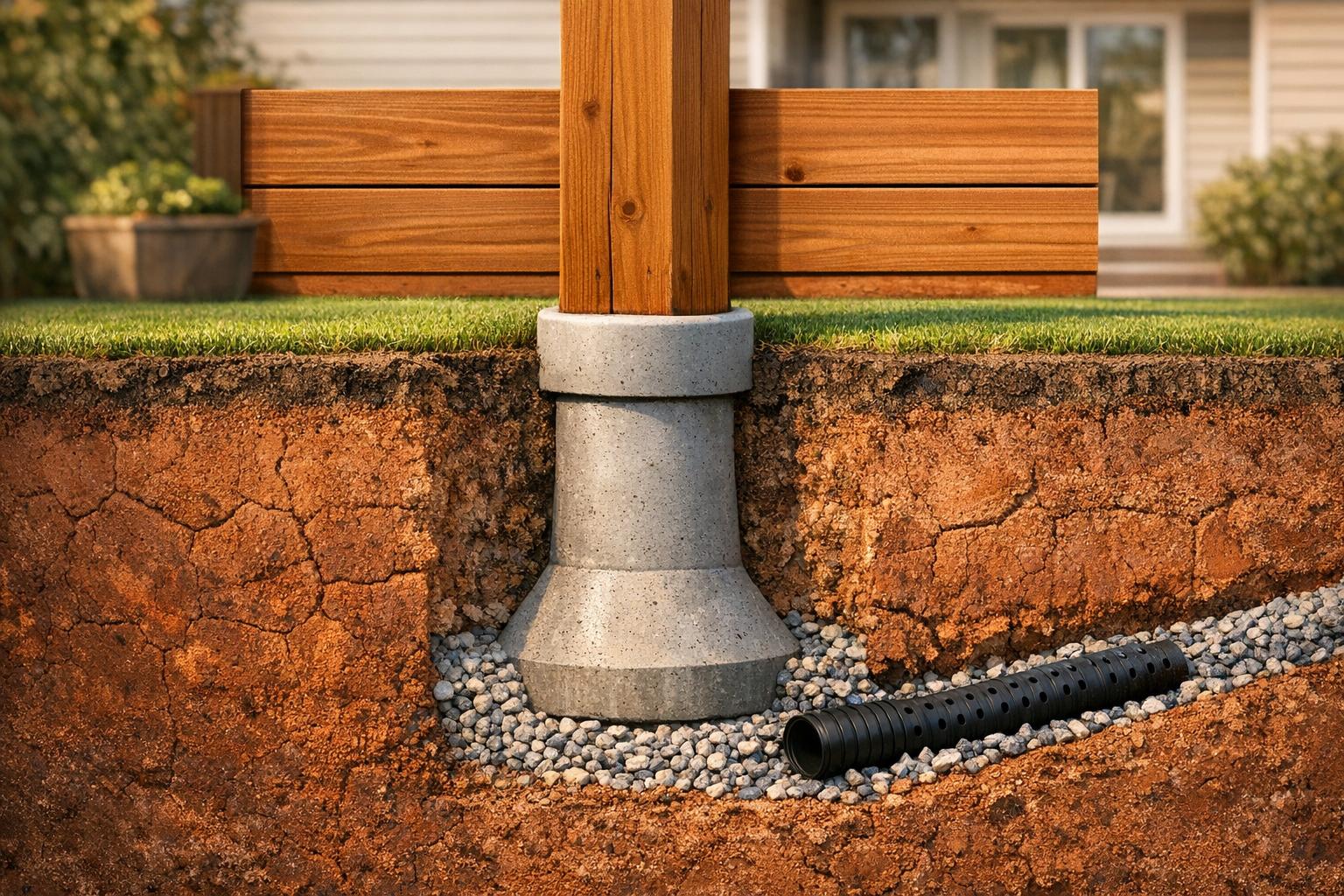
If your fence posts are tilting, cracking, or heaving, the soil beneath them might be the issue – especially if you live in areas like North Texas. Expansive soils, rich in clay minerals, expand when wet and shrink when dry, causing ground movement that destabilizes fence posts. Standard installation methods often fail in these conditions, leading to costly repairs within a few years.
Key Takeaways:
- What’s the problem? Expansive soils cause post heaving, tilting, and footing damage due to their shrink-swell behavior.
- Why does it matter? Standard 24-inch footings often fail in high-clay soils, especially in regions like Dallas and Fort Worth.
- What’s the solution? Use deeper post embedment (44–48 inches), engineered footings (such as belled designs or helical piers), and durable materials like galvanized steel.
For long-lasting fences, understanding your soil and using the right installation techniques is non-negotiable. Below, we’ll break down everything you need to know to build fences that stand the test of time in challenging soil conditions.
Setting Corner Posts in Clay Soil
sbb-itb-d1d0a96
How Expansive Soil Affects Fence Stability
When it comes to building fences, understanding how soil moves is just as important as the installation itself. Expansive soil, in particular, can wreak havoc on fence stability over time.
How Expansive Soil Moves
Expansive soil is constantly on the move as it reacts to moisture changes. It swells when wet and shrinks when dry, creating significant forces in the process. For example, during a single wetting cycle, the soil can exert upward pressure on concrete footings of more than 8,000 pounds per square foot.
Over time, these cycles of swelling and shrinking take a toll. In wet seasons, the soil pushes posts upward, and during dry periods, the soil loosens, reducing support. After just 2 to 5 cycles, this heaving and loosening can completely displace a post. On top of that, lateral pressure from the soil can cause posts to lean or twist.
When clay soil becomes fully saturated, it loses much of its load-bearing strength. This means even moderate winds can cause fences to tilt or collapse.
Understanding these movements is key to spotting expansive soil on your property.
How to Identify Expansive Soil on Your Property
There are several ways to identify if your property has expansive soil. Start by examining the soil itself. Dark clay, often called "black cotton soil", is a clear visual sign of soil with high shrink-swell potential. When dry, this type of soil tends to crack into wide, polygon-shaped patterns.
You can also look at nearby structures for clues. Cracks in concrete driveways, sidewalks, or foundation slabs that follow irregular, jagged paths are often caused by soil movement. If a previous fence on your property tilted or heaved within a few years of installation, it’s another strong indicator of expansive soil.
For a more precise evaluation, consider soil testing. ASTM D4318 testing measures the soil’s Plasticity Index (PI), which can tell you how likely the soil is to expand and contract. Here’s a quick guide to what the results mean:
| Soil Characteristic | What It Tells You |
|---|---|
| PI below 15 | Stable; standard installation methods should work |
| PI between 15–20 | Moderately expansive; deeper post installation is recommended |
| PI above 20 | Highly expansive; engineered footings are necessary |
| Dark clay texture | Indicates montmorillonite-rich soil with high shrink-swell potential |
| Wide surface cracking when dry | Confirms active shrink-swell behavior |
Soil Conditions Specific to North Texas
For those in North Texas, expansive soil challenges are even more pronounced. The region, including cities like Plano, Dallas, and Fort Worth, is known for its Vertisol clays, which have very high plasticity. These clays undergo extreme volume changes, with the active moisture zone often extending 3 to 5 feet below ground.
The local climate makes things worse. Long, dry summers followed by heavy rains create intense cycles of swelling and shrinking, putting constant strain on fence posts. Properties near irrigation systems or drainage areas experience even more frequent moisture changes, speeding up the timeline for post failure.
Another factor to consider is construction fill. Many newer subdivisions in the area use fill soil during home building, and this fill is often poorly compacted. Its moisture behavior can be unpredictable, differing from the native soil just a few feet away. Homeowners in houses built within the last 10 to 15 years should be especially cautious when planning fences.
For residents in North Texas, companies like Tend Fencing offer specialized solutions to handle these unique soil challenges.
Designing Fence Posts for Expansive Soil
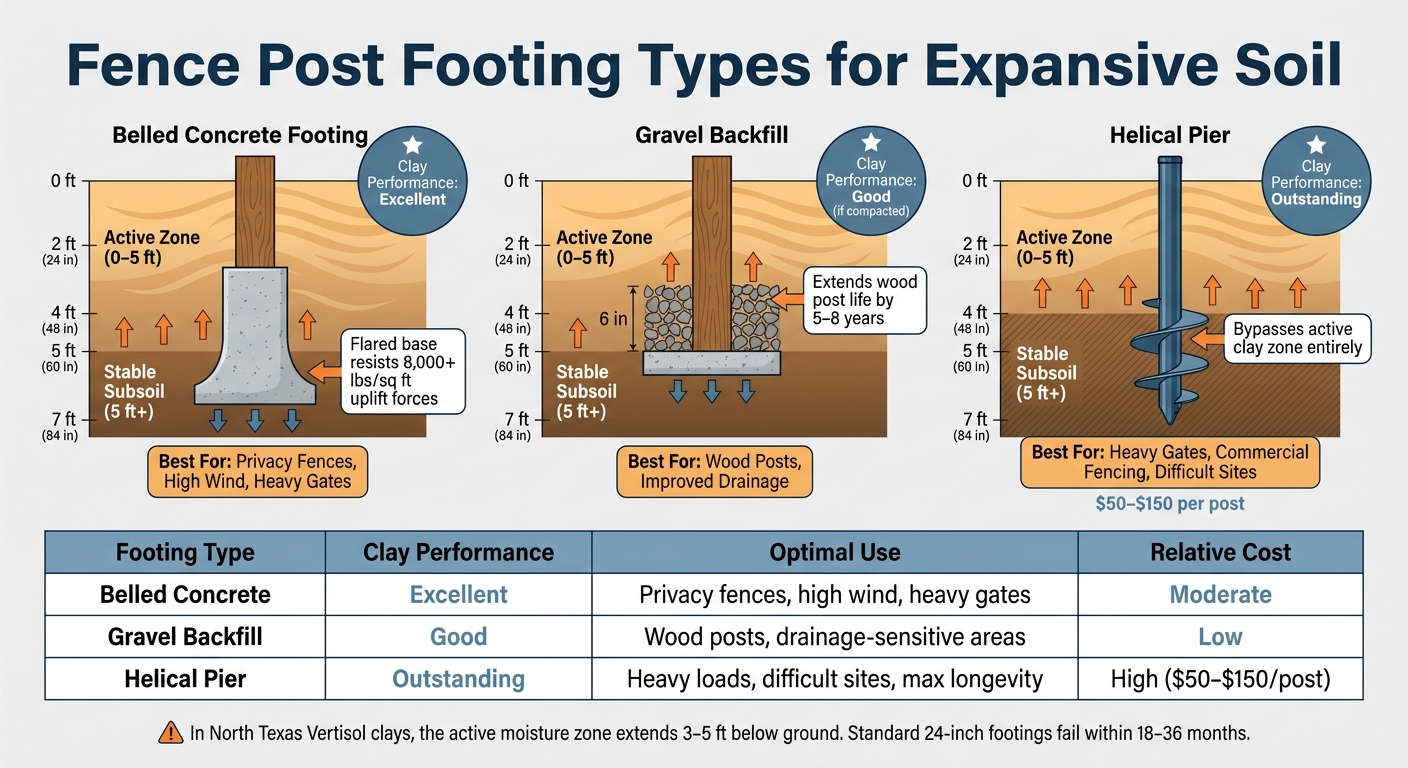
Fence Post Footing Types for Expansive Soil: Which One Is Right for You?
Creating a fence post system that can handle the challenges posed by expansive clay is no small feat. Expansive clay shifts with moisture changes, causing significant movement that can wreak havoc on improperly designed fences. By selecting the right materials, ensuring proper post depth, and choosing the best footing type, you can build a fence that stands strong for decades instead of succumbing to post heave in just a couple of years.
Choosing the Right Post Materials
The material you choose for your fence posts plays a huge role in how well the system performs in expansive clay. Hot-dip galvanized steel, certified to ASTM A123 or A153 standards, is a standout option. This is because saturated clay tends to accelerate corrosion in metals that aren’t galvanized. Steel board systems, for instance, can last an impressive 30 to 50+ years, far outlasting cedar or pressure-treated wood, which typically survives only 7 to 15 years.
"Steel board fencing stands at the top of the durability pyramid for good reason… steel maintains its structural integrity through extreme weather, animal pressure, and UV exposure." – Jesse Sumrak, Buckley Fence
If you’re considering wood posts, ensure they’re rated for ground contact (UC4A or UC4B). Without this rating, the constant moisture in clay soil will accelerate decay. Vinyl posts are another option, but they require internal steel or aluminum reinforcements that extend from above ground to the footing. This reinforcement is crucial for providing the lateral strength needed to handle soil movement.
The durability of your fence depends on pairing the right materials with the correct depth and spacing.
Post Depth and Spacing Guidelines
Expansive soils require a different approach to post depth than other soil types. The active zone of expansive clay – where most movement occurs – usually extends 3 to 5 feet below the surface. For a 6-foot privacy fence, posts should be set at least 44 inches deep with a hole diameter of 10 inches. Corner, end, and gate posts should go even deeper, about 6 to 8 inches more than standard line posts, to handle the additional stress they bear.
Footing Types for Expansive Soil
Footings are the unsung heroes of fence stability, especially in expansive clay. Here are three options that work well:
- Belled Concrete Footings: These footings flare out at the base, forming a bell shape that extends below the active zone of the soil. This design helps resist the upward forces that occur during wet cycles. In contrast, standard cylindrical footings are more prone to being pushed upward by the clay.
- Gravel Backfill: Using a 6-inch base of compacted ¾-inch angular crushed stone (not rounded pea gravel) allows water to drain away from the post base. While this method can extend the life of wood posts by 5 to 8 years, it doesn’t offer the same lateral stability as concrete.
- Helical Piers: These steel shafts with helix plates are driven deep into the ground, bypassing the active clay zone altogether to anchor into stable subsoil. They’re an excellent choice for high-load situations like heavy gates or commercial fencing. Though they cost between $50 and $150 per post, their ability to handle even the most challenging soils makes them worth considering.
| Footing Type | Clay Performance | Optimal Use |
|---|---|---|
| Belled Concrete | Excellent | Privacy fences, high wind, heavy gates |
| Gravel Backfill | Good (if compacted well) | Wood posts, areas requiring better drainage |
| Helical Piers | Outstanding | Difficult sites, heavy loads, maximum longevity |
How to Install Fence Posts in Expansive Soil
Preparing the Site
Before you start digging, it’s crucial to assess your soil conditions. Tools like the USDA Web Soil Survey or a simple probe test can help you determine if your soil falls under the category of Vertisols or high-PI (Plasticity Index) clay. If you’re in areas like North Texas, expansive soils are a common challenge. Soils with a PI above 20 require specially engineered footing designs – standard methods won’t cut it.
Take a close look at your site for any nearby irrigation lines, drainage systems, or landscaping features that could direct water toward your fence. Saturated clay loses its strength quickly, which can lead to increased uplift pressure on your posts. Also, don’t forget to call 811 at least three business days before digging – accidentally hitting a gas or fiber optic line can result in damages costing anywhere from $5,000 to $50,000.
Keep in mind that in some areas prone to expansive soils – like parts of Texas, California, and Colorado – local regulations may require engineered footing drawings, even for fences shorter than 7 feet. Always check with your local building department to stay compliant.
Once you’ve assessed the site and identified potential hazards, you can move forward with setting posts designed to withstand long-term soil movement.
Setting Posts for Long-Term Stability
In high-PI soils, the standard 24-inch footings often fail. To ensure stability, posts should be set 44–48 inches deep, extending below the active moisture zone.
"A standard cylindrical concrete footing in a clay soil can experience uplift forces exceeding 8,000 pounds per square foot during wetting cycles, according to data published by the Texas Section of the American Society of Civil Engineers." – National Fencing Authority
Start by lining each hole with 6 inches of compacted angular crushed stone. This improves drainage and provides additional stability. When pouring the concrete, make sure to slope it 1 to 2 inches above ground level, angling it away from the post. This helps prevent water from pooling at the base, which is a common cause of rot and corrosion. If you’re using a belled footing design, ensure the flare extends below the active moisture zone to resist the upward forces caused by soil wetting cycles.
Building Fence Structures That Handle Soil Movement
Proper post setting is just one part of the equation. To handle the shifting nature of expansive soils, your fence design needs to account for movement. Even the best-set posts can’t fully offset the damage caused by a rigid fence structure in unstable ground. Consider using sleeve systems – steel sleeves or helical piers anchored below the active zone allow the post to flex independently of the footing.
For gate and corner posts, which endure higher stress levels, dig 6 to 8 inches deeper than standard line posts. Using helical piers in these spots is also a smart move to handle the extra dynamic loads from gate operation. This added depth and reinforcement can make a big difference in maintaining the durability of your fence.
Keeping Your Fence Stable in Expansive Soil Over Time
Controlling Soil Moisture Around Your Fence
Once your fence posts are in place, uneven soil moisture becomes the biggest long-term challenge. If one side of the fence stays damp while the other dries out, the soil expands and contracts unevenly. Over time, this can lead to leaning, twisting, or even heaving of the posts.
To combat this, grade the ground so it slopes away from the fence, which helps prevent water from pooling. If you notice areas where water collects after rain, consider regrading the soil or adding a simple drainage channel before the next rainy season hits.
Be mindful of irrigation near the fence. Water lightly – around 2–3 times per week – during dry months to avoid rapid soil shrinkage. Also, keep an eye on large trees near the fence line. Their roots can draw moisture unevenly, causing soil contraction that might tilt the posts over time.
"Proper drainage after rain is the single most important factor in preventing foundation damage from expansive soil." – Tony Escamilla, Founder, Villa Home Inspections
Regular monitoring is key. Check for early signs of shifting or movement to address issues before they worsen.
Signs of Soil-Related Fence Problems
Poor moisture control leaves clues that your fence might be in trouble. Walk along your fence line at least once a year – especially before and after the rainy season – and look out for these warning signs:
| Warning Sign | What It Likely Means |
|---|---|
| Post heave (post pushed upward) | Soil swelling from excess moisture |
| Leaning or rotating posts | Uneven moisture or lateral soil pressure |
| Misaligned or dragging gates | Post movement at corners or gate frames |
| Soil pulling away from posts | Soil shrinkage due to dry conditions |
| Ground fissures near the fence line | Severe contraction in high-PI clay |
| Dark patches or fungal growth | Moisture trapped at the base of the posts |
If you notice a post wobbling when you push it, it’s a sign that immediate attention is needed. In areas with high-PI clay, like North Texas, standard 24-inch footings often fail within 18 to 36 months. If your fence is nearing that age and showing these signs, don’t delay repairs.
Repair and Reinforcement Options
If you spot early signs of damage, acting quickly can restore your fence’s stability. Here are some repair strategies for common issues:
- Moderate post heave: Retrofit the post with a belled footing. This involves expanding the base of the footing below the active soil zone – typically 3 to 5 feet deep in high-PI clays – so it resists upward forces instead of being pushed out.
- Severe leaning or heave: Install helical pier anchors. These are drilled into more stable soil below the active zone, providing long-term reinforcement.
For posts that are beyond repair, replace them with hot-dip galvanized steel (ASTM A123 or A153). Wood posts are especially vulnerable to rot at the concrete-soil interface in expansive clay, but galvanized steel resists the corrosion caused by fluctuating moisture. When setting new footings, use granular gravel backfill instead of native clay to improve drainage and reduce future heaving.
If the soil itself is causing recurring issues, lime injection may be the answer. This process chemically changes the clay’s mineral structure, lowering its Plasticity Index and reducing how much it swells and shrinks with moisture changes. Lime injection is typically used when multiple posts in a section are failing, and standard fixes aren’t holding up over time.
Conclusion: Getting Fence Posts Right in Expansive Soil
This guide has covered the essential steps – from assessing soil conditions to applying the right installation methods – for building fences that last in expansive soils. The key to success lies in adapting techniques to address the specific challenges posed by these shifting ground conditions.
Here’s the bottom line: standard 24-inch footings just don’t cut it in high-plasticity clay. In North Texas, post heave is a common issue, often showing up within 18 to 36 months when conventional methods are used. The solution? Engineered post systems that include at least 44-inch embedment, belled footings, effective drainage, and durable materials like hot-dip galvanized steel.
Take the Vertisol clays found in the Dallas–Fort Worth–Plano area, for example. These soils can generate uplift forces exceeding 8,000 pounds per square foot during wet periods. This level of force requires advanced installation strategies – not the standard approaches.
If you’re in the Plano, TX area, Tend Fencing has firsthand knowledge of these soil conditions. They use the proven techniques outlined in this guide, ensuring proper post depth, footing design, and material selection to handle the seasonal soil movement that comes with expansive clay.
A fence is a long-term investment, and its durability depends on getting the foundation right from the start. For detailed guidance on each step, refer back to the earlier sections of this guide. A well-installed fence is built to stand the test of time, even in challenging soil conditions.
FAQs
How do I know if my yard has expansive clay soil?
To spot expansive clay soil, look at its plasticity index (PI) and how much it can swell. If the PI is over 15, the soil likely expands and contracts with moisture changes. Some clues to watch for include how hard it is to dig, how well the soil holds water, and noticeable swelling or shrinking. These soils are often found in regions like Texas, Denver, and along the Pacific Coast. For precise results, professional soil testing can measure the PI and swelling traits accurately.
What’s the best post depth for a 6-foot fence in expansive soil?
The recommended post depth for a 6-foot fence in expansive soil is approximately 38 inches. This follows the "1/3 rule" (one-third of the post’s length should be buried) plus an extra 6 inches for gravel to enhance stability. However, expansive soils may require even deeper placement to handle soil movement effectively. Always review local regulations or consult a fencing expert to determine the exact adjustments needed for your specific location.
When should I use belled footings vs. helical piers?
Belled footings work well in expansive clay soils because their broader base spreads the load more evenly and helps counter soil movement. On the other hand, helical piers are a great choice for loose or low-capacity soils. They provide stability quickly, require little excavation, and cause minimal disruption. Use belled footings for high-swell soils, while helical piers are better for unstable or inconsistent ground conditions where keeping disturbance to a minimum is essential.