
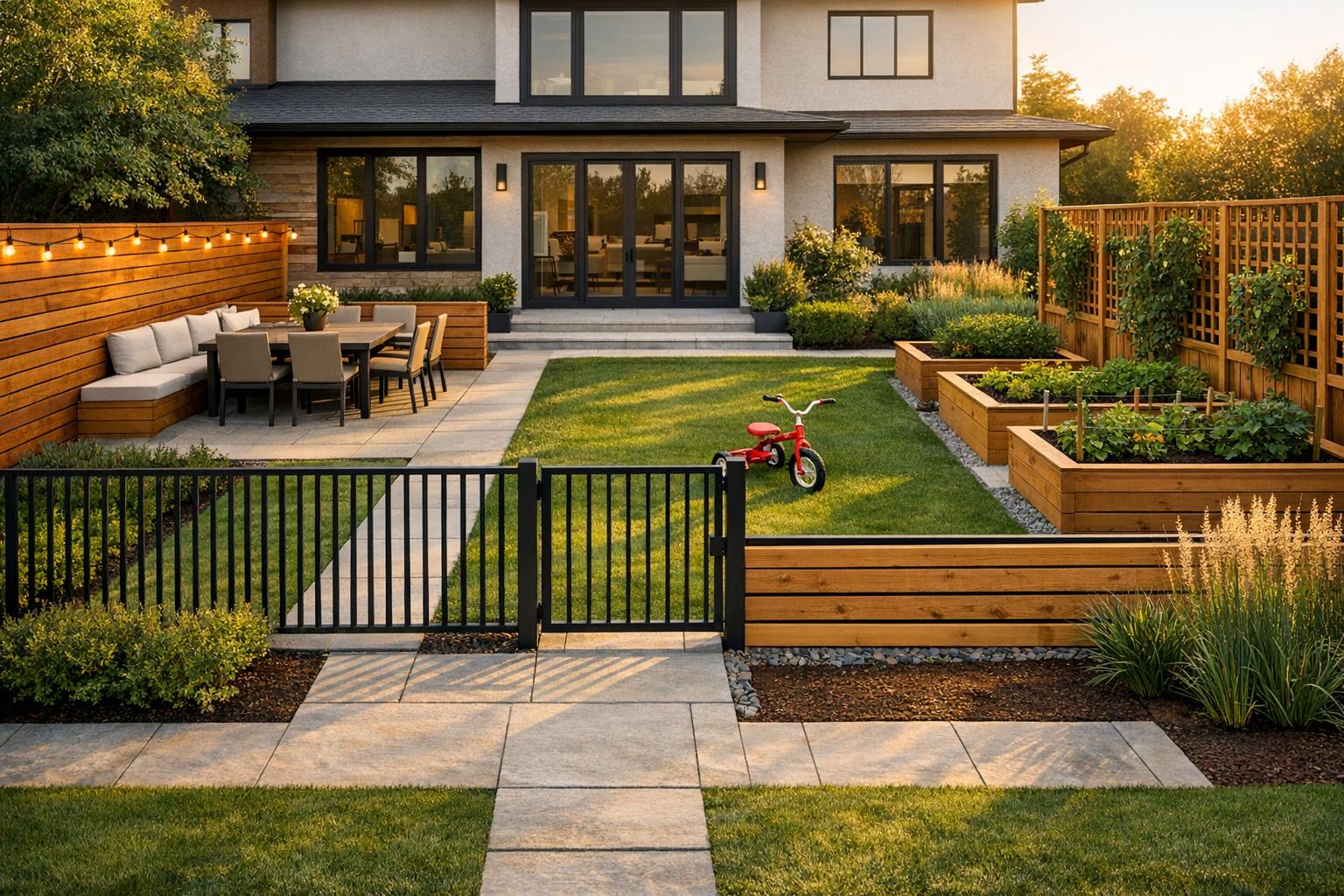
Transform your backyard into a functional and stylish space with fencing. Whether you want privacy, safety, or visual appeal, the right fencing can create distinct zones for relaxation, play, gardening, or dining. Here’s a quick look at eight practical ways to use fencing in your outdoor space:
- Vary Fence Heights: Use tall fences for privacy and shorter ones to separate open areas.
- Horizontal Fencing: Creates a modern look and makes small yards feel larger.
- Trellis or Lattice Fencing: Adds partial privacy while supporting climbing plants.
- Combine Fencing with Greenery: Pair fences with shrubs or hedges for a natural, layered effect.
- Hide Utility Areas: Conceal trash bins, AC units, or pool equipment with solid panels.
- Decorative Designs: Use artistic fences to define boundaries and enhance curb appeal.
- Mark Activity Zones: Separate play areas, gardens, or pools with functional fencing.
- Landscaping Backdrop: Use fences to highlight plants and create visual contrast.
Each method balances privacy, durability, and style, helping you organize your yard while boosting its overall appeal. Keep reading for detailed tips on how to choose the right fencing for your needs.
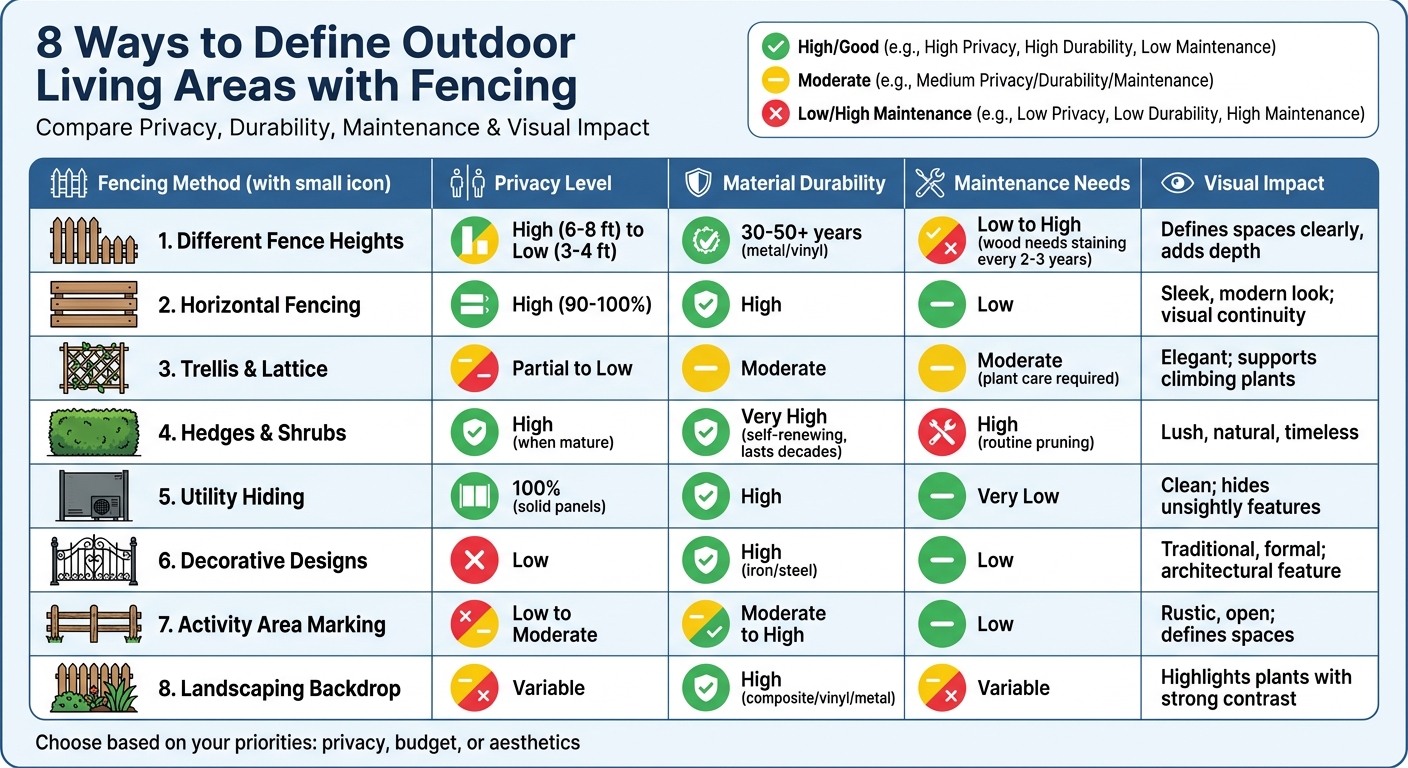
Comparison of 8 Outdoor Fencing Methods: Privacy, Durability, Maintenance & Style
20 Fence Ideas for Privacy, Style and Curb Appeal
sbb-itb-d1d0a96
1. Use Different Fence Heights to Create Separate Zones
Mixing fence heights is a clever way to define distinct areas in your yard. A tall, solid fence can transform part of your space into a private retreat – perfect for a hot tub or a peaceful meditation spot. On the other hand, a shorter, decorative fence can separate a vegetable garden from the lawn while keeping the view open.
As David Hernandez from USA Builder Depot explains:
"A decorative fence can be a visible divider between the front backyard and backyard, whilst a taller privacy fence may also enclose a secluded lawn retreat."
Shorter fences can guide guests toward key areas like patios or outdoor kitchens, while taller fences clearly mark off private spaces. You can also customize the height to meet specific needs – like taller fences for pool safety or large pets, and lower ones for garden borders or small animals.
The height you choose impacts both privacy and style. Taller fences block noise and sightlines, creating a more secluded vibe, while shorter fences act as subtle dividers that keep the space feeling open. Combining heights adds visual interest and boosts curb appeal – imagine a ornamental steel fence at the entrance paired with a taller wooden privacy fence in the backyard. It’s all about balancing function and design.
2. Install Horizontal Fencing for Better Visual Flow
Horizontal fencing is a stylish way to transform your outdoor space. Its clean, continuous lines naturally draw the eye along the perimeter, creating the impression of a wider, more open area. Unlike vertical fences that emphasize height, horizontal designs work wonders in making narrow yards feel more spacious. Plus, they pair perfectly with modern architecture and minimalist landscaping, adding a sleek, polished touch to your property.
As Barrier Bob from BarrierBoss puts it:
"Horizontal fence panels bring a fresh, contemporary edge to any property, whether you’re upgrading your backyard, securing a farm, or styling a commercial space."
Privacy Level Provided
When installed with tightly spaced slats, horizontal fencing offers excellent privacy while still allowing light and air to pass through. This balance makes it a great option for maintaining seclusion without feeling completely closed off. However, the design can sometimes make climbing easier for kids – or even pets.
Material Durability
The durability of horizontal fencing largely depends on the material you choose:
- Steel panels: These are tough and weather-resistant, requiring very little maintenance.
- Cedar and redwood: These woods bring natural beauty but need regular sealing to stay in top shape.
- Composites: These materials mimic wood while resisting rot, making them a low-maintenance alternative.
- Aluminum and steel: Both offer customizable finishes and long-lasting durability, perfect for a modern look.
Maintenance Requirements
Different materials come with different levels of upkeep:
- Steel: Minimal maintenance – just occasional cleaning.
- Wood: Requires regular staining or sealing to protect against weather and wear.
- Composites: Needs periodic cleaning, though fading may occur over time.
For natural wood, applying a weatherproof sealant right after installation can significantly extend its lifespan.
Aesthetic Impact
Horizontal fencing doesn’t just define a space; it transforms it. The horizontal lines create a sense of flow and openness, making it a versatile choice for various styles. You can take the look up a notch by incorporating climbing plants, outdoor lighting, or mixing materials like wood and metal. This design is all about blending functionality with a streamlined, modern vibe that complements contemporary outdoor spaces.
3. Add Trellis and Lattice Fencing for Partial Privacy
Trellis and lattice fencing bring a stylish touch to outdoor spaces, offering partial privacy while maintaining an open, airy feel. These designs are perfect for defining boundaries without making your yard feel closed off. They work beautifully for patios, deck panels, or even secluded garden corners, allowing light and air to pass through effortlessly. Let’s dive into how these fencing options balance privacy, durability, and style.
Privacy Level Provided
While they don’t completely block visibility like solid fences, trellis and lattice structures create a textured barrier that feels both cozy and open. They’re perfect for courtyard-style settings or carving out private garden areas. To up the privacy factor, consider adding climbing plants or hanging planters. Over time, these can create a lush, green wall that feels more personal and natural.
Material Durability
You’ll typically find trellis and lattice fencing in two main materials: natural wood and solid cellular vinyl. Wood gives you a timeless, classic look, while vinyl offers a similar aesthetic but with added durability and lower maintenance. Either option can be tailored to fit your space and style preferences.
Aesthetic Impact
One of the standout features of lattice fencing is its decorative potential. Intricate patterns, inlaid designs, or even Victorian-style arches can turn a simple screen into a true statement piece. You can also customize the color to match your landscaping or existing structures, ensuring it blends seamlessly with your outdoor design. Beyond privacy, these fences double as eye-catching accents, aligning beautifully with modern landscaping trends that prioritize both function and visual charm.
For professional installation and custom designs, reach out to Tend Fencing to bring your vision to life.
4. Combine Fencing with Hedges and Shrubs
Pairing fencing with lush greenery offers a perfect mix of structure and natural beauty. This approach combines the sturdy framework of a fence with the soft, organic appeal of plants. Fast-growing evergreens like Ficus Indian Laurel are a great choice for creating a dense, vibrant screen that enhances your fence line.
Privacy Level Provided
Hedges and shrubs act as a living shield, providing excellent coverage while maintaining a natural look. Unlike rigid panels, dense greenery feels more inviting and blends seamlessly into the landscape. As the plants grow, they create a solid barrier that blocks sightlines and offers privacy without compromising on aesthetics. This combination is ideal for anyone seeking a balance between seclusion and a welcoming outdoor space.
Material Durability
One of the unique advantages of living fences is their ability to grow stronger over time. While traditional materials like wood or metal may degrade, the roots and branches of shrubs and hedges naturally adapt to environmental conditions, making them more resilient to wind and weather. The fence provides immediate structure, while the greenery adds long-term durability, creating a barrier that becomes tougher as it matures.
Maintenance Requirements
Caring for a living fence involves different tasks compared to traditional fencing. While wood or vinyl may need occasional repairs or refinishing, greenery requires regular attention to stay healthy and visually appealing. This includes pruning, shaping, and monitoring plant health. As Terra Penn from Moon Valley Nurseries explains:
"Routine pruning, shaping, and health checks help a living fence grow evenly and remain dense and attractive year after year".
By staying on top of maintenance, you can avoid unexpected repair costs and keep your living fence looking its best.
Aesthetic Impact
Blending greenery with fencing creates a harmonious design that complements a variety of architectural styles. The foliage softens the hard lines of traditional fences, giving your outdoor space a more polished and established appearance. Beyond aesthetics, plants provide natural shade, cool the surrounding area, and improve air quality by absorbing carbon dioxide and filtering pollutants.
This combination of structure and greenery not only enhances your property’s look but also opens the door to more residential fencing ideas in the future.
5. Hide Utility Areas and Unattractive Features
Utility features like AC units, trash bins, pool equipment, and electrical boxes are necessary but not exactly pleasing to the eye. Using strategic fencing can help keep these elements out of sight, giving your outdoor space a cleaner, more polished look. The key is to pick materials that not only hide these utilities but also match the overall style of your property. Similar to using varying fence heights to separate zones, concealing these features requires balancing function with design. This approach ensures a cohesive and organized outdoor area.
Privacy Level Provided
If you’re looking to effectively hide utility areas, solid panels are your best bet. Unlike chain-link or spaced pickets, materials like vinyl or composite panels provide complete coverage with no gaps for visibility. For a less imposing option, trellises or lattice panels can offer partial screening. These work especially well in smaller yards where a solid fence might feel too heavy. Enhance the look by adding climbing plants like jasmine or ivy, which can turn the fence into a lush, living barrier over time.
Material Durability
When it comes to durability, vinyl and composite fencing stand out. Vinyl can last anywhere from 20 to 30 years without fading or cracking, while composite materials typically hold up for 25 to 30 years. For even greater longevity, premium steel fencing can last over 50 years if installed properly and treated with rust-resistant coatings. In coastal regions, materials like aluminum or vinyl are better suited to withstand salt air corrosion compared to wood, which often requires staining or sealing every 2 to 3 years to maintain a lifespan of 15 to 20 years.
Maintenance Requirements
Vinyl fencing is a low-maintenance choice, usually requiring just an occasional wash to keep it clean. While it comes with an upfront cost of $3,500–$6,000 per 100 feet, it avoids the $200–$400 annual upkeep that wood fencing typically demands. Composite fencing offers similar ease of care. If you decide to incorporate greenery, such as ornamental grasses or evergreen hedges, be prepared for regular pruning to keep things looking neat.
Aesthetic Impact
Decorative options like metal panels with geometric cutouts or patina finishes can do double duty by hiding utility areas while acting as striking architectural features. Slatted wood screens are another stylish option, offering partial visibility while allowing light and air to flow through, creating a contemporary yet functional look. Whatever your choice, ensure the fence is tall enough to fully obscure the unsightly features while staying within local HOA or zoning regulations, which often cap fence heights at around 6 feet.
6. Define Boundaries with Decorative Fence Designs
Decorative fencing is a practical yet stylish way to mark property lines and separate spaces. The right design not only defines your yard but also complements the aesthetic of your home – whether it’s modern, rustic, or something in between. Here’s a closer look at how decorative fencing can balance privacy, durability, upkeep, and visual appeal.
Privacy Level Provided
The level of privacy your fence provides depends on its design. For example, horizontal slat fences paired with shrubbery create a layered effect, offering both privacy and shade. On the other hand, hog wire fences with wooden frames and gridded panels are great for marking boundaries while keeping sightlines open. Classic picket and split rail fences subtly define spaces, making them perfect for front yards.
Material Durability
When it comes to durability, materials like wrought iron and decorative metal are hard to beat – they’re tough and require minimal upkeep. If you’re considering wood, Ipe hardwood can last over 40 years, while treated cedar offers up to 40 years of use as well. For wetter climates, metal or composite materials are better options to avoid issues like rot.
Maintenance Requirements
Some fencing materials are easier to maintain than others. Aluminum fences, for instance, only need an annual wash and a quick hardware check. Steel and wrought iron fences require occasional inspections for chipped coatings, which can help them last up to 20 years. Wood fences benefit from staining, which penetrates deeper than paint and fades gradually over time.
"Today’s privacy walls are an opportunity to blend beauty and function in unexpected ways" – Michelle Hendricks, Director of Marketing at Deckorators.
Aesthetic Impact
Decorative fencing is as much about style as it is about function. Dark tones like Tricorn Black, Iron Ore, and Urbane Bronze are expected to dominate in 2025. Matte finishes are particularly popular because they minimize glare and often match a home’s exterior. For added character, mixed-material designs – think stucco pillars paired with metal spans or wood gates with concrete posts – bring architectural flair to your yard. Modern touches like parallel 4×4 wood posts can also create a sculptural, contemporary look.
"Matte finishes are ideal for fences because they would reduce glare from direct sunlight, and oftentimes a matte finish corresponds with a home’s exterior finish" – Emily Kantz, Color Marketing Manager at Sherwin-Williams.
If you’re in the Plano, TX area and want to elevate your outdoor space, Tend Fencing offers custom decorative fencing solutions that combine style, strength, and functionality.
7. Mark Off Specific Activity Areas
Fencing can help define different zones in your yard – whether it’s a play area, a garden corner, or a poolside retreat. The key is choosing materials that align with the purpose of each space.
Privacy Level Provided
For play areas, opt for fencing that allows visibility. Open-picket aluminum or powder-coated steel works well, letting you keep an eye on kids while they play. Around pools, aluminum fencing is a smart choice; it meets safety codes and offers clear sight lines for supervision. Meanwhile, privacy zones like patios or lounging areas benefit from solid panels made of wood, vinyl, or composite to block outside views.
"Fencing that can be clearly seen through is often safer than fully solid privacy fencing, as it keeps people from hiding on the outside… and provides a line of sight." – Fortress Building Products
Besides privacy, the durability of the material plays a big role in choosing the right fence.
Material Durability
Chain link fencing is a cost-effective option for pet enclosures, priced at $10–$20 per linear foot. For garden dividers, lightweight options like lattice or hog wire not only create boundaries but also support climbing plants, costing just $0.40–$1.50 per linear foot. Pool fencing requires rust-resistant materials like aluminum, especially in humid climates where steel might corrode. Wood fences, while visually appealing, are prone to moisture and insect damage, making vinyl or composite better for high-traffic areas.
Maintenance Requirements
Ease of maintenance is another factor to consider. Vinyl and aluminum are low-maintenance options, requiring only occasional cleaning with soap and water. On the other hand, wood fencing demands more effort, such as regular sanding and staining. For play areas, powder-coated steel is a practical choice – it resists rot and doesn’t need frequent sealing.
Aesthetic Impact
The right fence can also enhance the look of your yard. Split-rail fencing, for example, gives larger properties a rustic and open feel, costing $12 to $30 per linear foot installed. Lattice and trellis designs add charm to garden borders while doubling as climbing plant supports. For a sleek, modern vibe, aluminum panels offer clean lines and a polished appearance. Combining fencing with hedges can soften the overall look, creating natural, evolving boundaries. These thoughtful choices ensure that your activity areas are not just functional but visually appealing too.
8. Use Fencing as a Backdrop for Landscaping
A thoughtfully placed fence can do more than just define boundaries – it can serve as a striking backdrop for your garden. When paired with the right plants, flowers, or shrubs, it creates a clean contrast that enhances your landscaping while keeping upkeep manageable.
Material Durability
Choosing the right fence material is key to ensuring longevity and style. Composite fencing, made from wood fibers and recycled plastic, is a durable option that resists rot, warping, and pests while mimicking the look of natural wood. Vinyl fencing is another low-maintenance choice, as it’s resistant to moisture and pests, with premium versions lasting over 50 years. In areas with heavy rain or near the coast, aluminum panels offer a rust-proof, sleek aesthetic. If you’re looking for something exceptionally sturdy, concrete panel fencing doubles as a sound barrier and withstands harsh conditions, though it requires a higher upfront cost. For a lightweight yet strong solution, fiberglass fencing resists fading and sun damage, making it a reliable option for sunny climates.
Maintenance Requirements
Modern fencing materials are designed with convenience in mind. Both vinyl and composite fences require only occasional cleaning with soap and water to prevent mold and keep them looking fresh. Opting for materials with UV protection can also help maintain their color. If you prefer the natural beauty of cedar, keep in mind it typically lasts 20 to 30 years and benefits from periodic sealing to extend its lifespan.
To keep your fence line clear and functional, remove any bushes or rocks that may obstruct it. Before installation, always call 811 to mark utility lines. It’s also wise to avoid letting plants grow into dense underbrush around the fence, as this can obscure property boundaries, which must remain visible to prevent disputes.
Aesthetic Impact
The right fence can complement your home’s design and elevate your landscaping. Sleek metal fences pair beautifully with modern architecture, while wrought iron enhances traditional homes. Positioning your fence to highlight flower beds, trees, or shrubs adds curb appeal and creates a cohesive, polished look. For privacy, solid panels not only provide seclusion but also shield sensitive plants from wind. If you prefer a softer visual effect, decorative lattice tops are a great option.
Modular systems now allow for creative combinations, such as mixing composite panels with aluminum posts, giving you the flexibility to design a contemporary, custom appearance. Privacy fences, which typically cost between $40 and $150 per linear foot, can also increase your home’s resale value by up to 5%.
"In contemporary landscaping, a fence can decorate a home’s architectural capabilities by incorporating complementary substances, colorings, and designs." – David Hernandez, USA Builder Depot
For professional installation and tailored designs that bring these ideas to life, consider contacting Tend Fencing. They specialize in residential and commercial fencing solutions in Plano, TX, and nearby areas.
Comparison Table
Choosing the right fencing method depends on what matters most to you – privacy, durability, upkeep, or aesthetics. Here’s a quick look at how eight popular fencing methods compare.
| Fencing Method | Privacy Level | Material Durability | Maintenance Needs | Visual Impact |
|---|---|---|---|---|
| Different Fence Heights | High (6-8 ft) to Low (3-4 ft) | High (30–50+ years for metal/vinyl; variable for wood) | Low (Metal/Vinyl) to High (Wood: staining every 2–3 years) | Defines spaces clearly, adding depth |
| Horizontal Fencing | High (90–100% depending on gap spacing) | High | Low | Sleek, modern look; promotes visual continuity |
| Trellis & Lattice | Partial to Low | Moderate | Moderate (plant care required) | Adds elegance; supports climbing greenery |
| Hedges & Shrubs | High (when mature and dense) | Very High (self-renewing, lasts decades) | High (routine pruning) | Lush, natural, and timeless |
| Utility Hiding | 100% (Solid panels) | High | Very Low | Neat and clean; hides unsightly features |
| Decorative Designs | Low (picket, wrought iron) | High (Iron/Steel) | Low | Traditional, formal; doubles as an architectural feature |
| Activity Area Marking | Low to Moderate | Moderate to High | Low | Rustic and open; defines spaces effectively |
| Landscaping Backdrop | Variable | High (Composite/Vinyl/Metal) | Variable (depends on material) | Highlights plants and textures with strong contrast |
Key Considerations
- Privacy: Solid fences – like masonry, tall wood, vinyl, or metal panels – offer full privacy. On the other hand, decorative options like picket or wrought iron work better as boundary markers with limited screening.
- Long-term Costs: Over 25 years, a wood fence could cost between $12,000 and $18,000, while a metal fence might only require $200 in maintenance during the same timeframe. Vinyl, while resistant to pests and rot, can melt at temperatures of 300°F.
"If your priority is privacy, choose a fence that is 6 feet tall or higher with no gaps between the boards or panels." – David Beaulieu, Landscaping Expert
This table highlights how each fencing style brings something different to the table, helping you create outdoor spaces that suit your needs.
If you’re in Plano, TX, and need expert advice, Tend Fencing can help you design and install a fence that blends practicality with style.
Conclusion
Fencing isn’t just about marking property lines – it’s a way to shape your outdoor space into functional, personalized zones that fit your needs. Whether you’re looking for privacy around a pool, a decorative touch for your garden, or a sound buffer near a busy road, the right fencing approach can make all the difference.
Each fencing style brings a unique advantage. From varying fence heights that define spaces clearly, to horizontal designs that add a sleek, modern touch, and trellis panels that blend boundaries with greenery. Living fences can provide structure while benefiting the environment, utility-hiding panels keep your yard tidy, and decorative designs boost curb appeal. Activity markers help guide movement, while well-placed landscaping backdrops can highlight your plants. Together, these options not only improve how your space looks but also how it functions.
By thoughtfully selecting and combining these techniques, you can create an outdoor space that feels cohesive and serves a purpose. Start by evaluating your property layout – identify areas where you need noise reduction, pet containment, or visual separation. Factor in the durability of materials, your maintenance preferences, and how the fence will align with your home’s style. For example, minimalist metal works well with modern homes, while wrought iron pairs beautifully with traditional designs.
"Incorporating the right fence into your home design will transform your space’s capability and aesthetic." – David Hernandez
If you’re located in Plano, TX, and need expert advice, Tend Fencing offers custom solutions tailored to your property. Their team specializes in selecting durable materials, defining boundaries effectively, and creating outdoor spaces that enhance both functionality and value.
FAQs
What fence type is best for my yard layout?
The best type of fence for your yard depends on its layout, your specific needs, and your style preferences. If you’re aiming for a natural look and a greener option, a living fence made from dense hedges or shrubs can boost both privacy and curb appeal. On the other hand, classic choices like wood, metal, or composite fences provide long-lasting durability and can be tailored to your design tastes. When deciding, think about factors like how much privacy you want, the upkeep required, the overall design, and how it fits with the environment to make sure your fence enhances your outdoor space perfectly.
Do I need a permit or HOA approval for a new fence?
Before starting your project, it’s crucial to understand your community’s rules. Many HOAs require prior approval for installations. These guidelines are typically detailed in their Covenants, Conditions, and Restrictions (CC&Rs), covering aspects like height, materials, and placement. On top of that, local authorities often require permits to ensure compliance with building codes. Make sure to review your HOA’s CC&Rs and consult local regulations to avoid any issues.
How do I choose between wood, vinyl, composite, and metal?
When picking fencing materials, think about durability, maintenance, cost, and style. Wood gives a classic, natural appearance but requires consistent care to stay in good shape. Vinyl is a great low-maintenance option that lasts for years. Metal options, such as wrought iron or chain link, are strong and secure, though they differ in price and the level of privacy they offer. Composite fencing blends the look of wood with the toughness of vinyl, but it comes with a higher initial price tag. Choose a material that aligns with your budget and the upkeep you’re willing to handle.