
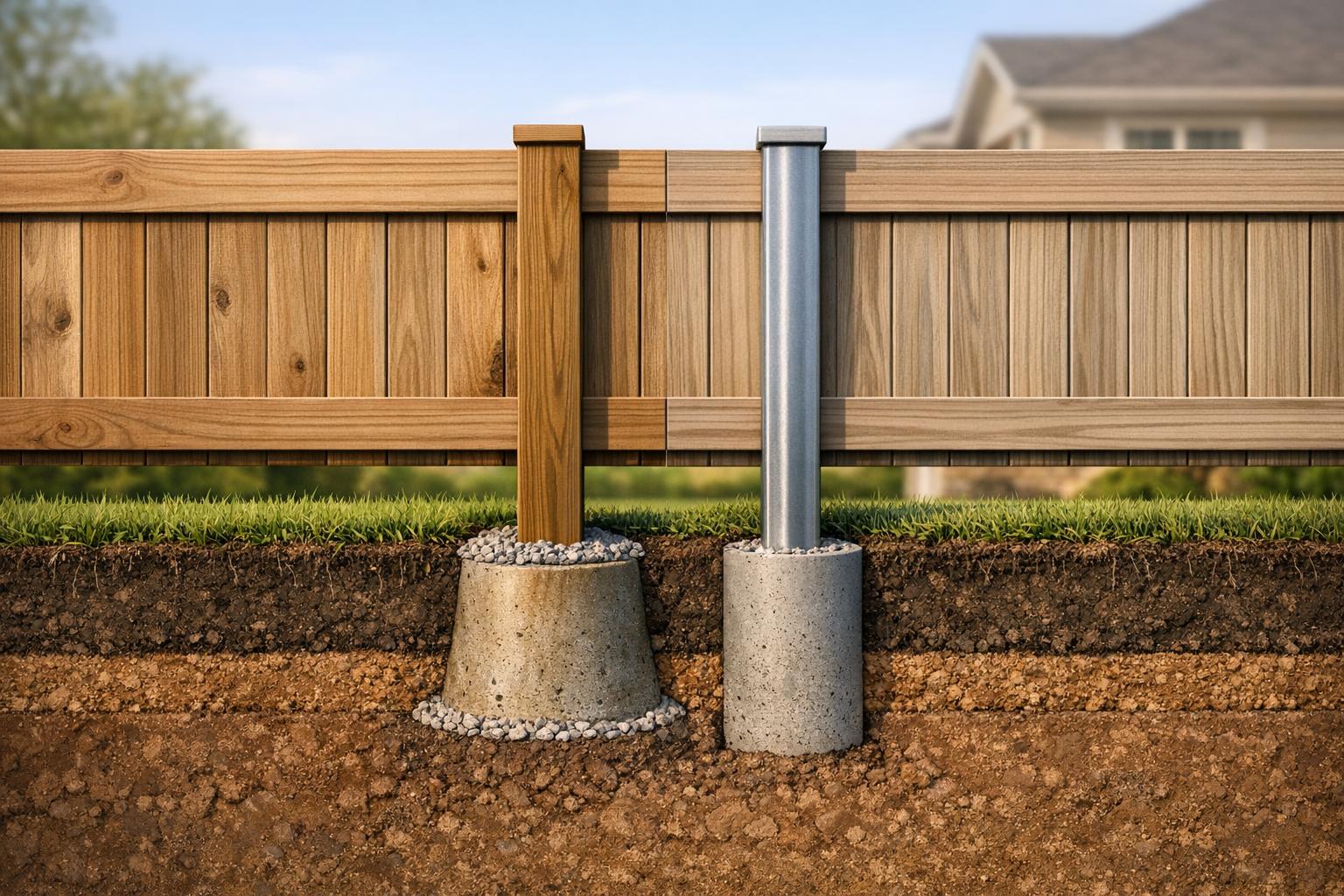
When deciding between wood and metal fence posts, the primary factors to consider are durability, cost, and maintenance. Here’s a quick breakdown:
- Durability: Ornamental steel posts last 25–50+ years, while wood typically lasts 10–20 years. Metal resists rot, pests, and warping, making it ideal for harsh climates or clay-heavy soils. Wood is more vulnerable to moisture and decay.
- Cost: Wood posts cost $5–$20 each, while metal posts range from $20–$50. Metal has higher upfront costs but lower long-term expenses due to minimal maintenance and longer lifespan.
- Maintenance: Wood requires regular sealing and inspections, costing $100–$300 annually. Metal needs occasional cleaning and rust checks, with far fewer repairs over time.
- Hybrid Option: Combining metal posts with wood panels offers the strength of metal and the aesthetic appeal of wood, with reduced long-term costs.
Quick Comparison:
| Feature | Wood Posts | Metal Posts |
|---|---|---|
| Lifespan | 10–20 years | 25–50+ years |
| Upfront Cost | $5–$20 per post | $20–$50 per post |
| Maintenance | Regular sealing ($100–$300/year) | Minimal (cleaning & rust checks) |
| Durability | Prone to rot, pests, and warping | Resistant to decay and pests |
| Best For | Budget-friendly, rustic look | Long-term durability, harsh conditions |
For a long-lasting, low-maintenance solution, metal posts are the better investment. However, wood posts are a budget-friendly option with a classic look. A hybrid system provides a balance of both.
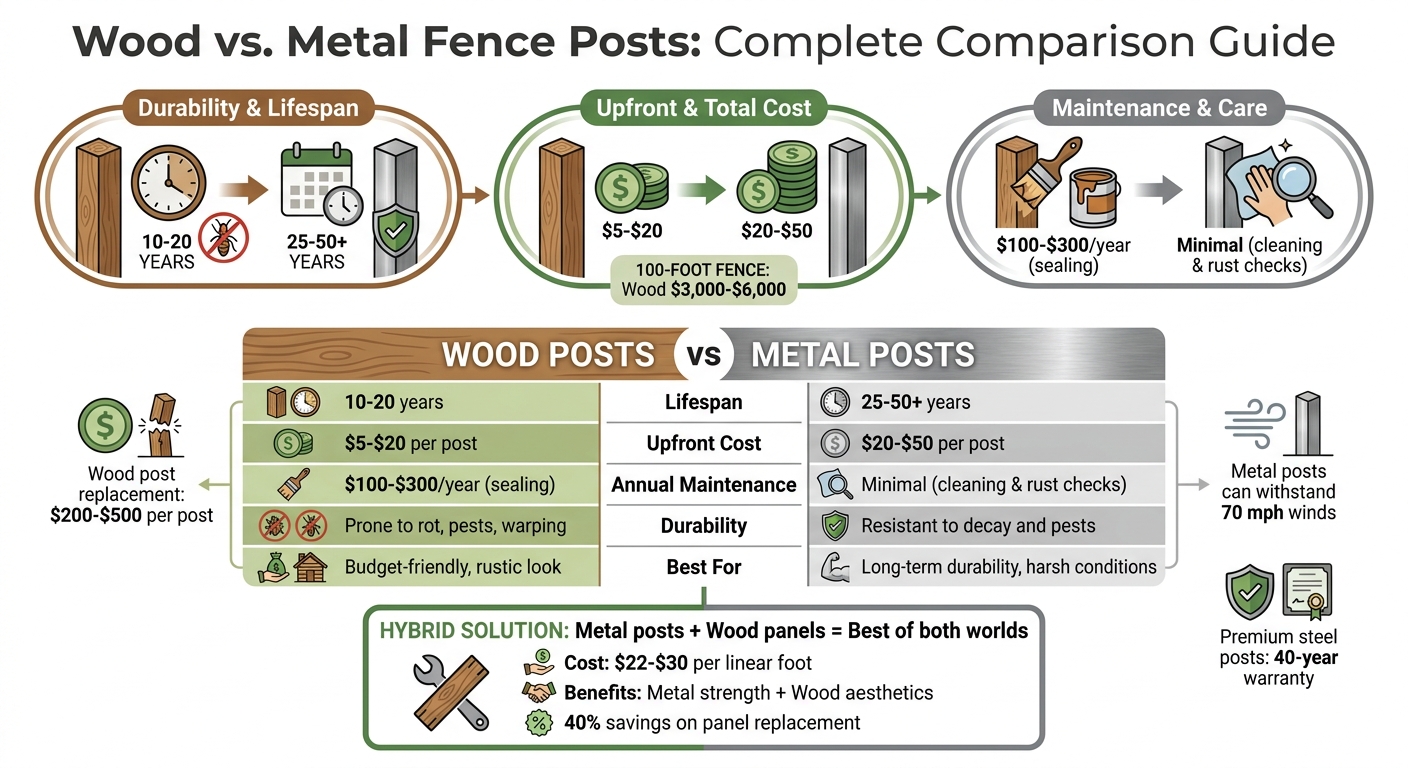
Wood vs Metal Fence Posts: Cost, Lifespan, and Maintenance Comparison
WOOD vs STEEL – Which Fence Post Should YOU Use?
sbb-itb-d1d0a96
What Affects Fence Post Stability
Fence post stability isn’t just about picking the right material – it’s also about how that material holds up in your environment. The soil type, weather conditions, and installation methods all play a major role in determining whether your fence stands strong for years or starts leaning after a few seasons. Let’s break it down to see how these factors influence the performance of wood and metal posts.
How Soil Type Affects Post Stability
The type of soil you’re dealing with can make or break your fence post’s durability. Here’s how different soils affect stability:
- Clay Soil: This dense, moisture-retaining soil is tough on wood posts. Clay traps water, speeding up decay – even in pressure-treated wood. As the National Fencing Authority explains:
"Poorly drained clay soils accelerate wood decay even in pressure-treated lumber, shifting the cost-benefit analysis toward steel or composite posts for 20-year-plus service expectations."
- Sandy or Loose Soils: These soils don’t grip posts well, often causing them to lean as the surrounding soil collapses. For extra stability, dig deeper holes – about one-third of the post’s height plus six inches – and use a gravel base with wider concrete footings. Aim for post holes three times the diameter of the post.
- Wet or Saturated Soils: Constant exposure to moisture speeds up wood rot and can corrode metal posts. To combat this, use French drains, gravel layers, and waterproof concrete to keep posts stable.
Here’s a quick comparison of soil types and their impact:
| Soil Type | Impact on Wood Posts | Impact on Metal Posts | Recommended Solution |
|---|---|---|---|
| Clay | High risk of rot due to moisture | Stable but harder to install | Use a gravel base; opt for metal posts |
| Sandy | Prone to leaning due to low density | May lean but easier to install | Deeper holes; wider concrete footings |
| Wet/Saturated | Rapid decay and shifting | Corrosion risk and shifting | French drains; waterproof concrete |
Weather and Climate Effects
Weather conditions can also have a big impact on post stability, especially when it comes to moisture and temperature changes.
- Moisture: In humid areas, wood posts absorb water, swell, and eventually rot unless they’re treated or sealed. Metal posts fare better in wet conditions, especially if they’re galvanized or powder-coated.
- Dry Climates: Low humidity can make untreated wood brittle and prone to cracking. Metal posts don’t suffer the same fate, though they can get extremely hot in direct sunlight.
- Freeze-Thaw Cycles: Repeated freezing and thawing can cause metal posts to expand and contract, potentially shifting them if they’re not set below the frost line. In colder states like Minnesota, frost depth can reach up to 60 inches, so deep installations are a must. Pressure-treated wood tends to handle these temperature swings better.
- Coastal Areas: Salt exposure near the ocean can quickly degrade both wood and standard galvanized metal. For these environments, marine-grade aluminum or stainless steel is the best choice for long-term durability.
Installation Depth and Methods
How deep you set your posts is just as important as the material you choose. The general rule is to bury posts to a depth of one-third their total length, plus an extra six inches for a gravel base. Local building codes may require depths between 24 and 48 inches, depending on your location.
Using concrete footings can greatly improve stability. For instance, a 10-inch diameter footing increases the load-bearing surface by six to eight times compared to a bare 4×4 post. This is especially useful in areas with high winds.
Installation methods differ by material:
- Metal Posts: These can often be driven directly into soft soil using mechanical tools, making installation faster.
- Wood Posts: These require pre-dug holes and concrete settings, which take time to cure before achieving full stability. Adding a compacted gravel layer at the bottom of the hole can improve drainage and help prevent rot.
As Fence Armor puts it:
"The longevity and stability of a fence will depend primarily on how well its posts are set."
Wood Fence Posts: Benefits and Stability Problems
Benefits of Wood Posts
Wood fence posts are a popular choice for their affordability and natural charm. They typically cost between $5 and $20 per post, significantly cheaper than metal posts, which range from $20 to $50 each. For a basic 100-foot wood fence, the total cost is usually around $3,000 to $6,000.
Beyond their cost, wood posts bring a classic, timeless aesthetic that metal simply can’t replicate. As First Fence of Georgia explains:
"Wood offers a sense of warmth and coziness that never goes out of style".
This natural look makes wood posts a perfect fit for traditional or rustic outdoor spaces, blending harmoniously with the surrounding landscape.
Wood posts are also highly customizable. They can be painted, stained, or reshaped to suit uneven terrain. Additionally, wood is a renewable resource, with fast-growing options like pine offering an eco-conscious choice. As a bonus, wood acts as a natural sound barrier, helping reduce noise pollution.
However, despite their many advantages, wood posts are not without challenges, particularly when it comes to stability.
Stability Problems with Wood Posts
One of the biggest weaknesses of wood posts lies in the "critical zone" – the area at ground level where moisture, oxygen, and microorganisms work together to degrade the wood. Frame It All describes this vulnerability:
"The critical zone is the only place where all three of these elements [moisture, oxygen, and microorganisms] are consistently present".
Soil conditions play a major role in accelerating this decay. For instance, heavy clay soils trap water against the post, while acidic soils can speed up the breakdown of wood fibers. Even small nicks or scratches in the treated surface can expose the wood to rot and other damage.
Improper installation often worsens these problems. Posts that aren’t buried deep enough – at least one-third of their length or a minimum of 24 inches – may lack the necessary stability to remain upright. Additionally, using wood rated for "Above Ground" instead of "Ground Contact" can lead to premature failure, as the former lacks the chemical treatment needed to withstand constant exposure to moisture. It’s worth noting that up to 40% of fence issues are caused by problems with the posts.
These stability concerns have a direct impact on the lifespan and maintenance requirements of wood posts.
How Long Wood Posts Last and Maintenance Needs
The lifespan of wood posts varies depending on treatment and care. Untreated posts typically last 5 to 10 years, while pressure-treated wood can endure for 10 to 20 years. Premium woods like cedar or redwood can last 15 to 30 years if properly maintained. Maintenance includes applying fence staining and sealing every 2–3 years and performing annual inspections.
Regular upkeep is key to preserving wood post stability. During annual inspections, check for cracks, splinters, or signs of decay near the base. Expect to spend around $100 to $300 annually on staining and sealing materials.
If more than 30% of a post is affected by rot or termite damage, full replacement is required. This can cost anywhere from $200 to $500 per post. As Fence Daddy advises:
"If the wood crumbles in your hands or the rot or termite damage covers more than about 30% of the post, you will need to replace the entire post".
Metal Fence Posts: Strength and Durability
Advantages of Metal Posts
When dealing with harsh environments, metal posts stand out as a dependable option. They resist issues like rot, fungal growth, and insect damage – problems that commonly plague wood. Unlike wood, which absorbs moisture and can warp or twist over time, metal posts maintain their alignment for decades .
Galvanized steel posts, in particular, come with a zinc coating that acts as a protective barrier against moisture and oxygen. This layer prevents rust and corrosion far better than traditional paint or sealants. As Betafence notes:
"Unlike a wooden fence that needs to be sealed or changed, the galvanized posts require minimal care."
Another key advantage is their lateral strength and rigidity. Metal posts can withstand wind loads of up to 70 mph on a six-foot-tall privacy fence with posts spaced eight feet apart. Additionally, steel’s non-combustible nature makes it fire-resistant.
Metal Post Lifespan and Maintenance
Galvanized steel posts often last over 30 years, with some systems exceeding 40 or even 50 years . This far outpaces wood posts, which typically need replacing every 7 to 15 years .
Maintenance is straightforward. Inspect the posts twice a year for rust or loose parts and clean them every 6 to 12 months. If you spot any chips or scratches in the protective coating, applying rust-inhibiting paint right away can help prevent further damage.
One common failure point is internal corrosion in hollow metal posts, which can occur if post caps are missing, allowing rainwater to collect inside. To avoid this, install proper caps during setup and keep grass or bushes trimmed away from the base to reduce moisture exposure.
How Metal Posts Handle Harsh Weather
Metal posts remain stable even in heavy rain and high humidity, unlike wood, which can swell or degrade.
However, freeze-thaw cycles can pose a challenge. Without proper anchoring, metal posts might shift slightly, as repeated expansion and contraction could weaken welds or joints.
For coastal areas, where salt-heavy air accelerates corrosion, standard galvanized steel may not hold up long-term. In these conditions, marine-grade aluminum or stainless steel is a better choice for lasting performance.
Using Metal Posts with Wood Panels
How Hybrid Fencing Improves Stability
A hybrid fencing system combines the best of both worlds: the durability of metal and the natural charm of wood. By pairing metal posts with wood panels, you get the strength of metal where it matters most – at the foundation – while keeping the warm, classic look of wood above ground. This method solves the common problems of wood-only fences, such as rot and instability caused by shifting soil.
Metal posts act as a sturdy backbone, preventing the decay that often plagues wood posts. They stay upright even when soil conditions change, ensuring your fence remains stable and secure for years.
The benefits are clear. While wood panels may need occasional maintenance, replacing them is far easier and less expensive than dealing with deteriorated posts. Metal posts, which are the hardest part to replace, can last 50 years or more. This creates a fence that combines lasting strength with timeless aesthetics.
Appearance and Performance Benefits
Hybrid fencing systems offer the natural beauty of wood without the stability issues that can arise with all-wood fences. From the street, your fence looks like traditional cedar or pine, but the hidden metal framework ensures it stays upright and resists sagging over time.
Maintenance is straightforward. Metal posts require only biannual checks and occasional cleaning, while wood panels need staining every 3 to 5 years or the occasional board replacement. Plus, you avoid the environmental concerns tied to chemically treated wood posts leaching into the soil.
Financially, hybrid systems are a smart choice. They cost around $22–$30 per linear foot, making them more affordable than many all-wood options. When you factor in the reduced need for future post replacements, hybrid fencing offers excellent value over the long term.
For homeowners in the Plano, TX area looking for a fence that blends natural beauty with outstanding durability, Tend Fencing specializes in installing high-quality hybrid systems designed to last.
Cost Comparison: Wood vs. Metal Posts
Upfront Installation Costs
If you’re comparing costs, wood posts are the more affordable option upfront, ranging from $5 to $20 per post, while metal posts, such as steel or aluminum, start at $20 to $50 per post. For those considering premium powder-coated steel posts, expect to pay significantly more – between $225 and $250 per post. To put this into perspective, for a 100-foot fence, the material cost difference alone could add an extra $1,000 to $2,000 to your project.
When it comes to labor, installation costs are generally $12 to $15 per linear foot, regardless of whether you’re working with wood or metal. However, metal posts might save you some time and effort during installation. They’re lighter and often come with pre-drilled holes, which makes them easier to handle compared to the heavier wood posts. For a 100-foot fence, you’ll typically need about 13 posts and 13 bags of concrete.
"Metal fence posts typically come with a higher upfront cost compared to wood… However, this initial savings can be misleading." – Lily Carter, WoodRio
But upfront costs are only part of the equation. To get the full picture, you need to consider maintenance and repair expenses over time.
Maintenance and Repair Costs Over Time
When it comes to long-term costs, the differences become even more apparent. Wood posts generally start to deteriorate at the ground line within 10 to 15 years in wet soil conditions, while metal posts can last 40+ years. Replacing a single rotted wood post can cost around $500, largely due to minimum contractor fees. On top of that, wood fences require staining every 2 to 3 years to protect against decay, adding to the ongoing expenses.
Metal posts, on the other hand, are built to last. In fact, they often outlive the fence panels they support. When the panels eventually need replacing, you can save roughly 40% on replacement costs by reusing the existing steel posts.
Factoring in these maintenance and repair costs makes the long-term financial impact much clearer.
Overall Value and Durability
Although metal posts come with a higher upfront price, they deliver far more value over time. They require little to no maintenance, resist decay and pest damage, and can last anywhere from 20 to over 50 years. Some premium steel posts even include a 40-year manufacturer warranty, further underscoring their durability.
Wood posts, while cheaper initially, require regular upkeep and are more prone to failure – especially in wet climates or clay-heavy soils, like those found in Texas. In these conditions, the higher initial cost of metal posts becomes easier to justify.
For those looking for a compromise, a hybrid design – metal posts paired with wood panels – offers a balanced solution. This approach costs around $22 to $30 per linear foot installed, providing both durability and aesthetic appeal. It’s a solid option for anyone seeking long-term stability without breaking the bank on upfront costs.
Conclusion: Which Fence Post Type to Choose
The best fence post for your needs depends on factors like climate, budget, and how long you plan to stay in your home. Metal posts offer unmatched durability, lasting anywhere from 20 to over 40 years, compared to the 10 to 20 years you can expect from wood. Plus, they won’t rot, warp, or attract pests, making them ideal for areas with high moisture, such as coastal regions, or for clay-heavy soils that can cause wood to fail prematurely.
On the other hand, wood posts are a more budget-friendly option, costing $5 to $20 per post compared to $20 to $50 for metal. They can also perform better in areas with heavy snow or extreme freeze-thaw cycles, where poorly anchored metal posts might shift. The downside? Wood requires regular maintenance to prevent decay, which adds to the long-term cost.
A hybrid approach might be the best of both worlds. Using metal posts to support wood panels gives you the stability of metal with the classic look of wood. When the panels eventually wear out, you can reuse the steel posts, saving around 40% on replacement costs.
Environmental conditions also play a big role in performance. For example, in dry climates, metal posts hold up better as wood can crack, while in coastal areas, marine-grade aluminum or stainless steel is essential to resist salt corrosion. If you plan to stay in your home for more than a decade, metal posts may be worth the higher upfront cost, sparing you the hassle and expense of replacing rotted wood down the line.
FAQs
Should I use concrete or gravel for fence post holes?
When deciding between concrete and gravel for your fence posts, it’s all about balancing soil conditions, climate, and how long you want the fence to last.
- Concrete provides unmatched stability, making it a solid choice for areas with high winds or loose, unstable soil. However, it can hold moisture around wooden posts, which might speed up rot over time.
- Gravel, on the other hand, shines in well-draining soils and moderate climates. It promotes better drainage, which can help wooden posts last longer by reducing moisture buildup.
Take a good look at your soil type, the typical weather in your area, and how durable you need your fence to be before making your choice.
How do I choose post depth for my area’s frost line?
To ensure your fence posts stay stable and secure, make sure they extend below your region’s frost line. This prevents shifting caused by freeze-thaw cycles. Since frost line depths differ depending on location, it’s a good idea to check your local building codes or talk to a fencing expert. Setting the posts at the right depth is key to maintaining stability and durability, especially when dealing with varying weather and soil conditions.
What’s the best post material for clay or wet soil?
For clay or wet soil, galvanized steel posts are an excellent option. In these conditions, wood posts tend to rot at the ground line, especially in clay-rich soils, which can weaken their stability over time. Steel posts, on the other hand, are far more durable and can hold up for decades. To make them last even longer, consider adding gravel at the bottom of the post holes and ensuring proper drainage to handle water runoff efficiently.