
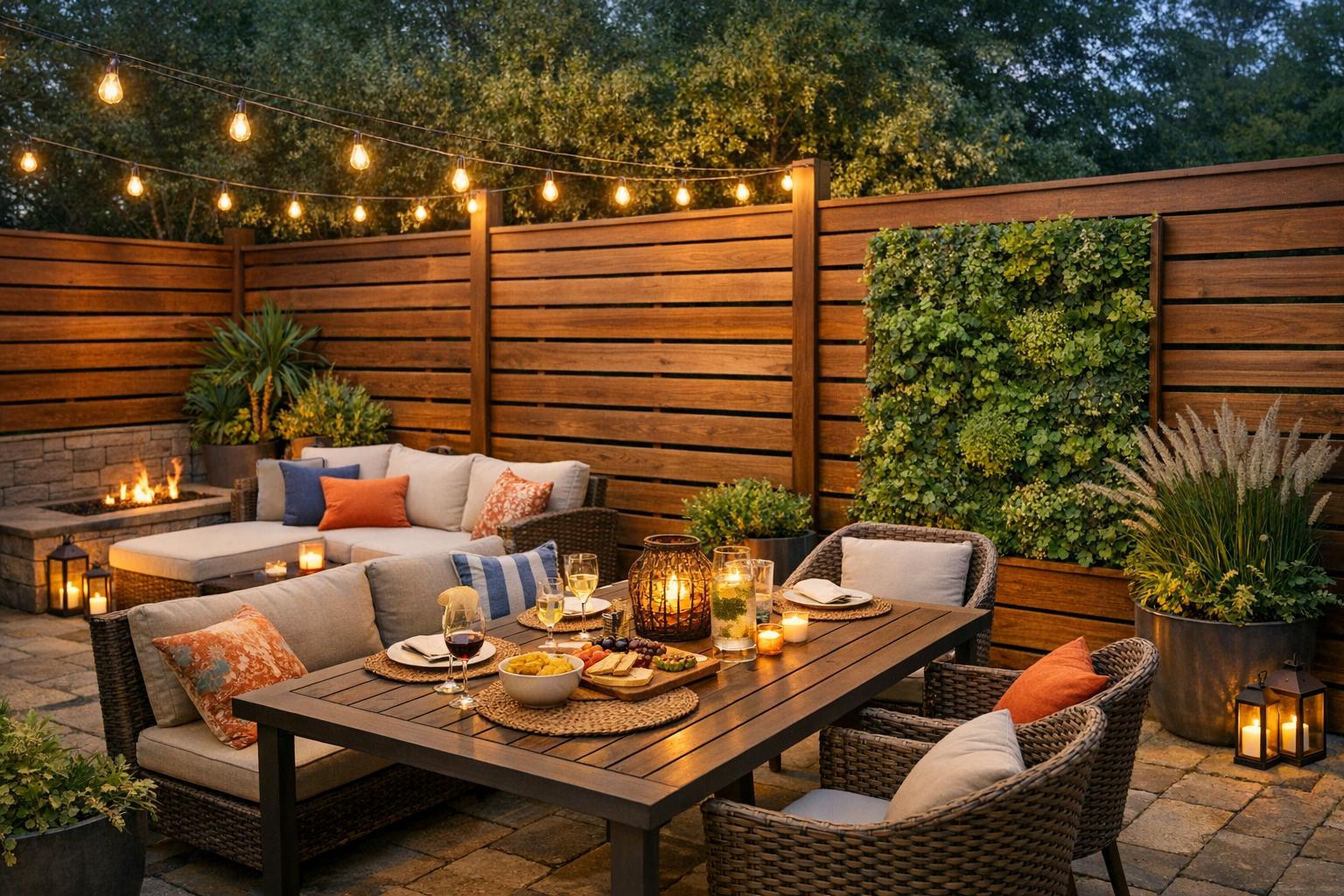
When designing an outdoor entertainment space, choosing the right fence is essential. A well-chosen fence provides privacy, defines zones, and enhances the overall look of your yard. Here are 10 fence ideas to consider:
- Horizontal Wood Privacy Fence: Offers full privacy with a modern aesthetic. Best for small yards to create a cozy atmosphere. Costs range from $16–$23 per linear foot for professional installation.
- Mixed Material Fence: Combines wood, metal, or stone for flexibility in privacy and style. Ideal for creating distinct zones in larger spaces.
- Privacy Screens: Great for patios and decks, these adjustable panels block unwanted views while maintaining airflow. Options include bamboo, vinyl, or metal.
- Living Green Fence: Use plants like bamboo or hedges for a natural barrier. Requires regular maintenance but adds greenery and charm.
- Corrugated Metal Fence: Durable and low-maintenance, it provides maximum privacy and noise reduction. Perfect for modern designs.
- Ornamental Iron Fence: Adds elegance while maintaining an open feel. Best for decorative purposes or dividing spaces without full privacy.
- Semi-Private Fencing: Features lattice or slats for partial privacy and airflow. Works well in smaller yards or areas needing a light, open design.
- Fences with Built-In Seating and Bars: Multi-functional designs for entertaining, offering seating, serving ledges, or storage.
- Lighting-Ready Fences: Incorporate LED lights, string lights, or motion sensors to create ambiance and enhance safety.
- Custom Wood and Ornamental Iron Fences: Tailored designs for a personalized look, combining privacy, durability, and style.
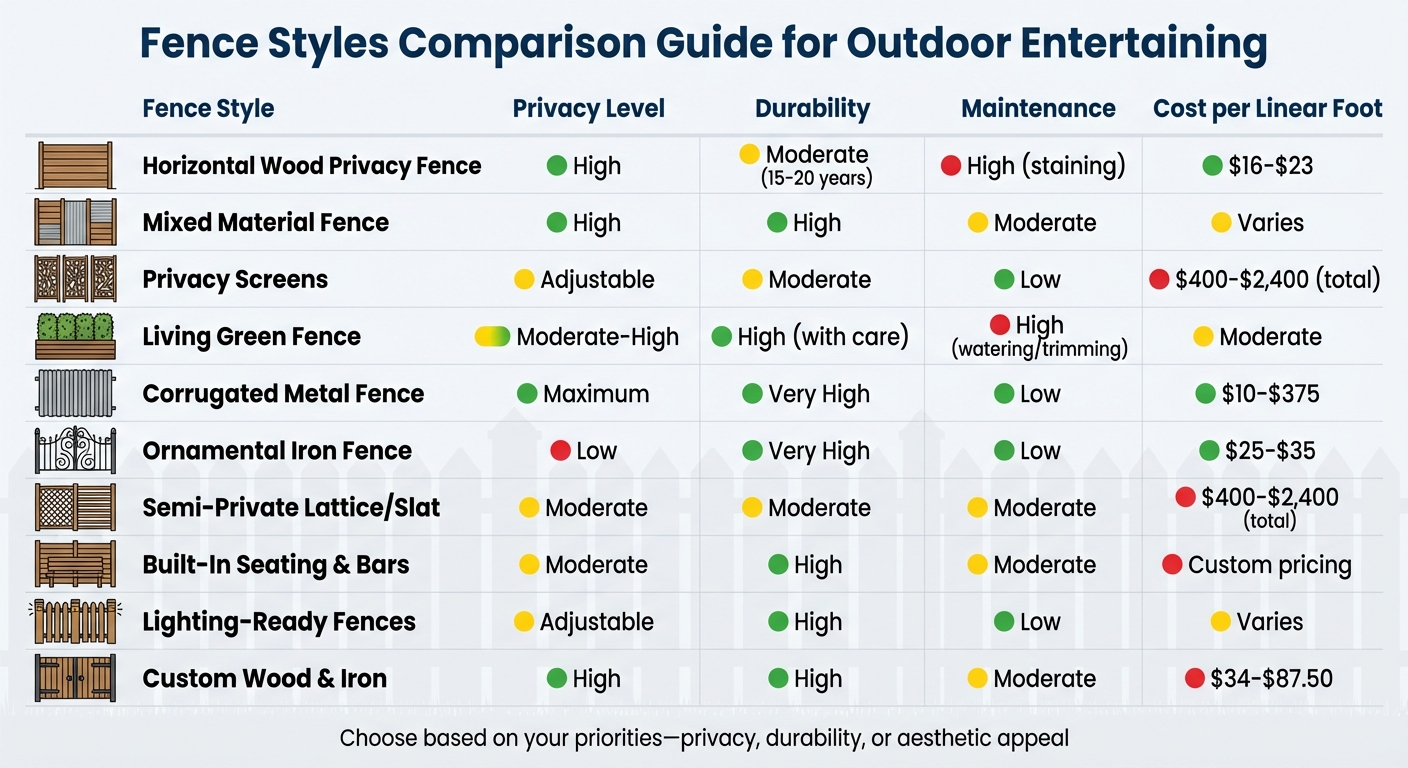
Quick Comparison:
| Fence Style | Privacy | Durability | Maintenance | Cost |
|---|---|---|---|---|
| Horizontal Wood | High | Moderate (15–20 years) | High (staining) | $16–$23/linear foot |
| Mixed Material | High | High | Moderate | Varies (based on materials) |
| Privacy Screens | Adjustable | Moderate | Low | $400–$2,400 (total) |
| Living Green | Moderate-High | High (with care) | High (watering/trimming) | Moderate |
| Corrugated Metal | Maximum | Very High | Low | $10–$375/linear foot |
| Ornamental Iron | Low | Very High | Low | $25–$35/linear foot |
| Semi-Private (Lattice) | Moderate | Moderate | Moderate | $400–$2,400 (total) |
| Built-In Seating | Moderate | High | Moderate | Customized pricing |
| Lighting-Ready | Adjustable | High | Low | Varies (based on lighting) |
| Custom Wood/Iron | High | High | Moderate | $34–$87.50/linear foot |
Choose based on your priorities – privacy, durability, or aesthetic appeal – and ensure compliance with local regulations for height and materials.
Fence Styles Comparison: Privacy, Durability, Maintenance and Cost Guide
1. Horizontal Wood Privacy Fence with Clean Lines
Privacy Level and Zoning Capabilities
Horizontal wood fences provide excellent privacy, especially when the boards are installed tightly together – perfect for creating a cozy and secluded outdoor space. If you want to allow for some airflow while maintaining a sense of privacy, you can adjust the spacing between the boards. The horizontal design also has a visual trick up its sleeve: it can make smaller yards or patios feel wider, offering a sophisticated setting for entertaining guests.
For practical zoning, consider using taller panels (up to 8 feet) near seating areas to block out noise or prying eyes, while shorter sections can frame garden spaces beautifully.
Durability and Weather Resistance
One challenge with horizontal fences is gravity – since the boards span horizontally, they’re more susceptible to sagging over time compared to vertical fences. To combat this, it’s crucial to space posts no more than 6 feet apart.
Leave a 1/8-inch gap between boards to allow for expansion during humid weather. When it comes to wood choice, naturally water-resistant options like Western red cedar or redwood are great picks. For even greater durability, dense hardwoods like Ipe are an option, though they come with a hefty price tag – up to 5 to 10 times more than standard cedar. To protect the wood and maintain its natural color, apply a UV-resistant sealer after installation.
Aesthetic Appeal and Design Flexibility
The sleek, clean lines of a horizontal wood fence make it a stylish backdrop for outdoor spaces like kitchens or seating areas. Dark stains in shades like espresso, charcoal, or black are especially popular right now, as they allow the fence to blend into the background, letting your landscaping and entertainment areas shine. For a touch of creativity, mix different board widths – such as 1×6 and 1×3 – to create subtle patterns.
Horizontal fences also offer design versatility. Features like built-in benches or solar-powered sconces can be integrated directly onto the rails, turning your yard into a warm and inviting outdoor living room, perfect for evening gatherings. For added flair, consider pairing horizontal panels with vertical-plank gates or combining wood slats with metal frames for a modern, industrial vibe.
Functionality for Entertaining Purposes
When it comes to cost, professional residential fence installation for a horizontal wood fence typically runs between $16 and $23 per linear foot, while DIY projects can range from $6 to $13 per linear foot. Keep in mind, horizontal designs are about 10–20% more expensive due to the need for premium lumber and more closely spaced posts. With proper care, such as regular sealing and the use of corrosion-resistant fasteners, these fences can last 15–20 years.
This thoughtful mix of style, durability, and functionality makes horizontal wood fences a standout choice for creating a polished and inviting outdoor space.
sbb-itb-d1d0a96
2. Mixed Material Fence for Divided Entertainment Zones
Privacy Level and Zoning Capabilities
When designing outdoor spaces that need to balance style with functionality, mixed material fences are an excellent choice. They allow for the creation of distinct zones by combining solid and open elements, which helps achieve varying levels of privacy. For areas requiring maximum seclusion, like hot tubs or outdoor showers, materials like stone, brick, or concrete are ideal. Meanwhile, slatted wood or metal mesh works well for social spaces, as they provide definition without feeling closed off or blocking natural light. Adjusting the height of the fence strategically is crucial – taller solid panels (around 6 to 8 feet) can block views near dining areas, while shorter, decorative sections can highlight gardens or serve as transitions between spaces. Interestingly, placing screening elements closer to the house rather than at the property line can make your backyard feel more expansive. This mix of materials not only serves practical purposes but also ensures long-term performance.
Durability and Weather Resistance
One of the standout features of mixed material fences is their durability. Metal posts, especially those that are powder-coated, provide excellent structural support and resist wear over time. Powder-coated aluminum or steel posts are particularly effective at preventing issues like rot and warping, which are common with all-wood fences. These metal components can last anywhere from 30 to 60 years, far outlasting traditional wood fences, which typically require significant repairs after 10 to 20 years. For wood elements, cedar and redwood are popular choices because they naturally resist decay and insect damage, often lasting 20 to 30 years with proper care. Composite materials paired with aluminum frames offer another durable option, as they are rot-proof and easy to maintain.
Aesthetic Appeal and Design Flexibility
The combination of materials in these fences opens up endless design possibilities. By mixing textures and tones, you can create visual depth that makes your property feel larger. Popular pairings include wood panels framed with black steel or stone columns filled with wooden slats, blending industrial strength with a rustic vibe. You might also consider contrasts like concrete walls topped with wood slats or brick sections accented with metal inserts for added architectural interest. Horizontal slats, a hallmark of modern designs, provide a sleek and sophisticated look while visually widening the space. Dark-toned fencing – whether through black metal or dark-stained wood – helps the structure fade into the background, allowing landscaping and entertainment areas to take center stage. For added functionality, designs can incorporate built-in benches, planters, or screens to hide HVAC units or trash bins.
Functionality for Entertaining Purposes
Mixed material fences don’t just look great – they’re also highly practical for outdoor entertaining. Privacy fencing typically ranges from $40 to $150 per linear foot, depending on the materials and labor involved. These fences are particularly useful for entertainment areas, as they can combine solid bases like concrete or brick with slatted wood overlays to ensure privacy while maintaining airflow – perfect for pool decks or sunbathing zones. Additional features, such as recessed LED lighting, can be seamlessly integrated into the design to enhance evening gatherings. Before you start building, though, make sure to confirm your property lines and check local regulations on fence height, as many municipalities have specific rules for front and backyard fencing.
3. Privacy Screens for Patios and Decks
Privacy Level and Zoning Capabilities
Privacy screens are a clever way to carve out distinct spaces on patios and decks without committing to a full fence. They can separate a cozy hot tub area from a dining spot or keep unsightly equipment like pool pumps out of sight. For best results, maintain slat gaps between 1/4 and 3/8 inch, or up to 1/2 inch in windy areas to reduce strain. In most cities, you can install screens up to 6 feet tall without needing a permit, but anything over 7 feet usually requires approval. Now, let’s look at how material choices can make these screens last longer.
Durability and Weather Resistance
The materials you choose for your privacy screen play a huge role in how well it holds up over time. Vinyl (PVC) is a low-maintenance option that doesn’t need painting and handles harsh weather with ease. Composite materials are another great choice – they feature interlocking designs that prevent gaps from shifting or bowing. If you’re after a natural look, bamboo is a standout option. It’s termite-resistant and, as Cali Bamboo notes:
Bamboo fences can last twice as long as cedar fences and are able to significantly withstand more environmental extremes, such as high-force winds
. For something even more durable, consider metal options like corrugated steel or aluminum. These materials resist rot, rust, and mold, often lasting for decades. Wooden screens, while beautiful, typically last 15–20 years, whereas vinyl and aluminum can go the distance.
Aesthetic Appeal and Design Flexibility
Beyond durability, privacy screens offer endless design possibilities. Horizontal slats lend a sleek, modern vibe to smaller yards, while laser-cut metal panels can double as striking decorative pieces. Opting for dark tones like charcoal, black, or deep espresso can add a touch of elegance while making the greenery around them stand out. Mixing materials is another way to elevate the look – think white stucco walls paired with redwood accents or wood-framed metal siding for added contrast. For a functional twist, you can integrate planter boxes, hooks for hammocks, or even LED lighting to create a cozy atmosphere for evening gatherings.
Functionality for Entertaining Purposes
Privacy screens do more than just look good – they can make outdoor entertaining more comfortable. They block wind, dust, and noise, which is a big plus when hosting friends or family. Heavier materials like composite cladding or masonry are particularly effective for reducing noise. Outdoor curtains are another versatile option, offering adjustable privacy for anything from intimate dinners to larger parties. Screens can also hide less attractive necessities like AC units, pool equipment, or trash bins. If you’re considering trellis-style screens, they’re a budget-friendly option, with costs ranging from $400 to $2,400, depending on size and materials.
| Material | Maintenance Level | Primary Benefit |
|---|---|---|
| Vinyl/Composite | Low | Resists rot, fading, and warping; lasts decades |
| Bamboo | Moderate | Sustainable, termite-resistant, wind-tolerant |
| Corrugated Metal | Low | Budget-friendly, rust-resistant, industrial look |
| Wood (Cedar) | High | Natural beauty, highly customizable, classic appeal |
4. Living Green Fence and Vertical Garden Walls
Privacy Level and Zoning Capabilities
Living fences combine natural beauty with practicality, offering a unique way to create privacy and define outdoor spaces. These green barriers help block sightlines, reduce noise, and provide an eco-friendly alternative to traditional fencing materials. Dense plants like bamboo can grow as tall as 15–20 feet, delivering impressive vertical privacy. As landscape designer Janice Parker explains, privacy fencing transforms your garden into a sanctuary by selectively revealing certain areas. You can also use hedges or vertical gardens to divide your yard into distinct zones. Fast-growing plants like forsythia, which can reach up to 9 feet, or bamboo are excellent choices for quickly creating a natural screen. Just remember to contain bamboo with root barriers or planters to prevent it from taking over your yard. Once established, the durability of your living fence will depend on proper plant care and selection.
Durability and Weather Resistance
The longevity of a living fence largely depends on the types of plants you choose. Evergreen varieties like arborvitae, juniper, and holly maintain their foliage year-round, ensuring consistent privacy – even in winter. For example, the "North Pole" arborvitae grows to 10–15 feet and thrives in USDA Zones 3–7. In warmer, drier regions (Zones 7–11), drought-tolerant plants such as Texas sage, Arizona rosewood, and Texas mountain laurel are excellent choices once established. Photinia shrubs, known for their vibrant color and dense coverage, can grow up to 15 feet tall and 8 feet wide. If you prefer a more polished look, boxwoods – typically reaching 4 feet – can be neatly trimmed to create formal, manicured borders.
Aesthetic Appeal and Design Flexibility
Living walls bring warmth, texture, and a touch of nature to neutral patio spaces, making them ideal focal points for social areas. By layering plants of different heights – such as pairing tall cypress trees with shorter hedges like podocarpus – you can create a visually dynamic, multi-dimensional landscape. For a lush, opaque screen, combine a sturdy structure like a trellis or chain-link fence with fast-growing vines such as ivy or trumpet creeper. For a modern twist, mix stained wood slats with vertical garden elements to achieve a striking contrast. In smaller spaces, vertical garden walls and trellises allow you to maximize greenery without sacrificing valuable room. Adding mirrors to a green wall can also reflect light and foliage, making the area feel larger and more inviting. These thoughtful design elements can elevate both the style and functionality of your outdoor space.
Functionality for Entertaining Purposes
Living fences are not just visually appealing – they’re also practical for hosting outdoor gatherings. They help reduce noise, block wind, and keep dust at bay, creating a more comfortable environment for socializing. You can even incorporate edible herbs into your living wall to add both beauty and fresh, aromatic accents for outdoor dining. Adding floating shelves or shadow boxes to the vertical garden structure provides space to display drinks, candles, or small potted plants for guests. Concealed uplighting within the green wall framework can highlight the textures of the foliage at night, creating a cozy and inviting atmosphere. If your living fence doubles as a boundary for pets, reinforcing it with internal wire mesh can keep them safely contained during gatherings. While living fences can be a cost-friendly option, they do require regular maintenance, including pruning and watering, compared to standard fencing materials.
5. Corrugated Metal and Industrial Style Fencing
Privacy Level and Zoning Capabilities
Corrugated metal fencing provides complete privacy with its seamless, gap-free panels. Its solid design makes it a great choice for both busy social spaces and quieter, more private areas. This versatility means it works well for creating secluded spots like outdoor kitchens or fire pit zones. Plus, its density helps block wind and reduce noise, making it ideal for defining specific outdoor spaces. As a bonus, its reflective finish can direct sunlight toward nearby plants, adding a practical touch to its modern appeal.
Durability and Weather Resistance
Corrugated metal fencing isn’t just about privacy – it’s built to last. Made from durable materials like 26-gauge steel panels with specialized coatings, these fences resist fading and corrosion, even in challenging weather conditions. When properly anchored, they can withstand strong winds up to 130 mph. Unlike wood, metal doesn’t rot, warp, or attract pests, and some systems are even designed to be "FireSmart", making them suitable for wildfire-prone areas. For properties near the coast, marine-grade aluminum with anodized finishes is recommended to combat the effects of salt air. To maintain its longevity, occasional inspections for coating chips can help prevent rust from developing.
Aesthetic Appeal and Design Flexibility
Corrugated metal offers a sleek, industrial look that complements modern and mid-century outdoor designs. To soften its bold appearance, you can pair it with natural materials like Western Red Cedar, which adds a warm, organic contrast. The horizontal corrugation creates a sense of expanded space, while materials like Corten weathering steel develop a unique, evolving patina over time, adding character. Its sturdy surface is also great for mounting decorative elements like planter boxes, outdoor artwork, or geometric panels, enhancing the overall design. However, keep in mind that metal surfaces can heat up under direct sunlight during the summer.
Functionality for Entertaining Purposes
Corrugated metal fencing is a practical choice for high-traffic entertaining spaces. It requires little maintenance – unlike wood, there’s no need for regular staining, sealing, or repairs. The solid panels also help dampen sound, keeping conversations private while reducing noise from nearby streets. Their strength allows for securely mounting decorative lights or fixtures, perfect for evening gatherings. Material costs for corrugated metal sheets start around $10 per linear foot, while fully framed panels can range from $200 to $375 per section. Before expert fence installation, be sure to check local height restrictions and setback requirements.
6. Ornamental Iron Fencing for Open Social Yards
Privacy Level and Zoning Capabilities
Ornamental iron fencing strikes a balance between defining boundaries and maintaining openness. With geometric patterns offering 40% to 60% visual permeability, these fences mark property lines without creating a sense of isolation. They’re perfect for dividing outdoor spaces into distinct zones – like a dining area set apart from a lounge – without blocking sightlines. This thoughtful design ensures a seamless flow while providing a durable structure that stands up to various weather conditions.
Durability and Weather Resistance
Made from tough iron alloys, ornamental fencing outlasts materials like wood or aluminum when it comes to harsh weather. The metal resists wear and pests naturally, and modern finishes like powder-coating and galvanization add extra protection against rust and corrosion. To keep it in top shape, inspect for rust annually, sand any affected areas, and apply a rust-resistant primer followed by quality exterior paint every two to three years. Regularly lubricating gate hinges is also a good idea. For homes near the coast – within 3,000 feet of saltwater – marine-grade finishes are a smart choice to counteract the effects of salt air. Wrought iron fencing typically costs between $25 and $35 per linear foot.
Aesthetic Appeal and Design Flexibility
Ornamental iron brings elegance to any yard without closing off open spaces.
"Wrought iron offers an eternal charm that enhances your property’s aesthetic and value. Its intricate designs fit with both modern and historic settings." – Viking Fence
Black powder-coated finishes allow the fencing to blend into the background, keeping the focus on your landscaping. Whether used as a security barrier or a decorative feature, ornamental iron pairs beautifully with materials like wood, concrete, or rock for custom designs. Additions like post-cap lighting or ground-level uplighting can highlight the intricate ironwork, especially during evening gatherings. These design elements make the fencing not just visually appealing but also functional for dynamic outdoor spaces.
Functionality for Entertaining Purposes
For pool areas, ornamental iron fencing provides a secure barrier that meets safety codes, including self-closing, self-latching gates. Its open design ensures clear visibility, making it easy to keep an eye on guests and children. The structure also promotes airflow and light, creating a comfortable setting for warm-weather events. Plus, the low-maintenance nature of metal means you won’t have to worry about constant upkeep like staining or sealing. It’s a practical, stylish option that enhances your yard while staying ready for any gathering.
7. Semi-Private Fencing with Lattice or Slat Details
Privacy Level and Zoning Capabilities
Semi-private fencing strikes a balance between openness and seclusion. With spaced slats or lattice panels, these fences offer partial privacy while still allowing light, air, and sound to pass through freely. This design avoids the boxed-in feeling that solid fences can create, making it a smart choice for smaller outdoor spaces like patios or entertainment areas.
"A privacy fence must limit clear sightlines, but there’s a gradient with which designers can play… the goal is to include gaps that are large enough to be visible, but small enough to prevent a clear view." – Kevin Lenhart, Landscape Designer and Design Director, Yardzen
Lattice-topped fences are perfect for defining specific spaces, such as an outdoor kitchen or seating area. Adding 12 to 18 inches of lattice on top enhances privacy while keeping the space open and airy. For a more enclosed look, closely spaced wood slats can create a sleek, modern style that minimizes visibility. These fences also double as excellent supports for climbing plants like clematis, star jasmine, or bougainvillea, which can grow over time to form a natural, living privacy barrier. This combination of utility and style makes semi-private fencing a versatile option for many outdoor designs.
Durability and Weather Resistance
Semi-private fences are built to handle wind better than solid panels. For example, well-made vinyl fences can endure wind speeds of 70 to 80 mph, while standard wood fences typically withstand up to 60 mph. To improve stability in windy areas, fence posts should be buried to half their total length – an 8-foot post, for instance, should be set 4 feet into the ground. Maintaining a 1- to 2-inch gap between slats ensures airflow while still providing privacy.
Material selection plays a major role in durability. High-quality vinyl resists rot, rust, and insect damage, lasting 20 to 30 years with little maintenance. Aluminum and steel are strong options too, especially for open designs that naturally handle gusty conditions. Aluminum is particularly resistant to corrosion, making it ideal for humid or rainy climates. Wood, while requiring more upkeep, can last longer with UC4-treated timber to prevent rot. Designs like shadowbox or hit-and-miss fencing are especially effective in windy areas. Vertical boards are another practical choice, as they shed water more efficiently than horizontal designs, reducing wear in damp environments. These thoughtful construction choices ensure that semi-private fences are not only functional but also visually appealing.
Aesthetic Appeal and Design Flexibility
Lattice and slat fences bring a stylish edge to outdoor spaces. Horizontal slats create a modern, streamlined look that complements midcentury-style homes and can make a yard feel larger. On the other hand, vertical slats lend a more traditional feel while offering practical benefits, like better water drainage. Square lattice panels add a contemporary touch, particularly in cottage-inspired landscapes.
To enhance the design further, consider painting the fence in dark or black tones. This allows the structure to blend into the background, letting your landscaping shine. Pairing these fences with climbing plants can create a dynamic, evolving privacy screen that changes with the seasons. Installation costs for a trellis-style semi-private fence typically range from $400 to $2,400, while professional installation of privacy fences varies between $40 and $150 per linear foot, depending on materials and height.
Functionality for Entertaining Purposes
Semi-private fences are not just visually appealing – they’re also practical for hosting outdoor gatherings. Their open design allows fresh air to circulate, keeping guests cool and comfortable, while the filtered light creates a beautiful, dappled effect that enhances the ambiance.
"Hidden areas, made with privacy screening, create a sense of mystery, as you do not see all of the garden at once. Mystery makes a great garden!" – Janice Parker, Landscape Architect
These fences also require less upkeep compared to solid designs, making them a low-maintenance yet stylish option for any outdoor space. Whether you’re hosting a barbecue or simply enjoying a quiet evening, semi-private fencing combines functionality with charm.
8. Fence with Built-In Seating, Bars, and Serving Ledges
Functionality for Entertaining Purposes
A fence with built-in seating and serving ledges can transform your outdoor area into a practical and stylish entertainment zone. By incorporating these features, you can save space and reduce the need for extra furniture, making every square foot count. Perimeter benches provide sturdy seating, while integrated bars serve as a central spot for food and drinks preparation, streamlining the hosting experience.
"Integrating a built-in bench into a compact courtyard garden is an efficient use of space." – Karen Rogers, KR Garden Design
Built-in benches with flip-top lids add a clever storage solution for outdoor essentials like cushions and party supplies. Narrow ledges, installed at bar height, offer a handy spot for drinks or small plates during casual gatherings. You can take it a step further by adding hooks or small shelves for even more functionality.
"A simple setup with a barbecue, countertop, and some storage can create a perfect spot for alfresco dining." – Anton White, Ovaeda
This design approach not only enhances the guest experience but also requires thoughtful material choices to ensure durability and long-term use.
Durability and Weather Resistance
Selecting the right materials is crucial for the longevity of built-in seating and serving ledges. Ipe wood, when treated correctly, is highly durable and resistant to UV damage. Composite materials like Trex are low-maintenance options, as they resist rot, splintering, and splitting over time. Cedar is another excellent choice, thanks to its natural resistance to insects and decay.
Metal elements, such as corrugated or Corten steel, are also durable and resistant to rust and mold. However, they can become uncomfortably hot under direct sunlight, making them less suitable for seating surfaces. Additionally, vertical board orientations in the design can help water drain more effectively, which is especially beneficial in humid or rainy climates.
Aesthetic Appeal and Design Flexibility
Using the same material for both the fence and built-in features creates a cohesive look that extends your home’s style into your outdoor space. L-shaped benches paired with lush planted backdrops can help define cozy garden spaces, making them perfect for dining or lounging during social events. Incorporating lighting – whether through sconces, LED strips, or uplighting near seating and bar areas – ensures the space remains functional and welcoming even after dark.
For a more dynamic design, consider combining materials like stone and wood. A stone retaining wall paired with wood fencing can create clear divisions between seating and serving areas, adding depth and a polished feel to even smaller outdoor spaces.
9. Lighting-Ready and Tech-Friendly Fence Designs
Functionality for Entertaining Purposes
Modern fences are no longer just boundary markers – they’re becoming key players in creating inviting outdoor spaces, especially for evening gatherings. Solar-powered post cap lights are a simple way to add automatic illumination without extra effort. If you’re after consistent brightness, low-voltage LED systems are a great option, using only 3–8 watts per linear foot for energy-efficient lighting.
String lights continue to be a favorite for setting a festive mood. They’re easy to install – just attach them to posts or pergolas for instant charm. For added safety, motion-sensor lights are perfect for lighting up pathways after dark. Want even more control? Smart systems like Govee RGBIC kits (priced between $50 and $100) let you adjust colors, brightness, and schedules through an app or voice commands. With user ratings as high as 4.5 out of 5 stars, they’re a hit for their connectivity features.
These lighting options don’t just serve practical purposes – they also make your space visually stunning.
Aesthetic Appeal and Design Flexibility
Using a mix of lighting types can completely transform the look and feel of your outdoor area. For example, you can pair overhead string lights for a warm ambiance with accent uplighting to showcase fence textures or unique architectural details. Post cap lights provide a soft glow at eye level, avoiding harsh glares, while LED strips under cap rails create a sleek, continuous lighting effect along the fence line.
"Using three dimensionality, either in trellises or the framework of a fence, provides a good opportunity to uplight the fence in the evening." – Janice Parker, Landscape Architect
Dark fixtures, such as black or oil-rubbed bronze, help the lighting itself take center stage. For a modern-rustic vibe, consider Edison-style bulbs – they’re shatterproof, have a vintage charm, and are built to handle outdoor conditions.
Durability and Weather Resistance
When planning outdoor lighting, durability is just as important as design. Look for fixtures with IP65 or IP66 ratings, which ensure protection against dust and heavy rain. High-quality solar lights often feature nickel-cadmium or nickel-metal hydride batteries, which hold a charge longer and last longer than lead-acid options.
For mounting, materials like durable aluminum or powder-coated steel work well, especially when paired with stainless-steel fasteners to prevent rust. If you’re combining different materials, isolation gaskets can help prevent corrosion where metal meets wood. Integrated LED systems are another smart choice – they last between 15,000 and 25,000 hours, meaning less frequent replacements. For homes near the coast, where salt air can cause rapid wear, marine-grade aluminum with anodized finishes is a must to prevent damage from the elements.
10. Custom Wood and Ornamental Iron Fences by Tend Fencing
Aesthetic Appeal and Design Flexibility
Custom wood and ornamental iron fences offer a level of personalization that standard options simply can’t match. Cedar, for example, provides a classic look that suits nearly any home style. You can stain or paint it to fit your aesthetic preferences, while ornamental iron adds a touch of intricate, old-world elegance. Together, these materials combine natural warmth with timeless charm.
"Cedar offers a timeless look that suits a wide array of architectural styles and can be stained or painted." – Joe Carline, Partner, Kligerman Architecture & Design
Tend Fencing specializes in creating custom designs tailored to your unique style. Whether you lean toward modern horizontal slats or prefer the traditional appeal of vertical boards, their team collaborates with you to craft a fence that enhances your home’s character. Dark-stained finishes and black tones are particularly trendy right now, as they not only add sophistication but also highlight surrounding greenery, creating a striking backdrop for outdoor gatherings.
Privacy Level and Zoning Capabilities
When entertaining outdoors, privacy is often a top priority. Custom wood fences, like board-on-board or overlapping plank designs, provide excellent coverage by closing off gaps and blocking sightlines effectively. For maximum privacy, fences should be at least six feet tall. Beyond privacy, custom fencing can help divide your yard into distinct zones – think outdoor kitchens, dining areas, or play spaces – while maintaining a seamless flow across the property. This thoughtful design can turn your yard into a versatile, multi-functional space.
Durability and Weather Resistance
While aesthetics are important, durability is equally critical for an outdoor investment. Cedar naturally resists decay and insect damage, making it a solid choice for long-term use. Meanwhile, aluminum and ornamental iron fences are built to resist rust and rot, standing strong in various climates. Aluminum fencing, for instance, can last 20 to 30 years with minimal maintenance, while wood fences generally last 10 to 20 years. To keep wood fences looking their best and weather-resistant, re-staining or repainting every 2 to 5 years is recommended. Tend Fencing ensures durability by installing posts 18 to 24 inches deep, reducing the risk of frost heaving during colder months.
Functionality for Entertaining Purposes
Custom fences aren’t just about marking property lines – they can also enhance your outdoor living experience. Tend Fencing’s cedar designs can incorporate practical features like built-in benches, drink shelves, or even lighting fixtures. Thick wood panels serve double duty by acting as sound barriers, dampening street noise and creating a more relaxing atmosphere for conversation. Additional elements, such as sconces, string light hooks, or uplighting, can transform your fence into a functional centerpiece for evening gatherings. With these thoughtful touches, your fence becomes more than a boundary – it’s an integral part of your outdoor entertaining space.
Privacy Fence Ideas | 7 Creative Ways To Make Your Fence Private
Comparison Table
Here’s a quick breakdown of different fence styles, comparing their privacy, durability, maintenance needs, and cost. Keep in mind, wood fences typically last 15–20 years and require regular staining, while materials like vinyl and composite are much easier to maintain.
| Fence Style | Privacy Level | Durability | Maintenance | Cost Range |
|---|---|---|---|---|
| Horizontal Wood Privacy Fence | High (if tightly spaced) | Moderate (15–20 years) | High (stain every 2–3 years) | $31.80–$76.50 per linear foot |
| Mixed Material Fence | High | High | Moderate | Moderate to High |
| Privacy Screens | High/Adjustable | Moderate | Low | Low to Moderate |
| Living Green Fence | Moderate to High (mature) | High (self-renewing) | Very High (watering, trimming) | Moderate |
| Corrugated Metal | Maximum | Very High | Low | Low to Moderate |
| Ornamental Iron | Low | Very High | Low (if powder-coated) | $50.50–$87.50 per linear foot |
| Semi-Private Lattice/Slat | Moderate | Moderate | Moderate | Low to Moderate |
| Custom Wood & Ornamental Iron | High | High | Moderate (wood); Low (iron) | $34.00–$87.50 per linear foot |
If you’re looking for maximum privacy with minimal upkeep, corrugated metal is an excellent choice. Grace Gallagher from Better Homes & Gardens points out:
"Corrugated metal is not only a cost-effective privacy fence idea but also more durable and easy to care for than wood. The material is rot-, rust-, and mold-resistant".
For those prioritizing durability and style over privacy, ornamental iron stands out. It’s incredibly sturdy and adds an elegant touch, though it’s better suited for open yards where aesthetics take precedence over seclusion. This table and analysis can help you weigh the pros and cons of each option, making it easier to pick the perfect fence for your outdoor space.
Conclusion
The right fence can turn your backyard into more than just an outdoor space – it can become a true hub for entertainment and relaxation. Whether you’re looking for total privacy for intimate gatherings, a way to separate your pool from your dining area, or simply a stylish backdrop to enhance your landscaping, the fence you choose plays a key role in shaping how you and your guests experience the space. As the Trex Team explains:
"A privacy fence should serve the basic purposes of seclusion and security".
Modern fence designs do more than just define boundaries – they extend your living space outdoors. Achieving this transformation requires thoughtful planning.
Start by identifying your top priorities. Do you need to block wind and noise? Comply with pool safety codes? Or perhaps you’re looking for a low-maintenance option? Each material and style comes with its own set of benefits, from the long-lasting elegance of ornamental iron to the cozy, natural feel of horizontal wood. Defining your needs early on will help guide your decision.
Don’t forget to review local regulations and HOA rules before starting your project. For example, fences taller than 7 feet often require special permits, and some neighborhoods may have restrictions on color or height. Partnering with professionals ensures your fence not only meets these requirements but also aligns with your aesthetic and functional goals.
If you’re a homeowner in Plano, TX, looking to bring your vision to life, Tend Fencing offers custom solutions in wood, ornamental iron, and chainlink fencing. Plus, their eco-friendly approach – planting a tree for every fence they build – adds an extra layer of value to your investment. Visit Tend Fencing to explore options and request a custom quote.
FAQs
What are the best fence materials for extreme weather conditions?
For regions prone to extreme weather, metal fences such as steel or wrought iron, and composite fences crafted from sturdy vinyl-based materials, are top-notch options. These materials stand up well against moisture, strong winds, and shifting temperatures, providing long-lasting protection with little upkeep required.
Beyond their resilience, these fences also bring flexibility in design, making it easy to improve both the practicality and aesthetic appeal of your outdoor area.
What are some creative ways to add lighting to my fence for evening entertaining?
Adding lighting to your fence can completely change the vibe of your outdoor space, making it a welcoming spot for evening hangouts. Here are some creative ways to brighten things up:
- String lights: These are a classic choice. You can drape them along the top of your fence or weave them through a lattice for a soft, festive glow. They’re budget-friendly and super easy to set up.
- LED post-cap lights: If you’re after a modern touch, these built-in lights are a great option. They offer smooth, even lighting while adding a sleek finish to your fence.
- Uplighting: Want to show off your fence’s texture or nearby landscaping? Place waterproof lights at the base of your fence to create depth and a cozy ambiance.
- Solar-powered lanterns: For an eco-friendly choice, mount solar lanterns on your fence posts. They’re low-maintenance and don’t require any wiring – perfect for a hassle-free solution.
When you work with Tend Fencing, these lighting ideas can be seamlessly incorporated right into your fence design. They make sure wiring or solar panels are neatly hidden and protected, all while enhancing your fence’s overall style. Plus, their dedication to sustainability – like planting a tree for every fence they build – makes energy-efficient options like solar or LED lighting an ideal fit for your outdoor space.
What are the best fencing options to enhance privacy in a small backyard?
For small backyards where privacy is a priority, solid wood or vinyl fences are fantastic options, offering complete visual coverage. If you’re looking for something a bit more open, vertical-slat or lattice designs strike a nice balance, giving you privacy while maintaining an airy, inviting vibe. Both choices not only help create a more secluded space but also add a touch of style to your outdoor area.