
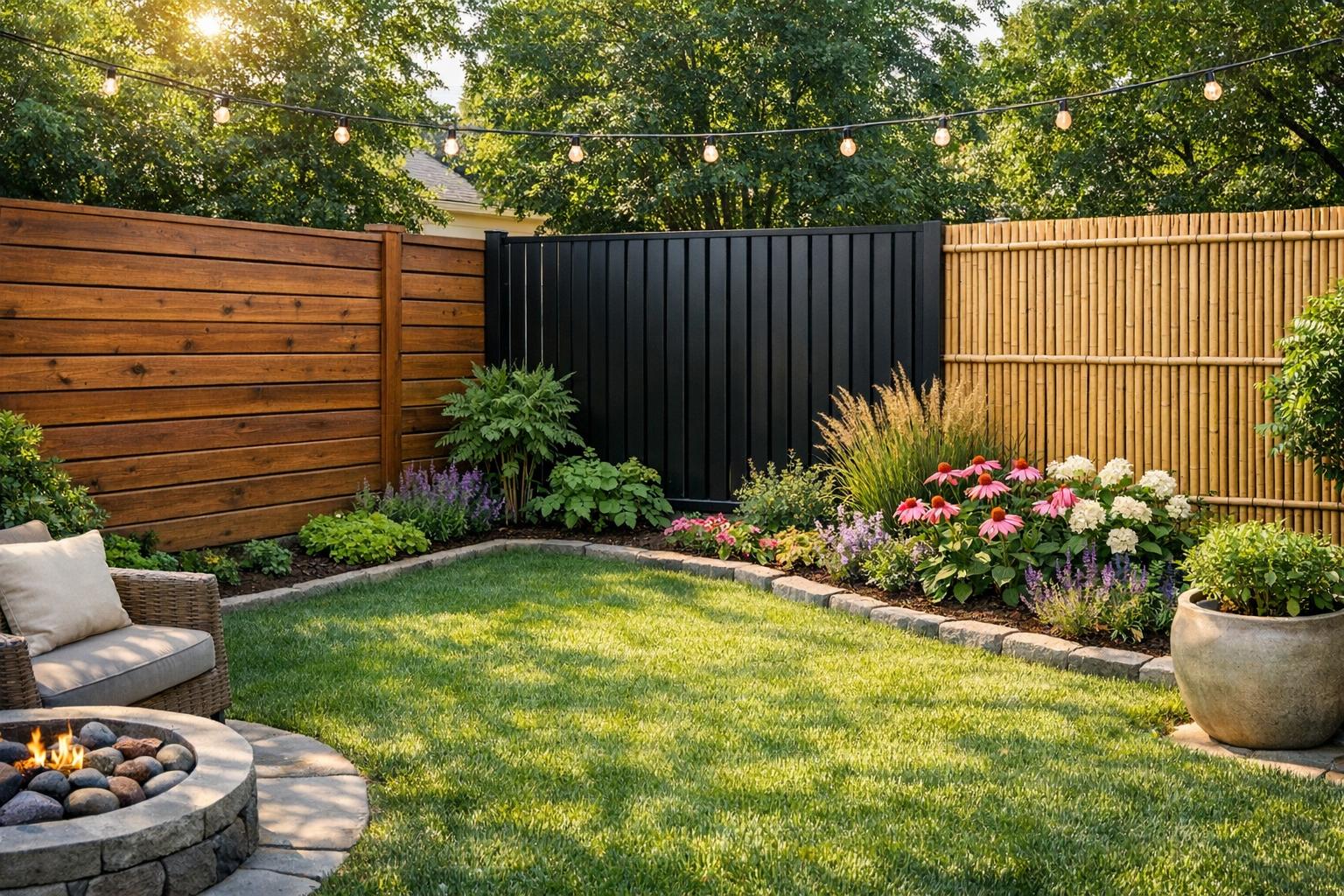
Creating a private outdoor space in a small yard can be a challenge, but the right fence design can make all the difference. Whether you’re looking to block prying eyes, keep pets safe, or add a stylish touch, there are plenty of options to suit your needs. Here’s a quick guide to 10 privacy fence ideas, each with its own benefits and considerations:
- Vertical Slat Wood Fence: Classic design offering high privacy and durability but requires regular maintenance.
- Horizontal Board Fence: Modern aesthetic that makes yards appear wider, with moderate upkeep.
- Lattice Top Fence: Combines a solid base with an airy lattice top for a balance of privacy and openness.
- Slatted Semi-Private Fence: Allows light and air to pass through while maintaining partial privacy.
- Metal and Wood Combo Fence: Durable and stylish, blending natural wood with sturdy metal frames.
- Vertical Garden Fence: A living wall of plants that doubles as a privacy screen, though it requires high maintenance.
- Pergola or Trellis Wall: Adds structure and partial privacy, especially when paired with climbing plants.
- Bamboo or Reed Fence: Eco-friendly and cost-effective, though less durable than other options.
- Chain Link with Privacy Slats: Affordable and functional, offering moderate to high privacy depending on slat density.
- Living Fence with Hedges or Espalier: Natural and visually appealing, but takes years to mature and requires ongoing care.
Each option varies in cost, privacy level, space efficiency, and maintenance needs. Whether you prefer sleek panels, natural hedges, or eco-friendly materials, there’s a solution to suit your yard’s size and style.
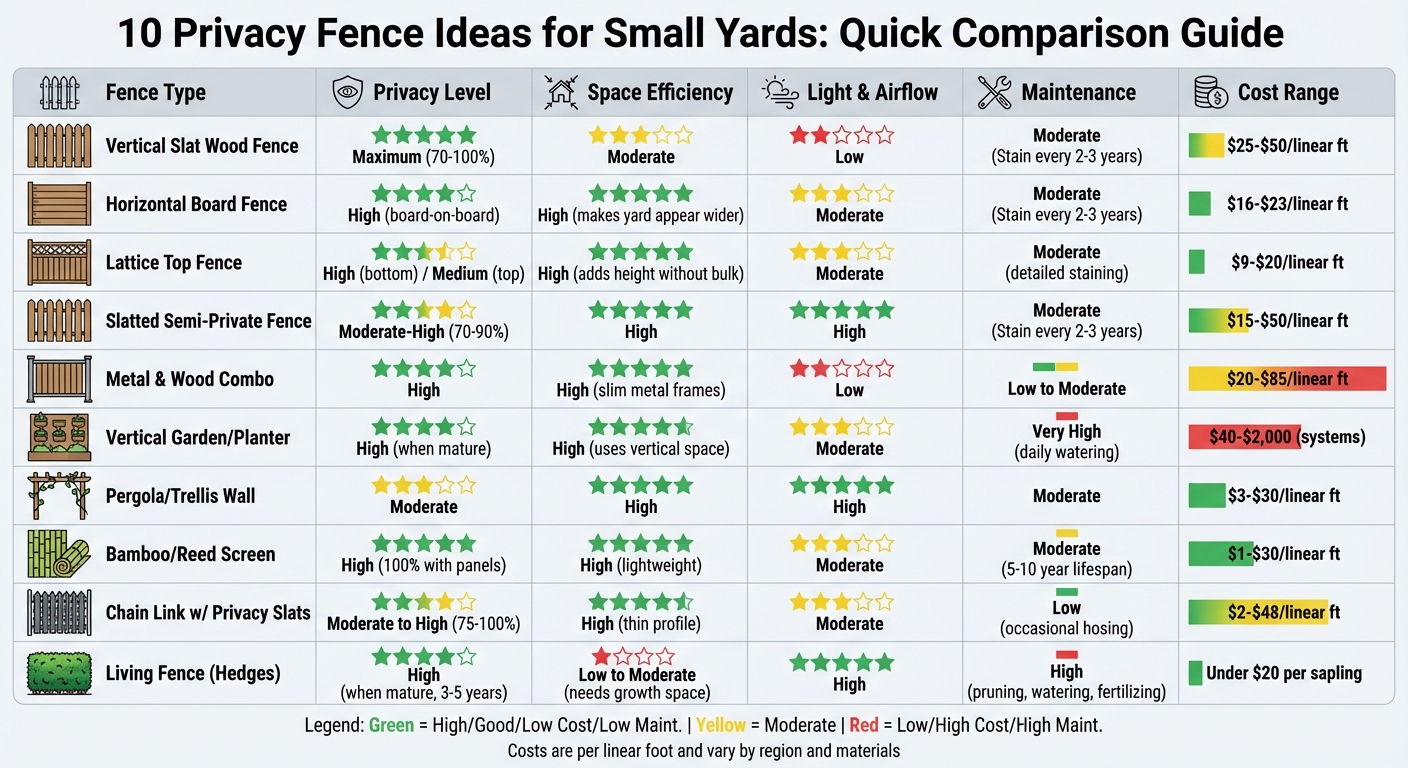
Privacy Fence Comparison: 10 Options for Small Yards
Small Yard? BIG Privacy! 11 Compact Fence Designs That Transform Tiny Spaces 🔥🏡
1. Vertical Slat Wood Privacy Fence
A vertical slat wood fence, typically standing 6–8 feet tall, combines effective privacy with a timeless look. The vertical alignment of the boards draws the eye upward, creating a sense of openness even in smaller yards.
"Wooden fencing’s design flexibility makes it ideal for safeguarding your privacy, whether your yard is minuscule or supersized".
Privacy Level
This design is perfect for achieving high privacy, blocking 70% to 100% of visibility based on how the boards are placed. Many installations include 1/4–3/8 inch gaps to allow for wood expansion while still maintaining seclusion. For complete visual coverage, a board-on-board construction eliminates gaps entirely.
Space Efficiency
Vertical slat wood fences are well-suited for compact yards as they can be tailored to fit any layout. In smaller spaces, using light-colored paint or stain can help avoid a closed-in feeling. Additionally, the vertical surface can double as a practical feature – mount planter boxes or storage ledges to make the most of your yard without sacrificing space.
Light and Airflow
While these fences are designed to maximize privacy, they can sometimes block airflow. To improve ventilation, consider leaving at least 1/2-inch gaps between the slats. Alternatively, you could add a 12- to 18-inch lattice topper to a standard 6-foot fence. This allows light and air to pass through while still maintaining privacy at eye level. As Jordan Clough points out, vertical planks also shed water more effectively in humid climates, which can be an added bonus.
Maintenance Level
Wood fences require consistent care to stay in top condition. Regular sealing, staining, or painting is essential to protect against rot, insects, and weathering. Cedar fences generally need restaining every 2–3 years, while pressure-treated pine may need attention annually. In smaller yards, where every detail matters, proper maintenance ensures the fence remains both functional and visually appealing. With routine upkeep, a high-quality vertical wood fence can last 15–20 years. Installation costs typically range from $25 to $50 per linear foot, but premium materials like Western Red Cedar can increase costs to $90 to $120 per linear foot.
2. Horizontal Board Privacy Fence
Horizontal board fences offer a modern twist on traditional fencing, delivering a sleek design that enhances privacy while making the most of smaller yards.
"Horizontal fencing brings a clean, contemporary look to your outdoor space… making the space feel larger and more open." – Barrier Bob, Barrier Boss
Privacy Level
When built using a board-on-board style, horizontal fences provide outstanding privacy with little to no visibility from the outside. You can adjust the spacing to suit your needs – opt for 1/4 to 3/8 inch gaps for maximum seclusion or add about 1/2 inch at the top for a touch of visual interest.
Space Efficiency
The horizontal orientation of the boards creates an illusion of a wider yard, guiding the eye along the fence line rather than upward. This design complements modern architecture beautifully, offering a minimalist aesthetic without overwhelming the space.
Light and Airflow
By spacing the boards about 1/2 inch apart, you can strike a balance between maintaining privacy and allowing for airflow and natural light.
Maintenance Level
Horizontal fences require careful attention to prevent sagging. To maintain their structure, use durable wood like cedar or redwood, keep posts spaced within 6 feet, and choose thicker 2×6 boards. Regular staining or sealing is also crucial to protect the wood from UV damage and rot.
Professional installation typically costs $16 to $23 per linear foot, which is about 10% to 20% more than vertical fences due to the need for high-grade materials and closer post spacing. For a lower-maintenance alternative, consider composite, vinyl, or steel. These materials are more resistant to warping and decay, ensuring your fence stays stylish and functional over time. This makes horizontal fences an excellent choice for optimizing privacy and aesthetics in smaller outdoor spaces.
3. Lattice Top Privacy Fence
A lattice top fence combines a 6-foot solid base with 12–18 inches of decorative lattice on top. This design strikes a balance between privacy and openness, offering effective screening while keeping your small yard from feeling confined.
"Standard 6-foot fencing with 12-18 inches of lattice pergola creates effective screening while maintaining an open feeling." – Rob Thibeault, Author, Brentwood Fence
Privacy Level
This design offers a practical privacy solution, especially for smaller spaces. The solid bottom section blocks direct sightlines, while the lattice top provides a lighter, airier feel. To boost privacy further, consider planting fast-growing vines like clematis, honeysuckle, or morning glory. Over time, these plants can create a lush, natural screen that enhances both privacy and aesthetics [26, 27].
Space Efficiency
Lattice panels are lightweight and can be mounted on existing structures like railings, walls, or posts, making them ideal for compact yards. Their vertical design draws the eye upward, creating the illusion of a taller space. Adding a lattice topper is a clever way to increase height without exceeding local building codes, which often cap solid fences at 6 feet [10, 19]. This approach not only adds verticality but also improves light and airflow in your yard.
"Lattice screens are the MVPs of the small backyard privacy game. Why? They’re lightweight, customizable, and they let light and air flow while still blocking the view." – Jessica, DIY Expert, Four Generations One Roof
Light and Airflow
The open-weave design of the lattice top allows sunlight to filter through the upper section while letting air circulate freely. This prevents the enclosed, cave-like feeling that can come with solid fences [10, 26]. Additionally, the breathable design reduces wind resistance, making the structure more stable in windy conditions compared to fully solid panels [3, 28].
Maintenance Level
The durability of lattice fencing depends on the material and proper upkeep. Wood lattice needs staining or sealing every 2–3 years to protect against rot and weather damage. This maintenance typically costs between $500 and $1,500 for an average yard. For a low-maintenance alternative, vinyl lattice resists fading and cracking and only requires occasional cleaning [28, 29, 2, 4]. Securely attaching lattice panels is crucial to prevent sagging, especially when supporting climbing plants. Pressure-treated lattice panels are budget-friendly, starting at under $30 for an 8-foot section, while wood lattice generally costs between $9 and $20 per linear foot [4, 6].
4. Slatted Semi-Private Fence
A slatted semi-private fence features spaced boards that provide privacy while allowing light and air to pass through. This design is perfect for creating a sense of openness while still protecting your outdoor space. The gaps between the slats – typically 1/4 to 3/8 inch for maximum privacy or 1/2 inch for a mix of seclusion and openness – make it a great choice for smaller yards. It offers privacy without the closed-in feeling of a solid wall, making your outdoor area feel more inviting and spacious.
Privacy Level
Depending on the spacing and style, slatted fences can provide 70% to 90% privacy. For most homeowners, a 1/2-inch gap strikes a good balance, blocking direct sightlines while still feeling open. If you’re looking for more privacy, opt for tighter gaps of 1/4 or 3/8 inch. Horizontal slats create a modern, sleek look that can visually widen a small yard, while vertical slats give a more classic appearance.
Light and Airflow
One of the major perks of slatted designs is how they filter natural light, keeping small yards bright and welcoming. Airflow is another big advantage, especially in areas prone to strong winds. Gaps of at least 1/2 inch allow air to move through the fence rather than pushing against it like a solid barrier, reducing wind resistance. These practical benefits pair well with different material choices, which can also impact maintenance.
Space Efficiency
For compact yards, slatted fences are a smart choice. They define your space without making it feel cramped. A darker paint color, like black, can add a sophisticated touch while making greenery pop, creating a sense of depth in smaller areas. The open design prevents the "boxed-in" effect that solid panels often create, helping your yard feel more expansive.
Maintenance Level
The upkeep of a slatted fence largely depends on the material you choose. Wood slats require periodic staining or sealing, typically every few years, to maintain their appearance. Vinyl and composite materials, on the other hand, need minimal cleaning, while steel options are almost maintenance-free – just rinse them off occasionally and clear debris from the bottom rail. Costs range from $15 to $50 per linear foot, with composite and vinyl options generally at the higher end of the price spectrum.
5. Metal and Wood Combination Fence
A metal and wood combination fence blends the natural charm of wood with the strength and durability of metal, offering a sleek, modern aesthetic that’s perfect for small yards. This design incorporates wood panels into metal frames or attaches them to metal posts. The result? A stylish yet practical fence that addresses common problems found in traditional wood fencing. For example, metal posts elevate the wood to prevent ground-level rot, while the slim metal frames save precious yard space.
Privacy Level
This style isn’t just about looks – it’s also great for privacy. If you’re aiming for maximum seclusion, solid corrugated metal sheets or full wood panels are excellent options to block sightlines entirely. On the other hand, if you prefer a more decorative touch, you can use horizontal wood slats with narrow gaps or add laser-cut metal accents. These options maintain partial privacy while creating a more open and airy vibe. Most privacy fences in this category are built between 6 and 8 feet tall to effectively shield your yard from neighbors.
Space Efficiency
Metal components make this fence design especially space-friendly. Compared to bulky 4×4 wooden posts, the slimmer profiles of metal posts and frames take up less ground space, making them a smart choice for compact yards. Want to make your outdoor area feel even larger? Opt for dark-colored metal frames paired with lighter wood slats. This color contrast creates a subtle, receding effect that minimizes the fence’s visual impact.
Light and Airflow
Horizontal slat designs are a great way to let natural light and air circulate freely, keeping your yard from feeling too enclosed. This open structure is particularly beneficial in windy areas, as it reduces wind resistance compared to solid fences. Plus, these fences can help lower ambient noise levels by 5 to 10 decibels, making your outdoor space quieter and more enjoyable.
Maintenance Level
Metal components – whether aluminum or galvanized steel – are built to last, resisting rot, rust, and mold with minimal upkeep. A quick rinse with a hose is usually all they need. The wood sections, however, require a bit more care, including staining or sealing every 2 to 3 years to maintain their appearance and durability. This combination significantly extends the fence’s lifespan, with aluminum-based designs lasting anywhere from 30 to 50 years.
When it comes to costs, a metal and wood hybrid fence typically runs between $55 and $85 per linear foot for composite styles. Corrugated metal panels are a more budget-friendly option, ranging from $20 to $55 per linear foot. These features make this fence an excellent choice for small yards, combining style, durability, and low maintenance.
For homeowners in Plano, TX, Tend Fencing offers expert installation services to help you create a durable and stylish privacy fence tailored to your yard’s needs.
6. Vertical Garden and Planter Box Fence
Transform your fence into a lush, living wall with a vertical garden and planter box fence. By incorporating planters and trellises into an existing fence structure, you can create a green barrier that softens the sharp edges of traditional fences while providing privacy. Dense vines like English ivy or Star Jasmine are excellent choices for screening, and layered plantings can add height to shorter fences without needing a complete rebuild.
Privacy Level
Once fully grown, a vertical garden offers an effective green screen that blocks views from neighboring properties. Gaps in foliage can be filled with climbing vines or lattice structures to enhance privacy. Vigorous climbers such as Clematis, Morning Glories, or Star Jasmine not only provide dense coverage but also add vibrant color to your fence.
Space Efficiency
For small yards, this design is a game-changer. It uses vertical space rather than taking up valuable ground area, allowing you to enjoy greenery without losing usable outdoor space. Landscape architect Janice Parker highlights how "privacy fencing, either along a property line or around a specific area in your garden, creates a sense of sanctuary, seclusion, and peacefulness". The vertical layout also ensures better light exposure and airflow, making it both practical and visually appealing.
Light and Airflow
Unlike solid fences made of wood or metal, vertical gardens with trellises or spaced planters allow air to flow freely. This feature prevents the enclosed feeling that traditional barriers can create. The dappled sunlight filtering through the greenery adds a welcoming charm, while the natural materials help reduce noise, creating a quieter, more tranquil outdoor space.
Maintenance Level
Vertical gardens do require some upkeep to thrive. Daily watering and biweekly fertilization (or the use of slow-release fertilizers) are necessary to keep plants healthy. Prune flowering plants weekly to encourage new blooms and rotate seasonal varieties to maintain year-round appeal. To simplify watering, consider installing a drip irrigation system, which can start at around $40 to $50. For those looking for a more advanced setup, professional hydroponic living walls range from $500 to $2,000, depending on the size and complexity.
If you’re in Plano, TX, Tend Fencing offers expert custom installations to bring your vertical garden vision to life.
sbb-itb-d1d0a96
7. Pergola Panel or Trellis Privacy Wall
A pergola panel or trellis privacy wall offers a mix of privacy and openness. These structures use slatted or lattice designs to create a partially screened view that feels welcoming rather than overwhelming. Unlike solid fences, which can feel heavy and restrictive, trellises bring versatility and are especially handy in smaller outdoor spaces. They also blend functionality with visual appeal.
Wood lattice panels typically stand between 6 and 8 feet tall, with prices ranging from $9 to $20 per linear foot for wood lattice and $3 to $7 per linear foot for basic trellis panels.
Privacy Level
On their own, trellis and lattice structures provide moderate privacy, but their real charm comes when paired with climbing plants. Vines like jasmine, ivy, or clematis can be trained to grow through the framework, turning it into a lush, green barrier. Over time, this natural growth creates a dense screen, gradually evolving from partial to nearly complete privacy as the plants mature.
Space Efficiency
In smaller yards, pergola panels and trellises are a smart choice for making the most of limited space. Their open design avoids the closed-in feeling that solid fences can create, helping your outdoor area feel more open and inviting. These structures can be attached to decks, incorporated into existing pergolas, or used as standalone screens to define areas like dining spots or hot tubs. They’re perfect for dividing spaces without making them feel confined.
Light and Airflow
One of the standout benefits of trellises is how they let light and air flow freely. The open framework allows sunlight, breezes, and natural sounds to pass through, keeping your outdoor space bright and airy. As climbing plants grow, they provide dappled shade, cooling the area on sunny days without completely blocking the light. Unlike solid walls that can create wind turbulence, trellises allow breezes to move through gently, adding to the overall comfort of your yard.
Maintenance Level
The upkeep required depends on the material you choose. Wood trellises need staining or sealing every 2 to 3 years to protect against rot, while vinyl or composite options require minimal maintenance and resist moisture and pests. Aluminum is the most durable, lasting 30 to 40+ years with very little upkeep, though it costs more – typically $15 to $30 per linear foot. If you’re growing climbing plants, you’ll need to prune them regularly and clear away growth at the end of each season to prevent moisture buildup that could lead to rot. Tend Fencing can work with you to design and build a custom solution that fits your yard’s unique needs.
8. Bamboo or Reed Privacy Screen Fence
Bamboo and reed screens bring a natural touch to compact outdoor spaces while offering a practical solution for privacy. These eco-friendly options provide effective screening with a softer, more organic aesthetic compared to solid wood fences. Bamboo panels entirely block visibility, while living bamboo, with its evergreen foliage, offers year-round coverage and can grow taller than standard fences.
Privacy Level
Bamboo panels create a dense, impenetrable barrier that completely obscures sightlines. For a living alternative, varieties like Black Bamboo (rated 4.9/5.0 from 74 reviews) or Red Margin Bamboo (4.86/5.0 from 36 reviews) form lush, towering walls that can reach heights of 10 to 50 feet. On the other hand, reed screens offer moderate privacy. They have a thinner, more open design that filters light while maintaining a rustic charm. If you opt for living bamboo, clumping varieties are recommended to prevent the roots from spreading uncontrollably. This combination of privacy and practicality makes bamboo and reed screens a smart choice for smaller spaces.
Space Efficiency
Bamboo and reed screens are lightweight and easy to install, making them perfect for limited yard areas. Bamboo panels typically cost around $150 for an 8-foot section, while rolled bamboo ranges from $6 to $30 per linear foot. Reed fencing is even more budget-friendly, priced between $1 and $6 per linear foot. Clumping bamboo varieties are particularly suited for tight spaces, as their roots stay contained.
Light and Airflow
One of the standout features of bamboo fences is their ability to balance privacy with airflow. The rounded canes allow wind to pass through, making them more resilient to strong winds than solid wood panels. Reed screens, being more porous, create an airy feel while letting in filtered sunlight. Proper spacing also helps these materials dry quickly after rain, reducing the risk of rot. This blend of privacy, light, and ventilation makes these screens an excellent fit for cozy outdoor areas.
Maintenance Level
Bamboo is naturally resistant to termites and, with proper care, can last up to 20 years. Without treatment, its lifespan drops to 2-3 years. Applying an oil-based exterior stain or sealer can extend its durability to 7-10 years. To prevent moisture damage, keep the fence base 2-4 inches above the soil. Reed screens are low-maintenance, requiring mild soap and water cleaning twice a year, along with reapplication of a water-resistant sealant every 1-2 years. Reed fencing, crafted from freshwater reeds and galvanized steel wire, is durable, easy to install, and simple to remove – making it a great option for renters.
9. Chain Link Fence with Privacy Slats
Chain link fences with privacy slats are a practical and affordable choice for small yards. These slats – narrow strips made from materials like HDPE, PVC, aluminum, or wood – fit neatly into the mesh of a chain link fence. They instantly convert a see-through barrier into a semi-private screen without taking up extra yard space. Unlike hedges that take years to grow, privacy slats offer an immediate solution.
Privacy Level
When it comes to privacy, these slats perform well. Standard options provide about 75% coverage, while high-density versions can block nearly 100% of visibility. They’re secured with a bottom locking channel, so there’s no need for additional fasteners. Beyond privacy, these slats also add a layer of security by making the fence harder to climb or cut.
Space Efficiency
For smaller yards, privacy slats are a smart solution because they integrate directly into the existing fence without requiring extra space. If you’re thinking about costs, DIY materials range from $2 to $12 per linear foot, while professional installation costs between $14 and $48 per linear foot. Compared to wood panels, plastic or aluminum slats are a budget-friendly alternative that doesn’t compromise on functionality or style.
Light and Airflow
While privacy slats block direct views, they still allow airflow through the small gaps, which helps prevent the "sail effect" during strong winds. As Family Handyman explains:
"Small gaps around 1/4 to 3/8 of an inch support privacy. However, it’s important to leave enough space between slats to allow air to circulate, especially in areas that have high winds."
In windy regions, slightly larger gaps – around 1/2 inch – can help maintain the fence’s stability. Experts like First Fence of Georgia suggest using heavy-duty SS40 posts and spacing posts closer together (8 to 9 feet apart) for 6-foot fences to ensure durability.
Maintenance Level
Once installed, chain link fences with privacy slats require minimal upkeep. A seasonal rinse with a hose and occasional cleaning of the bottom rail channels to remove debris will keep them looking good. For long-lasting results, choose vinyl or aluminum slats, which resist rot, pests, and fading. While wood slats are an option, they have a shorter lifespan and are more prone to decay. Most slats are designed to last as long as the fence itself – up to 50 years – and damaged slats can be easily replaced without dismantling the entire fence.
For homeowners in Plano, TX, Tend Fencing offers professional services to ensure a seamless and durable installation.
10. Living Privacy Fence with Hedges or Espalier
If you’re looking for a natural and space-saving way to create privacy in a small yard, a living privacy fence could be the perfect solution. This approach uses plants to form a natural barrier, blending beautifully into your outdoor space. One popular option is the espalier technique, where trees or shrubs are trained to grow flat against a support structure, making it ideal for tight areas. Building an 8-foot DIY espalier typically costs around $100–$150 in materials, while hedge saplings are generally priced under $20 each. Beyond privacy, this method adds a touch of greenery that complements your yard’s design.
Privacy Level
For year-round coverage, evergreen plants like Juniper "Blue Arrow" and Arborvitae "North Pole" are excellent choices. Juniper "Blue Arrow", for instance, grows up to 15–20 feet tall while staying just 2–4 feet wide, making it perfect for smaller spaces. If you’d prefer a seasonal touch, deciduous options like Dwarf Korean Lilac offer fragrant blooms in the spring, though they lose their leaves in winter, reducing privacy during colder months. Keep in mind that some plants, like Oleander, are toxic and should be avoided if you have pets or children.
Space Efficiency
The espalier technique is a standout for small yards because it trains plants to grow along a flat framework instead of spreading outward. This makes it a practical choice for fruit trees like apple, pear, and peach, as well as ornamental shrubs like magnolia and viburnum. When setting up an espalier near a wall, leave at least 12 inches of space between the structure and the support system to ensure proper airflow and easy maintenance. This setup not only saves space but also promotes healthy plant growth and simplifies upkeep.
Light and Airflow
One of the benefits of living fences is that they provide privacy without completely closing off your yard. They allow air to circulate freely while still blocking views, keeping your outdoor space airy and inviting. Espalier designs, in particular, let sunlight filter through their evenly spaced framework. To maintain healthy growth, prune hedges so they are wider at the base than at the top – this ensures sunlight reaches the lower branches and prevents gaps from forming.
Maintenance Level
Newly planted hedges require consistent care, including weekly deep watering during their first season and annual pruning in late winter or early spring to encourage dense growth. Espalier designs demand regular pruning and tying to maintain their shape. To keep plants healthy, apply a slow-release fertilizer once a year in the spring and refresh mulch one or two times annually to retain moisture and suppress weeds. While living fences take about 3 to 5 years to fully mature, the payoff is a beautiful, natural privacy screen that enhances your yard.
Comparison Table
Choosing the right privacy fence means weighing key factors like privacy, space efficiency, and upkeep. Here’s a side-by-side comparison of 10 popular options:
| Fence Option | Privacy Level | Space Efficiency | Light & Airflow | Maintenance |
|---|---|---|---|---|
| Vertical Slat Wood | Maximum | Moderate | Low | Moderate (Stain every 2–3 years) |
| Horizontal Board | High | High (Makes yard look wider) | Moderate | Moderate (Stain every 2–3 years) |
| Lattice Top | High (Bottom) / Medium (Top) | High | Moderate | Moderate (Detailed staining) |
| Slatted Semi-Private | Moderate-High | High | High | Moderate (Stain every 2–3 years) |
| Metal & Wood Combo | High | High | Low | Low to Moderate |
| Vertical Garden/Planter | High | High (Multi-use) | Moderate | Very High (Daily watering and plant care) |
| Pergola/Trellis Wall | Moderate | High | High | Moderate |
| Bamboo/Reed Screen | High | High | Moderate | Moderate (Replace every 5–10 years) |
| Chain Link w/ Slats | Moderate (60%) to High (90% with slats) | High (Thin profile) | Moderate | Low (Hose down occasionally) |
| Living Fence (Hedges) | High (When mature) | Low to Moderate (Needs growth space) | High | High (Pruning, watering, fertilizing) |
This table highlights the trade-offs, helping you match your yard’s requirements with the best option.
For instance, solid fences like vertical slat wood or metal-wood combos deliver maximum privacy and even reduce noise, but they can make smaller yards feel confined. On the other hand, semi-private designs like slatted fences or trellis walls allow light and air to flow, creating a more open and breathable atmosphere while still blocking views. These designs strike a balance between functionality and aesthetics.
Durability also varies widely. Metal and vinyl fences can last 25–50 years, while wood fences typically last 15–20 years with proper staining every 2–3 years. Bamboo, though affordable, needs replacing every 5–10 years. Living fences, such as hedges, require 3–5 years to mature and demand regular pruning and watering, making them a high-maintenance but visually appealing choice.
When it comes to cost, bamboo fences are the most budget-friendly, priced at $25–$45 per linear foot. Cedar wood falls in the middle range at $45–$85 per linear foot, while composite fencing is the priciest, ranging from $80–$140 per linear foot.
Conclusion
A privacy fence can turn a small yard into your personal sanctuary, shielding you from prying eyes and muffling outside noise. Whether you prefer sleek horizontal panels, budget-friendly bamboo screens, or lush green hedges, each option solves the unique challenges of smaller spaces. The trick is to choose a fence that fits your needs – whether that’s keeping pets safe, reducing street noise, or simply carving out a peaceful retreat.
Before diving into your project, it’s essential to tackle a few practical steps. Check local building codes and HOA regulations to avoid any surprises, and always call 811 to locate underground utilities before starting construction.
Think about how much maintenance you’re willing to handle. Wood fences offer timeless appeal but require regular staining or sealing. On the other hand, vinyl and aluminum are low-maintenance options that last longer with less upkeep.
Installation is another key factor. Hiring professionals can save time and ensure the job is done right. Experts handle the nitty-gritty details like permits, property line disputes, and choosing materials that work best for your climate and privacy goals. They also provide the structural support needed for specialized designs, such as tall fences or those with built-in planters, which can be tricky for DIYers to execute.
For homeowners in Plano, TX, Tend Fencing offers custom design and installation services tailored to your yard’s unique needs. Their team specializes in high-quality wood, ornamental iron, and chain-link fencing, ensuring you get a solution that balances style, privacy, and durability. To get started on your project, visit https://tendfencing.com for a personalized consultation and quote.
FAQs
What are the best low-maintenance privacy fences for small yards?
If you’re searching for a privacy fence that’s simple to care for and works well in a small yard, think about options like vinyl fencing, composite fencing, corrugated metal panels, or chain-link fences with privacy slats. Each choice offers a balance of durability, style, and low maintenance.
- Vinyl fencing stands out for its toughness. It resists moisture, pests, and never needs painting or staining. A quick wash with soap and water is all it takes to keep it looking fresh.
- Composite fencing gives you the appearance of natural wood without the hassle of sealing or staining. It won’t warp, splinter, or rot, making it a long-lasting option.
- Corrugated metal panels bring a sleek, modern vibe to your yard. They’re rust- and mold-resistant, need very little upkeep, and can last for decades with just occasional cleaning.
- Chain-link fences with privacy slats are a cost-effective way to add privacy. The slats are easy to clean, and the metal framework is practically maintenance-free.
Tend Fencing offers expert installation of these easy-care fencing solutions, tailoring each design to fit your small yard while ensuring privacy and minimal upkeep.
What’s the best privacy fence material for my yard’s climate?
Choosing the right privacy fence material starts with considering how well it can handle your local weather conditions. In areas with high humidity or frequent rain and snow, materials like pressure-treated wood or vinyl are excellent choices due to their resistance to moisture and rot. For regions with intense heat and sunlight, go for materials that won’t warp, crack, or overheat, such as composite or aluminum. If you live in a dry, windy area, focus on options that can withstand UV exposure and resist rust, like metal or specially treated wood.
Here’s a quick breakdown of popular materials:
- Wood: A classic choice, but it requires sealing in wet climates to prevent damage.
- Vinyl: Moisture-resistant and ideal for coastal or humid areas, though it may crack in extreme cold.
- Metal (like aluminum): Durable in dry climates but can become hot under direct sunlight.
- Composite: Low-maintenance and stable in areas with fluctuating temperatures.
- Bamboo: Lightweight and eco-friendly but less durable in wet or damp environments.
For tailored advice and professional assistance, Tend Fencing in Plano, TX, offers guidance to help you pick and treat the right material for your yard’s specific climate. Their expertise ensures your fence remains strong and visually appealing for years to come.
What should I consider when choosing a privacy fence for a small yard?
When picking a privacy fence for a small yard, it’s important to choose a material that offers privacy without making the area feel confined. Materials like narrow wood panels, vinyl, bamboo, or metal lattice strike a good balance by providing coverage while letting light pass through, which helps the yard feel more open. To create a cohesive and spacious look, opt for colors that complement your landscaping.
Keep budget, durability, and maintenance in mind when selecting materials. Here’s a quick cost breakdown: wood fencing typically ranges from $25–$50 per linear foot, vinyl costs about $40–$85, and aluminum can run between $75–$130. Choose a material that not only fits your budget but also holds up well in your local climate. For extra functionality, consider fences with built-in features like planters, seating, or storage to make the most of your space.
Don’t forget to check local height regulations – many areas limit fences to 6 feet tall. If you want additional height without creating a solid barrier, designs like trellises or slats can be a great option. For a tailored solution, a professional installer, such as Tend Fencing, can help you create a custom fence that provides privacy while keeping your yard open and welcoming.